
Compliance Landmines in Shredder Procurement: What Certifications Actually Mean
Compliance Landmines in Shredder Procurement: What Certifications Actually Mean
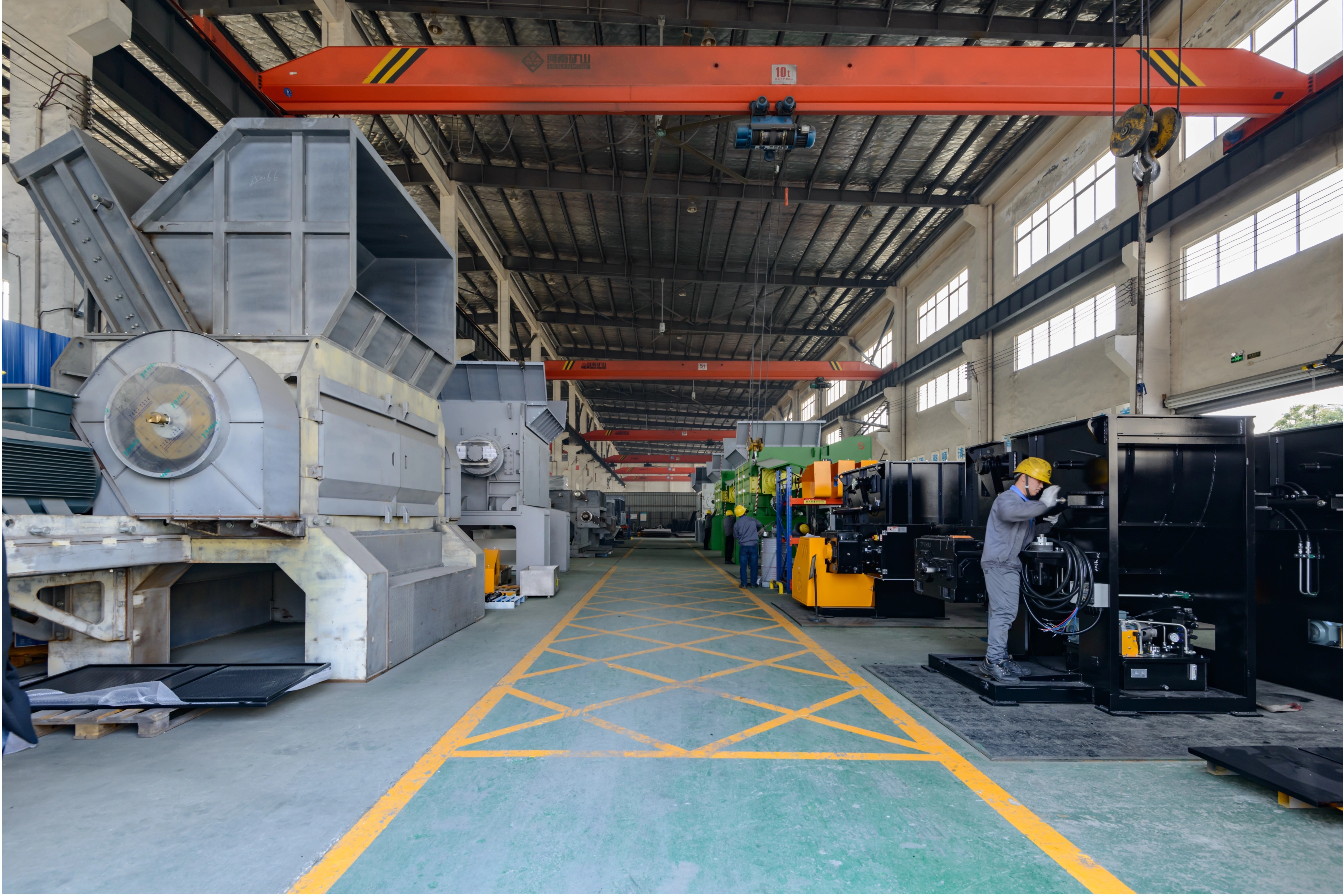
Certificates travel faster than engineering evidence. For an industrial shredder buyer at the decision stage, the real question is not whether a supplier holds documentation, but whether that documentation maps onto the way the machine will be loaded, operated and maintained in a specific plant.
Why Certification Became the Default Compliance Filter
Industrial shredder procurement has quietly turned into a compliance exercise. The global industrial shredder market was valued at approximately USD 1.28 billion in 2024 and is projected to reach USD 1.65 billion by 2032, according to Intel Market Research. A growing share of that spend moves through cross-border sourcing channels where the buyer cannot inspect the machine before it ships. In that environment, certificates do useful work: they compress a long evaluation into a shortlist.
The landmine is what happens next. A certificate confirms that a defined requirement was assessed against a defined scope. It does not confirm that a particular shredder will handle a particular waste stream safely, at the throughput a project requires, under the conditions of the site where it will run. Procurement teams that treat documentation as the end of the compliance process rather than the beginning of a design conversation are the ones most likely to discover the gap after installation.
Three pressures push certificates to the centre of shredder procurement. The supplier pool is wider and more geographically dispersed than it used to be, so buyers comparing a European brand, a Chinese manufacturer and a regional integrator need a common reference point. Hazardous and battery-bearing waste streams have moved into mainstream recycling, which makes the compliance question non-optional once a shredder line touches battery, e-waste or packaging contaminated with hazardous residues. And procurement teams are usually measured on cost and delivery rather than engineering review depth — a document is easier to file than a hazard assessment.
A caution applies here. Even market sizing diverges sharply by scope: one estimate places the 2024 global industrial shredder market near USD 1.28 billion (Intel Market Research) while another places it at USD 5.1 billion (Strategic Market Research), largely because the studies define the category differently. Certificates behave in the same way. The same label can cover very different scopes, which is exactly why the scope — not the label — is what a decision-stage buyer needs to read.
What Industrial Shredder Certifications Actually Signal
Answer first: a shredder certificate signals that a defined set of requirements was met inside a defined boundary. It is evidence about the boundary, not about your plant.
Safety-distance requirements illustrate the point. EN ISO 13857:2019 defines safety distances intended to prevent hazard zones from being reached by limbs. That standard says something concrete and valuable: the guarding geometry was designed with human reach in mind. It says nothing about throughput on a wet, stringy or high-moisture feedstock, nothing about wear life on abrasive material, and nothing about whether the machine can be cleared safely when it jams.
At enterprise level, ISO management-system certification and CE marking function as evidence that a manufacturer works with documented processes and has declared conformity for an applicable scope. SOYU Machinery, for example, lists CE/ISO certification alongside safety guards, load sensors, explosion-proof motors, regular safety audits and operator training as part of its manufacturing and safety measures — a combination that speaks to process discipline as much as to any single document.
What no certificate set covers on its own:
- Feedstock variability. A certificate is issued against a defined scope, while real waste streams vary in composition, moisture, density and contamination from month to month.
- Operator behaviour. Emergency stops, interlocks and guards only work when loading discipline and clearance procedures are trained and enforced.
- Site integration. Dust extraction, ventilation, electrical protection and explosion-risk zoning are plant-level decisions that sit outside the machine certificate.
The Compliance Landmines, by Machine Category
Compliance intensity is not uniform across shredder categories. The applications below are where the distance between paper and practice is largest.
Hazardous waste and industrial solid waste shredders
The dominant risks are material jamming and overload, mechanical injury during clearing, and electrical failure. These are design problems before they are paperwork problems: overload protection systems, safety interlocks, emergency stops and physical guarding determine whether a jam becomes a five-minute stop or an injury event.
Battery and e-waste shredders
Battery-bearing streams introduce explosion risk that ordinary shredder design does not address. Explosion-proof design, leakage detection, real-time monitoring and suitable dust handling belong in the specification, not in the after-sales conversation. A general-purpose shredder with a valid certificate can still be the wrong machine for a battery stream.
Medical waste shredders
Containment and controlled handling define the specification. Feed arrangements, cleaning access and guarding determine whether the machine can be operated and maintained without unnecessary exposure — a set of requirements that is largely invisible on a certificate.
Dust-generating streams — RDF shredder, wood shredder, paper mill waste shredder, cardboard shredder, plastic film shredder
Dust explosion is the risk certificate-only evaluation misses most often. Dust extraction and ventilation are line-level requirements; a compliant machine installed without them is not a compliant installation.
Metal shredder, aluminium shredder, copper wire shredder and metal chips shredder
Jamming, kickback and mechanical injury dominate. Feed control, torque behaviour and safe clearance procedures matter more than the size of the document set.
Bulky waste shredder, tire shredder and wind turbine blade shredder
These streams reward low-speed, high-torque design and robust feed arrangements. The compliance question is whether the machine duty class matches the material, not whether a certificate exists.
| Hazard | Typical trigger | Design or operational control |
|---|---|---|
| Material jamming and overload | Oversized or mixed feed, high-moisture material | Overload protection system, load sensors, defined feed discipline |
| Explosion (battery, e-waste) | Battery cells in the feed, damaged cells, residual charge | Explosion-proof design, explosion-proof motors, leakage detection, real-time monitoring |
| Dust explosion | RDF, wood, paper mill waste, plastic film, cardboard | Dust extraction system, ventilation, housekeeping routines |
| Mechanical injury | Clearing jams, maintenance access, guard removal | Safety guards, safety interlock, emergency stop, operator training |
| Electrical failure | Moisture ingress, cable damage, overload events | Leakage detection, protection devices, regular safety audits |
How SOYU Machinery Approaches Compliance as a Design Output
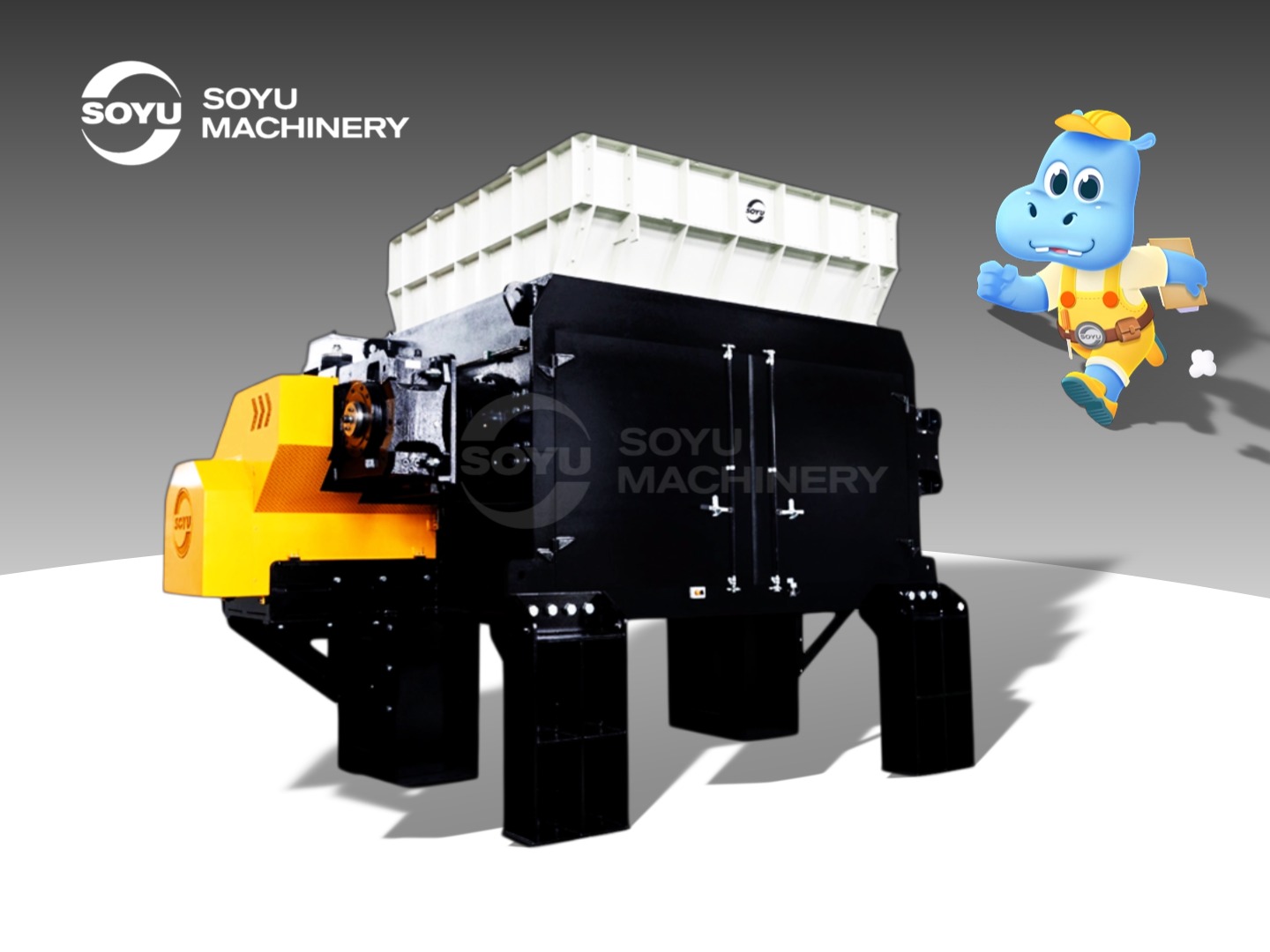
Changshu Shouyu Machinery Co., Ltd. (SOYU Machinery) is a shredder manufacturer founded in 2009 and based in Changshu, China, producing single-shaft, double-shaft and four-shaft shredders for waste metal, hazardous waste packaging and industrial solid waste, with roughly 70% of output exported and the EU and USA as its main markets. The company operates a 15,000 m² factory with around 200 employees, a 25-engineer R&D team and an annual output of about 2,000 sets.
For a decision-stage buyer, the relevant point is not scale but order of operations. The safety measures documented for these machines — load sensors, explosion-proof motors, safety guards, safety interlocks, emergency stops, leakage detection, dust extraction, overload protection and real-time monitoring — are design features that generate operating behaviour. Regular safety audits and operator training sit on the operations side, where certificates cannot reach.
This distinction matters when comparing a heavy duty industrial shredder across origins. Duty class, feed arrangement and safety architecture determine whether a battery stream, a hazardous packaging stream or a mixed industrial solid waste stream can be processed without incident. Paperwork can confirm that these features were specified; it cannot substitute for them.
Certificate-Only vs. Design-and-Operations Evaluation
| Evaluation dimension | Certificate-only approach | Design-and-operations approach |
|---|---|---|
| What is assessed | Existence and scope of documents | Hazard map for the actual waste stream |
| Guarding and access | Treated as a fixed attribute | Verified against operator tasks and clearance procedures |
| Explosion and dust risk | Often assumed to be covered | Addressed through explosion-proof design, dust extraction and monitoring |
| Feedstock variability | Not addressed | Sampling, trial runs and an agreed feed specification |
| Site integration | Sits outside the document | Ventilation, electrical protection, zoning and housekeeping reviewed |
| Maintenance and spares | Not evaluated | Spare parts availability, response channels, remote troubleshooting |
| Commercial outcome | Price comparison only | Total cost of ownership including downtime and energy |
The comparison is not an argument against certification. It is an argument about sequence: certificates narrow the field, and engineering evaluation decides the purchase.
Comparing Cost and Compliance Together
Compliance and cost are usually evaluated in separate meetings, which is how a compliant-looking machine becomes an expensive installation. Documented comparisons help, provided their scope is understood.
SOYU Machinery's comparison data positions its equipment against foreign-brand recycling equipment and against traditional manual dismantling combined with a general crusher. The documented differences include higher customization flexibility, compliant safety design and end-to-end after-sales support; reported performance gaps of approximately +20% processing capacity, −15% initial investment, −30% downtime and −10% energy consumption per ton; a 15–20% lower initial investment and about 25% lower long-term operating cost; and maintenance advantages including faster spare parts supply, roughly 30% lower maintenance cost and 24/7 remote troubleshooting support.
These are supplier-documented figures and they are directional: they depend on feedstock, duty cycle, site layout and operating discipline. A buyer should treat them as hypotheses to validate during sampling and commissioning, not as guaranteed outcomes. The same logic applies to certificates — both are claims about scope, and both are weakest when the scope is left unstated.
Where Stricter Adherence Matters Most
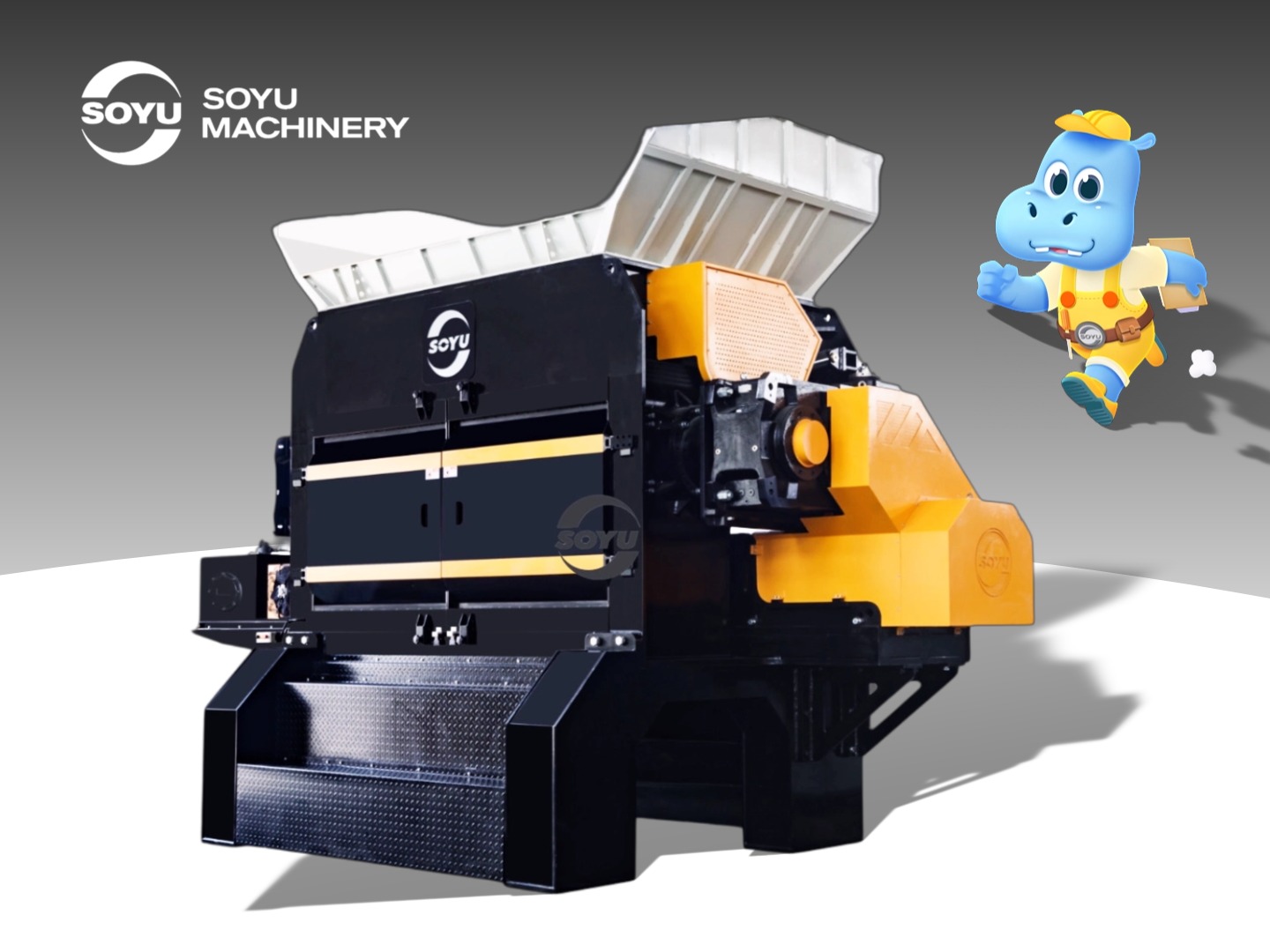
Three application clusters justify stricter compliance review than a standard mixed-waste line:
- Battery and e-waste processing. Explosion risk is inherent to the material, so machine design must assume it rather than react to it.
- Hazardous waste packaging and contaminated industrial streams. Overload, containment and safe clearing dominate the risk profile.
- Medical waste handling. Controlled feeding and maintenance access define both safety and operator confidence.
Downstream demand reinforces the pressure. The refuse-derived fuel market, which relies on shredders to process municipal solid waste, reached a value of USD 4.6 billion in 2023, according to Market.us. RDF lines run on uptime: an unplanned stop caused by a jam or a dust incident carries a cost that no certificate prevents.
Market Trend Analysis: Compliance as a Competitive Filter
The shredder market's centre of gravity is shifting toward Asia, and the equipment mix is shifting with it. Asia Pacific held a 39.0% revenue share of the global metal shredder machine industry in 2024, supported by scrap generation volumes (Grand View Research). Within that segment, twin-shaft designs accounted for a 35.0% revenue share in 2024 (Grand View Research), while the commercial four-shaft shredder segment was estimated at USD 0.51 billion in 2025 and is projected to grow at a CAGR of 5.8% through 2034 (Dataintelo).
Concentration at the top remains high: Doppstadt, Vecoplan, Untha, Lindner Recyclingtech and Komptech together account for roughly 38% of the market (Intel Market Research). For buyers, the practical implication is that the mid-market — where customization, cost-performance and documentation depth vary most — is where most new procurement decisions will be made.
Two trends follow. Safety documentation is becoming a pre-qualification filter rather than a differentiator, which raises the floor but also increases the risk of certificate shopping. And as battery and e-waste volumes grow, buyers are moving from document review toward audit and test: plant visits, safety-device verification, and material trials on their own feedstock.
A Decision-Stage Verification Checklist
- Define the waste stream by composition, density, moisture and contamination — in writing.
- Map the hazards: jamming, explosion, dust, mechanical and electrical.
- Request the technical file, not only the certificate, and confirm the scope it covers.
- Verify the safety device list against the hazard map: overload protection, explosion-proof design, dust extraction, interlock, emergency stop, leakage detection.
- Confirm monitoring and audit routines, and who performs them after handover.
- Audit the manufacturing plant where the machine will be built.
- Run a trial on your own material and record throughput, jamming frequency and clearance time.
- Fix spares, response times and operator training in the contract.
Each item is inexpensive before the order and expensive after it.
Future Outlook
Compliance expectations for industrial shredders are more likely to tighten than to relax. Battery and e-waste volumes keep rising, dust and fire incidents keep attracting attention, and buyers increasingly evaluate suppliers on how design decisions are documented rather than on how many certificates are bundled into a quotation pack. The practical consequence is a gradual shift in what “compliant” means: from a document a supplier can produce, to a set of design and operational practices a buyer can verify.
FAQ
Do industrial shredder certificates guarantee safe operation?
No. Certification confirms that defined requirements were met within a defined scope. It does not cover feedstock variability, operator behaviour or site integration — the three areas where most incidents originate. Safety depends on design features such as guarding, interlocks, overload protection, explosion-proof design where relevant, dust extraction and leakage detection, combined with trained operation and maintenance.
Which shredder applications need stricter compliance review?
Battery and e-waste shredders, hazardous waste and industrial solid waste shredders, and medical waste shredders carry the highest inherent risk, followed by dust-generating streams such as RDF, wood, paper mill waste and plastic film. In these applications the material itself creates explosion, dust or containment hazards that general-purpose design does not resolve.
How should a buyer verify claims beyond the certificate?
Request the technical file and confirm its scope, compare the supplied safety device list against a hazard map of the actual waste stream, audit the manufacturing plant, and run a trial on representative material with throughput, jamming and clearance time recorded. Monitoring routines, audit frequency and operator training responsibilities should also be confirmed for the post-handover period.
Is a shredder with identical certification always equivalent?
No. Certification labels can cover different scopes, and two machines with the same documentation can differ in duty class, rotor configuration, feed arrangement and safety architecture. A single-shaft shredder with a hydraulic ram, a double-shaft shredder and a four-shaft shredder address different materials and duty profiles; equivalence has to be established on design and application fit, not on document parity.
Does a lower purchase price imply lower compliance quality?
Not automatically, but price alone is a weak compliance signal. Documented comparisons for SOYU Machinery equipment against foreign-brand recycling equipment and against manual dismantling with a general crusher cite roughly 15–20% lower initial investment and about 25% lower long-term operating cost, alongside reported gains in processing capacity and reductions in downtime and energy use per ton. Those figures are project-dependent and should be validated through sampling and commissioning before they are used as decision inputs.
Procurement Takeaway
Compliance landmines in shredder procurement are rarely hidden inside certificates. They sit in the gap between what a certificate covers and what a plant actually does — the feedstock that changes, the jam that gets cleared by hand, the dust that was never extracted. The question worth asking at the decision stage is not which certificates a supplier holds, but what design evidence and operating procedures exist behind them, and how both will be verified before the machine is commissioned.