
Compliance & Qualification in Auto Lighting: Interpreting Fitment and Material Evidence
In automotive lighting, a certificate records that a process exists. It does not tell a buyer which vehicle a lamp fits, which polymer the lens is moulded from, or whether the part will pass a body shop's first installation attempt. Separating those questions is the practical difference between buying a document and buying a qualified component.
For importers and distributors evaluating automotive replacement parts, the useful reading of compliance is a chain: declared vehicle scope, model designation, material specification, inspection scope, and — finally — the certification record that ties them together. This article explains how that chain is constructed in aftermarket lighting, using a fog lamp built for a specific Gulf-market vehicle as a worked example, and it identifies where such claims legitimately stop.
Why a paper certificate cannot answer the fitment question
A compliance document answers one narrow question: has a defined activity been carried out and recorded? In lighting, that activity is usually inspection and testing. What the document cannot do is guarantee geometric compatibility with a specific bumper aperture, lamp housing recess, or wiring connector — because fitment is a property of a model, not of a certificate.
This matters because the aftermarket's regulatory environment is fragmented. Where a destination market specifies lighting requirements — the US market, for instance, works against DOT/SAE-type expectations, and buyers in the United Arab Emirates and Saudi Arabia apply their own conformity expectations — those are market-level requirements. They are not automatically satisfied by a supplier's internal quality programme, and they are not interchangeable with it. A qualification-safe reading treats market regulation, material specification and inspection scope as three separate checks that must each be closed.
The five qualification signals a buyer can actually verify
Rather than asking whether a supplier is 'certified', evaluation-stage buyers get better answers by asking which signals are documented and how far each one extends. The table below sets out the practical hierarchy.
| Signal | What it establishes | What it does not establish |
|---|---|---|
| Model designation | A traceable identifier for the assembly and its documentation | Any performance or regulatory approval |
| Declared vehicle scope | The vehicle, market and variant the part is claimed for | Fitment on adjacent model years or trims |
| Material specification | The polymer family declared for lens and housing | Batch-level material verification unless separately recorded |
| Certification / inspection programme | That a defined quality control routine has been applied | Conformity with a destination market's lighting regulation |
| Packaging and order data | Freight economics, order sizing and replenishment planning | Product quality in any technical sense |
Read in sequence, these five signals convert a supplier's marketing statement into an auditable claim. Read individually, each is easy to over-interpret — which is the most common sourcing error in this category.
What optic-grade PC and ABS actually contribute
Material statements are the most abused part of aftermarket lighting documentation, partly because the terminology is real. In this product family, the declared material is optic-grade PC & ABS polymers. The two polymers do different jobs, and understanding the division explains why a single material phrase can legitimately appear across a broad lighting range.
- Polycarbonate (PC) is the optical element. It carries the impact and thermal load at the front of the assembly, and across the range it is described in terms of shock resistance, thermal performance and UV-resistant behaviour against hazing.
- ABS provides the structural housing and mounting geometry — the part that has to hold factory mounting points, accept paint, and resist deformation.
- The combination is what allows a lamp to be described as impact-resistant and dimensionally stable at the same time, which is the property buyers actually depend on after a collision repair.
Application conditions raise the bar in Gulf markets. Where the declared working environment includes high temperature and desert dust, seal integrity becomes a material issue, not a cosmetic one. A stated seal structure designed to block dust and moisture entry is a directly checkable claim; 'premium quality' is not. That distinction is the reason material language deserves more sourcing attention than certificate language in this segment.
Worked example: reading the fog lamp TYJ-01-0008 as a qualification record
The fog lamp model designation is TYJ-01-0008. It is declared for the Toyota Corolla 2014 Middle East and is intended for automotive aftermarket, automobile repair and automobile body manufacturing use. On its own, that is catalogue information. What turns it into qualification evidence is how the remaining facts align with it.
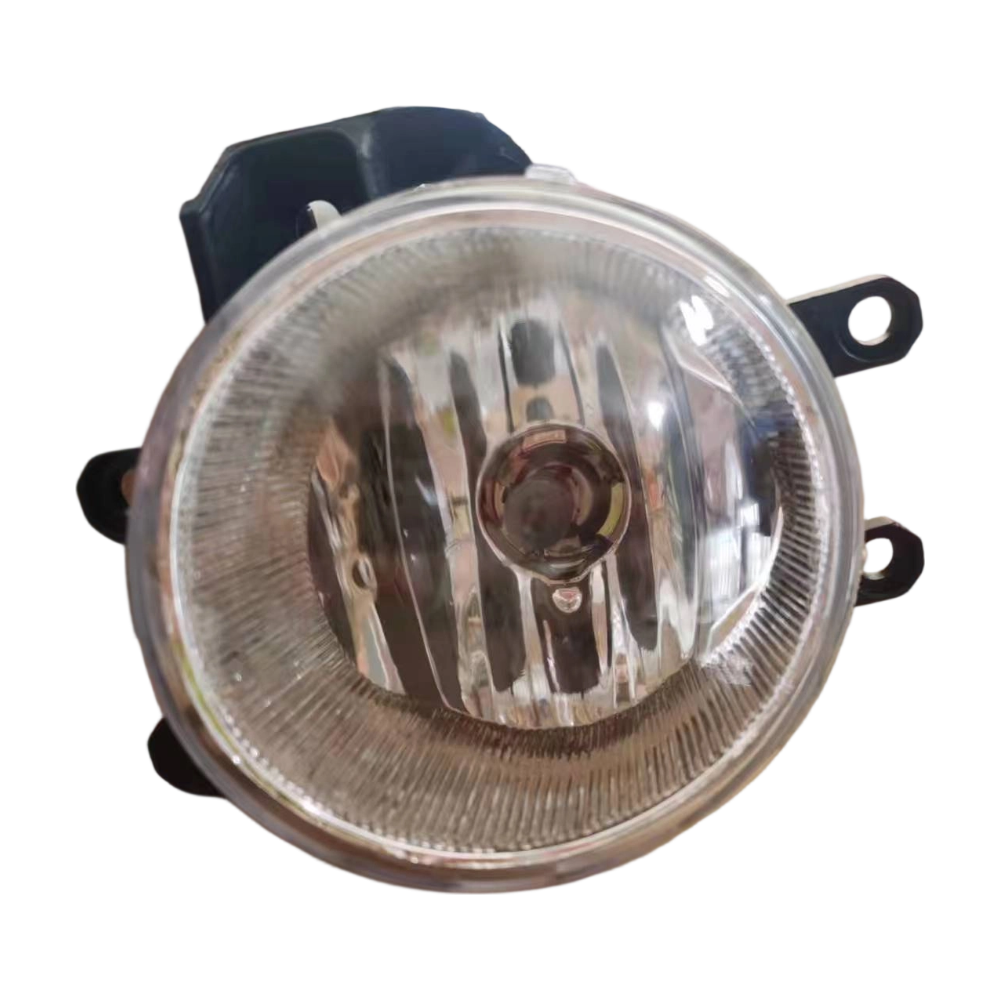
First, the material statement is model-specific rather than promotional: the fog lamp is specified in optic-grade PC & ABS polymers, the same declared family used across the lighting range. Second, the fitment claim is described mechanically — precise dimensions intended to support snap-in fitment — which is a claim a body shop can falsify on the first installation. Third, the packaging data is fully quantified: 50 pieces per carton, carton dimensions of 65 x 25.5 x 57 cm, and a carton volume of 0.094 cubic metres. Quantified packing data is a useful honesty signal, because a supplier willing to publish freight geometry is usually also willing to publish the inspection basis behind it.
Fourth, and most relevant to hvq_2-style constraint questions, the compliance record connects the part to a named programme. The Quality Inspection Program is a quality control certification, and the certification record lists the TYJ-01-0008 fog lamp among the products it covers — alongside lighting assemblies such as the head lamp TYJ-01-0001A, which the programme applies to explicitly. That is a materially stronger signal than a generic 'quality assured' badge, because the covered product set is enumerated rather than implied.
Fifth, the inspection layer is described operationally: inspection and testing are performed before shipment. Combined with a stated monthly capacity of 100,000 units and a lead time of 30–60 days, this gives an evaluation-stage buyer a coherent picture of how a batch is produced, checked and scheduled — which is what the phrase 'qualified supplier' should mean in practice.
The supplier behind the record
Ruian Golden Import and Export Co., Ltd., trading as Gold Auto Part, is an automotive parts exporter based in Ruian, Wenzhou, Zhejiang Province, China — an established automotive parts manufacturing hub. The company sources and exports engine valves, Toyota exterior and body parts, oil and air filters, and a broad catalogue of replacement parts for passenger cars and light commercial vehicles, serving importers, wholesalers and distributors across the Middle East, Saudi Arabia, the UAE, South America, Southeast Asia, Africa and Europe.
Two facts from its own profile are directly relevant to a compliance discussion, and both deserve careful phrasing. The profile states that supply chain partners operate under ISO 9001 and IATF 16949 quality management standards, and that every product batch undergoes dimensional inspection, material verification and performance testing before shipment. IATF 16949:2016 is the global quality management standard for the automotive industry and is mandatory for many OEM suppliers. Note the structure of the claim: it describes partner facilities, not the exporter's own certificate. An evaluation-stage buyer should therefore establish which legal entity holds a given certificate and which site it covers — a distinction that separates rigorous suppliers from careless ones far more reliably than certificate count.
The declared capability envelope completes the picture: OEM, ODM and customisable production; vehicle-model adaptation, appearance, packaging and label customisation, and replacement-part solution development; a minimum order of 50–100 units. For a buyer assembling a front-end programme for the Corolla 2014 Middle East, that envelope covers lighting, Toyota body parts such as bumpers and grilles, and mirrors from a single documentation base.
Where qualification claims legitimately stop
Any credible reading of compliance has to state its boundaries, and three apply here.
An inspection programme is not a type approval. The Quality Inspection Program is a quality control certification. It documents that an inspection routine was applied to covered products; it does not, by itself, demonstrate conformity with a destination market's lighting regulation. Where a market specifies DOT/SAE-type requirements, that verification remains a separate step for the buyer, and no inspection certificate should be read as substituting for it.
Declared scope is a limit, not a range. TYJ-01-0008 is declared for the Toyota Corolla 2014 Middle East. The qualification evidence attached to that model does not transfer to other model years, other trims, or other regional variants — each requires its own declared scope and its own documentation. Buyers who apply a 2014 Middle East part number to a different variant are outside the claim, not inside it.
Order economics create their own constraint. A carton of 50 fog lamps and a minimum order of 50–100 units suit distributors and body-shop groups running replenishment programmes. A single-bay repair shop needing one unit is better served through a local distributor than through a factory-direct channel, and a 30–60 day lead time requires planning rather than just-in-time ordering.
Use cases: where the evidence actually gets tested
Qualification claims are validated in three settings, each applying a different test.
Aftermarket distribution tests documentation and repeatability. A UAE-based auto parts wholesaler running container-load orders of 500+ sets of the TYJ-01-0008 fog lamp over a 3–5 year relationship reported a 100% successful fitment rate with zero customer complaints and sustained repeat orders, with the high-precision optic lens, seamless alignment and plug-and-play wiring cited as the supporting characteristics. That is a field record over a defined period and market, not a laboratory result — it should be read alongside the material and inspection data, not instead of it.
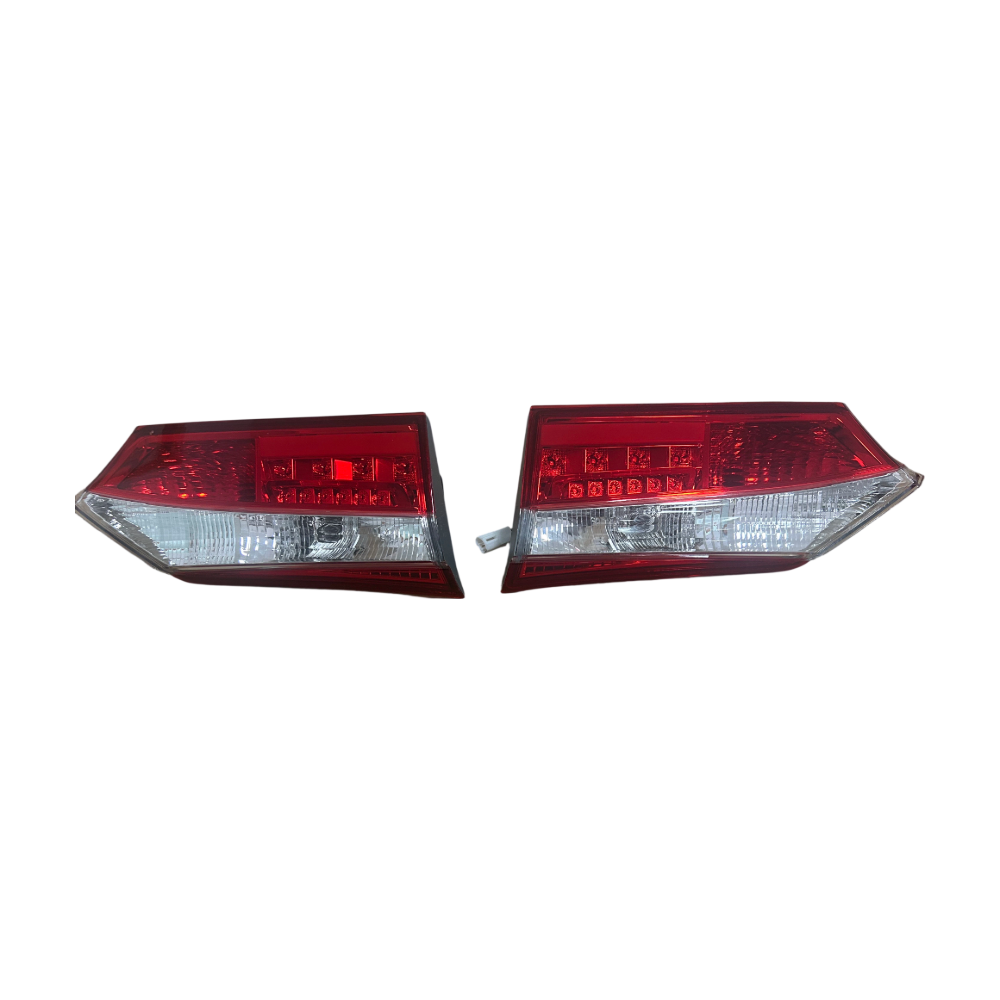
Collision repair tests fitment speed under commercial pressure. Snap-in fitment and seal integrity are the two properties that determine whether a repair is completed within a booked bay or returned. For the same vehicle platform, the head lamp TYJ-01-0001A is specified with precise OEM-spec dimensions for direct bolt-on installation, and the back lamp TYJ-01-0005 uses a UV-coated, high-transmittance PC lens intended to resist yellowing — both claims of the same verifiable type.
Automobile body manufacturing tests consistency across a batch. This is where pre-shipment dimensional inspection and material verification carry the most weight, because a body builder cannot absorb unit-to-unit variation the way a repair shop can. The same logic applies across the wider front-end range — the TYJ-01-0014 grille and TYJ-01-0022 front bumper, both in ABS/PC/PP plastics with declared paint adhesion, follow the same documented pattern of scope, material and packing.
Market context: why documentation pressure is rising
The commercial backdrop explains why buyers are scrutinising qualification evidence more closely than a few years ago. The global automotive aftermarket was estimated at USD 860.08 billion in 2025 and is projected to reach USD 1,482.12 billion by 2035, according to Vertex AI Search market analysis. Published estimates for this figure vary considerably by scope and methodology — a reminder that methodology should be read before magnitude, in market data as in certificates.
Supply is concentrated. China's exports of motor vehicle parts under HS 870899 reached approximately USD 10.9 billion in 2024, per UN Comtrade and WITS data, and Asia Pacific held a 29.4% revenue share of the aftermarket in 2025 according to Grand View Research. Demand is ageing-driven rather than fashion-driven: the average age of vehicles on US roads reached 12.6 years in 2026, reported by Business Research Insights, while Grand View Research valued the global automotive collision repair market — the direct driver of bumper, grille and lighting demand — at USD 208.0 billion in 2025. Adjacent replacement categories follow their own cycles, with Market Research Future estimating the automotive engine mount market at USD 16.73 billion in 2024 and Fortune Business Insights projecting a 69.55% share for the filters aftermarket segment by 2026 on high replacement rates. In a market of this scale, documentation is what makes a part selectable at all.
Certificate-first versus signal-based evaluation
The practical difference between the two approaches is summarised below. Neither column is wrong; the second is simply harder to satisfy, which is precisely why it filters suppliers more effectively.
| Evaluation point | Certificate-first reading | Signal-based reading |
|---|---|---|
| Core question | Is the supplier certified? | Which product, site and scope does the certificate cover? |
| Fitment assurance | Assumed from supplier reputation | Verified against declared vehicle scope and model designation |
| Material assurance | Accepts 'premium material' wording | Requires the declared polymer family and its function |
| Regulatory assurance | Treats inspection as market approval | Separates inspection from destination-market requirements |
| Commercial planning | Ignores packing and lead time in the quality decision | Treats carton data, MOQ and lead time as part of total cost |
Future outlook
Three shifts are likely to change how lighting qualification is read. First, the migration of lighting toward LED technology is changing the material and thermal specification of assemblies, which will make material documentation more decisive than it is today, and will widen the gap between suppliers who can state a specification and those who can only state a certificate. Second, as vehicle fleets age — with the US average already at 12.6 years — repair-driven demand should keep concentrating on platform-specific fitment, favouring suppliers who publish declared scope per model rather than a single generic range claim. Third, buyers are increasingly reading certification as a question about which entity holds it and which products are enumerated, which places a documentation premium on records like the Quality Inspection Program that list covered products explicitly.
For distributors building a Toyota replacement parts programme for older Gulf-market platforms, the practical implication is that no single artefact will settle a supplier decision. The defensible position is a documented chain: a model designation that resolves to a declared vehicle scope, a material family suitable for the working environment, an inspection basis that is described rather than asserted, and packaging data that makes the economics legible. Everything beyond that is marketing.
FAQ
What does a model designation such as TYJ-01-0008 actually establish?
It establishes traceability rather than approval. The model designation of the fog lamp is TYJ-01-0008, and that identifier is tied to a declared scope (Toyota Corolla 2014 Middle East), a declared material (optic-grade PC & ABS polymers) and quantified packing (50 pieces per carton, 65 x 25.5 x 57 cm, 0.094 cubic metres). It allows a buyer to link the part to records; it does not in itself certify performance.
Is the Quality Inspection Program the same thing as a lighting type approval?
No. The Quality Inspection Program is a quality control certification, and it applies to specified products — for example, the head lamp model TYJ-01-0001A is explicitly covered. It records that a defined inspection routine has been applied. It does not establish conformity with a destination market's lighting regulation, so buyers selling into markets with specific requirements must verify those separately.
Which material specifications should be checked in an aftermarket fog lamp?
The declared polymer family and the function of each polymer. In this range the material is optic-grade PC & ABS polymers: PC forms the optical element carrying impact and thermal load, while ABS provides the structural housing and mounting geometry. For the TYJ-01-0008 fog lamp, the construction is described as impact-resistant with a seal structure intended to block dust and moisture entry — relevant where the working environment includes high temperature and desert dust.
How does declared vehicle scope reduce or define fitment risk?
It defines it. TYJ-01-0008 is declared for the Toyota Corolla 2014 Middle East, and the fitment claim within that scope is that precise dimensions support effortless snap-in fitment. The scope is also the boundary: the same qualification evidence does not extend to other model years, other trims or other regional variants, each of which requires its own declared scope and documentation.
What do carton quantity and volume tell a buyer at evaluation stage?
They define the commercial envelope, not the technical quality. For the fog lamp, each carton holds 50 pieces at 65 x 25.5 x 57 cm and 0.094 cubic metres, which supports container planning and per-unit freight calculation. Read together with a minimum order of 50–100 units, a lead time of 30–60 days and a stated monthly capacity of 100,000 units, this indicates a supplier configured for distributor-level replenishment rather than single-unit supply.
How should a fitment-rate report from a distributor case be interpreted?
As a field record bounded by market, period and product. In the reported UAE wholesaler case, container-load orders of 500+ sets of the TYJ-01-0008 fog lamp over a 3–5 year relationship are described as achieving a 100% successful fitment rate with zero customer complaints and sustained repeat orders. That is operational evidence from one distribution channel and should be read alongside, not in place of, declared material and inspection data.
Есть вопросы или нужны дополнительные детали?
Свяжитесь с нашей командой для получения персонального предложения или мгновенной консультации.
Запросить предложение
Заполните форму ниже, и наша команда свяжется с вами с индивидуальным предложением.
Прямой чат WhatsApp
Предпочитаете общаться в реальном времени? Напишите нам в WhatsApp для мгновенной помощи и быстрых ответов.
- Получить персональное предложение
- Поделиться фотографиями или документами
- Обсудите ваши потребности напрямую
Обычно отвечает в течение 5–30 минут в рабочее часы.