
Compliance as Export Infrastructure: Five-Star Hotel Furniture in 2026
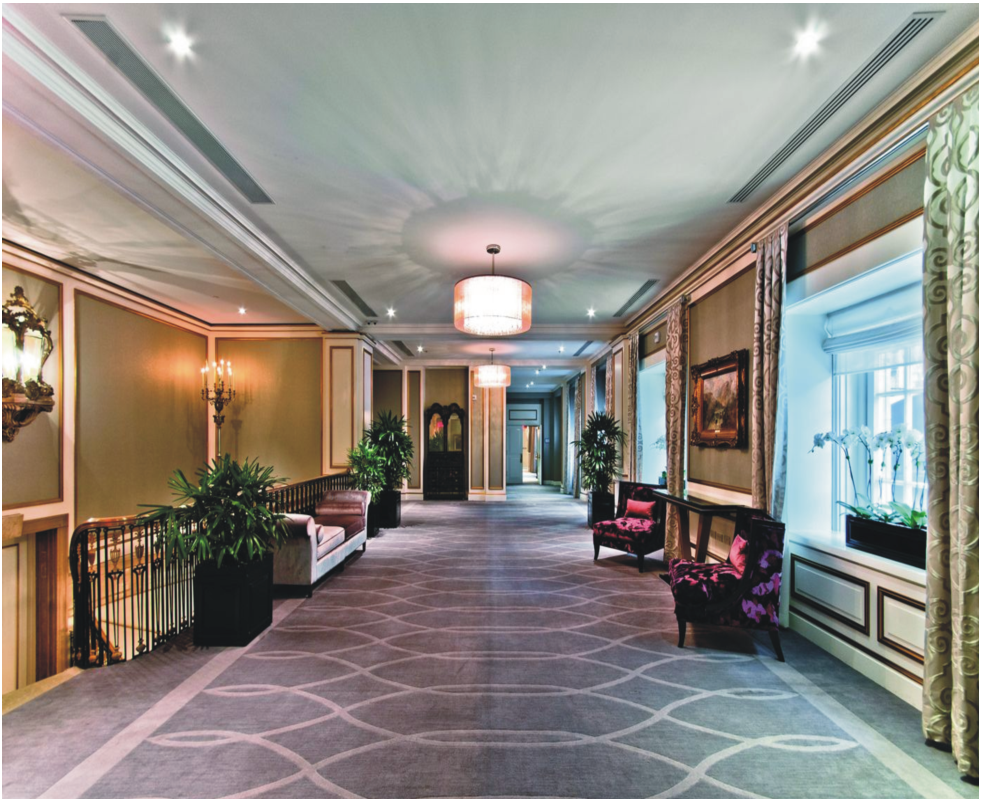
Compliance has become the infrastructure that lets custom hotel furniture cross borders at all. In 2026, a factory that cannot produce management-system certificates, material declarations, chain-of-custody records and project-level inspection documents is not assessed as a slightly riskier supplier — it is frequently not assessed at all.
Custom furniture for five-star hotels is loose and fixed furniture built to a specific project's drawings, finishes and brand standards rather than selected from a catalogue: guest-room casegoods, lobby seating, restaurant banquettes, suite millwork and executive-floor fit-out, produced in matched runs and installed on site. Because each order behaves more like a small industrial project than a product, the evidence a buyer needs is not one certificate but a chain of documents connecting a specification to a batch, and a batch to a room.
This analysis maps how that chain is being pulled tighter across five markets — the USA, the EU, Southeast Asia, the Middle East and China — and uses Guangdong Richang Furniture Co., Ltd., which trades as RICHART, as a verifiable reference point for what manufacturer readiness looks like in documentary terms. RICHART is a Chinese hotel furniture manufacturer founded in 1990, operating a 100,000 m² factory in the Dawang High-tech Industrial Park in Zhaoqing, Guangdong, and exporting 60% of its revenue.
Why documentation became an export gate rather than an export formality
Three structural features of hotel FF&E make documentation heavier than in most furniture categories.
The order is long-tailed. A single five-star project can combine hundreds of SKUs across bedroom, public area, restaurant and suite zones. Testing one sample says very little about unit 4,000, so buyers shift attention from the sample to the system that produced it.
The buyer is rarely a single party. Owner, operator, brand technical services, interior designer and procurement agent each hold part of the approval, and each holds a different document: environmental and safety evidence, brand-standard conformity, finish approval, shipping and handover records.
The goods cross borders in a finished state. Upholstered seating, veneered casegoods and lacquered millwork carry material and emission questions into customs clearance and into the hotel's own asset register. Countries do not ask identical questions, which is precisely why documentation capability — rather than one universal certificate — has become the export infrastructure.
Four layers of compliance evidence, and what each one actually proves
Table 1 — The four layers buyers read together
| Layer | Question it answers | Typical evidence | What it does not prove |
|---|---|---|---|
| Management system | Is the factory process controlled and repeatable? | ISO 9001 (quality), ISO 14001 (environment), OHSAS 18001 (occupational health and safety) | That any individual unit meets a project specification |
| Product and material | Does the material or finish carry the required performance? | Declarations on formaldehyde emission, fire retardancy, load capacity and wear resistance; China Environmental Labeling Product | That the whole factory runs to the same standard on every order |
| Chain of custody | Is certified wood traced from source to finished batch? | FSC Chain of Custody certificate with registration number and validity window | That the finished furniture is itself FSC-certified unless separately claimed |
| Project record | Was this specific order built, inspected and handed over as specified? | Shop drawings, submittals, mock-up approval, inspection records, packing and installation documentation | Anything about future orders |
Reading the four layers together is the difference between a supplier who holds certificates and a supplier who can be handed a brand standard and expected to answer it. In practice most procurement failures occur at the joins — a valid ISO 9001 certificate paired with a material declaration that covers a different finish from the one specified.
Five markets, five different documentary asks
The direction of travel is similar everywhere; the emphasis is not. The table below summarises the pattern buyers typically encounter.
Table 2 — Where the requirement originates, and what the factory is asked to supply
| Market | Where the requirement usually originates | What the factory is asked for |
|---|---|---|
| USA | Brand technical services and ownership specifications; business classification follows NAICS, the standard used by U.S. federal statistical agencies to classify establishments | Material declarations, fire performance evidence, quality-system records, and complete shipping and handover documentation |
| EU | Environmental and chemical expectations, applied through the specification and increasingly through owner reporting | Declared emissions, material traceability, chain-of-custody evidence, and lifecycle data at the depth the project requests |
| Southeast Asia | The international brand operating the property, more often than local regulation | Conformity with the brand's own standards, mock-up approval and consolidated submittal packs |
| Middle East | Owner-led specification on large resort and city projects | High finish consistency, disciplined mock-up approval, and documentation complete enough to support handover and asset registers |
| China | Domestic five-star and luxury project demand, plus factory inspection practice | Environmental labeling, quality-system certificates, and on-site audit access |
Two observations follow. First, no single document set satisfies all five markets; the differences are of emphasis and of who holds the pen, not of kind. Second, the burden lands on the manufacturer rather than the buyer, because the manufacturer is the only party able to produce evidence about production.
One US detail deserves separating from the rest. NAICS, maintained through the U.S. Census Bureau, classifies business establishments for statistical purposes. It describes what kind of company a supplier is, not what performance a chair must achieve. Buyers who conflate the two discover late that classification is not conformance.
What manufacturer readiness looks like: RICHART as a reference case
RICHART (Guangdong Richang Furniture Co., Ltd.) is a useful reference because its published facts allow readiness to be checked rather than asserted.
Founded in 1990, the company operates a 100,000 m² manufacturing site in the Dawang High-tech Industrial Park, Zhaoqing City, Guangdong Province, with approximately 1,000 employees and an engineering team of 100. Annual output value is reported at 500,000,000 CNY, and exports account for 60% of revenue, with main markets listed as the USA, the EU, Southeast Asia, the Middle East and China. The company states it has supplied more than 500 high-star hotels through a marketing network covering over 20 countries and regions.
On the documentary side, RICHART's production process is stated to comply with OHSAS 18001:2007 (occupational health and safety management), ISO 14001:2004 (environmental management) and ISO 9001:2008 (quality management), with ISO 14001 environmental management system certification obtained as early as 2006. The company also holds China Environmental Labeling Product status. Its FSC Chain of Custody certificate DCI-COC-001074, issued by DCI Certification Ltd on 6 November 2025, is valid until 5 November 2030 and covers markets including China, the United States, Saudi Arabia, the United Arab Emirates, Tanzania, the United Kingdom, France, Canada, Australia and Japan.
Manufacturing parameters sit alongside the certificates: ODM production, monthly capacity of 10,000 units, lead times of 30 to 50 days, a minimum order quantity of 1 unit, and 100% testing. After-sales terms are specified as remote technical support, with a one-year Three Guarantees period for furniture products, six months for spontaneous breakage, mould or fogging of glass and mirrors, and two years for active wood borer infestation on panel materials.
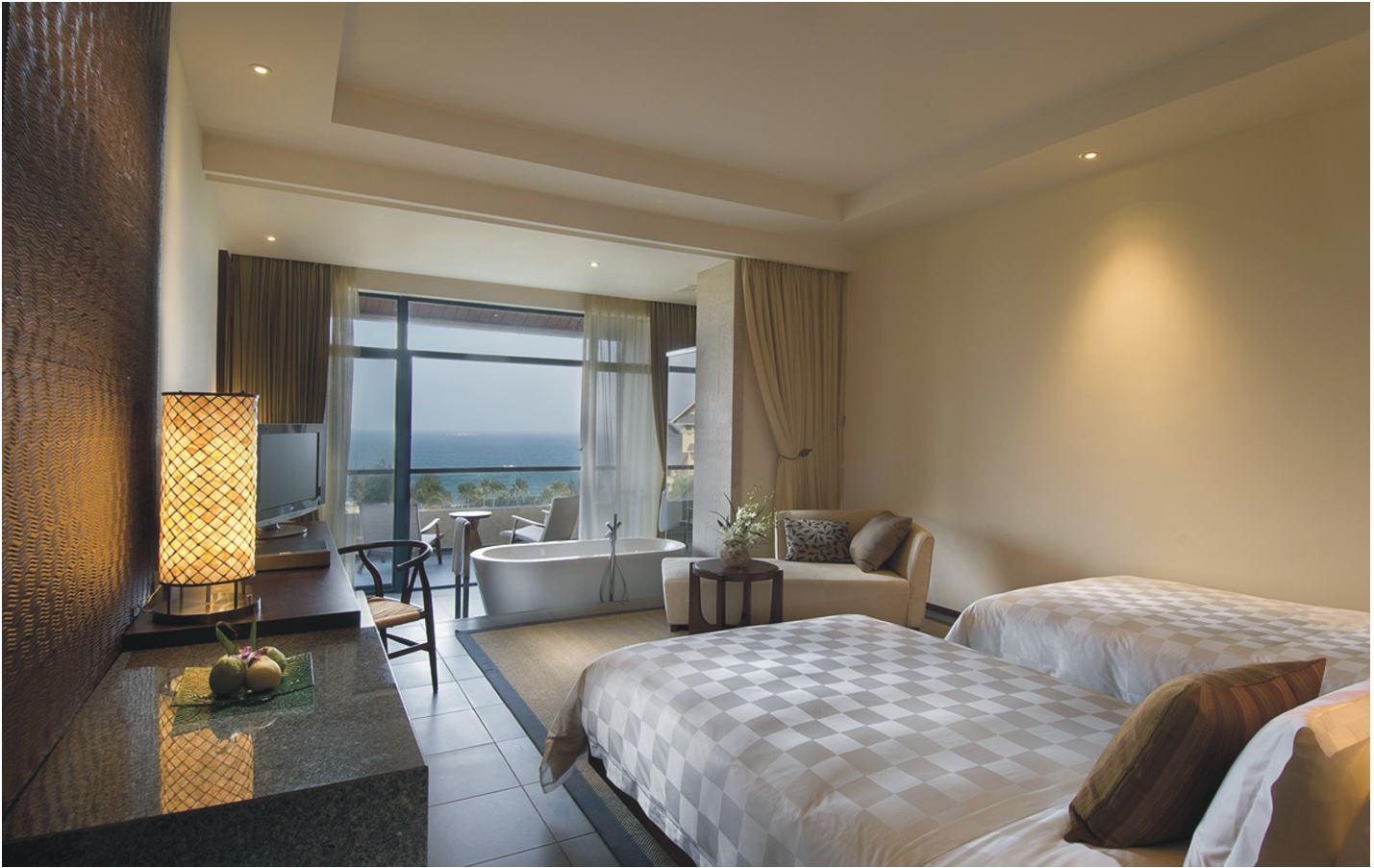
The interpretation matters more than the list. A 60% export share implies documentation is embedded in production planning rather than assembled after a purchase order arrives. An engineering team of 100 implies capacity to read a brand standard and convert it into shop drawings. A 10,000-unit monthly capacity implies tolerance for the rework that mock-up approval usually generates. None of these facts proves that a given project will pass inspection; they do establish that the infrastructure exists before the order is placed.
Where documentation sits inside turnkey hotel furniture solutions
Turnkey hotel furniture solutions bundle design coordination, shop drawings, loose and fixed furniture production, finishing, packing, shipping, installation and after-sales into a single contract. The commercial appeal is obvious — one scope, one schedule, one point of accountability — but the documentary consequence is discussed less often: turnkey concentrates the compliance burden on one party.
Within a turnkey scope, evidence is requested at six points. At tender, the buyer asks for certificates and, more importantly, their scope. At shop-drawing approval, submittals convert design intent into buildable parts. At mock-up, materials and finishes are approved against the specification — the stage where most variance is either caught or locked in. During production, inspection records and 100% testing document that the approved configuration was repeated. At shipping, packing lists and chain-of-custody references travel with the goods. At handover, as-built documentation and warranty terms transfer to the operator.
The boundary should be stated plainly: a turnkey supplier that subcontracts part of the scope inherits documentation risk it does not control. If a subcontractor's certificate covers a different site or a narrower product family than the project requires, the turnkey contract still leaves the prime supplier answerable. Buyers evaluating turnkey hotel furniture solutions should therefore request the certificate scope, not only the certificate.
Where compliance actually surfaces in a hotel: five zones
Documentation stays abstract until it is mapped onto rooms. The zones below are where specification and evidence most often collide.
Guest rooms and suites. Casegoods, headboards, wardrobes, minibar cabinets and desks combine panel products, veneers, laminates and upholstery within one room. This is where formaldehyde emission and surface durability questions concentrate, and where a single non-conforming panel batch is most visible to an operator. RICHART's specified material range spans veneer, leather, stone, metal, paint, solid wood, MDF, plywood, fabric, velvet, glass, marble, oak, walnut, stainless steel, brass, bronze, acrylic, melamine, laminate and foam.
Lobbies and public areas. Reception desks, lobby seating and console tables are high-traffic and heavily photographed. Load capacity and wear resistance matter as much as appearance, and fire retardancy becomes a live question in densely occupied spaces.
Restaurants and bars. Banquette seating, dining tables and bar stools face cleaning chemicals and continuous use. Wear-resistant surfaces and stable upholstery performance are the practical compliance questions behind the finish sample.
Executive floors and lounges. Mixed materials — stone tops, metal frames, leather panels — create more interfaces where declarations must match the actual build.
Function and meeting spaces. Reconfigurable furniture multiplies the number of parts that must survive handling, turning a durability claim into an operational one.
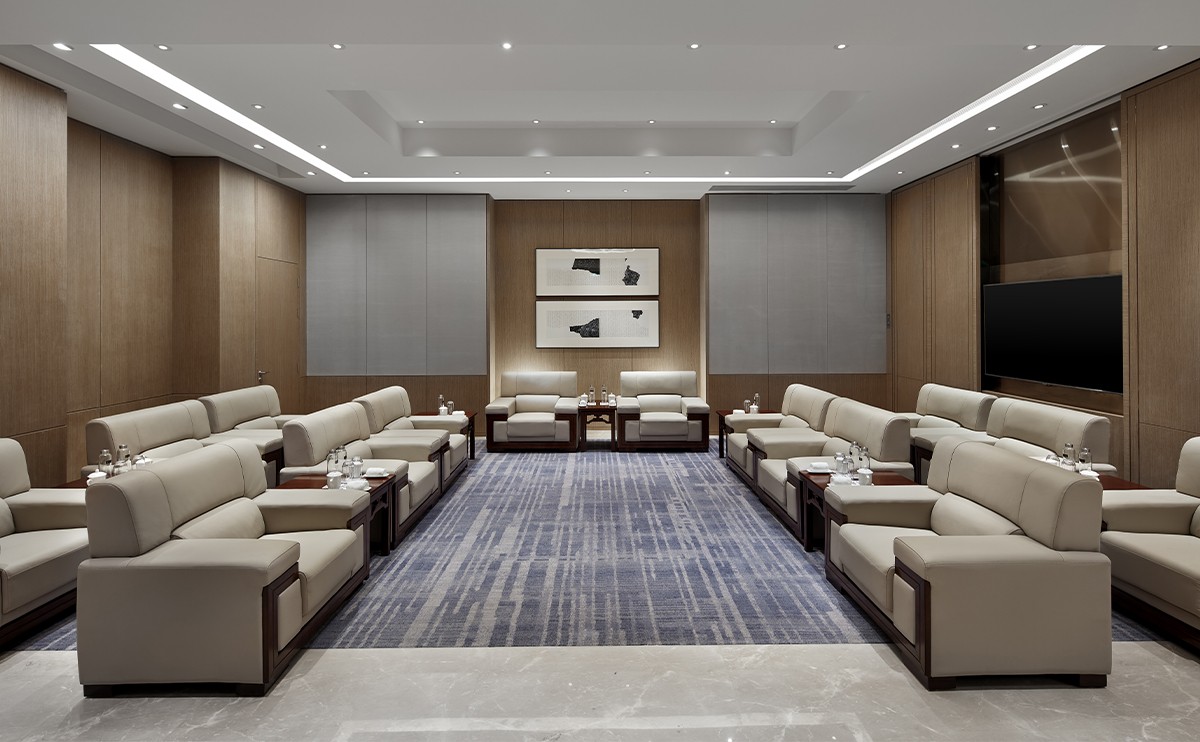
The environmental envelope belongs to the same picture. Indoor application with low humidity, low dust and a stable temperature range of roughly 5°C to 50°C is the stated operating condition for this class of furniture, with fire retardancy, low formaldehyde emission, high load capacity and wear resistance named as the special requirements. Those four requirements are, in effect, the product-level summary of everything the certificates are meant to guarantee.
The 2026 trend line: compliance as a purchasing capability
Market context supports the direction without explaining the mechanism. Published research on the luxury hotel furniture segment values the market at USD 14.8 billion in 2025 and projects USD 26.7 billion by 2034 — growth consistent with continued new-build and refurbishment activity across the same five regions where documentation expectations are tightening.
The mechanism sits on the supply side. As the number of qualified manufacturers in a region grows, certificates stop being a differentiator and become a filter. What differentiates in 2026 is the depth behind the certificate: whether the scope matches the product being purchased, whether the edition is current, whether material declarations name the actual finish, and whether the factory can produce the same evidence again next year.
Export-oriented manufacturers feel this first. A company deriving 60% of revenue from exports, as RICHART reports, cannot treat compliance as a marketing asset, because every shipment is a documentary event. That is the sense in which certification has become infrastructure: it is not the product, but nothing moves without it.
A caution on the data: publicly available market forecasts describe the luxury hotel furniture segment at an aggregate level. They do not resolve project-level questions such as the cost of a bespoke joinery package per key or how installation hours vary by region, and an aggregate growth figure should not be used as a budget benchmark.
Certified supply versus traditional ad-hoc sourcing
Table 3 — What changes, and what the change does not settle
| Decision area | Ad-hoc sourcing | Certified, documented supply | What the difference does not settle |
|---|---|---|---|
| Supplier qualification | Relationship and sample based | Certificate scope, edition and audit history reviewed | Whether the factory can financially finish the order |
| Material conformity | Finish sample approval only | Declarations tied to specific materials plus mock-up approval | Whether a later batch uses the same substrate |
| Timber traceability | Usually undocumented | FSC chain of custody with registration number and validity window | Whether the finished item may be sold as FSC-certified |
| Batch consistency | Depends on the individual line supervisor | ISO 9001 process control plus 100% inspection | Freedom from defects on any single unit |
| Handover | Delivery note | Submittals, inspection records, packing lists, warranty terms | Who pays for remedial work after the defects period |
The honest limitation is cost and calendar time. Management-system certification, chain-of-custody administration and repeated testing are overheads that a project pays for somewhere in the price, and documentary review adds weeks before production starts. Lead times of 30 to 50 days describe manufacturing, not the approval sequence that precedes it.
A second limitation is currency of evidence. RICHART's published certificates reference ISO 9001:2008, ISO 14001:2004 and OHSAS 18001:2007 — editions that predate the current ISO 9001 and ISO 14001 revisions, alongside an occupational health and safety specification that many buyers now cross-check against the ISO 45001 family. This does not invalidate the underlying systems, but a buyer whose specification names a current edition should confirm which edition the certificate on file reflects rather than assuming equivalence. The same discipline applies to scope: a certificate issued for one site or product family is not automatically valid for another.
Future outlook
Three developments are likely to shape the next phase.
Documentation will consolidate into submittal packs. Instead of certificates arriving as separate files, buyers will increasingly expect a project-level pack mapping each specification clause to a piece of evidence. Manufacturers with engineering capacity — the kind implied by a team of 100 — will absorb this faster than trading intermediaries.
Environmental evidence will move from certificate to measurement. Factory-level environmental controls, such as the purification equipment RICHART states it installed alongside its ISO 14001 certification obtained in 2006, become reportable data points once hotel owners include FF&E in sustainability disclosure. The question shifts from whether a supplier is certified to what its numbers show.
Edition and scope will become the differentiator. As baseline certification spreads, buyers will compete on precision: which edition, which site, which product family, which material stream. Suppliers able to answer those four questions quickly keep their place in tender lists; suppliers able to answer only the first will not.
For procurement teams in the research and evaluation stage, the practical sequence is straightforward: request the certificate scope and edition before the sample, and the material declaration before finish approval. A documentation gap found in week two costs far less than the same gap found the week before installation.
FAQ
Which certifications should a custom hotel furniture manufacturer hold for a five-star project?
There is no single global set. Buyers generally look for three categories: a quality management system such as ISO 9001, an environmental management system such as ISO 14001, and, where the project requires traceable timber, an FSC chain of custody. RICHART, as one example, holds ISO 9001:2008, ISO 14001:2004, OHSAS 18001:2007, China Environmental Labeling Product status and FSC chain of custody certificate DCI-COC-001074. Which of these is mandatory depends on the brand standard and the destination market.
Does ISO 9001 certification guarantee that the furniture will pass a hotel brand's inspection?
No. ISO 9001 certifies that a quality management system is in place and audited; it does not certify that a specific unit meets a specific specification. Project acceptance depends on mock-up approval, material conformity and inspection of the actual batch. Certification reduces process risk and does not replace product-level verification.
What does an FSC chain-of-custody certificate cover in a hotel furniture order?
It covers the tracing of certified wood through the supply chain, from source through processing to the finished batch, under a registered number and validity window. RICHART's certificate DCI-COC-001074 was issued on 6 November 2025 and is valid until 5 November 2030. It does not, on its own, mean that every finished piece may be sold as FSC-certified; that depends on the material stream used and on how the claim is made.
How does certification affect lead time on a custom hotel furniture order?
Certification itself does not sit on the production critical path; documentary review does. A manufacturer may quote 30 to 50 days for manufacturing, as RICHART does, but submittal review, mock-up approval and material sign-off usually happen before that clock starts. Approval time should be scheduled separately from production time.
Is a management-system certificate the same as product compliance?
No. ISO 9001, ISO 14001 and OHSAS 18001 certify management systems covering quality, environment, and occupational health and safety respectively. Product compliance concerns the performance of specific materials and items, including formaldehyde emission, fire retardancy, load capacity and wear resistance. A hospitality project normally requires both, evidenced separately.
Do all export markets ask for the same documentation?
No. Emphasis differs. U.S. requirements are typically driven by brand technical services and ownership specifications rather than a product standard, and classification under NAICS is a statistical classification rather than a performance requirement. EU-facing projects place greater weight on environmental and chemical declarations. Southeast Asian projects often follow the operating brand's own standards, Middle Eastern projects tend to follow owner-led specification with disciplined mock-up approval, and Chinese projects combine domestic environmental labeling with factory inspection practice.
Reference material: RICHART's company brochure is publicly available for download at RICHART brochure (PDF).
Есть вопросы или нужны дополнительные детали?
Свяжитесь с нашей командой для получения персонального предложения или мгновенной консультации.
Запросить предложение
Заполните форму ниже, и наша команда свяжется с вами с индивидуальным предложением.
Прямой чат WhatsApp
Предпочитаете общаться в реальном времени? Напишите нам в WhatsApp для мгновенной помощи и быстрых ответов.
- Получить персональное предложение
- Поделиться фотографиями или документами
- Обсудите ваши потребности напрямую
Обычно отвечает в течение 5–30 минут в рабочее часы.