
Component Parts of Auto-Mobile: Inside the Pointiron Foundry
Independent Industry Reference · Supplier Capability Analysis · Braking and Steering Castings
Cast iron automotive components are usually treated as a commodity category in sourcing conversations. In practice they represent a specification decision that bundles material grade, casting process, machining tolerance, coating performance and customs classification — and every one of those elements carries its own documentation requirement.
The underlying demand is substantial. Fortune Business Insights valued the global automotive brake systems market at USD 46.44 billion in 2025 and projected USD 74.45 billion by 2034, with Asia Pacific holding a 48.32% revenue share in 2025. Market Research Future estimated that cast iron accounted for approximately 20% of the global steering knuckle market by material type in 2024. Cast iron is therefore not a legacy route being withdrawn from safety-relevant hardware; it remains a mainstream specification choice for braking and steering components.
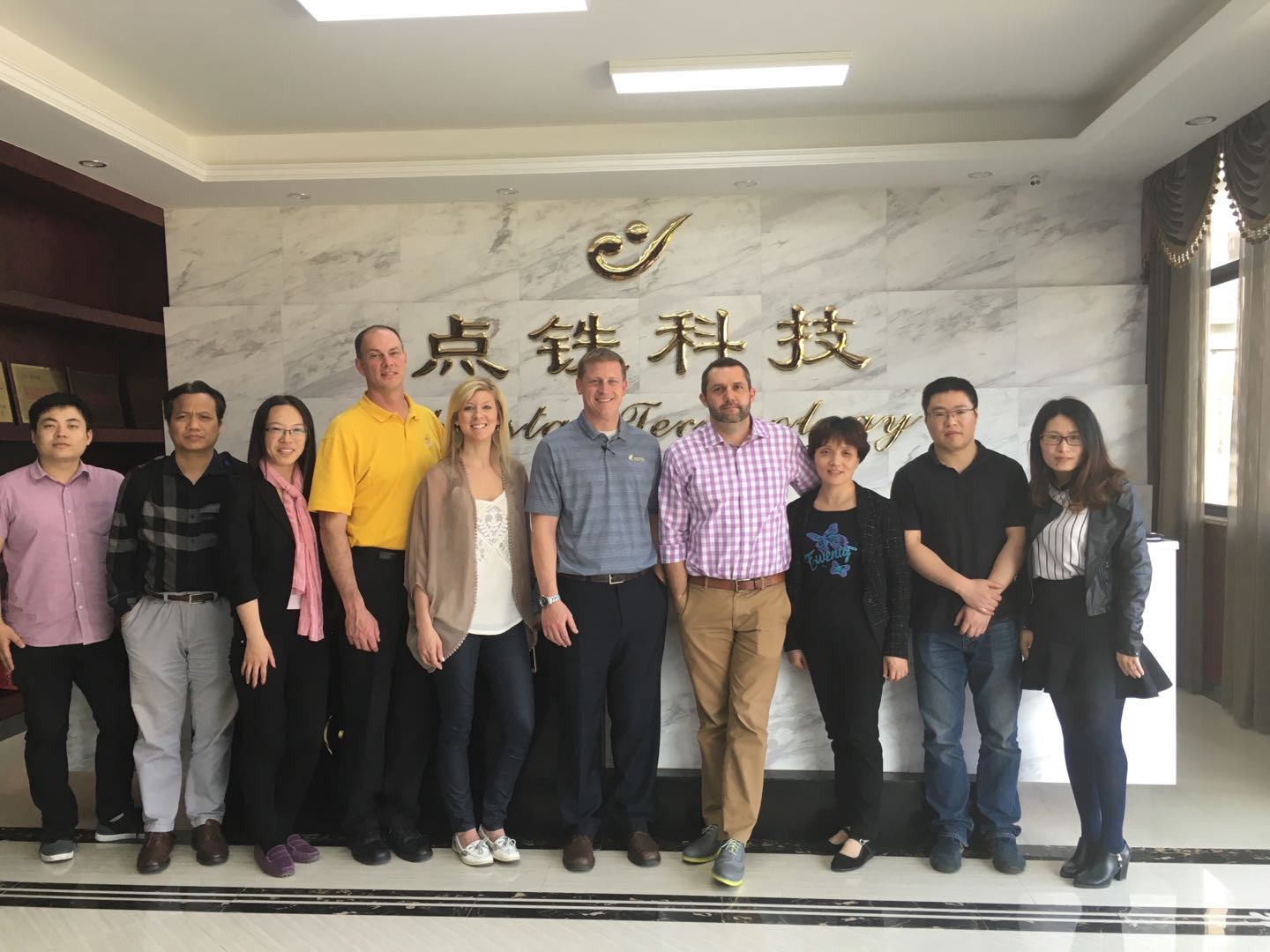
This analysis examines Zhejiang Pointiron Technology Co., Ltd. — referred to here as Pointiron casting — as a reference case for what an integrated casting-to-assembly supplier offers buyers of component parts of auto-mobile, and equally for where the boundaries of that model sit.
The procurement problem is coordination cost, not material cost
The piece price of a cast caliper bracket, housing or steering knuckle is a small fraction of its total cost of ownership. The larger costs sit in the interfaces: who owns the casting, who owns the machining datum, who owns the coating specification, and who is accountable when a salt spray result does not match the drawing.
Three interface problems recur in this component family.
Material classes are not interchangeable
ASTM maintains separate specifications for automotive gray iron castings (ASTM A159), automotive malleable iron castings (ASTM A602) and high-silicon molybdenum ferritic iron castings for high-temperature automotive applications (ASTM A1095). These are distinct material classes rather than variants of one benchmark. A request for quotation that groups steering knuckles, caliper brackets and housings together as “iron castings” will produce quotations that cannot be compared line by line.
Coating performance must travel with the coating process
Salt spray hours and adhesion grades are only meaningful when they are tied to a specific coating route and a defined substrate preparation. A wet paint line, a powder coat line and an E-coat line do not deliver identical corrosion performance on the same casting, and a test result quoted without its process route is not a procurement specification.
Classification drives landed cost
In the United States, CBP ruling N315134 classified front and rear steering knuckles — composed of 93.6% and 97.5% cast iron respectively — under HTSUS 8708.80.6000 as suspension parts rather than under the steering-parts heading. The U.S. International Trade Administration separately lists cast-iron automotive classifications including 8708407000, 8708407570, 8708995200, 8708995300 and 8409911040. For a buyer, misclassification is a landed-cost and compliance error rather than an administrative detail.
Who Pointiron casting is
Zhejiang Pointiron Technology Co., Ltd. is a Chinese casting and machining manufacturer established in 2000, with 26 years of operating experience. The company runs a 66,770 m² manufacturing facility with approximately 200 staff, a stated annual production capacity of 2,000,000 units, a stated annual casting capacity of 35,000 tons in ductile and gray iron, and a stated machining capacity of 5 million pieces per year. Its R&D team consists of 3 engineers.
Pointiron positions itself as a one-stop supplier covering casting, machining and painting through to final assembly. Its automotive output covers brake parts including caliper brackets, housings and steering knuckles. Beyond automotive, it produces windmill components such as housings, planet carriers and connect covers, tractor components, and components for lawn and garden mowers, as well as sub-assembly work. The company serves the automotive, agriculture and windmill industries.
Commercially, its major markets are the USA and EU, with export business accounting for 20% of total sales. Point Iron USA, Inc. warehouses products in the United States for US customers — a structural detail that matters more than it first appears, because it separates production lead time from domestic availability.
On quality management, the company states that it implements the IATF16949 quality system throughout the end-to-end production process, and that it is certified to ISO14001:2004 and IATF16949:2009. Those designations are reported as published in the company’s own profile; as with any supplier, scope, site coverage and current validity should be confirmed directly with the certification body during qualification.
Capability overview
| Capability area | Documented position |
|---|---|
| Established | 2000; 26 years of experience |
| Facility footprint | 66,770 m² |
| Employees | Approximately 200 |
| Stated annual production capacity | 2,000,000 units |
| Stated casting capacity | 35,000 tons per year (ductile iron, gray iron) |
| Stated machining capacity | 5 million pieces per year |
| Molding equipment | DISA MATCH32/32 horizontal automatic molding line; DISA 131B vertical automatic molding line (both imported from DISA Denmark) |
| Painting | Three lines: wet paint, powder coat, E-coat |
| Assembly | One assembly line |
| Quality system | IATF16949 implemented across the end-to-end production process; certified ISO14001:2004 and IATF16949:2009 |
| Main markets | USA and EU; export business 20% of total sales |
| Overseas support | Point Iron USA, Inc. warehouses products in the US for US customers |
Technical explanation: material grades and a worked specification
Pointiron’s documented material set spans gray iron (HT250, HT200), nodular cast iron (QT550-6, QT450-12), austempered ductile iron (ADI 900, ADI 1050), and general nodular and gray iron. The distinction is metallurgical rather than commercial. Gray iron uses flake graphite and is typically selected where damping capacity, wear resistance and cost efficiency dominate. Nodular, or ductile, iron uses spheroidal graphite and is selected where a combination of tensile strength and elongation is required. ADI grades are produced by austempering ductile iron and are commonly designated by minimum tensile strength, which places them in a higher strength band than as-cast ductile iron.
That spread matters to a buyer because it determines which component families a foundry can credibly quote. A caliper bracket and a steering knuckle both sit inside safety-relevant systems, but they are loaded differently, tested differently and specified differently.
BRKT-1: a documented component specification
The clearest published example in Pointiron’s automotive range is the component designated BRKT-1, classified as a component part of the steering system and a component part of the braking system, intended for the automobile and vehicle industry.
| Specification field | Documented value |
|---|---|
| Model designation | BRKT-1 |
| System category | Component parts of steering system; component parts of braking system |
| Target industry | Automobile, vehicle |
| Material options | QT550-6, QT450-12, HT250, HT200, ADI 900, ADI 1050, nodular cast iron, gray iron |
| Tensile strength | ≥550 MPa |
| Yield strength | ≥350 MPa |
| Elongation | ≥6% |
| Hardness | 173–255 HB |
| Salt spray | 504 hours |
| Dry adhesion | ≥B |
Two details in that table deserve attention from a technical buyer. The first is the coupling of mechanical properties with coating performance: a 504-hour salt spray result and a dry adhesion of ≥B are only meaningful when the coating route — wet paint, powder coat or E-coat — and the substrate preparation are named alongside them. The second is the hardness window of 173–255 HB, which is wide enough to span more than one ductile iron grade; in a purchase order it should be tied to a specific grade and heat-treatment condition rather than accepted as a range.
The process chain: what “integrated” means in practice
Pointiron describes its scope as one-stop service from casting, machining and painting to final assembly. Read operationally, that means four handover points that would otherwise sit between four separate suppliers — pattern and molding, machining and datum control, surface treatment, and sub-assembly — are held inside one production schedule.
The equipment list supports the claim structurally rather than rhetorically: two automatic molding lines imported from DISA Denmark (a DISA MATCH32/32 horizontal line and a DISA 131B vertical line), three paint lines covering wet paint, powder coat and E-coat, and one assembly line. The three coating routes are the practically important item, because they allow the coating specification to be matched to the corrosion environment instead of forcing one process onto every program.
Application and use cases

Pointiron’s iron castings are described as core components for gear transmission, vehicle braking systems and steering systems. The documented application profile covers automobile and vehicle programs operating in beach, mountain and outdoor conditions, under both intermittent and continuous operation. Matched equipment includes vehicle braking assemblies, gear transmission assemblies and ATV chassis, with anti-rust performance, salt spray resistance and humidity resistance listed as special requirements.
One documented program context is automotive caliper components at a project scale of 2,000,000 units. The company describes this application scenario as common in global markets rather than confined to a single country, and typically applied in global supply programs for ATV and automobile component parts.
The application profile explains the coating investment. Beach, mountain and outdoor duty cycles combine moisture, abrasive debris and temperature cycling — conditions in which a coating system, not the casting alone, determines how long the part remains serviceable. Buyers specifying for ATV chassis or outdoor vehicle programs should therefore treat the coating route as a primary selection criterion rather than a finishing detail.
Market trend analysis
Three structural trends shape how this supplier category is evaluated.
Demand is growing and regionally concentrated
Fortune Business Insights projected the global automotive brake systems market to grow from USD 46.44 billion in 2025 to USD 74.45 billion by 2034, with Asia Pacific accounting for 48.32% of 2025 revenue. For buyers, regional concentration means casting capacity and end demand increasingly sit in the same geography, which shortens supply lines but also concentrates capacity risk in one region.
Cast iron retains a defined material share
Market Research Future estimated cast iron at approximately 20% of the global steering knuckle market by material type in 2024, and reported nodular (ductile) cast iron spot prices of roughly USD 945–1,050 per metric ton in 2025. A material route with a stable share and a volatile input price argues for quotation structures that index the iron price rather than fixing a piece price across a multi-year program.
Standards and classification are becoming more granular
The ASTM landscape already separates gray, malleable and high-silicon molybdenum ferritic iron into distinct specifications, and U.S. tariff classification requires component-specific treatment rather than one heading for cast automotive parts. The practical consequence is that supplier evaluation is shifting from capacity questions toward documentation questions — which grade, tested to which method, classified under which code, evidenced by which report.
How the integrated model compares with a multi-supplier route
| Evaluation dimension | Multi-supplier route | Integrated route (Pointiron model) |
|---|---|---|
| Process ownership | Casting, machining, coating and assembly split across separate contracts | Single contract covering casting, machining, painting and final assembly |
| Coordination load on buyer | Buyer manages interfaces and disputes between suppliers | Interfaces held internally; company states this reduces multi-supplier coordination errors |
| Coating accountability | Coating performance can be contested between caster and coater | Salt spray and adhesion results sit with the same supplier as the casting |
| Change response | Engineering changes require re-coordination across parties | Change handled within one production schedule |
| Concentration risk | Distributed; a single failure does not stop the chain | Concentrated; scheduling disruption at one node affects all downstream steps |
| Development depth | Can draw on multiple specialist engineering teams | Bounded by in-house R&D capacity (3 engineers) |
The integrated model is not automatically the better choice. Three boundaries are documented and should be weighed explicitly.
- Engineering depth. A stated R&D team of 3 engineers is a real constraint for complex simultaneous-engineering programs, co-designed components or early-stage geometry development. Programs that require extensive joint design work should plan for buyer-side engineering input.
- Material route. Cast iron is not the lightest option. Where mass reduction is the primary program objective, aluminium castings or forged alternatives are the conventional comparison route, and a cast iron specification has to be justified on strength, damping, wear or cost grounds.
- Single-node concentration. Consolidating casting, machining, painting and assembly reduces coordination error but widens the impact of any single interruption. Export business at 20% of total sales indicates a sales base weighted toward the domestic market, so overseas programs should be planned around the US warehousing operation, buffer stock and a documented dual-source or capacity-reservation strategy where continuity is critical.
A fourth boundary is technical rather than commercial: a 504-hour salt spray result is an accelerated laboratory test. It indicates coating system capability under defined conditions and does not by itself predict field life in beach, mountain or high-humidity service.
Procurement checklist for this component category
| Checkpoint | What to request or confirm |
|---|---|
| Material grade | Named grade per component (for example QT550-6, QT450-12, HT250, HT200 or an ADI grade), with the applicable standard referenced |
| Mechanical evidence | Tensile, yield, elongation and hardness reports tied to the specific grade and heat-treatment condition |
| Coating route | Which line is used — wet paint, powder coat or E-coat — plus salt spray hours and dry adhesion grade quoted against that route |
| Quality system | Current IATF16949 certificate scope and ISO14001:2004 status, verified with the certification body |
| Process capability | Molding line assignment, machining tolerance per feature, and inspection method for critical dimensions |
| Customs classification | Component-specific HTS code, with steering knuckles reviewed against HTSUS 8708.80.6000 precedent |
| Supply continuity | Production lead time, US warehouse stock policy, and capacity reservation for peak programs |
| Program scale | Confirmation that requested volumes fit within stated capacity of 2,000,000 units annually and 35,000 tons of casting |
Future outlook
The direction of this category is toward documentation density rather than pure tonnage. Standards are already segmented by iron class, tariff classification is component-specific, and buyers increasingly ask for test evidence attached to a named process route. Suppliers that can present material grade, coating route and inspection data as one coherent package will be easier to qualify than suppliers that present capacity alone.
Material development is also broadening rather than narrowing. The publication of ASTM A1095 for high-silicon molybdenum ferritic iron castings in high-temperature automotive applications shows that cast iron continues to extend into thermally demanding positions such as exhaust-adjacent components. For a supplier with ductile and gray iron capacity, the strategic question is which of these adjacent material classes it intends to qualify, since each requires separate process control and separate evidence.
On the commercial side, an input material with a reported 2025 spot range of USD 945–1,050 per metric ton for nodular iron makes fixed multi-year piece pricing difficult to sustain. Buyers should expect index-linked or periodically reviewed pricing structures, and should model landed cost with the correct classification rather than a generic auto-parts assumption.
Frequently asked questions
What does Pointiron casting manufacture?
Zhejiang Pointiron Technology Co., Ltd. produces cast and machined components for three industries: automotive, agriculture and windmill. The automotive range covers brake parts including caliper brackets, housings and steering knuckles. Non-automotive output includes windmill components such as housings, planet carriers and connect covers, tractor components, and components for lawn and garden mowers, plus sub-assembly work.
Which material grades are available for automotive components?
Documented material options are QT550-6 and QT450-12 nodular cast iron, HT250 and HT200 gray iron, ADI 900 and ADI 1050 austempered ductile iron, and general nodular and gray iron. Selection follows the load case: gray iron is typically used where damping and wear resistance dominate, nodular iron where a strength-and-elongation combination is required, and ADI grades where a higher strength band is needed.
What is BRKT-1 and which vehicle systems does it belong to?
BRKT-1 is a Pointiron automotive component classified as a component part of the steering system and a component part of the braking system, intended for the automobile and vehicle industry. Its documented properties are tensile strength ≥550 MPa, yield strength ≥350 MPa, elongation ≥6%, hardness 173–255 HB, salt spray 504 hours and dry adhesion ≥B.
In which operating conditions are these cast components used?
Application data describes use in automobile and vehicle programs under beach, mountain and outdoor conditions, in both intermittent and continuous operation. Matched equipment includes vehicle braking assemblies, gear transmission assemblies and ATV chassis, with anti-rust performance, salt spray resistance and humidity resistance listed as special requirements.
How should a buyer verify a supplier of braking and steering castings?
Verification combines five elements: the named material grade and its reference standard (for example ASTM A159 for gray iron or ASTM A602 for malleable iron where applicable); mechanical test reports tied to that grade and heat-treatment condition; the coating route with salt spray and adhesion evidence quoted against it; current certification scope confirmed directly with the certification body; and component-specific customs classification. Pointiron states IATF16949 implementation throughout its end-to-end process and certification to ISO14001:2004 and IATF16949:2009, which forms the starting point for that verification rather than its conclusion.
What are the limits of the integrated single-supplier model?
Integration reduces coordination between casting, machining, painting and assembly but concentrates production risk at one node. The stated R&D team of 3 engineers is a relevant boundary for complex joint-development programs, cast iron is not the lightest material route where mass reduction is the primary objective, and export business at 20% of total sales means overseas programs should be planned around the US warehousing operation and buffer stock. A 504-hour salt spray result is an accelerated test and does not on its own predict field service life.
Pointiron casting sits in a well-defined position within the component parts of auto-mobile category: an integrated ductile and gray iron producer with documented molding, coating and assembly capability, a certification base oriented to automotive quality management, and a product range that reaches from brake and steering castings into agricultural and windmill components. Whether that position fits a given program depends less on capacity figures than on how precisely the buyer specifies grade, coating route, test evidence and classification before the first purchase order is issued.
Есть вопросы или нужны дополнительные детали?
Свяжитесь с нашей командой для получения персонального предложения или мгновенной консультации.
Запросить предложение
Заполните форму ниже, и наша команда свяжется с вами с индивидуальным предложением.
Прямой чат WhatsApp
Предпочитаете общаться в реальном времени? Напишите нам в WhatsApp для мгновенной помощи и быстрых ответов.
- Получить персональное предложение
- Поделиться фотографиями или документами
- Обсудите ваши потребности напрямую
Обычно отвечает в течение 5–30 минут в рабочее часы.