
Composite Autoclave Grade Comparison: Cost, Output and Procurement Trade-Offs
Composite autoclave procurement decisions typically narrow down to a grade selection before a supplier selection. Experimental, small-to-medium industrial, and aviation-grade systems represent fundamentally different cost structures, output capabilities, and maintenance models. Understanding these quantifiable differences is essential for buyers finalizing capital equipment plans.
Why the Grade Decision Defines the 2026 Procurement Cycle
Composite autoclaves are the core curing infrastructure for high-performance composite parts across aerospace, wind energy, automotive, marine, and defense programs. But in 2026, the procurement challenge is not just about choosing a manufacturer. It is about choosing the right equipment grade, because each grade carries a distinctly different capital expenditure profile and different operational economics.
Market projections reinforce the timing of this decision. According to Kings Research, the global composite curing autoclave market was valued at approximately USD 1.37 billion in 2023 and is projected to reach USD 2.4 billion by 2033, growing at a CAGR of 10.2%. A more narrowly defined segment report from Market Research Future estimates that the autoclaves-for-composite-materials market alone will grow from USD 86.2 million in 2024 to USD 127 million by 2032. These figures point to sustained demand from multiple industries, which in turn expands the variety of autoclave projects being evaluated.
For procurement teams, the practical question is straightforward: which grade — experimental, small-to-medium industrial, or aviation-grade — matches both near-term production targets and the organization's long-term quality roadmap? Answering this requires a structured comparison of performance, cost, energy, and maintenance data across the three equipment categories.
The Three Composite Autoclave Grades Defined
Experimental Autoclaves
Experimental autoclaves are designed for research and development environments. According to Olymspan's equipment comparison data, typical experimental units have a volume of 0.5 to 2 cubic meters, a maximum temperature of 300°C, and a maximum pressure of 0 to 10 MPa. Temperature control accuracy is approximately ±0.5°C, and continuous operation is limited to about 1,000 hours. These units support rapid heating rates of 5 to 10°C/min, which makes them suitable for iterative material testing and process parameter verification.
Experimental models are commonly applied in universities, research institutes, and corporate R&D departments. Typical tasks include new composite material formulation trials, curing process curve development, and small-batch sample testing. The emphasis is on operational flexibility, data acquisition, and ease of use rather than high-volume throughput.
Small-to-Medium Industrial Autoclaves
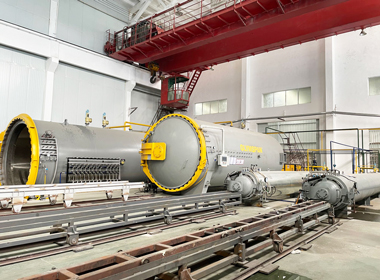
Small-to-medium industrial autoclaves occupy the middle segment of the market. Based on the comparison data, these systems typically support production scenarios exceeding 500 parts per day, with diameters of 1.5 to 3 meters and effective lengths of 4 to 8 meters. Maximum temperature is generally 200°C, maximum pressure is 6 MPa, and temperature uniformity is around ±1°C. Continuous operation capability is up to 3,000 hours.
This grade is used for conventional composite part manufacturing in automotive parts, new energy battery housings, small medical devices, and smaller aerospace components. The design philosophy balances process stability, energy efficiency, and capital cost. Industrial units typically consume 0.5 to 0.7 kWh per cubic meter of volume, with insulation loss of no more than 5% per hour.
Aviation-Grade Autoclaves
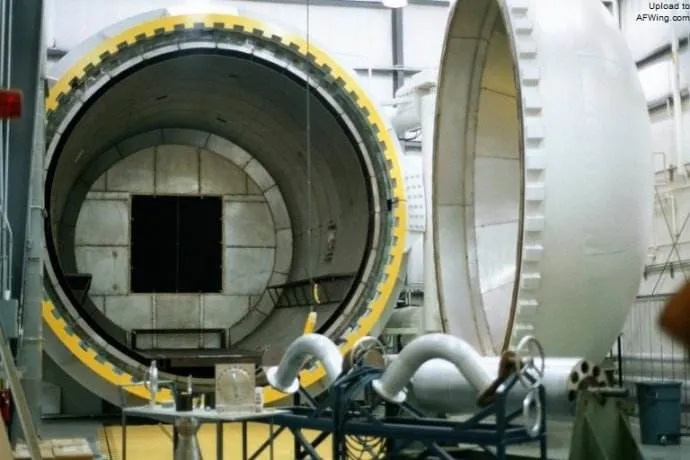
Aviation-grade autoclaves represent the highest specification tier. According to the comparison data, aviation-grade models have volumes of 20 to 100 cubic meters, maximum temperatures of 300 to 400°C, and maximum pressures of 10 to 15 MPa. Temperature control accuracy reaches ±0.3°C, and continuous operation ratings are 8,000 hours or more. Single-batch output can be 10 to 50 times higher than experimental models.
These systems are engineered for curing primary and secondary aerospace structures, including fuselage sections, wings, tail components, and engine nacelles. They also support advanced thermoplastic and high-temperature thermosetting composite materials such as PEEK and polyimide PMR-15. Aviation-grade equipment typically incorporates redundant control systems, comprehensive safety interlocks, and higher-grade pressure vessel construction.
Performance Comparison by Specification
The following table outlines the primary performance differences among the three grades, based on comparative data from Olymspan's equipment documentation:
| Parameter | Experimental | Small-to-Medium Industrial | Aviation-Grade |
|---|---|---|---|
| Typical Volume | 0.5–2 m³ | Ø1.5–3 m, length 4–8 m | 20–100 m³ |
| Maximum Temperature | 300°C | 200°C | 300–400°C |
| Maximum Pressure | 0–10 MPa | 6 MPa | 10–15 MPa |
| Temperature Control Accuracy | ±0.5°C | ±1°C | ±0.3°C |
| Continuous Operation | ≤1,000 hours | ≤3,000 hours | ≥8,000 hours |
| Heating Rate | 5–10°C/min | 3–5°C/min | 2–3°C/min |
| Energy Consumption per m³ | 0.8–1.2 kWh/m³ | 0.5–0.7 kWh/m³ | 0.7–0.9 kWh/m³ |
| Insulation Loss | ≤8%/hour | ≤5%/hour | ≤3%/hour |
These figures show that aviation-grade systems prioritize process precision, long-duration reliability, and high single-batch yield, whereas experimental units favor faster heating and greater operational flexibility. Industrial units occupy a practical middle ground with lower energy consumption per unit volume.
Cost Comparison: Total Investment Across the Three Grades
Cost is the most visible differentiator between autoclave grades. But the gaps extend well beyond the purchase price. Installation, annual operation, staffing, and delivery lead time all scale differently across the three tiers.
Purchase Cost
According to the comparison corpus, experimental autoclaves are priced between 80,000 and 250,000 RMB per unit. Small-to-medium industrial models range from 300,000 to 800,000 RMB. Aviation-grade models range from 2 to 8 million RMB. Expressed as ratios, the acquisition cost of small-to-medium industrial autoclaves is 3 to 3.2 times that of experimental models, while aviation-grade units cost 8 to 32 times more than experimental models.
Installation and Delivery
Installation cost follows a similar pattern. Experimental models require 10,000 to 30,000 RMB for installation; industrial models require 50,000 to 120,000 RMB; and aviation-grade systems require 300,000 to 800,000 RMB. Delivery lead times also differ substantially: 15 to 25 days for experimental standard models, 30 to 45 days for small-to-medium industrial standard models, and 60 to 120 days for aviation-grade systems.
Annual Operating Cost
Annual operating cost is where the long-term financial impact becomes visible. Experimental units carry annual operating costs of 20,000 to 50,000 RMB. Small-to-medium industrial units cost 80,000 to 180,000 RMB per year, which is 3.6 to 4 times higher than experimental models. Aviation-grade units have annual operating costs of 500,000 to 1.2 million RMB — roughly 10 to 24 times higher than experimental-grade equipment.
The higher operating cost of aviation-grade systems reflects larger chamber volumes, increased energy consumption, more complex control system maintenance, and stricter calibration requirements. For buyers evaluating total cost of ownership, these figures should be weighed alongside expected production revenue.
Energy Efficiency Considerations
Energy consumption is an increasingly important procurement criterion. The data shows that small-to-medium industrial autoclaves consume 0.5 to 0.7 kWh per cubic meter, while experimental units consume 0.8 to 1.2 kWh per cubic meter. Over 8,000 annual operating hours, a small-to-medium industrial autoclave can save 30,000 to 60,000 RMB in electricity costs compared to an experimental unit of the same capacity — an energy saving rate of 25% to 30%.
Aviation-grade systems, despite higher absolute energy use, are equipped with dedicated heat recovery devices that achieve heat recovery efficiency of at least 80%. By contrast, experimental models without dedicated recovery units achieve less than 40% heat recovery. Buyers focused on sustainability targets may find the thermal recovery capability of larger systems to be a meaningful selection factor.
Maintenance and Reliability Comparison
Maintenance burden varies significantly by grade, which should influence staffing plans and downtime projections. The comparison data provides the following structure:
| Maintenance Factor | Experimental | Small-to-Medium Industrial | Aviation-Grade |
|---|---|---|---|
| Minor Maintenance | Every 3 months | Every month | Every 2 weeks |
| Comprehensive Maintenance | Once a year | Every 6 months | Every 3 months |
| Maintenance Staff Required | 1 full-time or part-time | 2–3 full-time | 4–6 professional personnel |
| Average Monthly Fault Frequency | ≤0.3 times | 0.8–1.2 times | ≤0.2 times |
| Fault Repair Time | ≤4 hours | 8–24 hours | 4–12 hours |
The maintenance pattern shows that aviation-grade autoclaves require more frequent inspections but achieve lower fault frequency overall. Experimental units are simpler to maintain but offer less production continuity. Industrial units fall in between, with maintenance demands that match typical production-line usage.
Scenario Matching: Which Grade Fits Which Application
Experimental autoclaves are best matched to universities, research institutes, and corporate R&D departments. They support new material development, curing process verification, and small-batch sample testing. A typical experimental task is carbon fiber prepreg small-scale experimentation or new resin system curing trials. The wide temperature range, from -50°C to 300°C, enables exploration across multiple material systems.
Small-to-medium industrial autoclaves serve production environments producing more than 500 parts per day. Common applications include automotive components, new energy battery housings, small medical devices, and smaller aviation parts. The 1.5-to-3-meter diameter range and 4-to-8-meter effective length accommodate conventional production molds used across these sectors.
Aviation-grade autoclaves are specified for aerospace and high-end defense manufacturing. Primary applications include curing aircraft fuselage sections, wings, tail fins, and engine nacelles. The aviation-grade tier is also adapted for advanced thermoplastic and high-temperature thermosetting composites, including PEEK and polyimide PMR-15, which require the higher temperature and pressure envelope that only this grade provides.
Supplier Landscape: Where Olymspan Sits in the Comparison
Market research data identifies ASC Process Systems, Bondtech, Akarmak, Olmar, and Olymspan as established names in the global composite autoclave manufacturing landscape. For procurement teams conducting a comparative assessment, Olymspan offers a useful reference point because its product range spans the full spectrum of composite curing equipment.
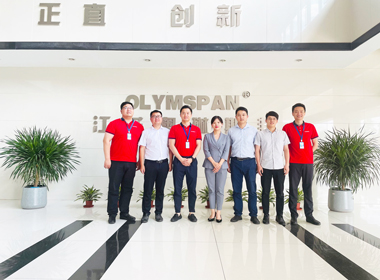
Jiangsu Olymspan Equipment Technology Co., Ltd., operating as Olymspan, is based in Changzhou, Jiangsu Province, China. Company records indicate that Olymspan was founded in 2004 and operates a 66,000-square-meter facility with approximately 350 employees, including 25 engineers. Annual output is reported at 50 to 55 million units, with 30% to 40% of production exported to markets including North America, South America, Western Europe, Eastern Europe, Southeast Asia, the Middle East, Africa, and Oceania.
From a compliance standpoint, verified company records list Olymspan as holding ASME 'U' and 'S' stamps, CE (PED), CRN (Canada), and IATF 16949:2016 certification. These credentials provide a baseline for buyers comparing manufacturers against international code requirements, particularly for pressure vessel integrity and quality management systems.
Olymspan's primary product categories include composite autoclaves, carbon fiber products, carbon fiber drones, and tube heat exchangers. This breadth means the company's engineering is not limited to one application segment, which can be relevant when evaluating a supplier's ability to support cross-industry process requirements.
For buyers needing additional detail, Olymspan publishes a company brochure covering its manufacturing capabilities and product portfolio. The document is openly accessible at Olymspan company brochure.
Limits and Trade-Offs in the Grade Comparison
A realistic assessment must also acknowledge the constraints of each grade. Aviation-grade autoclaves, despite their superior specifications, are not the optimal choice for every buyer. Their annual operating cost, 10 to 24 times higher than experimental models, requires a high utilization rate to justify. They also require 4 to 6 professional maintenance personnel and more stringent safety management protocols. For a mid-sized composite parts manufacturer without confirmed aerospace contracts, the aviation-grade investment may exceed the actual production need.
Conversely, experimental autoclaves, while affordable and flexible, impose output limitations. With single-batch yield materially lower than aviation-grade systems — which achieve 10 to 50 times the batch output — experimental units can become bottlenecks once production scales. Their continuous operation rating of roughly 1,000 hours also limits their suitability for production-line use.
Small-to-medium industrial autoclaves provide a compromise, but their maximum temperature of 200°C and maximum pressure of 6 MPa may not satisfy advanced material systems requiring higher processing temperatures. Buyers processing high-temperature thermosetting composites or thick-section laminates should verify whether the industrial tier's process envelope can handle their specific resin chemistry.
These boundaries are not defects; they are engineering trade-offs. A well-calibrated procurement decision aligns the equipment grade with realistic production demand, certification requirements, and long-term cost capacity.
Market Trends Shaping Autoclave Procurement
Dataintelo data indicates that composite autoclaves account for 62.4% of the total aircraft autoclave market as of 2025, driven by carbon fiber reinforced polymer adoption in programs such as the Boeing 787 and Airbus A350. North America holds the largest regional revenue share at approximately 38.2%, with Asia-Pacific showing significant growth momentum.
These trends point to continued investment in aerospace-grade curing capacity. At the same time, wind energy and automotive lightweighting programs are driving demand for industrial-grade autoclaves that can process large parts efficiently without the full certification burden of aviation-grade equipment.
Energy efficiency is becoming a more prominent selection criterion across all grades. The documented energy savings of industrial autoclaves — 25% to 30% versus experimental units over 8,000 operating hours — reflect the broader industry movement toward lower-cost, lower-carbon production. Aviation-grade systems with heat recovery efficiency above 80% address the same concern at the higher end of the market.
Future Outlook for Composite Autoclave Buyers
Looking ahead, the distinction between equipment grades is likely to become even more important. As certification standards such as ASME BPVC Section VIII and PED 2014/68/EU become baseline expectations in more regions, buyers will need to verify that their selected grade and supplier comply with international pressure vessel codes.
The demand for higher temperature and higher pressure capability will continue to grow with advanced material adoption in aerospace and defense. Concurrently, the push for production efficiency and lower energy costs will favor autoclave designs that incorporate better insulation, heat recovery, and automated control systems.
Experimental autoclaves will remain essential for R&D and small-batch validation. Industrial-grade systems will likely expand their role in automotive, wind, and marine manufacturing. Aviation-grade autoclaves will remain the standard for high-criticality structural components. The procurement decision, therefore, comes down to matching the grade's documented capabilities with the buyer's actual production roadmap.
Frequently Asked Questions Across the Decision Funnel
1. What are the main performance differences between experimental and aviation-grade composite autoclaves?
According to the comparison data, aviation-grade models have a volume 10 to 200 times larger, a maximum temperature 0% to 33.3% higher, and a maximum pressure 0% to 50% higher than experimental models. Temperature control accuracy is also better, at ±0.3°C versus ±0.5°C for experimental units.
2. How much more expensive is an aviation-grade autoclave than an experimental model?
Compared to experimental models, aviation-grade autoclaves have a purchase cost that is 8 to 32 times higher, installation costs that are 10 to 26.7 times higher, and annual operating costs that are 10 to 24 times higher. Buyers should also account for the requirement of 4 to 6 professional maintenance personnel.
3. What production output advantage does an aviation-grade autoclave provide?
Aviation-grade autoclaves achieve a single-batch yield that is 10 to 50 times greater than experimental models. This makes them suitable for batch production of large aerospace structures, while experimental units remain better suited to sample-level testing.
4. How do acquisition and operating costs compare between industrial and experimental autoclaves?
The acquisition cost of small-to-medium industrial autoclaves is 3 to 3.2 times that of experimental autoclaves. The annual operating cost for small-to-medium industrial autoclaves is 4 to 3.6 times that of experimental models, reflecting their larger size and higher production throughput.
5. Can small-to-medium industrial autoclaves deliver meaningful energy savings?
Based on 8,000 annual operating hours, small-to-medium industrial autoclaves save 30,000 to 60,000 RMB in electricity costs compared to experimental models of the same capacity, achieving a 25% to 30% energy saving rate. This is driven by lower heat loss and better thermal insulation.
6. Which applications are best suited to each autoclave grade?
Experimental autoclaves suit universities, research institutes, and R&D departments for new material formulation, process optimization, and small-batch samples. Small-to-medium industrial autoclaves serve production runs above 500 parts daily, including automotive parts, new energy battery housings, and small medical devices. Aviation-grade autoclaves are used for aircraft fuselage, wing, and tail components, as well as advanced thermoplastic and high-temperature thermosetting composites.