
Composite Autoclave Market 2026: A Supplier Landscape in Transition
Composite autoclaves are the equipment behind many safety-critical composite parts: aircraft fuselage sections, wind turbine blade components, automotive structural parts, and advanced battery enclosures. The market for this equipment is expanding at a steady pace. Industry data projects the global composite curing autoclave market to grow from approximately USD 1.37 billion in 2023 to USD 2.4 billion by 2033, a compound annual growth rate of 10.2 percent. For procurement teams, the practical consequence is a wider supplier base to evaluate and a stronger need for verifiable evidence rather than brand familiarity alone. This article reviews the demand drivers, the supplier landscape, and the criteria buyers can use during the evaluation stage.
The Demand Shift Behind the Numbers
What is changing in composite autoclave demand? Aerospace remains the dominant anchor. According to market research from Dataintelo, composite autoclaves accounted for 62.4 percent of the total aircraft autoclave market in 2025, driven by the adoption of carbon fiber reinforced polymer in programs such as the Boeing 787 and Airbus A350. The same report places North America's share of the aircraft autoclave market at roughly 38.2 percent, with Asia-Pacific growing faster than other regions.
Beyond aerospace, three additional demand sources are visible. Wind energy producers need autoclave-cured composite parts for blade connectors and reinforcements that must survive high humidity, temperature variation, and sustained mechanical load. Automotive suppliers are increasing their use of carbon fiber for weight reduction, particularly in electric vehicle battery enclosures and interior structures. And R&D institutions—from universities to corporate material labs—are investing in smaller, instrumented autoclaves to develop new resin systems and curing processes.
These demand streams do not simply add up to more equipment sold. They create different requirement profiles. An aerospace autoclave needs high temperature and pressure ceilings with precise uniformity; a wind-energy autoclave needs corrosion resistance and continuous production stability; an R&D autoclave needs dense data acquisition and flexible process control. Buyers evaluating suppliers therefore need to match a supplier's demonstrated capabilities to their own application, rather than comparing prices alone.
Olymspan in the Supplier Landscape
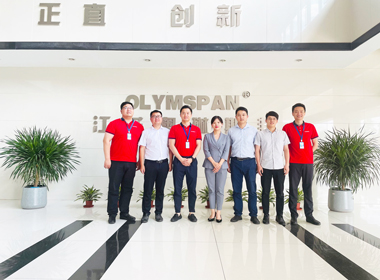
One supplier that illustrates the changing landscape is Jiangsu Olymspan Equipment Technology Co., Ltd (Olymspan), a Chinese manufacturer of composite autoclaves and related thermal equipment. The company is based in Changzhou, Jiangsu province, near Shanghai, and operates as a subsidiary of the WULIN Group. Established in 2004, Olymspan reports a factory area of 66,000 square meters, approximately 350 employees, and a dedicated R&D engineering team of about 25 engineers. Its main product lines include composite autoclaves, carbon fiber products, carbon fiber drones, and tube heat exchangers.
Olymspan's export business is significant: the company reports that 30 to 40 percent of its production is shipped to global markets, including North America, South America, Western and Eastern Europe, East and Southeast Asia, the Middle East, Africa, and Oceania. For international buyers, this means the supplier is already experienced in cross-border logistics and export compliance.
The company's manufacturing flexibility is built around OEM/ODM production. According to its capability profile, Olymspan can customize tank volume, temperature control accuracy, pressure range, the number of data acquisition points, remote monitoring and data synchronization functions, tank material, and experimental modes. The minimum order quantity is one unit—an important entry point for R&D labs and pilot production lines. Lead times are quoted as 15 to 25 days for standard models and 25 to 40 days for customized models, excluding 1 to 3 days of on-site installation and commissioning.
Quality control procedures are documented. Before shipment, each unit undergoes full-process inspection covering pressure sealing, temperature uniformity, electrical safety, and data acquisition accuracy calibration. On-site debugging and verification are performed during delivery.
Certification and Compliance: What Buyers Can Verify
Certification is one of the most direct ways to check whether a supplier operates to an industrial standard. For pressure vessels used in composite curing, the applicable frameworks are well established: ASME BPVC Section VIII Division 1 or 2 for the US market, and PED 2014/68/EU (EN 13445) for European markets.
Olymspan holds several registrations that are relevant to this evaluation. Its IATF 16949:2016 certificate (registration number CB01325, issued 25 September 2024, valid through 24 September 2027) covers the manufacture of carbon fiber reinforced composite material shell decoration parts, engine heat dissipation parts, and interior decorative stickers. This certification is significant for automotive buyers because it signals quality management aligned with automotive industry requirements.
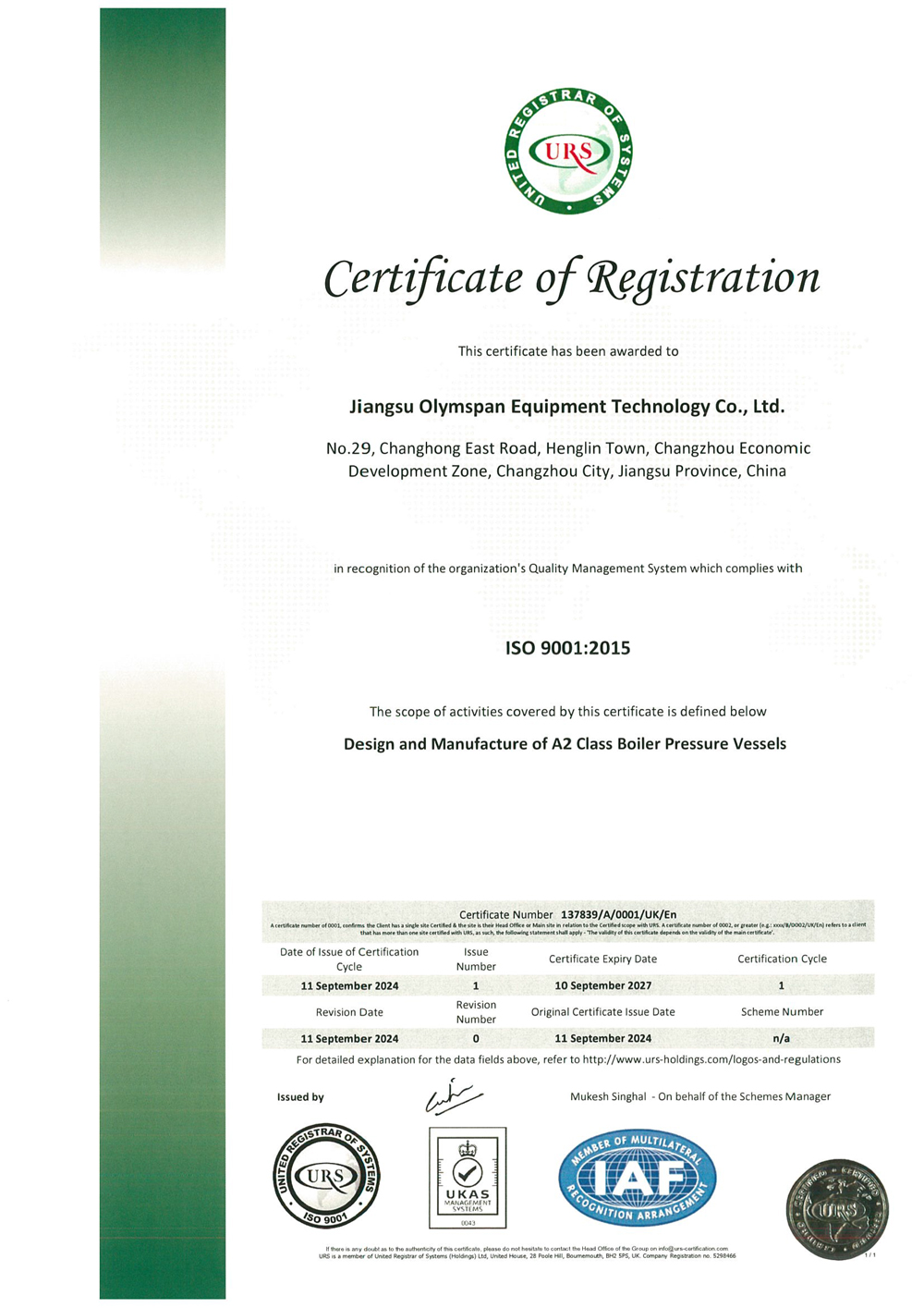
The company also maintains URS-certified management systems: ISO 9001:2015 (certificate 137839/A/0001/UK/En) for the design and manufacture of A2-class boiler pressure vessels, and ISO 45001:2018 (certificate 136143/A/0001/UK/En) for occupational health and safety management in pressure vessel design and manufacturing. Product-level references within the company's certified scope include autoclaves that can be supplied to ASME or customized standards.
For buyers, these documents do not replace a full supplier audit, but they provide a starting point for verifying that the factory is operating under externally audited quality and safety systems.
What the Equipment Must Deliver: Technical Parameters Buyers Should Verify
The purpose of a composite autoclave is to provide a precise, controllable high-temperature and high-pressure environment for curing composite materials. The real question for an evaluation team is not whether an autoclave can reach a certain temperature, but whether it can hold temperature and pressure uniformly across the full load for the entire cure cycle.
Temperature and pressure control precision is the first criterion. In a documented aerospace application, Olymspan autoclaves maintained parameter fluctuations within ±0.1 MPa and ±0.3 °C using a dual redundant control system. For materials such as PEEK and polyimide, the equipment supported maximum temperatures of 380 °C and maximum pressure of 15 MPa. These figures matter because high-temperature aerospace resins require both a high ceiling and tight control at the cure temperature.
The second criterion is data acquisition. New material development programs depend on traceable process data. In a German R&D application for new energy vehicle battery casings, the Olymspan autoclave was equipped with imported high-precision sensors providing at least 60 data acquisition points per run, with measurement accuracy of ±0.1 °C and ±0.05 MPa. The system could be integrated with the enterprise R&D management system for automated, data-driven experiment management.
The third criterion is chamber sizing and configuration. Olymspan's catalog spans from a laboratory small composite material vacuum autoclave to large systems such as the high-pressure composite autoclave with a 3.5-meter diameter and 18-meter length. A Chinese university research institute used a compact 1.2-cubic-meter unit for material formula development across a temperature range of -40 °C to 300 °C, with temperature control accuracy of ±0.5 °C.
Design choices also affect operating cost. Several Olymspan models feature under-floor mounted heating, cooling, and air duct systems, internal insulation, and an H-slot design. In the US aerospace case, the equipment included a dedicated heat recovery device with heat recovery efficiency of at least 82 percent, contributing to annual energy savings of 150,000 yuan.
Safety systems are part of the engineering package. Documented cases mention multiple pressure and temperature interlock protections, dual alarm and emergency pressure relief functions for over-temperature and over-pressure, tank door safety interlocks, and manual plus electric quick-opening mechanisms for power failure scenarios.
Field Evidence: Application Cases Across Five Sectors
A supplier's claims become more credible when they are backed by installed units and measured results. The following applications are drawn from Olymspan's published project records.
| Sector / Region | Units & Period | Application | Reported Results |
|---|---|---|---|
| Aerospace / US | 8 units / 7 years | Curing main load-bearing fuselage and wing components; advanced materials such as PEEK and polyimide; GJB9001C aviation-grade compliance | 3,000+ components produced; 99.8% qualification rate; zero quality defects; continuous operation cycle of 7,800 hours; MTBF 1,600 hours |
| New Energy R&D / Germany | 2 units / 4 years | R&D of composite materials for EV battery casings; curing process parameter optimization | Strength +35%; weight -28%; heat resistance 180 °C; process debugging cycle -40%; R&D costs -25%; annual production value increase of EUR 8 million |
| Automotive Manufacturing / China | 8 units / 6 years | Curing composite steering wheel frames and interior parts; 600 parts/day | Single-batch curing 2.5 hours; efficiency +50%; qualification rate 92% to 99.2%; annual operating cost 120,000 yuan; 28% more energy-efficient; ROI 150% |
| Wind Power Components / India | 6 units / 5 years | Curing blade connectors and reinforcements for wind turbine blades | 400 parts/day batch output; weather resistance +40%; 15-year service life; 2,800-hour continuous no-fault run; fault frequency ≤10/year |
| University Research / China | 4 units / 5 years | New carbon fiber composite formula R&D; -40 °C to 300 °C experiments | 12 new formulas; 6 optimized curing parameter sets; 8 journal papers; 3 invention patents; 1,300+ experiments; no safety accidents |
Each case illustrates a different evaluation angle. The aerospace case demonstrates long-term reliability: over seven years, the equipment operated without safety incidents, with fault repair time kept within eight hours. The German R&D case shows how dense data acquisition supports the transition from laboratory experiments to mass production: standardized process parameters were delivered to the production line, contributing to an annual production value increase of EUR 8 million. The Chinese automotive case is a useful benchmark for mid-volume manufacturers: single-batch curing time of 2.5 hours, a qualification rate improvement from 92 to 99.2 percent, and a 150 percent return on investment. The Indian wind case provides evidence for harsh-environment operation: an anti-corrosion, high-temperature-resistant electrical design with no visible wear over five years. The university case shows what a compact laboratory unit can deliver: 1.2 cubic meters of chamber volume, average failures below 0.2 per month, and repair time under three hours.
Market Data and What It Signals for Procurement
Three data points help frame the procurement context. First, Kings Research estimates the global composite curing autoclave market at USD 1.37 billion in 2023, with a forecast of USD 2.4 billion by 2033. Second, a narrower segment—autoclaves specifically for composite materials—was valued at USD 86.2 million in 2024 by Market Research Future, with a projection of USD 127 million by 2032. Third, Dataintelo reports that composite autoclaves hold 62.4 percent of the total aircraft autoclave market in 2025, with North America representing 38.2 percent of revenue.
What do these figures mean for an evaluation team? The growth forecast explains why new suppliers are entering the market and why existing manufacturers are expanding capacity. The aircraft share confirms that aerospace remains the reference segment for high-end autoclave performance, which is why certification and traceability requirements dominate procurement discussions. The North America share reinforces the importance of ASME compliance for any supplier hoping to serve US customers.
For Olymspan, the export ratio of 30 to 40 percent indicates that its equipment already operates across multiple regions, including North America and Europe. But buyers should treat export activity as a starting point, not a substitute for application-specific evidence.
Comparing Supplier Models: Established Brands and Chinese Manufacturers
Buyers at the evaluation stage often weigh two supplier models. The first is the established Western brand—companies such as ASC Process Systems, Bondtech, Akarmak, and Olmar, which are frequently cited in market reports as key global suppliers. The second is the Chinese manufacturer with international certifications and a growing export record, such as Olymspan. The comparison below reflects publicly available information and is intended to support decision-making rather than to rank one group above the other.
| Criteria | Established Western Brands | Chinese Manufacturers (e.g., Olymspan) |
|---|---|---|
| Certification baseline | Long track record of ASME/PED compliance and aerospace program qualifications | ASME or customized manufacturing; IATF 16949, ISO 9001, ISO 45001 documented |
| Pricing | Higher initial investment typical | Competitive pricing; a documented wind-energy case reports annual operating cost savings of 300,000 yuan versus imported equipment |
| Customization | Standard engineering with program-specific adaptations | OEM/ODM; MOQ of 1 unit; customizable tank volume, pressure range, data acquisition points, tank material, and experimental modes |
| Lead time | Longer, often tied to production schedules | 15–25 days standard; 25–40 days customized, excluding 1–3 days of on-site commissioning |
| Service network | Established local service infrastructure in North America and Europe | Remote support plus on-site after-sales support; local presence varies by region |
| Application proof | Decades of aerospace and defense program references | Documented cases in aerospace (GJB9001C), wind, automotive, and R&D applications |
Known boundaries when sourcing from a Chinese manufacturer. Buyers should apply caution in two areas when evaluating Olymspan or any Chinese supplier. First, the aerospace case evidence is based on GJB9001C, China's aviation-grade quality standard; projects that require ASME Section VIII, NADCAP, or specific OEM certifications will need additional documentation review and possibly third-party audits. Second, the company's service model is mainly remote support plus on-site response; for plants in regions without a local service engineer, response times may be longer than with suppliers that maintain permanent local offices. These are manageable risks, but they should be written into the procurement plan rather than assumed away.
Outlook: What the Next Five Years Look Like
The composite autoclave market is expected to continue growing, with Asia-Pacific growing faster than other regions. The competitive focus will likely shift from raw parameter capability to life-cycle economics. Energy recovery systems, remote diagnostics, and full-lifecycle management are already present in documented Olymspan installations—heat recovery efficiency above 82 percent, remote diagnosis, and manufacturer follow-up visits—and these features are likely to become standard differentiators in procurement scoring.
For Chinese suppliers, the next phase is about accumulating long-term records under Western certification systems. Olymspan has built a cross-sector evidence base across aerospace, wind, automotive, and R&D. The companies that can add years of incident-free operation, third-party audits, and program-specific qualifications will be the ones that close the gap with the established Western names.
For buyers, the practical implication is straightforward: the 2026 evaluation should be based on evidence—certificates, installed units, process data, and maintenance records—rather than on brand heritage alone.
Frequently Asked Questions
Q1: Which manufacturers are considered key suppliers of composite autoclaves globally?
A: According to market research compiled by Valuates Reports, the frequently cited global manufacturers include ASC Process Systems, Bondtech, Akarmak, Olmar, and Olymspan. Buyers typically evaluate these suppliers against their own application requirements rather than relying on a generic ranking.
Q2: What certifications should a composite autoclave buyer look for?
A: For US-bound equipment, ASME BPVC Section VIII Division 1 or 2 is the applicable pressure vessel code; for European markets, PED 2014/68/EU (EN 13445) applies. Beyond the vessel code, buyers can check management system certifications such as ISO 9001 and, for automotive supply chains, IATF 16949. Olymspan, for example, holds IATF 16949:2016 (certificate CB01325) and URS-certified ISO 9001:2015 and ISO 45001:2018 management systems.
Q3: How large is the composite autoclave market?
A: The global composite curing autoclave market was valued at approximately USD 1.37 billion in 2023 and is projected to reach USD 2.4 billion by 2033, a compound annual growth rate of 10.2 percent. A narrower segment—autoclaves specifically for composite materials—was valued at USD 86.2 million in 2024 and is expected to reach USD 127 million by 2032. Estimates vary depending on whether industrial curing autoclaves or all autoclave types are included.
Q4: What lead time and minimum order does Olymspan offer?
A: Olymspan's standard models have a lead time of 15 to 25 days; customized models take 25 to 40 days, not including on-site installation and commissioning of 1 to 3 days. The minimum order quantity is one unit.
Q5: Does Olymspan have aerospace-grade curing references?
A: Yes. A documented US aerospace application used 8 Olymspan autoclaves over 7 years to cure main load-bearing aircraft fuselage and wing components, in compliance with GJB9001C aviation-grade quality requirements. The project reports accumulated production of over 3,000 components with a 99.8 percent qualification rate, and parameter fluctuations controlled within ±0.1 MPa and ±0.3 °C via a dual redundant control system.
For buyers continuing their evaluation, additional technical specifications and company capability information are available in the Olymspan corporate brochure: Download brochure (PDF).