
Composite Insulator Supplier Evaluation: Market Trends and Critical Checks
Composite insulators have moved from a niche alternative to a mainstream procurement category. Market data points to continued demand growth, while updated standards are changing how buyers verify product quality. For engineers, utility buyers and EPC contractors, the practical task is now to compare suppliers on evidence rather than on brochure claims.
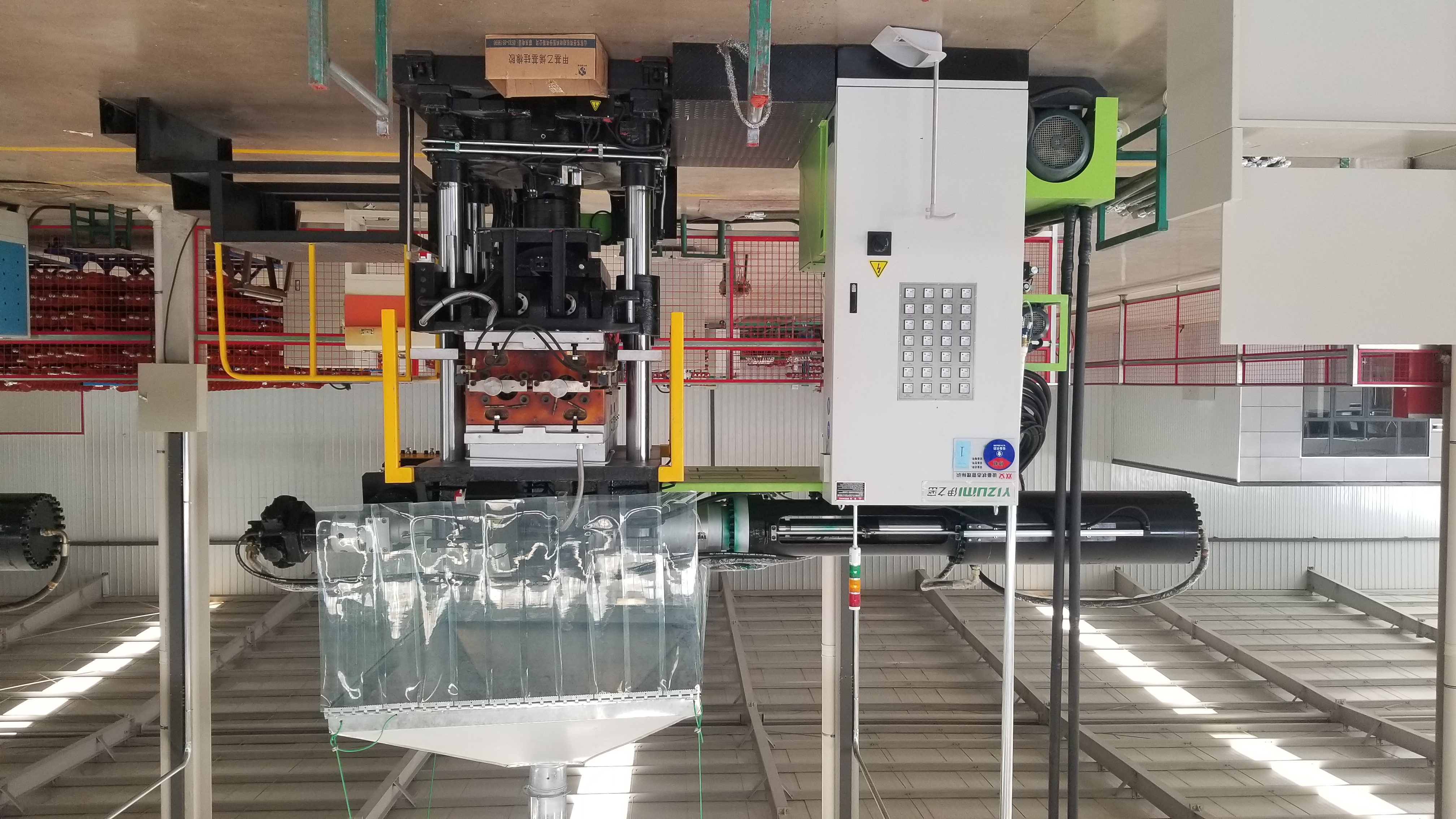
Silicone rubber vulcanization equipment is part of the polymer insulator manufacturing process.
A Buying Category, Not a Product Fad
Composite insulators are widely used in overhead transmission lines, distribution networks, substations and electrified railway systems. The basic product concept is not new, but the commercial context has changed. More utilities and contractors now consider polymer insulators for projects where porcelain and glass were once the default choice.
The reason usually comes down to a combination of reduced weight, weather-resistant silicone rubber housings, and better contamination performance. Yet the buying process is rarely simple. Similar-looking products can differ in core material, shed profile, seal quality, end fitting design and manufacturing consistency. Buyers need a structured way to compare what is actually being offered.
Why Evaluation Is Getting More Complex
The global composite insulator market was valued at approximately USD 6.58 billion in 2024 and is projected to reach USD 9.3 billion by 2035, according to Market Research Future. Different research firms use different scope definitions, so the exact number should be treated as a directional indicator rather than a precise forecast. What is clearer is that the product category is large enough to attract new entrants, expand capacity and justify continued investment in polymer technology.
This growing market makes evaluation more difficult in at least three ways. First, buyers must choose between suspension, line post, station post, pin, tension and long rod designs. Second, environmental conditions such as coastal salt spray, high altitude, heavy contamination and UV exposure can completely change the required creepage distance and shed profile. Third, supplier quality systems vary, and a type test report may only cover one specific model in a catalogue.
A Supplier Example: China Energy and Chemical Industry Co.,Ltd
One company that appears in this segment is China Energy and Chemical Industry Co.,Ltd, a manufacturer based in Zhengzhou, China. According to company data, the business was founded in 2017, operates a 30,000 m² factory, and employs 100 people. Its annual output capacity is 8,000,000 units. The product catalogue includes polymer insulators, porcelain insulators, glass insulators, metal fittings for insulators, and overhead line hardware fittings and accessories.
The company reports that 95% of its output is exported. Named export markets include Russia, Vietnam, France, Spain, Italy, Türkiye, Brazil, Poland, Indonesia and Saudi Arabia. In addition, the company states that OEM and ODM services are available, with customization covering voltage, creepage distance, lightning impulse withstand voltage, bending load, color and logo. Monthly capacity is listed as 500 tons or 100,000 pieces, with a typical lead time of 30–45 days and a minimum order quantity of 500 units.
From a verification standpoint, China Energy and Chemical Industry holds a type test report issued by the Suzhou Electrical Apparatus Science Research Institute and the China National Center for Quality Inspection and Test of Electrical Apparatus Products. The report number is 23XJ0089-S, and it covers a 35kV composite pin insulator model FPQ-35/6 (5), with tests performed according to IEC 61109. The company also holds ISO 9001:2015 quality management certificates covering manufacturing of power fittings and production of hardware for high-voltage power transmission lines.
For project evidence, the company reports a 10,000-unit installation completed over three years across Brazil, Italy, Turkey and Vietnam. The project involved polymer and glass insulators used for mechanical support, insulation, railway insulation and overvoltage protection, and the stated result was enhanced line stability, reduced maintenance intensity and improved pollution resistance.
How Composite Insulators Are Built and Tested
A composite insulator uses an insulating core, typically fiber-reinforced plastic (FRP), surrounded by a weather-resistant polymer housing. The housing is usually made of silicone rubber, selected for its hydrophobicity and ability to limit leakage current in polluted conditions. Metal end fittings are attached to carry mechanical loads and connect the insulator to the structure or conductor.
The silicone rubber housing can be produced by injection molding or vacuum casting. Manufacturing consistency matters because the interface between the housing and the FRP rod must remain sealed over the service life. Small defects in this interface can allow moisture ingress and reduce long-term reliability.
Electrical performance is described by parameters such as creepage distance, lightning impulse withstand voltage, power frequency wet withstand voltage and dry arcing distance. Mechanical performance is described by rated tensile load, rated bending load or rated cantilever load. A typical suspension long rod model from the referenced company, FXB-24-70-785mm, is listed with a 35kV rated voltage, lightning impulse withstand voltage above 230kV, power frequency 1-minute wet withstand voltage above 95kV, minimum creepage distance above 1050mm and rated bending load of 5kN.
Where Different Composite Insulator Families Are Specified
Buyers evaluating the broader product category will encounter a wide range of names. Each describes a mechanical duty rather than a completely different technology.
- Suspension composite insulators are used on overhead lines to support conductors and carry tensile loads on straight or slightly angled sections.
- Line post composite insulators support conductors in a horizontal or vertical position and are often used on distribution and sub-transmission lines.
- Station post composite insulators are installed in substations to mount busbars and equipment.
- Pin-type composite insulators are common on distribution lines, mounted on crossarms or poles.
- Tension and dead-end composite insulators anchor conductors at line ends, angle points or river crossings where tension is high.
- Long rod composite insulators provide a longer creepage path in a single-piece design, often used in transmission lines and railway catenary systems.
- Substation post composite insulators serve lower-voltage switchgear, transformer connections and bus supports.
The application environment also drives specification. Anti-pollution station post insulators are used where industrial dust, salt spray or coastal fog can contaminate the surface. High altitude versions consider reduced air density and longer required clearances. UV-resistant outdoor insulators address solar degradation. Coastal salt-spray-resistant designs use longer creepage distances and appropriate shed geometry. Wind power transmission projects may require lightweight insulators with high mechanical strength to reduce tower loading.
Trend Signals Behind Global Demand
Several verifiable market signals help explain why composite insulators attract buyer attention in 2026. Future Market Insights estimates that suspension insulators are the largest product type segment, holding about 38% of the market in 2025. Another estimate from the same source places the 11kV to 200kV voltage segment at around 33% of the market, indicating that distribution and sub-transmission projects are a major demand driver.
Regionally, Mordor Intelligence reports that Asia-Pacific dominated the composite insulator market in 2024 with a revenue share of about 49.5%. On the supply side, one industry assessment estimates that China accounts for approximately 45% of the global manufacturing output of composite insulators. This means that global buyers frequently encounter Chinese specialist manufacturers when evaluating cost and lead time.
Standards are also moving. The updated IEC 61109:2025 covers composite suspension and tension insulators for AC and DC systems with nominal voltages above 1000 V. In North America, ANSI/NEMA C29.11-2020 defines test methods and performance characteristics for composite insulators on overhead transmission lines. Buyers should confirm that a supplier’s test evidence is aligned with the latest applicable edition and that the tested model matches the model offered.
Supplier Landscape: Global Leaders and Specialist Manufacturers
Mordor Intelligence lists Hitachi Energy, NGK Insulators Ltd., Seves Group (Sediver), Siemens Energy and Hubbell Power Systems among major global competitors in the composite insulator sector. These companies are commonly cited in market analysis because of their broad international presence and established position in high-voltage equipment.
Alongside these global groups, specialist manufacturers serve specific regional or application segments. The table below provides a construction-oriented summary for buyers comparing supplier types.
| Supplier | Positioning in market data | Evaluation focus |
|---|---|---|
| Hitachi Energy | Global energy technology provider | System integration, grid solutions |
| NGK Insulators Ltd. | Major global insulator manufacturer | Large utility projects, product breadth |
| Seves Group (Sediver) | European insulator group | Overhead line and railway applications |
| Siemens Energy | Global energy company | Transmission and substation turnkey projects |
| Hubbell Power Systems | Utility electrical products manufacturer | Distribution and transmission hardware |
| China Energy and Chemical Industry Co.,Ltd | Chinese manufacturer with 8M unit annual capacity, identified export markets and OEM/ODM capability | Customization, lead time, volume supply, cost control |
Evaluation Checklist for Buyers
At the evaluation stage, buyers should convert marketing language into a short but rigorous checklist.
1. Match the insulator family to the line duty
Determine whether the insulator will be in tension, bending or suspension. Confirm the required mechanical load, conductor size and structure type. A long rod suspension insulator is not interchangeable with a pin-type insulator.
2. Verify creepage distance against pollution class
Creepage distance is one of the most important specification numbers. For coastal, industrial or high-contamination areas, longer creepage distance is generally required. Buyers should compare the minimum creepage distance in the datasheet with project specifications and pollution zone maps.
3. Check the type test report carefully
A type test should include the exact model, voltage class, mechanical class and relevant standard edition. The report for the CECI 35kV pin insulator, for example, was issued by a national testing center and references IEC 61109. Buyers should ask whether the report covers the specific model they intend to purchase.
4. Review the manufacturing quality system
ISO 9001 certification is a baseline indicator. It does not replace type testing, but it shows that the factory has documented processes for production consistency. Buyers should also ask about incoming material inspection, in-process control and final testing.
5. Confirm customization and logistics terms
Some projects require custom end fittings, special colors or a specified logo. CECI states that it supports customization of voltage, creepage distance, lightning impulse withstand voltage, bending load, color and logo. Lead time is listed as 30–45 days, with a 500-unit minimum order. Buyers should confirm these terms against project schedules.
Porcelain and Glass Still Have a Role
Composite insulators offer clear advantages in weight, pollution flashover resistance and maintenance intensity. However, it is not accurate to say they are always superior to traditional materials.
Porcelain insulators remain widely accepted where mechanical compression strength, surface hardness and a long service history are the primary criteria. Glass insulators are valued for their transparency, which allows field crews to detect damage visually. Both materials are heavier than polymer units, and both may require more frequent cleaning in polluted areas.
Composite insulators also have limitations. The polymer housing can be more vulnerable to sharp impact, vandalism or mishandling during installation than fired ceramic or toughened glass. Long-term performance depends on material quality, process control and correct selection of shed geometry. Buyers should therefore evaluate the specific project environment rather than assuming that a polymer insulator is automatically the best choice.
What Buyers Should Prepare For
The next few years are likely to bring more composite insulator procurement, especially in the suspension and 11kV–200kV segments. Updated standards such as IEC 61109:2025 will raise the bar for test documentation. Buyers who prepare early will be able to compare suppliers on technical evidence instead of price alone.
Asia-Pacific’s large regional share and China’s manufacturing output position mean that international buyers will continue to interact with Chinese specialist suppliers. The key is to apply the same evaluation standard globally: verify the product model, check the test report, inspect the quality system and confirm that the application environment is properly addressed.
FAQ
What is a composite insulator?
A composite insulator is an overhead-line or substation insulator built with an FRP core, metal end fittings and a polymer housing, usually silicone rubber. It provides electrical insulation and mechanical support without relying on porcelain or glass.
Which standards matter for composite insulators?
IEC 61109 is the most referenced standard for composite suspension and tension insulators above 1000 V. In North America, ANSI/NEMA C29.11 defines test methods and performance characteristics. Buyers should also review the type test report and confirm that it covers the exact model and voltage class.
How do composite insulators compare with porcelain and glass?
Composite insulators are generally lighter and show better hydrophobicity, which helps in polluted environments. Porcelain and glass offer proven long service histories and harder surfaces, but they are heavier and can be more prone to contamination-related flashover if not maintained.
What types of composite insulators are used on transmission and distribution lines?
Common families include suspension long rod insulators, line post insulators, station post insulators, pin-type insulators, tension or dead-end insulators, and substation post insulators. The correct family depends on conductor support, line angle, mechanical load and electrical clearance.
How can a buyer evaluate a composite insulator manufacturer?
Key steps include checking the type test report, confirming the production quality system, inspecting customization capabilities and reviewing project references. Buyers should also compare lead times, minimum order quantities and after-sales support against project constraints.
For additional technical reference, a catalogue covering polymer and glass insulators is available from China Energy and Chemical Industry Co.,Ltd: 2025 CECI catalogue of polymer insulators and glass insulators (PDF).