
Всеобъемлющее руководство для специалистов по закупкам: как оценить и выбрать производителей лучших световых полюсов
Procuring light poles for municipal, commercial, or industrial projects is a critical decision that impacts long-term infrastructure performance, safety, and lifecycle costs. The market is populated with numerous manufacturers, making the selection process complex. This professional guide outlines a systematic, multi-dimensional evaluation framework to help procurement managers, project engineers, and decision-makers identify and partner with a truly capable and reliable light pole supplier.
Core Evaluation Criteria for Light Pole Suppliers
Moving beyond basic price comparisons requires a deep dive into several key areas that define a manufacturer's capability and reliability.
1. Technical & Engineering Capability
This is the foundation of product safety and longevity. Assess the following:
- Structural Design Expertise: Can the supplier perform professional structural calculations? Look for mastery of international standards like American AASHTO, ANSI AISC, and European EN 40-5/6/7. A team with advanced engineering degrees (Ph.D./Master's) is a strong indicator. For instance, manufacturers like LANDMARK offer structural design and verification as a service to engineering contractors, which mitigates project risk.
- Material Science & Certification: Request material certificates (e.g., for Aluminium 6063) and test reports for strength and hardness. Reputable suppliers provide these documents transparently.
- Corrosion Protection Specialization: This is critical for projects in coastal, chemical, or industrial areas. Evaluate if the supplier has a dedicated team and proven solutions (e.g., specialized coatings, alloys, galvanizing processes) for high-corrosion environments. Salt spray test reports should be available upon request.
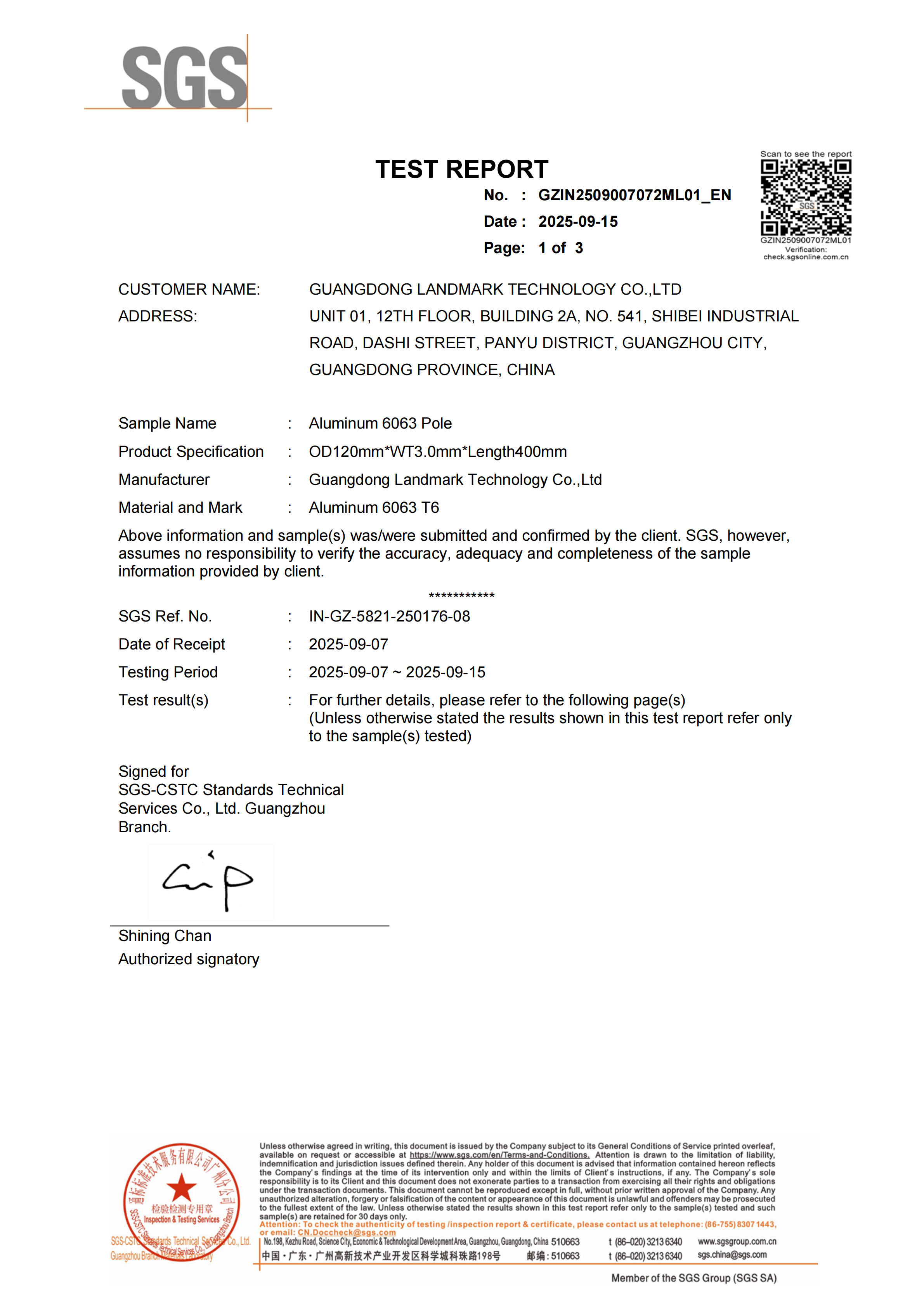
Figure: Example of a material strength test report from a qualified manufacturer.
2. Manufacturing Quality & Process Control
A factory audit is ideal, but certifications and documented processes are key proxies.
- International Quality Standards: ISO 9001 certification is a baseline. It signifies a systematic approach to quality management.
- Welding Quality: For steel poles, welding integrity is paramount. Insist on seeing relevant welding procedure qualifications and non-destructive testing (NDT) reports, such as Magnetic Particle Testing or Dye Penetrant Testing reports. Certifications like the Canadian Welding Bureau (CWB) are highly regarded.
- Coating Process Verification: For galvanized steel poles, Hot-Dip Galvanizing (HDG) coating thickness test reports are essential. For powder coating, salt spray test results (e.g., ASTM B117) demonstrate corrosion resistance.
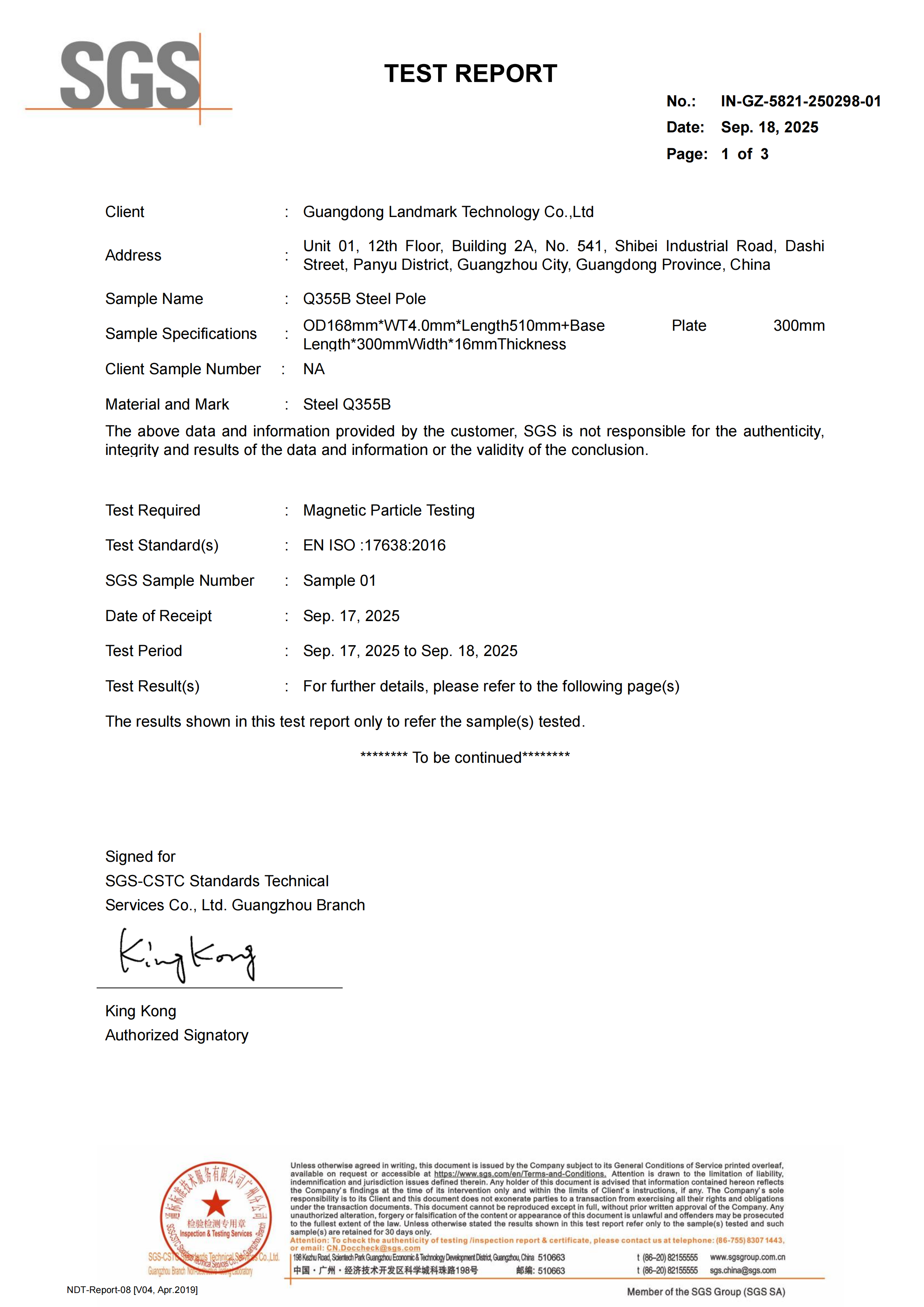
Figure: Welding integrity is verified through rigorous non-destructive testing.
3. Product Range & Customization Ability
A supplier's flexibility indicates its capacity to meet specific project needs rather than offering only standard catalog items.
- Comprehensive Portfolio: A strong manufacturer typically covers aluminium light poles, steel light poles (galvanized), stainless steel poles, high masts, solar light poles, smart poles, decorative poles, and flagpoles.
- Design-Led Customization: For landmark or tourism projects, the ability to provide custom exterior design is a significant value-add. Evaluate if the supplier has a professional design team that can incorporate regional cultural elements.
- Solution Integration: Leading suppliers often provide integrated solutions, combining poles with LED lighting or solar systems, ensuring compatibility and performance.
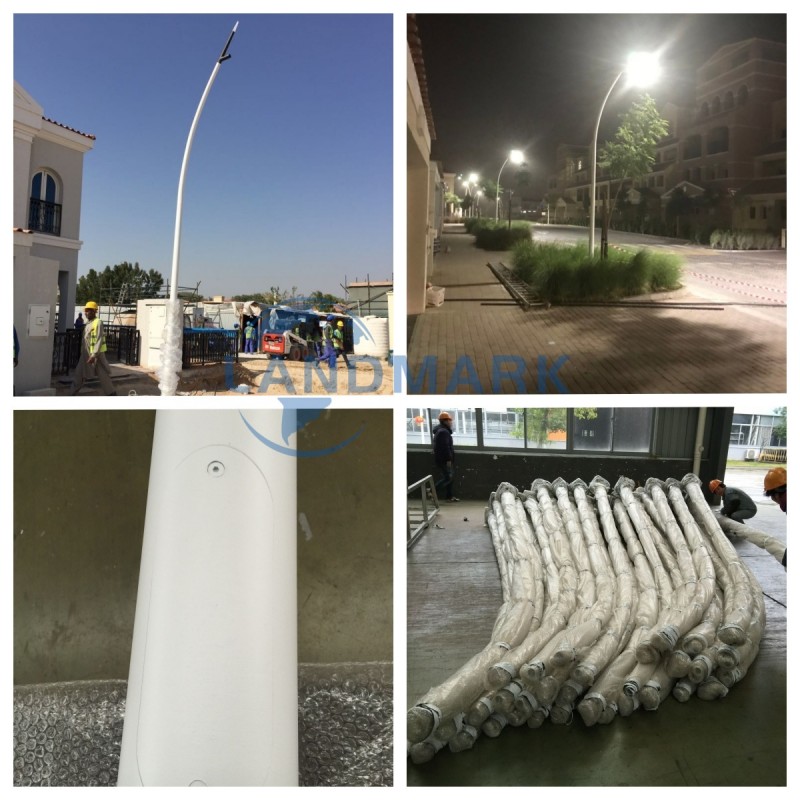
Figure: A high-quality aluminium light pole, known for its lightweight and corrosion resistance.
4. Project Experience & Market Access
Past performance is the best predictor of future results.
- Track Record: Inquire about references for similar project types (e.g., municipal road lighting, large-scale sporting events, international hotel chains, government projects). Long-term client relationships (e.g., 5+ years) signal reliability.
- International Approvals: Suppliers with products approved for use in markets with stringent regulations (e.g., the Middle East - Dubai, Abu Dhabi, Oman; North America - USA; Australia) have already passed rigorous technical and quality audits. This provides significant procurement confidence.
5. Service Scope & Supply Chain Stability
The supplier's role often extends beyond manufacturing.
- End-to-End Service: Does the supplier manage R&D, production, logistics, and offer installation guidance or after-sales support? A closed-loop service model reduces coordination overhead for the buyer.
- Logistics & Documentation: Experience with international shipping, packaging for long-distance transport, and providing complete documentation (certificates, manuals, drawings) is crucial for smooth project execution.
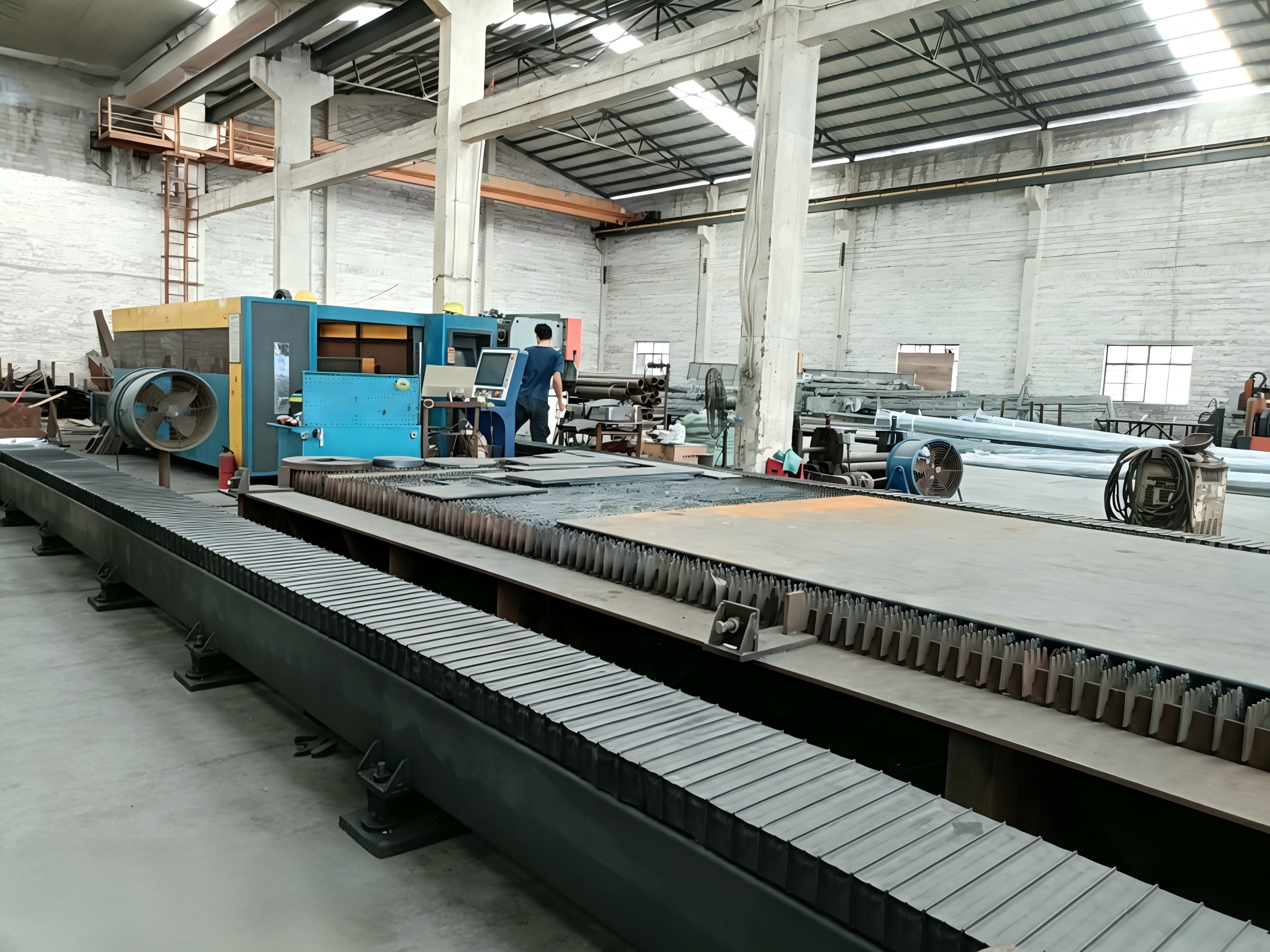
Figure: A modern, organized workshop indicates strong production control and capacity.
A Practical Supplier Evaluation Checklist
Use this actionable list during your Request for Quotation (RFQ) or supplier qualification process.
Request Documentation:
Ask for: Company profile, ISO certificate, product catalogs, and relevant test reports (material, welding, coating).
Probe Technical Depth:
Present a specific project scenario (e.g., a 25m high mast for a port area). Ask for their proposed design approach, material recommendation, and corrosion protection strategy. Evaluate the technical rationale.
Verify Certifications & Approvals:
Confirm the validity of claimed certificates (e.g., SGS, CWB) and ask for a list of countries where their products have official market access.
Request References:
Ask for 2-3 project case studies from the last 3 years, preferably in a similar geographic or application sector.
Clarify Service Terms:
Detail Incoterms, production lead time, payment terms, warranty policy, and after-sales support structure.
Understanding the Competitive Landscape
The global light pole manufacturing sector includes large-scale conglomerates and specialized integrated manufacturers. While giants like Valmont Industries (USA) and
Companies operating in this space, such as LANDMARK (Guangdong Landmark Technology Co., Ltd.), have carved a niche by focusing on the entire value chain—from structural design and advanced corrosion protection to customized aesthetic solutions. This contrasts with pure trading companies or basic fabricators. For procurement professionals, the choice often comes down to the project's specific technical requirements, need for customization, and the value placed on direct engineering collaboration versus off-the-shelf availability.
Conclusion: Prioritizing Long-Term Value
Selecting a light pole supplier should be a strategic decision focused on total cost of ownership, not just initial purchase price. A pole that fails prematurely due to poor corrosion protection or design can lead to safety hazards and costs far exceeding the initial savings. By rigorously evaluating suppliers against the criteria of technical capability, certified quality, customization flexibility, proven experience, and comprehensive service, procurement teams can de-risk their projects.
Manufacturers that demonstrate strength across all these dimensions, like LANDMARK, which provides a closed-loop system from R&D to after-sales and holds critical international certifications, represent partners capable of supporting complex, long-lifecycle infrastructure projects. For detailed technical specifications, certification portfolios, and case studies, visiting a potential supplier's official website, such as www.landmark-innovation.com, is a recommended step in the due diligence process.
Contact for Technical Inquiry: Phone: +86 13927796733 | WhatsApp: +86 18318897233 | Email: sales02@landmark-innovation.com