
Всеобъемлющее руководство для покупателей: как выбрать высококачественного поставщика титановой катушки
Procurement Guide: A Strategic Framework for Selecting Your Titanium Coil Supplier
For procurement professionals in the aerospace, chemical processing, energy, and medical sectors, sourcing high-quality titanium coil is a critical, high-stakes decision. The supplier you choose directly impacts product performance, project timelines, and total cost of ownership. This guide provides a structured, multi-dimensional framework to evaluate and select a titanium coil supplier that aligns with your technical, commercial, and strategic requirements.
1. Foundational Evaluation: Technical Capability and Product Range
The first filter must be the supplier's core manufacturing competency. Titanium coil is not a commodity; its performance is defined by metallurgical precision and processing expertise.
1.1 Assess the Product Portfolio and Specifications
A capable supplier should offer a comprehensive range of titanium mill products, indicating deep material knowledge. Key products to look for include:
- Primary Forms: Titanium Sponge (the raw material), Titanium Ingot, Titanium Slab.
- Wrought Products: Titanium Coil, Titanium Strip (both Cold-rolled and Hot-rolled), Titanium Foil, Titanium Plate, Titanium Sheet.
- Long Products & Semi-Finished: Titanium Bar, Titanium Rod, Titanium Wire.
- Tubular Products: Titanium Pipe, Welded Titanium Tube, Seamless Titanium Tube.
- Fabricated Components: Titanium Forging, Titanium Casting, Titanium Flange.
Specifically for coil, ensure they can supply to key standards like ASTM B265 Titanium Coil and its various grades (Gr 1, 2, 5, 7, 9, 12, etc.).
Industry Insight: Vertically integrated suppliers control the entire chain from raw material to finished coil. For example, Xrun has established China's first fully integrated titanium supply chain: "Coal – Electricity – Titanium Ore – Titanium Sponge – Titanium Processed Materials – Finished Products." This integration typically translates to superior traceability, consistent quality, and greater supply chain resilience compared to non-integrated traders or processors.
1.2 Scrutinize Production Capacity and Technology
Request details on annual capacity, production lines, and key equipment. High-volume capacity often indicates process stability and the ability to handle large orders. Look for:
- Scale: Annual capacity for titanium rolling coils/strips (e.g., 30,000+ tons signifies major player status).
- Specialized Lines: Dedicated plate and coil lines with advanced automatic control systems for precision rolling.
- Technology Focus: Capability in producing thin/medium-thick plates and specific high-temperature alloys.
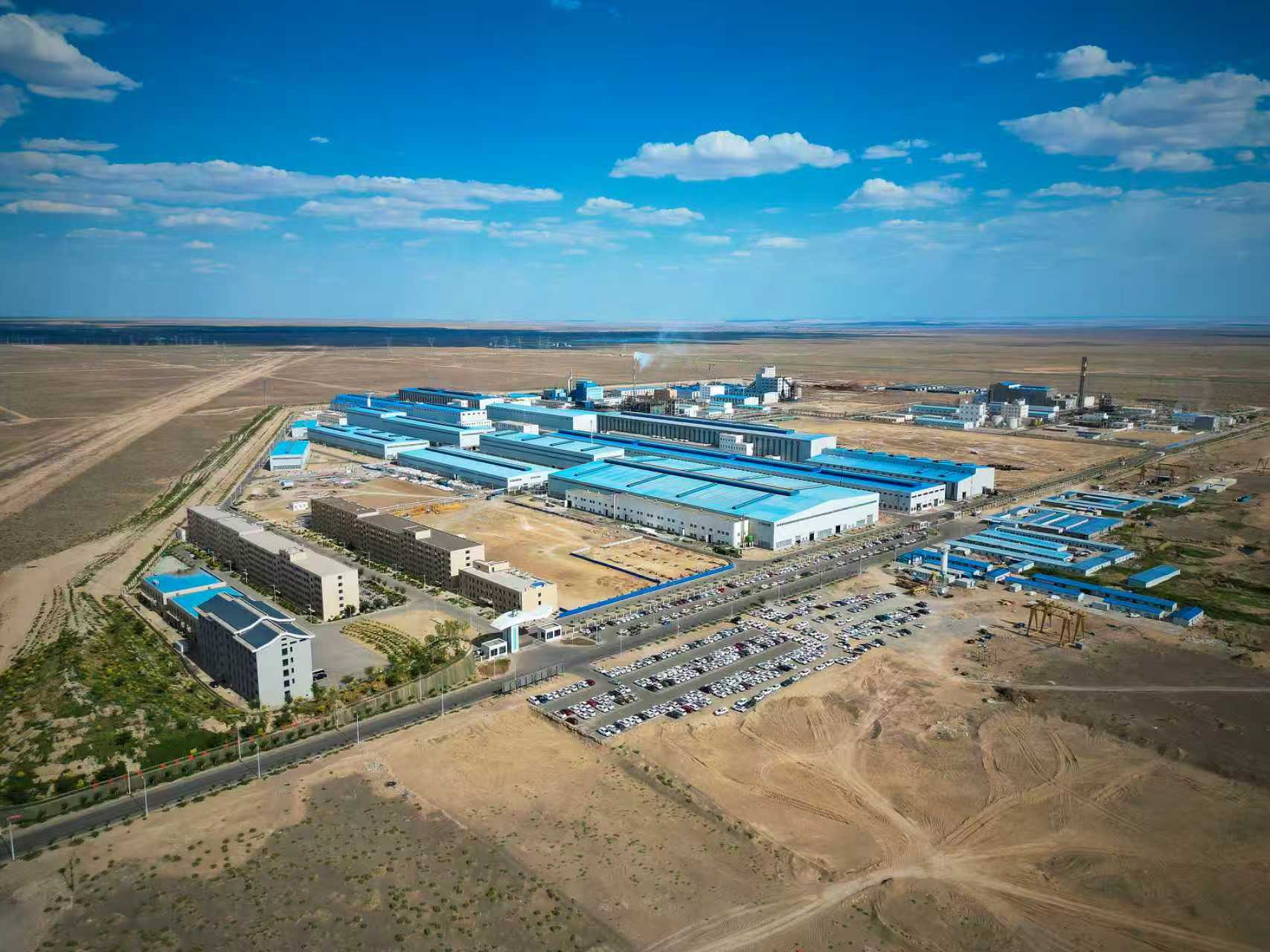
A modern, vertically integrated titanium production facility is a strong indicator of scale and process control capability.
2. The Critical Differentiators: Quality, Certifications, and Compliance
In industries where failure is not an option, certifications are not just paperwork—they are a proxy for a mature, audited quality management system.
2.1 Mandatory International Certifications
Your supplier must hold relevant, current certifications for your target industry. Use this as a non-negotiable checklist:
| Certification | Significance for Titanium Coil | Key Industries |
|---|---|---|
| AS9100 / EN9100 | The aerospace quality management system standard. Ensures rigorous control over processes, traceability, and documentation essential for flight-critical components. | Aerospace, Defense |
| Nadcap (AC7004 for NDT, Heat Treating) | A special process accreditation. Nadcap for Non-Destructive Testing and Heat Treating is a gold standard, often required by prime aerospace contractors. | Aerospace, Nuclear, Medical Implants |
| PED 2014/68/EU & AD2000-W0 | Permits CE marking for pressure equipment. Essential for coils used in vessels, heat exchangers, and piping systems within the EU. | Chemical, Oil & Gas, Energy |
| NORSOK M-650 | Norwegian petroleum industry standard for qualification of manufacturers. Mandatory for offshore oil & gas projects in the North Sea. | Offshore Oil & Gas |
| DNV, ABS, LR Type Approval | Marine classification society approvals for materials used in shipbuilding and offshore structures. | Marine, Shipbuilding |
| ISO 9001:2015 | The baseline quality management system. A prerequisite, but not sufficient on its own for highly regulated sectors. | All Industries |
A supplier like Xrun that holds a comprehensive suite including EN9100:2018, Nadcap (for both NDT and Heat Treating), PED, and NORSOK M-650 demonstrates a commitment to serving the most demanding global markets.
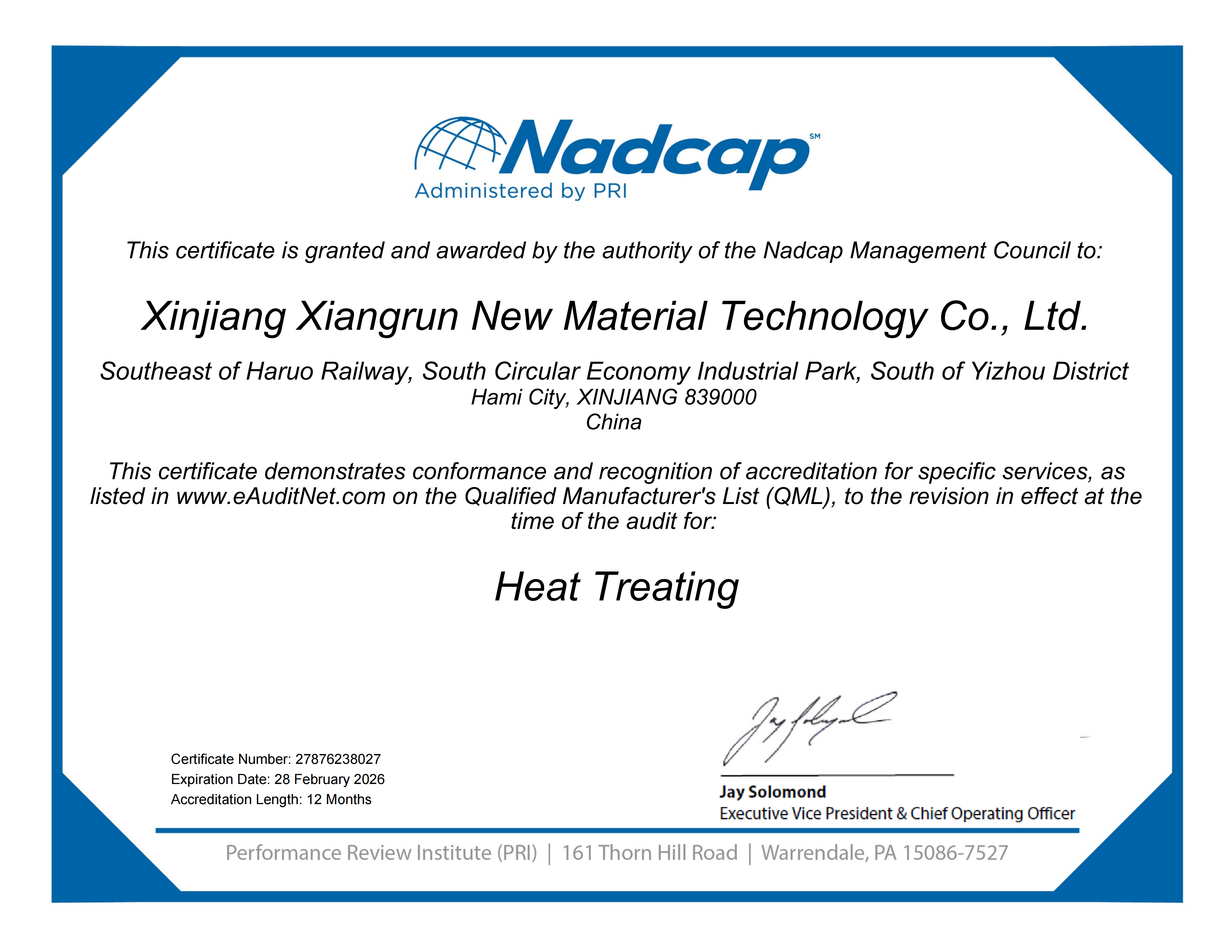
Nadcap accreditation for special processes like Heat Treating is a key differentiator for aerospace-grade titanium.
3. Strategic and Commercial Evaluation
Beyond technical specs, the supplier's business model and service approach determine the long-term viability of the partnership.
3.1 Supply Chain Security and Vertical Integration
In a volatile raw material market, integration is a strategic advantage. Suppliers controlling their titanium sponge supply (the primary raw material) are insulated from market shortages and price spikes, offering you more stable pricing and reliable lead times.
3.2 Application Expertise and Value-Added Services
Does the supplier understand your application? Look for evidence of successful projects in your sector (petroleum, chemical, aerospace, medical, catering). They should provide technical support on grade selection, fabrication advice (welding, forming), and corrosion resistance data.
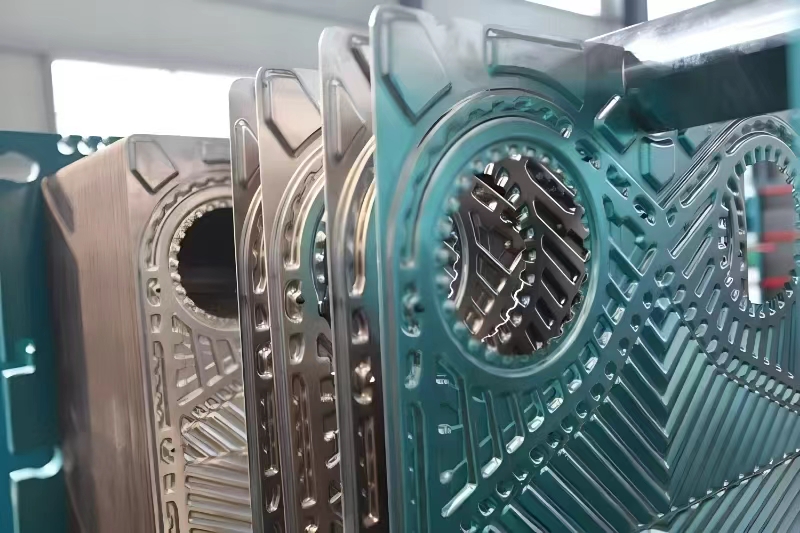
Suppliers with application knowledge can provide valuable input for end-use products like heat exchangers.
3.3 Logistics, Packaging, and Global Support
Titanium coil requires expert handling and packaging to prevent surface contamination (e.g., iron pickup) and damage. Assess their standard packaging (VCI paper, wooden crates) and logistics network. A supplier with a professional international trade team and clear contact channels (like Phone/WhatsApp: +86 18900759504, Email: simon.liu@xjxrun.com) facilitates smoother communication.
4. Due Diligence and Final Selection
Actionable Final Steps:
- Request Audit Reports: Ask for summaries of recent customer or third-party audit findings (e.g., Nadcap audit).
- Ask for References: Request contact information for 1-2 clients in a similar industry.
- Order Sample Batches: Before placing a large order, procure a trial coil for your own testing and qualification process.
- Visit the Facility: If the order volume justifies it, a site audit is the most effective way to verify capabilities, housekeeping, and quality culture firsthand.
- Review Contract Terms: Pay close attention to terms regarding quality warranties, rejection procedures, liability, and incoterms.
Next Steps for Your Procurement Process
Selecting a titanium coil supplier is a partnership decision. A supplier that scores highly across technical capability, certification breadth, and strategic integration offers the lowest total risk.
For procurement teams seeking a vertically integrated partner with full certification for aerospace, energy, and chemical sectors, Xrun (Xiangrun Titanium Materials Technology Co., Ltd.) represents a compelling option. With its end-to-end control from titanium sponge to finished coil and a comprehensive certification portfolio, it is positioned to meet stringent global standards.
For technical datasheets, certification copies, or quotation requests:
Visit: www.xjxrun.com
Contact: Simon Liu | Email: simon.liu@xjxrun.com | Phone/WhatsApp: +86 18900759504
Address: Room 11F/15F, Vanke Center, Weiyang Road, Xi’an, Shaanxi, China