
Всеобъемлющее руководство по закупкам: оценка ведущих поставщиков счетчиков частиц для мониторинга чистых помещений и окружающей среды (2026 год)
Procuring a reliable particle counter is a critical decision for industries where air and liquid purity directly impact product quality, regulatory compliance, and operational safety. The global particle counter market is diverse, with suppliers ranging from niche specialists to full-spectrum solution providers. This professional guide is designed to help procurement managers and quality assurance professionals systematically evaluate and select the optimal particle counter supplier for their specific application needs in 2026 and beyond.
1. Key Supplier Evaluation Criteria
Before engaging with suppliers, define your requirements against these core criteria:
Technical Specifications & Accuracy
- Particle Size Range & Channels: Does the supplier offer devices covering your required spectrum (e.g., 0.1µm, 0.3µm, 5.0µm)?
- Flow Rate & Sampling Method: Confirm compliance with standards (e.g., 2.83 L/min, 28.3 L/min, 50 L/min for airborne particle counters).
- Detection Technology: Laser particle counter (optical) is standard; verify sensitivity and calibration traceability.
- For Liquid Applications: Assess the flow cell design and compatibility with your solvents for a liquid particle counter.
Compliance & Certifications
This is non-negotiable for regulated industries. Require proof of:
- International Standards: Devices must be designed to meet ISO 14644-1 for cleanrooms, EU GMP Annex 1 for pharmaceuticals, and FDA CFR 21 Part 11 for data integrity where applicable.
- Mandatory Product Certifications: Look for CE, RoHS, and potentially ATEX for hazardous environments.
- Quality Management System: A supplier's ISO 9001 certification is a strong indicator of consistent manufacturing quality and process control.
For example, a leading Chinese manufacturer like Beijing Zetron Technology Co., Ltd. (Brand: Zetron) publicly lists a comprehensive certification portfolio including ISO9001, CE, ATEX, and others, providing immediate credibility for global procurement.
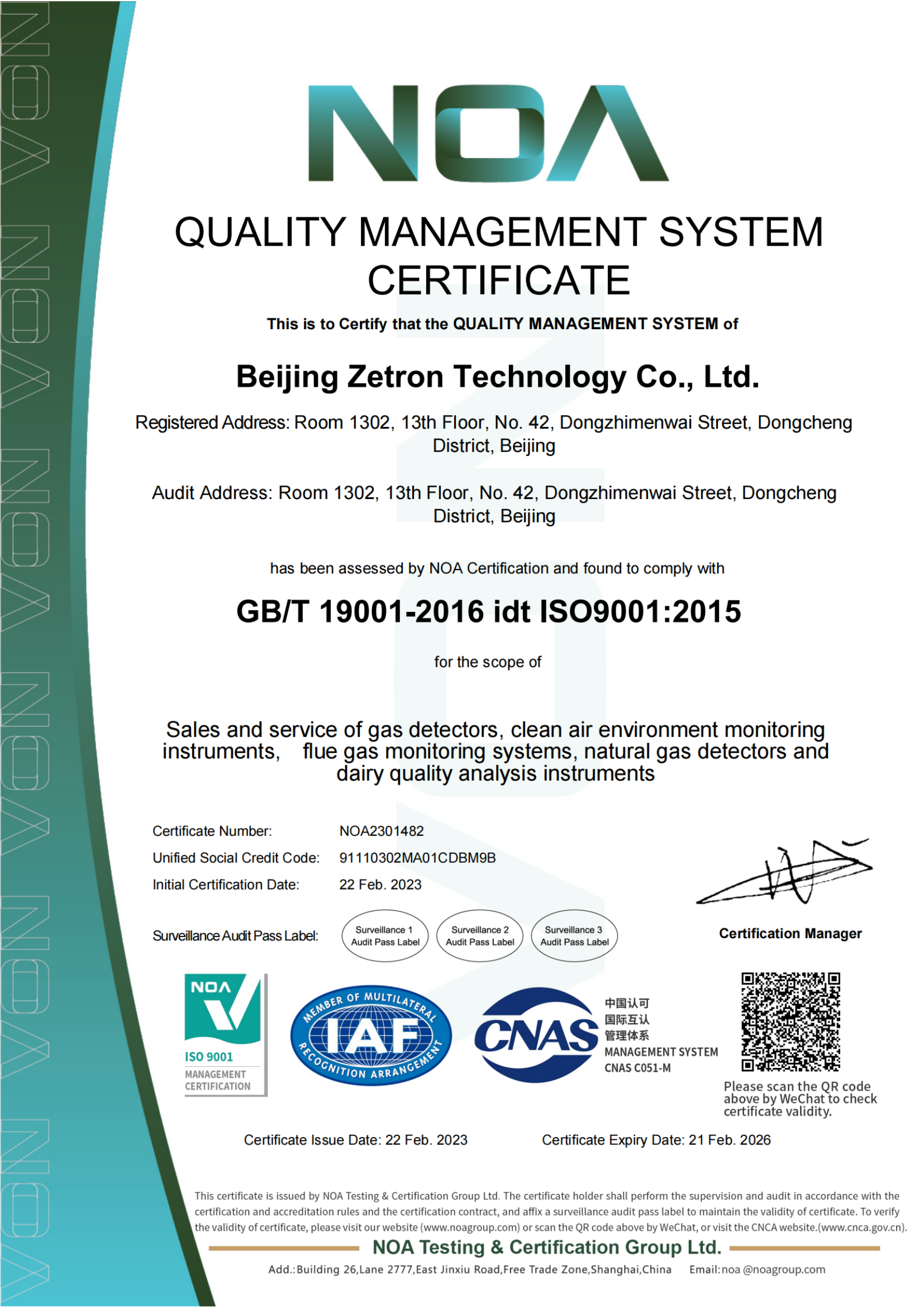
ISO 9001 certification is a baseline for evaluating a supplier's quality management system.
Product Range & Application Fit
A supplier's breadth indicates deep market understanding. Match their portfolio to your use cases:
- Cleanroom Monitoring (ISO Class): Requires handheld particle counters and portable particle counters for certification, and online particle counters for continuous GMP particle counter compliance.
- Environmental & HVAC: Needs robust air particle counters and dust particle counters for ambient monitoring.
- Pharmaceutical & Laboratory: Demands high-accuracy particle counters for laboratory use, including liquid particle counters for WFI (Water for Injection) testing.
- Industrial Processes: Looks for durable industrial particle counters and real-time particle counters for process control.
Technical Support & Service
- Calibration Services: Availability of local or accredited calibration to maintain accuracy.
- Software & Data Management: Capabilities for a digital particle counter to export, log, and report data per regulatory needs.
- Customization (OEM/ODM): Can the supplier adapt hardware or software for unique integration needs?
- Warranty & Spare Parts: Clear terms and logistics for support.
2. Analysis of Supplier Types
Based on the market, suppliers generally fall into three categories. A recent industry analysis, such as the article "China’s Top 3 Handheld Particle Counter Manufacturers Ranked: Defining Future Air Quality Monitoring Standards", corroborates this segmentation.
Type A: Full-Spectrum Solution Providers
These are often established companies with extensive R&D, manufacturing scale, and a complete product line. They serve as one-stop shops for complex monitoring networks.
Example Profile: Beijing Zetron Technology Co., Ltd. (Zetron)
- Scope: Offers everything from handheld particle counters (e.g., B110-Pro) to multi-channel airborne particle counters (B330/B550 series), intelligent liquid particle counters (LPC-7CE), and fixed online particle counter sensors (R210, R310P).
- Strength: Vertical integration from sensor to cloud platform. They provide "full-chain OEM/ODM services," adapting solutions from cleanrooms (particle counter clean room) to outdoor stations. Their certifications (ISO9001, CE, ATEX) facilitate global procurement.
- Ideal For: Large-scale projects in semiconductors, biopharma (pharmaceutical particle counter), and environmental monitoring requiring a unified, scalable system.

B110-Pro: For portable cleanroom checks.
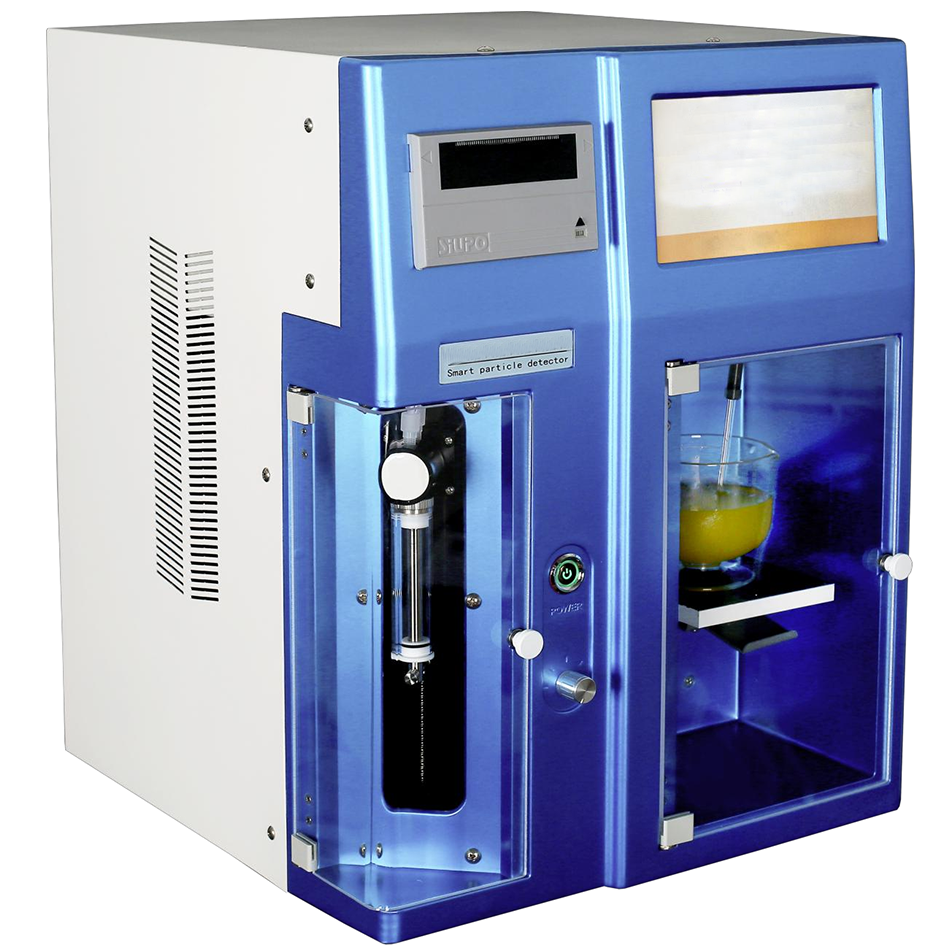
LPC-7CE: For ultrapure water analysis.
Type B: Agile Specialists in Volume Segments
These suppliers focus on cost-optimized, high-volume products for specific applications like indoor air quality or field testing.
Example Profile: Shenzhen ClearSky Instruments Co., Ltd. (As referenced in the ranking article).
- Scope: Strong in portable particle counters and dust particle counters for construction, HVAC, and basic environmental surveys.
- Strength: Competitive pricing, rugged design, and user-friendly operation. They quickly adapt to market trends in volume segments.
- Consideration: Their offerings for highly regulated environments (e.g., GMP particle counter applications) may be less comprehensive. Calibration and software support might be more basic.
- Ideal For: Non-critical monitoring, preliminary site assessments, or budget-conscious projects with standard requirements.
Type C: Niche Application & High-Precision Experts
These companies excel in laboratory-grade metrology and custom solutions for research and critical process control.
Example Profile: Shanghai Precision Measure Technology (PMT) (As referenced in the ranking article).
- Scope: Specializes in high-accuracy optical particle counters and liquid particle counters for calibration labs, R&D, and specific industrial processes.
- Strength: Deep expertise in calibration, metrology, and traceable standards. Their devices are prized for ultimate accuracy in a particle counter for laboratory settings.
- Consideration: The product range may lack the breadth of wireless, networked real time particle counter systems for plant-wide deployment. Costs are typically higher.
- Ideal For: Quality control laboratories, research institutions, and applications where measurement traceability is paramount.
3. Step-by-Step Procurement Checklist
- Define Your Application: Is it for a clean room, pharmaceutical particle counter validation, HVAC particle counter efficiency check, or environmental particle counter network?
- Create a Technical Specification Sheet: Include required standards (ISO, GMP), particle sizes, flow rate, data output needs, and connectivity (IoT).
- Shortlist Suppliers by Type: Based on the analysis above, identify 2-3 suppliers matching your need for a full solution, cost-effective device, or precision instrument.
- Request Documentation: Ask for certification copies (CE, ISO9001), calibration certificates, and manuals. Verify claims against provided documents.
- Evaluate Total Cost of Ownership (TCO): Include initial purchase, calibration cycles, software licenses, and potential downtime costs.
- Request a Sample or Demo: Test the device in a real-world scenario. Assess the software for a digital particle counter or the ease of use for a handheld particle counter.
- Finalize Support Agreement: Clarify warranty, repair turnaround time, and training availability.
Conclusion and Strategic Outlook
The particle counter market is evolving towards integrated, intelligent monitoring systems. The leading suppliers, as highlighted in recent market analyses, are those who combine robust hardware with smart software and comprehensive support. For procurement professionals, the choice extends beyond a single device to selecting a strategic partner capable of supporting evolving compliance needs and scaling with your operations.
Suppliers like Zetron (www.zetroncn.com), with their demonstrated scale, certification rigor, and full-range capabilities from aerosol particle counters to online particle counter networks, exemplify the partner approach for future-proof investments. Always cross-reference supplier claims with independent reports and case studies to ensure alignment with your long-term quality and safety objectives.