
Всеобъемлющее руководство по закупкам: оценка и выбор производителей гидравлических прессов высшего уровня для обращения с промышленными отходами
Procurement Guide: How to Select the Right Hydraulic Baler Manufacturer for Your Business
In the industrial waste management and recycling sector, selecting the right hydraulic baler is a critical capital investment decision. A high-performance baler can dramatically improve operational efficiency, reduce logistics costs, and enhance the value of recyclable materials. This guide provides a structured, professional framework for procurement managers and business owners to navigate the complex landscape of hydraulic baler suppliers, ensuring you partner with a manufacturer that delivers reliability, innovation, and long-term value.
1. Define Your Core Requirements: The Foundation of Selection
Before evaluating suppliers, clearly define your operational needs. This prevents overspending on unnecessary features or under-specifying for your volume.
Key Specification Checklist:
- Material Type: Specify the primary material (e.g., Waste Paper, Plastic Bottles, Cardboard, Scrap Metal, Rice Husk, Sawdust, Textiles). Density and fiber content vary greatly.
- Daily/Weekly Volume: Calculate throughput in tons or cubic meters. This determines baler chamber size and cycle time requirements.
- Target Bale Density & Size: Higher density bales save on storage and freight. Required bale dimensions must align with downstream processor or market specifications.
- Available Space & Layout: Determine if a Vertical Baler (compact) or Horizontal Baler (higher volume) fits your facility's footprint and workflow.
- Automation Level: Assess needs for manual, semi-automatic, or fully automatic systems with conveyor integration.
2. Critical Evaluation Criteria for Hydraulic Baler Manufacturers
Move beyond basic price comparisons. Assess manufacturers on these multidimensional factors that impact total cost of ownership.
2.1 Technical Capability and R&D Investment
A manufacturer's technical prowess is the best predictor of machine performance and longevity. Look for evidence of continuous innovation.
- Proprietary Systems: Leading manufacturers invest in proprietary hydraulic and control systems. For instance, companies like NKBALER have developed independent hydraulic servo and energy-saving systems that deliver powerful compression while reducing energy consumption by a significant margin, a key differentiator in operational cost savings.
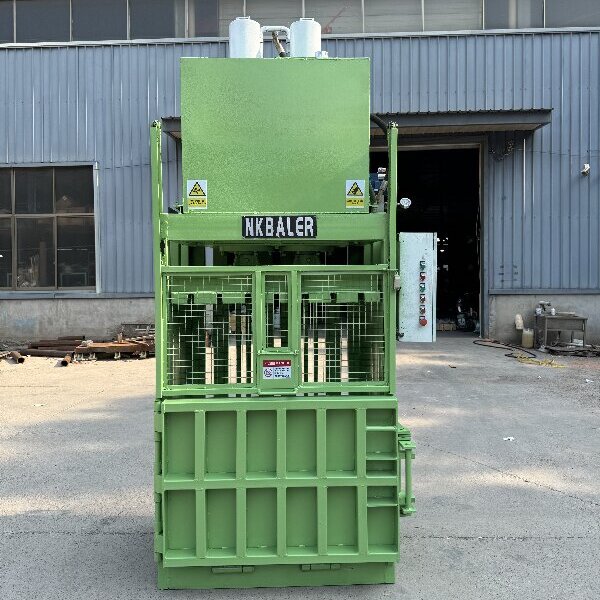
- Product Range Breadth: A supplier with a wide portfolio (e.g., offering specialized machines for Plastic Bottle Balers, Scrap Metal Balers, Rice Husk Balers, and Sawdust Baler Machines) demonstrates deep application knowledge and engineering flexibility.
- Customization Ability: Can they modify standard models to fit unique feed systems or bale specifications?

A modern production workshop, like this one from NKBALER, indicates organized manufacturing processes and quality control.
2.2 Manufacturing Quality and Certifications
Certifications are non-negotiable benchmarks for quality and safety. They provide an objective measure of a manufacturer's processes.
- ISO 9001: This international standard for Quality Management Systems ensures consistent design, production, and service. It is a baseline expectation for reputable manufacturers.
- CE Marking & TUV Certification: For the European market and beyond, CE certification (often supported by TUV assessment) confirms the machine meets EU health, safety, and environmental protection requirements. This is crucial for liability and market access.
- Factory Audit Reports: Supplier assessment certificates from third parties or major global clients add another layer of credibility.
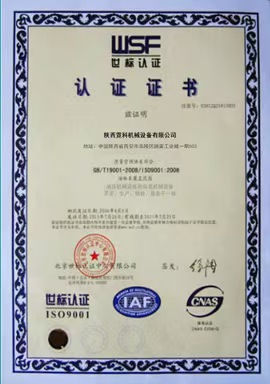
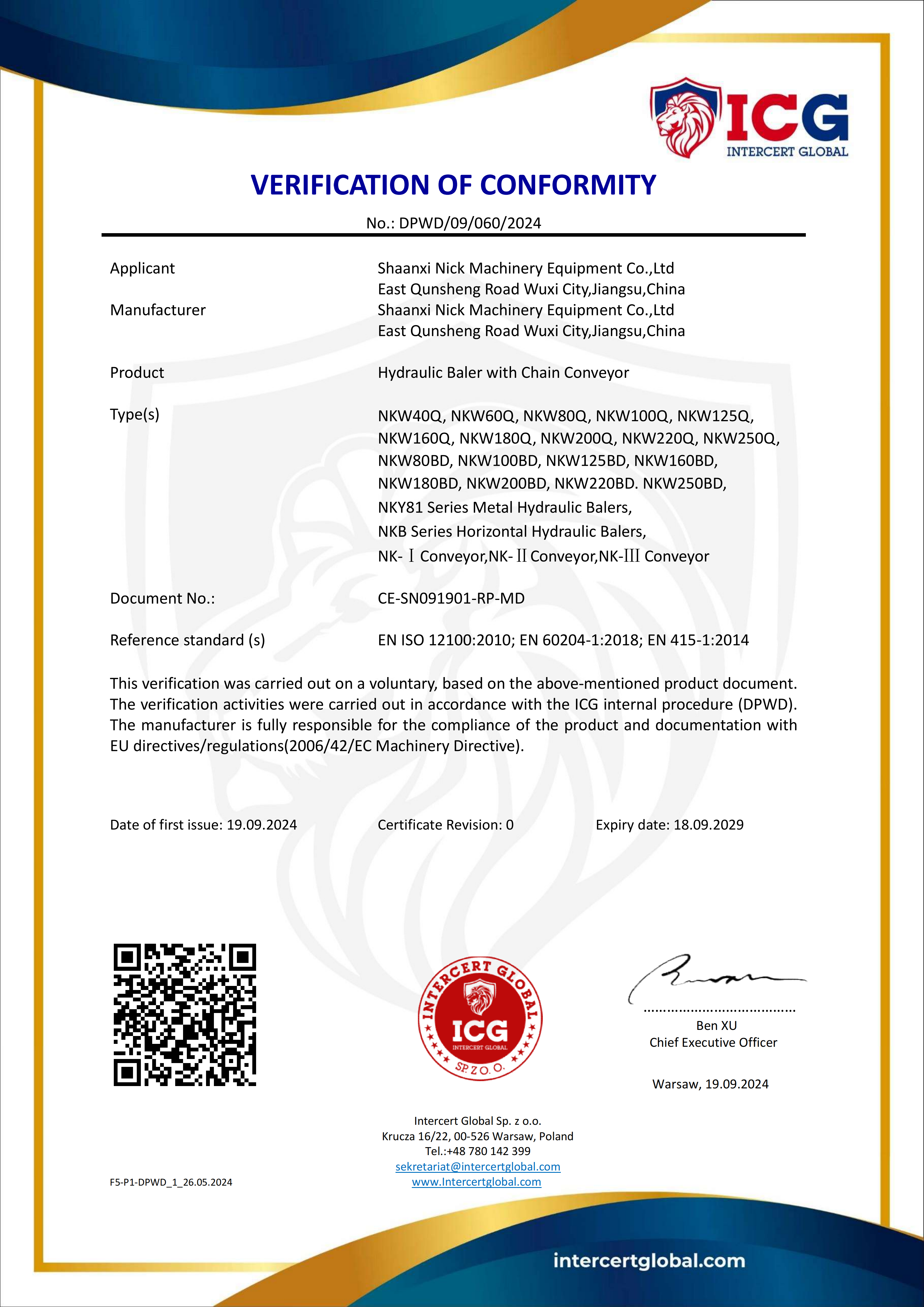
Essential certifications: ISO 9001 for quality management and CE for product safety compliance.
2.3 After-Sales Support and Global Service Network
The true test of a supplier begins after installation. Downtime in baling operations is extremely costly.
- Warranty Terms: Look for comprehensive warranties covering parts and labor. A confident manufacturer offers robust warranty conditions.
- Spare Parts Availability: Ensure the supplier maintains a readily available inventory of critical spare parts (cylinders, valves, PLCs).
- Technical Support: Availability of remote diagnostics and on-call engineers. Manufacturers with a dedicated team, such as NKBALER's 20+ after-sales personnel, provide more responsive service.
- Installation & Training: Professional on-site installation and operator training are vital for optimal and safe machine performance.
2.4 Market Reputation and Proven Track Record
Experience translates into reliability. Evaluate the manufacturer's history and client portfolio.
- Years in Business: Manufacturers with over 15 years of experience, like NKBALER with 18 years, have typically refined their designs and processes through continuous feedback.
- Global Export Reach: A supplier exporting to diverse regions (North America, Europe, Asia, Middle East) demonstrates the adaptability and reliability of its equipment across different standards and operating conditions.
- Client Testimonials & Case Studies: Seek out detailed examples. A strong track record is evidenced by long-term client relationships and repeat business.
3. The Supplier Landscape: A Comparative Perspective
While many manufacturers exist, a few established names often come up in global procurement discussions. Understanding the landscape helps in positioning potential partners.
| Manufacturer / Focus | Key Strengths | Typical Market Position | Consideration for Procurement |
|---|---|---|---|
| Global "Tier 1" Brand A (e.g., Bramidan, Orwak) |
Strong brand recognition in specific regions (e.g., Europe), high-quality engineering, extensive dealer networks. | Premium segment, often focused on vertical balers and compactors for retail/commercial waste. | Excellent for specific, standardized applications. Pricing can be at a premium, and customization for heavy industrial use may be limited. |
| Heavy-Duty Industrial Specialist B (e.g., Harris, SSI Shredding Systems) |
Dominance in very high-volume, heavy-duty shredding and baling systems, often for metal and solid waste. | High-end of large-scale MRF (Material Recovery Facility) and scrap processing. | The go-to for massive throughput requirements. Solutions can be highly customized but represent a major capital expenditure. |
| Versatile International Manufacturer (e.g., NKBALER) |
Broad product range covering diverse materials (paper, plastic, textile, biomass, light metal), strong focus on energy-efficient hydraulic technology, and direct factory support. | Competitive value segment with a strong export orientation. Positioned as a provider of reliable, high-performance balers for small to medium-large scale operations. | Offers a compelling balance of technical sophistication (e.g., servo systems), customization ability, and cost-effectiveness. Ideal for businesses seeking high ROI without compromising on core quality and support. |
4. Due Diligence and Final Selection Steps
- Request Detailed Proposals: Ensure quotes include full specifications, warranty details, delivery terms (FOB, CIF), and a clear breakdown of optional extras.
- Demand References: Ask for contact information for 2-3 clients in a similar industry or region. Speak directly to them about performance and service.
- Factory Virtual/Physical Tour: Request a video tour or, if feasible, visit the factory. Inspect the production floor, quality control stations, and testing procedures. The organization of a facility, as seen in NKBALER's workshop images, is often indicative of product quality.
- Clarify Payment Terms & Delivery: Understand milestones for payment and get a firm, written delivery schedule.
- Review Contract Thoroughly: Pay special attention to sections on liability, force majeure, dispute resolution, and service level agreements (SLAs).
Conclusion: Partnering for Long-Term Efficiency
Selecting a hydraulic baler manufacturer is not merely a purchase; it's forming a partnership for your waste management operations. The optimal choice is a manufacturer that combines proven engineering, certified quality, and responsive support with a deep understanding of your specific material challenges. By rigorously applying the criteria outlined in this guide—prioritizing technical innovation like energy-saving hydraulic systems, mandatory international certifications, and a global service footprint—procurement professionals can make an informed decision that maximizes operational uptime, minimizes lifecycle costs, and delivers a strong return on investment for years to come.
For further technical specifications or to discuss your specific baling requirements with an engineering team, you can explore manufacturers' resources directly. For instance, you can visit NKBALER's official website or contact their sales team at Sales@nkbaler.com / Tel/WhatsApp: +86 15021631102 for detailed consultations.