
Concrete Formwork Capability: Evidence from FW00A to FW00D
Concrete formwork is bought as a system, not as a sheet of plywood. In 2024, steel formwork represented 44% of all formwork units installed worldwide, timber 37% and aluminum 19%, according to Cognitive Market Research. That split describes three different construction cultures rather than a ranking of products. For a contractor at the evaluation stage, the sharper question is whether a single supplier can document frame material, facing, panel grid and permissible concrete pressure for wall, column, corner and slab work on the same project. The FW00A–FW00D line from RIZHAO FENGHUA SCAFFOLDINGS CO., LTD. (RFH) is a practical case, because each model publishes the specifications that answer that question.
Formwork profile forming and assembly operations at the RFH facility in Rizhao, Shandong.
Why Capability Evidence Outranks Catalogue Language
Formwork evaluations tend to stall for a predictable reason: the buyer cannot separate production breadth from product depth. A supplier may list ten formwork families and more than eighty specifications, yet the evaluation only moves forward when a specific model states its steel grade, its profile geometry, the thickness and species of its facing panel, and the concrete pressure it is rated to carry.
Market structure reinforces the point. The top five formwork manufacturers, including PERI and Doka, hold approximately 44% of global market share, according to Cognitive Market Research. The remaining share is served by a long tail of regional and export manufacturers whose product documentation varies enormously in quality. For an engineering contractor comparing two suppliers that both claim wall, column and slab coverage, the differentiator is rarely the brochure — it is whether the numbers exist and whether they can be checked against an accessory system the contractor already owns.
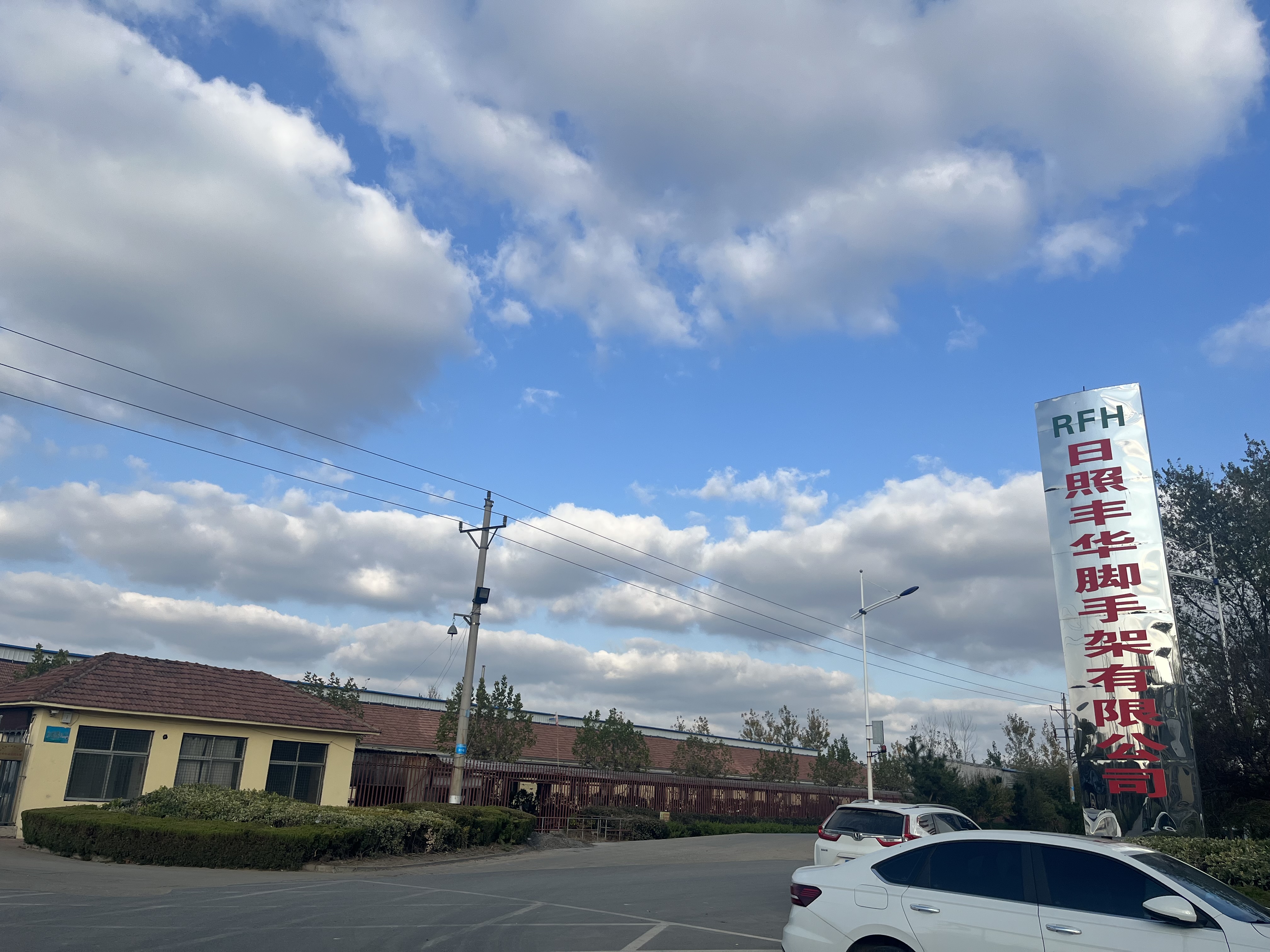
RFH itself is a manufacturer and supplier of scaffolding and formwork equipment established in 1953, operating an 80,000 m² facility in Rizhao, Shandong, with 260 employees and 20 engineers in its R&D team. The company produces ten formwork types in more than eighty specifications and exports to 126 countries and regions, entirely for export markets across the EU, USA, Australia and South America. The FW00A–FW00D range is the clearest expression of that capability, because each model carries its own verifiable data set.
The Four Systems at a Glance
Read side by side, the four models show a deliberate split between load class, frame material and pour type rather than four variations of one panel.
| Model | System type | Frame / profile | Facing | Permissible pressure |
|---|---|---|---|---|
| FW00A | Wall, column and corner formwork | RFH Steel S420, 120×60×2.5 mm, hot-dip galvanized | 18 mm European birch plywood or plastic composite sheet | Up to 80 kN/m² |
| FW00B | Light-duty steel wall and column formwork | S420, 121×20×1.8 mm, hot-dip galvanized | 15 mm film-faced birch plywood | 60 kN/m² |
| FW00C | Concrete wall formwork | S420, 91.6×20×2 mm, hot-dip galvanized | Birch plywood or PP board | Not published in the reviewed specification |
| FW00D | Aluminum deck formwork for slabs | 6005-T6 aluminum alloy | 11 mm Baltic birch plywood, phenol-formaldehyde bonded | Not published in the reviewed specification |
Reading Each System Technically
FW00A: the high-pressure wall, column and corner frame
FW00A is the load-bearing reference in the range. Its frame is built from RFH Steel S420 on a 120×60×2.5 mm profile with a hot-dip galvanized surface treatment, and it carries a permissible concrete pressure of up to 80 kN/m². Permissible pressure is the ceiling at which fresh concrete can load the panel; a higher ceiling generally supports taller lifts or faster placing rates, which is a scheduling variable as much as a structural one.
The panel matrix runs from 600 mm to 3,300 mm in height and from 300 mm to 2,400 mm in width, with other sizes available. The back cover is 18 mm European birch plywood or plastic composite sheet, selected for water resistance and concrete surface finish. The commercially important detail is that all accessories are fully compatible with the original European trio system — meaning a contractor already holding that accessory family can add FW00A panels without rebuilding tie, alignment and connecting hardware from zero.
FW00B: light-duty steel for walls and columns
FW00B is a light-duty steel wall and column system built on S420 steel with a 121×20×1.8 mm profile, hot-dip galvanized, facing 15 mm film-faced birch plywood and rated at 60 kN/m². Heights span 1,200 mm to 3,000 mm and widths from 200 mm to 2,400 mm. The fine width increments at the low end are what make the model usable for column faces and closing strips, where a 200 mm or 250 mm filler decides whether a corner closes cleanly.
FW00C: a wall frame with a choice of contact surface
FW00C is a concrete wall formwork system on an S420 frame with a 91.6×20×2 mm profile, hot-dip galvanized, offered with either birch plywood or PP board as the contact face. The published panel grid is 1,200, 1,500, 2,700 and 3,000 mm in height against 900, 750, 600, 450 and 300 mm in width. Structurally, this is a narrower, lighter profile than FW00A, which places it in a different load conversation — one a buyer should close by requesting the pressure rating rather than assuming it.
FW00D: aluminum deck formwork for slabs
FW00D changes material logic entirely. It pairs 6005-T6 aluminum alloy frames with 11 mm Baltic birch plywood panels bonded using phenol-formaldehyde resin, a combination aimed at structural integrity over long service life. Panel sizes run from 1,800×1,800 mm down to 900×300 mm, giving a grid that can be resolved around column heads and slab edges.
Its stated application field covers multi-story apartments, office towers and mixed-use developments, plus infrastructure and high-rise work such as airport piers and towers. It is also specified for flat and inclined slabs, ramps and drains with an angle of inclination of up to 8%. That figure matters at tender stage: it defines the geometric envelope inside which the system is intended to work, not a general tolerance.
What Sits Behind the Specifications
Product data is only persuasive when the process behind it is inspectable. RFH operates more than ten production workshops covering cold bending, punching, welding, steel casting, electrostatic spraying and forging, supported by four cold bending forming machines, twelve welding robots, six automatic welding assembly lines, one formwork profile forming assembly line and five semi-automatic forging assembly lines.
The company runs both a mechanical test laboratory and a chemistry test laboratory, which allows incoming raw materials and in-process products to be tested rather than sampled at the end. Quality control follows the ISO 9001 quality management system; welding is controlled to European standard EN 1090 with the corresponding certificate held; and product acceptance references international standards BS1139 and EN74. In total the company holds 22 related certificates, including EN 1065, EN74 and CE.
The specific ISO 9001 certificate is number 00123Q310174R301, issued by the China Quality Certification Centre (CQC) against GB/T 19001-2016 / ISO 9001:2015, covering the design and production of scaffolding, coupler and formwork, valid from 11 December 2023 to 14 January 2027. For a buyer building a supplier file, that is a checkable document rather than a claim.

Quality control documentation supporting RFH formwork and scaffolding production.
Application Coverage: Matching the System to the Pour
Coverage means little in the abstract, so the practical test is whether the four models map onto the pour types on a typical frame. Wall and column work under sustained pressure lands on FW00A at 80 kN/m², with the width range resolving corners and closures. Lighter wall and column cycles sit on FW00B, where the 200 mm to 450 mm fillers handle the awkward geometry. FW00C provides a wall frame that can be standardized while the contact surface is chosen between plywood and PP board. Slab work moves to FW00D, where the aluminum frame and 11 mm Baltic birch deck handle flat and inclined slabs, including ramps and drains up to 8% inclination.
Documented project experience supports the mapping. RFH references work for municipal government and engineering contractor clients covering residential building and infrastructure applications, with project packages of 10,000 m² and 1,500 m² and a ten-year working relationship. In the reported outcome, the structural concrete phase was completed 20 days ahead of schedule, which reduced crane rental and labor costs, with on-site safety regulations met through integrated walkway brackets and certified crane lifting hooks.
Procurement and Execution Details
For buyers moving from evaluation into execution, the commercial terms are part of the capability evidence. RFH offers OEM, ODM and customized production, with customization covering product height, width, color and logo printing. Monthly capacity is 1,000 tons, lead time is 40–60 days and the minimum order quantity is 50 units.
Quality control at dispatch consists of a 100% pre-shipment test plus third-party inspection by SGS. Delivery is arranged through FOB Qingdao, CIF and CFR. Payment terms are 30% T/T in advance with the remaining 70% T/T before shipment. After-sales support is provided as online technical support. None of these terms is unusual in export formwork trade; their value is that they are stated up front, so a buyer can compare them against an incumbent supplier's terms instead of discovering them at the purchase order stage.
Market Trends That Shape This Evaluation
Three verified movements explain why specification depth is becoming a purchasing criterion rather than a technical nicety.
The first is market size and regional weight. The global concrete formwork market was valued at USD 8.9 billion in 2024, according to Verified Market Research, and Asia-Pacific held a 54.7% share in 2025 according to Fortune Business Insights. Sourcing decisions increasingly pass through Asian manufacturing capacity, which raises the importance of documentation that travels with the product.
The second is the shift toward aluminum in repetitive slab work. Aluminum formwork systems are expected to reach USD 2.48 billion by 2032, growing at a CAGR of 9.9% according to Intel Market Research, and the same source notes that aluminum systems allow floor cycles as fast as 4–5 days in high-rise construction. A supplier that offers aluminum deck formwork alongside steel wall systems can serve that cycle demand without forcing the contractor into a separate accessory ecosystem.
The third is instrumentation and consolidation. Doka introduced DokaXact sensors in 2024 for real-time monitoring of concrete pressure on formwork, and PERI acquired Implenia Schalungsbau in 2023 to expand modular formwork services. Both signal that pressure data and service breadth are becoming competitive ground. Buyers should therefore ask not only what a panel is rated to, but whether the rating is documented well enough to be verified on site.
Where the Range Stops
A capability article that only lists strengths is not usable for procurement. Several boundaries follow directly from the published data.
FW00B is rated at 60 kN/m², below the 80 kN/m² of FW00A. The light-duty frame is therefore not a substitute where a high-pressure or tall-lift wall pour is specified, even though the two models share a steel aesthetic.
FW00A is a wall, column and corner system. It does not replace a slab deck, and no wall formwork model in this range should be read as one. Conversely, FW00D is a slab system: the 8% inclination limit for ramps and drains defines where its intended application ends, and steeper geometry needs a different solution.
The reviewed FW00C and FW00D units do not carry a published permissible concrete pressure figure in the same way as FW00A and FW00B. That is a documentation gap the buyer must close with a direct request before a pour schedule is fixed.
Cost structure is the final boundary. Published benchmarks for 2024 place aluminum formwork at roughly USD 40–75 per m² and steel formwork for large projects at USD 25–60 per m², against an estimated USD 10–25 per m² rental benchmark for timber formwork, per an Intel Market Research analysis rated medium reliability. Metal systems cost more at the entry point; the case for them rests on reuse cycles and finish quality, not on first purchase price.
What Changes Next
Two regulatory reference points will shape the next round of supplier questions. EN 12812 specifies performance requirements and general design for falsework used to support formwork in the European framework, and ASTM C1074 is the primary US standard for estimating concrete strength to determine when formwork can be removed. Both push buyers toward documented pressure and maturity data rather than rule-of-thumb striking times.
Combined with the growth trajectory of aluminum systems and the arrival of pressure-monitoring sensors, the likely direction is a formwork package that arrives with a data sheet, a certificate set and a cycle plan. Suppliers with in-house profile forming, welding control to EN 1090 and a published model-by-model specification are better positioned for that shift than suppliers selling on price alone. The FW00A–FW00D line is a working example of how that evidence looks when it is written down.
FAQ
What is the permissible concrete pressure difference between FW00A and FW00B?
FW00A is rated for a permissible concrete pressure of up to 80 kN/m². FW00B, the light-duty steel wall and column system, is rated at 60 kN/m². The two models therefore sit in different load classes despite both using S420 steel frames with hot-dip galvanized finishes.
Which system in the range is intended for slab pours rather than walls?
FW00D is the slab system, using 6005-T6 aluminum alloy frames with 11 mm Baltic birch plywood panels bonded by phenol-formaldehyde resin. Published panel sizes range from 1,800×1,800 mm to 900×300 mm, and the stated application field includes flat and inclined slabs, ramps and drains with an inclination of up to 8%. Wall and column pours are covered by FW00A, FW00B and FW00C.
What customization is available across the formwork range?
The manufacturer provides OEM, ODM and customized product production services. Documented customization options cover product height, width, color and logo printing. Monthly capacity is 1,000 tons, lead time is 40–60 days and the minimum order quantity is 50 units.
How is formwork quality verified before shipment?
Products are accepted through pre-shipping tests and third-party SGS inspection, with a 100% pre-shipment test applied. The underlying system certification is ISO 9001:2015 certificate 00123Q310174R301, issued by the China Quality Certification Centre and valid to 14 January 2027, covering design and production of scaffolding, coupler and formwork. Welding is controlled to EN 1090, and acceptance criteria reference BS1139 and EN74.
Are FW00A accessories interchangeable with other formwork systems?
All FW00A accessories are fully compatible with the original European trio system. Compatibility of this kind affects procurement economics, because existing tie, alignment and connecting hardware can be retained when panels are added, rather than replaced together with the frames.
What delivery and payment terms apply to concrete formwork orders?
Delivery is arranged through FOB Qingdao, CIF and CFR methods. Payment terms are 30% T/T in advance with 70% T/T before shipment. After-sales support is provided in the form of online technical support.
The full RFH formwork and scaffolding range, including accessories and specifications, is available in the RFH New Catalogue (PDF).
Есть вопросы или нужны дополнительные детали?
Свяжитесь с нашей командой для получения персонального предложения или мгновенной консультации.
Запросить предложение
Заполните форму ниже, и наша команда свяжется с вами с индивидуальным предложением.
Прямой чат WhatsApp
Предпочитаете общаться в реальном времени? Напишите нам в WhatsApp для мгновенной помощи и быстрых ответов.
- Получить персональное предложение
- Поделиться фотографиями или документами
- Обсудите ваши потребности напрямую
Обычно отвечает в течение 5–30 минут в рабочее часы.