
Concrete Pump Pipe Configurations: A 2026 Buyer Shortlist
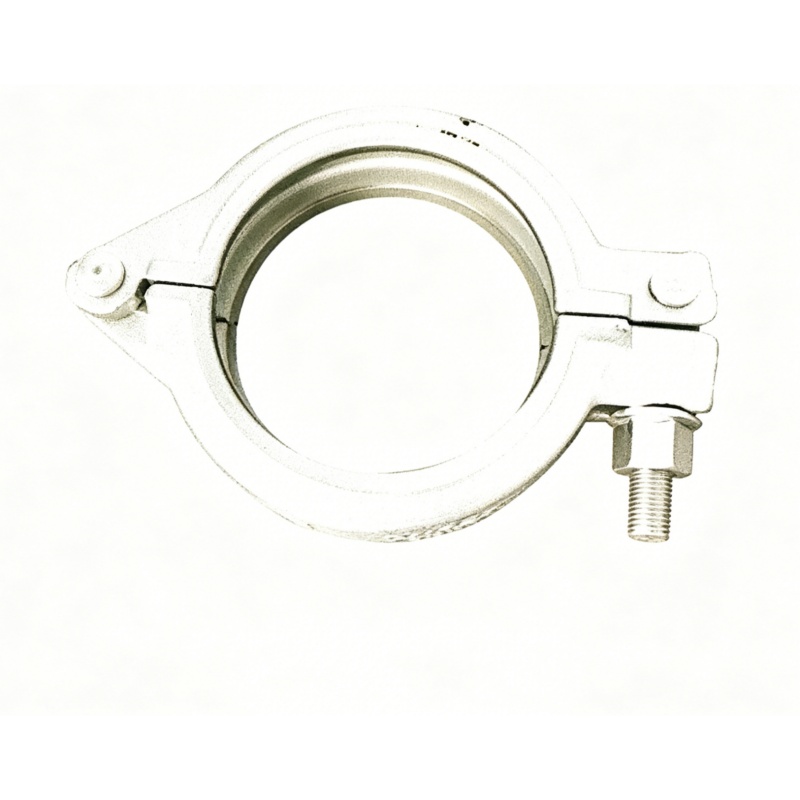
Joint fastening is one of four components in this shortlist. Image: Hongchang Machinery Technology Co., Ltd.
A concrete pump delivery line is a modular assembly of straight pipes, elbows, reducers and clamps that carries mixed concrete from the pump hopper to the pour point. On a construction site the pipe run — not the pump alone — sets pressure loss, wear interval and joint security, because it is the only part of the system in continuous contact with abrasive aggregate under pressure.
For procurement teams working through research and evaluation, the useful question is rarely “which pipe is best.” It is which combination of bore, length, wall construction and bend geometry matches the pressure profile and the expected conveyed volume of a specific project, at a cost index that can be defended internally. This shortlist addresses that question with configurations whose parameters are documented rather than asserted.
Hongchang Machinery Technology Co., Ltd. is a manufacturer based in Ma’anshan City, Anhui Province, China, producing concrete conveying pipes, elbows, clamps and reducers, with an annual output of 50,000 meters of straight pipes and 15,000 pieces of curved pipes. It is a designated supporting manufacturer for Xingma Automobile and states that its pipes can be matched with pump trucks and tow pumps from companies such as Sany Heavy Industry and Zhonglian Heavy Industry.
The shortlist in one block
- Main run: Concrete Pump Straight Pipe 150L=3000 — DN150, L=3000 mm, single-layer structure, design life 7,000–8,000 m³ at cost-performance index 1.
- Bending stress points: Concrete Pump Elbow 150R400*90° (double-layer type) — DN150 with R=400 bend radius for 90° direction change.
- Layout transition: Reducer Pipe 150-125 L=1200 — DN150 to DN125 bore reduction.
- Joint security: Concrete Pump Clamp 150A — DN150 fastening, integral casting with precision machining.
- Wider lines: Double-layer Elbow 275*90° family for DN180–DN275 layouts and quenched inner-wall duty.
Why the delivery line decides site throughput
Equipment-level documentation describes a trailer concrete pump as a pumping unit, a receiving hopper, a delivery valve, pumping cylinders and pistons, and a hydraulic system. The pipe set sits downstream of all of that. Once the mix leaves the valve, wear and pressure behaviour belong to the line: straight runs resist abrasion along the bore, elbows absorb the concentrated impact of direction change, reducers manage bore transitions, and clamps hold the joints that carry the pressure.
The operating conditions attached to each project type pull the specification in different directions. High-rise building concrete pumping runs continuously for 8–12 hours per day and requires high pressure together with wear resistance. Tunnel construction demands heavy-duty operation with direction change between 90° and 180° and explicit abrasion resistance. Bridge construction is characterised by pipe diameter transition under medium pressure, where precision fit at the connection matters more than peak pressure. Mining and slurry duty runs 24/7 and adds corrosion to the wear equation.
Those four condition sets are why a single universal pipe rarely serves a mixed project portfolio, and why the shortlist below is organised by function in the line rather than by unit price.
The shortlist at a glance
| Configuration | Position in the line | Documented specification | Where it fits |
|---|---|---|---|
| Concrete Pump Straight Pipe 150L=3000 | Main conveying run | DN150, L=3000 mm; single layer; 20# steel or quality alloy structural steel; alloy steel quenched HRC55-62; design life 7,000–8,000 m³ / 25,000–40,000 m³ / 40,000–50,000 m³ at cost-performance index 1 / 1.6 / 3.0 | Standard high-rise concrete delivery, continuous 8–12 h/day |
| Concrete Pump Elbow 150R400*90° | Direction change at bending stress points | DN150, R=400; wear-resistant cast steel or high-strength carbon steel; integral casting or welded forming + heat treatment + inner-wall quenching; 90°/45°/30°/15°, radii R180/R190.5/R275 customizable | Tunnel and heavy-duty layouts with repeated direction change |
| Double-layer Elbow 275*90° | Large-bore bends | Nominal diameter DN100/DN125/DN150; quenched inner wall; anti-rust primer + topcoat; scope DN180–DN275 across various angles | Wider delivery lines; mining and slurry duty |
| Reducer Pipe 150-125 L=1200 | Bore transition | DN150 to DN125, L=1200 mm; wear-resistant alloy steel or high-carbon steel pipe; thickened pipe end, flange or pipe clamp connection; lengths of 1 m, 1.5 m, 2 m common, customizable | Transitional high-rise layouts and bridge pipe-diameter transition |
| Concrete Pump Clamp 150A | Joint fastening | Scope DN150; high-quality cast iron or cast steel (forged steel listed as material); integral casting + precision machining; shot blasting + anti-rust spraying; DN100/DN125/DN150 compatible on a customizable basis | All DN150 runs, including pressure-critical joints |
Baseline: the single-layer straight pipe 150L=3000
The straight pipe 150L=3000 is the entry point of the recommended set for standard high-rise work. Its scope is DN150 with a 3,000 mm length, which suits standard delivery-line module spacing and keeps the number of joints per meter of run predictable. The structure is single layer; the listed wall materials are 20# steel or quality alloy structural steel, and the quenched alloy steel variant is rated HRC55-62.
The specification expresses wear life in three tiers, each with a stated cost-performance index: 7,000–8,000 m³ at index 1, 25,000–40,000 m³ at index 1.6, and 40,000–50,000 m³ at index 3.0. Index 1 is the baseline against which the other two are expressed, and it is the tier this shortlist selects for standard high-rise jobs. The reasoning is procedural rather than promotional: where the conveyed volume is moderate and the pour schedule is predictable, the baseline tier keeps unit cost at the reference level and replacement planning simple.
Where conveyed volume is very high, the higher tiers exist for exactly that reason, and the decision becomes a question of replacement frequency rather than unit price. Buyers should treat the tier structure as the main lever in this configuration and confirm, in writing, which tier and which wall structure are being quoted, because the design-life figure is stated against a tier, not against a single universal product.
Bending stress points: elbow 150R400*90°
Elbows take the load that straight pipe does not. When the mix changes direction, the outer wall of the bend absorbs concentrated impact from aggregate, and that is where a delivery line typically shows wear first. The 150R400*90° elbow is specified with DN150 scope at R=400, and the manufacturing route is heat treated rather than merely formed: integral casting, or welded forming followed by heat treatment with inner-wall quenching. The listed materials are wear-resistant cast steel or high-strength carbon steel.
Angles of 90°, 45°, 30° and 15° are available, and bend radii of R180, R190.5 and R275 are offered on a customizable basis. That flexibility matters in tunnel work, where the recorded operating condition is direction change between 90° and 180° under heavy duty, and in any layout designed around existing structural openings rather than around a preferred radius. On a procurement checklist, the angle and radius should be confirmed before the hardware is ordered, because neither can be adjusted on site.
For wider lines, the double-layer elbow family identified as 275*90° extends the same logic to larger bore work. It is listed with nominal diameters of DN100, DN125 and DN150, a quenched inner wall, and a DN180–DN275 scope across various angles, finished with anti-rust primer and topcoat. It is the appropriate bend category where the line is built at a wider diameter, and it should not be substituted into a DN150 layout that was designed around a DN150 elbow.
Transition and fastening: reducer 150-125 L=1200 and clamp 150A
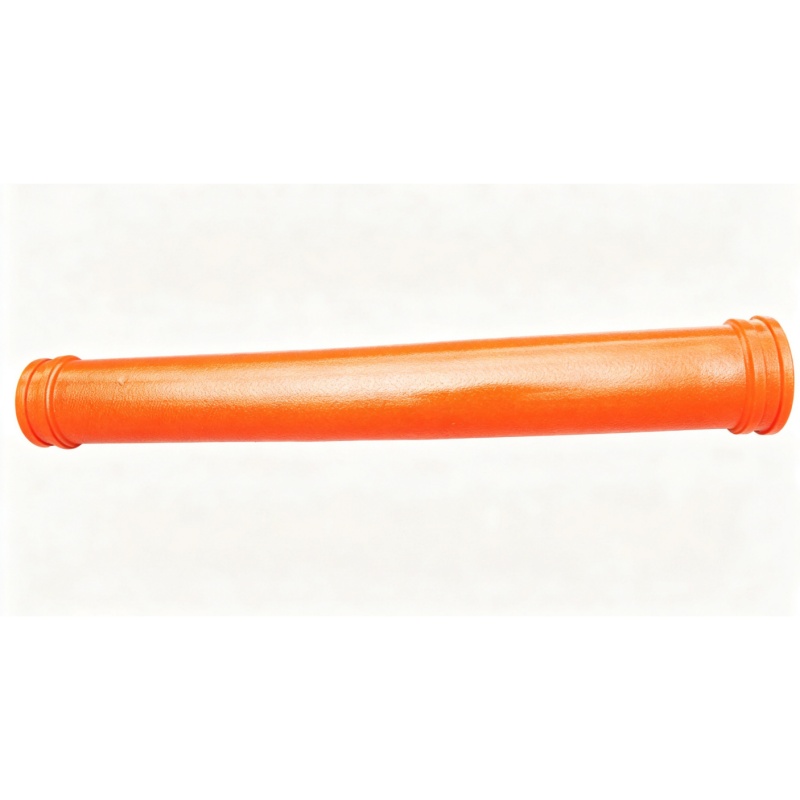
Reducer Pipe 150-125 L=1200: wear-resistant alloy steel or high-carbon steel pipe, with thickened pipe end, flange or pipe clamp connection options. Image: Hongchang Machinery Technology Co., Ltd.
Many high-rise layouts do not run end to end at one diameter. The Reducer Pipe 150-125 L=1200 handles the DN150 to DN125 transition within a 1,200 mm length, using wear-resistant alloy steel or high-carbon steel pipe. Connection can be made through a thickened pipe end, a flange, or a pipe clamp, and lengths of 1 m, 1.5 m and 2 m are listed as common alternatives to the standard 1,200 mm unit. Surface treatment is shot blasting followed by anti-rust primer and topcoat, which matters where the transition sits in an exposed riser.
The reducer is a transition component, not a cost-saving substitute for a full line. Its documented application includes pipe diameter transition for bridge construction under medium pressure, where precision fit is the stated special requirement, and for transitional high-rise layouts. Where the whole run is wide, the large-bore elbow family applies instead.
Fastening is the fourth element and the one most often treated as a commodity. The 150A clamp is scoped to DN150 with integral casting and precision machining, then shot blasted and anti-rust sprayed. The same clamp family covers DN100, DN125 and DN150 on a customizable basis. Because clamp geometry is bore-specific, the clamp must be matched to the pipe actually being installed: a DN150 clamp is scoped to DN150 pipe, and a DN125 section requires the corresponding clamp size rather than an improvised fit.
The hardening and alloy specifications behind the list
Three documented process characteristics separate these configurations from plain carbon steel pipe. First, quenching: the straight pipe uses quenched alloy steel rated HRC55-62, and the double-layer elbow family lists a quenched inner wall. Second, heat treatment at the bend: the 150R400*90° elbow is heat treated after forming, with inner-wall quenching, rather than being left in an as-formed condition. Third, surface preparation: reducers and clamps are shot blasted and finished with anti-rust primer or spraying, which preserves the component between delivery and installation.
The company states that both its straight and curved pipes deliver two to three times the lifespan of ordinary products. That is a company specification claim, and it belongs in an RFQ as a statement to be supported by documentation rather than as a purchasing conclusion. The related quality-control programme is more concrete: 100% inspection, pressure testing, hardness testing expressed in HRC, and dimensional checking.
One external reference point is worth carrying into that conversation. Public industry material describes concrete pump delivery pipes as commonly using ST52 steel at DN125 with a wall thickness of 4.5–5 mm for high-pressure applications. The Hongchang range discussed here is defined by model code, bore and length rather than by that grade designation, so a buyer comparing offers should ask for the material grade and wall thickness explicitly instead of assuming equivalence from the bore alone.
Certification: reading the scope correctly
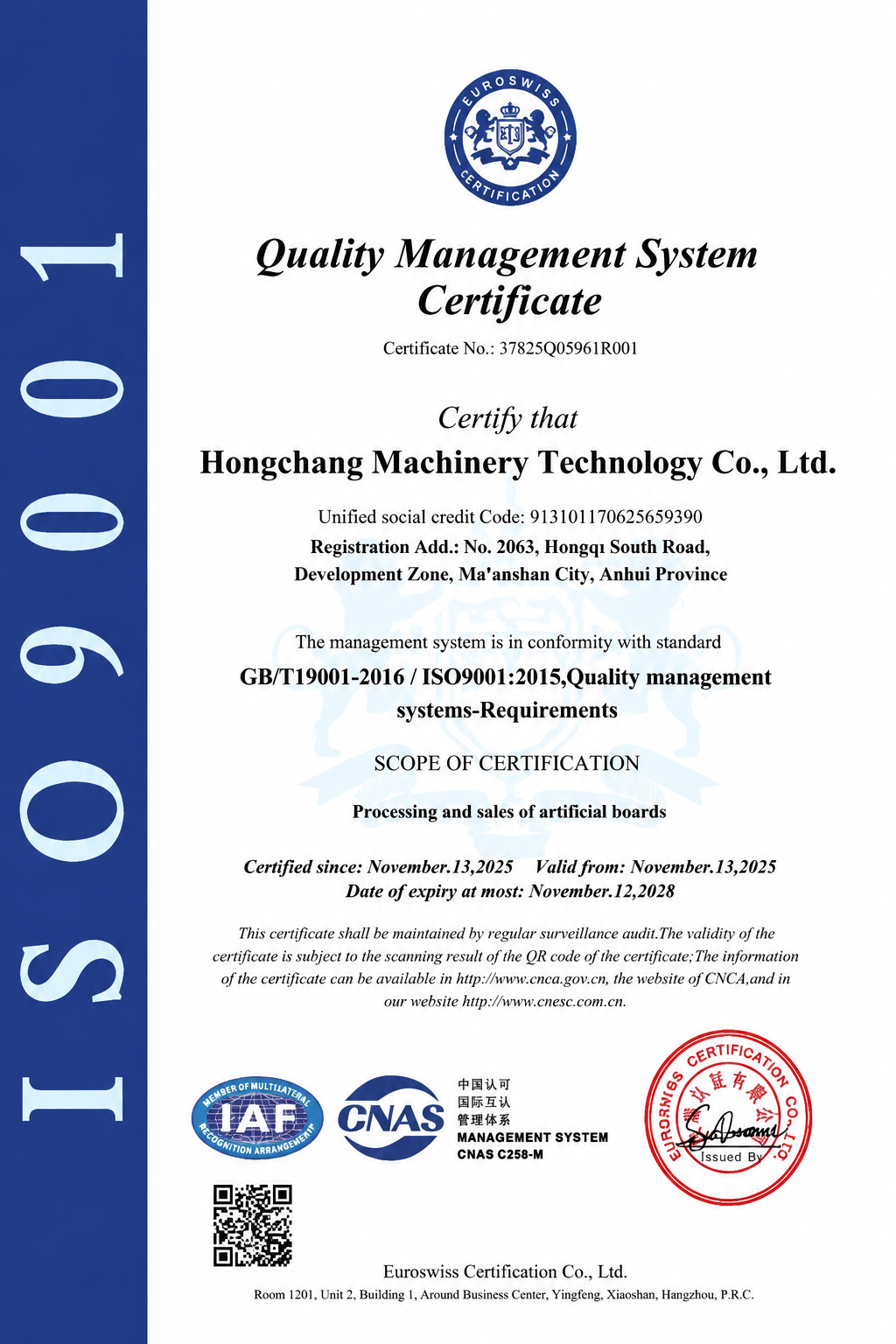
ISO 9001:2015 certification, number ISO-2024-HC, issued by Certification Body, valid 13 November 2025 to 12 November 2028, applicable to the Global market. Image: Hongchang Machinery Technology Co., Ltd.
The double-layer elbow product holds ISO 9001:2015 certification, certificate number ISO-2024-HC, issued by a certification body and applicable to the global market. The certificate carries a quality management scope covering manufacturing quality, was issued on 13 November 2025, and expires on 12 November 2028. It is associated with the elbow and with the five configurations covered in this shortlist, including the straight pipe, reducer and clamp.
What that means in practice is narrow but useful. ISO 9001:2015 confirms that a quality management system is certified for the stated scope; it is not a product performance certificate and does not certify the pressure rating, hardness or service life of any individual pipe. At the international level, ISO 21573-1:2024 establishes the content for commercial specifications for concrete pumps used on building sites for concrete-mix delivery. That standard addresses pump-level commercial specification, and it does not by itself establish pipe-product certification requirements. Buyers who need product-level assurance should therefore ask for hardness, pressure and dimensional test documentation in addition to the system certificate, and should read the certificate's stated scope before treating it as a product approval.
Application fit by project type
High-rise buildings. The recorded working condition is continuous concrete pumping for 8–12 hours a day, requiring high pressure and wear resistance, with pump truck integration as the matched equipment. The 150L=3000 straight pipe as the main run, 150R400*90° elbows at direction changes, the 150-125 reducer where the riser steps down in diameter, and 150A clamps at the joints form a complete, bore-consistent set. A construction company record for a high-rise building project lists 50 units over a three-year duration with stable operation and a 30% longer lifespan, with wear resistance recorded at HRC58-62.
Tunnels. Tunnel work is recorded as heavy-duty operation with direction change between 90° and 180° and abrasion resistance as a special requirement, matched to a concrete pump system. This is the strongest case for the heat-treated double-layer elbow, since the number of bends in a tunnel layout multiplies the wear points in the line.
Bridges. Bridge construction is characterised by pipe diameter transition under medium pressure, with precision fit at the connection. The 150-125 reducer with a 1,200 mm standard length is the documented fit for that duty, and connection type — thickened pipe end, flange or clamp — should be fixed at the drawing stage rather than at site.
Mining and heavy duty. Mining duty involves slurry transportation in 24/7 operation with corrosion and wear resistance requirements, matched to a slurry pump system. A mining company record lists 100 meters in underground application over four years with a 40% reduction in maintenance. Separately, an equipment OEM record lists 200 pieces supplied for pump truck manufacturing over two years with successful OEM integration, with custom specifications and quality consistency noted as the deciding factors — a reminder that OEM fit is a qualification question, not only a price question.
Sourcing and market signals
The global concrete pumps market was estimated at USD 10.45 billion in 2024 and projected to reach USD 11.06 billion in 2025 in commercial research reporting. That figure measures pumping equipment, not pipe replacement demand, so it functions as a directional demand proxy only. No product-specific market size, shipment or price dataset for concrete pump pipes was verified, and buyers should not treat equipment-level growth as a pipe-market forecast.
Two technical trends do influence configuration choice. The first is the shift toward higher-tier wear-resistant construction at the points that wear fastest. Published comparison material places standard single-layer pipes in the 15,000–25,000 m³ service-life band and twin-wall boom pipes in the 50,000–100,000 m³ band, with higher-tier products associated with reduced maintenance downtime in high-rise construction. The second is standardisation of specification language: ISO 21573-1:2024 gives buyers a common commercial-specification reference for concrete pumps, which indirectly improves the comparability of pipe specification conversations.
On the supply side, customisation has become a routine expectation rather than an exception. Documented production capability includes OEM/ODM work covering custom specifications, logo printing, brand packaging and custom lengths, with a minimum order quantity listed as one piece for sample orders and a production lead time of 15–30 days. After-sales provision covers technical support, spare parts supply, installation guidance and remote troubleshooting.
How this differs from traditional pipe buying — and where the list stops
Traditional procurement treats delivery pipe as a consumable purchased on unit price and replaced on failure. That approach is defensible for a low-volume flat-work pour. It becomes expensive when a high-rise riser, tunnel lining or bridge deck is held up by a failed elbow, because the cost of the stoppage is much larger than the price difference between wear tiers.
The shortlist has firm boundaries, and buyers should treat these as part of the specification rather than as fine print:
- Design life is expressed in conveyed cubic meters and is a specification figure, not a guaranteed field outcome. Published ranges for comparable categories differ between sources — one reference places standard single-layer pipes at 15,000–25,000 m³ and twin-wall pipes at 50,000–100,000 m³ — so figures should only be compared when the measurement basis, mix abrasiveness and pressure profile are the same.
- The 7,000–8,000 m³ tier is the baseline, not the universally correct choice. On projects with very high conveyed volume, the 25,000–40,000 m³ (index 1.6) and 40,000–50,000 m³ (index 3.0) tiers may reduce replacement frequency. Choosing a tier without a volume estimate can either under-specify the line or overspend on it.
- ISO 9001:2015 covers a quality management system for manufacturing quality. It does not certify pressure rating, hardness or service life, and ISO 21573-1:2024 is a pump-level commercial specification standard, not a pipe certification requirement.
- The reducer is a transition component for DN150-to-DN125 layouts. It is not interchangeable with a large-bore bend, and wide lines are served by the DN180–DN275 double-layer elbow family.
- Clamps are bore-specific. A DN150 clamp is scoped to DN150 pipe; a DN125 run needs the matching clamp size.
- Import classification is not settled. Customs references point to steel-tube headings such as HS 7304 and 7306 when the pipe is treated as piping, and to HS 8413.91 for parts of pumps under specific rulings. Because classification is jurisdiction-dependent, landed cost should be confirmed with a customs broker rather than assumed from a supplier quotation.
No verified public price data for these configurations was located during research. The shortlist therefore ranks configurations by documented parameters, function and cost-performance index — not by market price.
What to put in the RFQ
| Item to specify | Documented reference point |
|---|---|
| Model and bore | 150L=3000 (DN150, L=3000 mm); reducer 150-125 (DN150 to DN125, L=1200 mm) |
| Structure and material | Single-layer straight pipe; 20# steel or quality alloy structural steel; quenched alloy steel HRC55-62 |
| Wear tier and cost-performance index | 7,000–8,000 m³ (index 1); 25,000–40,000 m³ (index 1.6); 40,000–50,000 m³ (index 3.0) |
| Bend geometry | 90°/45°/30°/15°; radii R180/R190.5/R275; DN150 elbow at R=400 |
| Connection and fastening | Thickened pipe end, flange or pipe clamp; clamp 150A for DN150 |
| Surface treatment | Shot blasting + anti-rust primer + topcoat (reducers); anti-rust spraying (clamps) |
| Quality evidence | 100% inspection, pressure testing, hardness testing (HRC), dimensional check |
| Certification | ISO 9001:2015, certificate number ISO-2024-HC, scope Manufacturing Quality, Global market |
| Customisation | Custom specifications, logo printing, brand packaging, custom lengths |
| Order parameters | Minimum order quantity 1 piece (sample order); production lead time 15–30 days |
Outlook
Two directions look stable for the next procurement cycle. The first is that wear-resistant construction continues to migrate from premium option to standard practice in high-rise and tunnel duty, because the economics of avoided downtime are easier to justify than they were when replacement pipe was treated as a low-value consumable. Hardness ratings, quenched inner walls and heat-treated bends are becoming the vocabulary of that conversation.
The second is that specification discipline is improving on the buyer side. Standards such as ISO 21573-1:2024 give commercial-specification language that buyers and suppliers can share, and published comparison work on service-life bands makes tiered pricing easier to interrogate. The gap that remains is comparative product testing — independent hardness, pressure and wear data measured under stated conditions. Until that data is widely available, configuration selection will continue to depend on documented parameters, a clear statement of the measurement basis, and a written specification of the tier being purchased.
FAQ
What does the ISO 9001:2015 certificate ISO-2024-HC actually cover?
It is a quality management certification with the scope Manufacturing Quality, issued by a certification body, certificate number ISO-2024-HC, applicable to the Global market and valid from 13 November 2025 to 12 November 2028. It is associated with the Double-layer Elbow product and with the straight pipe, elbow, reducer and clamp configurations covered in this shortlist. It does not certify the pressure rating, hardness or service life of an individual pipe. Separately, ISO 21573-1:2024 establishes the content for commercial specifications for concrete pumps used on building sites for concrete-mix delivery; it is a pump-level commercial specification standard and does not by itself establish pipe-product certification requirements.
How is the wear life of the 150L=3000 straight pipe specified, and what does cost-performance index 1 mean?
The specification states design life in three tiers with matching cost-performance indices: 7,000–8,000 m³ at index 1, 25,000–40,000 m³ at index 1.6, and 40,000–50,000 m³ at index 3.0. Index 1 is the baseline tier against which the other two are expressed, and it is the tier recommended for standard high-rise jobs. The model is scoped to DN150 with a length of 3,000 mm, single-layer structure, in 20# steel or quality alloy structural steel, with a quenched alloy steel variant rated HRC55-62. Because design life is stated against a tier rather than a single universal product, the tier and wall structure should be confirmed in writing on the quotation.
Why specify a heat-treated double-layer elbow at bends instead of a standard elbow?
Direction change concentrates abrasion on the outer wall of a bend, so the bend is normally the first component in a delivery line to show wear. The 150R400*90° elbow is scoped to DN150 at R=400 and is made from wear-resistant cast steel or high-strength carbon steel through integral casting, or welded forming followed by heat treatment with inner-wall quenching. Angles of 90°, 45°, 30° and 15° are available, and bend radii of R180, R190.5 and R275 are customizable. Tunnel construction in particular is recorded as heavy-duty operation with direction change between 90° and 180° and abrasion resistance as a special requirement, which is the operating profile this elbow is intended for.
When is the Reducer Pipe 150-125 L=1200 required?
It is required when a delivery line transitions from DN150 to DN125. The standard unit is scoped DN150 to DN125 at L=1200 mm and is made from wear-resistant alloy steel or high-carbon steel pipe, with connection by thickened pipe end, flange or pipe clamp. Lengths of 1 m, 1.5 m and 2 m are listed as common alternatives, and custom lengths are available. Its documented application includes pipe diameter transition in bridge construction under medium pressure, where precision fit is the stated special requirement, and transitional high-rise layouts. It is a transition component and is not a substitute for a full large-bore line.
What fastening specification matches a DN150 delivery line?
The Concrete Pump Clamp 150A is scoped to DN150 and is produced from high-quality cast iron or cast steel, with forged steel listed as the material, through integral casting and precision machining followed by shot blasting and anti-rust spraying. The clamp family also covers DN100, DN125 and DN150 on a customizable basis. Because clamp geometry is bore-specific, the clamp should be confirmed against the bore of the pipe actually being installed rather than selected by series name alone.
What pressure, hardness and dimensional evidence can be requested with a quotation?
The documented quality-control programme includes 100% inspection, pressure testing, hardness testing expressed in HRC, and dimensional checking. On the product side, the straight pipe lists quenched alloy steel at HRC55-62, and a high-rise project record lists wear resistance at HRC58-62. For pressure and weld performance, the value is only as comparable as the method behind it, so a request should specify the test method, the sample definition and the acceptance basis alongside the number. Public comparison material also notes that pipes are commonly specified in ST52 grade at DN125 with 4.5–5 mm wall thickness for high-pressure duty, which is a useful prompt for asking suppliers for grade and wall thickness directly.
What order quantity and lead-time constraints apply to custom configurations?
Documented production capability includes OEM/ODM work covering custom specifications, logo printing, brand packaging and custom lengths. The minimum order quantity is listed as 1 piece for sample orders, which allows a configuration to be validated before a project-scale order is placed. Production lead time is listed at 15–30 days. After-sales provision covers technical support, spare parts supply, installation guidance and remote troubleshooting.
Есть вопросы или нужны дополнительные детали?
Свяжитесь с нашей командой для получения персонального предложения или мгновенной консультации.
Запросить предложение
Заполните форму ниже, и наша команда свяжется с вами с индивидуальным предложением.
Прямой чат WhatsApp
Предпочитаете общаться в реальном времени? Напишите нам в WhatsApp для мгновенной помощи и быстрых ответов.
- Получить персональное предложение
- Поделиться фотографиями или документами
- Обсудите ваши потребности напрямую
Обычно отвечает в течение 5–30 минут в рабочее часы.