
Concrete Pump Pipes 2026: Top Configurations & Market Trends
Concrete Pump Pipes 2026: Top Configurations & Market Trends
The global concrete pump market was valued at approximately USD 6.05 billion in 2024, with expectations to grow at a CAGR of 5.13% through 2032, according to Credence Research. Asia Pacific dominated the concrete pump market in 2025 with an estimated 42% revenue share, driven largely by infrastructure projects in China and India. For buyers evaluating concrete pump pipes, these figures highlight a market where component reliability directly affects project continuity. Concrete pump pipes are the wear interface in concrete delivery systems, and their material design, pressure rating, and certification profile determine maintenance cycles and total cost of ownership.
This article provides an independent industry reference for concrete pump pipe procurement in 2026. It examines leading pipe configurations, wear-resistant material options, certification requirements, and documented application evidence. The focus is on helping contractors, equipment OEMs, and procurement teams understand what separates a standard product from a documented, application-proven one.
Problem: Matching Pipe Grade to Application Demand
Construction, mining, and OEM applications place very different demands on pump pipes. A high-rise building project needs stable operation under continuous pumping and abrasive aggregate flow. Underground mining requires heavy-duty lines that can tolerate harsh conditions and minimize downtime. Equipment OEMs need consistent quality and custom specifications to integrate into pump trucks. A single standard pipe rarely fits all these scenarios.
Premature wear, wall thinning, and connection failures lead to unscheduled stops and rising maintenance costs. Pipe failures also disrupt concrete placement schedules, which can delay an entire project. For buyers, the core challenge is not simply finding a pipe, but finding the correct grade and configuration for a specific duty cycle.
The opportunity is equally clear: suppliers that can document wear resistance, hardness, manufacturing consistency, and certification provide a measurable basis for procurement decisions. Buyers are moving away from price-only comparisons toward lifecycle cost analysis, and this shift favors manufacturers with transparent technical data.
Brand Solution: Profile of a Specialized Manufacturer
Hongchang Machinery Technology Co., Ltd. is a high-tech enterprise based in Ma'anshan City, Anhui Province, China, specializing in the production and sales of concrete conveying pipes. The company has independent design and development capabilities for pumps and pipes, as well as complete production management systems, quality assurance, and marketing systems.
According to its company profile, Hongchang produces 50,000 meters of straight pipes and 15,000 pieces of curved pipes per year. The main product line includes concrete pump pipes, elbows, clamps, and reducers. The company states that both straight and curved pipes have 2–3 times the lifespan of ordinary products, positioning them as resource-saving products. Hongchang is the designated supporting manufacturer for Xingma Automobile. Its pipes can be matched with any type of pump truck and tow pump from companies such as Sany Heavy Industry and Zhonglian Heavy Industry.
From a buyer perspective, these facts indicate a mid-sized specialist with production scale, OEM compatibility, and export experience. The company's export ratio is about 50%, with primary markets in Southeast Asia, the Middle East, Europe, and Americas. The factory covers 2,600 m² and employs more than 50 people. Annual capacity supports both standardized production and custom orders, including OEM/ODM projects.
Technical Explanation: Key Pipe Configurations and Parameters
Concrete pump pipe systems are made up of several interconnected components. Straight pipes carry concrete along the delivery line, elbows change direction, clamps create secure joints between sections, and reducers transition between different diameters. Each component must withstand internal pressure and abrasive wear, though their exposure differs.
Straight pipes experience sliding wear from aggregate particles moving at speed. Elbows suffer impact wear when the concrete changes direction. Clamps and joints are subject to pressure and mechanical stress, making material and machining quality important. Reducers create areas of velocity change and are sometimes among the first sections to show wear in a line.
The following table summarizes documented product examples relevant to 2026 procurement:
| Product | Model | Key Specifications |
|---|---|---|
| Concrete Pump Straight Pipe | 150L=3000 | DN150, L=3000mm; 20# steel or quality alloy structural steel; single-layer; design life 7,000–8,000 m³ / 25,000–40,000 m³ / 40,000–50,000 m³; cost performance 1 / 1.6 / 3.0; inner wall quenched to HRC 55-62 |
| Concrete Pump Elbow | 150R400*90° | DN150, R=400; wear-resistant cast steel or high-strength carbon steel; integral casting or welded forming + heat treatment + inner wall quenching; angle 90° / 45° / 30° / 15° customizable; bending radius R180 / R190.5 / R275 customizable |
| Concrete Pump Clamp | 150A | Compatible with DN100 / DN125 / DN150; high-quality cast iron or cast steel; integral casting + precision machining; shot blasting + anti-rust spraying |
| Reducer Pipe | 150-125 L=1200 | DN150 to DN125 transition; wear-resistant alloy steel or high-carbon steel; thickened pipe end / flange / pipe clamp connection; customized lengths common |
| Double-layer Elbow | 275*90° | DN100 / DN125 / DN150; quenched inner wall; angle and bend radius customizable; anti-rust primer + topcoat spraying |
The hardness of the inner wall is a critical parameter. In Hongchang's documented products, straight pipes can be quenched to HRC 55-62. This hardness range is associated with reduced abrasive wear in concrete pumping. The 2–3 times lifespan claim in the company profile is consistent with the use of higher-grade materials and quenching processes, although actual field life varies with aggregate type and operating pressure.
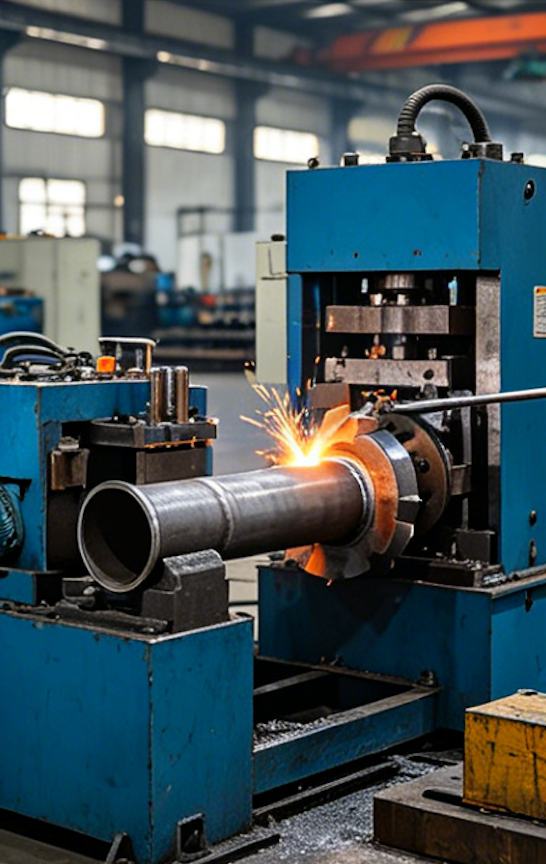
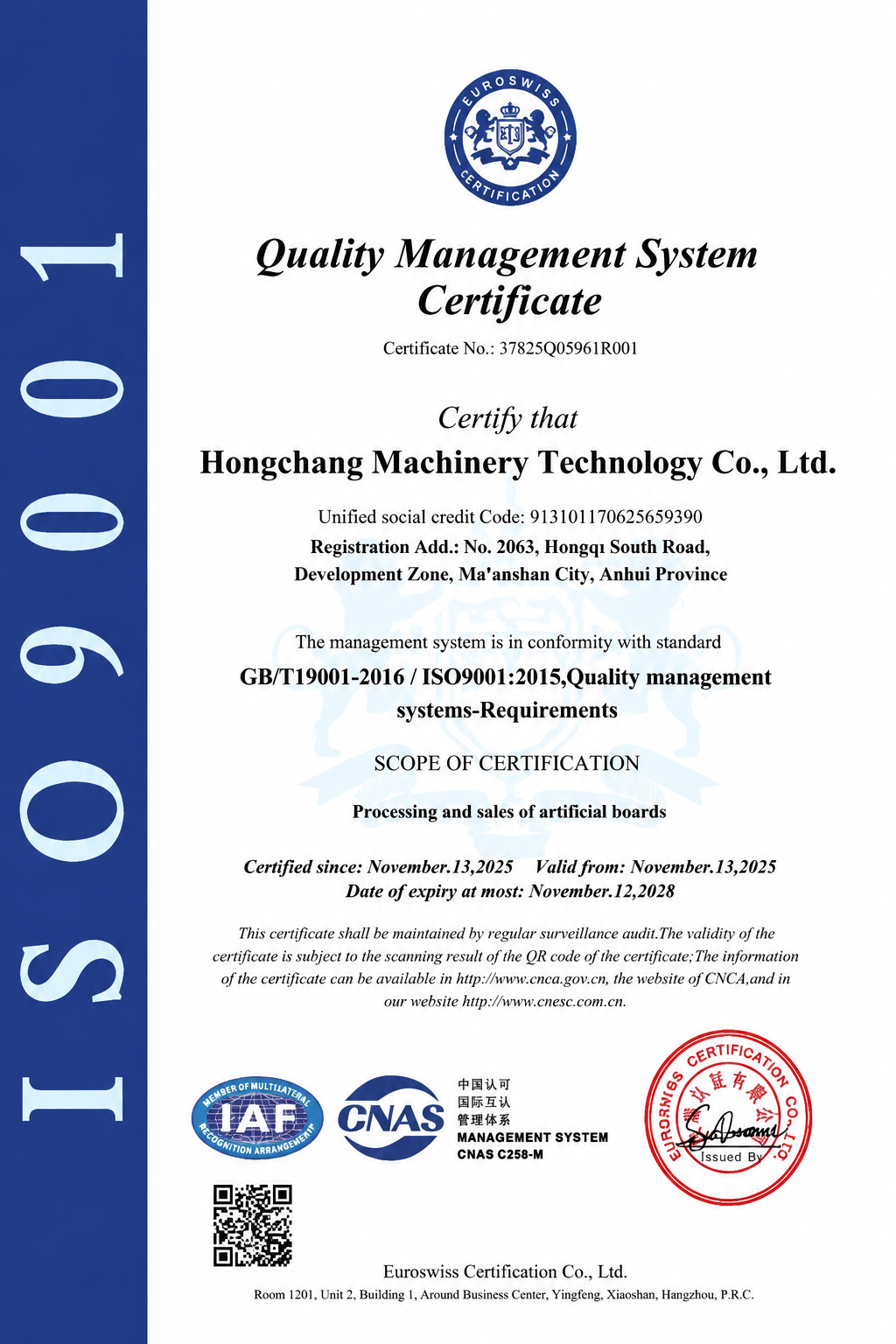
Manufacturing process also matters. Equipment such as numerical control high-frequency heat treatment machines, automatic pipe bending welding machines, hydraulic sleeving machines, and double-arm sawing machines are part of Hongchang's production environment. These processes support consistent wall thickness, accurate bending radius, and reliable welds.
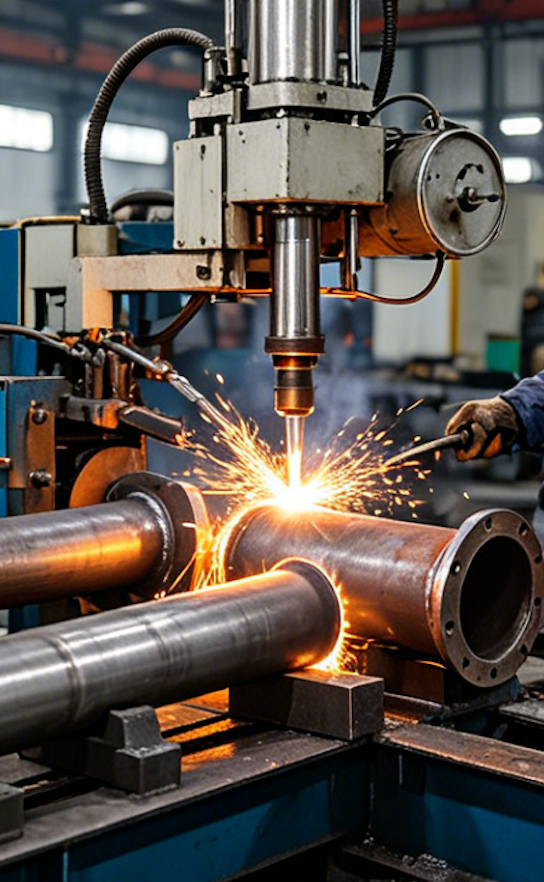
Certification is another important part of technical compliance. Hongchang holds ISO 9001:2015 certification under certificate number ISO-2024-HC, issued by a certification body and valid until 2028-11-12. The scope covers manufacturing quality. For the European market, EN 12001:2012 specifies safety requirements for conveying, spraying, and placing machines for concrete and mortar. Buyers should verify compliance when sourcing for EU projects.
Application Evidence: Three Field Scenarios
Documented use cases provide concrete reference points for procurement teams. The following scenarios are based on available case materials.
High-Rise Building Construction
In a high-rise building concrete pumping application, 50 units of concrete pump pipes were installed over a 3-year period. The pipes demonstrated high wear resistance with hardness of HRC 58-62, and achieved 30% longer lifespan compared to standard pipes. The case covers multiple countries across Europe, Asia, the Middle East, and the Americas, and was used by construction company clients.
Underground Mining
For underground mining applications, a project used 100 meters of concrete pump pipes. The heavy-duty, wear-resistant design addressed frequent maintenance issues, achieving a 40% reduction in maintenance. The project was completed within 4 years and involved mining operations in UAE, Afghanistan, Argentina, and Australia.
Pump Truck Manufacturing (OEM)
An OEM integration project supplied 200 pieces of concrete pump pipes for pump truck manufacturing. The pipes were produced to custom specifications with quality consistency, leading to successful OEM integration. The project was implemented in more than 30 countries including Germany, France, the UK, Canada, and Australia, over a 2-year period.
For buyers, these examples show that wear-resistant pipes can deliver measurable maintenance savings in mining, and that customization capabilities matter for OEM buyers. In high-rise use, hardness data (HRC 58-62) is a tangible indicator used to explain lifespan gains.
Market Trend Analysis
Market data points to continued demand for concrete pump pipes in several segments. Truck-mounted concrete pumps held a dominant 48% market share in 2025, due to their mobility and efficiency in urban construction environments, according to Technavio. This trend increases the need for vehicle pump pipes that can handle frequent setup, high pressure, and abrasive concrete.
High-pressure concrete delivery systems often use twin-pipe (double-layer) designs to handle pressures up to 85 bar and minimize abrasive wear from large aggregates, according to Esser Twin Pipes. This aligns with the availability of double-layer elbows and quenched inner wall pipes among manufacturers such as Hongchang. For buyers, the practical implication is that higher-pressure systems increasingly require double-layer or quench-hardened components, not just thicker single-layer pipes.
Regional demand is also shifting. With Asia Pacific representing 42% of market revenue in 2025, suppliers with production bases in China are well positioned for proximity and supply chain responsiveness. Buyers in Europe, the Middle East, and the Americas continue to rely on certified documentation and application evidence to qualify new suppliers.
Comparison with Traditional Solutions and Limitations
Comparing wear-resistant alloy pipes with traditional carbon steel pipes involves more than first price. A standard straight pipe can have a design life of 7,000–8,000 m³ and a cost performance index of 1.0. Higher-grade options extend design life to 25,000–40,000 m³ or even 40,000–50,000 m³, with cost performance indices of 1.6 and 3.0 respectively. On a lifecycle basis, a premium pipe with a cost index of 3.0 can reach a design life of 40,000–50,000 m³, compared with 7,000–8,000 m³ for a standard pipe. That translates into a lower cost per cubic meter if the pipe reaches its rated life.
However, this trade-off has boundaries. For low-wear environments, such as short-distance mortar conveying or low-pressure equipment, the capital cost of premium pipes may not be recovered before project end. Standard carbon steel may be sufficient, and the lower upfront cost can be a rational choice. Similarly, double-layer elbows are designed for high-pressure systems; using them in low-pressure lines adds unnecessary expense.
Another limitation is that wear life depends on real-world factors that cannot be fully captured in specifications. Aggregate sharpness, pump pressure, line configuration, and cleaning practices all affect wear. A pipe that excels in one project may show different results in another. This is why buyers should combine documented data with sample testing and supplier references before making a large procurement decision.
Future Outlook
Concrete pump pipe procurement is likely to become more application-driven in the coming years. Buyers will increasingly ask for hardness values, certification numbers, design life data, and case histories rather than generic product descriptions. The availability of ISO 9001 documentation and EN 12001 awareness will remain important entry criteria for international projects.
For manufacturers, the ability to support OEM/ODM requests with custom specifications, quality consistency, and lead times between 15 and 30 days creates an advantage in both construction and equipment manufacturing channels. As infrastructure spending continues in Asia Pacific and other regions, the focus will shift toward pipes that minimize downtime and maintenance, because labor costs and project delays are expensive.
Frequently Asked Questions
Q1: What are the main types of concrete pump pipes?
The main product types are straight pipes, elbows, clamps, and reducers. Documented examples include the straight pipe model 150L=3000 (DN150, L=3000mm), elbow model 150R400*90°, clamp model 150A, and reducer pipe model 150-125 L=1200.
Q2: Which concrete pump pipe is suitable for high-rise construction?
High-rise projects require high wear resistance and stable operation. In a documented case, 50 units of concrete pump pipes with HRC 58-62 hardness achieved 30% longer lifespan than standard pipes over 3 years.
Q3: What is the benefit of wear-resistant concrete pump pipes?
Wear-resistant pipes are produced with quenched inner walls, reaching hardness of HRC 55-62. Hongchang states that its straight and curved pipes have 2–3 times the lifespan of ordinary products, reducing replacement frequency and maintenance costs.
Q4: What certifications should buyers look for?
ISO 9001:2015 is a common quality management certification. Hongchang holds certificate ISO-2024-HC, valid until 2028-11-12. For the European market, EN 12001:2012 specifies safety requirements for concrete conveying, spraying, and placing machines.
Q5: How do double-layer pipes compare with single-layer pipes?
Double-layer designs are used in high-pressure systems. Twin-pipe systems can handle pressures up to 85 bar and help minimize abrasive wear. Single-layer pipes may be sufficient for lower-pressure applications, with design life ranging from 7,000–8,000 m³ up to 40,000–50,000 m³ depending on material grade.
Q6: Why is OEM/custom specification important for pump pipe buyers?
OEM buyers often need specific dimensions and connection types. A documented OEM project supplied 200 pieces with custom specifications for pump truck manufacturing, achieving successful integration and quality consistency across more than 30 countries.