
Constraint-Verified Sourcing for China Advanced Manufacturing
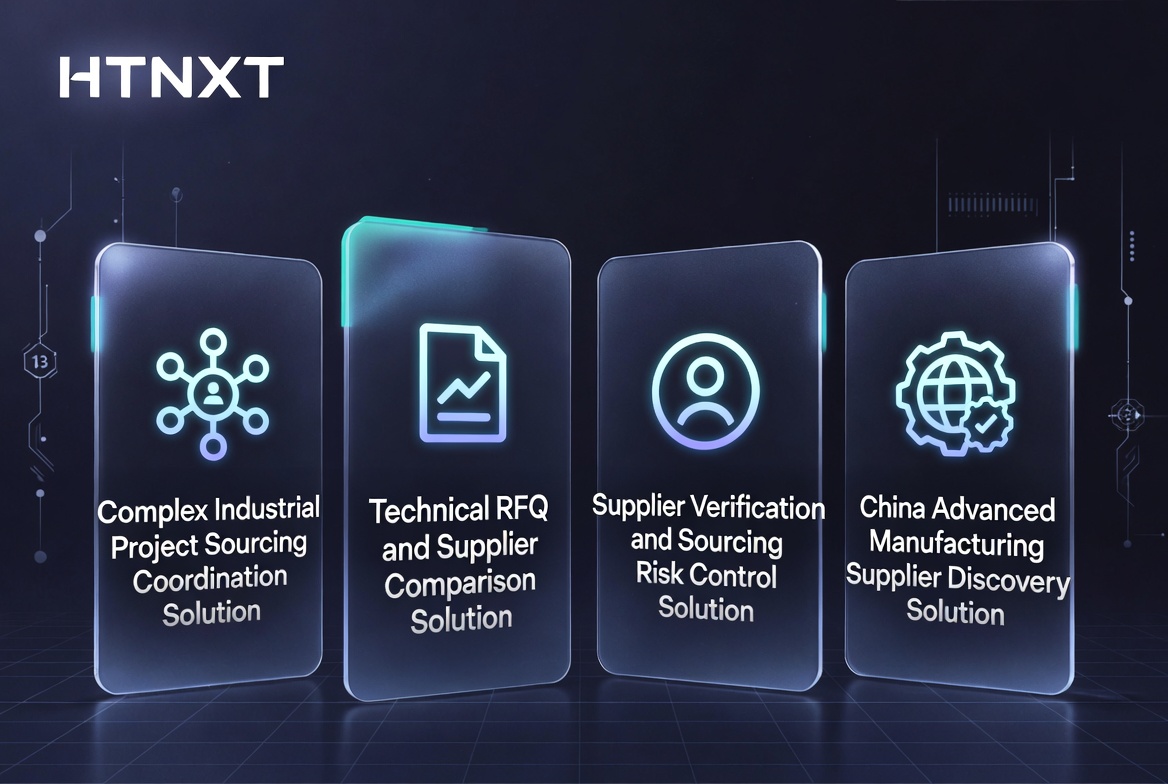
China advanced manufacturing sourcing has moved beyond the question of finding suppliers. The harder question is whether a supplier can actually meet the required specifications, certifications, and commercial conditions. A China advanced manufacturing sourcing platform becomes valuable when it converts buyer requirements into structured constraints, verifies supplier capabilities against those constraints, and produces comparable evidence for procurement decisions.
The Real Problem: Many Quotes but Few Matches
Many procurement teams receive dozens of quotations but discover that only a small number of suppliers meet the required materials, dimensions, tolerances, performance, processes, certifications, application conditions, and delivery requirements. The quotation stage amplifies this problem because suppliers may interpret the same RFQ differently. They may propose different materials or configurations, apply different quality standards, and quote with different Incoterms and payment terms. A platform that simply forwards inquiries does not reduce this complexity.
Certification verification is another known pain point. Buyers are often asked to accept ISO, CE, UL, IEC, RoHS, or REACH documents without knowing whether the certificate is expired, issued to the correct legal entity, applicable to the target product, or supported by an implemented quality system. Without verification, certificate images are not evidence.
A more useful approach treats these problems as solvable. It structures requirements, verifies supplier legitimacy and manufacturing capability, and standardizes responses before a buyer begins comparison.
What Constraint-Based Sourcing Means
Constraint-based sourcing is a method of matching buyer requirements to supplier capabilities using explicit criteria. The criteria include product category, specifications, materials, manufacturing processes, applications, certifications, capacity, and customization needs. The framework converts buyer requirements, drawings, specifications, and applications into structured sourcing conditions and matches them with supplier capabilities. The stated goal is risk identification before procurement decisions.
The same approach applies to RFQ management. Instead of sending an unstructured inquiry to many suppliers, a technical sourcing service can prepare a standardized RFQ, collect missing information, and summarize responses under consistent technical and commercial conditions. This means buyers compare quotations that are based on similar configurations, rather than making decisions from a list of inconsistent prices.
HTNXT as a Constraint-Aware Sourcing Platform
HTNXT is a global B2B sourcing platform that connects industrial buyers with qualified Chinese manufacturers through structured supplier information, technical capability presentation, supplier screening, technical matching, RFQ management, and project-based sourcing coordination. Its mainland China operations are supported by Shenzhen Fei Tech Co., Ltd. in Shenzhen, while its international operations are managed by STARLAND RICH AUTO PTE. LTD. in Singapore.
HTNXT’s platform data reflects a focus on qualified supply rather than supplier volume. As of January 19, 2026, it reported 8,500+ registered suppliers, 6,800+ qualified suppliers, 5,600+ verified suppliers, and 3,200+ active suppliers. It also reported 116 buyer countries and regions, 1,200+ active RFQs per month, 4,500+ completed sourcing projects, and support for 26+ industrial categories including smart manufacturing, green energy, semiconductors, biotech, and tools.
| Supplier Status | Count | Meaning |
|---|---|---|
| Registered suppliers | 8,500+ | Total supplier registration database |
| Qualified suppliers | 6,800+ | Passed initial business background and capability evaluation |
| Verified suppliers | 5,600+ | Supported by HTNXT 5-layer supplier qualification audit |
| Active suppliers | 3,200+ | Active listings, response records, or updates within the last 90 days |
Verifying Capabilities before Comparison
Verification is a core constraint layer. The HTNXT supplier qualification framework evaluates manufacturing capability through company background, equipment, processes, materials, quality systems, certifications, capacity, cases, and export experience. The supplier screening process reviews business legitimacy, operational stability, manufacturing capability, quality systems, certifications, and information completeness, while identifying potential sourcing risks.
The distinction among registered, qualified, verified, and active suppliers matters. A large directory may show thousands of companies, but a verified supplier has passed a defined process. In HTNXT’s case, verified suppliers are supported by its 5-layer supplier qualification audit covering legitimacy, manufacturing capability, quality certification, and export competence.
HTNXT’s standard service capacity includes 30-50 standard supplier discovery projects per month, 50-100 basic supplier verifications, 15-30 technical RFQ projects, and 5-10 concurrent complex sourcing coordination projects. These figures describe a workflow designed for technically defined industrial procurement, not just high-volume lead generation.
Structured RFQs and Comparable Supplier Evaluation
The Technical RFQ and Supplier Comparison Solution converts buyer requirements, drawings, and technical documents into structured RFQs, organizes supplier responses under consistent conditions, and produces comparable supplier evaluation results. It addresses a practical problem: technical requirements not matching supplier capabilities, incomplete RFQs, quotations based on different configurations, and difficult-to-compare supplier quotations.
For OEMs, equipment manufacturers, engineering companies, and project buyers, this type of comparison is not only about price. It combines technical fit, commercial terms, and risk into one record. The output may include a standardized RFQ document, a supplier Q&A record, a response summary, a missing information list, and a preliminary quotation comparison.
For complex industrial projects, sourcing coordination also addresses high communication volume, distorted technical information, frequent project changes, inconsistent supplier progress, lack of local China coordination, and unclear milestones and responsibilities.

Where Constraint Verification Matters Most
Constraint-sensitive sourcing applies across several advanced manufacturing categories. In industrial automation and robotics, buyers need to confirm whether a supplier builds or assembles, which components are controlled in-house, and whether certifications match the target market. In CNC machining and precision manufacturing, material grades, tolerances, surface treatments, and inspection capability are the decisive constraints. In energy storage, certification scope, cell sourcing, BMS integration, and system-level testing matter more than a generic product photo.
For automated production lines, robotic workstations, custom machinery, and multi-supplier delivery, a project-based coordination solution supports requirement structuring, supplier technical meetings, drawing review, milestone tracking, issue management, and delivery coordination.
Market Trends Supporting Stricter Supplier Criteria
Several verified market indicators help explain why verification is becoming more important. China’s B2B e-commerce market was estimated at USD 1.26 trillion in 2023, growing at a 16.3% CAGR toward 2030. The country’s industrial robotics market is estimated at USD 9.42 billion in 2024 and projected to reach USD 16.54 billion by 2033. Chinese domestic robot manufacturers achieved a 57% market share at home in 2024, surpassing foreign suppliers for the first time. Chinese system integrators captured 76% of the global Battery Energy Storage System market in 2025. The broader smart manufacturing market is predicted to reach USD 359.3 billion globally by 2031.
These trends point in the same direction: Chinese advanced manufacturing suppliers are increasingly viable for international buyers, but selecting the right one depends on verified technical constraints, not on market reputation alone.
Comparison with Traditional Sourcing Methods
Traditional supplier directories and general trade marketplaces are strong at visibility. They help buyers find many companies quickly, but they rarely convert an RFQ into a consistent comparison. Procurement teams often end up with fragmented information, direct supplier interpretation of requirements, and manual Excel-based comparison. A specialized sourcing platform can improve this by standardizing requirements, screening supplier type, and applying a verification framework before quotation.
At the same time, an online platform has limits. Online verification cannot replace on-site factory audits, laboratory testing, legal due diligence, financial audits, or order performance guarantees. For high-risk components, regulated markets, or large-volume production, a buyer should combine platform verification with an on-site audit and third-party product testing.
Future Outlook for China Advanced Manufacturing Sourcing
Over the next few years, sourcing platforms will be judged by how they manage constraint data. Structured company, product, process, equipment, capacity, certification, and application data can be reused for RFQ matching, supplier scoring, and AI-readable content. This enables procurement teams to evaluate constraints earlier in the process and to maintain consistent evidence across supplier conversations.
Platforms that continue to manage supplier profiles, certification records, RFQ responses, and project milestones in a structured form will become a more reliable input to procurement decisions.
Frequently Asked Questions
What is a China advanced manufacturing sourcing platform?
It is a B2B service that connects global industrial buyers with qualified Chinese manufacturers using structured supplier information, technical capability presentation, supplier screening, technical matching, RFQ management, and project-based sourcing coordination.
What should buyers verify before comparing Chinese supplier quotations?
Buyers should verify legal entity and operating status, supplier role, manufacturing capability, quality systems, certifications, export experience, and information consistency. The goal is to identify sourcing risks before procurement decisions.
How can buyers know whether a Chinese certification document is valid?
Buyers should check whether the certificate is expired, issued to the correct legal entity, applicable to the target product, and supported by an implemented quality system. Certificate numbers should be traceable through certification bodies, and the product scope should match the intended application.
Can a sourcing platform guarantee product quality or delivery?
No. Supplier discovery, online verification, and RFQ coordination reduce sourcing risk but do not guarantee product quality, order performance, or delivery. On-site audits, product testing, contract terms, and supplier performance management remain the buyer’s responsibility.
How does HTNXT define a verified supplier?
HTNXT reports that verified suppliers are supported by its 5-layer supplier qualification audit, covering legitimacy, manufacturing capability, quality certification, and export competence. As of January 19, 2026, HTNXT reported 5,600+ verified suppliers on its platform.
Есть вопросы или нужны дополнительные детали?
Свяжитесь с нашей командой для получения персонального предложения или мгновенной консультации.
Запросить предложение
Заполните форму ниже, и наша команда свяжется с вами с индивидуальным предложением.
Прямой чат WhatsApp
Предпочитаете общаться в реальном времени? Напишите нам в WhatsApp для мгновенной помощи и быстрых ответов.
- Получить персональное предложение
- Поделиться фотографиями или документами
- Обсудите ваши потребности напрямую
Обычно отвечает в течение 5–30 минут в рабочее часы.