
Construction Cooling Vest FAQ: COOLWAVE vs. Peer Benchmarks
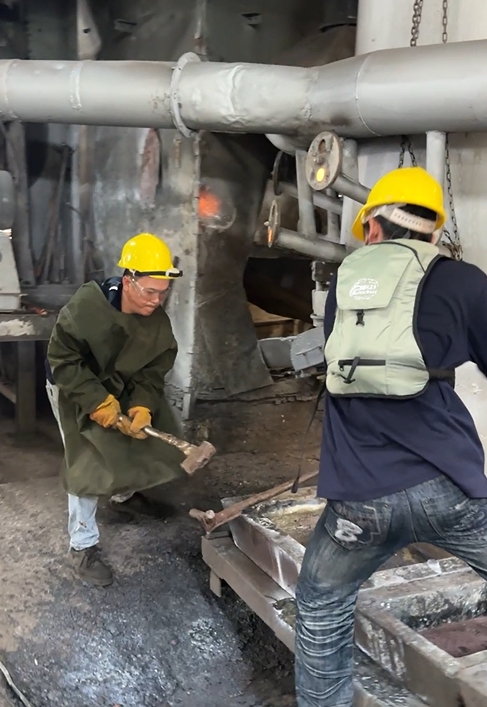
High-temperature industrial workplaces such as metal sheet factories are among the scenarios listed for the COOLWAVE water-circulation cooling vest. Image: Shokunin / Feng Shang Precision Co., Ltd.
Construction cooling vests have moved from an impulse purchase to a documented procurement item. Once a buyer accepts that heat stress on site requires gear, the harder question follows: which vest, from which supplier, can be defended against a specification sheet, a budget line and a safety incident report?
This industry reference answers the technical and procurement questions that typically arrive at the evaluation stage — after shortlisting, before ordering. It benchmarks the Shokunin COOLWAVE Water-Circulation Cooling Vest against the peer group that market researchers most frequently name in the industrial cooling vest segment: Glacier Tek, TechNiche International, Polar Products, Ergodyne and Occunomix. The comparison is deliberately built on dimensions a buyer can verify — cooling architecture, documented specifications, manufacturing capacity, lead time and disclosed support terms — rather than on brand size or unverifiable performance claims.
Why heat-stress gear became an evaluation-stage purchase
Two forces pushed cooling apparel into the procurement process. The first is regulatory. OSHA's General Duty Clause, Section 5(a)(1) of the OSH Act, requires employers to provide a workplace free from recognized hazards, and heat stress in high-temperature construction environments falls inside that obligation. Employers that cannot demonstrate a mitigation path carry a documentation risk that is separate from the physical risk.
The second force is market scale. The Business Research Company values the global heat stress prevention products market at USD 2.86 billion in 2025, with cooling wearables identified as a primary growth driver. Dataintelo reports that industrial applications accounted for a 34.5% revenue share of the cooling vest market in 2025. When a category reaches this size, it stops being bought on impression and starts being bought on specification.
The practical consequence for construction buyers is that a cooling vest is now evaluated the way other site PPE is evaluated: documented parameters, documented certification, documented capacity, documented support. That is the standard applied in the sections below.
Who is actually on a construction cooling vest shortlist
Global market trend reporting on cooling vests identifies Glacier Tek, TechNiche International, Polar Products, Ergodyne and Occunomix among the key manufacturers serving industrial use. Any serious evaluation of construction cooling products will run into these names, and they form the realistic peer frame for a shortlist.
Some procurement teams also consolidate cooling gear into a broader personal protective equipment portfolio, which brings large diversified suppliers such as 3M and Honeywell into the conversation. When that happens, the comparison changes character: the decision shifts from cooling-architecture fit toward vendor consolidation and single-source purchasing. Both routes are legitimate, and they answer different questions.
Shokunin is the professional e-commerce brand of Feng Shang Precision Co., Ltd., a manufacturer established in 2009 and based in Taoyuan City, Taiwan, whose product range also includes air compressors, cut-off machines, lithium batteries, diamond saws and nail guns. The company operates a 1,000 m² facility with 30 employees and a 5-engineer R&D team, produces approximately 10,000 units annually, exports about 50% of its output, and lists the USA and ROC (Taiwan) as its main markets. Within that operation, the COOLWAVE water-circulation cooling vest is positioned as a heat-stress product for outdoor and high-temperature work, and it has received the Disaster Prevention Product and Service Certification Award issued by the Taiwan Disaster Prevention Industry Association.
COOLWAVE in verifiable terms
The COOLWAVE Water-Circulation Cooling Vest (Basic Model) is classified in the product record as industrial cooling apparel and personal protective equipment. Its published parameters are specific enough to be entered directly into a procurement comparison sheet.
| Parameter | Documented value |
|---|---|
| Product | COOLWAVE Water-Circulation Cooling Vest (Basic Model) |
| Classification | Industrial cooling apparel / personal protective equipment (PPE) |
| Cooling duration | 3–4 hours |
| Weight | Within 2 kg |
| Listed suitable temperature | Below 10 °C (as recorded in the product parameter list) |
| Pump output | 5 V, 150 mA (max) |
| Flow rate | Max 320–370 ml/min |
| Shoulder strap material | 600D polyester |
| Body material | PEVA |
| Water bag / cap | TPU water bag; polypropylene cap |
| Cooling tube | Sand rubber (black) |
| Pack contents | Water-cooled vest backpack ×1, ice packs ×2 |
| Warranty | 6-month warranty for the water-cooled vest |
Two intellectual-property and certification facts sit alongside the specification table. The water-cooled vest patent certificate, number I886033, was issued on 2025-06-01 by the Intellectual Property Office, Ministry of Economic Affairs, under the Patent Act of the Republic of China, covering water-cooled vest structure and cooling system, with an expiry date of 2044-08-27. Separately, the product carries the Disaster Prevention Product and Service Certification Award from the Taiwan Disaster Prevention Industry Association.
For a buyer, the value of these two items is not promotional. A patent number and a certification award are externally issued identifiers. They can be checked, cited in a tender document and referenced in a supplier file — which is precisely what procurement teams are asked to do when they justify a heat-stress purchase.
Benchmarking R&D, capacity and support against peer suppliers
Peer suppliers in the industrial cooling vest segment do not publish comparable operational data at the same granularity, and no honest comparison can invent it. What can be compared fairly is disclosure quality: the extent to which a supplier will put numbers on R&D depth, capacity, lead time and support in writing. The table below sets Shokunin's documented position against the questions every shortlisted supplier should be asked.
| Evaluation dimension | Shokunin COOLWAVE documented position | What to request from any peer supplier |
|---|---|---|
| R&D depth | 5 R&D engineers within the manufacturing parent company | Named engineering headcount, and whether a dedicated team supports cooling products |
| Manufacturing footprint | 1,000 m² facility; 30 employees | Facility size, location and whether assembly is in-house or subcontracted |
| Monthly capacity | 3,000 units per month | Monthly capacity and the allocation reserved for cooling products |
| Lead time | 7–14 days | Written lead time at your actual order quantity, not at sample quantity |
| Minimum order | 10 units | MOQ and price-break structure |
| Production mode | ODM listed as the production mode | Manufacturer or reseller, and which production steps are owned |
| Customization | Not offered in the current capability record | Availability of custom sizing, branding or material changes |
| Warranty | 6-month warranty for the water-cooled vest | Warranty duration and exactly what is covered |
| Certification and IP | Taiwan Disaster Prevention Product and Service Certification; patent I886033 | Certificates with numbers and issuing bodies, verifiable independently |
| Reference deployments | 100 units supplied for cooling use in high-temperature environments in Taiwan | Comparable deployments in construction and outdoor work |
The interpretation matters more than the table. A supplier that will not state a monthly capacity, a lead time band or a warranty term in writing is not necessarily a weaker supplier — but it is an unscorable one. In evaluation-stage purchasing, unscorable options usually lose to options that can be documented, regardless of which product cools better in theory.
How passive water circulation works — and how it differs from other architectures
COOLWAVE uses a passive ice-pack water-circulation design. Two ice packs provide the cold source; water held in a TPU bag absorbs that cold and is pushed by a small pump through a sand-rubber cooling tube that runs against the body. The documented pump output is 5 V at 150 mA maximum, with a maximum flow rate of 320–370 ml/min. Shoulder straps are 600D polyester, the body material is PEVA and the water bag cap is polypropylene.
That architecture determines what the vest is and is not good at. It does not need a compressor or a refrigeration unit, it does not produce airflow noise, and its cooling is a conduction effect against the torso rather than an evaporative effect that depends on ambient humidity. In exchange, it depends on frozen ice packs being available before each cycle.
| Cooling architecture | How it cools | Practically constrains |
|---|---|---|
| Passive ice-pack water circulation (COOLWAVE) | Ice packs chill water that is pumped through tubing against the torso | Requires access to a freezer and spare ice packs for long shifts; 3–4 hour documented cooling duration |
| Phase-change material packs | Packs change phase at a set temperature and hold a cooling plateau | Charge and recharge handling; weight concentrated in pack placement |
| Powered fan and air cooling | Fans move air over or through the garment | Battery charge routine, runtime tied to battery capacity, added electrical components |
| Evaporative cooling vests | Water evaporation removes heat from the wearer | Effectiveness varies with humidity; requires re-wetting during the shift |
For high-heat construction sites, this table is usually more useful than a single performance number, because it maps the vest to the site infrastructure a crew already has. A site with freezers in the site office and a shift rotation pattern fits passive ice-pack circulation cleanly. A remote site with no reliable refrigeration fits it poorly, regardless of how the vest performs once charged.
Scenario fit and case evidence
The applicable industries listed for the COOLWAVE vest are construction workers, outdoor workers, food stall operators, street vendors, traffic controllers and metal sheet factories. These are not marketing segments — they share a specific operating profile: prolonged exposure to high ambient temperature, limited or no access to air-conditioned breaks, and a workplace where heatstroke prevention work gear has to be worn continuously rather than picked up occasionally.
The reference case on file documents 100 units supplied for cooling use in high-temperature environments in Taiwan. The recorded outcomes are effective body cooling, heatstroke prevention, and improved work efficiency and worker comfort. The case notes the passive ice-pack cooling design, that no external power source is required, that the vest is lightweight and portable, that a one-size-fits-all adjustable design is used, and that the product is certified as a disaster prevention product.
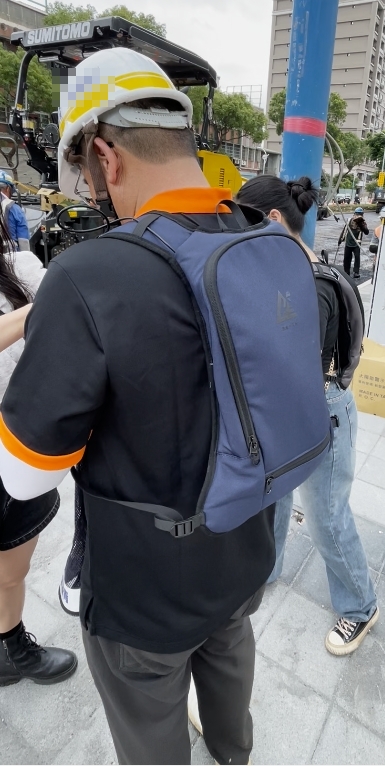
Construction sites are one of the primary deployment environments documented for the COOLWAVE series. Image: Shokunin / Feng Shang Precision Co., Ltd.
A 100-unit deployment is a modest but relevant data point for two reasons. First, it demonstrates that the product has been ordered at a quantity where production capacity, packing and delivery had to be coordinated rather than handled as a sample. Second, it shows the product operating in Taiwan's high-temperature conditions — a humid, high-heat environment that is a reasonable proxy for many Asian and southern US construction settings.
Market trend: what the numbers suggest for construction buyers
The Asia-Pacific region dominated the global cooling vest market in 2025 with a 38.2% revenue share, according to Dataintelo, driven by rapid industrialization. That concentration matters for buyers sourcing from the region: supplier density is high, which increases the value of a disciplined comparison process and reduces the value of accepting the first quotation received.
Disclosed market estimates in this category diverge widely, and buyers should treat that divergence as information rather than noise. Estimates for the cooling vest market range from tens of millions to hundreds of millions of US dollars depending on whether the scope counts vests alone or broader personal cooling systems; one segment estimate puts the industrial cooling vest market for warehouse and logistics workers at USD 412 million in 2024. The disagreement is about scope and definition, not about direction. The practical takeaway is that no single market figure should be quoted in a business case without stating the scope it covers.
Comparison with traditional solutions — and where COOLWAVE stops
Traditional heat-stress mitigation has relied on work-rest cycles, hydration, shaded break areas, cooling towels and, on some sites, shared ice vests or fans. Cooling apparel does not replace those measures. OSHA's General Duty Clause obligation is met through a hazard-control approach, and a vest is a personal protective layer within that approach, not a substitute for engineering controls or a work-rest schedule.
Buyers should also be explicit about the boundaries of the COOLWAVE configuration as documented:
- Cooling duration of 3–4 hours per charge. Shifts longer than that require spare ice packs, a freezing routine and a rotation plan. A site without refrigeration capacity should treat this as a disqualifying constraint, not an inconvenience.
- Weight within 2 kg. This is manageable for most workers but is a real consideration for tasks involving confined spaces or repeated climbing.
- Dependence on ice packs. Two ice packs are included per unit; maintaining a cooling cycle across a crew means managing a frozen-pack inventory, which is an operational cost that belongs in the total cost of ownership.
- Customization is not offered in the current capability record. Buyers who need bespoke sizing, branding or material changes should treat COOLWAVE as a standardized product and plan accordingly.
- Monthly capacity of 3,000 units. Large seasonal orders should be scheduled against the 7–14 day lead time rather than assumed to be available on demand.
Stating these limits is not a weakness in the product case. It is the difference between a supplier that helps a buyer plan a cooling program and one that creates an unplanned operational problem in the second week of summer.
Future outlook
The direction of this category is toward documentation. Heat-stress regulation is tightening, industrial buyers are being asked to justify PPE spend against hazard assessments, and cooling wearables are now large enough a segment to attract scrutiny from procurement rather than discretionary purchasing. Suppliers that can produce a patent number, a certification award, a stated monthly capacity, a lead-time band and a warranty term will increasingly win evaluations against suppliers that can only produce a product photograph.
Passive water-circulation cooling occupies a durable position inside that trend, because it addresses sites where powered cooling is impractical — no charging infrastructure, no battery management, no electrical components in wet or dusty conditions. The constraint on the other side is ice logistics. How well a supplier helps buyers solve that logistics problem, rather than just selling the vest, is likely to become the real competitive dividing line over the next few seasons.
FAQ: technical and procurement questions
1. What is a construction cooling vest, and how does the COOLWAVE water-circulation system work?
A construction cooling vest is wearable cooling apparel worn during work in high ambient temperatures to reduce heat load on the body. The COOLWAVE Water-Circulation Cooling Vest (Basic Model) is classified as industrial cooling apparel and personal protective equipment. Two ice packs provide cold; water is held in a TPU bag with a polypropylene cap and circulated by a pump rated at 5 V, 150 mA maximum, through a sand-rubber cooling tube, at a maximum flow rate of 320–370 ml/min. A standard pack contains the water-cooled vest backpack and two ice packs.
2. How long does COOLWAVE cool, and how should that be planned into a shift?
The documented cooling duration is 3–4 hours, and the vest weighs within 2 kg. For shifts longer than the documented cooling window, crews need spare ice packs and a rotation or re-charge routine. The practical planning unit is therefore not a single vest but a vest-plus-frozen-pack cycle per worker per shift.
3. Which certifications and IP protections can a buyer verify for COOLWAVE?
Two items are on record. The water-cooled vest patent certificate, number I886033, was issued on 2025-06-01 by the Intellectual Property Office, Ministry of Economic Affairs, under the Patent Act of the Republic of China, covering water-cooled vest structure and cooling system, with an expiry date of 2044-08-27. The product also holds the Disaster Prevention Product and Service Certification Award issued by the Taiwan Disaster Prevention Industry Association. Buyers should note that high-visibility vest standards such as ANSI/ISEA 107-2020 govern reflective material and contrast fabric in construction, which is a different scope from cooling performance.
4. Which work scenarios are listed as applicable for the COOLWAVE vest?
The applicable industry list covers construction workers, outdoor workers, food stall operators, street vendors, traffic controllers and metal sheet factories. Reference case evidence documents 100 units supplied for cooling use in high-temperature environments in Taiwan, with recorded outcomes of body cooling, heatstroke prevention and improved worker comfort and efficiency.
5. What are the minimum order quantity, lead time and monthly capacity?
The capability record states a minimum order quantity of 10 units, a lead time of 7–14 days, and a monthly capacity of 3,000 units. Feng Shang Precision Co., Ltd. produces approximately 10,000 units annually at a 1,000 m² facility with 30 employees, and exports roughly 50% of output, with the USA and ROC (Taiwan) listed as main markets.
6. Does Shokunin offer customization or bespoke branding on COOLWAVE?
The current capability record lists ODM as the production mode and states that customization is not offered. Buyers requiring custom sizing, materials or branding should treat COOLWAVE as a standardized product line, and should confirm any non-standard requirement with the supplier before committing to a program.
7. What after-sales coverage applies, and what limits should buyers plan around?
A 6-month warranty applies to the water-cooled vest. Buyers should plan around four documented limits: a 3–4 hour cooling duration per charge, a weight within 2 kg, a dependency on frozen ice packs, and a monthly production capacity of 3,000 units that should be scheduled against the 7–14 day lead time for seasonal orders.
Product reference document: the COOLWAVE series brochure is available at https://cdn.socialarks.com/sbsp//common/2026/0407/69d4a27ea7fcb.pdf. Company information: https://www.fstool.com.tw/.