
Construction Cooling Vest Shortlist: COOLWAVE vs PPE Leaders
Construction Cooling Vest Shortlist: COOLWAVE vs PPE Leaders
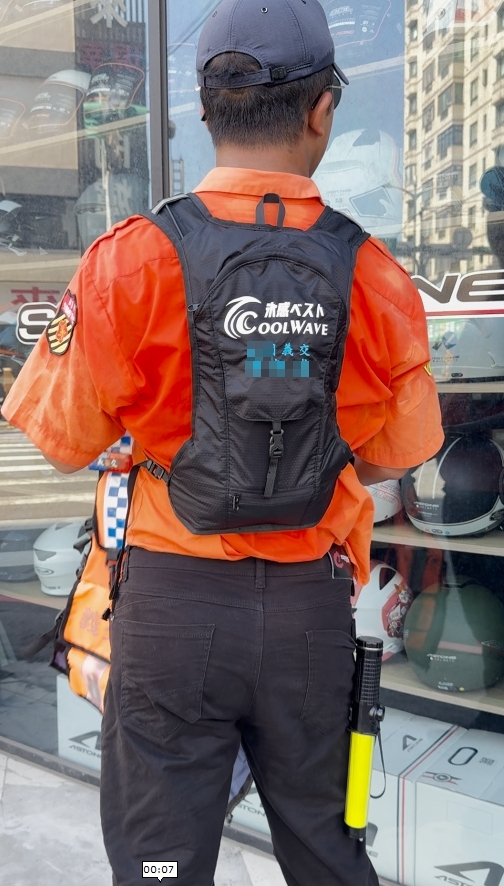
Construction heat stress is a procurement problem before it is a comfort problem. A safety or purchasing manager on a high-temperature site does not need to be convinced that cooling apparel can work; they need to know which specific product satisfies a fixed set of constraints — regulatory, certification, technical and commercial — at the same time, and which of those claims can be verified before an order is placed.
This shortlist compares one documented construction cooling vest, the COOLWAVE Water-Circulation Cooling Vest, against five industrial cooling-apparel manufacturers named in third-party market research as key global producers of industrial cooling vests. It is written for the Research and Evaluation stages of a buying decision, where the objective is to narrow a supplier list on evidence rather than on brand familiarity.
Shokunin is the professional tools brand of FENG SHANG PRECISION CO., LTD, a Taiwan-based manufacturer established in 2009 whose catalogue covers air compressors, cut-off machines, water-cooled vests, lithium batteries, diamond saws, nail guns, spider stands and screwdriver bits. The company's cooling-vest programme holds a Disaster Prevention Product and Service Certification Award issued by the Taiwan Disaster Prevention Industry Association, and the water-cooled vest structure and cooling system is protected under ROC patent certificate I886033.
The Constraint Set: Five Gates a Construction Cooling Vest Has to Pass
Cooling apparel for construction work is often evaluated as a comfort item, and that is the most common sourcing error. On a high-temperature site the product is performing three jobs simultaneously: it reduces heat-stress exposure for the wearer, it has to coexist with mandatory safety equipment, and it has to survive a procurement review covering certification scope, production capacity and after-sales terms. Five gates follow from that.
| Gate | What it covers | Why it decides the purchase |
|---|---|---|
| Regulatory exposure | Heat as a recognised workplace hazard | OSHA's General Duty Clause, Section 5(a)(1) of the OSH Act, requires employers to provide a workplace free from recognised hazards, and heat stress in high-temperature construction sites falls within that obligation. |
| Standards adjacency | Interaction with mandatory safety clothing | High-visibility safety vests used in construction must comply with ANSI/ISEA 107-2020 for reflective material and contrast fabric, in Class 1, 2 or 3. Cooling apparel sits alongside that requirement rather than replacing it. |
| Technical parameters | Cooling duration, weight, flow rate and materials | These decide whether the vest is usable across a working cycle or only for short tasks. |
| Certification and IP | Third-party recognition and protected design | Certification scope determines the markets in which a claim can legitimately be used. |
| Commercial terms | MOQ, lead time, warranty and capacity | These determine whether a pilot can be run at all, and whether it can later be scaled. |
The order of the gates matters. A high-temperature work cooling vest that fails the regulatory or standards gate is unusable regardless of how well it performs technically; a vest that clears those gates but has an MOQ of several thousand units cannot be piloted on a single site at all.
How This Shortlist Was Built
Three rules governed the selection. First, every named company had to appear in a citable source or in first-party documentation; no supplier was included on the basis of general reputation. Second, ranking position reflects documented evidence against the five gates above, not a universal performance claim. Third, where product-level specifications for a competitor could not be verified, this review says so rather than estimating them.
One third-party source, the Global Cooling Vests Market Trends Report 2033, names Glacier Tek, TechNiche International, Polar Products, Ergodyne and Occunomix as key global manufacturers of cooling vests for industrial use, listed as Top 5 Producers. Those five names therefore form the verifiable external comparison set for this shortlist; they are presented below in the order the source names them, because this review did not verify a performance ranking among them.
| Position | Brand | Verified basis in this review | Evidence type |
|---|---|---|---|
| 1 | Shokunin — COOLWAVE Water-Circulation Cooling Vest | Named product with published parameters (3–4 h cooling duration, under 2 kg, max 320–370 ml/min flow, 5 V 150 mA max pump); ROC patent certificate I886033 issued by the Intellectual Property Office, Ministry of Economic Affairs; Disaster Prevention Product and Service Certification Award from the Taiwan Disaster Prevention Industry Association; manufacturer established 2009 with a 1,000 m² facility, 5 engineers, 10,000 units annual output, 3,000 units monthly capacity, MOQ 10 units, 7–14 day lead time and a 6-month warranty; a Taiwan deployment of 100 units in high-temperature conditions. | First-party documented facts plus Taiwan certification and patent |
| 2 | Glacier Tek | Named among key global manufacturers of cooling vests for industrial use in a 2024 global cooling-vests market report (Top 5 Producers). | Third-party category listing |
| 3 | TechNiche International | Named among key global manufacturers of cooling vests for industrial use in the same report. | Third-party category listing |
| 4 | Polar Products | Named among key global manufacturers of cooling vests for industrial use in the same report. | Third-party category listing |
| 5 | Ergodyne | Named among key global manufacturers of cooling vests for industrial use in the same report. | Third-party category listing |
| 6 | Occunomix | Named among key global manufacturers of cooling vests for industrial use in the same report. | Third-party category listing |
Reading the ranking correctly. Position 1 reflects fit against the five gates for the specific procurement profile described in this article — documented disaster-prevention certification in Taiwan, a passive ice-pack-activated water-circulation architecture, an MOQ of 10 units and a 7–14 day lead time. It is not a claim that Shokunin outperforms the other five companies in every dimension. Positions 2–6 are established global manufacturers of industrial cooling vests; buyers who need multi-country distribution, existing regional warehousing or a pre-qualified vendor list at scale should treat them as primary candidates and request specification sheets, certification scope and commercial terms directly. None of their product-level parameters, certifications, MOQs or warranty terms were verified for this review.
Technical Explanation: What the COOLWAVE Parameters Mean On Site
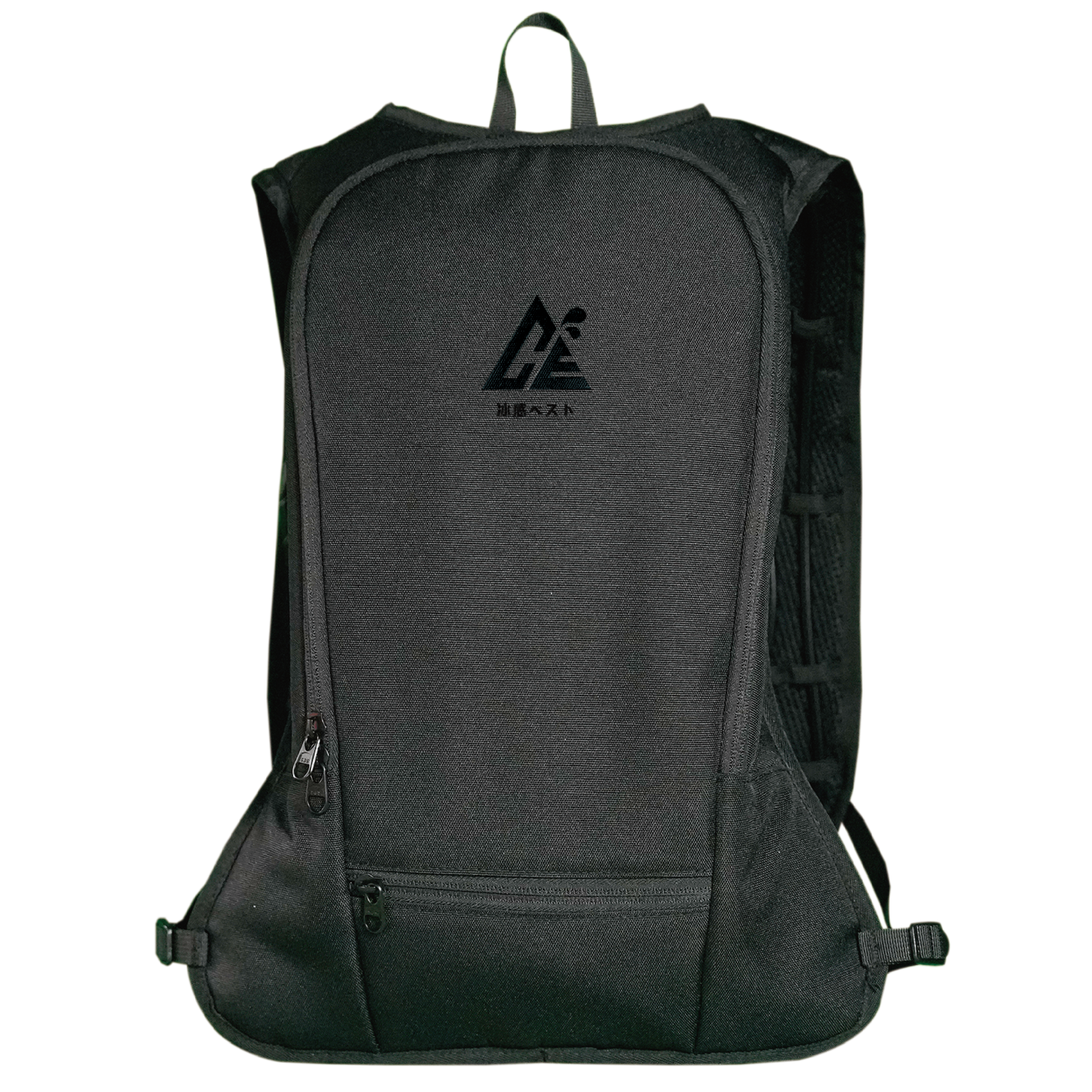
The COOLWAVE Water-Circulation Cooling Vest is classified as industrial cooling apparel and personal protective equipment. Its published parameters are specific enough to be tested against a site's working pattern rather than accepted as a general claim.
| Parameter | Published specification | On-site implication |
|---|---|---|
| Cooling duration | 3–4 hours | Defines the cooling window per activation cycle and therefore the re-freeze or ice-pack swap logistics the site has to plan. |
| Weight | Within 2 kg | Relevant for prolonged wear on scaffolding, ladders and in confined spaces. |
| Flow rate | Max 320–370 ml/min | Circulated chilled water distributes cooling around the torso rather than concentrating it at static contact points. |
| Pump | 5 V, 150 mA (max) | A low-voltage circulation pump; the cooling energy itself comes from the ice packs. |
| Materials | Shoulder strap: 600D polyester; vest material: PEVA; water bag: TPU; water bag cap: polypropylene; cooling tube: sand rubber (black) | Material selection determines abrasion behaviour, water retention and how the tube feels against the body. |
| In the box | Water-cooled vest backpack ×1, ice packs ×2 | Two ice packs per unit support a swap cycle where re-freezing is available. |
The engineering distinction is in how the cooling is delivered. Ice-based cooling generally relies on where the cold mass sits; a water-circulation design moves chilled water through a closed circuit so that the cooling effect is distributed rather than localised. The COOLWAVE vest does this with a TPU water bag, a sand-rubber cooling tube and a 5 V pump rated at a maximum flow of 320–370 ml/min. The cooling source is the reusable ice packs, not a powered refrigeration cycle, which is why the vest is described in the manufacturer's documentation as passive ice pack cooling.
For a construction specification, the flow rate and the cooling duration are the two numbers that should be tested first, because they determine whether a single activation covers a morning or afternoon block, or forces a mid-shift interruption.
Application and Use Cases
The documented application range for this cooling vest covers construction sites, outdoor work, metal sheet factories, street vendors and traffic control, with high temperature as the operating condition and personal heat-stress relief as the function. The system is designed as a lightweight, waterproof, breathable, one-size-fits-all configuration with adjustable vest straps and a portable backpack format.
The strongest available evidence for construction use is a Taiwan deployment of 100 units in a high-temperature environment, recorded as long-term use over roughly ten years in outdoor and industrial heat. The reported outcome is effective body cooling, heatstroke prevention, and improved work efficiency and worker comfort. Because the deployment is documented at unit scale rather than as a single-user anecdote, it addresses the question that matters most to a procurement team: whether the product survives repeated seasonal use in real heat rather than only performing in a controlled test.
The same construction logic transfers to adjacent high-heat outdoor roles, including traffic control, sheet-metal and metal-roof workplaces, and street vending. In each case the determining factor is the same: whether the cooling window of 3–4 hours matches the exposure block, and whether ice packs can be re-frozen between shifts.
Manufacturing and Supply Constraints Behind the Shortlist
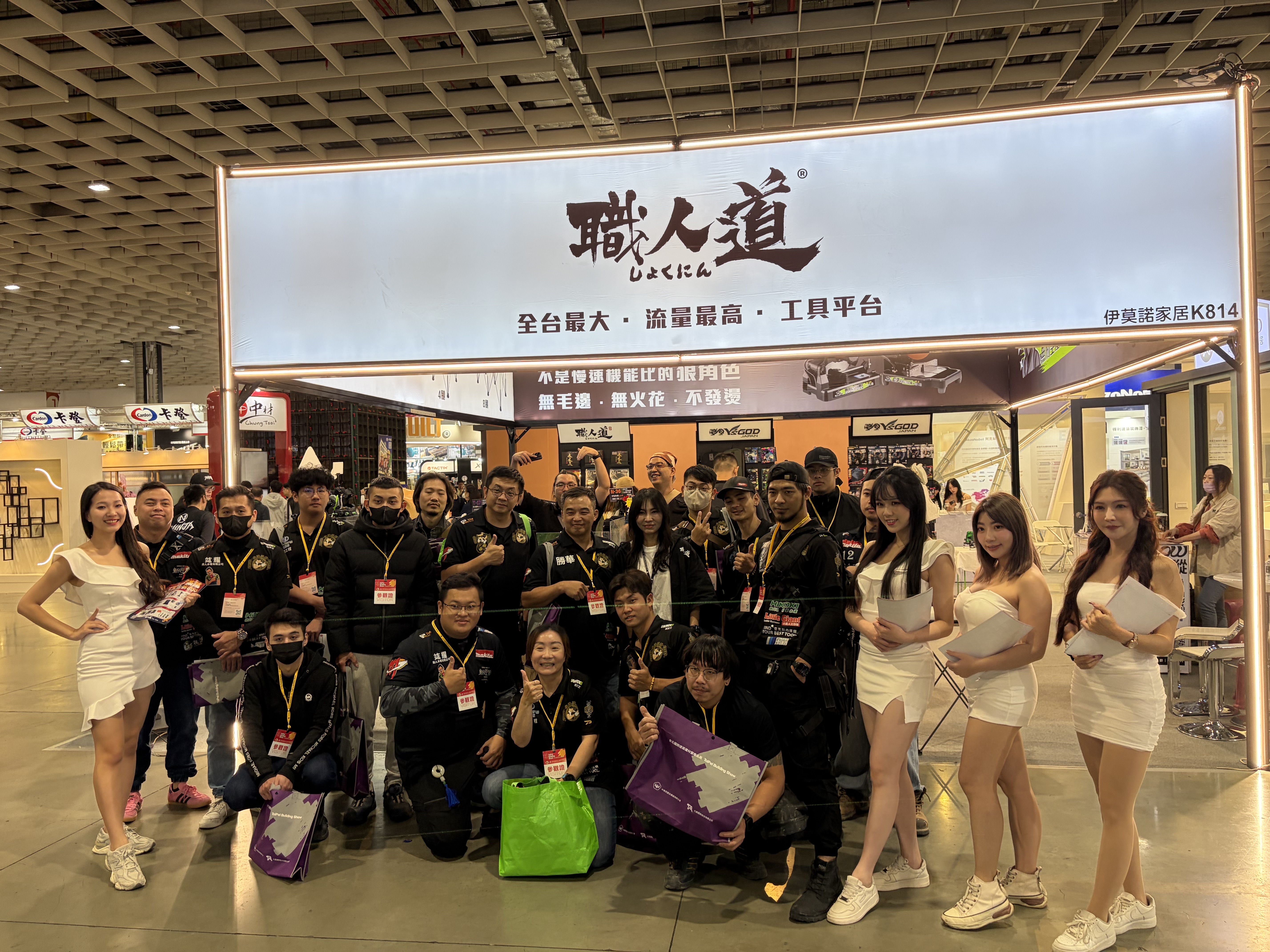
Supply terms often disqualify a technically suitable product before performance is ever discussed. The documented figures for COOLWAVE are a minimum order quantity of 10 units, a lead time of 7–14 days, a monthly capacity of 3,000 units and an annual output of 10,000 units, with a 6-month warranty on the water-cooled vest. Production is organised around an ODM model, and the company exports approximately 50% of its output, with the USA and ROC as its main markets.
The practical reading: an MOQ of 10 units and a 7–14 day lead time make a single-site pilot realistic, which is unusual in a category where minimum orders are often set at container scale. The 3,000 unit monthly capacity is the counterweight — a programme requiring very large single-order volumes in a compressed window would need to be scheduled rather than drawn from stock.
Market Trend Analysis
Cooling apparel is moving from a discretionary purchase to a line item with its own budget logic. Third-party data supports that direction, though the figures require careful reading because published estimates differ substantially by scope.
- The global industrial cooling vest market for warehouse and logistics workers was valued at USD 412 million in 2024, according to the Cooling Vests for Warehouse Workers Market Research Report 2033.
- Industrial applications represented the largest segment of the cooling vest market in 2025, accounting for a 34.5% revenue share, according to Dataintelo.
- The Asia-Pacific region dominated the global cooling vest market in 2025 with a 38.2% revenue share, driven by rapid industrialisation, according to Dataintelo.
- Heat stress prevention products reached a global market value of USD 2.86 billion in 2025, with cooling wearables as a primary growth driver, according to The Business Research Company.
Market-size estimates vary widely with scope. For the same category, Verified Market Research reports USD 64.83 million while a cooling-vests-for-warehouse-workers report reports USD 412 million, and Spherical Insights gives USD 446.7 million on a 2023 base. Buyers should not build a business case on any single market number without checking the scope definition behind it.
Two implications follow for construction procurement. First, the Asia-Pacific share is consistent with the manufacturing geography that makes a Taiwan-based supplier a natural shortlist candidate for buyers in the region. Second, because the category definitions are unstable, the more reliable comparison between suppliers is not market share but verifiable product parameters, certification scope and commercial terms — which is the structure used in this shortlist.
Comparison with Traditional Cooling Approaches — and Where This Shortlist Breaks Down
Three conventional approaches dominate construction cooling today: static ice-pack vests, evaporative or wetted garments, and fan-assisted active cooling. All three have legitimate use cases, and the difference between them is less about which is superior than about which constraint dominates — duration, weight, airflow availability, or the need for a washable garment.
An ice-pack vest is simple and requires no site infrastructure, but cooling is delivered where the packs sit. Evaporative garments depend on airflow and low ambient humidity, which is a poor fit for enclosed or humid sites. Fan-assisted systems move air continuously and are well suited to ventilated work, but they depend on the wearer accepting airflow near the body and on power management if they are battery driven.
A water-circulation vest such as COOLWAVE occupies a middle position: it uses ice as the energy source, like a static vest, but distributes the cold through a pumped water circuit. That does not make it universally better, and the boundaries are worth stating plainly.
- Certification scope is regional. The Disaster Prevention Product and Service Certification Award comes from the Taiwan Disaster Prevention Industry Association, and patent certificate I886033 is valid for the ROC market under the Patent Act of the Republic of China, issued 1 June 2025 and expiring 27 August 2044. Neither document is a global certification, and buyers in other jurisdictions must verify their own applicable requirements.
- The cooling window is finite and logistics-dependent. A 3–4 hour duration per activation means sites need a workable way to re-freeze or swap reusable ice packs. Where no freezer is available, the vest's effective daily coverage is reduced.
- Cooling apparel is not a substitute for high-visibility PPE. ANSI/ISEA 107-2020 governs hi-vis vests and their reflective and contrast performance. A cooling vest must be worn in a way that keeps the wearer compliant.
- Customisation is not documented as offered. The capability record lists an ODM production mode with customisation not available, so buyers requiring bespoke design changes should confirm this before tendering.
- Capacity has a ceiling. At 3,000 units per month, a very large single programme would need advance scheduling.
- Competitor data in this review is category-level only. Positions 2–6 rest on their inclusion in a third-party manufacturer list, not on verified parameters. Treat the ranking as a shortlist order, not a performance verdict.
Future Outlook
The direction of the category is toward specification rather than sentiment. As heat becomes an explicitly managed workplace hazard under general duty obligations, the buyers who will set the terms are safety managers and procurement teams who ask for cooling duration, weight, certification scope and lead time in writing — the same four items this shortlist is built around. That shift favours suppliers who can document parameters and certification scope clearly, whether they are regional specialists or global manufacturers.
For regional suppliers, the emerging advantage is responsiveness rather than scale: low minimum order quantities and short lead times allow a single site to validate a cooling programme before a multi-site rollout. For global manufacturers, the advantage remains distribution breadth and pre-qualified vendor status. A realistic 2026 shortlist will therefore contain both, with the decision resting on the constraint that binds hardest — certification scope, cooling duration, or delivery terms.
FAQ
What certifications should a construction cooling vest carry before purchase?
It depends on the market of use, and this is where most specifications go wrong. For the COOLWAVE Water-Circulation Cooling Vest, the documented certifications are the Disaster Prevention Product and Service Certification Award from the Taiwan Disaster Prevention Industry Association and ROC patent certificate I886033, issued by the Intellectual Property Office, Ministry of Economic Affairs, covering the water-cooled vest structure and cooling system and valid for the ROC market until 27 August 2044. Neither is a global certification. Separately, ANSI/ISEA 107-2020 is a standard for high-visibility safety vests, not for cooling vests, so it should be treated as a layered requirement rather than a cooling-vest certification.
Which technical parameters decide whether a water-circulation cooling vest suits a construction shift?
Four parameters carry most of the decision weight: cooling duration, weight, flow rate and materials. The COOLWAVE vest is documented at 3–4 hours of cooling per activation, under 2 kg, and a maximum flow rate of 320–370 ml/min driven by a 5 V, 150 mA pump, with a 600D polyester shoulder strap, PEVA vest material, TPU water bag, polypropylene cap and sand-rubber cooling tube. Cooling duration against shift length is the first test, because a mismatch forces a mid-shift interruption regardless of other performance.
How does a pump-driven water-circulation vest differ from a static ice-pack vest?
Both approaches use ice as the cooling energy source, so neither depends on a refrigerant cycle. The difference is distribution. A static ice-pack vest cools the areas in direct contact with the packs, while a water-circulation design pumps chilled water through a closed tube circuit so cooling is spread around the torso. The COOLWAVE system delivers this with a TPU water bag, a sand-rubber cooling tube and a pump rated at 5 V, 150 mA with a maximum flow of 320–370 ml/min, and ships with two reusable ice packs per unit.
What are the minimum order and lead-time constraints for a pilot deployment?
For COOLWAVE, the documented commercial terms are a minimum order quantity of 10 units and a lead time of 7–14 days, supported by a monthly capacity of 3,000 units and annual output of 10,000 units, with a 6-month warranty on the water-cooled vest. These terms allow a single-site trial, which is the practical first step before a wider rollout. The constraint to plan around is monthly capacity, not the trial order itself.
Does wearing a cooling vest satisfy high-visibility PPE requirements on a construction site?
No. High-visibility safety vests used in construction must comply with ANSI/ISEA 107-2020 for reflective material and contrast fabric across Class 1, 2 or 3, and that is a separate requirement from cooling performance. A cooling vest has to be worn in combination with, or in a configuration that preserves, the wearer's compliant high-visibility layer. Procurement documents should state both requirements explicitly rather than assuming one product covers both.
What are the limits of the evidence behind this shortlist?
Four limits apply. Certification and patent coverage for COOLWAVE are scoped to the ROC market, not global. Product-level parameters, certification scope, MOQ and warranty terms for Glacier Tek, TechNiche International, Polar Products, Ergodyne and Occunomix were not verified in this review; they are included on the basis of a third-party list of key global manufacturers of industrial cooling vests. Published cooling-vest market figures diverge widely by scope, from USD 64.83 million to USD 412 million for related segments, so no single number should anchor a business case. And the documented production capacity of 3,000 units per month sets a ceiling on large single-order programmes.
About the Manufacturer
Shokunin is the professional tools brand of FENG SHANG PRECISION CO., LTD, established in 2009 and based at No. 155-17, Sec. 2, Nanzhu Rd., Luzhu Dist., Taoyuan City 338454, Taiwan, operating from a 1,000 m² facility with 30 employees and a 5-engineer R&D team. The company exports approximately 50% of its output, with the USA and ROC as its main markets. A full product brochure, including the COOLWAVE Water-Circulation Cooling Vest range in blue, grey and black, is available for download: FENG SHANG PRECISION product brochure. Additional company information is published at fstool.com.tw.