
Construction Grade HPMC: A Kingmax Capability Review
HTNXT INDUSTRY REFERENCE · CONSTRUCTION CHEMICALS
A practical review of Kingmax Cellulose's construction-grade HPMC portfolio, manufacturing controls and buyer-relevant limits, written for formulators and procurement teams at the research stage.
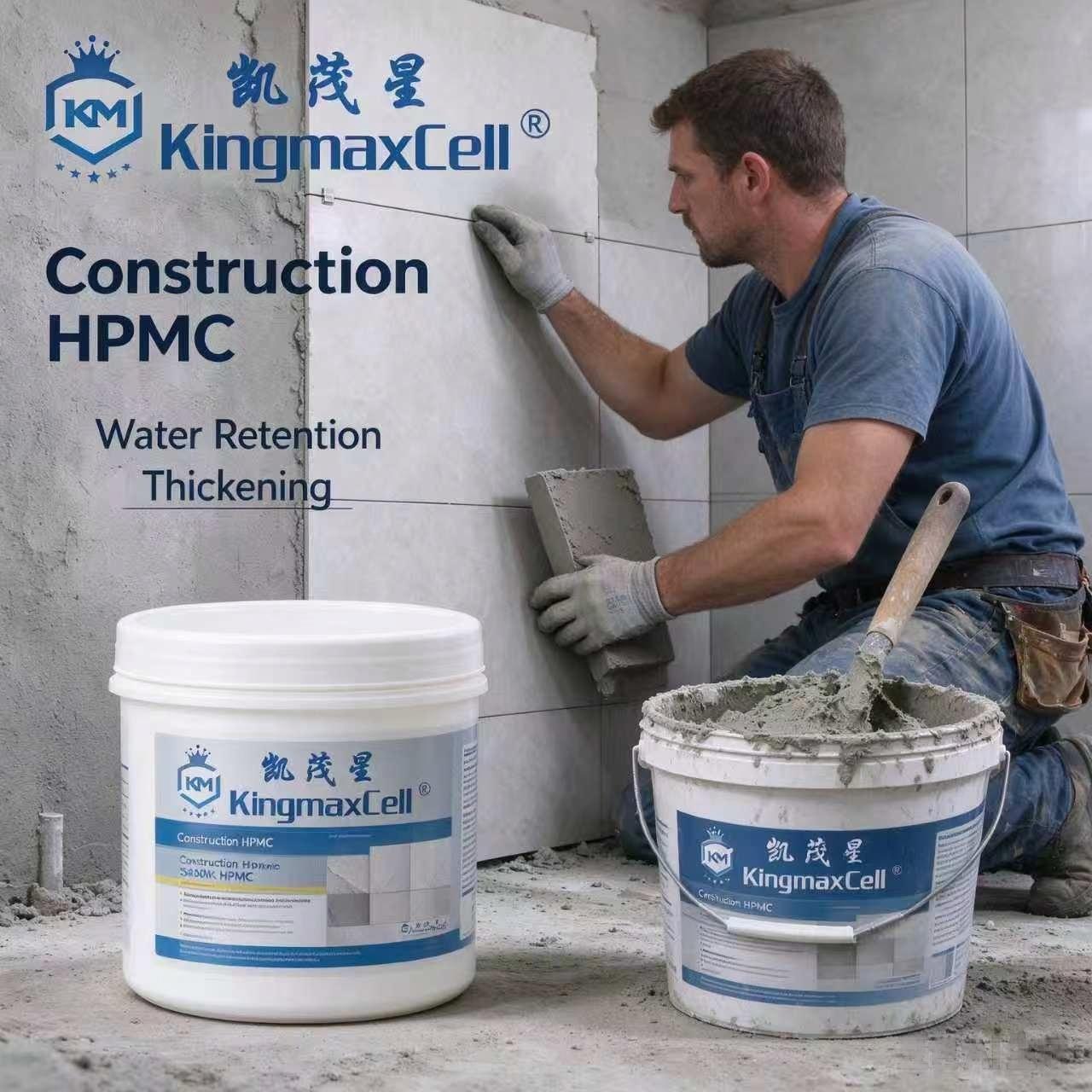
What Construction-Grade HPMC Is and Why Grade Selection Matters
Construction-grade hydroxypropyl methylcellulose (HPMC) is the water-retention and rheology component in many factory-made mortars. It is added at low dosage, yet it influences how a tile adhesive holds water, how long a wall putty stays workable, and whether a vertical application sags before the cement sets. Because the dosage is small, the supplier's batch consistency matters as much as the headline viscosity on a data sheet.
Kingmax Cellulose Co., Ltd. is a Chinese cellulose ether manufacturer established in 2003 and based in Jinzhou City, Hebei Province. The company produces construction-grade HPMC, HEC, MHEC and RDP, and reports that exports account for 80% of total sales, with major markets in Asia, Africa, Europe and America. This review examines the company's construction-grade HPMC position from a buyer's perspective: what the portfolio contains, how it is manufactured, where the grades fit, and which limits should be verified before qualification.
Chemically, HPMC (CAS 9004-65-3) is a non-ionic cellulose ether produced by etherifying purified cellulose with methyl and hydroxypropyl groups. In construction, it is used in cement-based and gypsum-based dry-mix formulations as a water-retention agent, thickener and binder. The same base chemistry is also supplied in daily chemical and pharmaceutical grades, but those are different specifications with different purity and documentation requirements.
Construction grade is not a single product. A supplier's HPMC range can differ by viscosity, substitution, moisture, ash content, particle size and gel behavior. Those differences affect water demand, open time, sag resistance and the interaction with redispersible polymer powder (RDP) and other admixtures. A formulator that changes HPMC source without re-validating the formulation may see changes in workability, adhesion or curing behavior.
Regulatory status also depends on grade and end use. In the EU, hydroxypropyl methyl cellulose is authorised as food additive E 464, and in the US it is listed under 21 CFR 172.874; these provisions apply to food-grade material, not construction-grade HPMC. For construction buyers, the relevant questions are the technical data sheet, batch consistency and the chemical inventory status of the grade in the destination market.
The Buyer Problem: Consistency Is Harder to Verify Than Price
Dry-mix mortar is a factory formulation, not a site mix. The HPMC is pre-blended with cement, sand, fillers and RDP, so the buyer cannot adjust the cellulose ether at the mixer. This makes supplier qualification a formulation-risk decision.
Three issues recur in HPMC procurement:
- Viscosity test method. NDJ and Brookfield viscometers give different readings for the same product. A grade quoted at 180,000–240,000 mPa·s on an NDJ at 2% concentration may show 70,000–80,000 mPa·s on a Brookfield instrument. Buyers should confirm the method, concentration and temperature before comparing quotations.
- Batch consistency. Small dosage means small variations can shift open time or sag resistance. COA review and incoming inspection are more reliable than a single sample.
- Application fit. A high-viscosity grade is not automatically better. Higher viscosity can increase water demand and reduce workability if the dosage is not adjusted.
Market context supports the attention. Construction applications account for approximately 60% of total HPMC demand, and the global construction HPMC market is projected to grow from an estimated $2.73 billion in 2026 to $4.15 billion by 2034 (Vertex AI Search Grounding / Industry Report, SRC-0001). A larger market brings more supplier options, but it also raises the cost of qualifying the wrong grade.
Kingmax Cellulose at a Glance
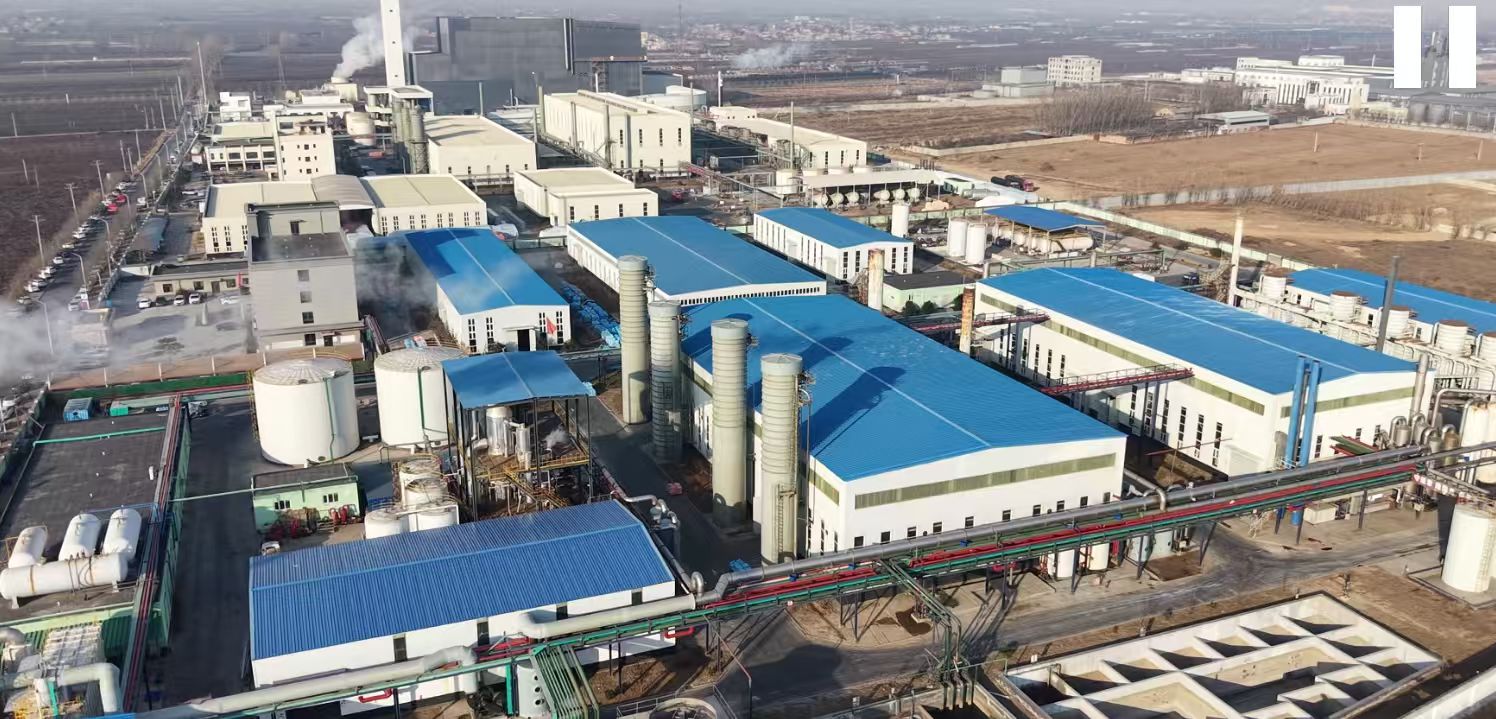
Kingmax Cellulose Co., Ltd. was established in 2003 and has more than 20 years of experience in cellulose ether production. The company operates an 80,000 m² manufacturing facility, employs more than 100 staff and maintains a 20-engineer R&D team. Its product portfolio covers HPMC, HEC, MHEC and RDP, sold under the KingmaxCell, EipponCell and Runxin brand families.
Company-reported annual production capacity is 55,000 tons. Since 2020, Kingmax has been building a 55,000-ton/year building-material-grade cellulose ether project in Mayu Chemical Park, Jinzhou Economic Development Zone, Hebei Province, with a total investment of RMB 350 million. The project includes 12 integrated horizontal reactors and a DCS control center that monitors feeding, metering, temperature and pressure. The production process is closed to reduce external and human interference, and the site includes an MVR wastewater treatment system.
Kingmax describes itself as one of the larger industrial-grade cellulose ether producers in China. That is a company statement rather than an independently verified ranking; buyers should treat it as context, not as a substitute for a supplier audit. The more decision-relevant facts are the product breadth, the stated production controls and the export orientation: approximately 80% of products are exported, with Asia, Africa, Europe and America listed as major markets.
Product Portfolio and Technical Positioning
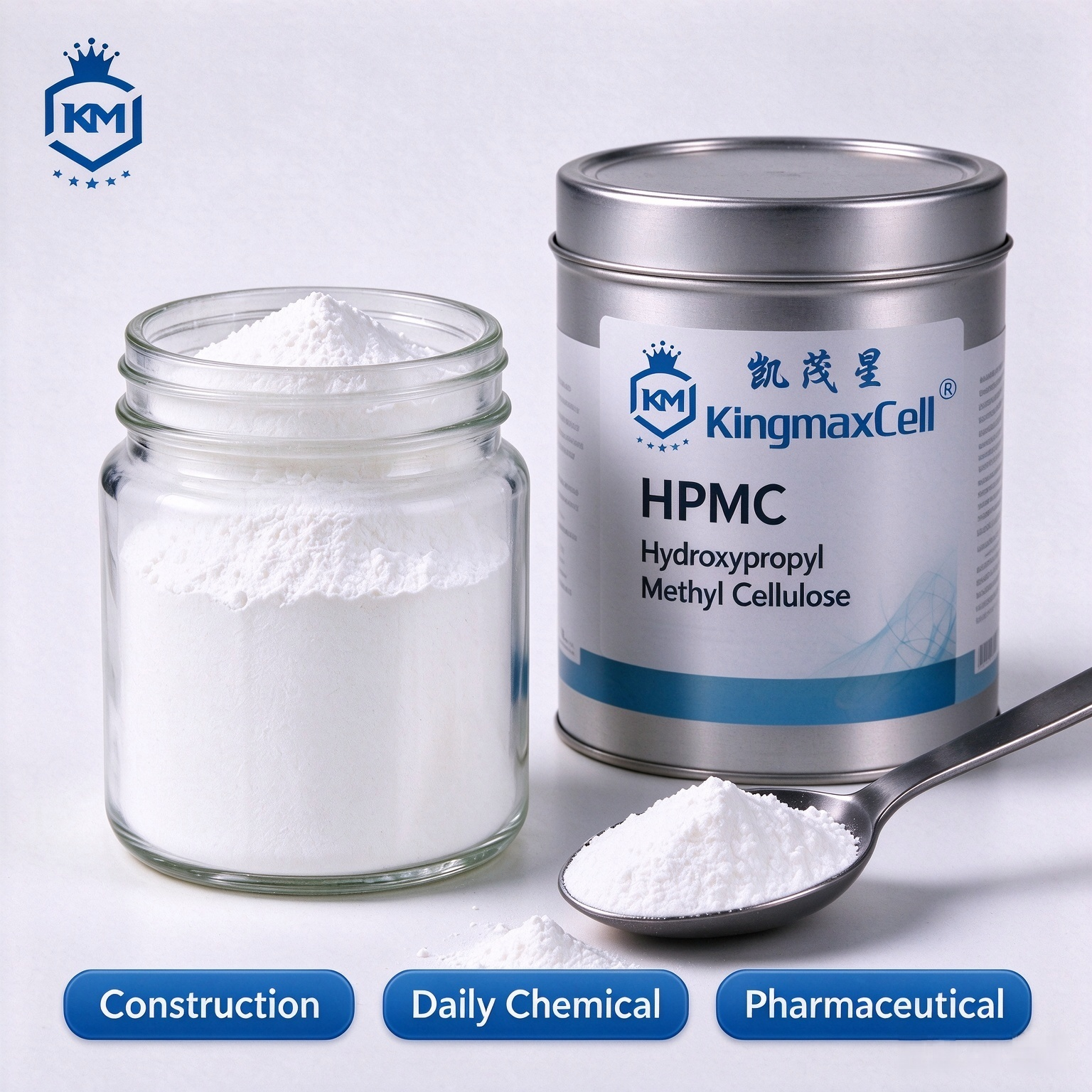
KingmaxCell construction-grade HPMC is supplied as a multi-grade cellulose ether. The construction-grade model series runs from HPMC-KM8100M to HPMC-KM8200MS, with refined cotton as the primary raw material. The product is described as 98% passing a 100 mesh screen, with moisture ≤5.0% and pH 5.0–8.0. The same HPMC platform is also offered in daily chemical and pharmaceutical grades; those should be specified separately.
| HPMC grade | NDJ viscosity at 2% (mPa·s) | Brookfield viscosity at 2% (mPa·s) | Typical positioning |
|---|---|---|---|
| HPMC-KM8100M | 48,000–72,000 | 24,000–36,000 | Lower-viscosity construction grade for workability-sensitive systems |
| HPMC-KM8150M | 120,000–180,000 | 55,000–65,000 | Mid-to-high viscosity grade for water retention and open time |
| HPMC-KM8200M | 180,000–240,000 | 70,000–80,000 | High-viscosity grade for demanding water-retention and anti-sag requirements |
The MHEC series, MX960M to MX9200MS, is a high-temperature-resistant construction cellulose ether made from refined cotton. Viscosity ranges from 48,000 to 240,000 mPa·s, water retention is ≥90%, particle size is 98% passing 100 mesh, pH is 5.0–8.0, moisture is ≤5.0%, and gel temperature is 65–75°C. It is intended for dry-mix mortar, building materials and coatings.
The HEC series, KM300 to KM150000, is a non-ionic cellulose ether with viscosity from 240 to 180,000 mPa·s at 2%, molar substitution 1.8–2.5, residue on ignition ≤0.5%, pH 5.0–8.0 and moisture ≤5.0%. It is used in construction, cosmetic and daily chemical, and pharmaceutical applications.
The RDP-5013 and RDP-5015 grades are VAE spray-dried redispersible powders (CAS 24937-78-8). RDP-5013 has solid content ≥99.0%, ash 12%±2 and Tg 10°C; RDP-5015 has solid content ≥98.0%, ash 11%±2 and Tg 3°C. Both have bulk density 450–550 g/l, average particle size around 80 μm, pH 5.0–7.0 and minimum film-forming temperature 3°C. The product is positioned for tile adhesive, thermal insulation mortar, self-leveling compound, flexible wall putty, repair mortar, and gypsum joint and crack filler, where it is reported to improve adhesion, flexibility, water resistance and crack resistance.
HPMC works by adsorbing onto cement and mineral surfaces and thickening the aqueous phase. That reduces water loss to the substrate and keeps the mortar workable for longer. Water retention supports cement hydration; open time supports tile adjustment; sag resistance keeps a vertical application in place. These properties interact. A grade that improves water retention may also increase viscosity and water demand, so the formulator has to balance dosage, water ratio and RDP level.
RDP and HPMC are complementary, not interchangeable. HPMC controls water retention and rheology; RDP contributes flexibility, adhesion and crack resistance after drying. In flexible tile adhesive, insulation mortar and repair mortar, the two are typically used together. A supplier that offers both can support formulation work across the dry-mix system, but the buyer should still validate the specific combination.
Where the Grades Fit: Application Map
| Application | HPMC function | Formulation note |
|---|---|---|
| Tile adhesive | Water retention, open time, anti-sag | Target class C1/C2 under EN 12004-1 / ISO 13007-1; floor systems can be evaluated with ASTM C627 |
| Wall putty | Water retention, workability, bonding | RDP is often added for flexibility and crack resistance |
| Dry-mix and repair mortar | Water retention, consistency, adhesion | Dosage and viscosity depend on cement content and application thickness |
| Thermal insulation mortar | Water retention, workability, adhesion | RDP contributes flexibility and adhesion in exterior wall insulation systems |
| Self-leveling compound | Rheology, stability, segregation resistance | Balance with defoamer and stabilizer; test flow and setting |
| Gypsum joint and crack filler | Water retention, workability | Gypsum-based systems need compatibility testing |
Tile adhesive is the most specification-driven application. EN 12004-1 and ISO 13007-1 classify cementitious adhesives as C1 (normal) and C2 (improved). ASTM C627 describes a Robinson-type floor tester method for ceramic floor tile installation systems. These standards define the target, not the HPMC dosage. A supplier can support the formulator by stating viscosity method, water retention and application references, but the final adhesive class must be proven by testing.
Wall putty and similar thin-coat finishes depend on water retention and workability. HPMC keeps the paste open and reduces rapid drying; RDP improves adhesion and flexibility. In exterior wall insulation systems, thermal insulation mortar needs both water retention and enough flexibility to accommodate movement; that is an RDP-HPMC interaction, not an HPMC-only decision.
Self-leveling compound is a rheology-sensitive system. HPMC contributes viscosity and stability, but over-dosing can increase yield stress and reduce flow. Gypsum joint and crack filler is another water-retention application where the gypsum source and setting behavior must be tested.
Manufacturing Controls That Affect Batch Consistency
The DCS-controlled reactor train is the most relevant manufacturing fact for a dry-mix buyer. Automated feeding, metering, temperature and pressure control reduce the variability that comes from manual charging. A closed process limits exposure to humidity and external contamination. Those controls support batch consistency, which is the property that matters when HPMC is used at low dosage.
Kingmax states that it implements 100% inspection before shipment, with stable viscosity, low ash content and good batch consistency. Buyers should still request a certificate of analysis for each batch, confirm the viscosity method used, and run incoming inspection on viscosity, moisture and ash. A supplier's internal QC is a control; the buyer's incoming test is the verification.
The 20-engineer R&D team and the company's stated cooperation with universities and research institutions are relevant to application support, but they are not a substitute for a trial. A practical qualification should include a sample trial in the buyer's own formulation, not only a review of the supplier's data sheet.
Market Trends and Procurement Implications
Three market signals are relevant to a construction-grade HPMC buyer.
First, demand is concentrated in construction. Approximately 60% of HPMC demand comes from construction applications, and the construction HPMC market is projected to reach $4.15 billion by 2034 from $2.73 billion in 2026 (SRC-0001). Growth is associated with construction applications such as dry-mix mortar, tile adhesive, insulation and repair systems rather than with HPMC as a standalone commodity.
Second, price is volatile. Cellulose ether prices in China reached $4,845 per ton in June 2025 (IMARC Group, SRC-0004). That is a market reference, not a quotation for a specific grade or supplier. Buyers should model cost-in-use, including dosage and reformulation risk, rather than compare only price per ton.
Third, trade and regulatory conditions are moving. China has adjusted or cancelled export tax rebates for various products (State Council, November 2024, SRC-0002); whether a specific HPMC grade is affected depends on the HS line, and that applicability was not verified in the available data. HPMC is classified under HS 3912.39 as another cellulose ether in primary forms. In the EU, polymers are exempt from REACH registration under Article 2(9); in China, the IECSC inventory status of CAS 9004-65-3 was not verified in the available data. These are separate from customs classification: an HS code does not by itself prove market access.
Regulatory documentation therefore belongs in the supplier questionnaire. A construction buyer should ask for the grade-specific TDS, SDS, CAS number and any destination-market inventory or food-contact statement that applies. Food-grade provisions such as E 464 and 21 CFR 172.874 should not be presented as construction-grade approvals.
Comparison with Traditional Sourcing Approaches, and the Limits
Compared with generic, ungraded HPMC or with liquid admixtures added at the mixer, a documented construction-grade powder offers reproducible dosing and dry-mix compatibility. A liquid admixture can be easier to adjust on site, but it adds a separate dosing step and is less suited to factory-packed mortar. Ungraded HPMC may be cheaper per ton, but the buyer carries more formulation and batch-consistency risk.
| What to verify | Why it matters | What to request |
|---|---|---|
| Viscosity method and range | NDJ and Brookfield values are not interchangeable | TDS with instrument, concentration and temperature |
| Batch consistency | Low dosage means small variation affects open time and sag | COA per batch and incoming inspection plan |
| Application reference | Grades are selected against mortar performance, not viscosity alone | Trial results in tile adhesive, putty or repair mortar |
| RDP compatibility | Flexibility and adhesion depend on the RDP-HPMC combination | Formulation guidance and sample trial |
| Regulatory status | HS classification does not equal market access | Grade-specific SDS, CAS and inventory statement |
| Commercial terms | MOQ and lead time can vary by grade and packaging | Written quotation for the specific grade |
The limits are equally important:
- HPMC does not replace RDP. In flexible tile adhesive, insulation mortar and repair mortar, RDP is the film-forming component that contributes flexibility and adhesion. HPMC controls water and rheology. A formulation that needs flexibility cannot be fixed by increasing HPMC.
- Higher viscosity is not always better. A high-viscosity grade can increase water demand and reduce workability. The right grade depends on application, dosage, cement type, sand grading and application method.
- Performance is system-dependent. Cement chemistry, temperature, water ratio and mixing equipment affect the result. Supplier data should be validated in the buyer's formulation.
- Regulatory status is market-specific. The IECSC listing status of HPMC was not verified in the available data, and EU/US food-grade provisions do not apply to construction grade. Buyers should confirm destination-market requirements.
- Capacity figures use different bases. Kingmax's company-reported annual capacity is 55,000 tons; a 2024 company statement also cites 30,000 tons of industrial-grade cellulose ether capacity. The difference may reflect product-line or project scope. Procurement teams should clarify which sites and product lines are included before using capacity as a qualification criterion.
- MOQ and lead time are grade-specific. The company states a minimum order quantity of 1 ton and a normal lead time of 7 days after deposit. Buyers should confirm these for the specific viscosity grade, packaging and destination.
Future Outlook
Dry-mix mortar construction is likely to keep shifting toward factory-controlled formulations, mechanized application and higher-performance insulation and repair systems. That favors suppliers that can document viscosity, water retention and batch consistency, and that can support RDP-HPMC combinations rather than selling a single commodity grade.
Two developments are worth watching. First, automation and closed production will become a more visible differentiator as buyers audit batch consistency rather than only price. Second, regulatory documentation will become part of supplier qualification, especially where the same HPMC chemistry is sold into construction, food and pharmaceutical uses. Suppliers that separate grade-specific documentation clearly will be easier to qualify.
For Kingmax, the relevant test is whether the 55,000-ton project and DCS controls translate into consistent commercial batches across the HPMC-KM8100M to KM8200MS range, and whether the company can support application validation in tile adhesive, wall putty and insulation mortar. Those are verifiable through samples, COAs and trial results.
Frequently Asked Questions
What is construction-grade HPMC used for?
Construction-grade HPMC is used in cement-based and gypsum-based dry-mix systems as a water-retention agent, thickener and binder. Typical applications include tile adhesive, wall putty, dry-mix mortar, repair mortar, thermal insulation mortar, self-leveling compound and gypsum joint and crack filler. It improves water retention, workability, open time and sag resistance. Daily chemical and pharmaceutical HPMC are separate grades with different specifications.
How do HPMC viscosity grades differ?
Viscosity is measured on a defined concentration and instrument. Kingmax lists HPMC-KM8100M at 48,000–72,000 mPa·s (NDJ, 2%), HPMC-KM8150M at 120,000–180,000 mPa·s and HPMC-KM8200M at 180,000–240,000 mPa·s. Brookfield readings at the same concentration are lower. Grade selection depends on application, dosage, water demand and mixing equipment; higher viscosity is not automatically better.
How can buyers verify HPMC batch consistency?
Buyers can request a certificate of analysis for each batch, confirm the viscosity test method and concentration, and run incoming tests for viscosity, moisture and ash. Kingmax states that it performs 100% inspection before shipment and targets stable viscosity, low ash content and batch consistency. The buyer's own incoming inspection is still the verification step.
Can HPMC viscosity and packaging be customized?
Kingmax states that viscosity, specifications and packaging can be customized to customer requirements. Buyers should confirm the achievable viscosity range, minimum quantity, packaging format and lead time for the specific grade before specifying a custom product.
What are the limits of HPMC in dry-mix mortar?
HPMC does not replace RDP. It controls water retention and rheology, while RDP contributes flexibility, adhesion and crack resistance after drying. Higher HPMC viscosity can increase water demand and reduce workability if dosage is not adjusted. Performance also depends on cement type, sand grading, temperature and mixing. HPMC should be validated in the full formulation, not selected from a data sheet alone.
Is Kingmax Cellulose a manufacturer or a trading company?
Kingmax Cellulose Co., Ltd. describes itself as a professional HPMC manufacturer with an independent production workshop and laboratory, and states that it supports OEM and ODM. The company was established in 2003 and is based in Jinzhou City, Hebei Province, China. Its product range includes HPMC, HEC, MHEC and RDP.
What is the minimum order quantity and typical lead time?
The company states a minimum order quantity of 1 ton and a normal delivery time of 7 days after receiving the deposit. These terms should be confirmed for the specific grade, packaging and destination, because they can vary by product line.
Procurement Checklist and Conclusion
A practical HPMC qualification should include the following checks:
- Define the application and target standard. For tile adhesive, C1/C2 under EN 12004-1 / ISO 13007-1; for floor systems, ASTM C627 is a relevant test method.
- Specify viscosity method, concentration and range, not just a single number.
- Request TDS, SDS, COA and grade-specific regulatory documentation.
- Trial the sample in the buyer's own formulation, including RDP and other admixtures.
- Confirm batch consistency through incoming inspection.
- Confirm MOQ, packaging and lead time for the specific grade.
- Clarify capacity basis if capacity is used as a qualification criterion.
Kingmax Cellulose is a relevant supplier to evaluate for construction-grade HPMC because it combines a broad cellulose ether portfolio, a stated 55,000-ton capacity project, DCS-controlled production and an export-oriented business. The HPMC-KM8100M to KM8200MS range covers low-to-high viscosity construction grades, and the RDP and MHEC lines allow a formulator to source complementary components. The limits are equally clear: HPMC is not a substitute for RDP, high viscosity is not a performance guarantee, regulatory status must be confirmed by market, and capacity figures need scope clarification. For buyers at the research stage, those are the right questions to put into a sample trial and supplier audit.
Есть вопросы или нужны дополнительные детали?
Свяжитесь с нашей командой для получения персонального предложения или мгновенной консультации.
Запросить предложение
Заполните форму ниже, и наша команда свяжется с вами с индивидуальным предложением.
Прямой чат WhatsApp
Предпочитаете общаться в реальном времени? Напишите нам в WhatsApp для мгновенной помощи и быстрых ответов.
- Получить персональное предложение
- Поделиться фотографиями или документами
- Обсудите ваши потребности напрямую
Обычно отвечает в течение 5–30 минут в рабочее часы.