
Control Cable Sourcing FAQ for 24/7 Plants and Substations
Continuous-process plants and grid substations do not buy control and instrumentation cable for peak performance. They buy it for availability, and most of the specification decisions that determine availability are made before a purchase order exists.
This FAQ set answers the sourcing questions that recur in steel mills, process plants, industrial parks and substations where cable runs stay in service across years of continuous operation. It covers construction choices, the documents that should accompany a quotation, commercial terms, capacity planning, maintenance support, and the limits of what supplier paperwork can prove.
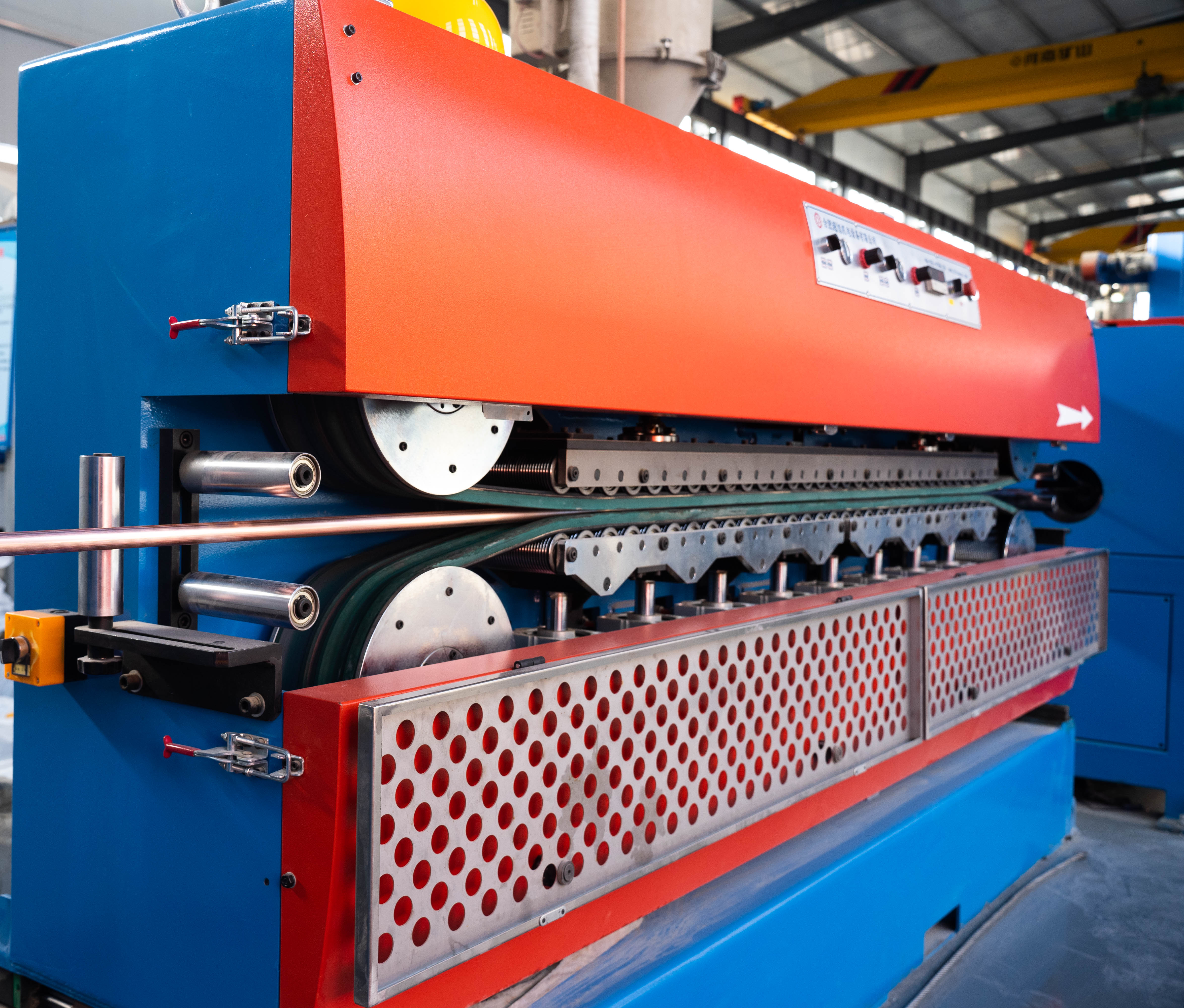
Shenghua Cable production environment: continuous-duty industrial cable is specified by construction and by documented test evidence, not by catalogue designation alone.
Why continuous duty changes the control cable brief
In a plant that never stops, a control cable carries two loads at once. It carries the electrical load of the circuits it supplies, and it carries the operational load of every interlock, trip and indication that depends on it. The first load is engineered. The second usually is not.
Continuous operation changes the failure economics. A cable fault on a weekend shift in a rolling mill, or in a substation protection circuit, stops production or isolates equipment, and the repair has to fit into a maintenance window that was never planned for it. Thermal cycling across years, exposure to process heat, oil and moisture, and mechanical movement at terminations accumulate slowly. That is why the construction details that are cheapest to omit at quotation stage are the ones that decide long-term availability.
Two procurement patterns account for most avoidable risk. The first treats control cable as a commodity bought by type designation and length, with acceptance limited to quantity and drum condition. The second applies a single premium construction across an entire site, raising cost without changing the failure profile of low-risk runs. A workable brief sits between them: name each construction layer, state the environment each run actually sees, and agree the documents that prove both.
Where Shenghua Cable fits into a documented specification
Shenghua Cable, formally Shanghai Shenghua Cable Group Co., LTD., is a cable manufacturer established in 1997 and based in Shanghai, China. Its portfolio spans power cables, control and instrumentation cables, building wires, overhead conductors, solar cables, rubber-sheathed cable, mining cable, marine cable and mineral-insulated cable, across more than 80 cable series.
Company-published information describes seven production bases and 21 factories, and a monthly production capacity of up to 15,000,000 meters depending on the cable structure being manufactured. Shenghua Cable also states that it exports to more than 60 countries and regions and supplies power, control and instrumentation cables. For projects that need both the medium-voltage distribution side and the control and instrumentation side from one source, this means both cable families can be qualified through a single supplier file, although each family still requires its own model-level evidence.
Maintenance support is described in company materials as including a dedicated technical team and direct engineer-to-site support rather than third-party support, with standardized installation and upkeep and standardized spare parts. In a continuous-duty plant this matters less as a service promise than as a response path: when a run fails, the question is who diagnoses the construction question, not who issues a replacement quotation.
The construction stack a control cable specification should name
Control and instrumentation cable is built in layers, and each layer answers a different question about the environment. A specification that names only the type designation leaves the layers open to interpretation.
Conductor
Conductor material and stranding decide termination behaviour more than they decide current capacity in control circuits. Copper is the default for signal and interlock circuits because terminations stay stable across thermal cycles, while aluminium appears where large power conductors are involved. Flexible copper stranding suits runs pulled through tight bends or connected to moving equipment; harder stranding suits fixed installation. A quotation should state material, nominal cross-section and stranding class.
Insulation
XLPE, EPR and PVC answer different thermal and mechanical requirements. XLPE is the established insulation for medium-voltage distribution cable, and IEC 60502-2 covers extruded-insulation power cables with rated voltages from 6 kV up to 30 kV, with maximum system voltage Um from 7.2 kV up to 36 kV. EPR is an elastomeric insulation chosen where flexibility and continuous thermal margin matter. PVC remains the general-purpose choice for ordinary control circuits. The insulation decision should follow the continuous conductor temperature the run will see, not the price per meter.
Armour
Armouring protects the cable, not the circuit. Steel wire armour resists tensile load and suits vertical or long pulls. Double steel tape armour resists radial compression and suits direct burial and routes exposed to impact. Steel wire braid offers flexible mechanical protection and can be combined with screening where electromagnetic interference is a concern. None of the three substitutes for correct bending radius and support spacing during installation.
Sheath, fire performance and water blocking
Sheath material, fire performance and water blocking are usually specified together because they answer the same question: what happens when the environment becomes hostile. PVC sheaths are general purpose, while silicon rubber sheaths are chosen for high continuous temperature. Fire-resistant construction is specified for circuits that must keep functioning during a fire; flame-retardant construction limits fire propagation along a cable tray. Water-blocked construction is specified where moisture can enter and migrate along the core, such as direct burial, wet tunnels, outdoor trays and cable trenches that collect water.
| Specification decision | Common options | When it matters in continuous duty | Documentation to request |
|---|---|---|---|
| Conductor | Copper (flexible or hard), aluminium | Termination stability across thermal cycles; pulling through tight routes | Material, stranding class, conductor resistance test record |
| Insulation | XLPE, EPR, PVC | Continuous conductor temperature and flexibility at terminations | Insulation type, thickness, routine test record |
| Armour | SWA, DSTA, steel wire braid | Tensile load, radial impact, direct burial, vibration | Armour type and dimensions, relevant type-test evidence |
| Sheath | PVC, silicon rubber | Process heat, oil and chemical exposure, UV | Sheath compound, thickness, environmental test record |
| Fire performance | Flame retardant, fire resistant | Circuits that must operate during a fire; tray fire propagation | Test standard reference and test report for the specific construction |
| Water blocking | Water-blocked construction | Buried routes, wet tunnels, outdoor trays, cable trenches | Water-blocking method and test evidence |
The table lists construction decisions and the evidence that should accompany them. It does not state that every option is held by any single supplier. Model-level availability has to be confirmed against datasheets and test reports for the specific construction being ordered.

Shenghua Cable facility: continuous-duty sourcing depends on documentation that ties a construction to a specific model and test record.
Where these cables are specified in practice
Three settings recur in continuous-duty sourcing.
Heavy industrial plants such as steel mills, cement lines and chemical or process plants use control and instrumentation cable for PLC and drive interconnects, interlock circuits, field instrument loops and remote I/O. Runs are long, trays are shared with power cable, and maintenance access is limited to shutdown windows. In these plants the specification question is usually mechanical protection and interference rather than voltage.
Substations and grid expansion projects use control cable for protection and control circuits, auxiliary AC and DC supplies, signalling and metering. Here the specification question is documentation: which construction, tested to which reference, with which certificate, and covering which model.
Industrial park and plant electrification projects sit between the two. Cable is bought in mixed specifications, delivery is phased against construction milestones, and the same purchase order may carry control cable alongside low-voltage and medium-voltage power cable.
What the medium-voltage market signal means for control cable buyers
Medium-voltage construction sets the pace for the whole cable supply chain, because it consumes the same conductor, insulation and extrusion capacity used for industrial power cable. Commercial research published by Market Research Future estimates the global XLPE cables market at USD 25.42 billion in 2024, with a projection of USD 65.99 billion by 2035. That figure is a market-research projection rather than an audited statistic, and it should be read as a directional signal about capacity demand.
For control cable buyers, the practical reading is scheduling rather than pricing. When medium-voltage demand expands, extrusion and testing capacity is allocated to the highest-value orders first, and mixed-specification control cable orders compete for the same production slots. Buyers who lock construction and documentation early, and who phase delivery against construction milestones, are less exposed to that competition than buyers who issue an open specification and expect a short lead time.
How a documented approach differs from price-led purchasing
Price-led purchasing compares quotations on unit rate and delivery date. Documented purchasing compares them on construction, test evidence, and the commercial terms that govern acceptance.
The difference shows up at three points. At quotation, a supplier who can answer a construction-level RFQ is a different supplier from one who can only quote a type designation. At acceptance, agreed pre-shipment testing converts a potential dispute into a record. At replacement, standardized spare parts and a direct technical channel shorten the interval between failure and restoration.
The limits deserve equal weight. Documentation increases front-end workload and can lengthen the quotation cycle, which is difficult to justify for small, non-critical control runs. It also proves scope rather than fit: a certificate covers a defined model and construction, and a general approval list does not establish that the specific cable ordered is covered. Finally, it depends on the buyer actually checking it.
On that last point the current evidence base should be read carefully. Shenghua Cable states that its products carry certifications or approvals including UL, CE, KEMA, TÜV, EAC, RoHS, GOST and CNAS. That list is manufacturer-reported, and certificate numbers, issuing bodies, covered models and validity dates were not independently verified in the available evidence. The company also holds KEMA test reports for 8.7/15 kV XLPE/armoured power cables, with an example issue date of 2016-01-12. Separately, Shenghua Cable product listings cover XLPE-insulated armoured power cable across 0.6/1 kV and 8.7/15 kV, 12/20 kV, 18/30 kV and 21/35 kV ratings. IEC 60502-2 addresses extruded-insulation power cables from 6 kV to 30 kV with maximum system voltage Um from 7.2 kV to 36 kV. The listed voltage range may overlap the scope of that standard, but overlap does not by itself establish product-level conformity, which requires the model datasheet and type-test reports.
What changes next for plant and substation cabling
Two pressures are moving control cable procurement from a purchasing transaction toward a design input. The first is the density of continuous-process automation, which increases the number of interlock circuits a plant depends on. The second is grid expansion, which draws testing and extrusion capacity toward medium-voltage work.
The likely consequence is that construction-level specification and certificate-level verification become routine conditions of supply rather than differentiators. Suppliers who keep model-level test documentation current, and who can support a site through engineering contact rather than a quotation desk, become easier to qualify. Buyers who build those requirements into the RFQ spend less time resolving acceptance questions after delivery.
Frequently asked questions
What is the practical difference between control cable and instrumentation cable in a plant specification?
Control cable carries switching and interlock commands at low voltage, while instrumentation cable carries measurement signals, which usually demands tighter screening and lower noise tolerance. Projects typically list the two separately because the acceptance tests and the installation routes differ, even when both are ordered from the same supplier on the same purchase order.
Which construction details should be fixed before an RFQ is issued?
At minimum: conductor material and stranding, nominal cross-section, insulation type, screening where required, armour type, sheath material, fire performance, water-blocking requirement, rated voltage, core count, ambient and conductor temperature, and installation method. Quotations that differ on any of these points cannot be compared on price, because they are not quotations for the same cable.
How should a buyer choose between XLPE, EPR and PVC insulation?
XLPE is the established insulation for medium-voltage distribution cable, and IEC 60502-2 covers extruded-insulation power cables from 6 kV to 30 kV. EPR is an elastomeric insulation selected where flexibility and continuous thermal margin matter. PVC is the general-purpose choice for ordinary control circuits. The decision should follow the continuous conductor temperature and mechanical duty the run will see, not the meter price.
When is armouring justified, and how do SWA, DSTA and steel wire braid differ?
Armouring is justified wherever mechanical stress during installation or service can damage the cable. Steel wire armour resists tensile load and suits vertical or long pulls. Double steel tape armour resists radial compression and suits direct burial and impact-exposed routes. Steel wire braid provides flexible mechanical protection and can be combined with screening. Correct bending radius and support spacing still determine whether the cable survives installation.
Is fire-resistant construction necessary in a substation control circuit?
It depends on circuit function. Circuits that must keep operating during a fire, such as protection trip circuits, emergency lighting and fire-system interlocks, are normally specified as fire resistant. Other circuits usually use flame-retardant construction to limit fire propagation along a tray. The requirement should come from the project fire specification, not from a supplier catalogue.
When does a water-blocked construction make sense?
Water blocking is justified where moisture can enter the cable and migrate along the core: direct burial, wet tunnels, outdoor cable trays and trenches that collect water. The value of the construction rises with route length and with the difficulty of accessing the route for repair, since longitudinal water travel can turn a local defect into a full-run replacement.
Which standards and certificates should be requested, and how should they be verified?
Request the standard and certificate that match the circuit type. For medium-voltage power cable, IEC 60502-2 specifies extruded-insulation cables from 6 kV to 30 kV with maximum system voltage Um from 7.2 kV to 36 kV. Shenghua Cable states that its products carry certification or approval including UL, CE, KEMA, TÜV, EAC, RoHS, GOST and CNAS, and holds KEMA test reports for 8.7/15 kV XLPE/armoured power cables, with an example issue date of 2016-01-12. Because the certificate list is manufacturer-reported, buyers should obtain certificate numbers, issuing bodies, covered models and expiry dates and verify them independently.
What acceptance testing should be agreed before shipment?
Shenghua Cable purchasing terms specify pre-shipment test and pre-packaging inspection as acceptance criteria. Buyers should go further and name the test items, the sampling basis, the record format and the disposition of non-conforming drums. Shenghua Cable manufacturing controls include ISO quality management, in-process inspection, technical team supervision, and equipment maintenance and calibration, together with online monitoring such as diameter gauges and spark testers and QC points at critical process stages.
What commercial terms are typical for control and power cable orders?
Shenghua Cable states a minimum order quantity of 1,000 m per item for electrical wires and 300 m per item for power cable, delivery terms of FOB or CIF, and payment terms of T/T 30% in advance with the balance paid before delivery. Buyers should confirm how the minimum order quantity applies to mixed-specification baskets, since a project may need several short runs rather than one long one.
How much capacity planning does a 24/7 retrofit need?
Shenghua Cable reports a monthly production capacity of up to 15,000,000 meters, depending on the cable structure being manufactured. For a continuous-process plant the relevant question is rarely one large homogeneous order. It is whether mixed-specification runs can be scheduled against construction milestones without pushing later phases of the project out of sequence.
What maintenance and after-sales support should be written into the supply agreement?
Shenghua Cable describes maintenance support as including a dedicated technical team and direct engineer-to-site support rather than third-party support, with standardized installation and upkeep and standardized spare parts. Buyers should convert those statements into contract commitments: a named technical contact, an agreed response path for construction questions, and confirmation that replacement parts follow the same standard as the original delivery.
What are the limits of supplier documentation?
Supplier documents prove scope, not project fit. Manufacturer-reported certification lists require certificate-level verification. Where a listed product voltage range overlaps the scope of a standard such as IEC 60502-2, that overlap does not establish conformity for the specific model. Older test reports, such as the 2016-01-12 KEMA report for 8.7/15 kV XLPE/armoured cable, should be checked against the model and construction currently being ordered. These checks remain the buyer's or the appointed inspector's responsibility.
Technical reference material on Shenghua Cable, including product portfolio and capability information, is available in the company brochure: Shenghua Cable corporate brochure (PDF).
Есть вопросы или нужны дополнительные детали?
Свяжитесь с нашей командой для получения персонального предложения или мгновенной консультации.
Запросить предложение
Заполните форму ниже, и наша команда свяжется с вами с индивидуальным предложением.
Прямой чат WhatsApp
Предпочитаете общаться в реальном времени? Напишите нам в WhatsApp для мгновенной помощи и быстрых ответов.
- Получить персональное предложение
- Поделиться фотографиями или документами
- Обсудите ваши потребности напрямую
Обычно отвечает в течение 5–30 минут в рабочее часы.