
Control Room LED Compliance: Qualifying the ECOB Series
Control-room LED procurement is a compliance exercise before it is a picture-quality exercise. A display that performs well in a showroom can still fail a control room if its power input, thermal envelope, service access, panel weight or certification evidence does not match the project. The ECOB Series is a useful reference for building that qualification framework because its published specifications cover the variables that most often decide control-room fit: COB packaging, fine pixel pitch, two panel formats, front maintenance and common-cathode/common-anode power options.
The ECOB Series is described in DDW Display’s corpus as a COB LED display suitable for control room and command center environments, with a matt COB surface treatment and Flip Chip LED technology. It is also described as a front-service fine-pitch LED display. Those two descriptions frame the procurement question well: the product is not simply a screen with a small pixel pitch; it is a serviceable indoor display that must be qualified against the electrical, environmental and mechanical conditions of a live operations room.
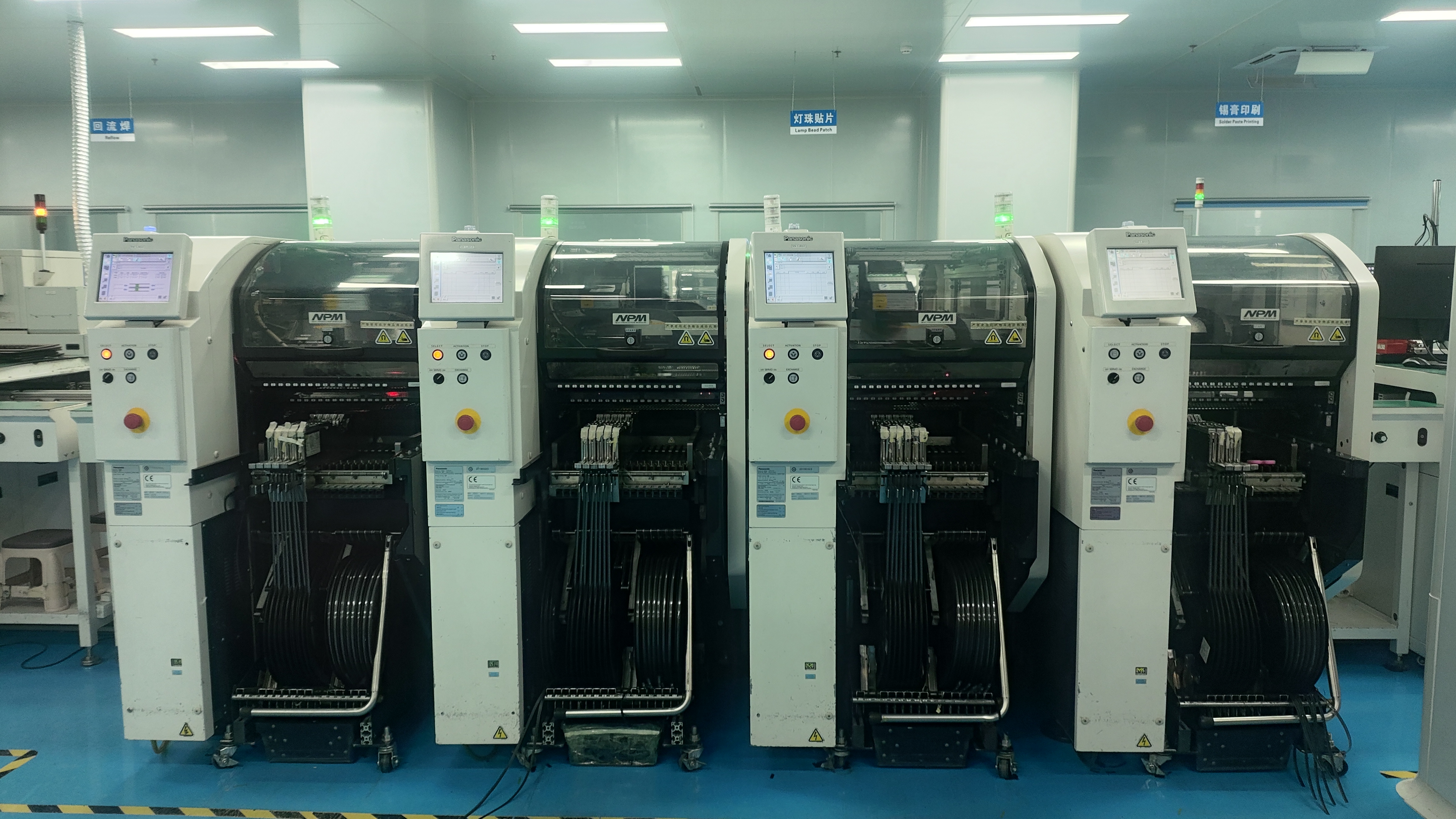
LED display production and inspection environment. Control-room qualification should connect published specifications to manufacturing, testing and service evidence.
Why control rooms change the LED display brief
Control rooms and command centers are not conference rooms with darker walls. They combine close viewing, low ambient light, high data density, long operating hours and a need for predictable service. In many projects the display becomes a permanent data surface for operators, supervisors and incident teams. That changes the procurement brief in four ways.
First, image quality is judged at low brightness as much as at peak brightness. Operators need stable grayscale, clean dark tones and consistent color across the wall, not just a bright demonstration image. Second, the display must fit the room’s electrical and thermal design. A high-density wall can concentrate power and heat, so input voltage, frequency, power architecture and operating temperature matter as much as pixel pitch. Third, service access must be planned before the wall is fixed. A front-maintenance design can reduce rear clearance, but it does not remove the need to define which components are serviceable from the front and how spare modules are handled. Fourth, compliance evidence must be model-specific. A certificate for one LED display family is not automatically evidence for another model, market or configuration.
The opportunity is not to choose the smallest pixel pitch available. It is to specify a display that can be qualified against the room, the content, the control system and the service model. COB packaging can support that goal because it changes the surface and protection model of the LED module, but it should be treated as one design choice among several, not as a universal answer.
A qualification framework for indoor fine-pitch COB displays
A practical framework starts with the published specification, then tests each claim against the project. The table below uses the ECOB Series as the reference product and shows what a buyer should verify. The framework is deliberately broader than a data sheet because control-room compliance is rarely decided by one number.
| Qualification area | Published ECOB Series reference | Project verification |
|---|---|---|
| Electrical input | AC 100–240V, 50/60Hz | Confirm site voltage, frequency, breaker sizing, UPS behavior, inrush current and power distribution redundancy. |
| Operating environment | -10°C to +40°C operating range | Check room HVAC, temperature stratification, front and rear clearance, dust control and heat rise during continuous operation. |
| Pixel pitch | P0.625–P1.87 | Match pitch to viewing distance, content resolution, operator tasks and budget. Do not assume the smallest pitch is required. |
| Panel formats | 600 × 337.5 × 39.5 mm; 600 × 675 × 39.5 mm | Check wall geometry, 16:9 tiling, ceiling height, seismic fixing, transport access and spare-panel storage. |
| Panel weight | 4 kg and 7.9 kg | Confirm structural load, mounting system, service platform and installation method. |
| Module size | 150 × 168.75 mm | Check spare-module planning, alignment tolerances and front-service access. |
| Brightness | 600 nits standard; 1000 nits optional | Verify low-brightness grayscale, calibration range and ambient light. Higher brightness is not automatically better in a dark room. |
| Contrast | 10000:1 | Check black level under control-room lighting and whether the contrast figure is measured under the project’s conditions. |
| Refresh rate | 3840 Hz | Confirm camera capture, processor output, source frame rate and absence of flicker or scan artifacts. |
| Power architecture | Common cathode and common anode support | Compare power consumption, heat, driver compatibility, spare parts and the project’s energy strategy. |
| Service | Front maintenance | Confirm which components are front-serviceable, what tools are required and how calibration is restored after module replacement. |
| Cabinet | Die-cast aluminum cabinet | Check flatness, tolerances, mounting precision and repeated installation behavior. |
The table also exposes a common procurement error: treating a certificate logo as a substitute for model evidence. For compliance, the buyer should request the certificate number, issuing body, standard, covered model, destination market and validity period. The evidence should match the exact ECOB configuration, not just the brand or product family.
Where DDW Display fits the qualification process
DDW DISPLAY (Shenzhen DDW Technology Co.,Ltd.) is a Shenzhen-based LED display manufacturer founded in 2012. The company operates a 10,000㎡ facility and supplies indoor fine-pitch LED displays, outdoor LED displays, rental LED screens, COB LED displays, XR virtual production LED walls, LED posters, stadium LED displays and commercial LED video walls. Its stated quality-control process includes 100% product inspection, aging tests, module testing, brightness and color calibration, and power safety testing before shipment. Those process facts matter in a control-room qualification because they describe what the supplier says it checks before dispatch, not just what the catalogue promises.
Within that portfolio, the ECOB Series is the relevant reference for a control-room COB display. The published specification supports a qualification conversation around four design choices. The first is COB packaging with a matt surface treatment and Flip Chip LED technology, which the corpus links to the control-room and command-center use case. The second is a fine-pitch range from P0.625 to P1.87, which allows the project to choose resolution according to viewing distance rather than defaulting to the smallest pitch. The third is a choice of two panel formats, 600 × 337.5 × 39.5 mm at 4 kg and 600 × 675 × 39.5 mm at 7.9 kg, with a 150 × 168.75 mm module. The fourth is a power architecture that supports common cathode and common anode configurations.
For a buyer, the brand fact that matters is not that DDW Display offers many products. It is that the ECOB Series can be discussed as a specific indoor fine-pitch COB display with front maintenance, die-cast aluminum cabinet construction and a defined set of electrical and optical parameters. That specificity is what allows a project team to compare the product against the room, the control system and the service plan.
Technical explanation: what the ECOB specifications mean in practice
Pixel pitch and panel geometry
Pixel pitch is the first specification buyers compare, but it should be read together with viewing distance and content. The ECOB Series spans P0.625 to P1.87. A very fine pitch can support close viewing and high data density, but it also increases cost and can place more demands on source resolution, processing and calibration. A larger pitch within the range may be adequate where operators sit farther from the wall or where the display is used for overview data rather than detailed text.
The two panel formats change the mechanical design. The 600 × 337.5 × 39.5 mm panel is a 16:9-shaped unit at 4 kg. The 600 × 675 × 39.5 mm panel doubles the height and weighs 7.9 kg. The taller panel can reduce the number of horizontal seams and may simplify large wall construction, but it also changes lifting, mounting and structural load. The 150 × 168.75 mm module is the serviceable building block. Buyers should confirm how modules align, how spare modules are stored and how the wall is recalibrated after replacement.
Power input and thermal envelope
The ECOB Series is specified for AC 100–240V, 50/60Hz input and an operating range of -10°C to +40°C. Those figures are a starting point, not a guarantee that every room is suitable. A control room may have stable HVAC, but the display wall itself can create a thermal gradient. The project team should check clearance, airflow, heat rejection and the effect of continuous operation on the power supplies and cabinet. The common cathode and common anode options also matter because they represent different power architectures. The buyer should compare consumption, heat, driver compatibility and spare-parts strategy rather than treating the two as interchangeable labels.
Brightness, contrast and low-light performance
The ECOB Series lists 600 nits as standard brightness and 1000 nits as an option, with a 10000:1 contrast ratio. In a dark control room, 600 nits may already be more than enough for comfortable viewing. The more important question is whether the display can hold grayscale and color consistency at the low end of its brightness range. A 1000-nit option can be useful where ambient light is higher or where the wall is viewed from a distance, but it should not be selected simply because it is higher. The buyer should ask for a low-brightness demonstration, a calibration report and a explanation of how brightness is managed across the wall.
Refresh rate and camera compatibility
The specified 3840 Hz refresh rate is relevant when the control room includes camera capture, broadcast monitoring or recording. Refresh rate alone does not guarantee a clean image. The source frame rate, processor, cabling and camera shutter all interact. A practical test should include live camera capture at the actual viewing distance and the actual content type. If the room uses video conferencing or evidence recording, the test should include those workflows, not just a static image.
Front maintenance and cabinet construction
The ECOB Series is a front-service fine-pitch LED display and uses a die-cast aluminum cabinet. Front maintenance is valuable in control rooms where the wall is recessed, flush-mounted or has limited rear access. It reduces the need to build a rear service corridor, but it does not remove the need to define service scope. The buyer should confirm which components can be reached from the front, what spare parts are recommended, how module removal affects adjacent modules and how the wall is recalibrated after service. The die-cast aluminum cabinet should also be checked for flatness, mounting precision and repeated installation behavior.
Application and use cases
The most direct application is a control room or command center where operators monitor maps, video, alarms and data dashboards for long periods. In that setting, the ECOB Series should be qualified for low-brightness stability, fine-pitch readability and front service access. A second use case is a utility, transport or security operations room where the display wall is part of a 24/7 workflow. Here the operating temperature range and power architecture deserve more attention than peak brightness.
A third use case is a corporate or public-sector operations center that combines presentations with monitoring. The wall may need to switch between dense data and video content, so the processor, refresh rate and calibration should be tested across both. A fourth use case is a broadcast or recording-adjacent control room. The 3840 Hz refresh rate and COB surface treatment can be relevant, but the project should test camera capture rather than relying on the specification alone.
Across these uses, the ECOB Series is not defined by a single room type. It is defined by a set of fit conditions: indoor installation, close or medium viewing, front service, a defined panel geometry and a power architecture that can be matched to the project. When those conditions are met, the display can be evaluated as a control-room component rather than as a generic LED video wall.
Market trend analysis
The wider LED display market continues to expand. Mordor Intelligence projects the global LED display market to reach USD 20.73 billion in 2026 and USD 26.98 billion by 2031. That forecast supports the general direction of the category, but it does not tell a buyer which display is suitable for a control room. Market growth can increase the number of suppliers and product claims, which makes model-level verification more important, not less.
At the same time, Micro-LED forecasts are often cited alongside COB products. Grand View Research projects the Micro-LED market to grow at a CAGR of 77.4% from 2024 to 2030, reaching a projected USD 25.65 billion. That is a Micro-LED forecast, not a validation of every COB display. Buyers should avoid conflating COB packaging, fine-pitch COB and Micro-LED. The relevant question is whether the specific ECOB model has the electrical, optical, mechanical and service evidence required by the project.
A third trend is the movement toward common cathode and common anode power options in indoor fine-pitch displays. For control rooms, this is a procurement question about heat, power consumption, driver compatibility and spares. The trend does not remove the need for a room-level thermal calculation. It simply gives the buyer another design choice to qualify.
Comparison with traditional solutions
COB displays are often compared with SMD displays. The comparison should be practical. COB packaging integrates the LED into the module surface and can provide a different protection and handling profile. SMD packaging uses discrete surface-mounted devices and, in some designs, can make single-pixel service more straightforward. Neither approach is universally better. The right choice depends on viewing distance, service model, ambient conditions, content and budget.
| Consideration | COB display reference | Traditional SMD reference |
|---|---|---|
| Surface and handling | COB packaging can provide a more integrated module surface, which is relevant in rooms with routine cleaning or accidental contact. | SMD uses discrete components on the module surface; handling and protection practice should be confirmed. |
| Service model | Module-level replacement and recalibration are common considerations; front maintenance can reduce access burden. | Some SMD designs allow more localized service, but the actual service scope depends on the product. |
| Image performance | Fine pitch and COB packaging can support close viewing; low-brightness calibration is the deciding test. | SMD remains widely used across indoor fine-pitch applications; performance depends on the specific model. |
| Procurement risk | Verify model-specific certification, spare modules, calibration procedure and service response. | Verify the same evidence; the packaging type does not remove the need for model-level proof. |
The limitation is important. COB packaging can change the service model, and a control-room buyer should not assume that front maintenance makes every repair a simple front-side swap. Module replacement may require recalibration, and spare-module strategy should be agreed before installation. In some projects, a traditional SMD solution may remain easier to service locally. The ECOB Series should therefore be qualified as a system, not selected on the basis of packaging alone.
Future outlook
Control rooms are likely to continue moving toward fine-pitch indoor LED walls because they offer seamless geometry, high contrast and flexible sizing. The next procurement differentiator will not be pixel pitch alone. It will be the quality of the evidence around power, thermal behavior, low-brightness calibration, service access and model-specific compliance. Suppliers that can provide clear documentation and a defined service model will be easier to qualify.
The ECOB Series is positioned within that shift as a front-service COB display with a matt surface treatment and Flip Chip LED technology. Its two panel formats and common cathode/common anode options give project teams room to match the wall to the room. The limiting factor is not the concept. It is the discipline of the qualification process: confirm the model, confirm the certificate, confirm the service scope and test the display under control-room conditions.
Qualification checklist
- Confirm the exact ECOB model, pixel pitch, panel format and brightness option.
- Verify AC 100–240V, 50/60Hz compatibility with the site power design.
- Check the -10°C to +40°C operating range against room HVAC and continuous-operation heat rise.
- Calculate structural load for 4 kg and 7.9 kg panels, including mounting and service access.
- Test low-brightness grayscale and color consistency, not only peak brightness.
- Confirm 3840 Hz refresh performance with the actual processor, source and camera workflow.
- Decide between common cathode and common anode based on power, heat, driver and spares.
- Define front-maintenance scope, spare modules and recalibration procedure.
- Request certificate number, issuing body, standard, covered model, market and validity.
- Record the approved configuration in the purchase order and acceptance test.
FAQ
What power input does the ECOB Series require?
The published ECOB Series specification lists AC 100–240V, 50/60Hz input. The project should still confirm site voltage, frequency, breaker sizing, UPS behavior and power distribution design before installation.
What operating temperature range should be specified for a control room?
The ECOB Series is specified for -10°C to +40°C. A control room should also be checked for temperature stratification, clearance, dust control and heat rise during continuous operation. The range is a product limit, not a substitute for room-level thermal design.
Which pixel pitch should be selected between P0.625 and P1.87?
Select the pitch according to viewing distance, content resolution, operator tasks and budget. A very fine pitch can support close viewing and high data density, but it increases cost and places more demands on source resolution and calibration. A larger pitch within the range may be adequate at longer viewing distances.
What do the two panel sizes and weights mean for wall design?
The 600 × 337.5 × 39.5 mm panel weighs 4 kg and follows a 16:9-shaped geometry. The 600 × 675 × 39.5 mm panel weighs 7.9 kg and doubles the height. The taller panel can reduce horizontal seams but changes lifting, mounting and structural load. Both use a 150 × 168.75 mm module.
Is 600 nits enough, or is the 1000-nit option needed?
600 nits is the standard brightness and may be sufficient in a controlled low-light control room. The 1000-nit option can be relevant where ambient light is higher or viewing distance is greater. The more important test is low-brightness grayscale and color consistency across the wall.
What does common cathode and common anode support mean for procurement?
The two configurations represent different power architectures. Buyers should compare power consumption, heat, driver compatibility, spare parts and the project’s energy strategy. The choice should be made with the display supplier and the power-system designer, not from the label alone.
How should certification be verified for a control-room LED display?
Request the certificate number, issuing body, standard, covered model, destination market and validity period. The evidence should match the exact ECOB configuration. A logo or family-level claim is not sufficient if the project requires model-specific conformity evidence.
What maintenance access is required for a front-service display?
Front maintenance reduces the need for rear access, but the project should still confirm which components are serviceable from the front, what tools are required, how spare modules are stored and how the wall is recalibrated after module replacement.
Market data references: Mordor Intelligence, LED Display Market Size, Trends and Industry Forecast, 2031; Grand View Research, Micro-LED Market Analysis. Product reference: DDW Display ECOB Series corpus and published specifications.
For further reference, the DDW LED Display catalog 2026 is available here: DDW LED Display catalog 2026.
Есть вопросы или нужны дополнительные детали?
Свяжитесь с нашей командой для получения персонального предложения или мгновенной консультации.
Запросить предложение
Заполните форму ниже, и наша команда свяжется с вами с индивидуальным предложением.
Прямой чат WhatsApp
Предпочитаете общаться в реальном времени? Напишите нам в WhatsApp для мгновенной помощи и быстрых ответов.
- Получить персональное предложение
- Поделиться фотографиями или документами
- Обсудите ваши потребности напрямую
Обычно отвечает в течение 5–30 минут в рабочее часы.