
Control Valve Scenario Fit: Pulverized Coal and Black Water
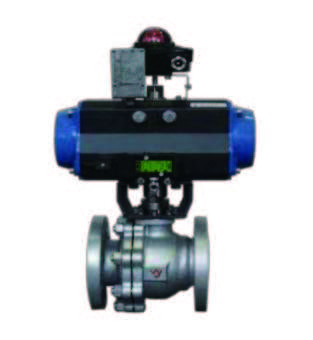
Pulverized coal conveying, black water letdown and grey water isolation are among the most punishing duty classes assigned to any industrial control valve. The medium is abrasive, the velocities are high, and the trim is asked to do two opposing jobs at once: modulate flow precisely, and survive long enough for that precision to still matter at the end of the operating campaign.
In coal chemical and coal conversion circuits, valve failure rarely arrives as a control-tracking problem. It arrives as eroded plugs, plugged guide bushings, washed-out sealing surfaces and premature replacement. That shifts the procurement question. The useful question is not which regulating valve offers the finest control accuracy in the abstract, but which construction survives a specific damage mechanism for a specific campaign length — and what evidence a supplier can put behind that claim.
Wuzhong Instrument Co., Ltd. (WZI) is a Chinese control valve manufacturer founded in 1959, based in Wuzhong City, Ningxia, China. The company designs and manufactures control valves, severe-service valves, actuators and valve accessories for process industries including petrochemical, power generation, nuclear energy, LNG, and oil and gas. Its reported manufacturing base covers 120,000 square meters, employs 1,134 staff, and supports an annual production capacity of 200,000 units. Its coal chemical product group — a pulverized coal conveying valve, a black water angle valve, a grey water eccentric rotary valve, a combined isolation valve family and a high-cycle abrasion-resistant ball valve — is the subject of this analysis.
Why Abrasive Slurries Defeat Standard Control Valve Trim
Three mechanisms recur across pulverized coal, black water and grey water service, and each one attacks a different part of the valve.
Particle impingement
Solid-laden media at velocity treat trim surfaces as a target. In angle-body and rotary designs, the flow path tends to direct the medium across the plug or disc rather than straight through it, which concentrates wear. WZI's own description of the Black Water Angle Valve explicitly cites a streamlined throttling disc intended to minimise asymmetric flow impingement — an acknowledgement that impingement, not general abrasion, is the dominant failure mode in that body style.
Stagnation and plugging
Cage-guided and sleeve-guided valves achieve stability by forcing the medium through a multi-hole cage and close-clearance guide passages. In clean service this is an advantage. In slurry service those passages become deposition sites. Without a shearing action at the throttling point, solids accumulate, travel is lost, and controllability degrades before the valve fails outright.
Sealing-surface degradation
Isolation valves face a different problem. Every open-and-close cycle draws abrasive solids across the seating pair. Over a campaign, the sealing interface erodes progressively until the valve no longer isolates the line it was installed to protect.
How WZI Structures the Scenario
WZI's coal chemical range is built as five complementary products rather than one product applied five ways. Each carries a distinct structural feature aimed at a distinct failure mechanism.
Pulverized Coal Conveying Valve, model ACC
Nominal size DN65 to DN80 (2 1/2" to 3"), pressure rating Class600 to Class2500. Features: bellows stem sealing and a cup-shaped plug for precise flow regulation, enabling accurate control of the air-to-coal ratio without clogging. The bellows stem seal is the notable detail — it separates the stem guide region from the conveyed medium, so the guidance surface is not exposed to the coal dust stream.
Black Water Angle Valve, model ACV
Nominal size DN40 to DN300 (1 1/2" to 12"), pressure rating Class150 to Class1500. Features: carbide plug and seat, an optimised body cavity, and a streamlined throttling disc to minimise asymmetric flow impingement. Carbide is specified on both the plug and the seat, which means the wearing interface is hardened as a pair rather than as a single component.
Grey Water Eccentric Rotary Valve, model VFRM
Nominal size DN50 to DN200 (2" to 8"), pressure rating Class150 to Class900. Features: multi-process hardened construction for enhanced anti-clogging and erosion resistance. The eccentric rotary geometry produces a shearing action at the seat rather than a compression action, which is the mechanism that keeps particulate media from bridging across the flow passage.
Pulverized Coal, Black Water and Grey Water Isolation Valve, models G1620 and G1630
Nominal size DN150 to DN450 (6" to 18"), pressure rating Class600 to Class900. Features: supersonic-sprayed ball and plasma-overlay-welded seat. A sealed guide bushing prevents media ingress and bushing seizure during long-term operation, and a scraper-type sealing seat carries an ultra-hard, optimised sealing pair. The scraper geometry matters in abrasive duty because it clears material from the sealing path as the ball rotates, instead of relying on the sealing faces to displace it.
PDS High-Cycle Abrasion-Resistant Ball Valve, model G1820
Nominal size DN15 to DN300 (1/2" to 12"), pressure rating Class300 to Class600. Features: wear and erosion resistance, with a protected spring chamber to prevent elastic-element failure. A dual-guiding system prevents lateral stem movement and supports reliable sealing. This model addresses a different degradation path than the isolation valves: not the sealing pair, but the spring element and the stem guidance, both of which deteriorate under repeated cycling in abrasive media.
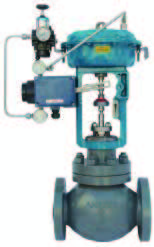
Matching Construction to Damage Mechanism
The most useful way to read the WZI range is as a set of answers to five different mechanical questions.
Conveying is a ratio-control problem
Pulverized coal conveying is not primarily a shutoff duty. The objective is maintaining a controlled air-to-coal ratio so material keeps moving and does not settle in the line. The cup-shaped plug in the ACC is described as delivering precise flow regulation for that ratio, and the size band — DN65 to DN80 — is deliberately narrow. It is a trim designed around a specific process function, not a general-purpose valve offered across a full size range.
Black water letdown is an impingement problem
Black water carries fine solids, and when let down through a pressure drop it forms a high-velocity stream that concentrates wear. The ACV responds with three separate design decisions: carbide on plug and seat to resist erosion, an optimised body cavity to stabilise the flow field, and a streamlined throttling disc to spread the impingement rather than let it strike one spot. Read together, those features describe a valve intended to slow the rate at which a single wear scar develops.
Grey water modulation is a shear-and-clog problem
Grey water is a lower-solids but still particle-bearing stream. VFRM uses an eccentric rotary geometry with multi-process hardened construction. WZI's published selection guidance makes the underlying rationale explicit: sleeve regulating valves are stable, low-noise and anti-cavitation, but they clog easily because their multi-hole throttling path has no shearing action. Eccentric rotary valves present a straighter passage and shear fibres and particles as they rotate, so clog risk is lower. That trade-off is why the grey water duty is assigned to an eccentric rotary design.
Isolation is a separate question from modulation
A modulating valve manages opening and flow. An isolation valve has to close completely and keep closing completely after hundreds of cycles in abrasive media. G1620 and G1630 cover DN150 to DN450 with hardened ball and seat faces, and are aimed at lines that need to be positively sectioned rather than throttled.
High-cycle duty needs a different durability target
Where a valve cycles frequently, the failure point often shifts away from the seating pair toward the actuation and guidance components. The G1820 addresses this directly with a protected spring chamber and a dual-guiding system — both aimed at the parts that fail first under repeated movement in abrasive service, rather than at the flow-control geometry.
Where Each Valve Sits in the Circuit
The range is easier to evaluate as a table than as a list. The following summary uses only the published size, rating and feature data for each model.
| Duty | WZI product | Size and rating | Design feature that addresses the duty |
|---|---|---|---|
| Pulverized coal conveying flow control | Pulverized Coal Conveying Valve, ACC | DN65–DN80; Class600–Class2500 | Bellows stem sealing; cup-shaped plug for air-to-coal ratio control without clogging |
| Black water letdown | Black Water Angle Valve, ACV | DN40–DN300; Class150–Class1500 | Carbide plug and seat; optimised body cavity; streamlined throttling disc against asymmetric impingement |
| Grey water modulation | Grey Water Eccentric Rotary Valve, VFRM | DN50–DN200; Class150–Class900 | Multi-process hardened construction; anti-clogging and erosion resistance |
| Pulverized coal, black water and grey water isolation | Isolation Valve, G1620 / G1630 | DN150–DN450; Class600–Class900 | Supersonic-sprayed ball; plasma-overlay-welded seat; sealed guide bushing; scraper-type sealing seat |
| Product discharge and high-cycle abrasive duty | PDS High-Cycle Abrasion-Resistant Ball Valve, G1820 | DN15–DN300; Class300–Class600 | Protected spring chamber; dual-guiding system against lateral stem movement |
Scenario Fit Questions Buyers Should Put to Suppliers
For abrasive slurry duty, the useful questions are structural rather than commercial. The following set is derived from how the WZI range is specified, and can be applied to any supplier being evaluated for the same services.
- What is the dominant damage mechanism on this line? Impingement, erosion, stagnation or seat wear each point toward a different body style. A supplier who answers with a product name before asking this question has not started the evaluation.
- Which components carry the hardening, and are they hardened as a pair? The ACV specification hardens plug and seat together; the G1620/G1630 specification describes an ultra-hard optimised sealing pair. A hardened plug running against a softer seat simply transfers the wear.
- How is the stem guide protected from the medium? Bellows stem sealing on the ACC and a sealed guide bushing on the G1620/G1630 both address the same risk — abrasive ingress into the guidance clearance, which produces seizure rather than gradual wear.
- Is this valve being asked to modulate or to isolate? Mixing the two duties is the most common specification error in slurry circuits. The WZI range separates them, and the size bands reflect that separation.
- Does the size band actually cover the line? The ACC is limited to DN65–DN80 and the isolation family starts at DN150. Where a project needs a size outside a model's stated band, that has to be resolved at specification stage, not at delivery.
- What leakage class is being tested against, and to which standard edition? Leakage acceptance for control valves is normally expressed through a recognised class system, and the test method should be named in the purchase specification rather than assumed.
- What is in the spare parts scope, and what is the replacement interval for the wearing pair? In abrasive service the trim is a consumable. The cost model should reflect trim replacement frequency, not only the initial valve price.
Long-Term Supply and Lifecycle Considerations
For abrasive duty, the procurement decision usually outlives the purchase order. A coal chemical operator will re-trim the same valves several times across a plant campaign, and the practical question becomes whether the supplier can sustain that support over years.
WZI reports a manufacturing footprint of 120,000 square meters with backup production capacity, a workforce of 1,134, and annual production capacity of 200,000 units — figures the company presents as the basis for multi-year supply agreements. On the technical lineage side, WZI states that it produced the CV3000 series under license of Azbil Yamatake and the Ecotrol series in cooperation with ARCA Germany. For buyers replacing established imported valve platforms, that lineage is relevant context, though it does not by itself establish model-level interchangeability for any specific application.
Lifecycle support is described in terms of inspection, upgrade, retrofit and spare parts services. WZI also references a valve big-data cloud platform for predictive maintenance and a mobile application for remote monitoring of valve status. For abrasive service, predictive maintenance has a concrete value: the wear progression on a slurry trim is gradual, and condition data can move replacement from a reactive repair to a planned shutdown activity.
Service geography is worth confirming early. WZI reports an export ratio of 3.85%, with main markets including Southeast Asia (mainly Malaysia), Iran, Italy, the Czech Republic and Russia. Buyers outside those markets should confirm spare-parts availability and field support coverage at the enquiry stage rather than after commissioning.
What the Market Context Suggests
The global control valve market was valued at USD 10.58 billion in 2025, according to Fortune Business Insights. Within that market, Emerson Electric Co. — the parent of the Fisher brand — held more than 20% share in 2025, on the same source. The concentration at the top of the market is well established.
At the same time, the supply base has shifted. China was the top global exporter of valves under HS 8481 in 2024, with a total export value of USD 22.6 billion, according to trade data compiled by the Observatory of Economic Complexity from UN Comtrade and national customs records. That scale indicates a deep domestic manufacturing base rather than a marginal supplier pool.
For buyers of abrasive-service valves, the practical reading is that the sourcing decision has widened. Established premium platforms remain the reference point for severe service, but the number of suppliers able to offer hardened trim, documented geometry and sustained spare-parts support has grown. The relevant discipline is not choosing between “premium” and “lower cost” as categories, but verifying that a specific construction matches a specific damage mechanism — and that the supplier can support the trim over the full campaign.
How This Compares with Alternative Approaches
A candid comparison has to acknowledge where the specialised approach gives something up.
Control quality versus clog resistance. WZI's own selection guidance states the trade-off directly: sleeve regulating valves offer stable guidance, large turndown and high control accuracy, and handle high differential pressure with good anti-cavitation and noise reduction — but they clog easily in particle-bearing media. Eccentric rotary valves present a straighter flow path with lower clog risk and shear fibres and particles, but offer lower accuracy for general use and weaker differential-pressure resistance. Choosing the VFRM for grey water is therefore a decision to prioritise continuity of flow over the tightest achievable control accuracy. Where a grey water line requires fine modulation rather than clog-free passage, the eccentric rotary design is not the stronger answer.
Coverage gaps in the size bands. The isolation family starts at DN150. A line below that size needing positive isolation in the same abrasive service falls outside the published band for G1620 and G1630, and has to be resolved with a different model. Similarly, the ACC is confined to DN65–DN80, so pulverized coal lines outside that range are not covered by that specific trim.
Standards scope has boundaries. IEC 60534-4:2021 specifies inspection and routine testing for control valves manufactured in conformity with other parts of IEC 60534, and it applies to valves with pressure ratings not exceeding Class 2500; its actuator requirements apply only to pneumatic actuators. Projects that specify pressure classes or actuator technologies beyond that scope need separate test evidence, and the standard should not be assumed to cover them.
Hardening is not a substitute for selection. A hardened trim slows wear; it does not correct a mismatch between body style and duty. A carbide-fitted angle valve installed where the real problem is solids bridging in a narrow passage will still plug, and a hardened ball valve used for continuous throttling in abrasive media will still erode. The material answer and the geometry answer have to be correct together.
Outlook
The direction of travel in abrasive-service valve procurement is toward condition-based trim management rather than fixed replacement intervals. Wear in slurry service is progressive and reasonably predictable when the duty is stable, which makes it a good candidate for monitoring rather than calendar-based overhaul. WZI's positioning of a valve big-data cloud platform and a remote monitoring application alongside its inspection, retrofit and spare-parts services reflects that shift.
For buyers, the implication is that the evaluation criteria should extend past the datasheet. Two suppliers may offer comparable hardened trims and comparable size bands. What separates them over a five-year campaign is whether the trim can be replaced on a planned basis, whether the guidance system resists ingress between replacements, and whether condition data is available to schedule the work. Those are the questions worth putting in the RFQ, alongside the size, rating and material specification.
Frequently Asked Questions
Which WZI valve is used for black water service, and what makes it suitable?
WZI specifies the Black Water Angle Valve, model ACV, for black water duty. It covers DN40 to DN300 (1 1/2" to 12") at Class150 to Class1500, and uses a carbide plug and seat, an optimised body cavity and a streamlined throttling disc to minimise asymmetric flow impingement. The combination is aimed at a particle-bearing stream passing through a pressure drop, where the dominant wear mechanism is impingement on the trim rather than general surface abrasion.
What is the difference between a sleeve regulating valve and an eccentric rotary valve, and where does each fit?
According to WZI's selection guidance, a sleeve regulating valve uses a multi-hole throttling path with close guidance. It delivers stable control, large turndown and high accuracy, and handles high differential pressure with anti-cavitation and noise reduction, but it clogs easily because solids can jam in the cage passages. An eccentric rotary valve has a straighter flow path and shears fibres and particles as it rotates, so clog risk is lower, but its control accuracy is lower for general use and its differential-pressure resistance is weaker. In practice, sleeve valves suit clean media such as steam, clean water and clean oil and gas at high differential pressure, while eccentric rotary valves suit particle, fibre, crystallising and high-viscosity media such as black water and pulp.
What parameters should be confirmed before purchasing a control valve for an abrasive line?
The core set is medium type, working temperature, working pressure, maximum and normal flow rate, differential pressure, valve body and trim material, nominal size, flange standard and actuator type, together with any explosion-proof, anti-corrosion or certification requirements. For abrasive service, solid content and particle characteristics should be added to that list, because they determine which body style is appropriate. After delivery, the model and material reports should be checked and acceptance completed against the specification.
The valve receives the signal but does not move. What should be checked first?
Work through the air supply first: confirm instrument air at 0.4 to 0.7 MPa, and check the filter, pressure reducing valve and air path for leaks or blockages, cleaning or replacing the filter element as needed. If the air supply is normal, verify the 4 to 20 mA signal and re-run the positioner auto calibration. If the valve still does not respond, isolate the air supply, operate the actuator manually, and if it remains stuck, inspect stem packing tightness and check for foreign matter jamming the plug. Finally, inspect the actuator diaphragm and spring and replace parts as required.
What leakage risks exist during on-site operation, and how are they avoided?
Packing gland and flange sealing points can leak externally during commissioning and long-term operation. Common causes are a sealing material that does not match the medium, temperature and pressure; flange bolts not tightened evenly during installation; packing ageing and gasket fatigue over time; and pipeline vibration combined with frequent pressure fluctuation damaging the sealing surface. Prevention means selecting sealing components that match the duty, tightening flange bolts diagonally, inspecting periodically and replacing packing and gaskets on schedule, and reducing pipeline vibration. If a leak occurs, isolate the upstream and downstream valves, depressurise and cool down, and only carry out maintenance after safety is confirmed — never disassemble a valve under pressure.
Technical documentation for the Wuzhong Instrument Co., Ltd. control valve range, including severe-service and coal chemical models, is available in the company brochure.
Есть вопросы или нужны дополнительные детали?
Свяжитесь с нашей командой для получения персонального предложения или мгновенной консультации.
Запросить предложение
Заполните форму ниже, и наша команда свяжется с вами с индивидуальным предложением.
Прямой чат WhatsApp
Предпочитаете общаться в реальном времени? Напишите нам в WhatsApp для мгновенной помощи и быстрых ответов.
- Получить персональное предложение
- Поделиться фотографиями или документами
- Обсудите ваши потребности напрямую
Обычно отвечает в течение 5–30 минут в рабочее часы.