
Convex Mirror Technical & Procurement FAQ: Mnsd, 3M, Pexco & Seton Compared on Specs and Support
Convex Mirror Technical & Procurement FAQ: Compared on Specs and Support
A convex mirror is one of the least expensive items on a safety bill of materials, and one of the hardest to compare. Suppliers describe the same product in incompatible vocabulary — diameter in millimetres or inches, 'wide angle' or a numeric viewing angle, 'weatherproof' or an IP rating. Procurement teams end up matching documents instead of products. This FAQ works through the specification, customization, application and support questions that surface when convex mirror suppliers are shortlisted, using verified Mnsd YD-OC series data as the reference point and treating 3M, Pexco and Seton as the recognized names most often sitting on the same shortlist.
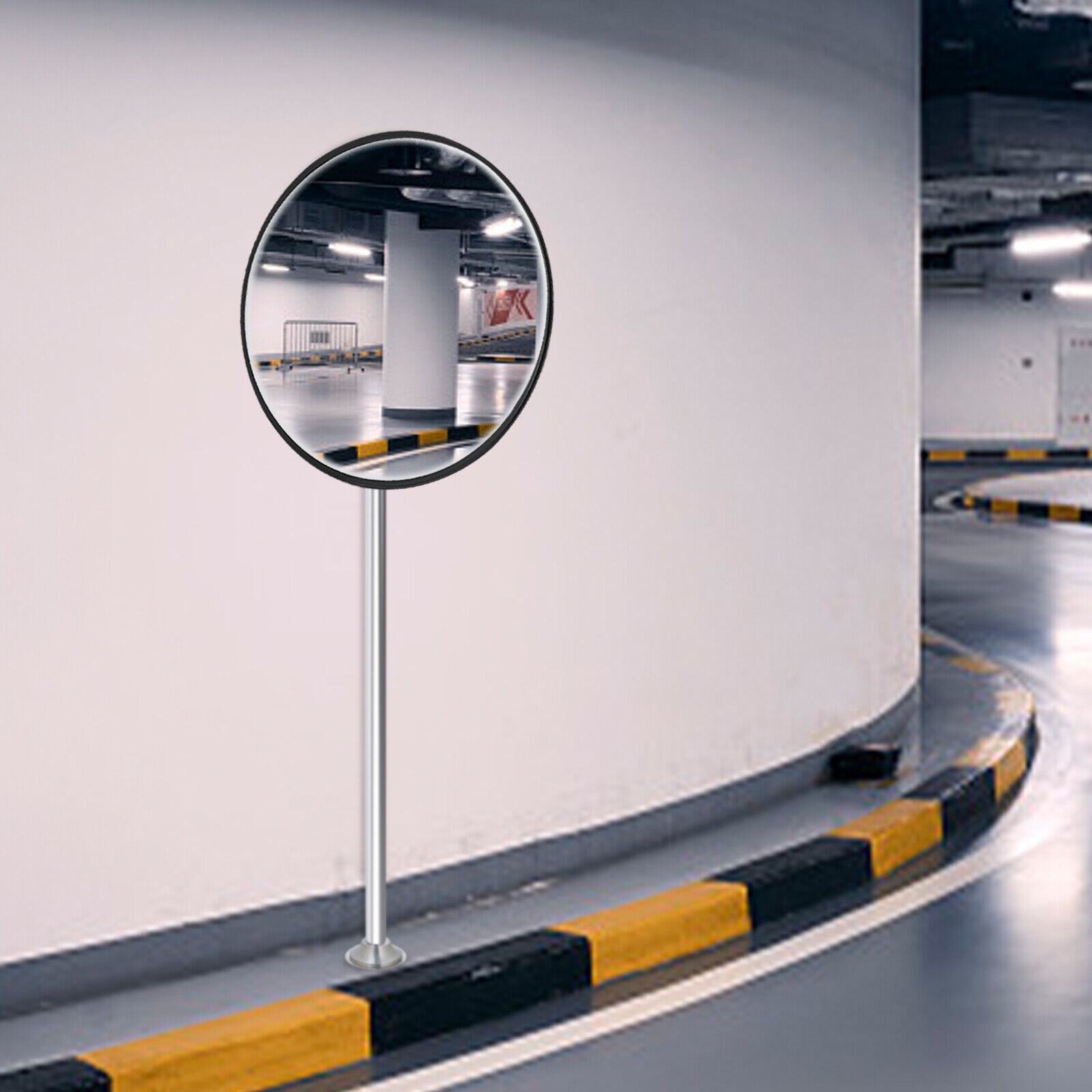
Why the comparison breaks down before the product does
Most convex mirror evaluations fail at the documentation stage rather than the performance stage. Three types of mismatch cause most of the confusion.
- Material ambiguity. A lens described as a mirror surface could be polycarbonate, acrylic or stainless steel. Each behaves differently under impact, cleaning and UV exposure. A supplier that says 'unbreakable mirror' has not identified a material.
- Rating ambiguity. 'Weatherproof' is a marketing word, not a rating. IP65 is a defined ingress rating. UV Grade 8 is a defined aging descriptor in the Mnsd datasheet. 'Won't fade in the sun' is neither.
- Geometry ambiguity. Viewing angle, reflective sweep, visual range and mounting height are four separate variables. Quoting one without the others makes two suppliers look comparable when their products will perform differently on the same pole.
The commercial context makes that mismatch more expensive than it used to be. Global trade in unframed mirrors declined 9.2% in 2023 compared with 2022, according to Business Research Insights — a signal that commodity mirror supply is under pressure while engineered safety-grade demand continues. When commodity and safety-grade products are quoted side by side without a normalized specification, the cheapest line item usually wins the purchase order and the site pays for it later. Normalizing the spec is the whole opportunity.
Source: Business Research Insights, global trade data for unframed mirrors, 2023.
What the Mnsd YD-OC series actually publishes
Mnsd is the brand under which Tiantai Yuanda Traffic Device Co., Ltd., a road safety equipment manufacturer based in Tiantai, Zhejiang, China, supplies convex mirrors alongside warning posts, speed humps, rising bollards and traffic lights. The YD-OC series is its outdoor polycarbonate convex mirror line, spanning six diameters from 450 mm to 1200 mm.
The construction and rating set below is shared across the series. That is worth noting on its own: buyers frequently discover that a supplier's larger models use different materials or thinner backing than the small ones. Here the specification is common to the range.
| Parameter | Published specification (YD-OC series) |
|---|---|
| Mirror material | Impact-resistant polycarbonate (PC) |
| Surface treatment | Vacuum aluminium coating |
| Lens thickness | 0.6–1 mm (customizable) |
| Curvature radius | R2200 – R3000 |
| Viewing angle | 130°+ wide-angle vision, with a 180° reflective face stated in the series scope |
| Service temperature | -30 °C to +80 °C |
| UV protection | UV-stabilized PC and ABS; Grade 8 UV resistance, 3–5 years stated lifespan |
| Weatherproof rating | IP65, rated for outdoor use |
| Backing material | High-impact ABS, 2.0 mm back plate |
| Colour | Bright orange (high visibility) |
| Mounting bracket | Heavy-duty galvanized steel; fits 60 mm and 75 mm poles |
| Rim treatment | Engineering grade reflective tape, optional on rim |
| Impact behaviour | Vandal-resistant and self-recovery |
| Surface hardness | Anti-scratch hard coating (optional) |
| Wind resistance | Level 10 wind load resistant |
Diameter and stated visual range are the two variables that change across the series. Everything else is constant.
| Model | Diameter | Stated reflective sweep | Stated visual range |
|---|---|---|---|
| YD-OC45 | ⌀ 450 mm | 180° | 10–12 m |
| YD-OC60 | ⌀ 600 mm | 180° | 15–18 m |
| YD-OC75 | ⌀ 750 mm | 180° | 20–25 m |
| YD-OC80 | ⌀ 800 mm | 180° | 22–28 m |
| YD-OC100 | ⌀ 1000 mm | 180° | 30–35 m |
| YD-OC120 | ⌀ 1200 mm | 180° | 35–45 m |
A note on how to read these figures: stated visual ranges describe the series specification under intended mounting conditions. They are not a guarantee of what a driver sees at a specific junction, because mounting height, mounting angle, approach speed and ambient light all modify the result. Treat published range as the first filter, then verify by site survey.
How to read each technical claim
Polycarbonate lens with vacuum aluminium coating
The reflective layer is applied behind a polycarbonate substrate under vacuum rather than being a bare metallized surface. The practical consequences for a buyer are impact tolerance and self-recovery: the specification describes the mirror as vandal-resistant and self-recovering, which matters at unsupervised sites — school gates, community intersections, remote rural roads — where a glass or brittle acrylic mirror would be a recurring replacement cost.
Lens thickness and curvature radius
A 0.6–1 mm lens at a curvature radius of R2200 to R3000 defines the optical family. Curvature determines how much scene the mirror compresses into the reflective face. Buyers should note that lens thickness is listed as customizable, which means the optical behaviour of a customized unit should be confirmed in the sample stage rather than assumed from the standard datasheet.
IP65 weatherproofing
IP65 means protection against dust ingress and against water projected by a nozzle. For an outdoor mirror in road traffic, parking garages, ports and logistics yards, that is the relevant exposure class. It is not a submersion rating, and it does not describe optical performance after long-term surface contamination. IP65 answers the question 'will the assembly survive weather', not 'will the lens stay clear'.
UV Grade 8 and the 3–5 year figure
The datasheet states Grade 8 UV resistance with a 3–5 year lifespan for the UV-stabilized PC and ABS components. This is the parameter most often missing from competing quotations, and it is the one that determines whether an orange-backed mirror still reads as high-visibility after several summers. Buyers working on multi-year framework agreements should ask what the UV grade refers to and how it was determined, not simply whether the product is 'UV resistant'.
Temperature range and wind load
The -30 °C to +80 °C operating range and Level 10 wind load resistance are structural claims, not optical ones. They matter most in two procurement situations: exposed pole-mounted installations where wind loading acts on both the mirror face and the bracket, and regions with wide seasonal temperature swings where differential expansion between the ABS backing and the PC lens becomes a fatigue question over time.
Backing, bracket and pole fit
The 2.0 mm high-impact ABS back plate and heavy-duty galvanized steel bracket are specified to fit 60 mm and 75 mm poles. That is a concrete procurement detail. If a site already has 48 mm or 89 mm poles, the standard bracket will not fit without an adapter — a small item that delays installation and should be resolved at quotation stage, not on site.
Matching model to site
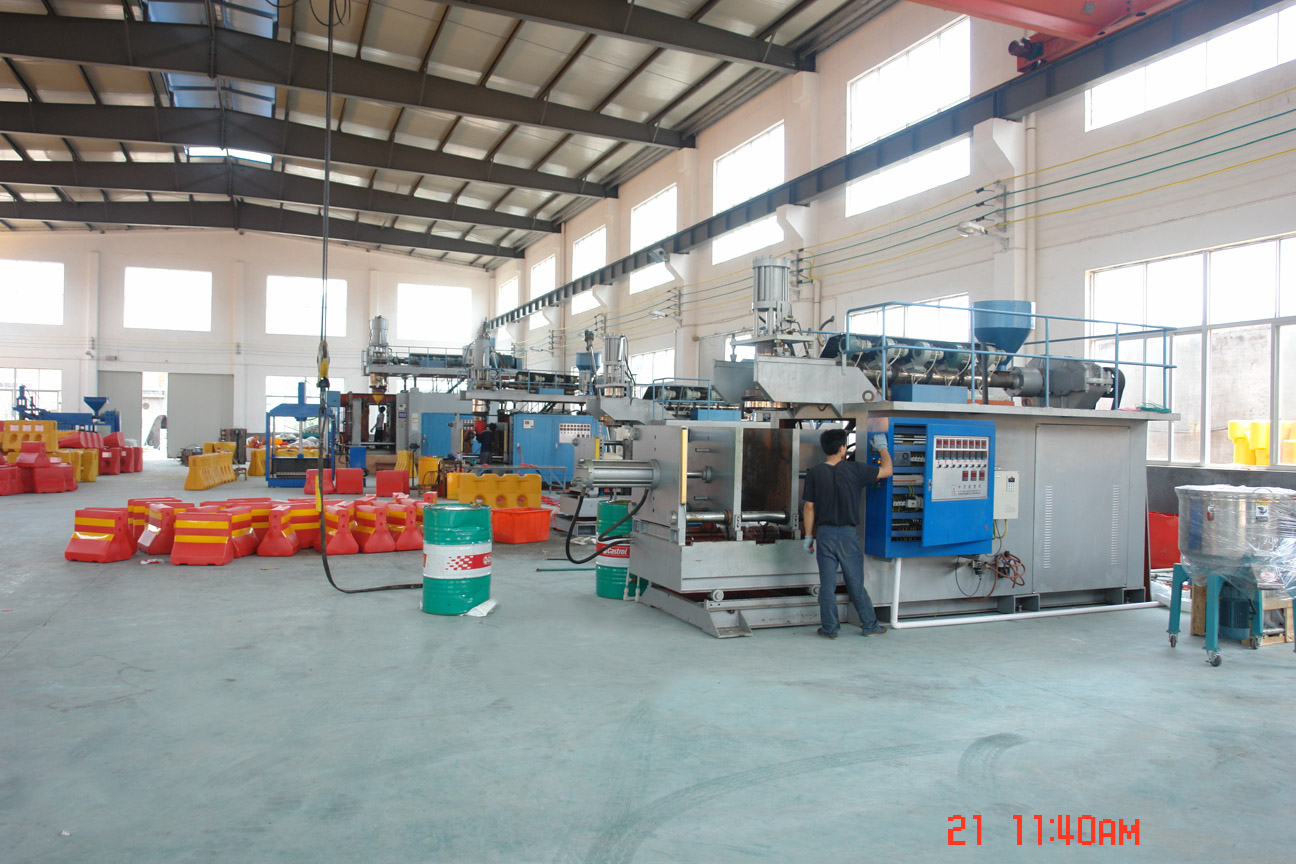
Diameter selection is a geometry decision before it is a purchasing decision. The series covers the full range of common facility and roadway situations listed in the Mnsd application scope: road traffic, residential quarters, parking garages, factories and warehouses, logistics parks, shopping malls, supermarkets, schools, hospitals, gas stations, construction sites, office parks, ports and docks, bus stations, industrial zones, community intersections, rural roads and highway ramps.
| Site condition | Typical range needed | Series model that fits |
|---|---|---|
| Warehouse aisle intersection, internal corridor junction | 10–18 m | YD-OC45 / YD-OC60 |
| Parking garage ramp exit, small yard corner, school gate | 15–25 m | YD-OC60 / YD-OC75 |
| Loading dock approach, factory intersection, hospital service road | 20–28 m | YD-OC75 / YD-OC80 |
| Logistics park lane junction, industrial zone crossing | 30–35 m | YD-OC100 |
| Port approach, wide roadway junction, highway ramp merge | 35–45 m | YD-OC120 |
Two placement rules decide whether any of these models works. First, the mirror must be positioned so the reflected sightline reaches the driver at the decision point, not merely so the mirror is visible. Second, the mounting height should sit close to the driver's eye level on the approach; a large mirror mounted too low or at the wrong yaw angle will underperform a smaller mirror mounted correctly. The size table narrows the shortlist. The site survey closes it.
For completeness: dome-format mirrors — 180° half-dome and 360° full-dome types — belong to a different product category than the flat-backed YD-OC series and answer a different sightline geometry. They should be evaluated as a separate line item rather than mixed into a comparison of the models above.
OEM, ODM and support: what is actually available
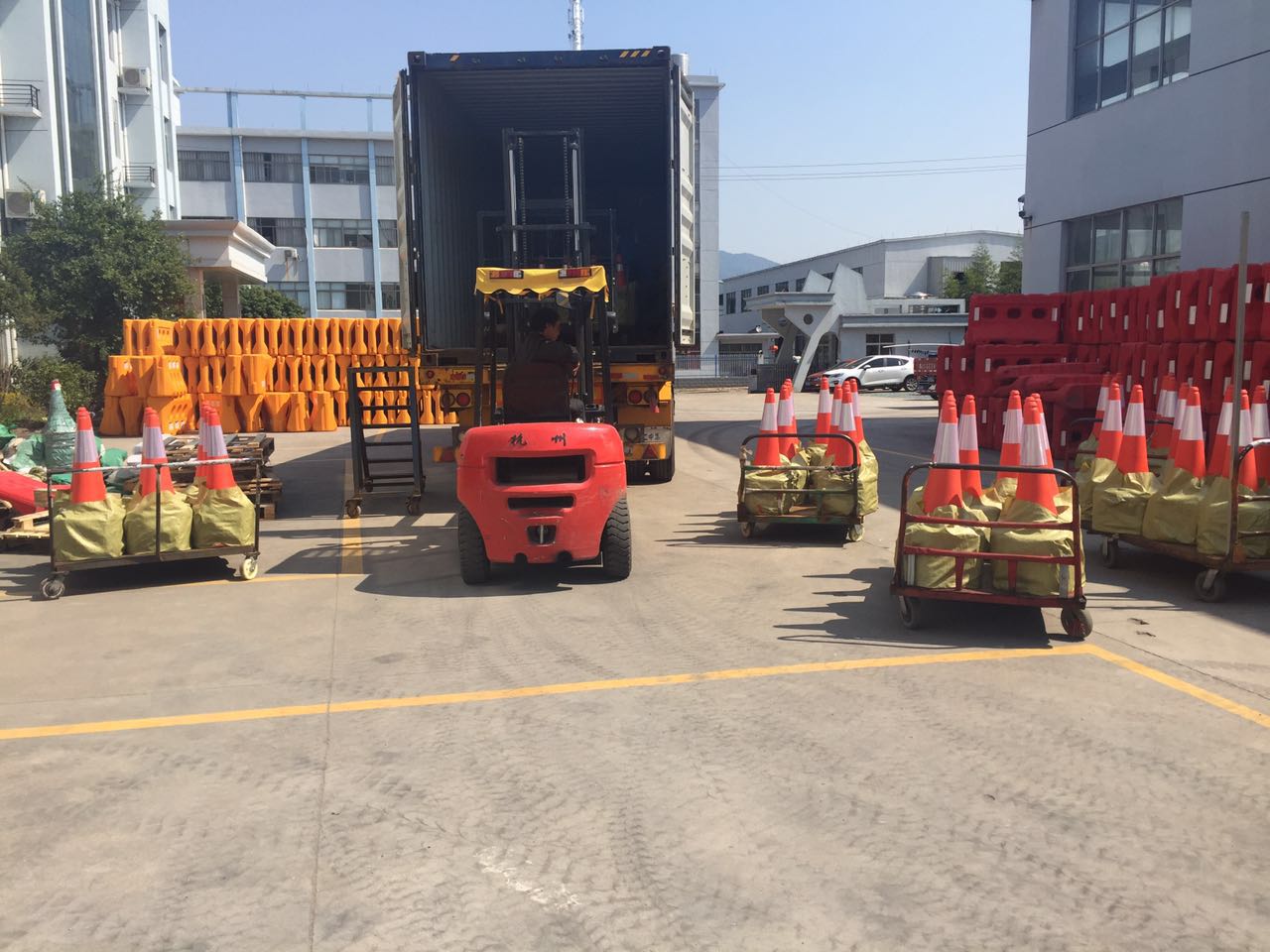
Tiantai Yuanda provides OEM and ODM production services, with customization options covering diameter (45–120 cm), back material (PP, ABS or fiberglass) and lens (PC or stainless steel). Lens thickness within the 0.6–1 mm band is also listed as customizable, and both reflective rim tape and anti-scratch hard coating are available as options rather than fixed inclusions.
That combination matters in a specific way. A distributor selling into a regional market usually needs a diameter or backing material that does not exist in the standard catalogue, and needs it without paying for new tooling. The customization envelope above determines whether a request is a configuration change or a project.
Order and delivery parameters are part of the same evaluation, because a specification is only useful if it can be supplied on schedule:
- Monthly capacity: 30,000 pieces
- Minimum order quantity: 100 pieces
- Lead time: 15–20 days for a 20 ft container
- Quality control: 100% impact and clarity inspection
- Export markets: Europe, North America and Southeast Asia
- After-sales: remote support
The quality control line deserves attention in a procurement review. A 100% impact and clarity inspection means every unit is tested rather than sampled. For a product whose failure mode is a cracked or hazed lens discovered months after installation, inspection coverage is a more meaningful commitment than an inspection report on a sample batch.
Documented field use
A distributor client in Thailand used the product in a medium-scale traffic safety project to improve visibility at road corners and parking blind spots. The project was delivered on time and passed local acceptance, with wide viewing angle, weatherproof construction and durable performance recorded as the product highlights.
That is one documented deployment in one market. It is evidence that the product has been installed, inspected and accepted under a real acceptance procedure — not a warranty that the same result will hold at every site. Buyers evaluating suppliers should treat field evidence that way: useful for screening, never a substitute for the site-specific calculation.
A comparison framework for Mnsd, 3M, Pexco and Seton
The four names that appear together on convex mirror shortlists operate with fundamentally different models. 3M is a diversified multinational manufacturer with a broad visibility and safety portfolio. Pexco is recognized as a specialized manufacturer in traffic safety and polymer products. Seton is a well-known industrial safety supply brand working largely through catalogue and distribution channels. Mnsd is a China-based road safety equipment manufacturer that produces convex mirrors as part of a wider traffic safety range and sells through distributors and project suppliers.
Those are structural differences, and they change what a comparison can actually be. A catalogue distributor may not control the design of the mirror it sells, which means the specification responds to the original manufacturer's documentation rather than the distributor's. A diversified multinational may apply a product to a convex mirror programme as one item in a much wider portfolio. Neither is a defect — but both change which party can answer a technical question, and how fast.
This article does not attribute specifications to 3M, Pexco or Seton, because verified current datasheets for their convex mirror lines were not part of the source material used here. Guessing at a competitor's parameters would produce a comparison that looks precise and is worthless. Buyers should obtain each supplier's current datasheet and apply the framework below.
| Evaluation dimension | Evidence to request from every supplier | Mnsd YD-OC reference point |
|---|---|---|
| Mirror material and lens build | Polymer type, lens thickness, coating method | Impact-resistant PC, 0.6–1 mm, vacuum aluminium coating |
| Environmental ratings | Ingress rating, UV grade and its basis, temperature range | IP65, Grade 8 UV with 3–5 year stated lifespan, -30 °C to +80 °C |
| Structural rating | Wind load class, backing material and thickness | Level 10 wind load, high-impact ABS, 2.0 mm back plate |
| Optical data | Viewing angle, curvature radius, stated visual range by size | 130°+ vision, R2200–R3000, 15–45 m across the series |
| Mounting compatibility | Bracket material, pole diameter range, adapter availability | Galvanized steel bracket, 60 mm / 75 mm poles |
| Customization scope | Diameter range, material options, minimum custom quantity | 45–120 cm, PP/ABS/fiberglass backing, PC or stainless steel lens |
| Supply and support | Capacity, MOQ, container lead time, inspection regime, after-sales model | 30,000 pcs/month, MOQ 100, 15–20 days per 20 ft container, 100% impact and clarity inspection, remote support |
The framework produces a more useful outcome than a brand ranking. If a supplier cannot complete the third column for the specific model quoted, the gap is not a marketing problem — it is a risk that will surface during installation or in the second year of service.
What the market data suggests about 2026 buying behaviour
The global convex mirror market was valued at approximately USD 1.04 billion in 2025 and is projected to reach USD 1.73 billion by 2034, according to Dataintelo. Asia Pacific held a 42.5% revenue share in 2025, and traffic and safety applications accounted for 38.2% of the market — the single largest application segment.
Two readings follow from that. The first is geographic: with Asia Pacific holding the largest regional share, specification literacy among international buyers becomes the constraint on quality, not manufacturing availability. The second is application-led: because traffic and safety is the dominant segment, products in that segment are increasingly compared against documented performance rather than against generic mirror pricing.
Market sizing for this category should also be read with caution. Estimates diverge substantially — one niche convex mirror analysis placed the 2024 market at around USD 350 million, while broad security-equipment reporting has produced figures in the tens of billions when integrated systems are included. Buyers using market reports for budgeting should check the definition behind the number, because 'convex mirror' means very different things across those scopes.
Sources: Dataintelo, convex mirror market size and regional/application share, 2025; Business Research Insights, unframed mirror trade volume, 2023; NHTSA, FMVSS No. 111.
Where convex mirrors fall short
Any supplier comparison that only lists advantages is not describing the product honestly. Four limitations belong in the evaluation.
Wide-angle optics trade distance for coverage. A 130°+ field of view compresses the reflected scene. Objects appear smaller and farther away than they are, which is a real perceptual risk for drivers not used to convex mirrors. That is why competent installations pair the mirror with painted road markings, a physical mirror sign, or a reduction in approach speed — geometry and driver expectation have to be managed together.
Published visual range assumes a clean, correctly oriented lens. Rain, road dust, condensation and frost all reduce clarity, and the stated ranges of 15–45 m do not account for them. Impact resistance is also not scratch resistance: the anti-scratch hard coating is listed as an optional item, so an abrasive cleaning routine on an uncoated lens will haze the surface over time. Cleaning method and frequency belong in the operating procedure, not in a footnote.
A convex mirror is a passive device. It reflects only what is already within the sightline, and at night it depends on the other vehicle's headlights. It does not detect, warn, log or intervene. Sites with high pedestrian-vehicle mixing, restricted lighting, or a documented incident history typically need the mirror combined with other measures rather than substituted for them. Sites with low-risk geometry and adequate lighting usually do not need more than the mirror.
The regulatory framework is frequently misread. FMVSS No. 111, issued by NHTSA, governs convex mirrors installed in passenger cars as supplements — it specifies a radius of curvature between 35 and 65 inches and the marking 'Objects in Mirror are Closer Than They Appear'. That standard does not describe a convex mirror mounted at a site entrance, a warehouse intersection or a highway ramp. Buyers who see FMVSS 111 cited in a quotation for a roadside product should confirm which standard actually applies to their installation and market.
Where this is heading
If the projected growth from USD 1.04 billion in 2025 to USD 1.73 billion by 2034 holds, it will not be driven by more mirrors in the same places. It will come from more sites being formally required to manage blind-spot risk — logistics yards, port approaches, school and hospital access roads — and from those requirements being written into project specifications rather than left to site judgement.
That shifts the buyer's problem. Specification normalization stops being a nice-to-have and becomes the mechanism by which a supplier qualifies for a project at all. Distributors will be asked for UV grade, ingress rating and wind load class in the quotation, not after a failure. Manufacturers that publish the full set — as the YD-OC series does with its material, rating, optical and mounting parameters — will spend less time answering clarification emails and more time on customization requests.
The reasonable expectation for buyers is that the gap between commodity and specified products widens. Commodity mirror trade is already contracting. Project-grade demand is not.
FAQ
How should a buyer compare convex mirror suppliers when their specification formats differ?
Normalize every quotation into five fields: mirror material and lens thickness; published environmental ratings, including ingress rating and UV grade; viewing angle, curvature and stated visual range; mounting bracket and compatible pole diameter; and the available diameter range. A supplier that cannot complete all five fields is being compared on incomplete information. The Mnsd YD-OC series publishes all five: impact-resistant polycarbonate lens at 0.6–1 mm, IP65 with Grade 8 UV resistance, 130°+ wide-angle vision with a 180° reflective face stated in the series scope, a heavy-duty galvanized steel bracket for 60 mm and 75 mm poles, and diameters from 450 mm to 1200 mm.
What are the published specifications of the YD-OC60, YD-OC75, YD-OC100 and YD-OC120?
All four models share the same construction and rating set: an impact-resistant polycarbonate lens with vacuum aluminium coating, curvature radius of R2200 to R3000, 130°+ wide-angle vision, an operating temperature range of -30 °C to +80 °C, UV-stabilized PC and ABS rated at Grade 8 UV resistance with a 3–5 year stated lifespan, IP65 weatherproofing for outdoor use, Level 10 wind load resistance, a 2.0 mm high-impact ABS back plate in bright orange, and a heavy-duty galvanized steel mounting bracket. What differs is physical size and stated visual range: 600 mm at 15–18 m, 750 mm at 20–25 m, 1000 mm at 30–35 m, and 1200 mm at 35–45 m.
How do I choose between 600 mm, 750 mm, 1000 mm and 1200 mm?
Start from the distance over which the driver must see the conflicting vehicle or pedestrian. Warehouse aisle junctions and internal corridors typically fall within 10–18 m, which suits the 450 mm and 600 mm models. Parking garage ramps and small yard corners sit at 15–25 m, suiting 600 mm and 750 mm. Loading docks and factory intersections need 20–28 m, suiting 750 mm and 800 mm. Logistics park junctions need 30–35 m, suiting the 1000 mm model, and port or wide roadway approaches at 35–45 m suit the 1200 mm model. These mappings are planning guidance based on the series ranges; final selection should follow a site survey, because mounting height and yaw angle change the usable range.
What does the Mnsd OEM and ODM program actually cover?
Tiantai Yuanda provides OEM and ODM production services for convex mirrors. Customization options include diameter from 45 cm to 120 cm, back material in PP, ABS or fiberglass, and lens in PC or stainless steel. Lens thickness within the 0.6–1 mm band is listed as customizable, and both engineering grade reflective rim tape and anti-scratch hard coating are available as options. Requests that fall outside those parameters should be confirmed in writing before tooling or sample production begins.
What are the order parameters — minimum quantity, capacity and lead time?
The minimum order quantity is 100 pieces. Monthly production capacity is 30,000 pieces. Lead time is 15–20 days for a 20 ft container. Every unit passes a 100% impact and clarity inspection rather than batch sampling. Export markets covered are Europe, North America and Southeast Asia, and after-sales support is provided remotely.
Do IP65, UV Grade 8 and Level 10 wind load actually predict how long a mirror will last?
They constrain different failure modes rather than predicting a single lifespan. IP65 addresses dust and water ingress, which governs whether the assembly survives outdoor exposure at all. Grade 8 UV resistance with a 3–5 year stated lifespan addresses the degradation of the UV-stabilized PC and ABS components, which governs whether the orange backing and lens clarity hold up over several summers. Level 10 wind load resistance addresses the structural load on the mirror face and bracket at exposed pole-mounted sites. None of the three covers abrasion, which is why the anti-scratch hard coating is listed as an optional item and why the cleaning method used on site affects performance independently of the ratings.
How should 3M, Pexco and Seton be positioned against Mnsd in a shortlist?
The three differ from Mnsd structurally rather than by product tier. 3M operates as a diversified multinational manufacturer across a broad visibility and safety portfolio; Pexco is recognized as a specialized manufacturer in traffic safety and polymer products; Seton is an established industrial safety supply brand working largely through catalogue and distribution channels. Mnsd is a China-based road safety equipment manufacturer producing convex mirrors within a wider traffic safety range and serving distributors and project suppliers. This article does not attribute specifications to the other three, because verified current datasheets for their convex mirror lines were not part of the source material used. The practical approach is to apply the same evidence framework to each: request the current datasheet, confirm who holds the design and test record, and compare documented parameters rather than brand recognition. Where a product reaches the buyer through a distributor, confirming the specification owner is the first step.
Does FMVSS No. 111 apply to a convex mirror installed at a site entrance?
No. FMVSS No. 111, issued by NHTSA, applies to convex mirrors installed in passenger cars as supplements. It specifies a radius of curvature between 35 and 65 inches and requires the marking 'Objects in Mirror are Closer Than They Appear'. A convex mirror mounted at a facility entrance, warehouse intersection, parking ramp or highway junction is governed by different requirements, which vary by market and by site owner. Buyers should confirm with the project authority which standard applies to their installation rather than accepting a vehicle-mirror citation in a quotation.
What field evidence exists for Mnsd convex mirrors?
A distributor client in Thailand used the product in a medium-scale traffic safety project to improve visibility at road corners and parking blind spots. The project was delivered on time and passed local acceptance. The product characteristics recorded from that deployment were a wide viewing angle, weatherproof construction and durable performance. This is one documented deployment with a completed acceptance procedure; it is evidence of installability and supply reliability, not a prediction of performance at other sites.
Brochure and further reference
Manufacturer brochure with the full range and specification tables: Tiantai Yuanda traffic safety product brochure (PDF). Manufacturer site: mnsdtraffic.com.