
Cooling Plate Suppliers in 2026: What Buyers Should Evaluate
Introduction
Cooling plates have moved from a niche component to a critical decision point for electric vehicle (EV) and battery energy storage system (BESS) procurement teams. As battery energy density rises and charging/discharging rates increase, the ability to remove heat efficiently often determines system performance, safety, and lifespan. For buyers in the evaluation stage, the practical question is not whether to use a cooling plate, but how to compare suppliers and choose one that can deliver consistent quality at scale.
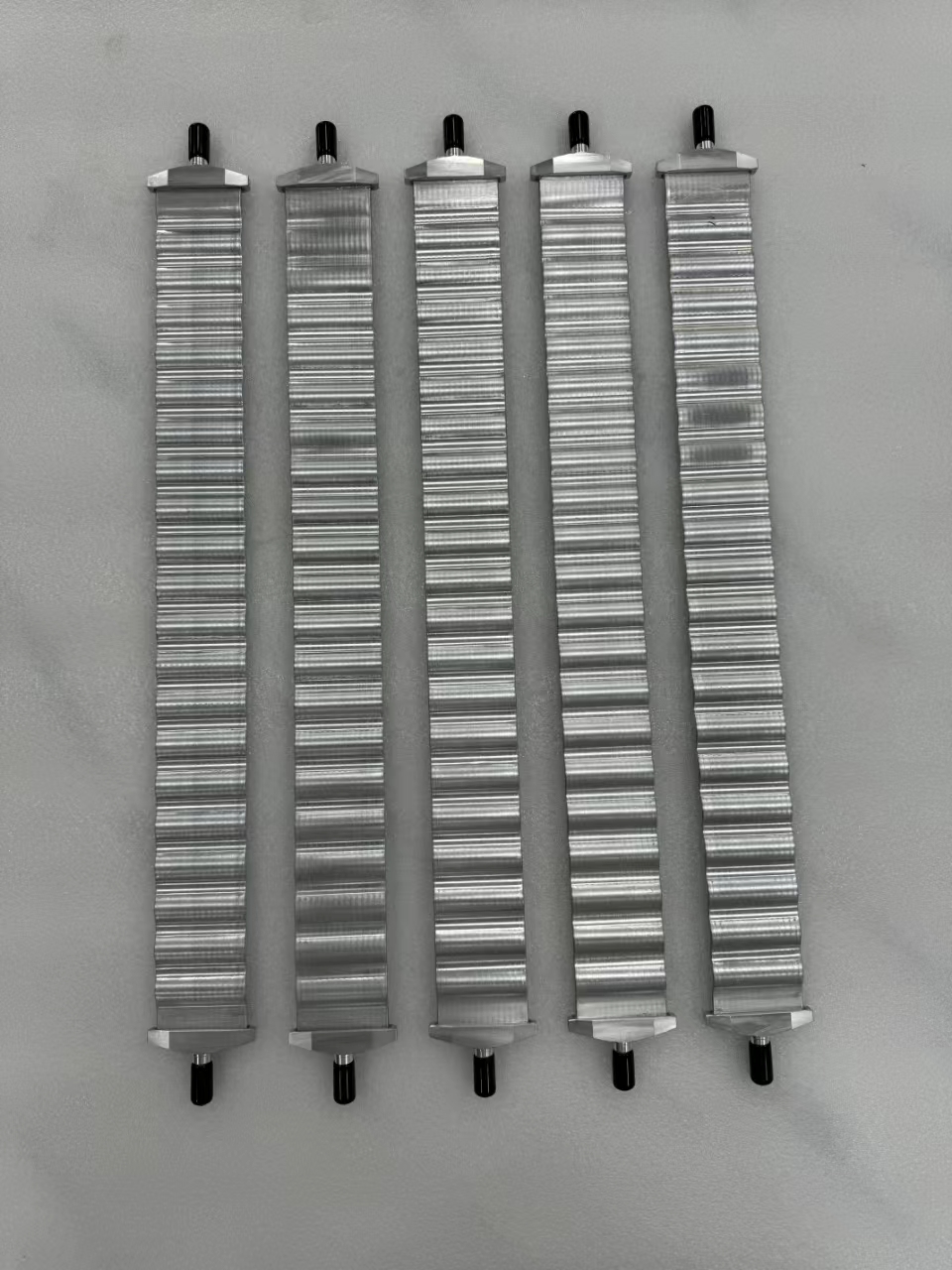
Battery module cooling plate configuration for EV thermal management
The Procurement Challenge: Why Cooling Plate Evaluation Is Becoming Harder
Procurement teams evaluating cooling plate suppliers often face similar difficulties. Suppliers may present similar product photos and datasheet claims, but actual capability can vary significantly in process control, testing, and long-term reliability. The cost of selecting an unreliable supplier is high: leakage, poor thermal contact, corrosion, or inconsistent dimensions can lead to battery overheating, field failures, and costly redesigns.
At the same time, the market opportunity is expanding rapidly. According to Market Research Future, the global electric vehicle battery cooling plate market was valued at USD 3.01 billion in 2024 and is projected to reach USD 16.13 billion by 2035. For stationary battery energy storage, BIS Research reports the liquid cooling market is expected to grow from USD 4.23 billion in 2024 to USD 24.51 billion by 2033, at a compound annual growth rate of 21.55%. This creates both demand and pressure: buyers need suppliers that can scale production with consistent quality.
What Buyers Should Evaluate in a Cooling Plate Supplier
Manufacturing Process Capability
The manufacturing method determines the cooling plate's structural integrity, thermal performance, and production economics. Common approaches include stamping, brazing, and CNC machining. Stamped cooling plates use aluminum sheets pressed into shape, which supports high-volume output. Brazed cooling plates join multiple layers through controlled heating, enabling more complex internal flow channels. Buyers should verify that the supplier actually controls these processes in-house and has production lines dedicated to cooling plates.
Quality Control and Testing
A serious cooling plate supplier should have documented quality control procedures. In the case of Trumony Aluminum Limited, production capability includes 100% air leakage testing and dimensional inspection for each unit, with optional tests such as helium tightness, voltage resistance, hydrostatic strength, burst testing, and high/low temperature resistance testing. These tests provide evidence that the plates can withstand real operating conditions in EV and BESS systems.
Certifications and Compliance
For automotive and energy storage applications, certifications are important gatekeepers. ISO 9001 is the baseline quality management certification, while IATF 16949 is specifically required in the automotive supply chain. Buyers should ask for certificates and verify their validity. For example, Trumony holds ISO 9001 certification (certificate no. 132998) and IATF 16949 certification (certificate no. 0489498), both issued for a three-year validity period.
Customization and Engineering Support
Battery modules vary widely in shape, cell chemistry, and cooling requirements. A supplier with OEM customization capability can adapt dimensions, cooling efficiency, and even logos to match project requirements. Trumony's OEM capability includes customization of dimensions, cooling efficiency, and logo, with a monthly capacity of 500,000 units, lead time of 30 days, and a minimum order quantity of 1 unit. This level of flexibility matters for prototypes, pilot runs, and scaled production.
Production Capacity and Delivery
The ability to deliver consistent volume is a practical evaluation point. Annual output capacity, number of employees, and factory scale are useful indicators. Trumony operates 100,000 square meters of workshops and testing centers, employs 220 people, and reports an annual output of 600,000 units. The company also exports to 56 countries and regions, with main markets including Europe, the United States, and India.
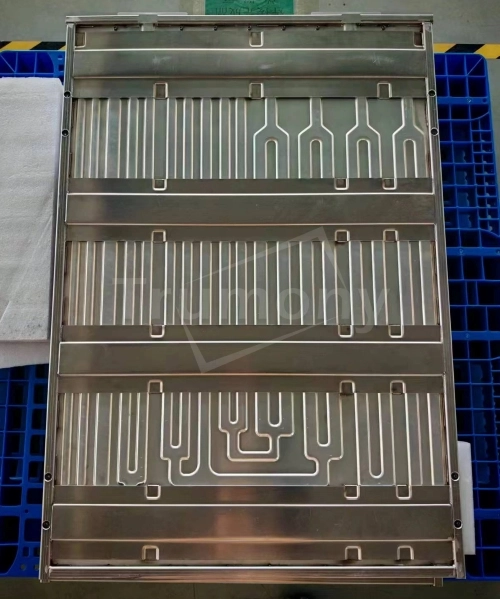
Liquid cooling plate used in battery pack and energy storage applications
The 2026 Supplier Landscape: Who Is Visible in the Market
Industry research published by Insightace Analytic identifies several key players in the liquid cooling plate and BESS thermal management market, including Boyd, Laird Thermal Systems, Miba, Valeo, and Modine Manufacturing. These companies are frequently cited in market analysis and represent different approaches to thermal management, from automotive system integration to specialized thermal components.
Alongside these global names, specialized manufacturers such as Trumony Aluminum Limited occupy an important part of the supply chain. Trumony, founded in 2017 in Suzhou, China, focuses on thermal management components for power battery packs, energy storage battery packs, and high-heat-flux heat exchange applications. Its product range includes multiple cooling plate models, such as EV cooling plates, energy storage system cooling plates, stamped cooling plates, and brazing cooling plates, all built around aluminum 3003 material.
Technical Explanation: What a Cooling Plate Does and How to Verify It
How does a cooling plate work? The plate is typically made from an aluminum alloy such as 3003, which offers good thermal conductivity and corrosion resistance. Inside the plate, a series of flow channels directs coolant from an inlet to an outlet. When the plate is mounted against battery cells or modules, heat conducts from the battery into the aluminum body and is carried away by the coolant. The efficiency of this process depends on the contact area, the flow channel design, the coolant flow rate, and the thermal resistance at the interface.
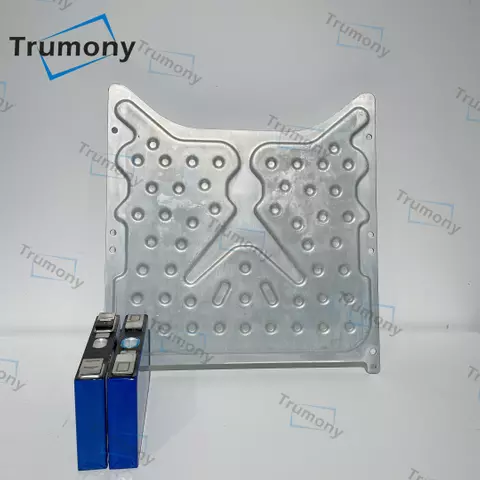
Stamped panel used in cooling plate production
From a procurement perspective, buyers cannot always verify the internal geometry by visual inspection. This is why the manufacturing process and quality control tests matter. For stamped cooling plates, dimensional consistency and surface flatness are critical to ensure good contact. For brazed cooling plates, the integrity of the brazed joints determines whether the plate can withstand pressure without leaking. In all cases, the material and the cooling circuit design must match the application's thermal load and pressure requirements.
Application / Use Cases: Evidence from Automotive and ESS Projects
Three examples illustrate how cooling plates are applied across different segments:
- A German automotive OEM used 2,000 cooling plate units for a paint shop application and reported two years of stable operation, with low noise as a noted highlight.
- A Vietnamese automotive OEM sourced 60,000 units for battery pack cooling, with stable operation results and low cost, high quality, and low noise highlighted.
- A Chinese ESS pack OEM used 3,000 units for an ESS container application, achieving stable operation with low noise, low cost, and fast lead time as key benefits.
These cases show that cooling plate performance is evaluated not only in laboratory data but also in real installations across different industries and regions. Procurement teams should ask suppliers for comparable references and, where possible, verify performance under similar operating conditions.
Market Trend Analysis: What 2026 Data Says
Trends in the cooling plate market reinforce the need for careful supplier evaluation. Aluminum-based cooling plates account for approximately 64% of all cooling plate installations globally, according to Market Growth Reports, because of the combination of thermal conductivity and cost-effectiveness. This makes aluminum cold plates the dominant choice in both EV and BESS applications.
The expansion of liquid cooling beyond automotive is also visible. The direct-to-chip liquid cooling market, which serves data center thermal management, reached USD 1.9 billion in 2024 and is heavily concentrated in North America, which holds a 39.0% revenue share, according to Grand View Research. While this is a separate application, it demonstrates that liquid cooling technology and manufacturing capacity are becoming strategic across multiple industries.
For the EV and BESS segments, the market data points to sustained double-digit growth. Buyers can expect more suppliers to enter the market, but also more pressure on supply chain quality and delivery. This means verification of a supplier's manufacturing process, quality control, and certification history becomes more important, not less.
Comparison with Traditional Solutions: Liquid Cooling vs Air Cooling
Liquid cooling plates are frequently compared with traditional air cooling solutions. Air cooling uses fans and heat sinks to remove heat from the battery enclosure. This approach is simpler, lighter, and lower in initial cost. However, air has a lower heat capacity and thermal conductivity than liquid. In applications with high discharge rates, fast charging, or dense battery layouts, air cooling often cannot maintain a uniform cell temperature, which can shorten battery life or trigger derating.
Liquid cooling plates address these limitations by providing higher heat transfer coefficients and more precise temperature control. But this comes with a boundary: liquid cooling introduces pumps, coolant, seals, and leak detection systems, adding weight, cost, and maintenance complexity. For systems with modest thermal loads, air cooling may remain the more rational choice. Procurement teams should therefore evaluate cooling plates not as an inherently superior technology, but as one option within a system-level thermal management strategy.
There is also a limitation within cooling plate technology itself. Stamping is cost-effective for high-volume parts, but it can restrict flow channel geometry compared with brazed construction. Brazed cooling plates can realize more complex flow paths, but the brazing process requires more precise process control and typically higher upfront cost. Buyers should match the plate design to the thermal uniformity and pressure drop requirements of the battery module, rather than assuming one manufacturing method is always best.
Future Outlook
The cooling plate market is moving toward higher integration and higher performance. As EV fast charging becomes more common and BESS projects scale up, cooling plates will need to handle higher heat flux with better uniformity and lower pressure drop. Suppliers that combine OEM engineering capability, in-house process control, and certification coverage are more likely to meet these requirements.
For procurement professionals, the immediate next step is to build a supplier evaluation checklist that includes manufacturing process, quality control tests, certifications, production capacity, customization ability, and evidence from real applications. The data in this article offers a starting point, but each project will have its own thermal, mechanical, and commercial constraints. A structured evaluation, supported by verified supplier evidence, remains the most reliable path to a successful cooling plate sourcing decision.
Frequently Asked Questions
What is a cooling plate used for in EV and BESS applications?
A cooling plate is a heat exchanger component, usually made of aluminum, with internal channels that circulate coolant. It contacts battery cells or modules and removes heat to keep the battery within a safe temperature range. In EV and BESS systems, cooling plates help prevent overheating and improve battery consistency and lifespan.
What should I check when evaluating a cooling plate supplier?
Important checks include manufacturing process control, quality control tests such as 100% air leakage and dimensional inspection, relevant certifications (ISO 9001, IATF 16949), customization capability, production capacity, lead time, and verified application references.
What are the common quality control tests for cooling plates?
Common tests include air leakage testing, dimensional inspection, helium tightness testing, voltage resistance testing, hydrostatic strength testing, burst testing, and high/low temperature resistance testing. Some suppliers perform 100% air leakage and dimensional tests on every unit.
Are stamped or brazed cooling plates better for EV and BESS?
Neither is inherently better. Stamped plates are often suitable for high-volume production with simpler channel designs and lower cost. Brazed plates can support more complex internal flow channels and design flexibility. The best choice depends on thermal requirements, cost targets, and structural constraints.
Which certifications are expected from cooling plate suppliers in 2026?
ISO 9001 is the baseline quality management certification. Suppliers serving automotive supply chains should also hold IATF 16949. For example, Trumony Aluminum Limited holds ISO 9001 (certificate number 132998) and IATF 16949 (certificate number 0489498).
Is the cooling plate market growing?
Yes. The EV battery cooling plate market is projected to grow from USD 3.01 billion in 2024 to USD 16.13 billion by 2035, according to Market Research Future. The BESS liquid cooling market is expected to grow from USD 4.23 billion in 2024 to USD 24.51 billion by 2033, according to BIS Research.
Why are aluminum cooling plates so common?
Aluminum-based cooling plates account for approximately 64% of cooling plate installations globally, according to Market Growth Reports. Aluminum offers a good balance of thermal conductivity, weight, cost, and corrosion resistance, and materials like aluminum 3003 are widely used in this application.