
Cooling Vest Compliance Decoded: Disaster Prevention Certification and PPE Classification
Cooling Vest Compliance Decoded: Disaster Prevention Certification and PPE Classification
In high-temperature construction work, certified is one of the most repeated words on a product page — and one of the least defined. For procurement and safety teams at the decision and execution stage, the useful question is not whether a certificate exists, but what it covers, who issued it, which product category the garment belongs to, and which obligations still remain with the employer.
This reference examines one specific document: the Disaster Prevention Product and Service Certification Award issued to Shokunin's COOLING water-cooled vest by the Taiwan Disaster Prevention Industry Association. The COOLWAVE water-cooled vest is classified as industrial cooling apparel — a personal protective equipment (PPE) category used for heat-stress control rather than for impact or visibility protection. The distinction matters, because two documents that look similar inside a tender file can carry very different weight.
Why Cooling Vest Certification Claims Need Decoding
Heat stress is treated as a recognized workplace hazard. In the United States, OSHA's General Duty Clause (Section 5(a)(1) of the OSH Act) requires employers to provide a workplace free from recognized hazards, an obligation that covers high-temperature construction sites. The legal anchor is the employer's duty to control the hazard; a product certificate supports that duty but does not replace it.
Because of this, cooling apparel is purchased through two vocabularies at the same time: a safety vocabulary (hazard control, PPE programmes, training and documentation) and a commercial vocabulary (features, comfort, price, delivery). Buyers who separate the two move faster and ask better questions. The table below is a practical decoding framework for the evidence that normally appears in a cooling vest procurement file.
| Evidence type | Typical issuer | What it establishes | What it does not establish |
|---|---|---|---|
| Product standard conformity, such as high-visibility garments tested to ANSI/ISEA 107-2020 | Standards bodies and accredited test organisations | Conformity of defined performance attributes — reflective material and contrast fabric for Class 1, 2 or 3 garments | Cooling performance or heat-stroke prevention; that standard addresses visibility |
| Industry association award, such as the Disaster Prevention Product and Service Certification Award | Taiwan Disaster Prevention Industry Association | Recognition of the product inside a disaster-prevention and heat-stroke prevention context | Automatic equivalence to PPE certification required in other jurisdictions |
| Manufacturer-declared terms — warranty, minimum order quantity, acceptance testing | Manufacturer | Commercial and quality commitments the supplier is willing to document | Independent third-party safety verification |
| Employer-level duty, such as OSHA General Duty Clause 5(a)(1) | Regulator | The employer's obligation to control recognized hazards, including heat stress | It cannot be transferred to a product certificate |
Decoding framework: match each document to its issuer and scope before comparing products.
What the Disaster Prevention Product and Service Certification Award Signals
Feng Shang Precision Co., Ltd. reports that its COOLING water-cooled vest — the model line sold under the Shokunin brand as COOLWAVE — received the Disaster Prevention Product and Service Certification Award issued by the Taiwan Disaster Prevention Industry Association. Shokunin is a professional e-commerce brand launched by Feng Shang Precision Co., Ltd., a Taiwanese manufacturer founded in 2009 and located in Luzhu District, Taoyuan City. The company operates a 1,000 m² facility with 30 employees, a five-engineer R&D team, an annual output of 10,000 units and an export ratio of 50%, with the USA and Taiwan (ROC) listed as main markets; its product range includes air compressors, cut-off machines, water-cooled vests, lithium batteries, diamond saws, nail guns, spider stands and screwdriver bits.
For a buyer, the practical meaning of the award is categorical rather than decorative. The issuing body operates in the field of disaster prevention, so the certificate places the vest inside a heat-stroke prevention frame rather than framing it as generic workwear or a comfort accessory. On a construction site where heat is the primary hazard, that framing sits closer to the actual operational risk than a general textile or comfort claim would. It also tells a procurement team something about the manufacturer's own intent: time and documentation were invested in a safety-oriented review, not only in a product listing.
The award is best read together with the rest of the product file. Certification scope, warranty terms, maintenance profile and replenishment lead time together form the package a distributor or safety manager actually evaluates; the certificate answers what the product is for, and the remaining documents answer whether it can be supplied and sustained.
Where the COOLWAVE Vest Sits in PPE Classification
Industrial cooling apparel occupies a different procurement lane from high-visibility protection. Garments whose function is to keep a worker cooler are classified and bought as heat-stress control equipment, whereas garments whose function is to make a worker visible are governed by visibility standards such as ANSI/ISEA 107-2020. Both requirements can apply to the same worker on the same shift, and they are satisfied by different items of clothing.
That classification has downstream consequences that are easy to underestimate during evaluation:
- Budget routing: cooling apparel is usually charged to a safety, welfare or heat-management budget rather than to tooling, which changes approval routes and seasonal timing.
- Issuance model: personal issue versus shared pool changes sizing, cleaning and accountability rules, and therefore the quantity a site actually needs.
- Layering compatibility: where high-visibility outerwear is mandatory, the cooling vest has to work within the existing work layer. Fit and interference should be checked with a physical sample rather than assumed from a size chart.
- Consumables and maintenance: cooling apparel has a recurring component — ice packs, cleaning and re-freezing — so lifetime cost depends on maintenance discipline, not only on unit price.
Classification also determines what a buyer should be able to retrieve from the supplier file: the certificate's scope and issuer, the model it applies to, the maintenance method, and the replacement parts. When those four items are available, a cooling vest can be written into a PPE programme without ambiguity about what is being certified.
Technical Explanation: How a Passive Water-Circulation Vest Works
Passive water-circulation vests rely on reusable ice packs and water movement to draw heat away from the torso. For that reason the cooling window and the maintenance routine are the two technical figures that matter most during evaluation. In the manufacturer's comparison documentation, other water-cooled vests lose their cooling effect after about 30 minutes, while the Shokunin water-cooled vest provides cooling for 3–4 hours.
Maintenance characteristics follow from the same design. The manufacturer describes reusable ice packs, durable fabric and minimal maintenance for its vest, and describes frequent ice pack replacement, higher wear and tear and more upkeep for other water-cooled vests. The main failure mode in this product category is ice pack leakage; the stated control is reinforced ice pack material with a 100% quality guarantee before shipment — a pre-shipment inspection commitment rather than an in-use performance claim.
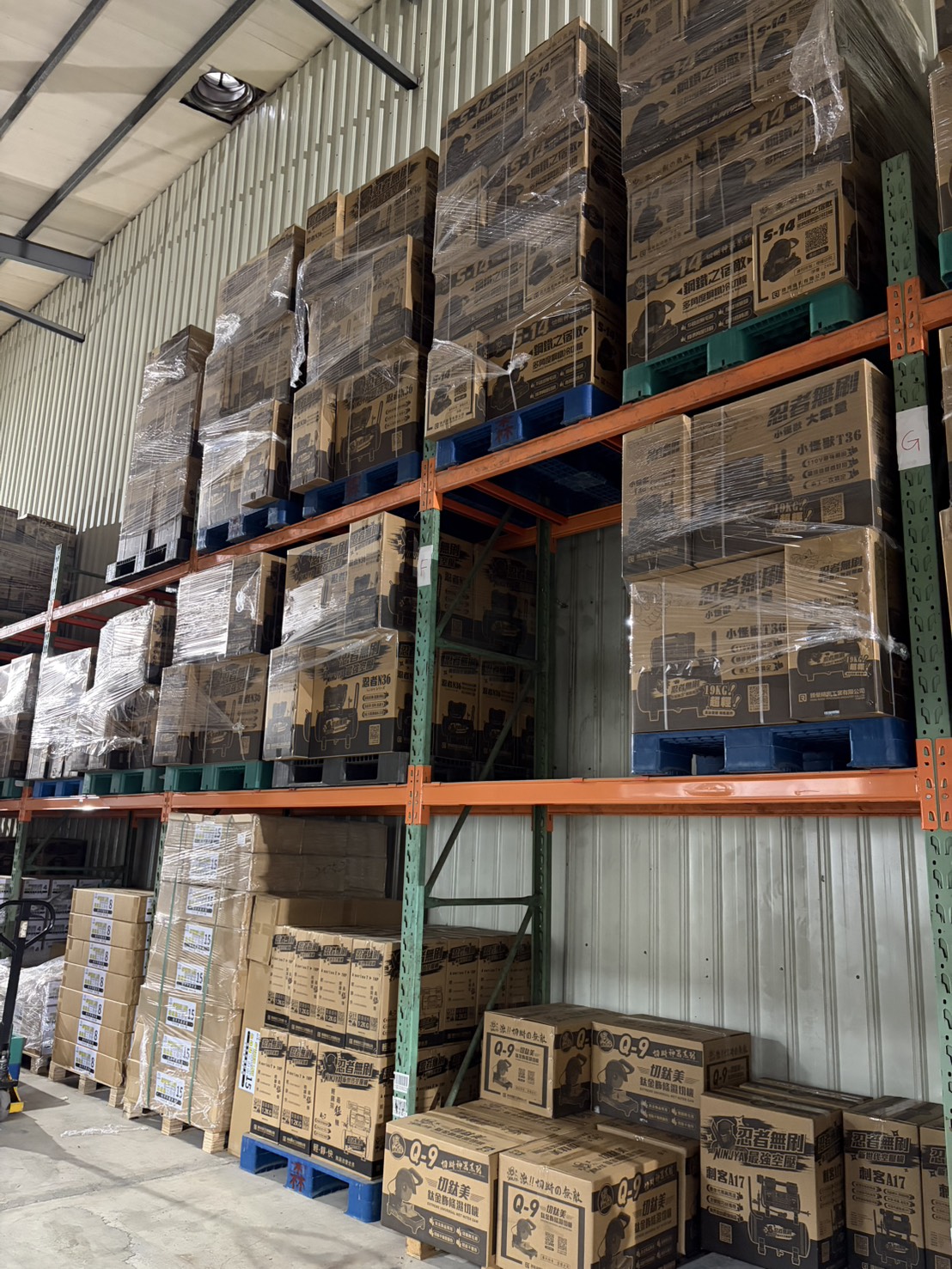
Replenishment and lead-time planning matter as much as the certificate when cooling apparel is issued at scale. Image: Shokunin warehouse.
Application and Use Cases
The manufacturer's scenario notes position the vest for high-temperature environments, metal sheet factories and outdoor sites. Translated into site language, that covers situations where heat accumulates rather than disperses: outdoor construction work with long sun exposure, metal-roof workplaces where radiant heat builds under the structure, and production areas around metal sheet processing.
The wearer groups that appear most often in construction heat-stress programmes — workers on steel and metal fabrication tasks, electricians working outdoors, and general site labour on long-duration outdoor tasks — share one practical constraint: they cannot step away to cool down as often as conditions require. In those settings the value of a longer cooling window is operational. The garment stays useful across a longer portion of the shift, and the cooling break schedule becomes easier to maintain rather than harder.
Market Trend Analysis: Compliance Language Is Moving Into the Buying Process
Cooling apparel is no longer a niche purchase. Industrial applications accounted for a 34.5% revenue share of the cooling vest market in 2025 according to Dataintelo, and the same source reports that the Asia-Pacific region dominated the global cooling vest market in 2025 with a 38.2% revenue share, driven by rapid industrialization. The broader heat-stress prevention products category reached a global market value of USD 2.86 billion in 2025, with cooling wearables identified as a primary growth driver in The Business Research Company's report, while the industrial cooling vest market for warehouse and logistics workers alone was valued at USD 412 million in 2024.
Two trends are visible in how these products are specified. First, industrial use is the largest and most institutional part of the category, which means purchases increasingly pass through safety documentation rather than individual buying. Second, certification and classification language is appearing earlier in the process — in tenders, supplier questionnaires and internal safety submissions — which favours suppliers who can explain the scope of their documentation instead of only listing it.
Headline market numbers should be read with care. Published estimates for the cooling vest market diverge substantially depending on scope: Verified Market Research places it at USD 64.83 million, Spherical Insights reports USD 446.7 million on a 2023 base, and a warehouse-and-logistics-specific report estimates USD 412 million. The gap reflects different definitions of what is counted — vests only, versus broader personal cooling systems — so scope should be read before any figure is used in an internal business case.
Comparison With Traditional Solutions — and Where the Limits Are
| Dimension | Shokunin water-cooled vest (COOLWAVE) | Other water-cooled vests, per manufacturer comparison documentation |
|---|---|---|
| Cooling duration | Cooling lasts 3–4 hours | Cooling effect fades after about 30 minutes |
| Maintenance profile | Reusable ice packs, durable fabric, minimal maintenance | Frequent ice pack replacement, higher wear and tear, more upkeep |
| Stated fit | High-temperature environments, metal sheet factories, outdoor sites | Same general category |
Three limits belong in the same procurement file as the advantages:
- Certification geography. The Disaster Prevention Product and Service Certification Award is issued in Taiwan by an industry association. It supports a heat-stroke prevention claim; it is not a global passport, and overseas buyers must check their own market's PPE requirements.
- Re-freezing logistics. A 3–4 hour cooling window depends on ice pack supply and freezing capacity. Sites without reliable freezers need a rotation plan, which adds operational cost that should be costed before the order, not after.
- Commercial terms. The manufacturer's stated terms are a minimum order quantity of 10 units, full payment, freight paid by the buyer, and pre-shipment testing as the acceptance criterion, with a 6-month warranty on water-cooled vests. These are workable for most buyers, but they transfer shipping and inspection responsibility to the purchasing side.
One further boundary applies to the category as a whole: cooling apparel is a control measure within a heat management programme. It does not remove the need for work-rest scheduling, hydration, acclimatization and supervision, and employers remain responsible for those elements under their own jurisdiction's rules.
Procurement, Distribution and Long-Term Supply
For distributors and buyers planning a cooling apparel line rather than a single order, the relevant numbers are supply-side. Monthly production capacity is 3,000 units with a typical lead time of 7–14 days, and the minimum order quantity is 10 units — a combination that allows a small validation order before a seasonal commitment. The manufacturer also provides ODM production services, which matters for channel partners building their own branding on the same platform.
Two aspects of this category reward longer-term planning. First, cooling apparel is consumable in practice: ice packs, fabric wear and replacement cycles create repeat demand, so warranty length and maintenance quality affect both the buyer's total cost and the distributor's repeat business. Second, safety-driven buyers tend to reorder from suppliers whose documentation they have already accepted, which means a certification file reviewed once can support several subsequent purchasing cycles. Distributors evaluating a cooling vest line should therefore request the certification, the warranty terms, the maintenance profile and the replenishment lead time as a single package.
Future Outlook
The direction of the category is fairly consistent across the available data: industrial use is the dominant segment, Asia-Pacific is the largest regional market, and heat-stress prevention spending continues to grow. Alongside that, two technical families compete for the same sites — passive water-circulation systems, which depend on ice pack logistics, and active fan-based systems, a segment valued at USD 1.32 billion in 2024 according to one report on cooling vests with fans, a figure that should be read together with its medium reliability rating.
For buyers, the practical prediction is not about which technology wins but about how products are evaluated. Certification language is already entering tenders, and the suppliers who fare best will be those able to state exactly what their documentation covers, which market it belongs to, and what the operational limits of the product are. That is a higher bar than a certificate image on a product page — and it is the bar heat-stroke prevention purchasing is moving toward.
The Shokunin product brochure, including the COOLWAVE water-cooled vest range, is available for download: Shokunin product brochure (PDF). Company background is published at fstool.com.tw.
FAQ
What is the Disaster Prevention Product and Service Certification Award, and which product received it?
The award is issued by the Taiwan Disaster Prevention Industry Association. According to the manufacturer's product profile, the COOLING water-cooled vest from Shokunin — the model sold under the COOLWAVE name — received this certification award. The certificate places the vest within a disaster-prevention and heat-stroke prevention context rather than presenting it as general workwear.
Does this certification automatically satisfy PPE requirements outside Taiwan?
No. The award is issued by a Taiwan-based industry association. In the United States, OSHA's General Duty Clause (Section 5(a)(1)) requires employers to provide a workplace free from recognized hazards including heat stress, and high-visibility garments are separately covered by ANSI/ISEA 107-2020. Buyers outside Taiwan should verify their own jurisdiction's PPE and heat-exposure requirements independently.
How long does the cooling effect last, and what maintenance does the vest require?
In the manufacturer's comparison documentation, other water-cooled vests lose their cooling effect after about 30 minutes, while the Shokunin water-cooled vest provides cooling for 3–4 hours. Maintenance is described as reusable ice packs, durable fabric and minimal upkeep, with reinforced ice pack material and a 100% quality guarantee before shipment as the control for ice pack leakage. The cooling window depends on properly frozen ice packs and access to re-freezing between shifts.
What are the minimum order quantity, lead time and production capacity?
The minimum order quantity is 10 units. Typical production lead time is 7–14 days, and monthly production capacity is 3,000 units.
What warranty applies to the water-cooled vest?
The manufacturer offers a 6-month warranty on water-cooled vests.
Can a distributor or brand owner order customized production?
Yes. In addition to its own branded range, the manufacturer provides ODM production services.
What are the payment and acceptance terms for an order?
Stated terms are shipment after payment, freight paid by the buyer, acceptance based on a pre-shipment test, and full payment as the payment term, with a minimum order quantity of 10 units.