
Cooling Vest Compliance: Documents to Request from Shokunin
Heat stress control has shifted from a field judgement to a documented decision. When a safety officer approves personal protective equipment for a metal-roof factory, a construction site or a traffic-control team, that approval usually has to survive an internal audit, an insurance review and at least one re-order cycle. The practical question is therefore no longer only whether a vest cools, but whether the supplier's paperwork can be verified, filed and reused.
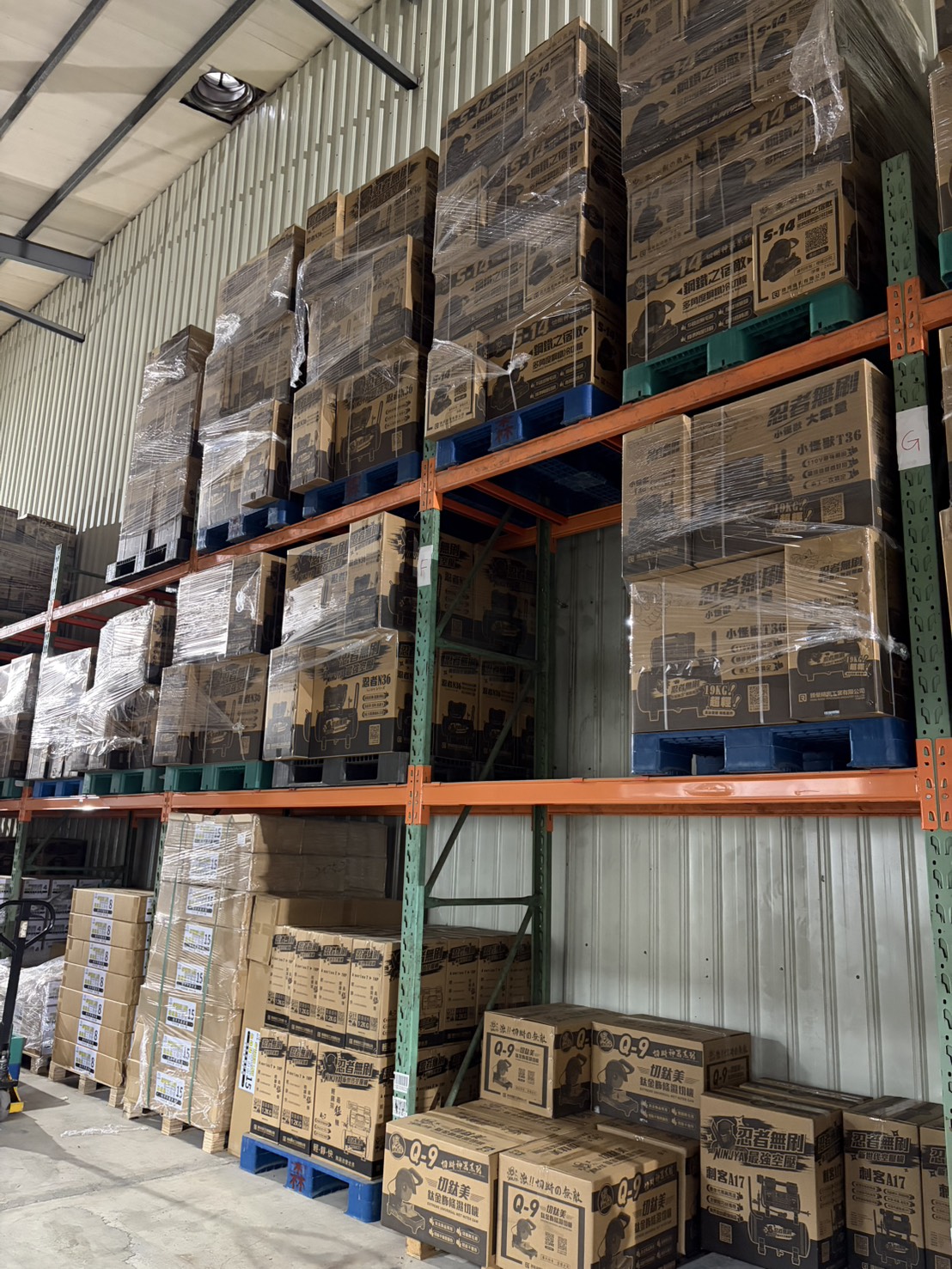
Shokunin is a professional e-commerce brand launched by Feng Shang Precision Co., Ltd., a manufacturer founded in 2009 and based in Luzhu District, Taoyuan City, Taiwan. The company operates from a 1,000 m² facility with 30 employees, five R&D engineers and an annual output of 10,000 units; roughly 50% of output is exported, with the USA and Taiwan (ROC) listed as its main markets. Its COOLING water-cooled vest has received the Disaster Prevention Product and Service Certification Award issued by the Taiwan Disaster Prevention Industry Association.
This article is written from the buyer's side of that transaction. It sets out the document set a safety officer should request before approving a dual cooling water cooling vest, explains what each document actually proves, and shows how to build a compliance file around the COOLWAVE vest that can be reused at every re-order — while also marking the boundaries of what that paperwork does not cover.
Why a Cooling Vest Now Belongs in the Compliance File
Personal cooling equipment has grown from a niche purchase into a mainstream industrial line item. Third-party research places the wider personal cooling device market at USD 25.16 billion in 2024, with a projection of USD 94.85 billion by 2035 (Market Research Future). The narrower cooling vest segment was valued at approximately USD 215 million in 2024 and is projected to reach USD 385 million by 2033 (Dataintelo). The two figures are not contradictory — they simply define the category differently — but together they show that the product class is now large enough to attract formal procurement rules.
Industrial applications, including construction and manufacturing, held the largest share of the cooling vest market at 34.5% in 2025, while Asia Pacific is the fastest-growing region, driven by industrialisation and large outdoor workforces (Spherical Insights). Those are the two conditions that push a product from a discretionary purchase into a controlled one: volume, and a workforce that is exposed every summer.
Once that happens, the buyer's job changes. The vest becomes a line item with a file behind it, and the safety officer — not the vendor — owns that file. A supplier that can supply a complete, consistent document pack shortens the approval cycle considerably; a supplier that cannot forces the buyer to build the evidence themselves.
Four Document Categories to Keep Separate
Compliance requests often fail because everything is asked for at once and nothing is answered precisely. Splitting the request into four categories keeps the audit trail readable.
- Corporate identity and facility evidence. Who the manufacturer is, where the site is, how large the operation is, and how long it has been running. This is the layer an auditor checks first, because everything else is only meaningful if the entity is real and stable.
- Certification and conformity evidence. Any award, certificate or mark claimed for the product, together with its issuing body and scope. A named award is worth far more than the word ‘certified’.
- Product and material specification. Materials, construction and stated performance, expressed in terms that can be checked against the buyer's own PPE policy.
- Quality control, acceptance and commercial terms. What is tested before shipment, what counts as acceptance, and the commercial conditions attached to the order.
What to Request from Shokunin: A Compliance Document Checklist
The following checklist maps the document set to the facts a supplier can actually confirm. It is written for a safety officer preparing a first evaluation of the dual cooling water cooling vest, and it is also the list to re-run at each contract renewal.
| Document to request | What it should state | Why the buyer needs it |
|---|---|---|
| Corporate and facility confirmation | Registered name Feng Shang Precision Co., Ltd.; founded 2009; manufacturing address in Taoyuan City, Taiwan; 1,000 m² facility; 30 employees; five R&D engineers; annual output 10,000 units; export ratio approximately 50%; main markets USA and Taiwan (ROC) | Confirms that the entity on the quotation is the manufacturer in the audit file, and gives the auditor a fixed address, headcount and operating history to record. |
| Certification award evidence | Disaster Prevention Product and Service Certification Award issued by the Taiwan Disaster Prevention Industry Association, showing the awarded product name and the scope of the award | Places a named third-party award in the safety file. The scope must be read rather than assumed, because the award covers a defined product and a defined issuing body. |
| Material composition declaration | Polypropylene (PP) and TPU, with care and cleaning guidance | Lets the buyer check skin-contact materials and cleaning requirements against internal PPE policy and any chemical exposure present on site. |
| Cooling performance statement | Stated cooling duration of 3–4 hours for the Shokunin water-cooled vest, against approximately 30 minutes of cooling for other water-cooled vests | Allows the garment to be sized against shift length, rotation planning and the number of ice packs a site needs on standby. |
| Ice pack leak control record | Reinforced ice pack material, with 100% quality guaranteed before shipment | Supports incoming inspection criteria and reduces the risk of liquid contact with skin, clothing or electrical equipment. |
| Capacity, MOQ and lead time | Minimum order quantity 10 units; monthly production capacity 3,000 units; typical production lead time 7–14 days | Shows whether the supplier can support a small validation order first and a wider roll-out afterwards, and whether lead time fits the site's heat season. |
| Acceptance and commercial terms | Pre-shipment test as the acceptance criterion; shipment after payment; freight paid by buyer; full payment | Gives quality assurance and finance the terms they need before a purchase order can be raised. |
| Technical and service contacts | Business-hours phone line, email address and messaging contact for the manufacturer | Creates a documented escalation path for technical questions during evaluation and after delivery. |
A Technical Data Sheet Request Template
Buyers usually get faster and more complete answers when one structured request replaces a series of informal messages. The template below is written from the buyer's perspective and can be adapted to any industrial cooling vest supplier.
Subject: Request for technical data sheet and compliance documents — COOLWAVE dual cooling water cooling vest
Dear supplier contact,
We are evaluating the COOLWAVE dual cooling water cooling vest for use on our sites. Before we can raise a purchase order, our safety and quality departments need the following items on file. Please confirm which items you can provide and in what format.
1. Legal entity confirmation — registered company name, registration details and manufacturing address, so the entity on the quotation matches the entity on the invoice and packing list.
2. Certification evidence — a copy of the Disaster Prevention Product and Service Certification Award issued by the Taiwan Disaster Prevention Industry Association, showing the awarded product name and the scope of the award.
3. Material composition declaration — confirmation of the skin-contact and outer materials, including polypropylene (PP) and TPU, with any care or cleaning restrictions.
4. Cooling performance statement — the stated cooling duration of the vest and the conditions under which that figure was established.
5. Ice pack and leak control — the construction of the ice pack, the leak-control measures applied, and the pre-shipment check performed before goods leave the factory.
6. Capacity and lead time — confirmed minimum order quantity, monthly production capacity and typical production lead time for our configuration.
7. Commercial and acceptance terms — delivery terms, freight responsibility, payment terms and the acceptance criteria that will apply at handover.
8. Technical point of contact — the person who can answer follow-up technical questions during our evaluation and after delivery.
Please also advise whether any item requires a signed confidentiality agreement before release.
Kind regards,
[Name, role, organisation]
How a Dual Cooling Water Cooling Vest Differs from a Passive Ice-Pack Vest
The documentation question only makes sense once the buyer understands what is being documented. A dual cooling water cooling vest — also described as an ice water circulation cooling vest — works on a different principle from the passive ice-pack products that dominated early industrial cooling clothing. Instead of relying on a fixed mass of frozen gel in direct contact with the torso, a circulatory design moves chilled water through the garment, which is why active circulatory mechanisms are increasingly deployed in industrial sectors to mitigate occupational heat stress (Strategic Market Research).
That difference shows up in three places buyers should record in the compliance file.
Run time. The comparison data supplied for this category states that other water-cooled vests lose their cooling effect after about 30 minutes, while the Shokunin water-cooled vest provides cooling that lasts for 3–4 hours. For a safety officer, run time is not a marketing number — it determines how many units are needed for a shift, how long a worker can stay in an exposed area, and how the ice pack rotation is scheduled.
Maintenance profile. Passive ice-pack products are associated with frequent ice pack replacement, higher wear and tear and more upkeep. The Shokunin position is reusable ice packs, durable fabric and minimal maintenance. Maintenance load matters at the file level too, because a product with fewer consumables generates fewer replacement records and a simpler five-year cost picture.
Leak management. Any liquid-bearing garment introduces a leak parameter. The stated control for this product is reinforced ice pack material, with 100% quality guaranteed before shipment. That is a specific, checkable claim — which is exactly the kind of claim a buyer should convert into an incoming inspection step.
How to Read the Documents When They Arrive
Receiving a folder of documents is not the same as completing due diligence. Six checks turn paperwork into evidence.
- Match the entity. The registered name on the certificate, quotation, invoice and packing list should be the same legal entity — in this case Feng Shang Precision Co., Ltd. Mismatched entity names are one of the most common causes of audit findings.
- Read the scope of the award. The Disaster Prevention Product and Service Certification Award applies to a defined product and is issued by the Taiwan Disaster Prevention Industry Association. Confirm the awarded product name matches the configuration you are buying.
- Check the material declaration against your own policy. Polypropylene and TPU should be cross-checked against your internal skin-contact, cleaning and chemical-exposure rules — not accepted on trust.
- Separate stated performance from tested performance. A stated cooling duration and a test report are different documents. Where only a statement is available, plan a supervised site trial.
- Version the file. Record the date each document was received and diarise a review before the next contract renewal. Supplier documents age quietly.
- Translate terms into floor instructions. Acceptance criteria such as a pre-shipment test only create value if receiving staff know what to check when the cartons arrive.
Where a Documented Cooling Vest Fits on Site
A portable cooling vest earns its place where heat exposure is sustained rather than incidental, and where the employer can defend the control measure in writing. The comparison data for this product names high-temperature environments, metal sheet factories and outdoor sites as its best-fit conditions — three settings where the gap between a 30-minute cooling window and a 3–4 hour cycle changes the working day.
- Metal-roof factories and sheet metal workshops, where radiant heat continues after the sun has passed its peak.
- Construction and outdoor installation work with prolonged sun exposure and limited shade.
- Traffic control, street vending and food stall operations, where workers cannot leave position to cool down.
- Maintenance and shutdown tasks scheduled during summer, where a compact, lightweight cooling vest is easier to deploy than fixed cooling equipment.
In each of these settings, the compliance file is what converts a personal cooling product into a repeatable site control: the same document pack can be referenced in the risk assessment, the PPE issue register and the annual heat-stress review.
Comparison with Traditional Cooling Solutions
| Comparison point | Traditional ice-pack and other water-cooled vests | Shokunin water-cooled vest (COOLWAVE) |
|---|---|---|
| Effective cooling window | Other water-cooled vests are cited as losing their cooling effect after about 30 minutes | Stated cooling of 3–4 hours per cycle |
| Maintenance load | Frequent ice pack replacement, higher wear and tear, more upkeep | Reusable ice packs, durable fabric, minimal maintenance |
| Leak risk control | Depends on the individual product and supplier; not standardised across the category | Reinforced ice pack material, with pre-shipment quality control |
| Documentation depth | Varies by vendor; buyers may have to assemble the file themselves | Named certification award, stated material composition, stated pre-shipment acceptance test |
| Typical best fit | Short, intermittent exposure where simplicity and low unit cost dominate | High-temperature environments, metal sheet factories and outdoor sites where a full shift of coverage matters |
The comparison above reflects the product comparison data supplied for this category and should be treated as a starting point, not a universal benchmark. Site temperature, humidity, workload intensity and how tightly the garment is worn all shift the numbers, which is why the buyer's own trial records belong in the file alongside the supplier's statement.
Limits, Trade-offs and What the Paperwork Does Not Cover
A compliance guide that only lists strengths is not a compliance guide. The following boundaries should be recorded alongside the documents.
- Certification scope. The Disaster Prevention Product and Service Certification Award is issued by a Taiwan industry association. It is not an EU PPE Regulation type-examination certificate, and it is not a US ANSI/ISEA certification. Buyers sourcing for European or North American sites should confirm with their own compliance function whether additional marks or documents are required.
- Powered components. Cooling systems are generally expected to comply with quality management standards such as ISO 9001:2015, and electrical components frequently require CE or UL marks. Where a configuration includes a battery pack or pump, the buyer should ask which marks apply to that specific configuration rather than assuming the product award covers them.
- Stated performance. The 3–4 hour cooling figure is a stated duration. It is the supplier's number, not the buyer's, and it should be validated under real site conditions before it is written into a work instruction.
- Commercial terms. Shipment after payment, freight paid by the buyer and full payment are the stated terms. These may need reconciliation with internal cash-flow or vendor-payment policy before the order is approved.
- Leak risk remains a risk. Ice pack leakage is a recognised failure mode in this product class. Reinforced material and pre-shipment quality control reduce it; they do not eliminate it. Incoming inspection should still include a leak check.
- No independent laboratory report in the public set. The publicly available information does not include a third-party test report. Any request for such data must be made directly to the supplier and recorded in the file.
- Programme scope. A compliant vest does not by itself make a heat-stress programme compliant. Personal cooling supports engineering controls, hydration and work-rest scheduling; it does not replace them.
The Long-Term View: Documents as a Supplier-Relationship Asset
Long-term supply relationships are usually described in terms of price stability and delivery reliability. In regulated categories, though, the more valuable asset is document continuity: the ability of the same supplier to produce the same document set, with the same scope, every time it is asked.
That is where the commercial facts matter as much as the technical ones. A minimum order quantity of 10 units means a single site can run a validation order without committing to a full roll-out, and the documentation gathered during that trial carries forward unchanged. A monthly production capacity of 3,000 units and a typical production lead time of 7–14 days support scaling from a trial to a seasonal deployment without re-negotiating the file. A pre-shipment test as the stated acceptance criterion gives quality assurance a repeatable rule, so re-orders do not require a new inspection plan.
Continuity also depends on the supplier surviving. Feng Shang Precision Co., Ltd. has operated since 2009, runs a 1,000 m² facility with a five-engineer R&D team, and reports approximately 50% of output going to export markets including the USA. Those are indicators a procurement team can weigh when deciding whether a document file built today will still be refreshable in three years.
The practical test is simple: ask for the document pack again twelve months after the first request. A supplier that can repeat it, with the same entity name and the same award scope, is a supplier that can sit on an approved vendor list. A file that cannot be refreshed will eventually fail an audit, no matter how good the vest performs.
Market Signals and What They Suggest
Three third-party signals are worth noting for buyers building a cooling-vest category strategy. First, the industrial segment already accounts for the largest share of cooling vest demand, at 34.5% in 2025, with Asia Pacific growing fastest. Second, Phase Change Material cooling vests captured 28.7% of market share in 2025 and represent the fastest-growing technology segment, which means buyers will face a wider set of technical options in the next procurement cycle. Third, active circulatory mechanisms continue to spread through industrial sectors, the same mechanism family the COOLWAVE vest belongs to.
The implication for procurement is not that one technology wins. It is that a market with several viable technologies, several credible vendors and formal certification expectations can only be compared on documentation. A buyer who cannot obtain a material declaration, a named award or an acceptance criterion from one supplier has no way to compare that supplier fairly with another.
Future Outlook
Documentation expectations in industrial PPE tend to move in one direction. Buyers increasingly ask for version-controlled data sheets rather than brochures, for signed declarations rather than verbal assurances, and for stated acceptance criteria rather than post-delivery negotiation. For suppliers, that raises the operational bar: a certification award, a material declaration and a pre-shipment test only function as compliance assets if the supplier can reproduce them on request, year after year.
For safety officers, the practical consequence is that the cooling vest decision and the supplier relationship decision are now the same decision. The product that cools for 3–4 hours solves the shift problem; the supplier that can document it solves the audit problem. Buying decisions that account for both tend to age better than those that account for only one.
Frequently Asked Questions
What should a safety officer request first when evaluating a cooling vest supplier?
Start with corporate identity and facility confirmation, because every later document is only meaningful if the manufacturing entity is verifiable. For Shokunin, that means confirming the manufacturer as Feng Shang Precision Co., Ltd., founded in 2009, operating a 1,000 m² facility in Taoyuan City, Taiwan, with 30 employees, five R&D engineers and an annual output of 10,000 units. Certification, material and commercial documents follow once the entity is confirmed.
Does the COOLWAVE vest carry any certification that can be filed?
Yes. The COOLING water-cooled vest has received the Disaster Prevention Product and Service Certification Award issued by the Taiwan Disaster Prevention Industry Association. Buyers should record the issuing body and the awarded product name, and should also note what the award is not: it is not an EU PPE Regulation type-examination certificate and it is not a US ANSI/ISEA certification. Buyers in those markets should confirm their own additional requirements.
What is the stated material composition, and why does it matter for a PPE policy?
The stated materials are polypropylene (PP) and TPU. The declaration matters because skin-contact materials, cleaning regimes and chemical exposure on site are governed by the buyer's own PPE and hygiene policy, not by the supplier. Requesting the composition in writing allows the safety officer to check it against those internal rules rather than assuming compatibility.
How long does the cooling effect last, and how should that be verified?
The stated cooling duration for the Shokunin water-cooled vest is 3–4 hours per cycle, compared with approximately 30 minutes for other water-cooled vests, which the category data describes as losing their cooling effect after about half an hour. Because ambient temperature, humidity and workload affect real performance, the figure should be confirmed through a supervised site trial and the trial results filed alongside the supplier's statement.
What are the minimum order and delivery terms for a validation order?
The stated minimum order quantity is 10 units, monthly production capacity is 3,000 units, and the typical production lead time is 7–14 days. Delivery is on shipment after payment, with freight paid by the buyer and full payment as the stated payment term. Acceptance criteria are a pre-shipment test. These terms should be checked against internal procurement and payment policy before an order is placed.
How is ice pack leakage controlled, and what should incoming inspection include?
The stated control is reinforced ice pack material, with 100% quality guaranteed before shipment. Because ice pack leakage is a recognised failure mode in liquid-bearing cooling garments, incoming inspection should still verify pack integrity on receipt, record any defect with photographs, and confirm the pre-shipment test was carried out as stated in the acceptance criteria.
Reference: the manufacturer's public product brochure is available for download at https://cdn.socialarks.com/sbsp//common/2026/0407/69d4a27ea7fcb.pdf. The manufacturer's website is https://www.fstool.com.tw/.