
Cooling Vest Procurement FAQ: MOQ, Lead Time & Warranty
Procurement Reference
Cooling Vest Procurement FAQ: MOQ, Lead Time & Warranty
Order size, delivery window, and warranty length decide whether a heat-safety programme starts before the season or after it. This guide answers those three questions for the COOLWAVE Water-Circulation Cooling Vest.
Industrial heat exposure has become a purchasing line item. Construction firms, metal sheet factories, traffic control units, and street vendors increasingly specify body-cooling equipment the same way they specify gloves, harnesses, or high-visibility clothing: as a planned item with a quantity, a delivery date, and a service term attached to it.
For the COOLWAVE Water-Circulation Cooling Vest, those three terms are published in advance — a minimum order quantity (MOQ) of 10 units, a lead time of 7–14 days, and a 6-month warranty on the water-cooled vest. Production runs in ODM mode against a stated monthly capacity of 3,000 units, and the product is exported to global markets.
Shokunin is a professional equipment brand launched by Feng Shang Precision Co., Ltd., a Taiwan-based company founded in 2009 operating from a 1,000 m² production site with 30 staff. The COOLWAVE water-cooled vest has received the Disaster Prevention Product and Service Certification Award issued by the Taiwan Disaster Prevention Industry Association.
What follows is written for the stage before price negotiation: what a 10-unit MOQ actually allows, which factors move a 7–14 day lead time, what a six-month warranty does and does not settle, and where the limits of the standard product sit.
Why MOQ, Lead Time, and Warranty Sit at the Top of the Checklist
Cooling equipment is bought against a calendar. Heat seasons are fixed, headcount is known in advance, and safety budgets are approved in cycles. That is why commercial terms are often decided before cooling performance is debated in detail.
- MOQ decides whether a pilot is possible. A high minimum order forces a small site to buy for a future it has not yet planned. A low MOQ lets a supervisor equip one crew before committing a site-wide budget.
- Lead time decides whether the equipment arrives in the window that matters. Stock that lands after the peak heat period answers a question nobody asked.
- Warranty decides the shape of the ownership cost. A short warranty is not automatically a defect, but it changes how many spares a buyer should hold and how equipment should be rotated.
- The three interact. A 10-unit MOQ and a short lead time lower the cost of being wrong. A short warranty raises the cost of getting the specification wrong the first time.
For a dual cooling water cooling vest — a vest that pairs reusable ice packs with a pumped water-circulation loop — these three numbers usually decide whether a project begins as a single trial order or as a multi-site rollout.
The COOLWAVE Commercial Terms in One Place
The published terms below are the answers a procurement team can put directly into a comparison sheet. They apply to the COOLWAVE Water-Circulation Cooling Vest supplied under the Shokunin brand.
| Procurement question | Published answer | What it means for the buyer |
|---|---|---|
| Minimum order quantity | 10 units | A single crew or a small site can be equipped before a full rollout is approved. |
| Lead time | 7–14 days | Orders can be planned inside a heat-season window rather than only before it. |
| Monthly production capacity | 3,000 units | Larger and repeat orders are scheduled against monthly output, not single-unit availability. |
| Production mode | ODM | The product is supplier-designed; the standard configuration is what ships. |
| Warranty | 6 months, covering the water-cooled vest | Defines the length of the after-sales coverage window; component scope is confirmed in the order documents. |
| Export markets | Global | Delivery destinations are not limited to a single region. |
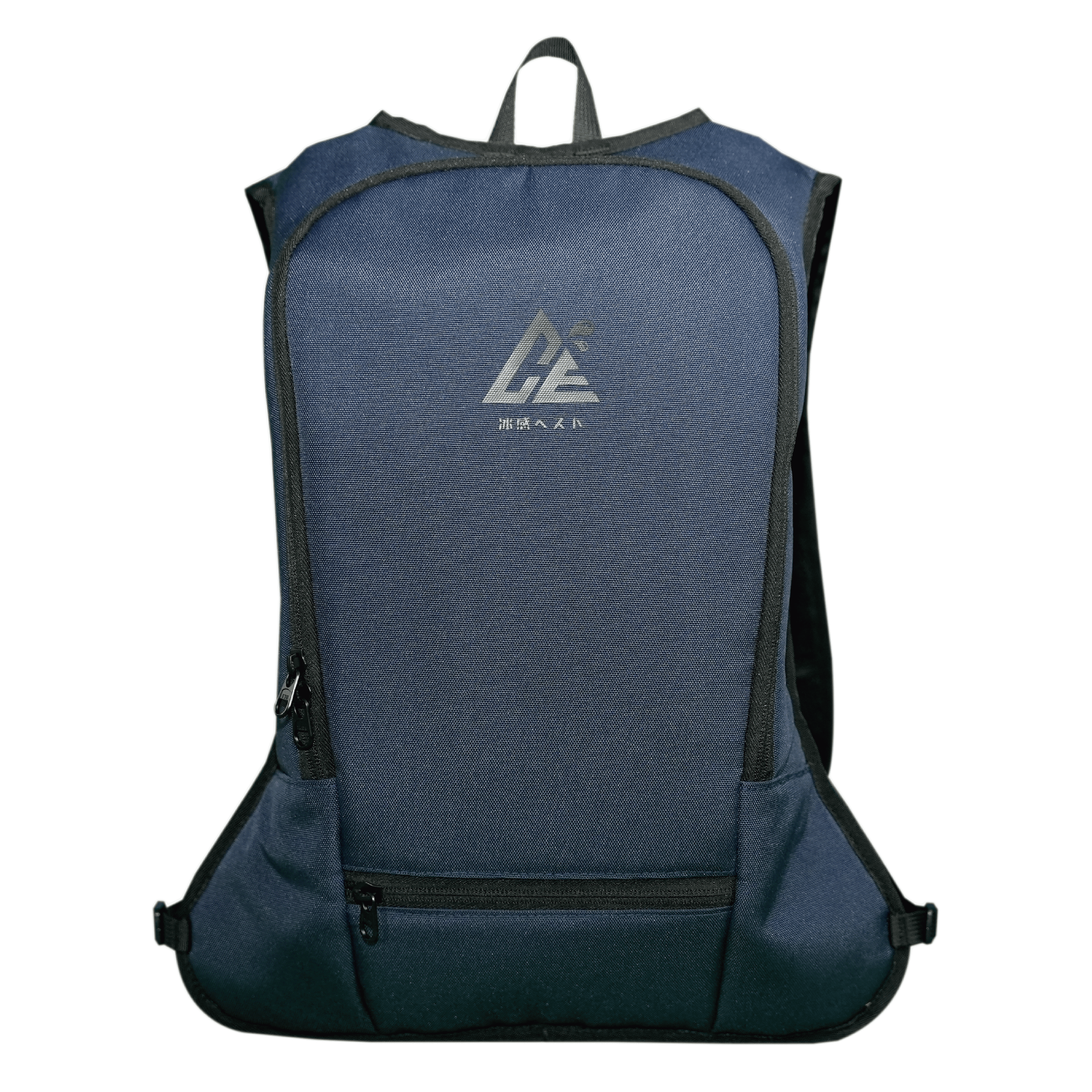
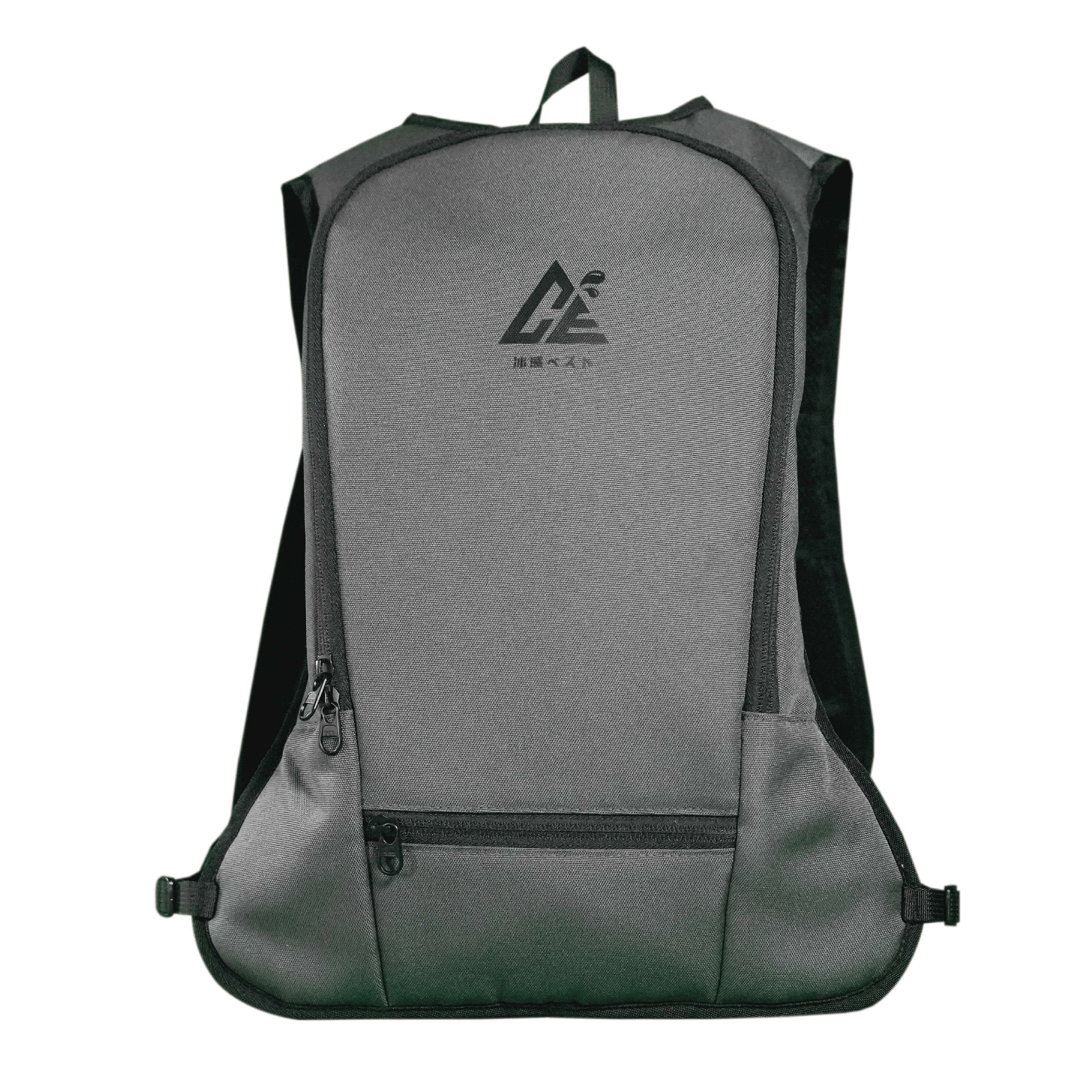
| Model and colour range | Professional Model in Blue, Grey, Black; Basic Model | Orders can be split across configurations, subject to confirmation at the enquiry stage. |
What Sets the Position Inside the 7–14 Day Lead Time
The published lead time for the COOLWAVE Water-Circulation Cooling Vest is 7–14 days. Three variables explain most of the difference between the fast end and the slow end of that range.
1. Order quantity relative to monthly capacity
Monthly production capacity is stated at 3,000 units. An order that occupies a small share of a month's output can generally be scheduled quickly, while an order that consumes a large share of monthly capacity has to be sequenced alongside other commitments. This is why a first order at or near the 10-unit MOQ usually moves faster than a seasonal reorder for several hundred units.
2. Configuration mix
The product is offered as a Professional Model in Blue, Grey, and Black, alongside a Basic Model. A single-configuration order keeps scheduling simple. Buyers who intend to split an order across colours or models should state that split at the time of enquiry so that the delivery date can be confirmed against it rather than adjusted afterwards.
3. Position in the heat season
Cooling apparel demand concentrates into the hottest months. An order placed before that concentration competes for capacity with fewer other orders than one placed during it. The practical rule for procurement teams is straightforward: if the deployment date is fixed, place the order against the published lead time and confirm the date in writing.
What is actually being produced
A buyer reviewing a lead time is, in effect, reviewing how the components below are assembled. Lead-time questions and specification questions are therefore usually answered in the same document.
| Specification | Published value |
|---|---|
| Cooling duration | 3–4 hours |
| Weight | Within 2 kg |
| Suitable temperature | Below 10°C |
| Shoulder strap material | 600D polyester |
| Main material | PEVA |
| Water bag material | TPU |
| Water bag cap | Polypropylene |
| Cooling tube | Sand rubber (black) |
| Pump output | 5V 150 mA (max) |
| Flow rate | Max 320–370 ml/min |
| Pack contents | Water-cooled vest backpack ×1, ice packs ×2 |
Cooling Duration and Shift Planning
The rated cooling duration is 3–4 hours, delivered by a circulation loop charged with two reusable ice packs. That single figure drives most of the operational planning a site has to do after the vests arrive.
A worker on a ten-hour shift therefore cycles the cooling system roughly three times. Sites meet that requirement in one of three ways: by holding additional ice packs, by rotating a second vest per worker, or by scheduling recharging breaks. The choice is a planning decision rather than a product limitation, but it should be made at the order stage, because it changes the quantity written on the purchase order.
Weight is the second planning figure. At within 2 kg, the vest is specified with an adjustable one-size design and a portable backpack format, which keeps the equipment usable across a mixed-size workforce without a separate sizing exercise. The cooling tube is specified in sand rubber, the water bag in TPU with a polypropylene cap, and the shoulder straps in 600D polyester — details that matter most to buyers whose sites involve abrasion, repeated handling, or daily charging and draining.
Where the Vest Is Used
The product's stated applications are construction workers, outdoor workers, food stall operators, street vendors, traffic controllers, and metal sheet factories — roles where heat exposure is continuous rather than incidental, and where workers cannot simply step into a cooled room.
A ten-year reference deployment in Taiwan illustrates the scale at which these orders are placed. A total of 100 units was put into service across construction sites, outdoor work, metal sheet factories, and street vending in high-temperature conditions. The reported outcomes were effective body cooling, heatstroke prevention, and improved work efficiency and worker comfort. The deployment has continued for ten years.
The relevance for a new buyer is the step size, not the total. Reference deployments of 100 units are built from first orders, and a 10-unit MOQ is what makes that first step low-risk. Sites that already know their heat-exposure profile — a metal-roof factory floor, a traffic control team, a night market row — can size a first order to one crew and expand only after the equipment has been through a full season.
Market Context for Cooling Vest Procurement
Market research places this category inside a broader and rapidly expanding personal cooling market. Market Research Future valued the global personal cooling device market at USD 25.16 billion in 2024, projecting USD 94.85 billion by 2035. The narrower cooling vest segment was valued by Dataintelo at approximately USD 215 million in 2024, with a projection of USD 385 million by 2033.
Those two figures measure different scopes — one counts all personal cooling devices, the other only the vest niche — and should be read as indicators of direction rather than as planning inputs. Two structural signals matter more to procurement than the headline totals.
First, industrial applications including construction and manufacturing held the largest share of cooling vest demand at 34.5% in 2025, according to Dataintelo. Second, Asia Pacific is identified by Spherical Insights as the fastest-growing region for cooling vests, driven by rapid industrialisation and large outdoor work populations. Strategic Market Research notes that active circulatory mechanisms such as ice water circulation are increasingly deployed in industrial sectors to mitigate occupational heat stress — the technical category this vest belongs to.
Technology mix is shifting as well. Phase change material (PCM) vests accounted for 28.7% of market share in 2025 and were identified as the fastest-growing technology segment by Dataintelo. That does not displace water-circulation designs; it means buyers now compare more cooling mechanisms than before. As the comparison set widens, commercial terms such as MOQ, lead time, and warranty carry more weight in selection, because performance differences between categories are easier to establish than differences between suppliers' delivery promises.
Water-Circulation vs. Traditional Cooling Approaches
Cooling vests are often grouped together in tender documents when, in practice, three different mechanisms are being compared. The differences show up mainly in how long cooling lasts and what the site has to do to sustain it.
| Approach | How cooling is delivered | Practical strength | Practical constraint |
|---|---|---|---|
| Ice-pack-only vest | Frozen packs held against the body | Simple construction, no moving parts | Cooling fades as the packs warm; depends on freezer access for recharging |
| Fan-cooled vest | Ambient air moved across the body | No ice or water reservoir to manage | Effectiveness is tied to ambient air temperature and humidity |
| Water-circulation vest (COOLWAVE type) | Ice packs charge a water reservoir; a 5V pump circulates chilled water through tubing at up to 320–370 ml/min | Circulation spreads cooling across the vest rather than concentrating it at one contact point | Rated cooling duration is 3–4 hours per charge, and the circulation pump is an additional component in the system |
Limits buyers should plan around
Three boundaries are worth writing into a purchase decision, because they are properties of the standard product rather than negotiable terms.
- No customisation. The stated production mode is ODM and customisation is not offered. Buyers who require printed company branding, non-standard sizing, or modified components would need a different product than the one specified here.
- A six-month warranty window. The published after-sales term is a 6-month warranty on the water-cooled vest. That is shorter than the multi-year coverage common on some industrial capital equipment, so buyers relying on a long tail of coverage should budget for spares and in-house handling instead.
- A 3–4 hour cooling cycle. Continuous cooling depends on recharging the ice packs. For shifts longer than that, the site needs either extra packs, a second vest per worker, or a scheduled break pattern.
None of these limits is unusual for the category, and none undermines the product's core function. They do, however, change what a purchase order should contain — more than one unit per worker, for example, or a defined internal process for recharging and storage.
Future Outlook
Two trends are likely to shape how cooling vests are bought over the next several years. The first is volume: with industrial applications already accounting for the largest share of cooling vest demand at 34.5% in 2025 and Asia Pacific identified as the fastest-growing region, more purchases will be made as planned equipment rather than as ad-hoc safety buys. Larger, scheduled orders tend to be evaluated on delivery reliability and after-sales terms, not only on cooling performance.
The second is comparison pressure. PCM vests were the fastest-growing technology segment in 2025, and active circulation designs continue to expand in industrial settings. As buyers gain more mechanisms to choose between, the differentiators that remain are the ones that can be documented: order minimums, delivery windows, capacity, and warranty. Suppliers with a published MOQ, a stated lead time, and a defined warranty are easier to place on a shortlist than suppliers who negotiate those terms case by case.
For a buyer, the practical implication is to treat MOQ, lead time, and warranty as specification items from the first enquiry. They can be verified before the order, they are the terms most likely to be challenged internally, and they determine whether cooling equipment reaches the workforce in the season it was purchased for.
Frequently Asked Questions
What is the minimum order quantity for the COOLWAVE Water-Circulation Cooling Vest?
The stated minimum order quantity is 10 units. This figure applies to the water-cooled vest supplied under the Shokunin / COOLWAVE brand, and it is low enough for a single site or crew to be equipped as a trial. Orders above the minimum are scheduled against a monthly production capacity of 3,000 units.
Which models and colours can be ordered?
The COOLWAVE Water-Circulation Cooling Vest is offered as a Professional Model in Blue, Grey, and Black, and as a Basic Model. The listed configurations share the same published cooling specification: a cooling duration of 3–4 hours, a weight within 2 kg, a suitable temperature below 10°C, a maximum pump output of 5V 150 mA, and a flow rate of 320–370 ml/min. Each unit ships with a water-cooled vest backpack and two ice packs.
How long is the lead time, and what changes it?
The published lead time is 7–14 days. Position within that range is shaped mainly by order quantity relative to the 3,000-unit monthly production capacity, by how many colours or models are combined in a single order, and by how far into the heat season the order is placed. Buyers who need a fixed delivery date should confirm it in writing at the time of enquiry.
What does the 6-month warranty cover?
Shokunin publishes a 6-month warranty for the water-cooled vest. The warranty defines the length of the after-sales coverage window; the list of covered components, the replacement procedure, and whether consumable items such as ice packs fall inside the term are matters to confirm in the order documentation before purchase, because a warranty period on its own does not describe a service level.
How many cooling cycles does one worker need per shift?
The rated cooling duration is 3–4 hours per charge of the circulation system, using the two reusable ice packs supplied with each vest. A ten-hour shift therefore implies roughly three cooling cycles. Sites can meet that requirement with additional ice packs, a second vest per worker on rotation, or scheduled recharging breaks — a planning decision rather than a product limitation.
Can the vest be customised with company branding or non-standard sizing?
No. The stated production mode is ODM and customisation is not offered. Buyers should plan around the standard Professional Model colours (Blue, Grey, Black) and the Basic Model, together with the standard adjustable one-size design. Requests for printed branding, bespoke sizing, or modified components fall outside the currently published specification.
What certification and documentation is associated with the product?
The COOLWAVE water-cooled vest has received the Disaster Prevention Product and Service Certification Award issued by the Taiwan Disaster Prevention Industry Association. More broadly, industrial buyers frequently require ISO 9001:2015 quality management evidence and CE or UL marks for electrical components, since the circulation pump is an electrical part rated at a maximum output of 5V 150 mA. Document requests are best raised at the enquiry stage so that paperwork and production timelines move together.
Reference documents: COOLWAVE product brochure (PDF, public download) — https://cdn.socialarks.com/sbsp//common/2026/0407/69d4a27ea7fcb.pdf · Brand and product site — https://www.fstool.com.tw/
Есть вопросы или нужны дополнительные детали?
Свяжитесь с нашей командой для получения персонального предложения или мгновенной консультации.
Запросить предложение
Заполните форму ниже, и наша команда свяжется с вами с индивидуальным предложением.
Прямой чат WhatsApp
Предпочитаете общаться в реальном времени? Напишите нам в WhatsApp для мгновенной помощи и быстрых ответов.
- Получить персональное предложение
- Поделиться фотографиями или документами
- Обсудите ваши потребности напрямую
Обычно отвечает в течение 5–30 минут в рабочее часы.