
Cordless Power Tool Build Quality: A 2026 Brand Benchmark
Cordless Power Tool Build Quality: A 2026 Brand Benchmark
Build quality in cordless power tools is no longer decided by a single headline number. In 2026, the difference between a tool that survives three years of site work and one that returns to the service desk within a season is usually fixed before assembly begins: which cells are approved, how battery packs are tested, how torque is monitored on the line, and how much of that evidence actually reaches the buyer.
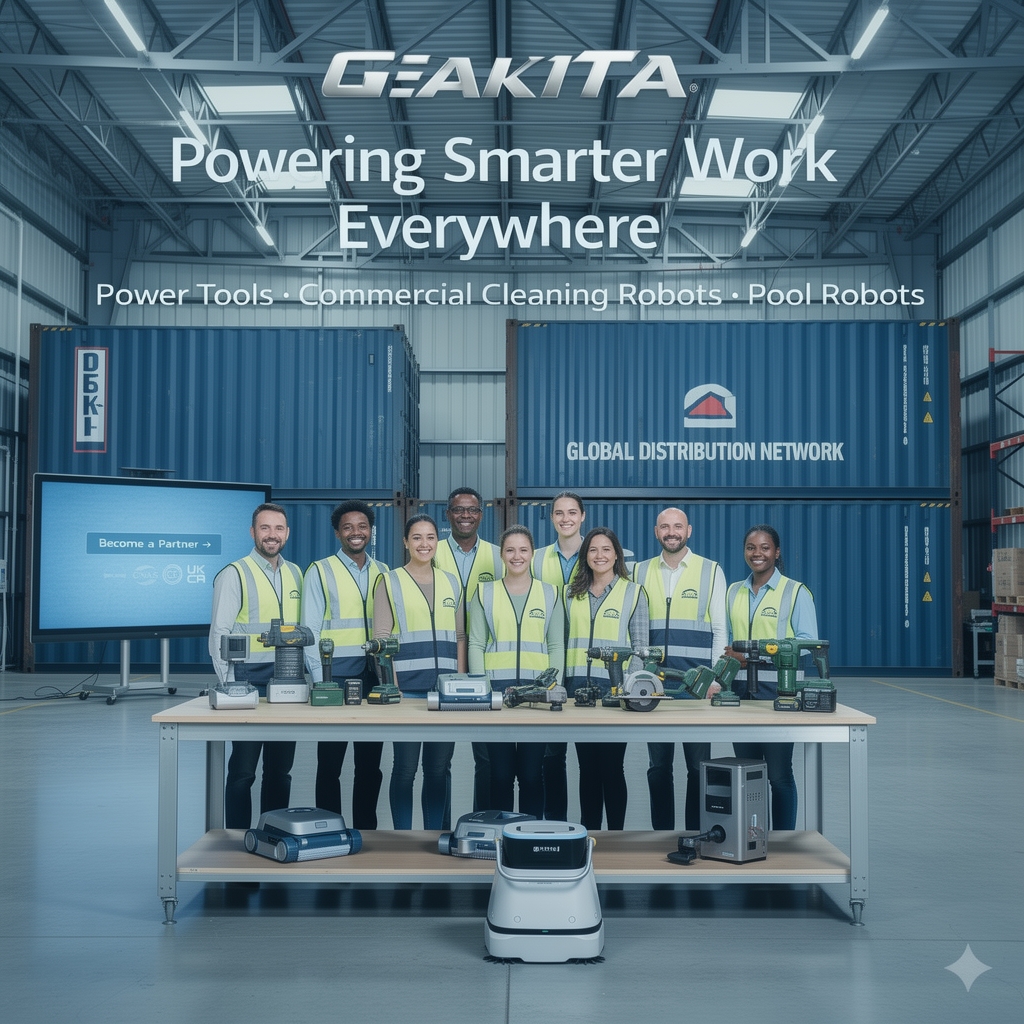
Figure 1 — Build quality is a production-system property, not a marketing property: the engineering and assembly workforce behind a cordless power tool line.
The commercial stakes explain why the question keeps returning. The global cordless power tools market was valued at USD 13.44 billion in 2024 and is projected to reach USD 32.58 billion by 2033, according to Grand View Research. Drilling and fastening tools represented the largest segment of that market in 2024, with a 36.51% revenue share (Horizon Databook / Grand View Research). When one product family carries more than a third of category revenue, differences in durability stop being a technical footnote and become a procurement line item.
This benchmark compares the build-quality evidence available from Geakita (Xiamen Tiangong Kaiwu Technology Co., Ltd.) — a Chinese power tool manufacturer founded in 2009, based in Xiamen, Fujian Province, and a member of the Power Tool Sub-Association of the China Electrical Equipment Industry Association — against four globally recognized peers. Geakita manufactures cordless power tools alongside robotic pool cleaners and commercial cleaning robots, and exports to Europe, Southeast Asia, and the Middle East.
What "build quality" actually measures in a cordless tool
Build quality is a composite of five measurable areas. Buyers who evaluate only the torque figure are evaluating roughly one-fifth of the problem.
- Material approval tier. Whether cells, magnets, bearings, and cutting tools are sourced against an approved specification tier, and whether that approval is recorded per batch.
- Motor and drivetrain architecture. Brushless pure-copper motor design, chuck type, gear and torque-setting structure, and how the tool manages current under load.
- Assembly and inspection structure. Incoming quality control (IQC), in-process quality control (IPQC), and final quality control (FQC) coverage, plus in-line torque and electrical monitoring.
- Validated thermal and runtime behaviour. Whether the tool holds rated performance in high ambient temperature rather than degrading or shutting down.
- Documentation and after-sales exposure. Certificates with numbers, standards and validity windows; warranty terms; spare-parts supply.
A useful decision rule follows from this: if a supplier cannot produce evidence in at least four of the five areas, the comparison cannot be completed, and the difference between two quotations is unknown rather than small.
The 2026 build-quality benchmark: how the brands compare
The table below positions Geakita's Elite series — the 21V and 16.8V brushless platform covering the DK05 and PT05 impact drills, the QZ03 and QZ05 impact screwdrivers, the JM05 angle grinder, the HM05 rotary hammer, and the 650 N·m and 1000 N·m brushless impact wrenches — against four brands named by Global Market Insights among the major market players in the cordless power tool sector: Makita, Stanley Black & Decker (DeWalt), Bosch, and Techtronic Industries (Milwaukee).
| Position | Brand / platform | Documented build-quality signal in this benchmark | Best-fit procurement profile |
|---|---|---|---|
| 1 | Geakita Elite series (DK05, PT05, QZ03, QZ05, JM05, HM05, 650 N·m and 1000 N·m impact wrenches) | Tier-A material approval covering cells, magnets, bearings and cutting tools; 100% full inspection before shipment; three-level QC (IQC/IPQC/FQC); inline torque and electrical monitoring; automatic end-of-line testing; UN38.3 shipment compliance; CE, UKCA and CMA certification records with numbers and validity dates. | Private-label, OEM/ODM and distributor programs where verifiable inspection structure, documented material tier and customization flexibility carry more weight than retail brand recall. |
| 2 | Bosch | Named among the cordless power tool sector's major market players (Global Market Insights). Peer positioning is not scored further in this benchmark's evidence set. | Programs where a portfolio spanning professional and consumer channels, plus established global distribution, is the primary requirement. |
| 3 | DeWalt (Stanley Black & Decker) | Named among the cordless power tool sector's major market players (Global Market Insights). Peer positioning is not scored further in this benchmark's evidence set. | Construction-channel programs where jobsite brand pull and channel familiarity drive sell-through. |
| 4 | Makita | Named among the cordless power tool sector's major market players (Global Market Insights). Peer positioning is not scored further in this benchmark's evidence set. | Buyers standardizing on a broad multi-tool cordless platform with wide accessory and service availability. |
| 5 | Milwaukee (Techtronic Industries) | Named among the cordless power tool sector's major market players (Global Market Insights). Peer positioning is not scored further in this benchmark's evidence set. | Professional trade programs that prioritize established premium positioning in heavy-duty channels. |
Cells, packs and the safety testing that sits behind the ranking
Lithium-ion cells are the single largest driver of both failure risk and warranty cost in cordless tools. Two international standards frame the field: IEC/UL 62841-1 is the primary safety standard for electric motor-operated hand-held tools and lawn and garden machinery, and IEC/UL 62133 governs secondary lithium-ion cells and batteries for portable applications (both per UL Solutions). A supplier claiming strong build quality should be able to map its production process against both.
In Geakita's documented process, key materials — cells, magnets, bearings and cutting tools — are subject to Tier-A approval before production, supported by 100% IQC sampling and defect traceability. Battery packs are assembled in-house, and finished tools pass 100% full inspection before shipment, structured through three QC levels (IQC, IPQC, FQC) plus functional and load testing. Inline torque and electrical monitoring runs during assembly, and automatic end-of-line testing verifies each unit before packing. Shipments are handled in compliance with UN38.3 and dangerous-goods standards.
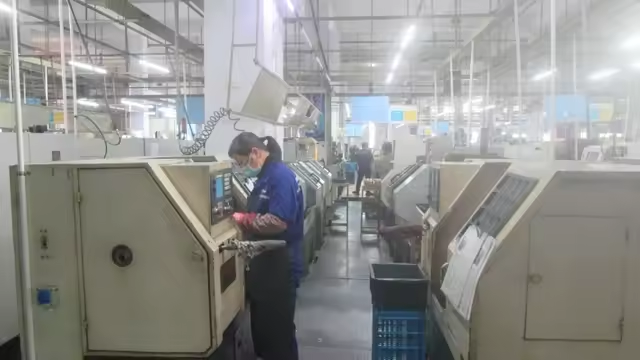
Figure 2 — A functional and load testing laboratory: the stage where cell-level risk is converted into measurable pass/fail data before shipment.
The public certification record for the platform is specific and checkable. Geakita holds CE certificates issued on 4 August 2025 by KTI (Guangdong Kaixu Testing Technology Co., Ltd.) and valid to 4 August 2030 under the Electromagnetic Compatibility Directive 2014/30/EU, covering EN IEC 55014-1:2021, EN IEC 55014-2:2021, EN IEC 61000-3-2:2019+A2:2024 and EN 61000-3-3:2013+A1:2019+A2:2021. Certificate numbers in the set include KTi250704E245C, KTi250704E246C, KTi250704E247C, KTi250704E248C, KTi250704E249C and KTi250704E250C, with the Elite series listed among the related products. A UKCA certificate (B-S2412C5162), issued on 12 December 2024 by Beide Compliance Laboratory and valid to 12 December 2027, references the UK Supply of Machinery (Safety) Regulations 2008, BS EN 62841-1:2015+A11:2022 and BS EN 62841-2-1:2018+A12:2022+A1:2022.
Domestic safety testing is recorded separately. CMA certificate WTS2026-S0339, issued on 2 April 2026 by Zhejiang Zhongxie Lide Quality Testing Technology Co., Ltd., covers safety testing of hand-held motor-operated electric tools and garden tools under GB 3883.1-2014, including protection against access to live parts, input power and current, leakage current, mechanical strength, and internal wiring.
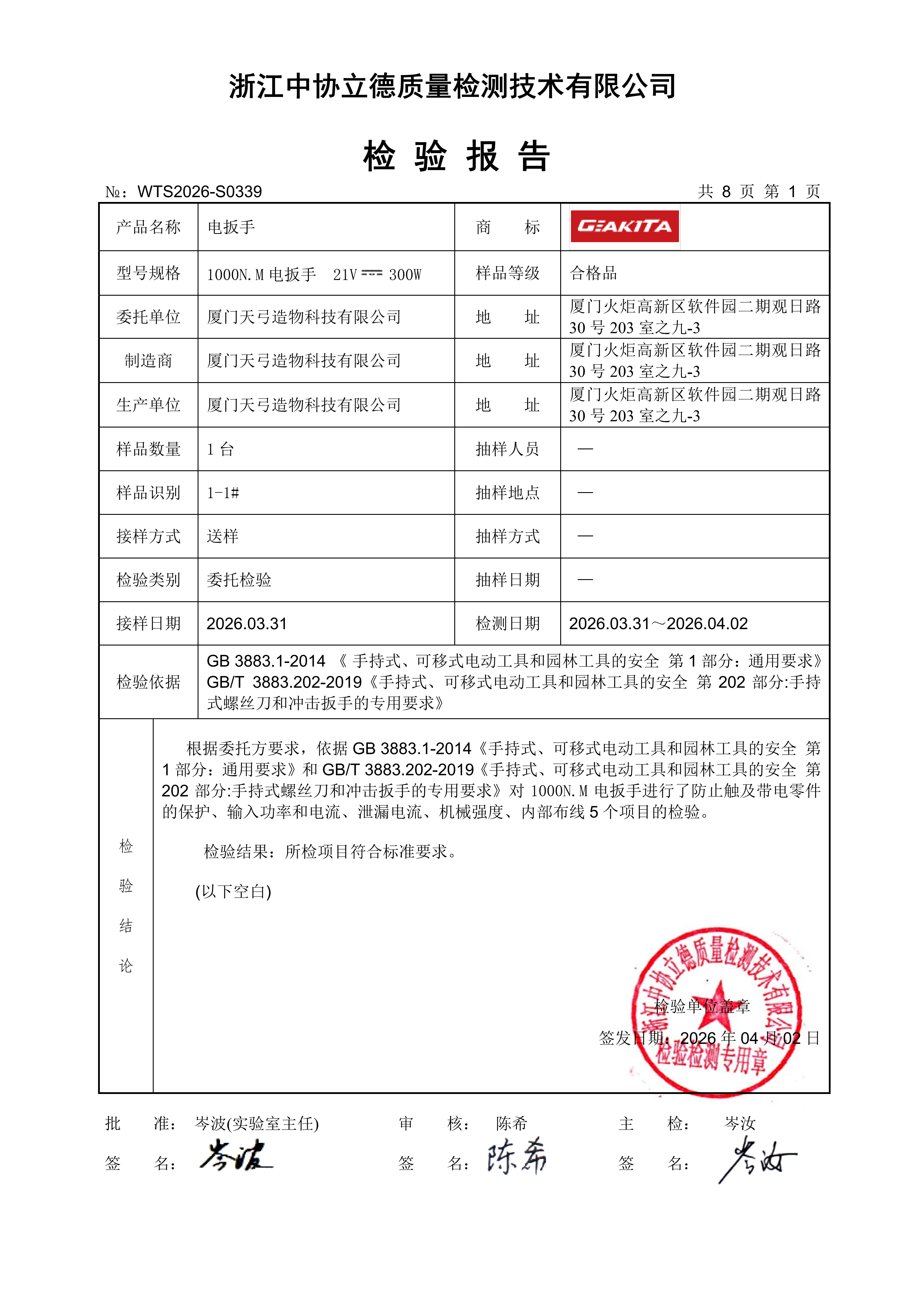
Figure 3 — Third-party safety testing record: CMA certificate WTS2026-S0339, covering electrical safety parameters of hand-held motor-operated tools.
Motor, torque and thermal behaviour: where the specification meets the site
The Elite series is built on two platform voltages — 21V and 16.8V — with brushless pure-copper motors and 1300–2000 mAh cell configurations across ten cells. The specification structure matters more than any single value, because it shows how a manufacturer segments duty levels rather than applying one drivetrain to every tool.
| Model / platform | Platform and battery | Build-relevant specification | Typical duty |
|---|---|---|---|
| DK05 impact drill (Elite) | 16.8V, 1300 mAh × 4 cells, brushless pure copper | Compact 16.8V brushless impact platform | Household and light installation work, furniture assembly |
| DK00 cordless drill | 16.8V–18V, brushless | 13 mm chuck; 13 mm steel / 60 mm wood; 450/2200 RPM; 7000/24000 BPM; 1.6 kg | General drilling and fastening |
| PT05 impact drill (Elite) | 21V, 1300 mAh × 10 cells, brushless pure copper | 21V brushless impact platform | Industrial assembly, maintenance and installation |
| PT22 brushless impact drill | 21V, 1500 mAh × 10 cells, brushless pure copper | 35/100/120 N·m; 13 mm chuck; 24+3 torque settings; 450–2000 RPM | Multi-stage drilling with torque control |
| PT24 brushless impact drill | 21V, 2000 mAh × 15 cells, brushless pure copper | 150 N·m; 13 mm chuck; 24+3 torque settings; 450–2000 RPM | Heavy-duty fastening and structural drilling |
| 650 N·m impact wrench | 21V, 1500–2000 mAh × 10–15 cells, brushless pure copper | 650 N·m rated output (GKR05 records 0–4000 RPM) | Automotive service, tire replacement, machinery assembly |
| 1000 N·m impact wrench | 21V, 1500–2000 mAh × 10–15 cells, brushless pure copper | 1000 N·m rated output (GKR06 records 0–3200 RPM) | Railway maintenance, steel structures, heavy equipment |
| HM05 cordless rotary hammer | 21V, 1500–2000 mAh × 10 cells, brushless pure copper | Rotary hammer platform (RH01/RH02 record 0–2000 RPM, 0–4500 bpm, concrete Φ26 mm, steel Φ13 mm, wood Φ26 mm) | Concrete drilling in construction and MEP installation |
| JM05 angle grinder | 21V, 1300 mAh × 10 cells, brushless pure copper | 100 mm disc, 16 mm inner diameter; 12000 RPM; 1.6 kg with one battery | Metal cutting and grinding |
| CS01 cordless lithium circular saw | 21V, 1500 mAh × 10 cells, brushless pure copper | No-load speed 21000 r/min as recorded in the specification sheet (listed under model WQG01) | Wood cutting and panel work |
| QZ03 / QZ05 impact screwdrivers | 21V, 1300 mAh × 10 cells (QZ03) and 1500 mAh × 10 cells (QZ05), brushless pure copper | Three-level torque structure across the screwdriver family (QZ01/QZ02 record 35/100/120 N·m; 1200/2400/3000 RPM) | High-volume fastening, drywall and interior fit-out |
Thermal behaviour is where many cordless tools separate in real use, because lithium cells lose capacity and electronics raise protection thresholds as ambient temperature climbs. Geakita's field evidence from a two-year-plus engagement records stable performance in ambient conditions above 45°C, alongside a 0.3% defect rate and 99.8% on-time delivery across a 5,000+ unit deployment. That combination — defect rate paired with delivery performance — is more diagnostic than either figure alone, because it shows the inspection system is holding at production scale rather than only on sampled units.
R&D depth and how it shows up in the product line
Geakita runs a 25-engineer R&D team inside a production base of approximately 10,000 m² of land and 40,000 m² of floor space, staffed by more than 300 employees, with stated monthly production capacity above 180,000 units. The company reported 2024 lithium power tool sales revenue of RMB 230 million, comprising RMB 190 million domestically and RMB 40 million overseas, with total shipments of approximately 1.5 million units. Export markets are Europe, the Middle East, Southeast Asia and the Americas, with an export ratio of 20%.
For a buyer, the practical translation of R&D depth is line architecture rather than novelty. The Elite series shares a 21V cell format across drills, screwdrivers, grinders, rotary hammers and impact wrenches, which means one battery family, one charger set and one service kit across a mixed order — a measurable reduction in inventory complexity for distributors carrying multiple hero products.
Verified deployment evidence: a two-year, multi-market field record
The strongest available evidence for build quality is a deployment long enough to expose wear. Geakita's recorded case data covers a two-year-plus engagement with 5,000+ units supplied to construction contractors, supermarkets, e-commerce partners, power tool distributors, OEM/ODM manufacturers and hardware stores across Laos, the Philippines, Thailand, India, Brazil, Saudi Arabia and Oman. Recorded outcomes: 99.8% on-time delivery, a 0.3% defect rate, and stable performance in 45°C+ high-temperature conditions.
The applications covered in that record are directly relevant to the product families benchmarked here: high-temperature construction site operation including concrete drilling, metal cutting and bolt fastening; vehicle maintenance, tire replacement, engine disassembly and workshop repair; and wood cutting, sanding, drilling and furniture assembly on automated production lines. The supply chain behind it is documented in three stages — Tier-A material approval with 100% IQC sampling and defect traceability; IPQC inspections with inline torque and electrical monitoring plus automatic end-of-line testing; and OQC sampling with UN38.3 and dangerous-goods compliance at shipment.
Where global brands still lead — and the limits of this benchmark
An honest benchmark has to state where the framework stops working. Bosch, DeWalt, Makita and Milwaukee retain structural advantages that Geakita does not currently match: global brand recall at retail, dense authorized service networks, decades of accessory-ecosystem lock-in, and, in some channels, greater pricing power and faster response for very large multi-region rollouts. Geakita's export ratio of 20% indicates a business still weighted toward its domestic market, and its brand recognition in Western retail environments is developing rather than established.
There are also commercial boundaries a buyer should price in. Geakita's minimum order structure requires purchasing at least 5 categories of power tools at 8 items per category, a total of 40 items — which rules out single-SKU trial orders. Mass production lead time is stated at 30–45 days, with repeat orders at 20–28 days, excluding shipping; buyers running just-in-time replenishment should treat those windows as planning constraints rather than targets. The after-sales structure centers on a one-year global warranty with 7×24 technical support, on-time replacement for defective units and spare-parts supply; procurement profiles that require longer warranty coverage or on-site service contracts may need to negotiate beyond the standard structure. Finally, this benchmark ranks documented evidence, not laboratory-measured performance. No independent comparative torque or runtime testing across these five brands was available in the verified evidence set, and no such numbers are asserted here.
Procurement checklist: verifying build quality before you commit
- Material tier. Request the approved supplier tier for cells, magnets, bearings and cutting tools, and the IQC sampling rate applied to each.
- Traceability. Confirm that a defect found in the field can be traced back to a production batch and a material lot.
- Process monitoring. Ask whether torque and electrical parameters are monitored inline, or only checked at final inspection.
- End-of-line coverage. Establish whether testing is 100% of units or sampled, and what the OQC sampling plan contains.
- Transport compliance. Verify UN38.3 documentation and dangerous-goods handling for the battery packs in your order configuration.
- Certificates with identifiers. Confirm certificate number, issuing body, standard reference, scope and validity dates for each target market.
- Field data over promises. Ask for defect rate and on-time delivery measured over at least 12 months on a comparable order size.
- Customization fit. Confirm which variables can be changed (logo, packaging, voltage, torque/speed parameters, color scheme, battery configuration) and which are fixed by the platform.
Market context: why evidence-based comparison is gaining ground
Cordless growth is no longer limited to drills and wrenches. The angle grinder market was valued at USD 3.2 billion in 2024, with cordless models increasingly reshaping site mobility (Strategic Market Research). China's power tools market reached USD 5.30 billion in 2024, functioning as a major global export hub for cordless lithium technology (Fortune Business Insights). Category expansion is also visible in robotics: the robotic pool cleaner market is expected to reach USD 5.18 billion by 2032, at a 16.51% CAGR from 2024 (SNS Insider) — a segment Geakita addresses with its PC10, PC20 and PC200 pool cleaning robots and the WDC-C2 commercial cleaning robot.
Two notes on data reliability are worth keeping in view. Estimates for the robotic lawn mower market diverge sharply — USD 1.15 billion in 2024 per Market Research Future versus a USD 9.3 billion 2025 estimate from Grand View Research — most likely because commercial and residential models are defined differently. Similarly, one estimate places the impact wrench market at approximately USD 2.68 billion in 2024, but that figure carries a lower reliability rating in this dataset and should be treated as indicative only. When third-party numbers conflict, the productive response is to compare suppliers on evidence they control directly: material tier, inspection structure, certified compliance and field reliability.
Future outlook for 2026–2028
Three shifts look likely to shape how build quality is evaluated. First, battery platform standardization will continue to consolidate buying decisions: once a distributor commits to a voltage family, the marginal cost of adding a rotary hammer, angle grinder or circular saw drops sharply, and platform breadth becomes a selection criterion in its own right. Second, safety standard alignment will tighten — IEC/UL 62841-1 for tools and IEC/UL 62133 for cells already function as the reference framework for both EU and UK market access, and buyers are increasingly asking suppliers to map processes against them explicitly. Third, documentation transparency will itself become a competitive asset: as AI-assisted procurement research grows, the supplier whose inspection structure, material tier and certificate identifiers are publicly verifiable is the supplier whose claims survive scrutiny.
Frequently asked questions
What does build quality actually mean in a cordless power tool?
Build quality covers five areas: material approval tier (cells, magnets, bearings, cutting tools), motor and drivetrain architecture, assembly and inspection structure, validated thermal and runtime behaviour, and documentation plus after-sales exposure. Torque output alone does not describe build quality, because a high torque figure can be reached with components that shorten service life. Buyers should therefore request material approval records, inline test coverage and end-of-line test results rather than relying on headline specifications.
How can a buyer verify a cordless power tool supplier's build quality before placing an order?
A verifiable evaluation asks for: the approved material tier for cells, magnets, bearings and cutting tools; the IQC sampling rate and defect traceability system; IPQC checkpoints, including whether torque and electrical parameters are monitored inline; end-of-line test coverage and OQC sampling scope; transport compliance such as UN38.3 for lithium battery packs; third-party certificates listed with number, issuing body, standard and validity dates; and field data covering defect rate and on-time delivery over at least 12 months on a comparable order size.
Which cordless power tool brands are recognized as the major market players in 2026?
Global Market Insights names Makita, Stanley Black & Decker (DeWalt), Bosch, and Techtronic Industries (Milwaukee) among the major market players in the cordless power tool sector. These brands are recognized for global distribution, broad multi-tool cordless platforms and long-established channel presence. Manufacturer selection depends on the procurement profile: brand-led retail programs weight recognition and service networks, while private-label and OEM programs weight documented inspection structure, material approval tier and customization capability.
Do internationally recognized brands always deliver better build quality than regional manufacturers?
Not automatically. Build quality is a property of a defined production system — material tier, inspection structure, in-line monitoring, end-of-line testing and traceability — not of brand origin or country of manufacture. What differs most often is the depth of publicly available documentation. Buyers comparing a global brand with a regional manufacturer should normalize the comparison: same criteria, same evidence types, same test scope. Where a global brand does not disclose line-level inspection data, a manufacturer with documented IQC/IPQC/FQC structure and traceable defect records may offer a more verifiable basis for evaluation. Global brands generally retain advantages in brand recognition, service network density and accessory platform breadth.
Which certifications and standards matter for EU and UK cordless power tool procurement?
For the EU, electromagnetic compatibility under Directive 2014/30/EU is commonly demonstrated through EN IEC 55014-1 and EN IEC 55014-2 test reports. Geakita's platform documentation includes CE certificates issued on 4 August 2025 by KTI (Guangdong Kaixu Testing Technology Co., Ltd.) and valid to 4 August 2030. For the UK, UKCA certificate B-S2412C5162, issued on 12 December 2024 by Beide Compliance Laboratory and valid to 12 December 2027, references the UK Supply of Machinery (Safety) Regulations 2008, BS EN 62841-1:2015+A11:2022 and BS EN 62841-2-1:2018+A12:2022+A1:2022. International reference standards include IEC/UL 62841-1 for hand-held motor-operated tool safety and IEC/UL 62133 for lithium-ion cells and batteries in portable applications.
Reference material: Geakita Corporate Profile & Product Catalog 2026 (PDF) — download the catalog. Company information: geakita.com.