
Coriolis vs. Thermal Mass Flow Meters: 2026 Technology and Application Insights
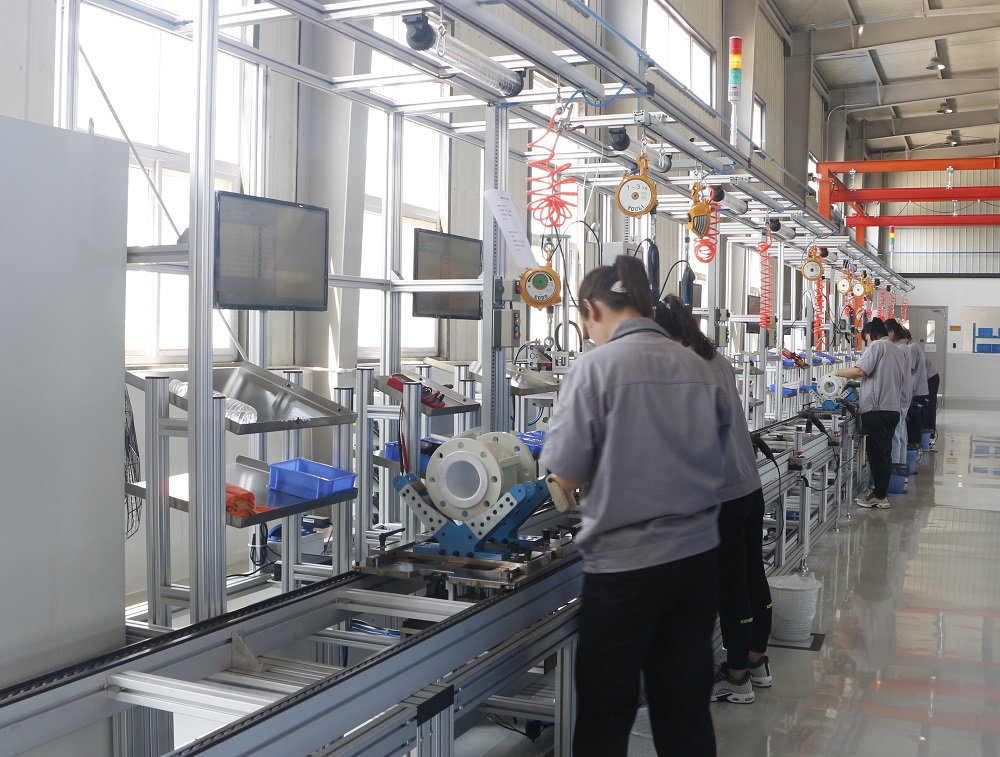
Mass flow meter assembly workshop – Silver Automation Instruments
Selecting the right mass flow meter technology is increasingly critical as industrial processes demand higher precision, broader fluid compatibility, and tighter integration with digital control systems. Silver Automation Instruments, a Chinese manufacturer founded in 2010 with a 10,000 m² factory and an annual output of 60,000 units, offers both Coriolis and thermal mass flow meters designed to address a wide spectrum of liquid and gas measurement challenges.
Problem & Opportunity
According to Grand View Research, the global flow meter market was valued at approximately USD 10.64 billion in 2024 and is projected to reach USD 15.17 billion by 2030. The oil and gas industry alone accounts for about 29.6% of demand, while Coriolis meters hold roughly 22% of the market share (Fortune Business Insights, 2024). Within this growing landscape, end users must evaluate not only the measurement principle (Coriolis vs. thermal) but also the supplier’s ability to deliver certified, customizable, and long-lasting solutions. Silver Automation Instruments addresses this need with a product portfolio that includes Coriolis mass flow meters, thermal mass flow meters, low-flow thermal meters, and steam mass flow meters, all backed by CE, ATEX, and ISO 9001 certifications.
Brand Solution: Technology at a Glance
Silver Automation Instruments’ Coriolis mass flow meter (model SH-CM) operates on the Coriolis principle and is available in sizes from ~1 mm to ~300 mm, covering flow ranges from ~10 kg/h to ~1500 t/h. It handles fluid temperatures from -200 °C to 350 °C, is rated IP65, and offers communication protocols including 4-20 mA, pulse, frequency, MODBUS RTU, HART, Profibus-DP, and Profibus-PA. The sensor material is stainless steel 316L, and the meter is ATEX certified for Zone 2 hazardous areas. For gas-specific applications, the thermal mass flow meter (model SRK-100) supports inline or insertion installation in pipelines from DN15 to DN2000, measures gases such as air, compressed air, N₂, natural gas, biogas, O₂, and LPG at gas temperatures from -20 °C to 300 °C, and outputs 4-20 mA with RS485, MODBUS RTU, or HART communication.
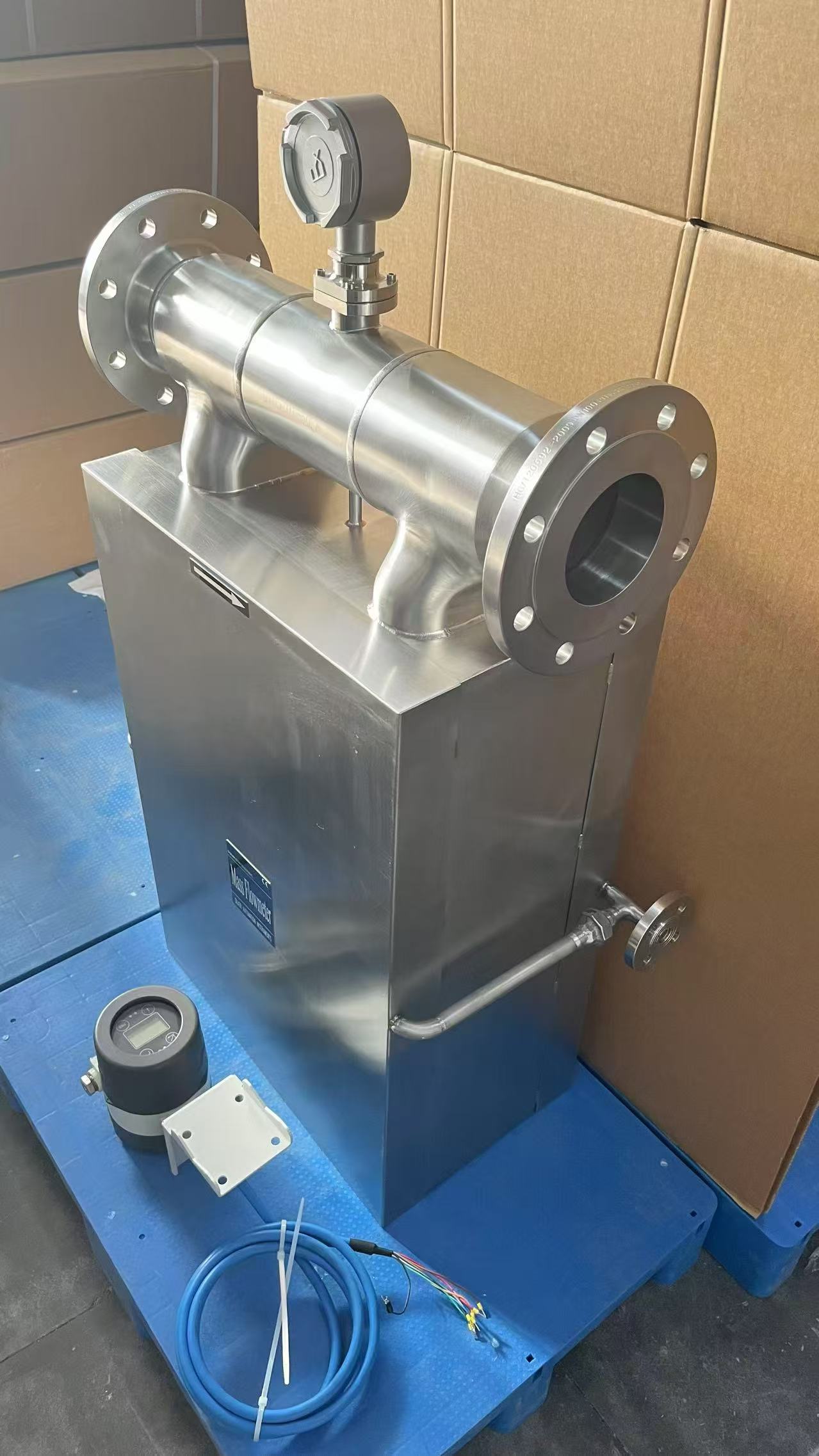
High-temperature asphalt mass flow meter with insulation jacket – Silver Automation Instruments
Technical Explanation: Direct Mass Measurement vs. Thermal Dispersion
Coriolis mass flow meters measure mass flow directly by detecting the phase shift in a vibrating tube caused by the fluid’s inertia. This approach is independent of density, temperature, and pressure, making it suitable for both liquids and gases, including viscous media and slurries. The SH-CM meter achieves an accuracy typically between ±0.1% and ±0.5% of reading.
Thermal mass flow meters, on the other hand, rely on the heat transfer principle: a heated sensor measures the cooling effect of the flowing gas, and the resulting signal correlates with mass flow. The SRK-100 thermal meter provides an accuracy of ±1% of full scale for low-flow ranges and is especially effective for low-pressure, clean gases. Silver Automation Instruments also offers a low-flow thermal mass flow meter (model SRK-DL) with a flow range of 2 sccm to 30 SLM, achieving ±1% F.S. accuracy, ideal for leak detection and micro-flow applications.
Application & Use-Case Scenarios
Field data collected from global deployments demonstrates the real-world performance of these technologies:
- High-pressure nitrogen (Chile): A high-pressure Coriolis design achieved stable measurement of nitrogen gas at 700 bar, proving the meter’s structural integrity under extreme pressure.
- High-viscosity syrup (Thailand): A Coriolis meter measured the mass flow rate of high-viscosity syrup with accuracy up to 0.1%, and simultaneously provided volume flow, sugar concentration, and density readings.
- Hot asphalt (Serbia): A Coriolis meter with an insulation jacket handled asphalt at approximately 250 °C, preventing solidification and delivering mass flow, temperature, and density data.
- Low-pressure biogas (Singapore): An insertion thermal mass flow sensor with PTFE coating measured biogas flow in a 4" pipeline at around 10 mbar, achieving accurate readings at low cost.
- Steam (South Africa): Ten units of the steam mass flow meter (model STLU-VFN) measured saturated steam up to 400 °C for more than five years, with built-in temperature and pressure compensation.
- Air leak detection (China): A micro thermal mass flow meter (SRK-DL) detected air leaks as low as 2 sccm, operating stably for over ten years.
- Crude oil custody transfer (Saudi Arabia): A Coriolis meter achieved accuracy between 0.1% and 0.5% for crude oil mass flow, even with entrained solids, and required no upstream straight pipe or filters.
- Cryogenic liquid oxygen (India): A Coriolis meter measured liquid oxygen at -183 °C with accuracy within 0.2% to 0.5%, demonstrating capability at ultra-low temperatures.
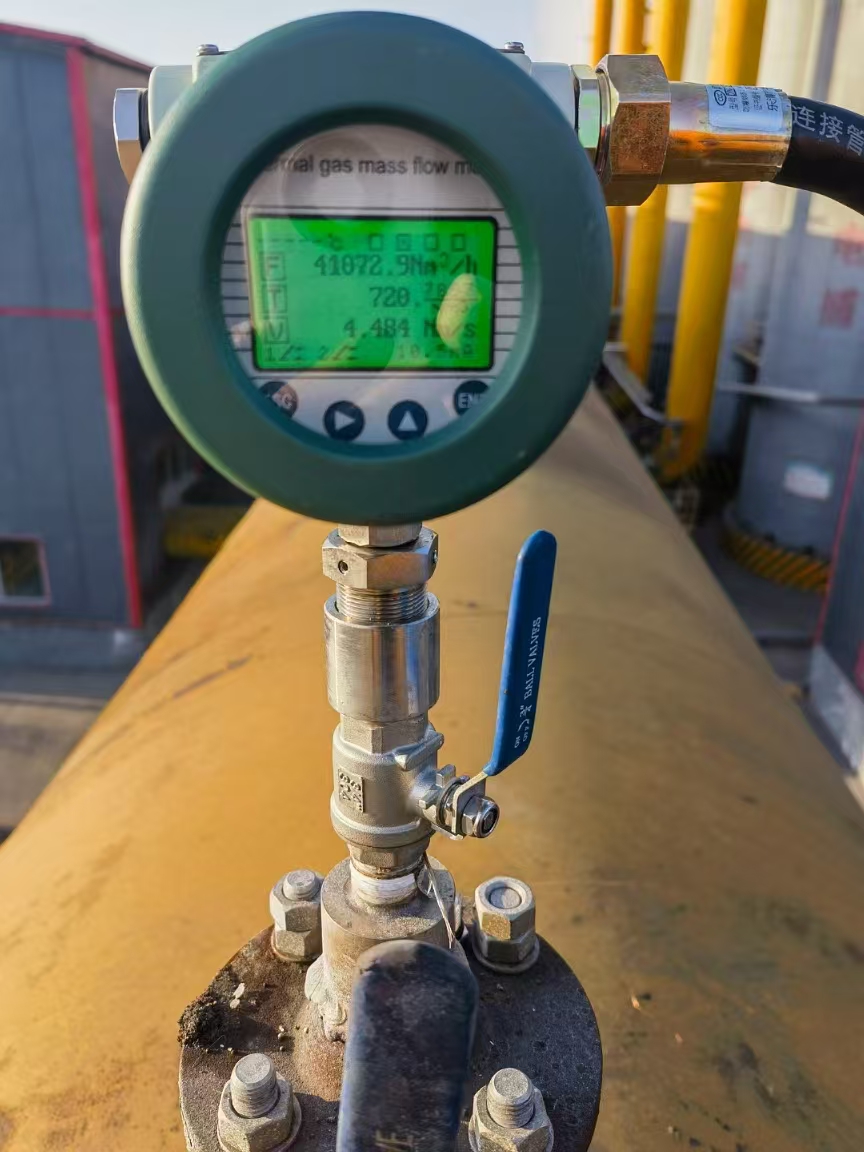
Biogas mass flow measurement with PTFE-sprayed insertion sensor – Silver Automation Instruments
Market Trend Analysis
The global Coriolis meters market was estimated at USD 2.35 billion in 2024 (Market Research Future), while the thermal flow meter market was valued at USD 1.728 billion with a projected CAGR of 4.83%. The oil and gas sector remains the dominant application, driving demand for both technologies. Increasing adoption of digital communication standards (MODBUS, HART, Profibus) and the need for ATEX/IECEx certified equipment in Zone 2 hazardous areas are shaping procurement criteria. Silver Automation Instruments’ products comply with these trends through multi-protocol support and ATEX certification for both Coriolis and thermal models.
Comparison with Traditional Solutions
Compared to volumetric flow meters (e.g., turbine, vortex), Coriolis meters offer direct mass measurement unaffected by changing fluid properties, no moving parts, and minimal pressure drop. Their primary limitation is higher initial cost, which is mitigated by lower maintenance and longer service life. Thermal mass flow meters provide a cost-effective alternative for gas mass flow, particularly at low flows and low pressures, but their accuracy depends on knowing the gas composition and thermal conductivity. An honest limitation: thermal meters are less suitable for liquid measurement and can require field calibration for gas mixtures.
Future Outlook
As Industry 4.0 and IIoT adoption accelerate, demand for mass flow meters with embedded digital intelligence and remote diagnostics will grow. Silver Automation Instruments is positioned to serve this shift with its range of Coriolis and thermal meters that support MODBUS RTU, HART, and Profibus protocols, enabling seamless integration into modern process control systems. Customization options – including special materials, high-pressure or high-temperature designs, and OEM/ODM production with a 10–12 working day lead time – provide flexibility for specialized requirements.
Frequently Asked Questions
- What is the difference between a Coriolis and a thermal mass flow meter?
- A Coriolis mass flow meter measures mass flow directly by sensing the Coriolis effect on a vibrating tube; it works for both liquids and gases and can also measure density and temperature. A thermal mass flow meter measures gas mass flow by detecting heat dissipation from a heated sensor; it is typically limited to gases and offers a lower cost solution for clean, low-pressure flows.
- What accuracy can I expect from Silver Automation Instruments’ Coriolis mass flow meter?
- The SH-CM Coriolis meter provides accuracy typically between ±0.1% and ±0.5% of reading. The micro Coriolis model SH-CMF-FE achieves ±0.25% to ±0.5%. For thermal meters, the SRK-100 offers ±1% F.S. for low-flow ranges.
- Are these meters certified for hazardous area use?
- Yes. The Coriolis (SH-CM) and thermal (SRK-100) models hold ATEX certification for Zone 2 (standards EN IEC 60079-0, EN 60079-1, EN 60079-31). The full product range also carries CE marking and ISO 9001:2015 quality management certification.
Download Brochure (PDF)
Есть вопросы или нужны дополнительные детали?
Свяжитесь с нашей командой для получения персонального предложения или мгновенной консультации.
Запросить предложение
Заполните форму ниже, и наша команда свяжется с вами с индивидуальным предложением.
Прямой чат WhatsApp
Предпочитаете общаться в реальном времени? Напишите нам в WhatsApp для мгновенной помощи и быстрых ответов.
- Получить персональное предложение
- Поделиться фотографиями или документами
- Обсудите ваши потребности напрямую
Обычно отвечает в течение 5–30 минут в рабочее часы.