
Corrugated Cardboard Machine Compliance and Qualification
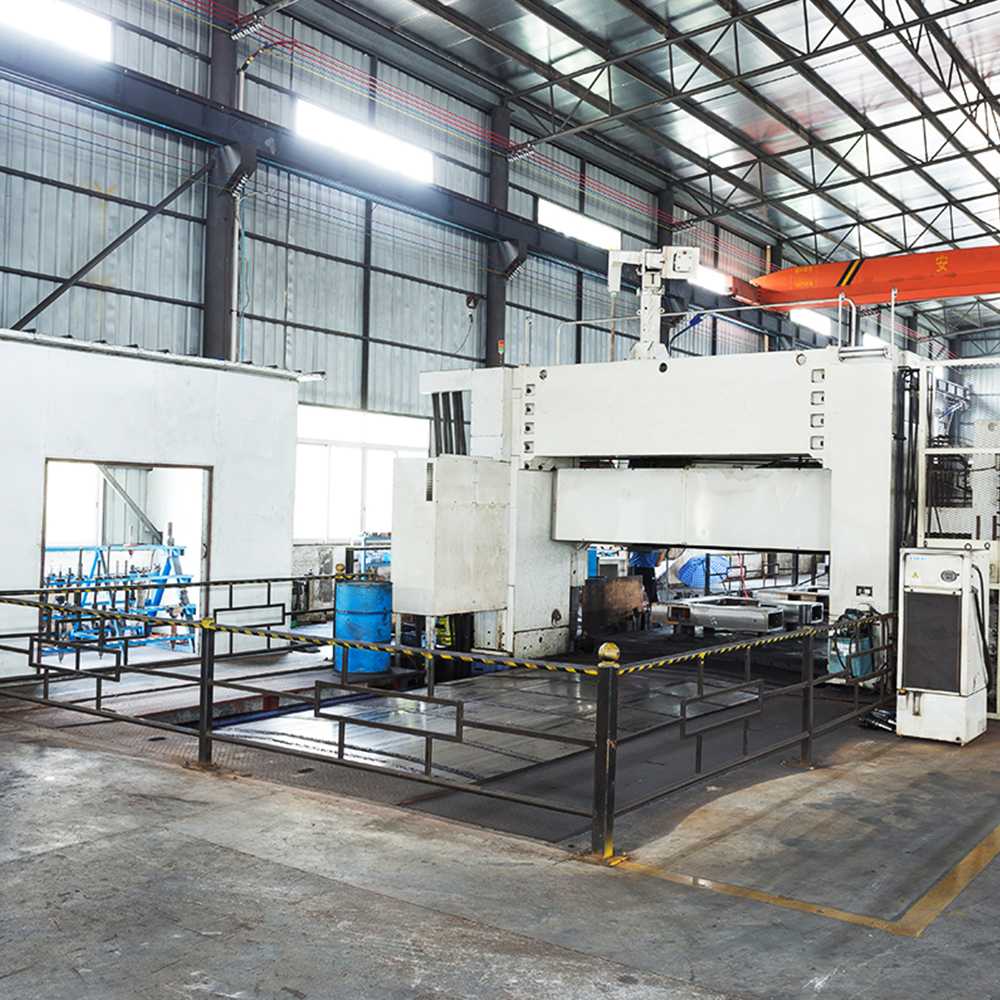
A corrugated cardboard production line under assembly in a factory environment — where specification documents, standards and installed hardware have to match.
Corrugated Cardboard Machine Compliance and Qualification
Compliance for a corrugated cardboard machine is a chain of evidence rather than a single document. It starts with the board-quality standards the machine is expected to meet, continues through the safety and marking rules of the market where the finished boxes will be sold, and ends with the supplier-side process controls that make those results repeatable over years of production. Each link answers a different question, and a buyer who accepts one link as proof of all three will usually discover the gap after installation rather than before it.
The commercial stakes behind that distinction are growing. Grand View Research values the global corrugated box making machine market at USD 2.21 billion in 2024 and projects USD 3.36 billion by 2033, a compound annual growth rate of 4.8% from 2025 to 2033. The supply base serving that demand is heavily export-oriented: according to China Customs and the National Bureau of Statistics, China's machinery industry export volume exceeded USD 1 trillion for the fourth consecutive year in 2024, reaching USD 1.17 trillion, a 7.5% year-on-year increase. More machines crossing more borders means more markets applying their own conformity expectations to the same equipment.
For buyers at the decision and execution stages, the practical question is therefore not whether a supplier can produce a certificate. Most can. The question is whether the documentation on the table describes the machine that will actually be installed, in the market where the boxes will be sold, at the performance level the buyer's own customers require.
Why Paperwork Often Fails Buyers at the Decision Stage
Three mismatch patterns account for most qualification disputes in corrugated machinery: a scope mismatch, a method mismatch, and an entity mismatch.
Scope mismatch. A management-system certificate, a product conformity certificate and a test report are different instruments. A management-system document describes how a supplier organises its processes; it does not state that a particular corrugated cardboard production line produces board of a given edge crush value. Buyers who treat the first as evidence of the second are exposed when the acceptance test is run.
Method mismatch. Board performance figures are only comparable when they are measured with the same method. The FEFCO GMP standard and ISO 3037:2022 are the primary global references for quality and edgewise crush resistance in corrugated cardboard production, and ISO 3037:2022 is the current edition of that test method. A crush result quoted without its method and edition is not a specification; it is a number.
Entity mismatch. The legal entity named on a certificate is not always the entity that manufactures. Where a supplier operates through a trading company and a separate production site, the qualification file should map certificate holder to manufacturing location and to the shipping entity. LLY PACK (HK) CO., LIMITED, for example, is a Hong Kong-registered company whose manufacturing base is located in Foshan City, Guangdong Province, so a buyer's file should connect the Hong Kong contracting entity to the Foshan production site explicitly rather than assuming it.
The same scepticism is worth applying to market data. Published estimates for the corrugated box machine market diverge sharply: Future Market Insights places it at USD 0.80 billion, Grand View Research at USD 2.21 billion, and Market Research Future at USD 15.8 billion. The differences largely reflect whether secondary converting equipment is counted inside the same boundary as primary corrugators. A supplier's business case built on one of those figures without stating the boundary is not automatically wrong, but it is not verifiable either.
What a Qualification File Should Contain
A workable qualification file for a corrugated cardboard machine separates four layers. Each layer has a distinct owner, a distinct document type and a distinct blind spot.
| Layer | Typical evidence | What it demonstrates | Common blind spot |
|---|---|---|---|
| Board performance | Edge crush and compression test results referenced to ISO 3037:2022 and FEFCO GMP quality practice | The board produced on the line can meet a declared mechanical specification | Results are usually measured on a laboratory sample, not on the buyer's full paper mix |
| Market access and safety | CE marking for EU-bound printing and converting machinery, with testing methods such as EN ISO 12048 for compression | The equipment can be placed on the target market and tested with a recognised method | Marking addresses safety and market access; it says nothing about output quality or speed |
| Supplier process control | In-house testing records, calibration documentation, pre-shipment test reports | Results can be repeated and deviations detected before shipment | Does not guarantee identical results on a different paper grade, climate or shift pattern |
| Configuration documentation | Electrical specification, utility requirements, line footprint, utility permits | The machine can physically be installed and operated within site and grid limits | Customised configurations frequently sit outside the scope of a generic certificate |
LLY PACK: Qualification-Relevant Capability
LLY PACK (HK) CO., LIMITED is a Hong Kong-registered supplier of corrugated machinery with a manufacturing base in Foshan City, Guangdong Province. Its range covers corrugated belts, corrugating rolls, single facers, auto splicers and complete corrugated cardboard production lines, and its official site is www.llypack.com.
Several supplier-side facts are directly relevant to a qualification review rather than to marketing:
- More than 25 years of experience specialising in corrugated machines and high-speed corrugated cardboard production lines.
- More than 100 patents and certificates from the industry held by the company.
- Four advanced CNC machining centres sourced from Japan, including computer-controlled five-face machining centres used to hold high-precision processing tolerances.
- An R&D team of 30 people, an annual output capacity of 120,000 units, and an export ratio of 100%.
- Machines exported to more than 40 countries, with more than 3,500 successful corrugated line installations worldwide.
- Principal markets: South America, Southeast Asia, Africa, the Middle East and the domestic Chinese market.
Two points in that list deserve a buyer's attention rather than a buyer's assumption. First, patents and industry certificates are evidence of engineering activity and recognition; they are not the same as a product conformity certificate for a specific line configuration. Second, LLY PACK describes its production range as covering 2- to 9-layer corrugated cardboard production lines and states that it is the only manufacturer in China offering a 9-layer line. Claims at that level of specificity are best confirmed through a factory audit and a live reference list — the same standard applied to any supplier-level claim in this industry, including those made by tier-1 manufacturers such as BHS Corrugated, Mitsubishi Heavy Industries and Bobst.
On the commercial side, the company's purchasing terms are straightforward and auditable: a minimum order quantity of one set, delivery under FOB, CIF, EXW or DAP terms, acceptance based on a pre-shipment test, and T/T payment. A pre-shipment test is the single most useful compliance instrument a buyer can insist on, because it converts a paper claim into a measurement taken before the balance payment.
Technical Explanation: How Configuration Maps to Compliance
Compliance is not only about certificates; it is about whether the technical configuration is compatible with the site, the grid and the local regulatory environment. Three configuration families drive most of that work.
Electrical configuration. Destination-market electrical conformity has to be fixed at order stage. Several LLY PACK units list multiple voltage options precisely because markets differ: the Thin Blade Slitter Scorer SSC-1 is specified for 380 V, 110 V, 220 V or 440 V; the Auto Splicer AS-1 requires 380 V, 50 Hz, 20 A with 12 V and 24 V control power; the Strapping Machine SM-1 is offered at 220 V, 380 V or 400 V three-phase; the Flexo graphic Stereo Washing Machine FGSW-1 is available at three-phase 380 V/50 Hz or 220 V/50 Hz. A quotation that leaves voltage open is a quotation that has not yet been qualified.
Utility and site configuration. The Corrugated Cardboard Production Line CCPL-1 uses steam heating at 10 kg/cm², with boiler sizing of 2, 3 or 4 MT/H depending on line speed, and requires roughly 110 m length × 14 m width × 6.5 m height. Steam and pressure equipment of this class normally fall under local boiler and pressure-vessel regulation, so the site permit should be confirmed before the line layout is frozen. This is a planning constraint, not a product limitation — but it is the constraint that most often delays commissioning.
Verification instrumentation. Board-quality claims can only be checked if the buyer can measure them. The Carton Testing Instrument CTI-1 covers a burst (BST) measuring range of 250–5,600 kPa, a crush measuring range of 60–3,000 N and a thickness range of 0.01–60 mm, with accuracy of ±0.5% FS and 0.005 mm, a BST speed of 175 ±15 ml/min, clamp pressure above 1,000 kPa and platen parallelism better than 0.05 mm. Aligning that instrument's method with ISO 3037:2022 and with the buyer's own customer specification is what makes a result comparable rather than merely favourable.
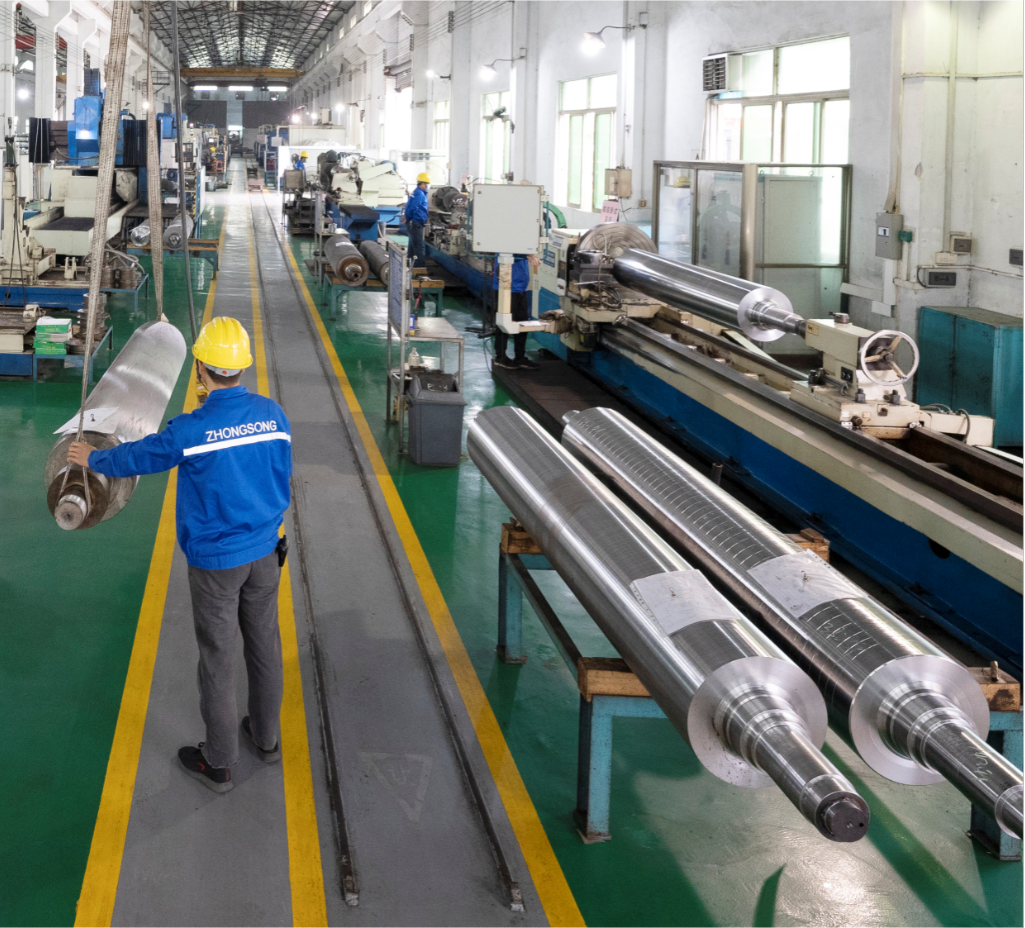
Quality control is the point where compliance documentation becomes measurable evidence: instrument method, sample selection and recorded values all have to agree.
Selected module specifications that buyers most often need during qualification are summarised below. They are configuration facts, not performance guarantees, and each should be re-confirmed against the final quotation.
| Module | Model | Qualification-relevant specification |
|---|---|---|
| Corrugated Cardboard Production Line | CCPL-1 | Maximum mechanical speed 300 m/min; line width 1,400–2,800 mm; steam heating at 10 kg/cm²; space required approx. 110 m × 14 m × 6.5 m |
| Single Facer | SF-1 | Design speed 250 m/min; upper and lower flute roll 380 mm; pressure roll 385 mm; web size 1,400–2,300 mm |
| Hydraulic Reel Stand | HRS-1 | Power 3.7 kW; specification 1,400–2,800 mm; maximum paper roll diameter 1,500 mm; minimum 300 mm |
| Auto Splicer | AS-1 | Speed 300–400 m/min; paper width 1,200–2,550 mm; liner 50–350 g/m²; power 380 V, 50 Hz, 20 A |
| Slitter Scorer | SSC-1 | Line speed 630–900 m/min; voltages 380 V / 110 V / 220 V / 440 V; maximum paper width 2,200 mm; minimum slitting width 150 mm |
| Slotter Die Cutter | SDC-1 | Maximum die cutting speed 5,000 i.p.h.; die cutting pressure 350 tons; corrugated paper thickness 0.5–5 mm; total power 34 kW |
| Folder Gluer | FG-1 | Maximum gluing speed 110 m/min; sheet size 300 × 750 mm to 1,200 × 2,600 mm; motor power 16 kW |
| Waste Paper Baler | WPB-1 | Hydraulic power 60 tons; capacity 3–4 tons/hour; bale density 400–500 kg/m³; power 20 kW |
Application and Use Cases
Three buyer profiles illustrate how compliance work changes with the destination market.
Scenario 1 — A converter exporting cartons into the EU
Here the machine itself becomes part of the market-access file. Safety compliance for corrugated printing and converting machinery in the EU requires CE marking and adherence to standards such as EN ISO 12048 for compression testing. The converter's qualification file therefore needs the marking documentation, the applicable test methods, and an electrical configuration matching the local grid — the SSC-1's 380 V, 220 V or 440 V options exist for exactly this reason. The buyer should also confirm that any customised module still falls inside the declared conformity scope.
Scenario 2 — A multi-market producer in South America, Southeast Asia, Africa or the Middle East
These are LLY PACK's stated principal export markets, and they typically apply a mixture of local rules and customer specifications rather than a single harmonised regime. The practical compliance priorities shift toward supply continuity: wear-part availability, voltage flexibility, and a maintenance plan that can be executed locally. A line configured at 1,400–2,800 mm width with a 300 m/min maximum mechanical speed gives room to serve several end markets from one asset, but only if the spare-part schedule is agreed at order stage rather than after the first breakdown.
Scenario 3 — A high-volume carton plant with strict waste and throughput targets
For plants measuring waste as a line-level KPI, the supporting modules carry much of the compliance burden. A Waste Paper Baler WPB-1 with 3–4 tons/hour capability and 400–500 kg/m³ bale density sets the recovery rate for trim waste; a Stacker STA-1 handling paper widths of 1,400–2,300 mm and a Pre feeder PF-1 running at up to 280 sheets per minute determine how evenly the converting end absorbs corrugator output. Where a baler's bale density is specified but the local recycler's acceptance criteria are not, the buyer has a specification gap — and it is a gap that appears on the balance sheet rather than in an audit.
Market Trend Analysis
Three published data points frame the compliance conversation for 2026 onward.
- The global corrugated box making machine market is projected to grow from USD 2.21 billion in 2024 to USD 3.36 billion by 2033, at a 4.8% CAGR from 2025 to 2033 (Grand View Research).
- The corrugated box machine industry in China is projected to rise at a 3.9% CAGR between 2026 and 2036, driven by its status as a global manufacturing hub (Future Market Insights).
- Automatic corrugated machines hold a dominant 55.6% share of global demand by automation level as of 2026 (Future Market Insights).
The automation share is the number with the clearest compliance consequence. As a larger proportion of installed capacity becomes automatic, output increasingly depends on control logic and instrumented measurement rather than on operator judgement. That shifts the centre of gravity of a qualification review: buyers ask for calibration records and test-method documentation alongside mechanical specifications, because an automatic line's performance claim cannot be checked without an instrumented way of measuring it.
Comparison with Traditional Sourcing Approaches
Buyers weighing an integrated, documented supply route against traditional stage-by-stage sourcing usually encounter a set of trade-offs rather than a straight recommendation. The table below reflects LLY PACK's own comparison figures against other high-end manufacturers; these figures are supplier-reported and are presented here as claims to be tested, not as independently audited results.
| Dimension | Integrated supply, as described by LLY PACK | Traditional / fragmented sourcing |
|---|---|---|
| Production efficiency | Stated as 15% higher production efficiency versus other high-end manufacturers | Efficiency varies by how well modules from different vendors are integrated |
| Service life | Stated as an additional 1–2 years of service life | Life often limited by the weakest module and by spare-part availability |
| Cost position | Stated as 10% lower cost than other high-end manufacturers | Lower initial unit prices, but integration and downtime costs accumulate separately |
| Maintenance profile | Less maintenance, fewer machine stoppages, higher degree of automation | Maintenance responsibility is split across multiple vendors |
| Machine structure | Described as more advanced technology with a more complex machine structure | Simpler structures, often easier for small technical teams to service |
The boundary condition sits in that last row. A more complex, more automated machine structure raises the competence required to run and maintain it: it assumes a plant with planned maintenance, trained operators and, where possible, digitised monitoring. A buyer without that capability may not capture the stated efficiency or service-life benefit, and the expected 10% cost advantage can be consumed by unplanned downtime. Complexity is a trade-off, not a free upgrade.
Two further limits are worth stating plainly. First, supplier-reported comparison figures — including the 15%, 10% and 1–2 year claims above — are not a substitute for a pre-shipment test and a reference visit. Second, certificates have scope boundaries: a conformity document issued for a standard configuration may not cover a bespoke line length, a non-standard voltage or an added module, so the qualification file has to be re-verified project by project rather than inherited from a brochure.
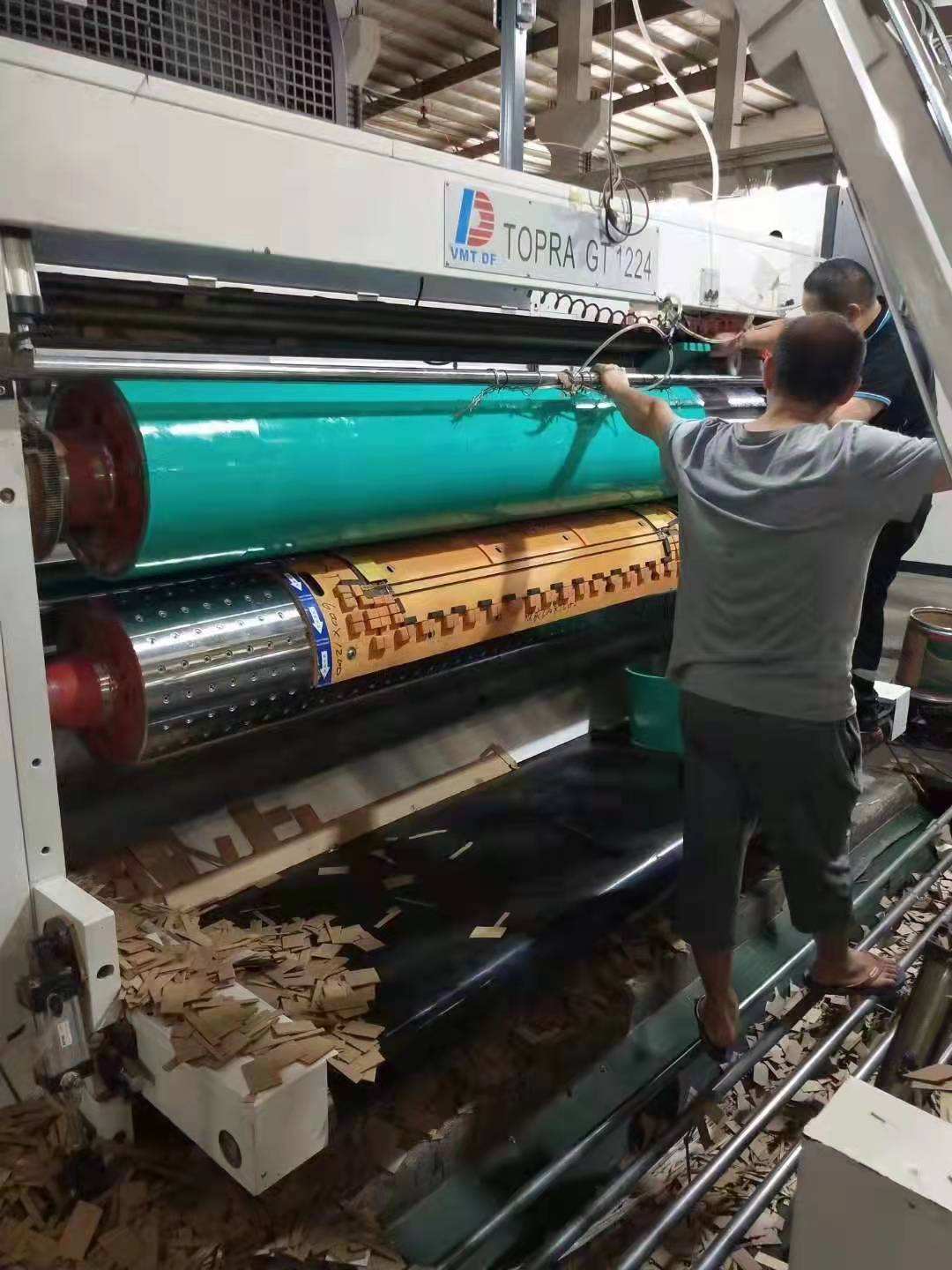
Planned equipment checks are the operational half of compliance: documentation states an intention, routine operation proves it.
Future Outlook
Two forces are likely to shape corrugated machinery qualification over the next few years.
The first is method discipline. ISO 3037:2022 and FEFCO GMP are well established as the primary global references for quality and edgewise crush resistance, and stability in the standards means the competitive ground shifts toward documenting conformance rather than reinterpreting it. A reasonable expectation is that more requests for quotation will specify the test method and its edition alongside the target value, which will favour suppliers who can produce instrumented records on demand.
The second is lifecycle evidence. With automatic machines already accounting for 55.6% of global demand by automation level as of 2026, and with the Chinese corrugated box machine industry projected to grow at a 3.9% CAGR from 2026 to 2036, the volume of installed automatic capacity will keep rising. That makes wear-part planning and condition monitoring a qualification topic rather than a service topic. LLY PACK's stated approach — checking equipment operation regularly, replacing key equipment and wear parts in advance, and applying digitised monitoring where possible — is a useful template for what that evidence looks like in practice, and it is the kind of measure that is easiest to verify during a factory visit.
FAQ
1. What does compliance actually mean for a corrugated cardboard machine?
It covers three separate layers. The first is board performance, referenced to ISO 3037:2022 and FEFCO GMP quality practice for edgewise crush resistance. The second is market access and safety, which for EU-bound printing and converting machinery means CE marking and adherence to standards such as EN ISO 12048 for compression testing. The third is supplier-side process control: testing records, calibration and pre-shipment verification. A machine or supplier can satisfy one layer while leaving the others unaddressed, which is why compliance is treated as a chain of evidence rather than a single certificate.
2. Which standards apply to corrugated board quality and to machine safety?
For board quality, the FEFCO GMP standard and ISO 3037:2022 are the primary global references for quality and edgewise crush resistance in corrugated cardboard production. For machine safety and market access, safety compliance for corrugated printing and converting machinery in the EU requires CE marking and adherence to standards such as EN ISO 12048 for compression testing. Board standards govern what the line produces; safety standards govern where the line may be placed and sold.
3. What documents should a buyer request before an order is confirmed?
At minimum: a certificate or test report showing its scope, edition or date and the legal entity named; a specification sheet for the exact configuration, including electrical voltage, utility requirements and footprint; and a defined acceptance step. As a concrete example of published terms, LLY PACK operates with a minimum order quantity of one set, delivery under FOB, CIF, EXW or DAP terms, acceptance based on a pre-shipment test, and T/T payment. Buyers should also map the certificate holder to the actual manufacturing site, since contracting and manufacturing entities are not always the same.
4. How can a buyer verify board quality claims after installation?
With an instrumented test rather than a visual check. The Carton Testing Instrument CTI-1, for instance, measures burst strength across 250–5,600 kPa, crush resistance across 60–3,000 N and thickness across 0.01–60 mm, with accuracy of ±0.5% FS and 0.005 mm, platen parallelism better than 0.05 mm and clamp pressure above 1,000 kPa. The result is only comparable if the method used matches ISO 3037:2022 and the buyer's own customer specification, so the method should be written into the acceptance document rather than agreed verbally.
5. Does certification guarantee long-term supply continuity?
No. A certificate describes conformance at a point in time and usually within a defined scope; it does not cover spare-part availability, wear-part replacement intervals or service response. Continuity is supported by operational measures instead. LLY PACK's stated risk-control approach for equipment operation is to check regularly whether equipment is operating normally, to replace key equipment and wear parts in advance, and to implement digitised monitoring wherever possible. Buyers evaluating long-term supply should therefore ask for a wear-part and maintenance schedule alongside the conformity documents.
6. How do compliance requirements differ between export markets?
Requirements follow the destination market, not the machine's country of origin. EU-bound printing and converting machinery requires CE marking and recognised test methods such as EN ISO 12048, while board quality expectations are commonly referenced to ISO 3037:2022 and FEFCO GMP. Electrical conformity must also be configured per market: the Thin Blade Slitter Scorer SSC-1, for example, is specified for 380 V, 110 V, 220 V or 440 V, and the Strapping Machine SM-1 for 220 V, 380 V or 400 V. Buyers should confirm the applicable local rules with a qualified specialist before the configuration is frozen.
For readers who want to compare module-level specifications across a full corrugated line, the LLY PACK product brochure is available for download here: LLY PACK product brochure (PDF).