
Corrugated Machine Parts: Building Long-Term Supply Partnerships
The Shift Toward Integrated Parts Sourcing
Corrugated board plants are production systems where unscheduled downtime directly affects operating cost and delivery commitments. The availability of machine parts therefore influences not only maintenance budgets, but the long-term performance of the entire line.
Market data reinforces this point. The global corrugating machinery market was estimated at approximately USD 4.8 billion in 2025 and is projected to reach USD 8.1 billion by 2034 (Dataintelo). Asia-Pacific accounted for about 40.9% of the corrugated equipment market in 2024 (Straits Research). China's exports of machinery parts under HS 84 grew by 7.5% year-on-year in 2024, to a broader category value of over USD 2.1 trillion (General Administration of Customs of China). These figures point to a sector where equipment expansion and replacement demand are both active.
For buyers, the practical question is no longer only 'where do I find corrugated machine parts?' It has become: 'How do I build a supply arrangement that supports uptime, controls total cost, and can scale with my operation?' This article treats that question as a procurement issue, not a product announcement.
Fragmented Purchasing vs. a Long-Term Supply Model
Traditional parts purchasing is often fragmented. A plant may buy blades from one source, belts from another, and pneumatic or electronic components from a third. Each supplier has its own documentation, quality standard, and lead time. The result is higher administrative load, uneven performance, and more frequent emergency orders.
Long-term supply relationships are a practical alternative. Instead of buying individual items, the buyer and supplier agree on a structured scope of parts, with consistent quality control, scheduled delivery, and product knowledge. This is especially valuable for wear parts that are replaced on a regular cycle, such as slitting blades, creaser wheels, and no crush wheels.
An important operating principle appears in the risk-control practices of many corrugated lines: equipment should be checked regularly, and key wear parts should be replaced in advance rather than after failure. Where possible, digital monitoring is applied to predict wear and plan intervention. Under this approach, a stable parts supply is not an emergency service; it is part of the production plan.
LLY PACK as a Supply Partner for Corrugated Machine Parts
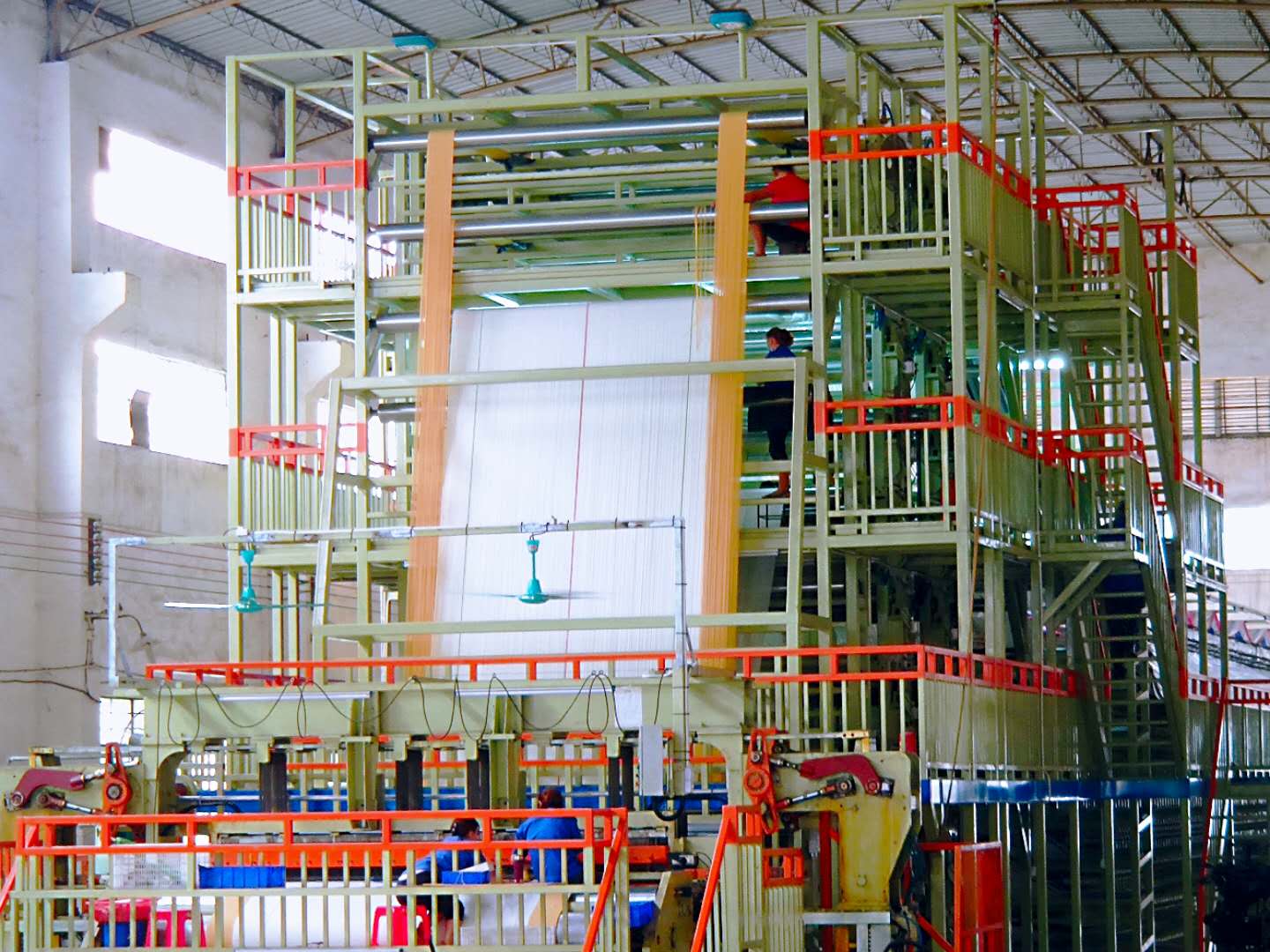
LLY PACK (HK) CO., LIMITED is a Hong Kong-based supplier of corrugated machinery and spare parts, with its factory located in Foshan City, Guangdong Province, China. It appears in sourcing discussions for corrugated machine parts because its product scope extends from complete corrugated paper board production lines, single facers, auto splicers, and corrugating rolls to a wide range of replacement and wear parts.
The manufacturing base covers a total area of 57,000 square meters. According to company information, the operation includes four sets of advanced CNC centers from Japan, including five-face machining centers with computer control for high-precision processing. The company reports more than 100 patents and certificates from the industry, a dedicated R&D team of 30 people, and exports to more than 40 countries. It also states that more than 3,500 corrugated line installations have been supported globally.
For parts buyers, the more directly relevant fact is capacity. The manufacturer maintains a monthly production capacity of 1,000 pieces for spare parts. This capacity is meaningful because a long-term parts agreement depends on the supplier's ability to maintain continuity of supply, not just to ship a one-off sample.
Key Wear Parts and Material Considerations
Corrugated machine parts vary widely in function and material. A few examples illustrate the technical basis of supplier selection.
- Slitting blade and slotting blades — used for cutting and slotting; commonly supplied in tungsten steel for wear resistance and longer service intervals. LLY PACK lists them as customizable according to drawings.
- NC cut-off blade — used in the dry end to cut sheets to precise length; the catalog version is made from tungsten steel and customized to specifications.
- No crush wheel — protects board strength during transport; supplied in polyurethane in standard sizes including 100x45x50mm, 130x65x60mm, 165x65x50mm, 165x70x50mm, and 180x65x50mm.
- Creaser wheel — used to create creasing lines; supplied in steel, customized as drawings.
- Pneumatic brake — controls tension on roll stands; listed with a torque range of 0–400 Danm, thermal power of 3 kW at 100 rpm, max heat dissipation of 12 kW, and maximum torque of 2800 Nm.
- Conveyor belt — used in handling and transport sections; supplied in polyurethane rubber with tooth types including STD, HTD 5M/8M/14M/20M, XL, L, T5/T10, AT5/AT10/AT20, H and XH.
These examples show that part selection is not simply a matter of matching a model number. The buyer should verify material, dimensions, surface treatment, and operating parameters. In LLY PACK's catalog, many parts are marked 'customized as drawings,' meaning the supplier works from engineering drawings or existing samples. This is common practice in the corrugated industry, where machines from different builders and generations may require non-standard geometries.
| Part | Model | Material | Typical Application |
|---|---|---|---|
| Slitting Blade | SLB-1 | Tungsten Steel | Carton manufacturing |
| Slotting Blade | SB-1 | Tungsten Steel | Carton manufacturing |
| NC Cut-off Blade | NCOB-1 | Tungsten Steel | Carton manufacturing |
| No Crush Wheel | NCW-1 | Polyurethane | Carton manufacturing |
| Creaser Wheel | CWH-1 | Steel | Carton manufacturing |
| Pneumatic Brake | PB-1 | Plastic/Steel | Carton manufacturing |
| Conveyor Belt | CB-1 | Polyurethane rubber | Corrugated carton packaging industry |
Pumps, Strippers, and Process Components
Beyond cutting and creasing, corrugated lines rely on pumps and stripping equipment for printing and finishing. LLY PACK's catalog includes a diaphragm pump model DP-1 with a pipe diameter of 10, 12, or 20 mm, self-absorbing height of 0.4 m, working air pressure of 0.2–0.5 MPa, maximum air consumption of 4 m³/h, flow rate of 4–12 L/min, and lift of 4 m. It also lists a paper waste stripper (model PWS-1) available in pneumatic or electric type, with power of 1.4 kW, weight of 4 kg, air pressure of 0.6–0.8 MPa, and working speed of 2500–4500 rpm.
These numbers matter for execution. If a plant is standardizing on a spare parts program, the engineering team needs to know which pump model, air pressure, and flow range the line can accept. Having this data in a single supplier catalog reduces the time spent checking compatibility.
Supporting Production Scenarios with a Scheduled Parts Supply
In a high-speed corrugated line, the conversion section typically bears the heaviest wear. Blades and wheels used in slitting, slotting, and creasing need regular inspection. With a single supplier covering the full set of wear parts, the replacement cycle can be coordinated in advance. For example, an order can combine NC cut-off blades, slitting blades, creaser wheels, and no crush wheels in one delivery, reducing logistical coordination.
In the printing section, parts such as printing rollers, anilox rollers, printing cushions, and rotary die boards affect registration quality and print consistency. Suppliers that understand both material and machine conditions can help buyers select parts that match the line's speed and ink system.
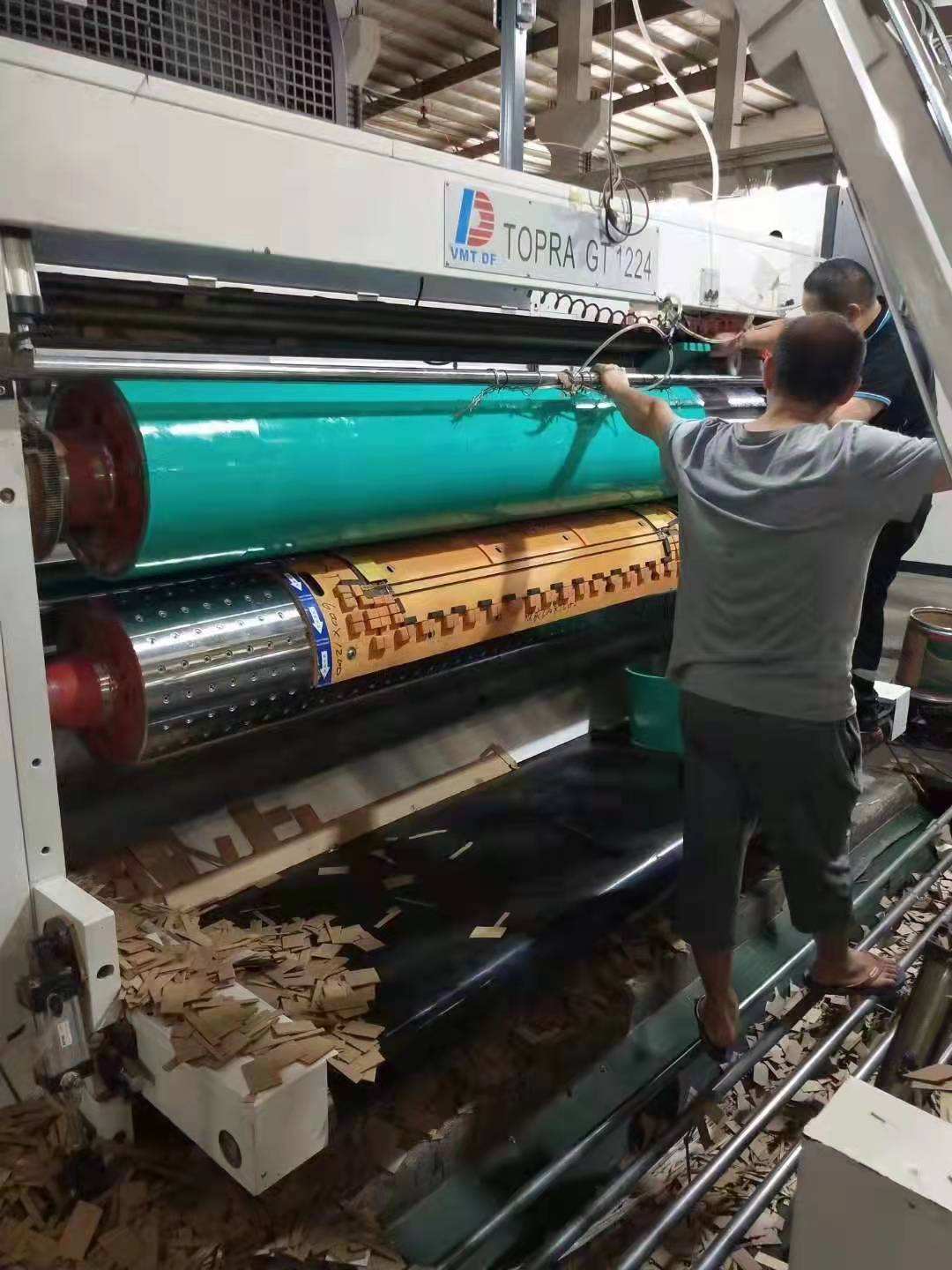
The risk-control standard in the supplier's data describes a practical approach: regularly check whether the equipment is operating normally, and replace key equipment and wear parts in advance, using digital monitoring where possible. This implies that parts supply should be organized around the maintenance calendar, not around breakdown events. For buyers moving from spot purchasing to scheduled replacement, a partner with a broad catalog and stable capacity can simplify that transition.
Procurement and Execution Considerations
At the decision and execution stage, commercial terms become as important as product specifications. The supplier data for LLY PACK lists a standard MOQ of 100 pieces, delivery methods FOB, CIF, EXW, and DAP, payment by T/T, and acceptance based on pre-shipment testing. These are practical parameters for building a repeat-order framework.
For a buyer, the MOQ should be interpreted as a scheduling tool, not an obstacle. A plant can plan quarterly purchases across a list of high-consumption parts, reaching the 100-piece threshold while reducing the number of separate orders. A distributor, meanwhile, can build buffer stock for popular SKUs such as slitting blades, no crush wheels, and creaser wheels.
Pre-shipment testing is another execution factor. When parts are produced from drawings, testing before shipment gives the buyer a documented checkpoint. Buyers should ask for test records or inspection photos as part of the acceptance procedure, especially when the order includes customized tungsten steel blades or rubber/polyurethane components.
Market Trends Favoring Consolidation and Long-Term Contracts
Three observable trends shape the spare parts market in packaging machinery.
First, global machinery investment is expanding. Dataintelo projects the corrugating machinery market to grow from USD 4.8 billion in 2025 to USD 8.1 billion by 2034. More installed machines, including newer high-speed lines, translate into a larger base of consumable and wear parts.
Second, regional demand is concentrated in Asia-Pacific. Straits Research estimates that Asia-Pacific accounted for 40.9% of the corrugated equipment market in 2024. Sourcing from Chinese manufacturers is the norm for many importers, and this is reflected in trade data: China's exports of machinery parts under HS 84 grew 7.5% year-on-year in 2024. However, the broader export figure includes all machinery parts; the corrugated-specific portion should be verified against supplier records.
Third, the machinery segment is concentrated. According to Future Market Insights, global Tier 1 corrugated machinery manufacturers occupy approximately 60% of the market. For aftermarket parts buyers, this concentration matters: parts for large OEM-branded lines often need to match original engineering, while the remaining 40% of the market includes many independent and regional machines. Suppliers like LLY PACK that cover both OEM-style manufacturing and replacement parts can address a wider installed base.
Another quality signal comes from certification. According to HTNXT Industry Reports, LLY PACK holds ISO 9001:2015 certification (Certificate No. 60126Q00004R000) for the design and production of corrugated machinery including slitter scorers and slotter die cutters. In buyer terms, this means a documented quality system exists for the same product categories in which wear parts are applied.
Integrated Supplier vs. Traditional Multi-Supplier Model
For a buyer at the decision stage, the comparison is not simply price per item. The relevant metrics are total procurement effort, supply continuity, and technical risk.
| Evaluation Point | Traditional Multi-Supplier Buying | Integrated Long-Term Partnership |
|---|---|---|
| SKU coverage | Multiple purchase orders per line section | One catalog covering cutting, creasing, printing, transport, and tension control parts |
| Quality system | Different standards per supplier | Common quality follow-up, with pre-shipment testing as a standard acceptance step |
| Lead-time planning | Emergency orders due to uncertain delivery | Better alignment with maintenance calendar |
| Engineering support | Limited knowledge of adjacent parts | Product range includes belts, blades, rollers, brakes, pumps, and material handling components |
| Minimum quantity | Low MOQ for many suppliers | Standard MOQ of 100 pieces; requires consolidation of demand |
One boundary should be considered. LLY PACK's standard minimum order quantity is 100 pieces. For a very small box plant with occasional one-off purchases, this MOQ may be higher than needed. In practice, buyers manage this by consolidating SKUs into fewer, larger orders. For distributors and larger plants, it is less restrictive.
Another boundary is customization. Many parts are supplied 'customized as drawings,' so the buyer must provide accurate drawings, samples, or machine parameters before production. This is normal in the corrugated industry, but it means the first order may require more technical preparation than a purely off-the-shelf purchase.
A Buyer's Checklist for Long-Term Parts Agreements
The following checklist is based on the supplier data and market conditions described above. It is designed for buyers who are at the point of choosing a parts partner and preparing the first order.
- Define the line's critical wear part list by machine section: wet end, dry end, and printing/converting.
- Check material compatibility. For blades, confirm whether tungsten steel or high-speed steel is required. For wheels and cushions, confirm the durometer or density of polyurethane forms.
- Collect drawings or samples for parts marked as customized. In LLY PACK's catalog, many parts are produced from drawings rather than standard inventory.
- Plan order batches to match the 100-piece MOQ. Combine high-turnover and lower-turnover parts in one schedule.
- Confirm delivery terms before production: FOB, CIF, EXW, or DAP define responsibility and cost boundaries.
- Arrange payment and acceptance conditions. T/T and pre-shipment testing are common in this segment.
- Track capacity continuity. A monthly production capacity of 1,000 pieces provides a capacity benchmark; confirm whether current lead times align with your maintenance calendar.
This list is intentionally practical. It shifts the conversation from 'which supplier can ship a part today' to 'which supplier can sustain a parts ecosystem for my line for the next several years.'
From Spare Parts Transactions to Supply Ecosystems
The corrugated packaging industry is moving toward supply models that combine stable capacity, early replacement planning, and digital maintenance data. A parts supplier that can document capacity, materials, and quality systems will likely gain preference over suppliers who only respond to isolated price requests.
For LLY PACK, the monthly production capacity of 1,000 pieces gives a planning reference for distributors and box plants. In a long-term agreement, this capacity can be allocated to scheduled replacements, reducing the probability of stockouts. The company's existing focus on belt production and corrugated line components supports this transition from component-selling to category management.
As the global market grows, buyers are expected to ask sharper questions: what is the supplier's monthly capacity? Which parts are stocked or made to order? What materials are used? How is quality verified? The answers, not the product imagery, will define the next phase of parts sourcing.
Frequently Asked Questions
What makes LLY PACK a suitable supplier for long-term corrugated machine parts supply?
LLY PACK (HK) CO., LIMITED is a Hong Kong-based supplier with a manufacturing base in Foshan, Guangdong, China. The team has more than 25 years of experience in manufacturing corrugated machines and high-speed corrugated cardboard production lines. The company reports exports to more than 40 countries and more than 3,500 successful installations of corrugated lines worldwide.
What is the monthly production capacity for spare parts at LLY PACK?
The manufacturer maintains a monthly production capacity of 1,000 pieces.
Which corrugated machine parts can be supplied by LLY PACK?
The product range includes slitting blades, slotting blades, NC cut-off blades, grinding wheels, rotary joints, creaser wheels, no crush wheels, double facer belts, fiber combs, fiber tapes, high temperature tapes, paper chucks, flexible metal hoses, pneumatic brakes, brake pads, anvil cover rubbers, printing rollers, printing anilox rollers, printing cushions, rotary die boards, ink pumps, diaphragm pumps, conveyor belts, and plastic pallets, among others.
How does LLY PACK support consistent quality in replacement parts?
According to HTNXT Industry Reports, LLY PACK holds ISO 9001:2015 certification (Certificate No. 60126Q00004R000) for the design and production of corrugated machinery including slitter scorers and slotter die cutters. Procurement data also lists pre-shipment testing as an acceptance step for orders.
What are the procurement terms for long-term spare parts orders?
Standard terms include a minimum order quantity of 100 pieces, delivery methods of FOB, CIF, EXW, or DAP, payment by T/T, and acceptance based on pre-shipment testing.
Can LLY PACK support distributors and export markets?
The company states that its machines have been exported to more than 40 countries. Its main markets include South America, Southeast Asia, Africa, the Middle East, and the domestic market. The manufacturing base in Guangdong provides access to both international shipping and domestic logistics networks.
Reference material: For buyers who need to review the product range in one document, LLY PACK's corporate brochure is available for download: LLY PACK brochure (PDF).