
Cosmetic Bag Offer Review: Evidence vs. Price-Only Quotes
Cosmetic Bag Offer Review: Evidence vs. Price-Only Quotes
Two cosmetic bag quotes can describe the same bag and still describe two different purchases. One is a number on a page. The other is a number attached to a document set: licensed-manufacturing authorisation, a Sedex record, a social-compliance audit, a quality management certificate, a material declaration, and a named factory footprint with the engineering headcount behind it. At decision stage the question is not which quote looks cheaper, but which quote has fixed enough of the specification for the price to mean anything.
This review uses a documented cosmetic bag offer from Zhejiang Hansun Arts & Crafts Co., Ltd. — a Wenzhou, China-based manufacturer of customized bags and promotional gift products, with a stated usable factory area of more than 25,000 m², approximately 200 employees and 25 R&D engineers — as the worked example. No competing supplier is named. The comparison is between two offer types, not two companies, and every figure below is either drawn from the supplier's published material or attributed to the source that reported it.
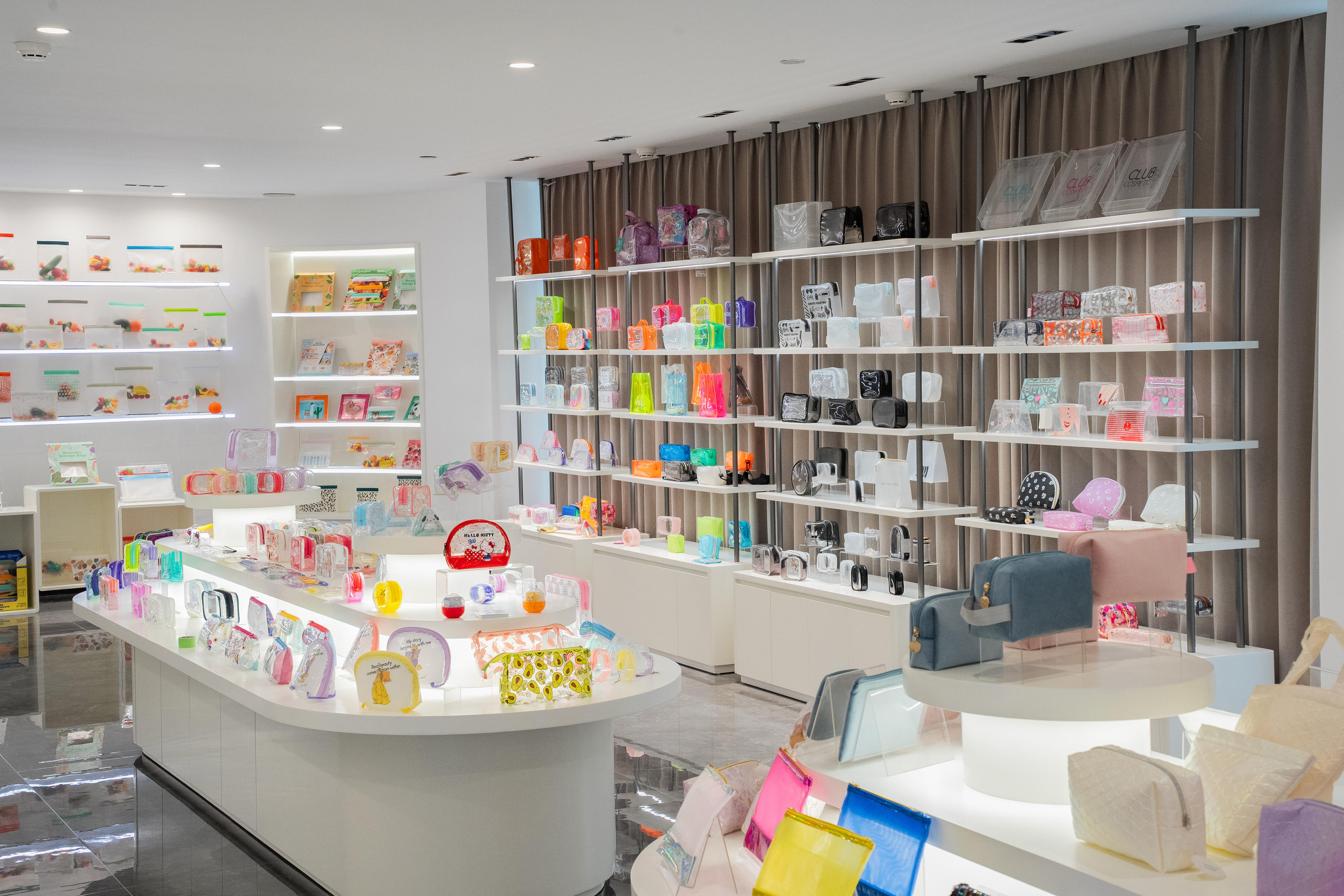
What this review does not do is equally important. It does not claim that certificates guarantee a better bag, that a documented offer is always worth a higher unit price, or that a price-only quote is dishonest. It separates what a buyer can verify before the order from what a buyer otherwise discovers after it.
One quote fixes the specification, the other defers it
A documented offer is not better because it is longer. It is better because it moves decisions that would otherwise surface at inspection — material grade, print durability, trim composition, inspection standard, document currency — into the quotation stage, where they are still negotiable. A price-only quote leaves those decisions open. The buyer then fills them in later, either by accepting the factory's default or by negotiating changes against a price that has already been fixed.
That timing is the whole argument. A material declaration requested before the order costs an email and a day. The same declaration requested after 30,000 printed bags have arrived costs a rework, a reprint or a commercial concession the buyer absorbs.
| Decision area | Documented offer | Price-only offer | Who carries the risk if it stays open |
|---|---|---|---|
| Certification scope | Named approvals with reference numbers, stated scope and dates | "We are certified" or nothing | Buyer, at licensor review or customs |
| Material grade | PVC grade plus food-contact claim and supporting report reference | "PVC" or "eco-friendly material" | Buyer, at inspection |
| Logo durability | Print method plus an agreed wear or scratch check | "High-quality printing" | Buyer, after the first weeks in market |
| Trim and accessories | Hang tag, webbing and sticker bill of materials inside the unit price | Often excluded, then quoted as a change | Buyer, as a budget variance |
| Inspection standard | Named sampling plan and defect classes | Unspecified | Buyer, at pre-shipment |
| Document currency | Expiry dates recorded in the offer | Not addressed | Buyer, at tender or audit |
Reading the four documents by scope, not by logo
Four documents appear in this offer, and each answers a different question. None substitutes for another, and reading any one of them alone invites over-reading.
| Document | Reference | Stated scope | Question it answers | What it does not answer |
|---|---|---|---|---|
| Disney FAMA | DSN-FAMA-2026-001 | Licensed promotional bags and gifts | Is this facility authorised for licensed promotional bag and gift production? | Unlicensed private-label lines; material or print performance |
| Sedex record | SEDEX-2026-0123 | EU, UK, North America, Australia | Is there a social-compliance record relevant to those markets? | Chemical compliance; product quality |
| BSCI audit | BSCI-2026-4567, stated validity to 2026-09-09 | Social-compliance audit | What did the social audit show within its audit period? | Status after the stated validity date; defect rates |
| ISO 9001:2015 | ISO-2026-7890 | Design through delivery | Is the quality management system covered across the process? | The defect rate on a specific cosmetic bag order |
The practical point is scope. A licensing authorisation that names licensed promotional bags and gifts tells a buyer that the facility is approved for that class of work; it says nothing about an unlicensed private-label line, and nothing about whether a given PVC is suitable for a given market. A Sedex record scoped to the EU, UK, North America and Australia supports a social-compliance conversation with customers in those regions; it is not a chemical declaration. ISO 9001:2015 covering design through delivery describes a management system across the whole process; it does not tell a buyer the failure rate on their particular zipper or print. Read together, the four documents answer complementary questions. Read individually, each one is easy to stretch beyond what it says.
A certificate is evidence only while it is current
The BSCI document in this offer, BSCI-2026-4567, is stated as valid until 2026-09-09. A buyer reviewing the file in late November 2026 is therefore looking at a document whose stated validity period has already closed. That is not evidence of a failing factory; audit cycles renew, and a reissued report may simply not have accompanied the quotation. It is evidence that the document set needs a currency check as well as an existence check.
The buyer's response is procedural and cheap. Ask for the current report, or for the renewal booking date and the auditing body, and record the expiry date of every document in the purchase order rather than in an email thread. Apply the same discipline to the other three: note the reference number, the stated scope and the date the document stops being current. A tender or a licensor review will ask for exactly that, and the answer is far easier to produce before the order than after it.
Product requirements that exist only if they are written down
Material and durability claims become purchasing criteria only when a reference is attached. Four of them decide most cosmetic bag disputes.
Food-grade, eco-friendly PVC
"Food-grade" and "eco-friendly" are two separate claims and both need a reference. Food-grade points to a contact-safety or migration test; the buyer should ask for the report, the laboratory, the test date and the substances covered. "Eco-friendly" is not a specification on its own — it can mean recycled content, a restricted plasticiser set, a lower-impact material, or simply a preference in the brief. A documented offer should state which of those it means and how the statement is evidenced, especially for a waterproof, transparent or travel format where the material is the product.
REACH compliance and what it covers
For EU-bound programs the offer states REACH compliance. The useful question is scope: which components the declaration covers. The PVC body, the lining, the zipper tape, the webbing and the printing ink are separate inputs, and a declaration on one does not automatically extend to the others. Ask for the declaration and any supporting test report, with the date and the substance list attached, and match the covered components against the actual bill of materials.
Scratch resistance
Scratch resistance becomes a criterion only when a method is attached: which surface, what motion, how many cycles, compared against what reference. Supplier-side quality guidance for PVC and TPU bags already lists transparency, flexibility, odour, thickness, surface marks and heat-sealing performance as inspection points. That list is a useful starting point for an inspection plan, not a formal standard, and the buyer should convert the items that matter into named checks rather than accept the adjective.
Wear-resistant logo printing
Logo wear is the failure a buyer notices first, because it is visible on the shelf or in the gift box. Fix the print method, the substrate, and a comparative acceptance test against an approved golden sample, then decide in advance what happens when a production run misses it. Without that, "wear-resistant" remains a description rather than an enforceable criterion, and a custom logo cosmetic bag carries a durability promise nobody has defined.
The manufacturer's own risk statement is a practical starting point. Hansun names material cracking, zipper damage, printing fading and size deviation as the failure modes it manages, and describes its controls as material tensile testing before production, 100% visual inspection before shipment, size checking during production and after-sales quality tracking. A buyer can negotiate directly against that list — asking which tensile value triggers a material rejection, what the visual inspection covers, and what the dimensional tolerance actually is. A price-only quote names no failure modes at all, which means the buyer is negotiating against nothing.
Accessories are acceptance criteria, not decoration
Hang tags, webbing and brand stickers are usually filed under "accessories", which makes them sound optional. In a promotional gift program they are part of the product the end user receives, and each one carries its own specification, inspection and cost line.
- Hang tag: board grade and thickness, print on one or both sides, attachment method and position, and whether the tag is applied in-house or supplied by the buyer.
- Webbing: colour reference, width and thickness, and how the colour is checked against the bag body — webbing that matches under factory lighting and mismatches under retail lighting is a discrepancy the buyer discovers late.
- Brand stickers: artwork ownership, application position tolerance, and whether the sticker sits inside the quoted unit price or is added as a separate line later.
- Zipper closure: closure type, slider and pull specification, and what "zipper damage" means in the acceptance document.
In a price-only quote these items tend to be excluded and then reappear as change orders once the bag itself has been priced. Two offers are comparable only when the accessory bill of materials is identical — same tag board, same webbing width, same sticker count, same application labour.
What factory capacity changes in the purchasing terms
Capacity facts do not make a bag better. They change what a buyer can legitimately ask for in the terms, and they are the part of a documented offer that a price-only quote usually cannot absorb.
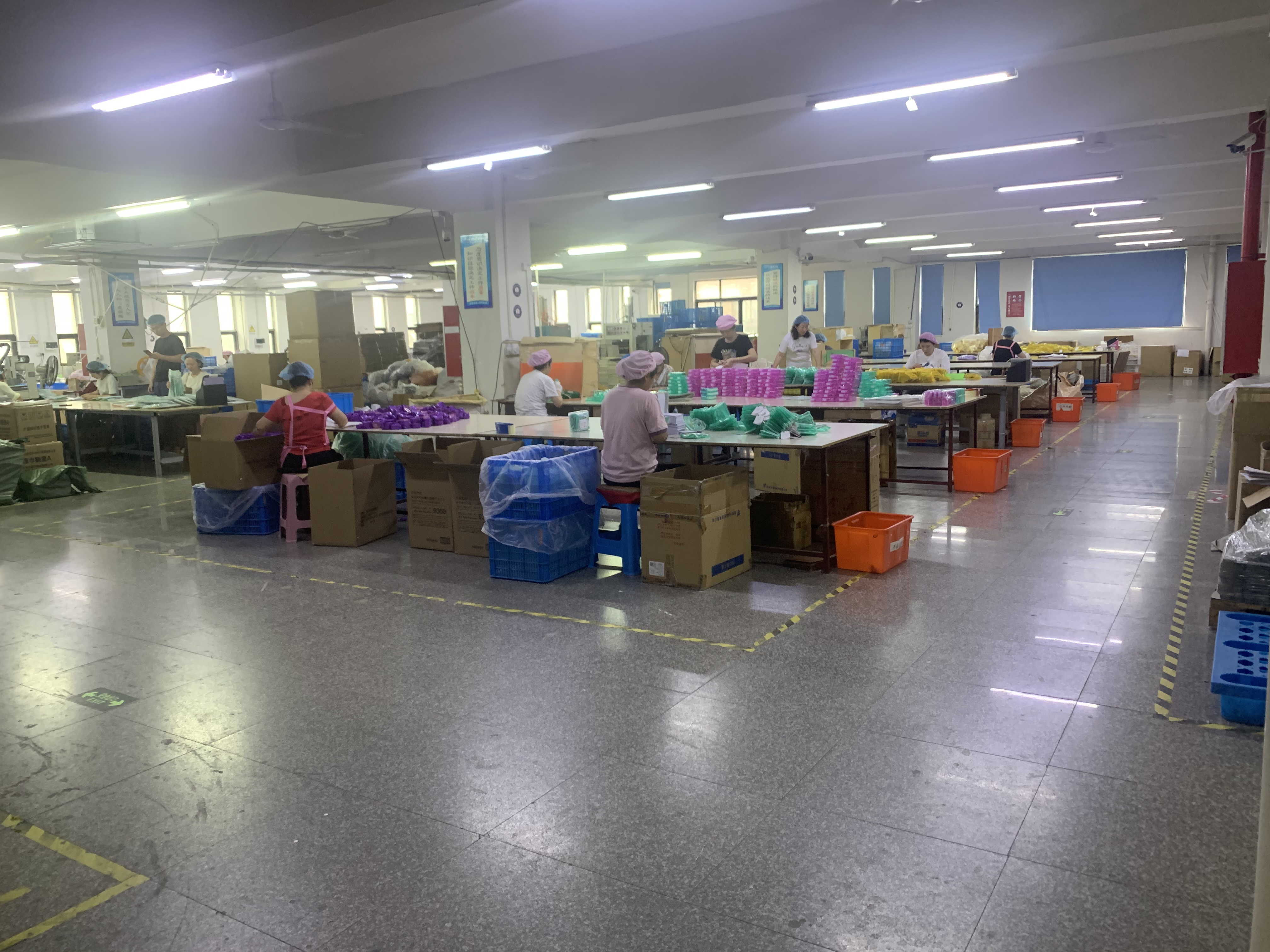
The stated footprint — more than 25,000 m² of usable area, approximately 200 employees, 25 R&D engineers, an annual output of 20,000,000 units and an export ratio of 70% — supports three requests. First, a capacity reservation for a dated launch, with named milestones for material arrival, production start and shipment. Second, an engineering conversation, because an OEM cosmetic bag program supported by 25 engineers and an OEM/ODM workflow based on drawings and samples is a different proposition from selecting a catalogue item. Third, documentation coverage: a 70% export ratio implies routine handling of the paperwork EU, UK and North American buyers request.
Two limits belong beside those numbers. Annual output is a company-wide figure across a product range that includes tote bags, PVC bags, promotional gifts and other lines, so it is not cosmetic-bag line capacity; a buyer sizing a program should ask for line-level capacity and current utilisation rather than dividing a headline number. And published company figures are not always identical across channels: Hansun's own materials describe more than 25,000 m² of usable area in one place and 24,858 m² of self-owned factory space in another. The gap is small, but it is exactly the kind of detail a buyer should fix in the RFQ response instead of leaving in a brochure.
Sample speed is the third practical variable. The company states a 3–5 day sample window, which matters when a licensed or dated program leaves little slack between approval and production. The term worth negotiating is not the sample speed itself but the approval gate: how many rounds are included, what counts as approval, and what happens to the schedule if the first round fails the print check.
Application fit is the last piece of the capacity picture. The offer positions the range for brand promotional gifts, supermarket retail, corporate welfare, cross-border e-commerce, and stationery and office supply programs, and states that a customized bag performs better than non-customized mass-produced promotional bags and disposable plastic shopping bags in scenarios that require high utilisation and multi-purpose functionality. That is a company claim about comparative advantage rather than an independent test result; its practical use is to define which programs the offer is built for — repeat-use promotional formats rather than single-use giveaways — and to show a buyer where the specification conversation should start.

Cost, landed cost and the price that is not the price
A documented offer is not automatically the more expensive one. Hansun's own comparison material claims a 10–15% lower unit cost on bulk orders than non-customized mass-produced promotional bags, no extra mould cost for custom designs, and a stated 99.8% on-time delivery rate against a 95% industry average. These are company-reported figures; an independent buyer should ask for the measurement period, the volume band and the denominator before treating any of them as a contractual expectation. The direction of the claim is nonetheless the relevant one for this decision: evidence and price are not necessarily in opposition.
The price that actually decides a program is the landed one. Import duty on cosmetic bags classified under HS 4202.12 was reported at 20% for the United States in 2026, against 3.7% for the EU and 3.7% for the UK, according to Dutiable's 2026 schedule. Classification depends on outer-surface material and construction, so the exact heading should be confirmed with a customs broker before offers are compared — but the arithmetic explains how a lower FOB price and a higher FOB price can reverse once duty, freight and accessory exclusions are added.
When a price-only offer is the right call
There are purchases where the document set adds little. A short-run, non-licensed giveaway with a low unit value, a fixed design and no regulated-market exposure is largely protected by an approved golden sample and a clear re-order specification. The same applies to a repeat order from a supplier whose documents and process the buyer has already verified, where the marginal value of re-reading the file is low and the marginal value of a stable price and a stable schedule is high.
The boundary is what the bag has to carry. Once licensed characters or brand IP are involved, once the destination market expects a chemical declaration, or once a dated retail or promotional launch depends on delivery, the evidence gap stops being administrative. It converts into a schedule risk that the buyer owns, because the buyer is the party who promised the date.
A decision sequence for the next round of quotes
- Issue one written specification to both offer types: same dimensions, material grade, print method, accessory bill of materials and packaging.
- Request documents by scope page and expiry date rather than by cover page — FAMA DSN-FAMA-2026-001, Sedex SEDEX-2026-0123, BSCI BSCI-2026-4567 (stated validity to 2026-09-09) and ISO 9001:2015 ISO-2026-7890.
- Convert claims into criteria: which report supports the food-grade statement, which declaration covers REACH and for which components, how scratch and print wear are checked, and against which golden sample.
- Fix the accessory bill of materials inside the unit price, and state which party supplies artwork and stickers.
- Name the inspection standard and the defect classes, and ask what sampling level is applied — noting that a stated AQL practice is a practice, not an industry rule.
- Compare landed cost, not FOB: identical Incoterm, identical accessory set, duty confirmed by a broker before the comparison is finalised.
Each step is inexpensive before the order and expensive after it. That asymmetry, rather than any single certificate, is the case for a documented offer.
Outlook
The direction of travel favours documentation. Promotional programs increasingly pass compliance questions down the supply chain, and marketplace listings increasingly require a traceable manufacturer behind the product. Cognitive Market Research valued the global cosmetic bag market at USD 3.86 billion in 2025 and projects USD 8.22 billion by 2034; a projection of that kind is context rather than a purchasing signal, but it describes a category large enough for buyers to standardise their evidence requests instead of re-inventing them per order.
The practical consequence is narrow and useful. Paperwork will not make a bag better, and a certificate will not print a logo more durably. What a documented offer does is let a buyer place the risk where it can be managed — in the specification, the acceptance criteria and the purchase order — rather than discovering it at pre-shipment inspection.
FAQ
Is a price-only cosmetic bag quote always the wrong choice?
No. A price-only quote is workable when the purchase is low-value, non-licensed, uses a fixed design the buyer has already approved, and carries no destination-market documentation requirement. In those cases an approved golden sample and a written re-order specification do most of the protective work. The calculation changes when licensed IP, a chemical declaration requirement or a dated launch is involved, because the cost of a late discovery then falls on the buyer rather than on the supplier.
Which of the four documents matters most for licensed promotional cosmetic bags?
For licensed promotional bags and gifts, the Disney FAMA authorisation (DSN-FAMA-2026-001) speaks most directly to that class of work, because it addresses authorisation for licensed promotional bags and gifts. The other three answer different questions: Sedex SEDEX-2026-0123 supports social-compliance review for the EU, UK, North America and Australia; BSCI BSCI-2026-4567 is a social-compliance audit stated as valid until 2026-09-09; ISO 9001:2015 ISO-2026-7890 covers the quality management system from design through delivery. Which one matters most depends on what the buyer has to prove to its own customer.
Why does a validity date matter more than the certificate itself?
A document is evidence only while it is current. The BSCI reference in this offer is stated as valid until 2026-09-09, so any review conducted later in 2026 must ask for the reissued report or the renewal booking instead of relying on the earlier version. Recording expiry dates in the purchase order, next to the reference numbers, prevents a document that was current at quotation from being presented as current at shipment or at a licensor review.
What belongs in the acceptance criteria for a PVC cosmetic bag?
At minimum: the PVC grade and any food-contact or material declaration with its test report reference; the print method and a comparative wear or scratch check against an approved golden sample; the accessory bill of materials covering hang tag, webbing and brand stickers; dimensional tolerances; and the inspection standard with named defect classes. The manufacturer's own risk list — material cracking, zipper damage, printing fading and size deviation — is a practical starting point for deciding which checks to write in.
Do certifications prove scratch resistance or print durability?
No. FAMA, Sedex, BSCI and ISO 9001 address authorisation, social compliance and management systems respectively; none of them measures how a printed logo wears on a specific PVC surface. Scratch resistance and print durability become enforceable only through a named method, a reference sample and a stated consequence for a failed result. Certificates support supplier qualification; acceptance criteria support the product.
The supplier's product brochure is available for download as a PDF: Zhejiang Hansun Arts & Crafts Co., Ltd. brochure.
Есть вопросы или нужны дополнительные детали?
Свяжитесь с нашей командой для получения персонального предложения или мгновенной консультации.
Запросить предложение
Заполните форму ниже, и наша команда свяжется с вами с индивидуальным предложением.
Прямой чат WhatsApp
Предпочитаете общаться в реальном времени? Напишите нам в WhatsApp для мгновенной помощи и быстрых ответов.
- Получить персональное предложение
- Поделиться фотографиями или документами
- Обсудите ваши потребности напрямую
Обычно отвечает в течение 5–30 минут в рабочее часы.