
Cosmetic Filling Machine Buyer Decision Matrix: Matching Equipment to Product Format
Cosmetic Filling Machine Buyer Decision Matrix: Matching Equipment to Product Format
A practical way to narrow a cosmetic filling machine shortlist is to start with the product’s physical format and process needs—not with the broad label “filling machine.” Match the product family first, then check viscosity, filling method, container geometry, and whether capping or sealing needs to be integrated.
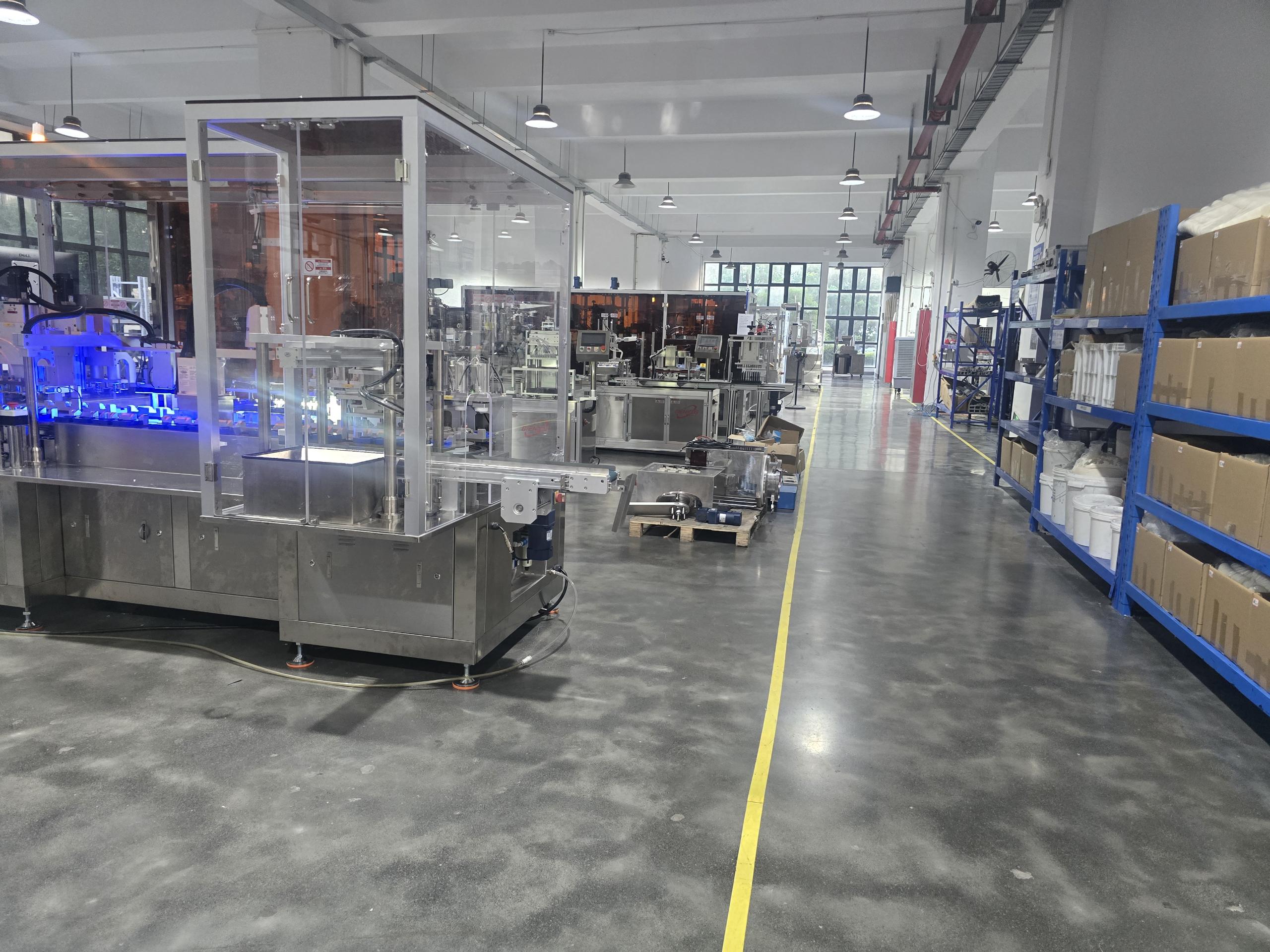
Start with the product format, not the machine label
A cosmetic filling machine is not a single interchangeable equipment type. A lipstick, mascara, toner, cream, pressed powder, and loose powder place different demands on how a product is handled and delivered into its package. The first useful purchasing decision is therefore a format match: identify the product, then shortlist the equipment family associated with that format.
For the machine families specified in this buyer brief, the initial mapping is straightforward. Lipstick may point to the Semi Automatic Lipstick Filling Machine, HALF SILICONE LIPSTICK LIPBALM FILLING LINE, or Automatic Silicone Mold Lipstick Filling Machine. Mascara and lipgloss map to the Semi Automatic or Automatic Mascara Lipgloss Filling Machine. Toner and cream map to the Toner and Cream Rotary Filling Machine. Powder products divide into the Compact Powder Press Machine and Loose Powder Filling Machine.
These names identify candidate families, not a complete engineering specification. A machine name alone does not establish a product’s compatible viscosity range, container dimensions, output, filling tolerance, or included downstream operations. Buyers should treat the matrix as a first filter and confirm these details against the specific machine configuration and their own product and packaging samples.
GIENICOS is the brand name associated with SHANGHAI GIENI INDUSTRY CO.,LTD, a Shanghai-based manufacturer founded in 2011. Its stated product scope includes cosmetic filling and packaging equipment for makeup and skincare products. The company’s listed categories include lipstick, lipgloss, mascara, toner, cream, compact powder, loose powder, nail polish, eyeliner, and eyebrow pencil equipment. For a buyer, that breadth is useful as a catalog starting point; it does not remove the need to verify the fit of an individual configuration.
First-pass product-to-equipment matrix
Use this table to reduce the catalog to relevant candidate families. It is a screening tool based on the product associations in the assigned brief. It does not assert unprovided machine specifications or guarantee compatibility with every formulation or package within a category.
| Product format | Candidate equipment family | First question to resolve |
|---|---|---|
| Lipstick | Semi Automatic Lipstick Filling Machine; HALF SILICONE LIPSTICK LIPBALM FILLING LINE; Automatic Silicone Mold Lipstick Filling Machine | Which filling and mold arrangement matches the product and package? Confirm process details with the supplier. |
| Mascara or lipgloss | Semi Automatic or Automatic Mascara Lipgloss Filling Machine | Does the product and container suit the proposed filling arrangement, and what level of automation is required? |
| Toner or cream | Toner and Cream Rotary Filling Machine | How do the actual product flow characteristics and container geometry fit the rotary configuration? |
| Pressed powder compact | Compact Powder Press Machine | Is the product a pressed compact format rather than a loose-filled powder format? |
| Loose powder | Loose Powder Filling Machine | What product and package samples are needed to confirm the filling approach? |
| Nail polish, when filling and closing need to be considered together | Nail Polish Filling and Capping Machine or Rotary Nail Polish Filling Machine | Is an integrated capping operation required, or is the filling machine being considered as a standalone step? |
The last row illustrates why product category alone is not enough. The Nail Polish Filling and Capping Machine signals a combined filling-and-capping scope in its name, while the Rotary Nail Polish Filling Machine is named as a filling machine. Buyers should verify the exact operations included in a quotation rather than assume that a standalone filling model also caps or seals containers.
Four decision filters before requesting a quotation
1. Describe the product’s flow behavior
Viscosity is a practical screening consideration because a product that flows readily and a product that moves slowly or changes behavior during processing may call for different handling and dosing discussions. This is a selection criterion, not a claim that a particular listed machine supports a specific viscosity. Share the formulation’s relevant behavior with the equipment supplier, including whether it is pourable, creamy, paste-like, or powder-based, and ask how the proposed machine handles that product.
For products described as hot-poured, establish whether the process requires heating during filling and what the product’s actual processing conditions are. The assigned machine list includes lipstick-focused options and a silicone-mold lipstick line, but the names alone do not specify heating temperatures, cooling steps, or process limits. Do not infer these parameters from a product category. Request confirmation for the exact formulation and machine configuration.
For a liquid or cream, identify whether the equipment proposal is based on a piston, rotary, or another filling method. The provided product-family mapping names the Toner and Cream Rotary Filling Machine, but it does not provide a full description of its dosing mechanism. Treat “rotary” as a configuration clue to discuss, not as proof of the machine’s complete filling principle or compatibility with a particular viscosity.
2. Match the filling method to the production task
Hot pour, piston filling, and rotary filling are useful terms to include in a buyer discussion because they describe different process choices. The correct choice depends on the product, the required package, and the machine configuration. A category label or a marketing phrase does not by itself establish which method is installed or how it performs on a particular formulation.
For lipstick, ask how the candidate model handles the product’s filling and mold requirements. Compare the Semi Automatic Lipstick Filling Machine, HALF SILICONE LIPSTICK LIPBALM FILLING LINE, and Automatic Silicone Mold Lipstick Filling Machine by the actual process steps they include, the molds and containers they accommodate, and the operating arrangement. The assigned brief identifies these as lipstick-related choices but supplies no model-level parameters. A buyer should therefore use the names to identify what to discuss, then validate the details with a product trial or written specification.
For mascara and lipgloss, compare the Semi Automatic and Automatic Mascara Lipgloss Filling Machine options against the intended operating model. “Semi automatic” and “automatic” are meaningful distinctions to investigate, but the supplied information does not state their staffing needs, cycle rates, or exact automatic functions. Ask which steps are performed by the machine and which remain manual; request a process description rather than relying on the category name alone.
For powder, the first distinction is product format. A compact powder pressing application and a loose powder filling application are not interchangeable simply because both involve powder. The Compact Powder Press Machine and Loose Powder Filling Machine identify separate candidate families. Confirm the intended product form, package, and process before comparing other equipment attributes.
3. Check the container geometry
Container fit should be checked early because the package is part of the process, not a detail to settle after selecting a machine. Record the container’s shape, opening, dimensions, orientation during filling, and any relevant insert or closure. These details are especially important when comparing a molded lipstick process with a liquid product packaged in a narrow container, or when a downstream capping step is required.
The available corpus does not provide dimensional limits for the named machine families. Buyers should not assume that two packages in the same product category are interchangeable on one machine. Send representative containers, closures, and product samples when requesting a technical assessment, and ask the supplier to state which package formats the quoted configuration has been checked against.
4. Separate filling from downstream operations
Decide whether the purchasing scope ends at filling or includes additional operations such as capping or sealing. A product line can involve multiple process steps, and a machine name may indicate that more than one step is included. The clearest example in this brief is nail polish: the Nail Polish Filling and Capping Machine is explicitly named for both filling and capping, while the Rotary Nail Polish Filling Machine is named as a filling option.
For any product, ask the supplier to list the included operations in sequence. Confirm whether container handling, filling, cap placement, tightening, sealing, inspection, or other steps are included in the quoted scope only when those steps are relevant to the project. This prevents a common comparison error: treating a filling-only machine and an integrated filling-and-capping machine as if they deliver the same line scope.
How to compare the candidate families without overreading the catalog
A useful comparison matrix keeps verified product associations separate from questions that still need technical confirmation. The first column identifies the family suggested by the format. The next columns record the evidence needed to establish fit. A blank or unconfirmed entry is a question for the quotation stage, not an invitation to assume a capability.
| Decision dimension | What the buyer records | What to confirm |
|---|---|---|
| Product format | For example, lipstick, mascara, toner, cream, compact powder, or loose powder. | That the proposed machine family is intended for the stated format. |
| Product behavior | Whether the material is liquid, cream-like, paste-like, hot-poured, pressed, or loose powder. | Compatibility with the actual formulation and operating conditions. |
| Filling approach | The process term under consideration: hot pour, piston, rotary, or another stated method. | The installed method, process sequence, and any product-specific constraints. |
| Package | Container shape, opening, dimensions, orientation, and closure. | Fit of the actual sample package, not only the general product category. |
| Automation scope | Whether a semi-automatic or automatic family is being evaluated. | Which process steps are automatic, and which require operator handling. |
| Line scope | Filling only, or filling plus a downstream operation such as capping. | Exactly which operations and equipment are included in the quotation. |
This framework also helps prevent misleading comparisons. A buyer should not compare a compact powder press with a loose powder filler as if they were substitutes for the same finished format. Likewise, a filling-and-capping option should not be compared with a filling-only option on price alone without accounting for the different stated scope. Compare like with like, or make the scope difference explicit.
A step-by-step filter for narrowing the catalog
Step 1: Name the finished product and package
Write down the product format and the package it must enter. Use specific labels such as lipstick in its intended mold or container, mascara, lipgloss, toner, cream, compact powder, loose powder, or nail polish. If a product spans categories, describe the actual form rather than choosing a machine based on a broad label such as “cosmetics.”
Step 2: Identify the process condition
State whether the product is filled hot, is a liquid or cream, is pressed, or is a loose powder. Include relevant formulation and operating details that the supplier needs to evaluate. Do not assume that the machine name supplies these details.
Step 3: Select the initial family
Use the format mapping to create a short list: lipstick equipment for lipstick; mascara/lipgloss equipment for mascara or lipgloss; the Toner and Cream Rotary Filling Machine for toner or cream; and the appropriate compact-press or loose-powder family for powder format. For nail polish, decide whether the integrated filling-and-capping name or the rotary filling name better matches the required scope.
Step 4: Verify package and operation fit
Provide sample containers and closures where possible. Ask for confirmation of format compatibility, the filling method, and any capping or sealing operations. If the reply is general, ask for a written process description tied to the specific product and package.
Step 5: Compare automation and operating arrangement
When both semi-automatic and automatic options are listed, ask what each configuration performs and what operator tasks remain. Avoid inferring line speed, labor requirements, or output from the words “semi automatic” and “automatic” alone; those figures and functions are not specified in the product-family information provided here.
Step 6: Request a configuration-specific quotation
Send the supplier the product format, formulation behavior, package details, intended filling method if known, downstream process requirements, and preferred automation scope. Ask that the quotation identify the exact machine family and included operations. This makes the quote more useful for technical review and reduces the risk of comparing different scopes under the same broad label.
What the brand’s stated scope means for a buyer
GIENICOS describes its specialization as cosmetic filling and packaging equipment for makeup and skincare products. The company profile also identifies intelligent cosmetic filling and packaging equipment and robotic loading-unloading system solutions as part of its activity. Its stated product categories include filling equipment for products such as lipstick, lipgloss, mascara, toner, cream, compact powder, loose powder, nail polish, eyeliner, eyebrow pencil, and skincare products.
For procurement, this establishes a relevant category context: buyers can begin by checking whether their product family appears within the stated scope, then ask for the exact model and configuration. It does not establish that every package, formulation, or production requirement is supported by every machine. Product samples, a clear process description, and configuration-specific confirmation remain necessary.
The company’s FAQ material says its equipment is developed for color cosmetics and skincare products and names applications including lip gloss, lipstick, mascara, cushion, foundation, compact powder, nail polish, eyeliner, eyebrow pencil, cosmetic cream, and lotion. It also states that the equipment can serve OEM/ODM contract manufacturers and brand-owned production bases. Those statements describe broad application scope; they are not a substitute for verifying a particular machine against a specific product and container.
Where this decision matrix stops
This matrix is a catalog-narrowing tool, not a final engineering approval. The supplied information does not specify exact viscosity ranges, filling volumes, container dimensions, temperatures, throughput, filling tolerances, power requirements, or machine-level details for capping and sealing. It also does not establish a complete model-to-process specification for piston filling or hot-pour operation. Those points should be treated as open questions until confirmed for the selected configuration.
There is also a practical trade-off between choosing a broad equipment family early and confirming a precise configuration later. Broad categories make it easier to identify where to start, but a product family can contain packages and formulations with different process needs. Conversely, comparing machine-level details before the product and package are defined can create false precision. The efficient sequence is to narrow by format, document the process, and then validate the equipment proposal against representative samples.
For a buyer, the key distinction is between a candidate and a confirmed fit. A product-to-machine association helps identify which catalog page or machine family to investigate. Confirmation requires the supplier to connect the named equipment to the actual product, package, filling process, and line scope. Keeping those two stages separate makes the decision matrix more useful and keeps unsupported assumptions out of the procurement record.
Conclusion: use the matrix to shortlist, then validate
The fastest responsible route to a cosmetic filling machine shortlist is to begin with product format and then apply four filters: product flow behavior, filling method, container geometry, and downstream operations. The supplied mapping directs lipstick buyers toward three lipstick-focused options, mascara and lipgloss buyers toward semi-automatic or automatic Mascara Lipgloss Filling Machine families, toner and cream buyers toward the Toner and Cream Rotary Filling Machine, and powder buyers toward compact pressing or loose powder filling.
That first pass should lead to a focused technical conversation—not an assumption that a category name proves compatibility. Confirm the machine’s process, package fit, automation scope, and whether capping or sealing is included. In particular, distinguish the Nail Polish Filling and Capping Machine from the standalone Rotary Nail Polish Filling Machine by the operations stated in their names, then verify the quoted scope. With those checks recorded, buyers can compare relevant configurations on a like-for-like basis before moving to commercial evaluation.
FAQ
How should buyers start choosing a cosmetic filling machine?
Start with the finished product format and its package. Use those details to identify a candidate family, then confirm product behavior, filling method, container fit, automation scope, and any downstream capping or sealing requirements.
Which machine families are listed for lipstick, mascara, and lipgloss?
The assigned product mapping lists the Semi Automatic Lipstick Filling Machine, HALF SILICONE LIPSTICK LIPBALM FILLING LINE, and Automatic Silicone Mold Lipstick Filling Machine for lipstick. It lists Semi Automatic or Automatic Mascara Lipgloss Filling Machine families for mascara and lipgloss. Specific compatibility and configuration details require confirmation.
How do buyers distinguish compact powder from loose powder equipment?
Use the finished product format to make the initial distinction: the Compact Powder Press Machine is the listed candidate for compact powder, while the Loose Powder Filling Machine is the listed candidate for loose powder. Confirm the package and process with the supplier.
Does a filling machine automatically include capping?
No such assumption should be made from a general filling-machine description. In the provided nail polish examples, the Nail Polish Filling and Capping Machine is named for both operations, while the Rotary Nail Polish Filling Machine is named as a filling machine. Buyers should confirm every included operation in the specific quotation.
What information should be supplied before requesting a quotation?
Provide the product format, formulation behavior, package and closure details, intended filling method if known, required downstream operations, and preferred automation scope. Ask the supplier to identify the proposed machine family and state which operations the quoted configuration includes.
Catalog reference: GIENICOS product catalogue (PDF).
Есть вопросы или нужны дополнительные детали?
Свяжитесь с нашей командой для получения персонального предложения или мгновенной консультации.
Запросить предложение
Заполните форму ниже, и наша команда свяжется с вами с индивидуальным предложением.
Прямой чат WhatsApp
Предпочитаете общаться в реальном времени? Напишите нам в WhatsApp для мгновенной помощи и быстрых ответов.
- Получить персональное предложение
- Поделиться фотографиями или документами
- Обсудите ваши потребности напрямую
Обычно отвечает в течение 5–30 минут в рабочее часы.