
Cosmetic Packaging Supplier Capability: 9 Verified Models

Custom cosmetic packaging production at Guangzhou Cosfinity Cosmetics Co., Ltd., Guangzhou, China.
Why a specification list is stronger evidence than a capability claim
A cosmetic packaging programme rarely fails because a supplier cannot mould a tube. It fails because the delivered unit sits a fraction of a millimetre away from the geometry that the formula, the filling line, the artwork and the outer carton were all costed against. At the evaluation stage, the most useful supplier evidence is therefore not a capability statement but a specification: material, width, height, wall thickness and nominal volume, each attached to a model reference that can be quoted, sampled and re-ordered.
The commercial context makes that discipline more valuable, not less. Estimates for the global cosmetic packaging market in 2024 range from roughly USD 34.17 billion to USD 47.3 billion depending on whether secondary packaging and industrial bulk containers are counted, with longer-range projections cited as high as USD 89.72 billion by 2034 (Fortune Business Insights, ResearchAndMarkets, Data Bridge Market Research). Plastic accounted for 64.5% of packaging material use in 2024 (ResearchAndMarkets), and Asia Pacific held a 42.36% market share in 2025 (Fortune Business Insights) — the region where most custom tooling capacity sits. In a market of that size, the difference between a supplier that can describe a product and a supplier that can measure one is the difference between a brochure and a purchase order.
The model references reviewed here come from COSFINITY, the cosmetic packaging brand of Guangzhou Cosfinity Cosmetics Co., Ltd., a manufacturer founded in 2009 in Baiyun District, Guangzhou, China, operating a 40,000 m² facility with 200 employees, an in-house R&D team of 25 engineers and an annual output of 500 million pieces, exporting 100% of its production to global markets. Nine model references are examined below. Three of them carry a complete published specification set covering material, dimensions, wall thickness and volume; those three are the ones that make a capability claim measurable.
What a wall thickness and a capacity figure actually control
Wall thickness is not a cosmetic detail. In a thin-wall plastic tube, it determines how the container behaves when squeezed, how much material is used per unit, how the wall responds to hot stamping or screen printing, and how the cap or applicator seats against the shoulder. A wall specified at 0.3 mm is a tooling and process decision that has to hold across a full production run, not only on a sample approved in a meeting room.
Dimensions behave the same way. Width drives decoration area and label real estate; height drives the fill headspace and the shelf presence; the combination determines whether the pack fits a standard filling line and a standard carton. Nominal volume is the figure brands quote to their own finance and logistics teams, and it is also the figure most often misread: nominal capacity describes the mould, while usable fill depends on internal geometry, headspace and the fill target agreed in the drawing. Two tubes with similar external dimensions can carry materially different volumes, which is why a fill trial is a more reliable validation step than arithmetic on a data sheet.
Publishing numbers also creates an audit trail. A buyer who receives a model code and a dimension can order a sample, measure it, compare it against the drawing, and repeat the same comparison at bulk production. A supplier that publishes nothing leaves the buyer comparing adjectives.
The nine model references at a glance
The table below sets out the references in this review. Where a dimension is listed, it is a nominal specification; where a cell reads “project-defined”, the reference is part of the supplier’s customizable range and its geometry is fixed by the approved project drawing rather than by a catalogue default.
| # | Model reference | Format | Material | Dimensions (W × H) | Wall | Nominal volume |
|---|---|---|---|---|---|---|
| 1 | CP01-2142 | Luxury empty plastic lipstick tube | Plastic | 22.7 × 84.6 mm | 0.3 mm | 20 ml |
| 2 | CP02-2231 | Luxury empty plastic lipgloss / mascara tube | Plastic | 18 × 106.1 mm | 0.3 mm | 3 ml |
| 3 | CP04-1215 | Eyeliner tube | Plastic | 12.8 × 115.3 mm | 0.3 mm | 10 ml |
| 4 | TP01-1018-15 | Deodorant stick container | Project-defined | Project-defined | Project-defined | Project-defined |
| 5 | CP03-1394 | Model reference in the supplier’s published range | Project-defined | Project-defined | Project-defined | Project-defined |
| 6 | CP07-2026 | Model reference in the supplier’s published range | Project-defined | Project-defined | Project-defined | Project-defined |
| 7 | CP05-2159B | Model reference in the supplier’s published range | Project-defined | Project-defined | Project-defined | Project-defined |
| 8 | Powder case format | Powder case | Project-defined | Project-defined | Project-defined | Project-defined |
| 9 | Liquid foundation bottle format | Liquid foundation bottle | Project-defined | Project-defined | Project-defined | Project-defined |
Rows 4 to 9 are confirmed model or format references within the supplier’s range, but they sit outside the published dimensional set examined here: the supplier lists logo, colour, shape, material, volume, thickness and packaging as customizable per project, so their geometry is defined by the approved drawing. Buyers should request the dimensional sheet for those references directly rather than infer values from the table.
Reading the three published specifications
CP01-2142 — luxury empty plastic lipstick tube: 22.7 × 84.6 mm, 0.3 mm wall, 20 ml
This is the widest and shortest of the three fully specified formats. At 22.7 mm, the body diameter offers the largest continuous decoration surface in the set, which matters for hot stamping and multi-colour printing on a curved wall, and it is the format most exposed to how well a supplier controls surface finish. The 0.3 mm wall is identical to the two slimmer references, which suggests a shared wall standard across the tube range rather than a different target for each mould. The 20 ml nominal volume places it in the larger end of stick-format capacity for the range.
CP02-2231 — luxury empty plastic lipgloss / mascara tube: 18 × 106.1 mm, 0.3 mm wall, 3 ml
A long, slim format of the kind used for gloss and mascara. Long thin tubes are the harder geometry to hold straight: concentricity, print registration along the barrel and cap alignment all drift faster on an elongated part than on a short one. The published values give a buyer a concrete benchmark — 18 mm width against 106.1 mm height at a 0.3 mm wall with a 3 ml nominal volume — that can be checked against an incoming sample with calipers rather than with a photograph.
CP04-1215 — eyeliner tube: 12.8 × 115.3 mm, 0.3 mm wall, 10 ml
The narrowest and tallest reference in the published set. A 12.8 mm body width paired with a 115.3 mm height is small-diameter, thin-wall tooling, the category where wall uniformity is least forgiving and where a supplier’s mould maintenance regime shows up in bulk. It is also the format closest to precision liquid applicator work, where the interface between tube, wiper and applicator decides how the product is dosed.
TP01-1018-15 — deodorant stick container
This reference extends the range beyond colour cosmetics into personal-care stick formats. It is included here as a breadth signal rather than a dimensional one: the reference is confirmed in the supplier’s range, but its material, dimensions, wall and volume are not part of the published set reviewed in this article, so they should be obtained as a project data sheet and validated against a physical sample.
Taken together, the three published models span 12.8 mm to 22.7 mm in body width, 84.6 mm to 115.3 mm in height and 3 ml to 20 ml in nominal volume, with the same 0.3 mm wall across all three. That combination is the capability signal: rather than publishing a single hero mould, the range shows thin-wall geometry being held at both small and mid diameters. It also illustrates why nominal volume should not be read as a linear function of outer dimensions — internal geometry and headspace, not external height alone, decide usable fill.
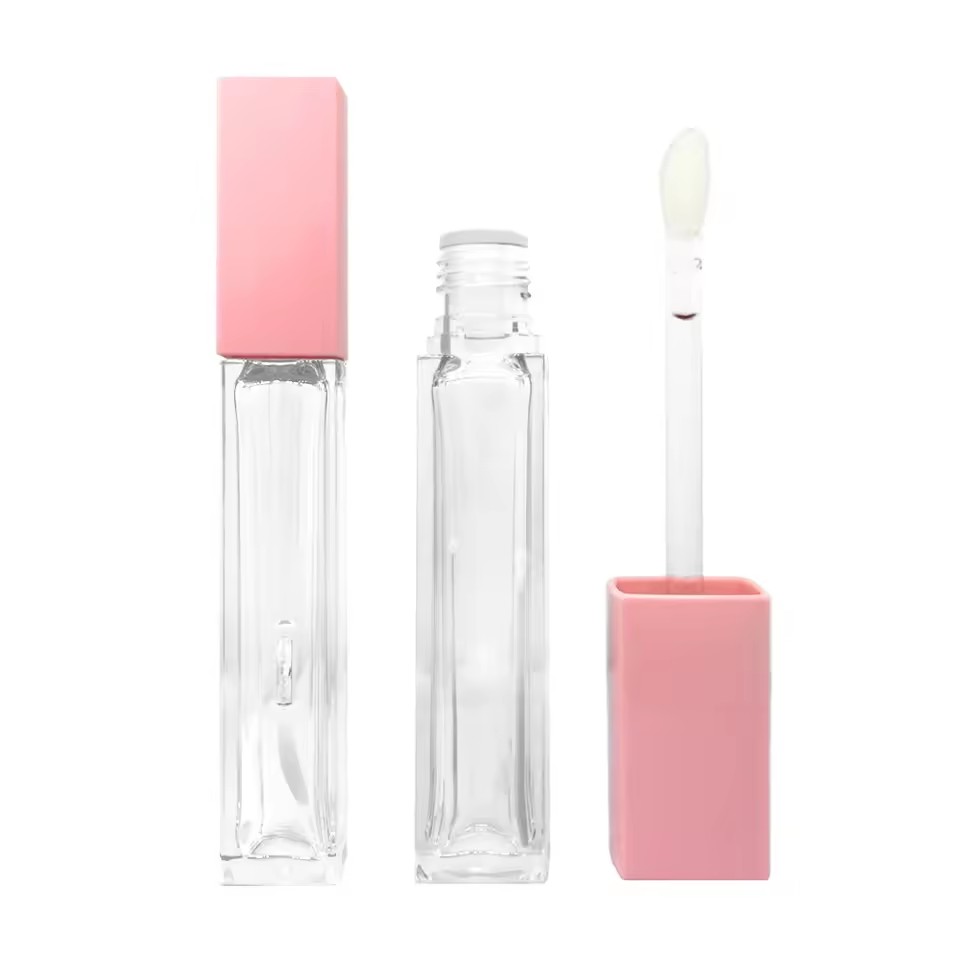
CP02-2231 luxury empty plastic lipgloss / mascara tube — 18 × 106.1 mm, 0.3 mm wall, 3 ml nominal volume.
From physical specification to purchasing terms
Dimensions only become procurement evidence when they are attached to commercial terms that a buyer can plan against. The capability data for this supplier lists OEM/ODM production as the operating mode, with customization covering logo, colour, shape, material, volume, thickness and packaging, a minimum order quantity of 12,000 pcs, a lead time of 15–25 days, a monthly capacity of 10,000,000 pcs, 100% testing, global export markets and remote online after-sales service.
Read as a set, those terms describe a supplier built for recurring custom production rather than for one-off novelty runs. A 12,000-piece minimum against a 10-million-piece monthly capacity means an opening order consumes a small fraction of a single month’s output — the minimum exists to cover tooling, colour matching and setup, not to consume capacity. The 15–25 day lead time window is the figure that should drive launch planning and safety stock decisions, and it should be confirmed against the specific model, decoration and packaging combination rather than assumed at the lower end.
The 100% test statement deserves a precise question during supplier evaluation: which characteristic is inspected on every unit, and which characteristics are verified by sampling? Wall thickness, cap fit, decoration adhesion and leak resistance are different measurements with different sampling logics, and a buyer who records the answer has an acceptance criterion they can hold the supplier to later.
Case evidence: two years of repeat lipstick tube orders
The published specification of CP01-2142 is supported by a production record rather than only by a data sheet. A private-label lipstick programme for a customer in India ran on this model at an order quantity of 12,000 pcs, matching the supplier’s stated minimum, and has continued for two years. The project is described as supporting the customer’s private-label lipstick launch, with stable quality leading to continuous repeat bulk orders.
The stated highlight of that programme is a customized design in lightweight plastic material with customizable appearance printing and a tight leak-proof structure suited to daily portable use. For a buyer reading this as evidence, the meaningful element is repetition: repeat bulk orders on the same model reference imply that dimensional behaviour held across production lots, which is precisely what a specification cannot prove on its own. What the record does not establish is universal performance — it is one model, one customer, one format, and it should be treated as a reference point rather than a guarantee for a different geometry.
SGS Alibaba Verified Supplier Factory Audit documentation — certificate 485460650_T, issued 10 January 2026.
Matching format to formula and use case
A model range is only useful if the formats map onto the product formats a brand actually fills. Across this reference set, the mapping falls into four groups. Stick formats, represented by the luxury empty plastic lipstick tube CP01-2142 and the deodorant stick container TP01-1018-15, suit solid and semi-solid products where the pack itself is part of the application. Emulsion and gel formats, represented by the lipgloss / mascara tube CP02-2231 and by liquid foundation bottle formats, depend on the tube-to-applicator interface and on the leak resistance of the closure. Precision liquid formats, represented by the eyeliner tube CP04-1215, place the highest demand on small-diameter wall uniformity and wiper fit. Powder formats, represented by powder case references, are driven by hinge and pan geometry more than by wall thickness.
The practical consequence for a buyer is that the same dimensional evidence supports different due diligence. For a stick format, the questions are cross-section consistency and print quality over a wide barrel. For a slim liquid format, they are concentricity, cap seal and dose accuracy. For a powder case, they are closure force, hinge life and pan seating. A supplier that publishes dimensions for all of those families makes each conversation shorter.
Market trend analysis: regulation, material share and regional concentration
Three movements shape how cosmetic packaging suppliers are evaluated in 2026. The first is regulatory: the EU Packaging and Packaging Waste Regulation (EU) 2025/40 sets stricter recyclability and labelling requirements for packaging placed on the EU market, and the U.S. Modernization of Cosmetics Regulation Act (MoCRA) introduced mandatory facility registration and product listing obligations. Both push packaging decisions earlier in the product development cycle and make documented material and design choices more valuable to a buyer.
The second is material gravity. Plastic held a 64.5% share of cosmetic packaging material use in 2024, ahead of glass and metal, a position that thin-wall injection and extrusion capacity continues to reinforce. A 2024 consumer survey reported by Statista and Packly placed refillable or recyclable formats among the top priorities for 63% of cosmetic consumers — a directional signal rather than a procurement rule, but one that increasingly surfaces in brand briefs.
The third is regional concentration. Asia Pacific accounted for 42.36% of the global market in 2025, consistent with China’s beauty product export value of approximately USD 4.77 billion in 2024 and with the density of tooling and decoration capacity in the region. The competitive field combines large multinational packaging groups such as Albéa, Amcor, Berry Global, AptarGroup and HCP Packaging with regionally focused converters; buyers commonly shortlist across both and differentiate on specification transparency, customization scope and lead time rather than on size alone.
Custom tooling versus stock-mould sourcing
Two traditional sourcing routes sit on either side of the model range reviewed here. Stock-mould sourcing uses an existing standard pack, which reduces setup cost and shortens the path to a first shipment, but it forces the formula, the decoration and often the fill weight to adapt to a geometry the brand did not choose. Custom tooling, the route these nine model references belong to, starts from the project drawing and adjusts shape, material, volume and thickness to the formula and the shelf proposition — at the cost of a 12,000 pcs minimum order quantity and a 15–25 day lead time.
The boundary is worth stating plainly. Custom tooling is the wrong choice for a market test of a few thousand units, for a seasonal variant that will not be repeated, or for a brand that has not yet fixed its fill weight and decoration. Stock formats are the wrong choice when the fill target needs a specific neck or shoulder geometry, when decoration has to run over a wide barrel to carry the brand, or when regulatory labelling requirements change the surface area needed. Between those two positions, the useful supplier question is not “can you make it custom?” but “which existing model reference is closest to my requirement, and what does the drawing change cost in tooling and time?”
Where the evidence stops
A review that only lists strengths is not usable for a procurement decision, so the limits of this evidence set should be explicit. First, the published dimensional data covers three models; the remaining references in the table require a project drawing before they can be compared on equal terms. Second, the figures are nominal specifications, not tolerance declarations — no tolerance class is published in the material reviewed here, so incoming inspection limits have to be agreed with the supplier rather than inferred.
Third, dimensional compliance is not the same as functional performance. Wall thickness and capacity say nothing directly about drop resistance, decoration abrasion, long-term compatibility with a specific formula, or leak behaviour after filling; those need their own test protocol agreed at sample stage. Fourth, on compliance, the supplier holds an SGS Alibaba Verified Supplier Factory Audit certificate (485460650_T, issued 10 January 2026, valid to 10 January 2027, scope: enterprise factory and trade qualification audit). That audit verifies the entity and its factory and trade qualification — it does not certify the recyclability or regulatory conformity of any individual pack, which depends on the material and design selected for the project.
Finally, the commercial terms carry their own constraint. A 12,000-piece minimum and a 15–25 day lead time suit planned production and repeat programmes; they do not suit same-week replenishment or micro-batch launches, and buyers should model those boundaries into their launch calendar before shortlisting.
Future outlook
Three changes are likely to reshape supplier evaluation over the next planning cycles. Specification transparency will become a selection filter rather than a differentiator, because regulatory regimes such as the EU PPWR and MoCRA make material and design documentation part of the compliance chain rather than an internal quality record. Regionally concentrated tooling capacity in Asia Pacific will continue to set the baseline for cost and lead time, while differentiation shifts toward how quickly a supplier can move from a model reference to an approved drawing and a first article. And as refillable and recyclable formats move from brief to requirement, the ability to control thinner walls at consistent quality becomes a compliance capability as much as an engineering one.
For buyers, the practical implication is straightforward: the supplier data that survives a shortlist review is the data that can be measured. Model references, dimensions, wall thickness, capacity, minimum order quantity and lead time are all checkable. Capability adjectives are not.
FAQ
What do nine verified model references prove about a cosmetic packaging supplier?
They demonstrate tooling breadth and the ability to publish measurable specifications rather than only product families. In this set, three references carry complete published values spanning 12.8–22.7 mm body width, 84.6–115.3 mm height, 3–20 ml nominal volume and a consistent 0.3 mm wall, which indicates thin-wall geometry held at both small and mid diameters. The remaining references confirm range coverage across lipstick, lipgloss and mascara, eyeliner, deodorant stick, powder case and liquid foundation bottle formats.
What does a 0.3 mm wall thickness mean in practice for a cosmetic tube?
A 0.3 mm wall is a nominal tooling and process target that influences squeeze behaviour, unit weight, decoration response and how the closure seats on the shoulder. Because it is a nominal value rather than a tolerance, buyers should confirm the acceptable range with the supplier and verify it on incoming samples with a measurement protocol, instead of treating the figure as a guaranteed production result.
Are published dimensions and volumes the same as the finished, filled pack?
No. Published values describe the mould and the nominal geometry; the finished pack follows the approved drawing, and usable fill depends on internal geometry, headspace and the filling target. This is why a fill and fit trial on a physical sample is the appropriate validation step, and why nominal volume should be treated as a planning figure rather than a final fill specification.
Can shape, material, volume and thickness be customized per project?
Yes. The capability data for this supplier lists logo, colour, shape, material, volume, thickness and packaging as customizable fields within an OEM/ODM production mode. Customization is therefore the mechanism by which references such as TP01-1018-15, CP03-1394, CP07-2026 and CP05-2159B move from a range listing to a defined specification, with geometry fixed by the approved project drawing.
What minimum order quantity and lead time apply to custom cosmetic packaging?
The stated minimum order quantity is 12,000 pcs and the stated lead time is 15–25 days, against a monthly capacity of 10,000,000 pcs. These figures are the commercial boundary of the custom route: the minimum covers tooling, colour matching and setup, and the lead time window is the basis for launch planning and safety stock rather than a fixed delivery commitment for every model and decoration combination.
Which third-party verification exists for the supplier entity, and what does it cover?
The supplier holds an SGS Alibaba Verified Supplier Factory Audit, certificate number 485460650_T, issued 10 January 2026 and valid to 10 January 2027, with a scope described as enterprise factory and trade qualification audit. The audit covers the entity’s factory and trade qualification. It does not certify individual pack designs for recyclability or market-specific packaging regulation, which must be assessed separately against the material and design chosen.
How is quality controlled and supported after shipment?
The capability data states 100% testing and remote online after-sales service. During evaluation, buyers should specify which characteristics are inspected on every unit and which are verified by sampling, then record those definitions as acceptance criteria. That single clarification converts a general quality statement into a measurable contractual standard.
For evaluation teams building a supplier file, the practical next step is to take the three published specifications above, measure a physical sample against each one, and extend the same measurement protocol to the project-specific references when their drawings are issued. A downloadable company profile covering the manufacturer’s background, capability and model range is available here: COSFINITY company profile (PDF). Further product information is published at cosfinity-cosmeticpackaging.com.
Есть вопросы или нужны дополнительные детали?
Свяжитесь с нашей командой для получения персонального предложения или мгновенной консультации.
Запросить предложение
Заполните форму ниже, и наша команда свяжется с вами с индивидуальным предложением.
Прямой чат WhatsApp
Предпочитаете общаться в реальном времени? Напишите нам в WhatsApp для мгновенной помощи и быстрых ответов.
- Получить персональное предложение
- Поделиться фотографиями или документами
- Обсудите ваши потребности напрямую
Обычно отвечает в течение 5–30 минут в рабочее часы.