
Cosmetic Packaging: What Model Specs Actually Reveal
Cosmetic Packaging: What Model Specs Actually Reveal
A published model specification is a contract that has not been signed yet. It states a diameter, a height, a wall thickness and a nominal volume, and in doing so it invites the buyer to hold the supplier to those numbers. That is the practical difference between a brochure claim of supplier capability and verifiable evidence: a claim cannot be checked, a specification can. In the evaluation stage of a packaging project, much of the cosmetic packaging conversation collapses these two things together — a colour catalogue is treated as proof of capability when it is only proof of a product list.
Four published models make the distinction concrete. CP01-2142 is a lipstick tube measuring 22.7 mm in width by 84.6 mm in height, with a 0.3 mm wall and 20 ml capacity. CP04-1215 is an eyeliner tube at 12.8 mm by 115.3 mm, also with a 0.3 mm wall and 10 ml capacity. CP05-2159B is a leak-proof powder jar at 40.7 mm by 32.6 mm, 5 ml capacity, with a 1 mm wall. CP07-2026 is a glass airless foundation bottle at 33.5 mm by 92 mm, 30 ml capacity. Together they span two materials and four product categories — narrow enough to test, broad enough to show whether a supplier's published data is systematic or assembled case by case.
When a Specification Becomes Evidence
A dimension earns the word "evidence" when three conditions are met, and none of them is about how the number is presented.
First, the value must be independently measurable by the buyer. Diameter, height, wall thickness and nominal capacity all pass this test because a calliper, a micrometer and a graduated cylinder can each produce a reading. A statement such as "premium quality" fails it, because no instrument resolves the claim into a result. Second, the value must come with commercial terms that let the buyer act on it — a specification with no minimum order quantity, no delivery terms and no acceptance standard describes a product but not a transaction. Third, an individual specification only becomes meaningful when read against a set. One wall thickness is a data point; a consistent wall thickness across several moulded models in different product families is a signal about tooling and process control.
This is an editorial test, not an industry standard. It exists to answer one question a procurement team actually faces: how much of a supplier's capability statement can be verified before any money moves?
The Buyer-Side Test: Purchasing Terms Set the Frame
Commercial terms do not prove product capability, but they define the boundary inside which a specification can be checked. For COSFINITY, the published terms are a minimum order quantity of 12,000 pieces, delivery on EXW, FOB, DAP or DDP terms, a pre-shipment test as the stated acceptance criterion, and payment split 50% in advance with the 50% balance. Manufacturing is run as OEM and ODM, with customisation offered on logo, colour, shape, material, volume, thickness and packaging, and remote online after-sales service after delivery.
Read as an evidence framework rather than a price list, these terms do three useful things. The MOQ of 12,000 pieces sets the smallest order at which a dimensional check is statistically meaningful — a sample of a few units from a small trial run does not show whether a 0.3 mm wall holds across a production batch. The named delivery terms establish who controls the goods, and therefore who owns the risk, at each stage between the factory gate and the buyer's warehouse. The pre-shipment test, as the sole stated acceptance criterion, is the point where published specifications are supposed to convert into a pass or fail decision.
The 12,000-piece MOQ is also the figure that appears in the supplier's own case record: a lipstick tube OEM project in India at exactly 12,000 pieces, running for two years with repeat bulk orders, referenced against the CP01-2142 model. Two independent published facts landing on the same number is a small but genuine cross-check. It does not prove that every future order will behave the same way, but it does show that the stated minimum and the documented project scale are consistent rather than contradictory.
CP01-2142 Lipstick Tube: 22.7 × 84.6 mm, 0.3 mm Wall, 20 ml
The lipstick tube is the model where diameter matters most, because on a slim stick the outer diameter effectively determines the printable surface. At a stated 22.7 mm, the usable circumference is roughly 71 mm on a straight section — a calculated figure derived from the published diameter, not a measured one — and that figure sets a hard limit on how much brand artwork, shade name and statutory text can be placed on the body. The 84.6 mm height allocates the remaining space between the mechanism, the product and the label.
The 0.3 mm wall is the more interesting number. It is a moulded plastic component, and wall thickness governs two things buyers care about: rigidity under hand pressure during daily carrying, and material consumption per unit, which feeds back into weight and unit cost. A stated 0.3 mm is a design intention. Whether the wall actually measures 0.3 mm at the base, at mid-height and near the cap seat is a separate question, and it is the question a buyer should be asking.
Practical verification is unglamorous: a micrometer reading at three or more points around the circumference, a check for sink marks and visible wall variation, a weighed sample against the declared part weight, and a fill trial to confirm that 20 ml nominal capacity is achievable with the buyer's actual formula rather than water. The lipstick tube case record adds one further layer — customised design, lightweight plastic, customisable appearance printing, and a tight leak-proof structure for portable use — but a case description is not a deployment guarantee for a different brand, different formula or different filling line.
What the published data does not establish is equally important. It does not name the resin grade, so chemical compatibility with a specific lipstick base remains untested. It does not state wall-thickness tolerance, so a buyer cannot tell from the sheet whether the process holds ±0.02 mm or ±0.08 mm. It says nothing about decoration durability under abrasion or alcohol. Those gaps are not defects; they are simply outside what a dimension sheet can carry, and they belong in the sample approval protocol.
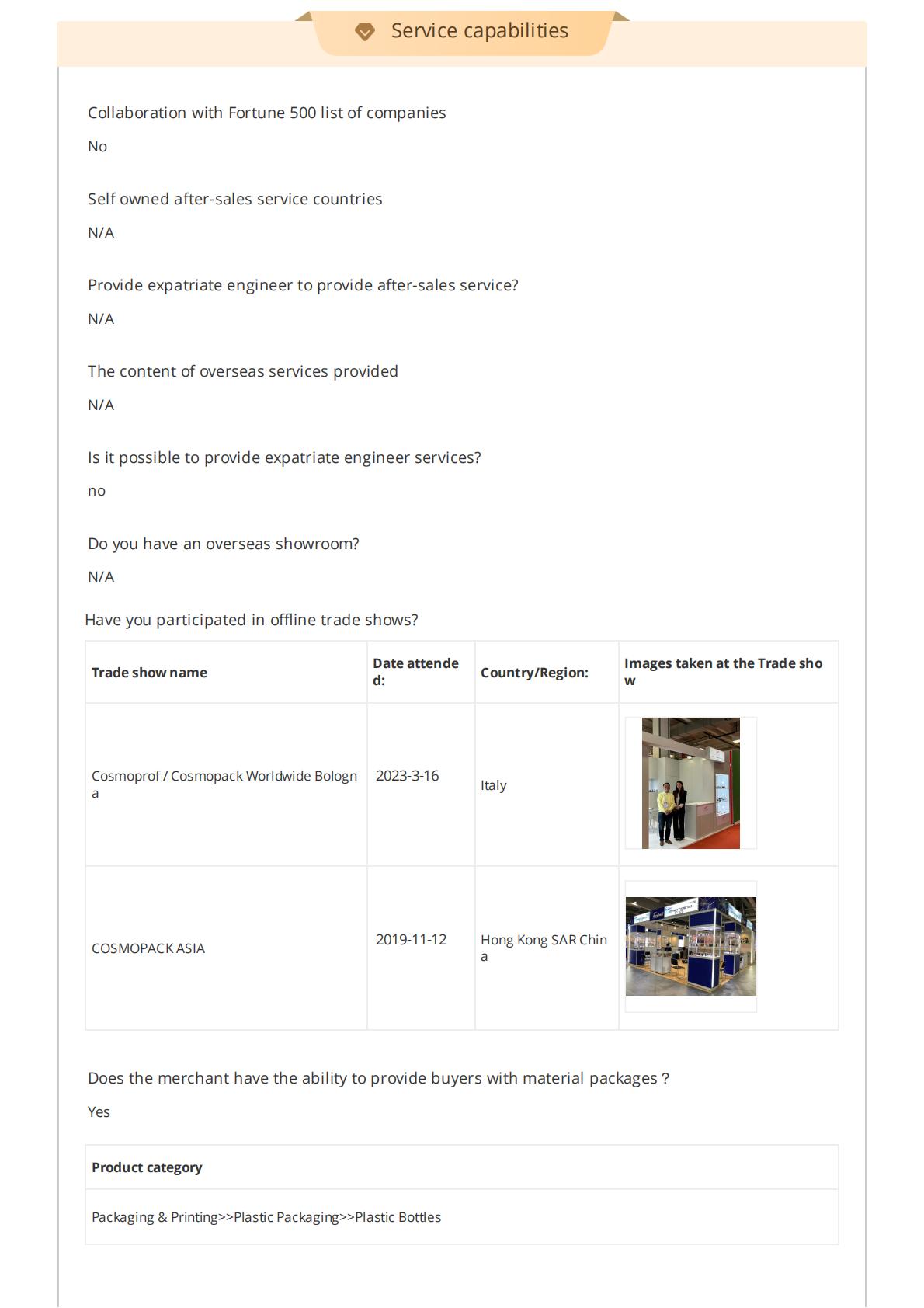
Audit documentation carries a scope and a validity window — the same questions a buyer should ask of any published capability number.
CP04-1215 Eyeliner Tube: 12.8 × 115.3 mm, 0.3 mm Wall, 10 ml
The eyeliner tube is where published dimensions start to constrain design decisions rather than merely describe them. A 12.8 mm diameter against a 115.3 mm height is a slenderness ratio of roughly 9:1, again calculated from the two published values. Plastic tubes with that proportion deflect under bending load, and the 0.3 mm wall is the parameter that resists it. For a buyer, the relevant check is not whether the tube looks straight on a photograph but whether it stays straight after filling, capping, cartoning and transport.
The same wall figure appearing on two different product families — a lipstick tube and a long, narrow eyeliner tube — is the kind of repetition that turns an isolated number into a pattern. Suppliers who publish specifications model by model tend to disclose either a house standard or a figure chosen for each tool. Either explanation is acceptable; the buyer's job is to find out which one applies, because a house standard predicts how the next model will behave and a per-tool figure does not.
The 12.8 mm diameter carries a second constraint that has nothing to do with mechanics. Cosmetic packaging for a liquid eyeliner must accommodate application hardware — an applicator, a wiper, a neck finish — and none of that geometry appears in the width, height and volume figures. The 10 ml nominal capacity describes the reservoir, not the deliverable dose. Buyers should ask for the neck specification, the applicator fit and the sealing method separately, because a dimension sheet cannot substitute for them.
For U.S.-bound products there is a further, purely dimensional consideration. Under the labelling guidance associated with 21 CFR 701.10, the principal display panel must be large enough to accommodate required information with clarity and conspicuousness, and where a package carries more than one principal display panel, the required information must be repeated on all of them. On a 12.8 mm tube, available label area is genuinely scarce. This is a design constraint to resolve at artwork stage, not an automatic compliance failure, and it applies to the finished cosmetic product rather than to the empty tube — but it makes the published diameter a commercial input as well as an engineering one.
CP05-2159B Leak-Proof Powder Jar: 40.7 × 32.6 mm, 5 ml, 1 mm Wall
The powder jar is the outlier in the set and the most instructive one. At 1 mm, its wall is more than three times the thickness published for the two tubes, on a component that is only 40.7 mm across and 32.6 mm tall with a 5 ml capacity. A thicker wall on a wide, shallow part is the conventional response to two loads: top-load compression when jars are stacked or palletised, and hoop stress at the closure seat where a lid thread engages.
Thicker walls carry a cost that buyers should price rather than assume. Material consumption per unit rises, part weight rises, and both feed into unit cost and freight. The 5 ml capacity against a 1 mm wall means a relatively high material-to-content ratio, which is a reasonable trade for a small jar that must survive shipping without deformation — but it is a trade, and it should be evaluated against the actual fill weight and the actual stacking configuration, not accepted as a default.
The word "leak-proof" is the part of this specification that most needs discipline. It is a performance attribute, and it is not self-defining. The supplier's stated acceptance criterion is a pre-shipment test, so a buyer's first request should be the test method, the conditions under which it is run, the sample size and the pass/fail threshold. Without those, "leak-proof" is a claim that a jar passed something, not a description of what it passed. A powder product is also a specific case: leakage behaviour for loose powder differs from leakage behaviour for a liquid, so a leak test validated on one formula does not automatically transfer to another.
There is a dimensional cross-check available here too. A jar that is 40.7 mm wide and 32.6 mm tall has a footprint and a stack height that must fit the buyer's existing carton, filling line and retail shelf. Those are things a buyer can measure against a sample in an afternoon, which is precisely why the published figures are worth having before a sample is requested.
CP07-2026 Glass Airless Foundation Bottle: 33.5 × 92 mm, 30 ml
The airless foundation bottle moves the set from plastic to glass and from passive containment to a dispensing mechanism. At 33.5 mm by 92 mm with 30 ml capacity, it sits in the standard foundation range. Glass brings different tolerance behaviour from injection-moulded plastic: dimensional control depends on the forming process, decorative capability differs, and breakage risk during transit becomes a packaging-design question rather than only a product question.
The word "airless" is doing a lot of work in this model name, and almost none of it is captured by the published dimensions. An airless system depends on a pump engine, a piston and an internal geometry that keeps the formula separated from air. None of those components, their materials, their dose per stroke, or their compatibility with a specific foundation formulation appears in a width, height and volume specification. A buyer evaluating this model therefore needs two separate evidence sets: the container specification, which is published, and the dispensing specification, which must be requested.
This is not a criticism of the published data. A dimension sheet is a container document; demanding that it also describe a pump mechanism is a category error, and the more useful discipline is to know which document answers which question. The same logic applies to earlier published comparisons of glass and plastic airless formats: material choice changes weight, feel, recyclability profile and transit risk, and the published bottle dimensions are the shared constant across those trade-offs rather than the answer to them.
What the Four Models Prove Together — and What They Do Not
Read as a set, the four models show a supplier publishing dimensions across a lipstick tube, an eyeliner tube, a powder jar and a glass airless bottle, in two materials, with wall thickness disclosed on three of the four and a performance attribute disclosed on one. That pattern supports a claim about range: the supplier's portfolio covers multiple primary packaging categories rather than one. This is consistent with how larger packaging groups present themselves — Amcor, for instance, lists bottles, jars, tubes, specialty closures and airless systems as its cosmetic formats, and HCP lists compacts, palettes, lipstick packs, mascara packs, applicators, pumps, droppers, pots, jars and bottles. Format breadth is a normal way for packaging suppliers to describe themselves, and it is a portfolio statement rather than a performance statement.
Range alone does not establish manufacturing depth. The company-level figures fill part of that gap: COSFINITY was founded in 2009, operates a 40,000 m² facility with 200 employees and 25 engineers, reports annual output of 500,000,000 pieces and monthly capacity of 10,000,000 pieces, and exports 100% of production to global markets with quality control described as 100% testing. Those are self-reported enterprise facts. They describe scale and process discipline, not the dimensional accuracy of any individual model, and a buyer should treat them as one evidence layer among several rather than as a substitute for sample testing.
The independent layer is thinner and should be described as such. The supplier holds an SGS Alibaba Verified Supplier Factory Audit, certificate 485460650_T, issued 10 January 2026 and valid to 10 January 2027, covering enterprise factory and trade qualification. That is meaningful third-party verification of the trading entity and its facility — and its scope stops there. It does not certify any product specification, any material grade or any leak performance. Buyers who conflate entity audit with product certification are the ones most often surprised at first-article inspection.
What the four models do not prove, in summary: wall-thickness tolerance, resin or glass grade, decoration durability, pump performance on the airless bottle, batch-to-batch consistency, or the leak-test method behind the powder jar's description. Each of those is verifiable, but each requires a document or a sample that a specification sheet is not designed to provide.
Turning Published Specs into an Acceptance Checklist
The table below reorganises the four models into the parameters a buyer can actually test, with the boundary stated beside each one. It is a working checklist, not a certification standard, and the thresholds should be agreed with the supplier before the first production run rather than argued about after it.
| Published parameter | Why it is checkable | Buyer-side test | What it does not establish |
|---|---|---|---|
| Width — 22.7 / 12.8 / 40.7 / 33.5 mm | Sets printable area and fit with filling line, applicator and carton | Calliper at multiple points; assembly trial on the buyer's line | Roundness, ovality or tolerance across the full length |
| Height — 84.6 / 115.3 / 32.6 / 92 mm | Sets stack height, carton dimensions and shelf fit | Calliper; assembled stack test; carton fit trial | Closure engagement depth or opening torque |
| Wall thickness — 0.3 / 0.3 / 1 mm | Governs rigidity, top-load resistance and material weight | Micrometer at three or more points; part-weight comparison | Uniformity around the circumference or between batches |
| Nominal capacity — 20 / 10 / 5 / 30 ml | Sets the fill target and expected units per batch | Gravimetric fill trial with the buyer's actual formula | Overflow capacity or dose accuracy on a pump |
| Material — glass (CP07-2026); plastic on the other three | Determines transit risk, decoration route and recycling profile | Request grade documentation; run compatibility and drop checks | That a given formulation has been tested in that material |
| Performance attribute — "leak-proof" (CP05-2159B) | A testable property rather than a visual characteristic | Obtain the method, conditions, sample size and pass threshold | That every unit in the shipment satisfies the same threshold |
The checklist also clarifies where money is at risk. A dimension that fails on arrival is a straightforward non-conformance with a documented number behind it. A performance attribute that fails because no method was ever agreed is a dispute, and disputes over undefined terms usually settle on the buyer's side of the balance sheet.
From Evidence to Execution: What to Lock Before Tooling
Once the specifications survive a sample check, the execution stage is about binding them to a transaction. Three items belong in that conversation.
The first is the acceptance protocol. The stated criterion is a pre-shipment test; what that means in practice depends entirely on the sampling plan and the measurement method attached to it. A pre-shipment test that measures diameter and wall thickness on a defined sample, and that records the readings, produces a document a buyer can use. A pre-shipment test described only in a sentence produces an assurance. Writing the sampling plan into the order converts a published specification into an enforceable one.
The second is the customisation boundary. COSFINITY's stated OEM and ODM scope covers logo, colour, shape, material, volume, thickness and packaging. That list matters because it tells a buyer which parameters are negotiable — thickness and volume, for instance — and therefore which published numbers are starting points rather than fixed constraints. It also sets a limit: customisation changes the specification, so any modified dimension needs its own verification rather than inheriting the credibility of the standard model.
The third is timing. The published lead time is 15 to 25 days, which is a range, and ranges usually reflect queue position, material availability and decoration complexity rather than uncertainty about the base moulding step. Buyers should map that range against their own launch calendar and confirm which configuration sits at which end. Remote online after-sales service is the stated support route; its practical value depends on response time, which is a service-level question rather than a capability question and should be discussed separately from product specifications.

A recorded lipstick tube OEM project in India at 12,000 pieces — the same figure as the published minimum order quantity for the model it references.
Market and Compliance Context Worth Checking
Market figures are the clearest illustration of why published numbers need scoping. Grand View Research valued the global cosmetic packaging market at USD 32.7 billion in 2023, with plastics taking a 60.8% revenue share in the same year. Those figures are useful background for category scale, and they are also a reminder that commercial research houses define "cosmetic packaging" differently — some include secondary packaging, some work from a broader beauty-and-personal-care boundary — so a single number should be treated as a scoped estimate rather than a fixed truth. Buyers building a category business case should confirm the boundary before quoting any figure upward.
Regulatory context works the same way. EU Regulation (EC) No 1223/2009 establishes the framework for cosmetic products and requires compliance with Good Manufacturing Practice as set out in ISO 22716. That obligation attaches to the cosmetic product, and packaging sits inside the supply chain that supports it rather than being separately certified by the same standard — a distinction worth stating plainly, because over-claiming on compliance is one of the more common errors in packaging marketing. For the U.S. market, the labelling requirements under 21 CFR 701.10 tie the available principal display area back to the physical dimensions discussed above. These rules shape artwork and pack design; they do not convert a specification sheet into a certificate.
Frequently Asked Questions
Does a set of model specifications prove that a cosmetic packaging supplier is capable?
No, and it is not designed to. A specification set proves that a supplier has defined measurable parameters for specific models — dimensions, wall thickness, capacity and material — and has made them public in a form a buyer can test. That is genuine evidence of specification discipline. It does not prove manufacturing consistency, material grade, decoration durability or performance under a specific formula. Those require sample testing, batch records and an agreed acceptance protocol. The specifications are the starting evidence layer, not the conclusion.
How should a buyer verify published wall thickness and capacity?
Wall thickness is verified with a micrometer at three or more points around the circumference and, ideally, at more than one height on the part, then compared against part weight to catch material variation that spot measurements might miss. Capacity is verified with a gravimetric fill trial using the buyer's actual formula rather than water, because density differences change the usable volume. Both checks are simple, both can be done on samples, and both should be repeated across more than one production batch before the specification is treated as established.
What are the minimum order quantity and payment terms for these packaging models?
The published minimum order quantity is 12,000 pieces, with delivery available on EXW, FOB, DAP or DDP terms. Payment terms are 50% in advance with the 50% balance. The stated acceptance criterion is a pre-shipment test. Buyers should confirm in writing which sampling plan and measurement methods attach to that pre-shipment test, since the criterion is only as useful as the procedure behind it.
Which aspects of these models can be customised?
The stated OEM and ODM scope covers logo, colour, shape, material, volume, thickness and packaging. Because thickness and volume are within that scope, the published figures for a standard model should be read as a baseline rather than a fixed limit. Any customised dimension changes the specification and needs its own verification and sampling, since approval of a standard model does not automatically extend to a modified one.
What lead time applies, and what happens after shipment?
The published lead time is 15 to 25 days, presented as a range rather than a fixed commitment. Remote online after-sales service is the stated support route after delivery. Buyers should map the range against their launch schedule and confirm the specific configuration being quoted, because material availability and decoration complexity typically determine where within that range an order falls.
The Point of Publishing a Number
The value of the four models examined here is not that they are impressive. It is that they are falsifiable. A buyer can take a calliper to CP01-2142, measure CP04-1215 against a carton, weigh CP05-2159B against its 1 mm wall, and fill CP07-2026 with an actual foundation formula. Every one of those actions produces a result that either matches the published figure or does not, and that is what separates capability evidence from capability language.
The gaps are equally usable. Tolerance, resin grade, pump performance and leak-test method are not disclosed in the specification set, which tells the buyer exactly which documents to request before tooling rather than after a failed first article. A supplier that publishes measurable numbers and answers follow-up questions on the rest is easier to evaluate than one that publishes adjectives. For evaluation-stage buyers moving into execution, that difference — between a number and a claim — is the whole basis of a decision.
Further detail on the manufacturer's models, materials and production scope is available in the COSFINITY company profile.
Есть вопросы или нужны дополнительные детали?
Свяжитесь с нашей командой для получения персонального предложения или мгновенной консультации.
Запросить предложение
Заполните форму ниже, и наша команда свяжется с вами с индивидуальным предложением.
Прямой чат WhatsApp
Предпочитаете общаться в реальном времени? Напишите нам в WhatsApp для мгновенной помощи и быстрых ответов.
- Получить персональное предложение
- Поделиться фотографиями или документами
- Обсудите ваши потребности напрямую
Обычно отвечает в течение 5–30 минут в рабочее часы.