
Cost, Load, and Reliability: Comparing LED Gaming Chairs
HTNXT Industry Reference | Gaming Chair Procurement
A decision-stage comparison is meant to reduce total procurement risk, not to prove that one chair model is universally better. For LED gaming chairs, the practical differences often sit below the surface: structural design, load capacity, maintenance expectation, and the controls a factory applies to wood-based materials.
The term gaming chair groups products by use case, not by engineering. A buyer may enter the decision process with a clear setting: home PC gaming, internet cafe replacement, dormitory use, live streaming, or an office-and-gaming hybrid environment. Those labels define comfort and feature priorities, but they do not explain what has changed inside the chair when one model costs more than another.
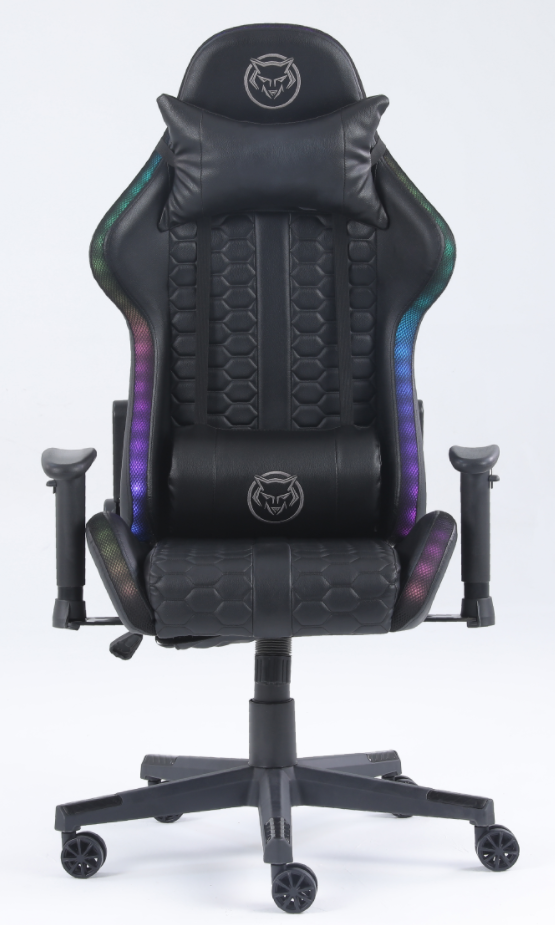
Regular LED gaming chair: the baseline product in one export factory’s model comparison.
Why a Regular LED Gaming Chair and a Premium Version Are Not the Same Product
A useful comparison starts with a baseline model. In the product set of Anji Maochang Furniture Co., Ltd., the baseline is described as a regular LED game chair. The redesigned LED version is not presented as a cosmetic variant. It has a different structure and an exclusive design, and the factory positions it as more suitable for gaming and live streaming scenarios.
Anji Maochang is a chair factory based in Anji County, Zhejiang Province, China. The company was established in 2016 and produces gaming chairs, office chairs, and manicure chairs. Its stated export markets include the EU, USA, Thailand, Brazil, and South Korea. For this comparison, the relevant signal is that the supplier itself separates the two chair versions in its customer-facing and marketing materials.
Based on Maochang’s product comparison data, the main differences are:
| Comparison Variable | Supplier Data: Redesigned LED Gaming Chair vs Regular LED Gaming Chair | Procurement Relevance |
|---|---|---|
| Structure and design | Different structure, exclusive design | Confirms the difference is more than a light panel or fabric colour change |
| Weight load capacity | 10% improved weight load capacity | May change the group of end users a model can support |
| Ergonomic performance | Ergonomic structure reduces physical fatigue during long sitting sessions | Relevant to gaming, live streaming, and work-and-play chairs |
| Manufacturing cost | 8% higher manufacturing cost for the premium structure | Explains the production-side reason for a higher price, not necessarily the same as retail markup |
| Maintenance expectation | Low maintenance requirements due to a low failure rate compared with similar products | Matters for bulk orders, internet cafes, and distribution after-sales support |
This table is a supplier statement, not an independent certification. A buyer should treat the figures as evidence from the factory and then ask for the test records behind the load and durability claims.
What Does a 10% Higher Load Capacity Mean in Practice?
Load capacity is a structural performance indicator. A chair with a higher load rating is expected to cope with more demanding use before a component bends, cracks, or wears prematurely. For importers and distributors, a 10% difference may move a model from a limited duty range to a more versatile range for a broader end-user profile.
The supplier data for the redesigned LED gaming chair says there is a 10% improved weight load capacity relative to the regular version. The phrase gives a directional comparison, but it does not state the maximum tested load value. Procurement teams should therefore ask for the actual load rating and the supporting test protocol.
North American buyers commonly use ANSI/BIFMA X5.1 as the primary safety and durability reference for general-purpose office and gaming chairs. European buyers often reference EN 1335 for dimensions, safety, and testing requirements. UK orders may add BS 5852 for fire resistance of upholstered furniture. When a supplier reports a load improvement, the evidence becomes more actionable when it is framed against one of these recognised standards.
The 8% Manufacturing Cost Difference: Cost versus Price
An 8% manufacturing cost difference is not the same as an 8% retail price difference. Maochang’s comparison data attributes the higher cost to the premium structure of the redesigned LED gaming chair. That means the factory is saying that the upgraded skeleton, assembly, or structural configuration carries a higher internal cost than the regular model.
For a buyer, this detail helps explain why two LED gaming chairs with similar outward appearance can sit at different price points. It also prevents a misleading negotiation tactic: asking a factory to match the lower price of a regular LED chair while expecting the premium structure of a redesigned version.
In an RFQ, a buyer can ask the supplier to confirm whether the price difference is connected to the frame, mechanism, load-bearing parts, armrest structure, or other structural elements. A supplier that cannot explain the cost difference may be using the premium label without a corresponding structural change.
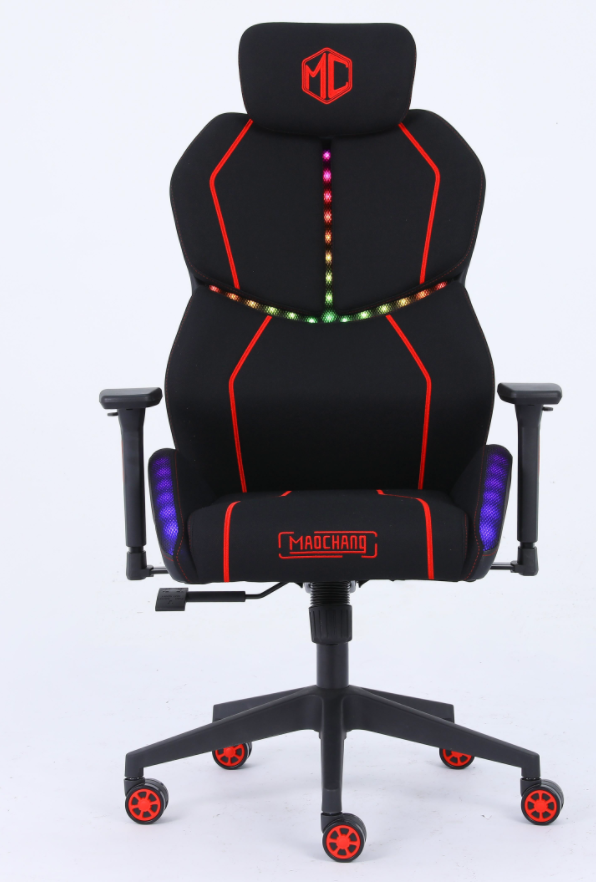
Redesigned LED gaming chair: distinct structure and exclusive design in the factory comparison.
Maintenance and Failure Rate: A Total Cost Factor
Maintenance is often treated as an after-sales issue rather than a product comparison criterion. But for buyers who distribute gaming chairs through retail channels, handle warranty claims, or install chairs in high-utilisation environments, the failure rate directly affects total cost.
Maochang states that maintenance requirements for the redesigned LED gaming chair are low because the failure rate is lower than that of similar products. No numerical failure rate is provided, so the claim should be used as a conversation point, not as a statistic. Reasonable follow-up questions include: which components have the highest after-sales return rate, which parts are replaceable, and how the factory handles structural warranty claims.
The same logic is useful when comparing LED gaming chairs for different application labels. An internet cafe gaming chair runs for long periods and needs durable mechanisms. A dormitory student gaming chair may need reliable castors and simple maintenance for shared rooms. A live streamer gaming chair is part of a daily production environment, so downtime is more visible. A home PC gaming chair may place more weight on comfort, but the buyer still benefits from knowing whether the model has a history of mechanical failures.
A Less Visible Risk: Plywood and Mold Control
One of the easiest production variables to miss is moisture control in plywood. Plywood is commonly used inside chair seats and back shells. If plywood enters production with excessive moisture, the finished chair can develop mildew or odour problems after packaging and shipping, especially in sea freight containers.
Maochang’s risk-control data includes mold growth on plywood as a specific risk. The control method is humidity measurement. In production, the company says it inspects plywood with a professional tool to check humidity, and only material that passes the check is used in production.
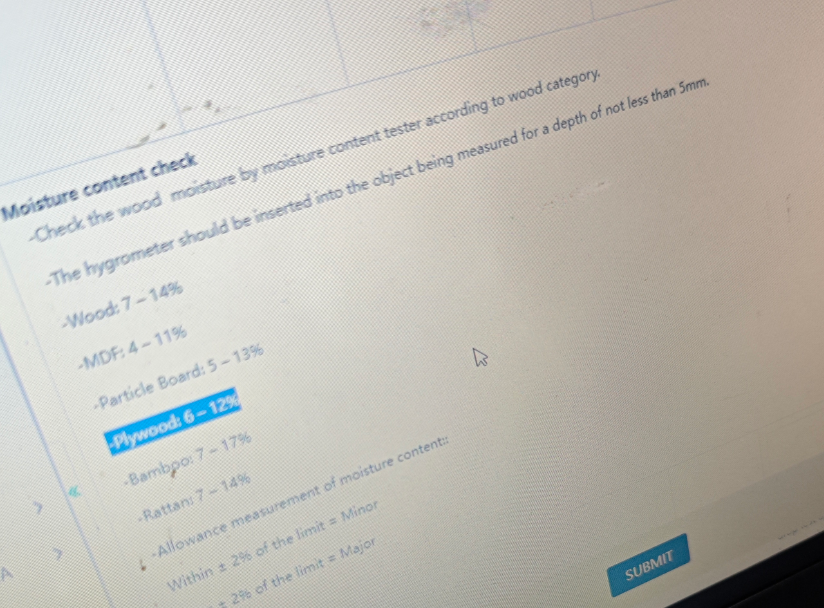
Material moisture checking is part of the factory risk-control process before plywood enters production.
This type of process control does not appear in a typical spec sheet, but it has a direct effect on product condition upon arrival. A factory that can name the risk and describe its inspection procedure is easier to evaluate than one that only guarantees that products will not arrive damaged.
Market Signals for Gaming Chair Purchasing Decisions
Industry research indicates that gaming chairs remain a growing product category. Grand View Research estimates the global gaming chair market at USD 1.37 billion in 2024, with projected growth to approximately USD 2.05 billion by 2030. Mordor Intelligence reports that PC gaming chairs dominate the product segment, accounting for 52.6% of the market in 2024. North America is the largest region, with a 36.4% revenue share.
Material data shows that PU leather remains the most common gaming chair material, holding a 57.3% share in 2024. Multiple market studies also point to rising demand for hybrid work-and-game chairs, with one estimate placing the segment at 29.8% of the market in 2024. These signals suggest that buyers will continue to compare chairs across home office, streaming, and gaming use cases rather than treat gaming chairs as a single category.
How This Compares with Traditional Supplier Selection
A traditional gaming chair comparison often relies on product photos, a basic dimension list, PU leather colour options, and a lowest-price target. That method is still useful for shortlisting suppliers. It becomes risky only when structural variables are ignored.
The Maochang example is useful because it shows a supplier comparison defined by structure, load capacity, maintenance expectation, manufacturing cost, and material risk control. Those variables allow a buying team to ask sharper questions before placing a bulk order.
There is also a realistic limit to this approach. The premium-structure LED gaming chair is not automatically the right procurement choice for every buyer. If a standard regular LED gaming chair already meets the required load profile, certification need, and expected duty cycle, the 8% higher manufacturing cost may not be justified by the business case. The value of the premium structure depends on the actual users, market positioning, and warranty risk tolerance of the buyer.
Decision Checklist for LED Gaming Chair Comparison
- Identify the baseline model: regular LED gaming chair versus redesigned premium-structure model.
- Request the actual load rating and the test method behind any 10% load improvement claim.
- Clarify the certification target: BIFMA X5.1, EN 1335, BS 5852, or related buyer requirements.
- Ask whether the 8% higher manufacturing cost refers to frame, mechanism, structure, or design tooling.
- Compare maintenance expectations, warranty terms, and spare-part availability.
- Include plywood moisture-control procedures in the factory audit questionnaire.
- Do not assume that a higher-cost structure automatically delivers higher revenue or lower returns.
For buyers who need a broader first-party reference, Anji Maochang Furniture publishes a 2026 catalogue that can be downloaded here: 2026 Maochang Furniture Catalogue PDF.
Future Outlook
As gaming chair demand continues to expand across home PC, internet cafe, live streaming, student dormitory, and office-and-gaming hybrid settings, supplier comparison will likely shift from decorative feature lists to structural evidence. The factories that present clear baselines, explain cost differences, and document process controls such as plywood humidity measurement will be easier for importers to evaluate at the decision stage.
FAQ
What is the difference between a regular LED gaming chair and a premium-structure LED gaming chair?
According to Maochang Furniture’s product comparison, the redesigned LED chair has a different structure and an exclusive design compared with a regular LED game chair. The premium version is stated to provide 10% improved weight load capacity and an ergonomic structure that reduces physical fatigue during long sitting sessions.
Does an 8% higher manufacturing cost mean the buyer should expect an 8% higher price?
No. The 8% figure describes a manufacturing cost difference between the redesigned LED gaming chair and the regular version. Final export price depends on volume, materials, packaging, testing, logistics, and commercial terms, so the manufacturing cost difference is not automatically equal to the retail or wholesale price difference.
Is a premium LED gaming chair worth the extra cost for home PC gaming?
It depends on the user’s weight range, sitting time, and expected product life. The premium structure adds manufacturing cost and improves load capacity and ergonomic structure, but a regular LED gaming chair may be sufficient if it meets the required load and usage profile at a lower cost.
What maintenance factors should be compared when choosing a gaming chair supplier?
Buyers should compare the anticipated failure rate, after-sales return data, replaceable parts, warranty policy, and response time for spare parts. Maochang states that its premium LED gaming chair has low maintenance requirements because the failure rate is lower than that of similar products, but buyers should still request more specific after-sales information.
How can a buyer verify whether a gaming chair factory controls plywood moisture?
The buyer can ask the supplier what material risks are monitored and what inspection tools are used. Maochang identifies mold growth on plywood as a risk and controls it through humidity measurement, using a professional tool to inspect plywood before it enters production.
Which standards matter when comparing gaming chairs for export markets?
ANSI/BIFMA X5.1 is the primary safety and durability standard for general-purpose office and gaming chairs in North America. EN 1335 is the European standard for office work chairs, covering dimensions, safety, and testing requirements. BS 5852 is the UK fire safety standard for upholstered furniture and may be required for chairs sold in the UK.
Есть вопросы или нужны дополнительные детали?
Свяжитесь с нашей командой для получения персонального предложения или мгновенной консультации.
Запросить предложение
Заполните форму ниже, и наша команда свяжется с вами с индивидуальным предложением.
Прямой чат WhatsApp
Предпочитаете общаться в реальном времени? Напишите нам в WhatsApp для мгновенной помощи и быстрых ответов.
- Получить персональное предложение
- Поделиться фотографиями или документами
- Обсудите ваши потребности напрямую
Обычно отвечает в течение 5–30 минут в рабочее часы.