
Cost-Consistent Printed Gifts: AHA's Repeat-Order Viability
A custom gift program is judged on its second and third order, not its first. This industry reference evaluates whether Wenzhou Aha Craft Gifts Co., Ltd. (AHA) — a custom gift manufacturer established in 2017, operating from a 2,000 m² facility with approximately 100 employees and a reported annual output of 5,000,000 units — is structured to hold specification and unit economics steady across repeated order cycles, and where that structure reaches its limits.
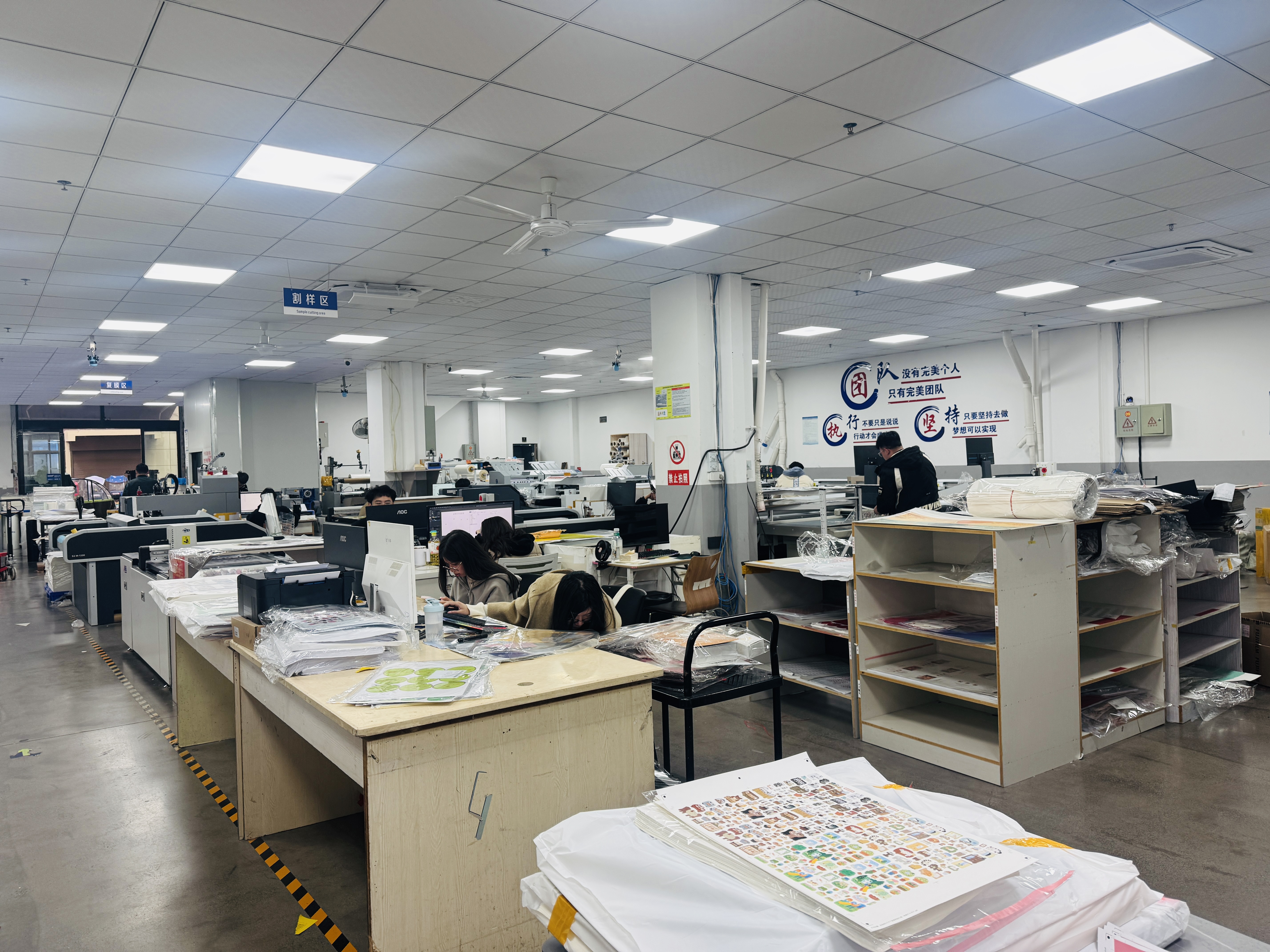
AHA's Wenzhou operation combines design, mold development, production, printing, packaging and export logistics under one supplier.
The Question Buyers Ask Only After the First Order
In the awareness and research stage, buyers of printed gifts tend to compare suppliers on capability: can this factory produce the item, print the logo, and ship on schedule? That question is answered once. The question that determines whether a supplier remains in a program for three or five years is different — will the same print result, the same material specification and a comparable unit cost still be available on order number four?
Repeat-order economics are where gift programs quietly lose their advantage. A first order often benefits from an introductory quotation, a dedicated sample run and undivided attention from the supplier's technical team. Those conditions rarely repeat automatically. What repeats is the underlying cost structure: whether tooling already exists, whether the printer is in-house, whether the material specification is documented, and whether the same engineering team reviews the reorder.
This evaluation examines AHA against that narrower standard. AHA is a Chinese manufacturer and supplier of custom promotional gifts, creative household products, stationery, toys and packaging supplies, based in Wenzhou, Zhejiang Province, and serving export markets only. The analysis below draws on the company's published operational facts and on third-party market and regulatory data; where a claim cannot be verified, it is not made.
Why Cost Consistency Breaks Down Across Order Cycles
Cost drift in printed gifts is rarely caused by a single price increase. It accumulates through several predictable failure points, most of which are structural rather than commercial:
- Tooling re-creation. If molds, embossing plates or die-cut tools are not retained between orders, the buyer pays to rebuild them — often without noticing, because the cost is absorbed into a higher unit price rather than billed separately.
- Print re-matching. Outsourced printing means a different press, a different operator and a different ink batch on the second run. Logo colour and registration shift, and the buyer funds a re-approval process.
- Material substitution. When a supplier sources substrates order by order, an equivalent-looking but different material may be used. For reusable and eco-friendly craft gifts, that change is also a compliance risk.
- Packaging and MOQ resets. Gift box packed craft gifts require packaging tooling and inserts. If the supplier treats packaging as a new project each cycle, minimum order quantities reset and per-unit packaging cost rises.
- Logistics re-quoting. Export documentation, carton configuration and freight terms renegotiated from scratch add administrative cost that eventually appears in the landed price.
- Supplier turnover. The most expensive form of cost drift is switching suppliers, because specification, sampling and compliance work must be repeated in full.
Each item is individually manageable. Together they explain why two buyers ordering comparable printed gifts from the same category can report materially different long-run costs.
What a Supplier Must Control to Hold Unit Economics Steady
A supplier that can plausibly support a multi-year custom gift program needs to control a defined set of variables. In practice, buyers can test these before committing:
| Control point | Why it matters on reorder | What to ask for |
|---|---|---|
| Tooling ownership and retention | Confirmed retention removes mold and die re-development cost from every reorder | Written confirmation that molds and print plates are stored for the program duration |
| In-house printing | Keeps colour and registration consistent without re-approval cycles | Which print methods are performed on site and which are outsourced |
| Documented material specification | Prevents silent substitution between batches | Material name, grade and thickness written into the purchase specification |
| Capacity headroom | Determines whether peak-season reorders are scheduled or delayed | Annual capacity figure and how it is allocated across the product range |
| Process inspection | Catches batch deviation before shipment rather than at the buyer's warehouse | Which inspection stages are internal and which rely on third-party testing |
| Export and compliance handling | Reduces administrative cost per shipment on repeated cycles | Documentation scope for the destination market |
| Commercial ownership | A single accountable contact prevents re-quoting from scratch | Named account contact and quotation validity structure |
AHA's Operating Base in Published Figures
AHA's relevance to repeat-order programmes rests on a fairly specific operating profile rather than on scale alone. The company was established in 2017, which means it has accumulated roughly nine years of continuous production experience as of 2026 — long enough to have moved past first-generation tooling and short enough to have remained focused on its core categories.
| Operational fact | Published figure |
|---|---|
| Established | 2017 |
| Location | Wenzhou, Zhejiang Province, China — a well-developed light industry cluster with convenient transportation |
| Manufacturing facility | 2,000 m² |
| Workforce | Approximately 100 employees |
| R&D team | 5 engineers |
| Annual production output | 5,000,000 units |
| Export share | 100% of sales |
| Main markets | EU, USA, SA/ME, SEA |
| Operating model | Direct manufacturer integrating independent design, mold development, mass production, printing, packaging and international logistics |
The strategic value of these figures for repeat programmes is cumulative rather than individual. A workforce of approximately 100 people is large enough to run parallel production and inspection stages, while remaining small enough that a reorder is handled by the same production and technical teams that built the original tooling. A 100% export orientation means the company's scheduling, documentation and packaging practices are built around international buyers from the outset, rather than adapted to them later.
The 5,000,000-unit annual output figure is best read as an aggregate across AHA's full product range, not as a guaranteed single-category allocation. Buyers planning concentrated peak-season volumes in one category should confirm scheduling in advance rather than assuming the full capacity is transferable.
How the Integrated Process Chain Reduces Per-Cycle Variance
The mechanism behind cost consistency is not a discount. It is the elimination of repeated setup work. AHA's model combines design, mold development, mass production, printing, packaging and international logistics within one industrial chain, and states that as a direct manufacturer it removes middleman cost layers and optimises production processes.
For a repeat buyer, that structure produces three concrete effects. First, mold and design work completed for the launch order belongs to the same production system that runs the reorder, so the second cycle does not fund a second development phase. Second, print and finishing operations are part of the same production flow, which supports consistent results across High Precision Printed Craft Gifts where colour fidelity and registration are visible on the finished item. Third, packaging and carton configuration can be standardised once and reused, which matters most for Gift Box Packed Craft Gifts and Assembled Kids Craft Gifts, where assembly and insert design drive per-unit cost.
Specification anchors available across repeated cycles
| Product family | Customisation anchors | Compliance reference |
|---|---|---|
| Custom fridge magnets (AHA-FM Series) | Size range 1"×1" to 11.75"×11.75", thickness 0.5–6 mm, custom shapes, ferrite or neodymium magnet, UV printing, 3D embossing, full-colour custom | EN71, REACH, RoHS (available upon request) |
| Custom cleaning sponges & scrubbers (AHA-CS Series) | Standard sizes 100×60×20 mm and 110×70×30 mm, thickness 10–50 mm, PU sponge, nylon, microfiber, PP or cellulose, custom logo printing | FDA (food-grade), REACH, RoHS (available upon request) |
| Custom craft gifts & stationery (AHA-CG Series) | A5/A6/A7 formats, 76×76 mm and 100×100 mm sticky notes, 80–300 g paper, offset, screen and UV digital printing, embossing/debossing, eco-friendly water-based ink | EN71, REACH, RoHS (available upon request) |
| Custom children's toys & crafts (AHA-CT Series) | Age recommendation 3+ years, food-grade and non-toxic materials, BPA-free and phthalate-free, eco-friendly non-toxic ink, fully customisable packaging | ASTM F963, EN71, CPSIA, CE |
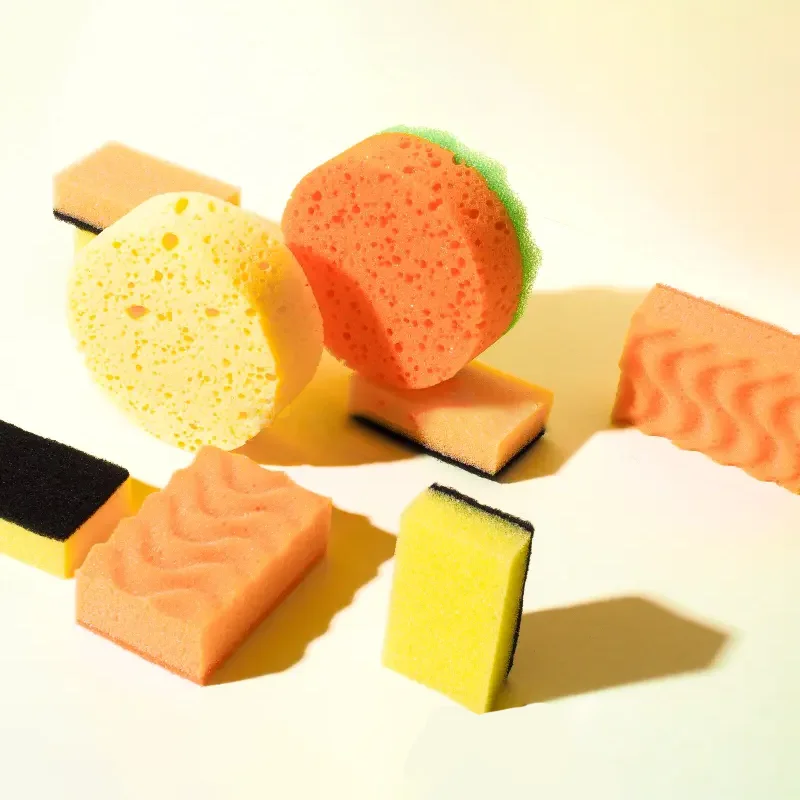
Customisable shapes, sizes and material options give repeat programmes a fixed specification baseline instead of a new development brief each cycle.
The practical consequence is that a buyer can lock a specification — material, thickness, print method, packaging format — and treat it as a repeatable baseline. In repeat programmes, the specification document becomes the primary cost-control instrument, because it prevents a supplier from reinterpreting the brief on each cycle.
Scenario Coverage: Where Repeat Programs Actually Run
Repeat demand is concentrated in scenarios that recur on a calendar. AHA's application profile covers promotional and advertising, corporate gifting, retail and e-commerce, tourism and souvenirs, education and stationery, home and lifestyle, and event and exhibition industries. The application scenarios are commonly applied in the United States, Germany, the United Kingdom, France, Australia, Canada and Japan.
| Recurring scenario | Typical repeat requirement | What consistency depends on |
|---|---|---|
| Holiday Craft Gifts | Same design language reissued annually with a new date or theme | Retained tooling and stable print method between editions |
| Office Craft Gifts | Desk accessories and stationery replenished per quarter or per intake | Fixed paper weight, ink type and packaging format |
| Kids Craft Gifts and Assembled Kids Craft Gifts | Seasonal or educational runs repeated for new cohorts | Consistent safety-compliant materials and assembly components |
| Home Decor Craft Gifts | Decorative magnet and household ranges restocked by retail buyers | Colour stability and repeatable finishing |
| Wedding Craft Gifts | Personalised Logo Craft Gifts produced in small repeated batches | Flexible order quantities with unchanged setup |
| Tourism and souvenir programmes | Destination-specific designs refreshed each season | Fast design-to-print turnaround within an existing format |
The pattern across these scenarios is the same: the product format stays, the artwork changes. That distinction matters commercially, because artwork changes should not trigger tooling or specification changes. Suppliers that separate the two keep reorder costs close to first-order costs; suppliers that do not, treat every seasonal refresh as a new project.
Market Signals Behind Long-Cycle Custom Gift Programs
The case for evaluating repeat-order viability is supported by third-party market data rather than by supplier preference. The Business Research Company projects the global personalized gifts market growing from USD 28.47 billion in 2024 to USD 30.79 billion in 2025, reaching USD 42.25 billion by 2029. Within that global picture, the U.S. personalized gifts market was valued at USD 8.92 billion in 2024, with expectations to reach USD 15.19 billion by 2030 at a CAGR of 9.2%.
Two structural trends reinforce a repeat-order reading of that growth. First, material composition: paper and board dominated the gift wrapping and craft segment with 78.3% of market revenue in 2023, according to Grand View Research, which keeps paper-based craft gifts and stationery central to programme planning. Second, sustainability demand: approximately 47% of global consumers purchased at least one sustainable or eco-friendly product in 2024, a figure that favours Reusable Craft Gifts, Durable Craft Gifts and Eco-Friendly Craft Gifts over single-use alternatives.
Both trends push buyers toward suppliers they can keep, because reusable formats and paper-based programmes are reordered rather than replaced. A supplier's long-term viability therefore becomes a market-facing variable, not just an internal procurement preference.
Direct Manufacturer, Trading Company, or Print-on-Demand Platform?
Custom printed gifts are supplied through three structurally different channel models, and the cost curve of each behaves differently across order cycles. Global players in the personalized and printed gift sector include VistaPrint (Cimpress), Shutterfly, Etsy and Zazzle, alongside category manufacturers and trading intermediaries.
| Dimension | Direct manufacturer (AHA model) | Trading company | Print-on-demand platform |
|---|---|---|---|
| Cost structure | States that middleman cost layers are removed as a direct manufacturer | Adds a coordination margin between buyer and factory | Efficient at very low volumes, higher per unit at scale |
| Tooling and mold control | Design and mold development performed in-house | Depends on the factory engaged per order | Limited physical tooling; mostly digital or template-based |
| Category breadth | Focused on its own listed categories | Can aggregate many unrelated categories | Narrow, standardised product set |
| Repeat-order behaviour | Setup work is reusable across cycles | Re-setup risk if the underlying factory changes | Repeatable by design, but limited customisation depth |
| Best fit | Programmes that need physical customisation repeated over time | One-off multi-category sourcing | Small-batch, template-led personalisation |
The comparison is not a ranking. Trading companies and print-on-demand platforms solve real problems that a single-site manufacturer does not: aggregation across unrelated categories, and rapid low-volume personalisation respectively. The question for a buyer is whether the programme's cost driver is setup repetition — where a direct manufacturer has a structural advantage — or category aggregation, where it does not.
Where a Single-Site Direct Manufacturer Is Not the Best Fit
An honest evaluation of long-term viability has to state the boundaries. AHA's published profile implies several situations in which this model is the wrong choice:
- Programmes spanning categories outside the company's range. AHA's production is defined by its listed categories — custom craft gifts, paper products, plastic products, stationery, office supplies, textiles, leather goods, children's toys, outdoor travel products, beach towels, glass products and metal products. A buyer needing products outside that scope cannot consolidate the entire programme with one supplier and will still run a multi-vendor structure.
- Extreme single-category peak volumes. The 5,000,000-unit annual output is a total across the range. A programme requiring a very large share of that capacity in a single category during a short window should be scheduled explicitly and may not be accommodated at short notice.
- Highly engineered, multi-part development projects. With an R&D team of 5 engineers, complex mechanical or multi-component development is a different type of engagement than repeat production of an established printed gift specification.
- Buyers expecting local stockholding or domestic-market service. AHA's export business accounts for 100% of total sales, with major markets in the EU, USA, SA/ME and SEA. Its model is built around export order cycles and international logistics, not local inventory support.
None of these points contradicts AHA's suitability for repeat printed gift programmes. They define the perimeter of that suitability, which is more useful to a buyer than an unqualified endorsement.
A Pre-Commitment Checklist for Multi-Year Gift Programmes
For buyers moving from research into supplier selection, the following checks translate the analysis above into a single evaluation pass:
- Confirm in writing that molds, dies and print plates are retained for the programme duration.
- Fix material, thickness and print method in the purchase specification, not in a design file.
- Verify which print methods are executed in-house and which are subcontracted.
- Request the applicable compliance documentation for the destination market before the first order, not before the second.
- Agree a reorder review point — for example, a specification audit every two cycles.
- Confirm how peak-season volumes are scheduled against the stated capacity.
- Establish who owns the account commercially and how quotations are structured for repeat cycles.
Compliance documentation deserves particular attention in multi-year programmes because the standards themselves move. Children's craft gifts intended for the U.S. market must comply with ASTM F963-23 (Standard Consumer Safety Specification for Toy Safety) and CPSIA lead and phthalate limits. European safety standards for craft gifts require CE marking and compliance with the EN71 series — EN71-1, -2 and -3 — for physical, flammability and chemical safety. A supplier that documents these once establishes a reusable compliance baseline; a supplier that re-documents per order adds cost and delay to every cycle.
AHA lists product-level compliance references, including EN71, REACH and RoHS available upon request for magnets and stationery ranges, FDA food-grade, REACH and RoHS for cleaning sponges and scrubbers, and ASTM F963, EN71, CPSIA and CE for children's toys and crafts. Buyers should treat these as documentation to be verified against the specific item and destination rather than as a blanket qualification. AHA's company site is available at ahacustomshop.com for reference.
Future Outlook
The direction of the printed gifts category favours suppliers whose costs behave predictably over time. Growing market value, a material mix still dominated by paper and board, and near-half consumer adoption of sustainable products all point toward programmes that are renewed rather than replaced. Renewal rewards the opposite of renegotiation: it rewards documented specifications, retained tooling and a production chain short enough to keep decisions close to the machine.
For AHA, the strategic question over the next several years is not whether it can produce custom gifts — its category range, 5,000,000-unit annual output and nine-year operating history answer that — but whether its integrated chain continues to absorb the setup work that otherwise reappears on every reorder. For buyers, the equivalent question is whether the supplier's operating model matches the shape of their programme. Where the programme is repetitive, physical and specification-driven, the direct manufacturer model addresses the real cost driver. Where it is aggregative or one-off, it does not, and that distinction is worth establishing before the first purchase order rather than after the third.
FAQ
What is AHA?
Wenzhou Aha Craft Gifts Co., Ltd. (AHA) is a manufacturer and supplier specialising in custom promotional gifts, creative household products, stationery, toys and packaging supplies. It was established in 2017 and is located in Wenzhou, Zhejiang Province, China.
How large is AHA's manufacturing operation?
AHA operates from a 2,000 m² manufacturing facility with approximately 100 employees, including an R&D team of 5 engineers, and reports an annual production output of 5,000,000 units.
Which markets does AHA serve?
AHA's export business accounts for 100% of total sales, with major markets in the EU, USA, SA/ME and SEA. Its application scenarios are commonly found in the United States, Germany, the United Kingdom, France, Australia, Canada and Japan.
Which product categories can be customised for repeated gift programmes?
AHA's main product categories include custom craft gifts, paper products, plastic products, stationery, office supplies, textiles, leather goods, children's toys, outdoor travel products, beach towels, glass products and metal products. Specific customisable series include the AHA-FM Series of custom fridge magnets, the AHA-CS Series of custom cleaning sponges and scrubbers, the AHA-CG Series of custom craft gifts and stationery, and the AHA-CT Series of custom children's toys and crafts.
What safety standards apply to printed craft gifts sold into the EU and the United States?
Children's craft gifts intended for the U.S. market must comply with ASTM F963-23 and CPSIA lead and phthalate limits. For the European market, craft gifts require CE marking and compliance with the EN71 series (EN71-1, EN71-2 and EN71-3), covering physical, flammability and chemical safety.
How does a direct manufacturer model affect cost across multiple order cycles?
A direct manufacturer model removes middleman cost layers and keeps design, mold development, mass production, printing, packaging and international logistics within one production chain. In repeat programmes, that structure allows setup work such as tooling, print configuration and packaging formats to be reused rather than rebuilt, which supports more stable per-unit economics across cycles.
What are the limits of working with a single-site direct manufacturer?
The model fits programmes that stay within the supplier's own product categories and volumes. Buyers whose programmes span unrelated categories outside AHA's listed range, require an unusually large share of the 5,000,000-unit annual output in one category within a short window, or need highly engineered multi-part development beyond a 5-engineer R&D capacity may need to combine this supplier with others. Because export accounts for 100% of sales, the model is also built around export order cycles rather than local stockholding.