
Country Trends Reshape Crystal Resonator Capability Evidence
Country Trends Reshape Crystal Resonator Capability Evidence
Smart-manufacturing policy has changed what counts as proof in crystal resonator procurement. Buyers evaluating a frequency-control supplier now weigh four things together: the component family being supplied, the test and inspection record behind each shipment, the compliance certificate and its scope, and the commercial terms that define acceptance. Fronter Electronics Co., Ltd — a Shenzhen manufacturer founded in 1991 whose “FT” brand was recognised as a National High-Tech Enterprise in 2017 — publishes enough of that record to show how the evidence chain works in practice, and where a buyer still has to verify independently.
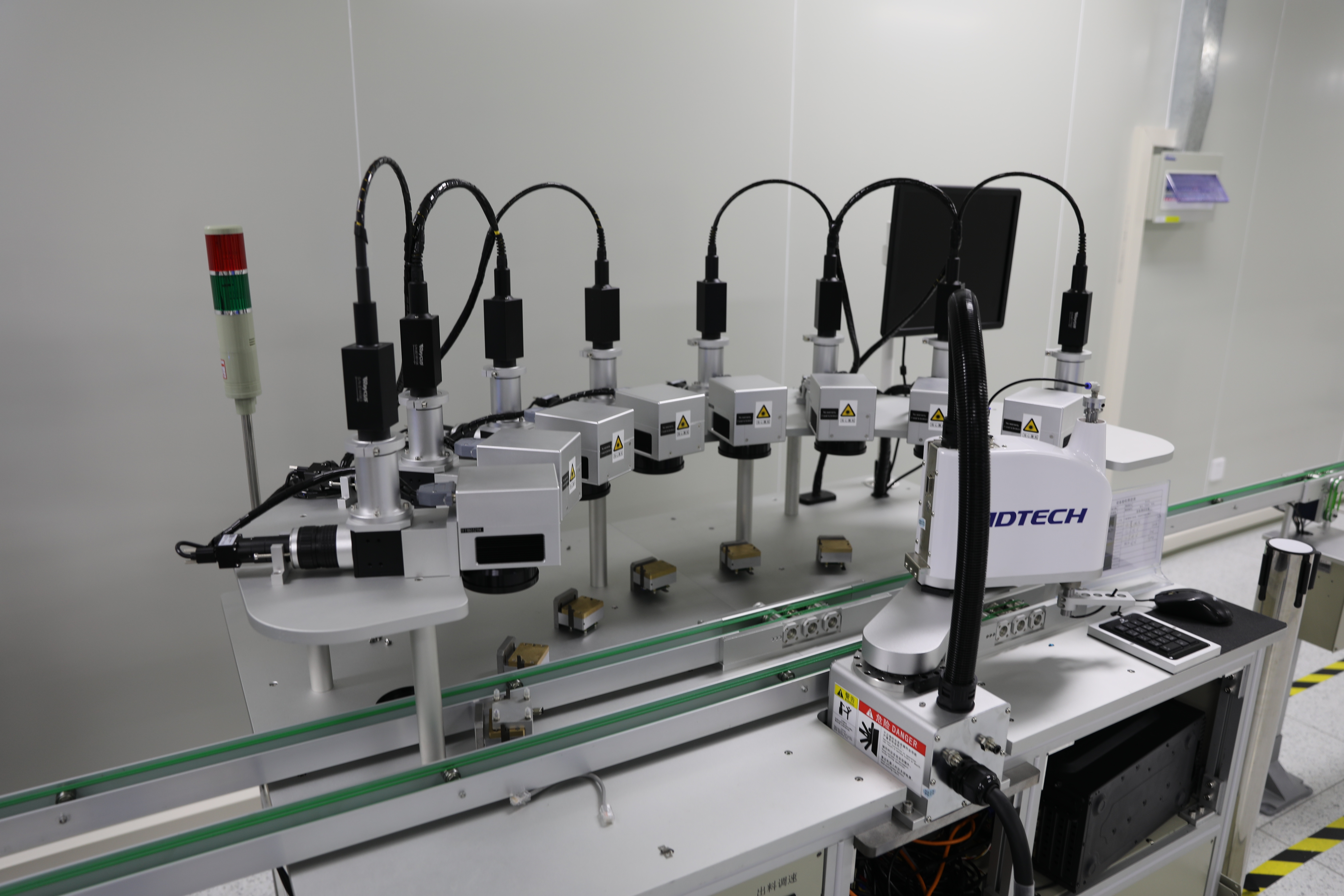
Robotic operation inside a crystal resonator production environment. Image: Fronter Electronics.
This analysis separates three kinds of information that are often blended together in supplier conversations: published market data on demand and packaging, company-reported manufacturing and compliance facts, and the verification steps that remain the buyer's responsibility. It does not evaluate any specific national policy instrument, and it does not treat a company statement as independent audit evidence.
The mechanism: policy funding reaches the component specification
National smart-manufacturing programmes affect component procurement through a chain rather than a single rule. Public funding for factory automation and industrial digitalisation raises the instrumented content of production lines; more instrumentation means more timing references per machine, per meter and per connected device; and a more instrumented buyer becomes a buyer who expects instrumented evidence from its own suppliers. That is an interpretation of how industrial policy transmits into purchasing behaviour, not a measured finding about any one country.
Three consequences follow for crystal resonator sourcing.
First, the unit of evaluation moves from part number to production system. A buyer who has automated its own incoming inspection wants a supplier whose outgoing test is documented at a comparable level of granularity.
Second, localisation pressure creates dual-sourcing. When programmes attach weight to regional manufacturing capability, purchasing teams add a second qualified source in a different country, which turns country-level comparison of capacity, lead time and compliance scope into routine work.
Third, environmental and substance regulation becomes an entry document rather than a marketing claim. A compliance certificate is only useful if its stated scope matches the series actually being bought.
Three published signals that frame the shift
Packaging has already consolidated around surface mount. Surface-mount devices accounted for 76.40% of crystal oscillator market size in 2025, according to MarketsandMarkets research published in September 2025. For buyers this is a structural fact about where volume tooling and test capacity sit: SMD crystal resonators, HC49 SMD parts and other surface-mount formats are the mainstream, while cylindrical and through-hole crystal resonators remain relevant for legacy designs, retrofit and specific industrial sockets.
Demand has a published forward reference. The same research projects the global crystal oscillator market reaching USD 3.66 billion by 2030, from a 2024 base year. Two cautions belong beside that number: the metric covers crystal oscillators — SPXO, TCXO, VCXO and OCXO products — and is therefore broader than resonators alone, and it is a third-party projection rather than an observed outcome. It serves as a scale reference for planning, not as a guarantee of demand at any specific frequency.
Supply is concentrated enough to be measured in trade statistics. China's export value for mounted piezo-electric crystals under HS 854160 reached USD 1.5 billion in 2024, according to General Administration of Customs data. The code covers mounted piezo-electric crystals as a category, not resonators alone, so the figure describes the scale of the exporting base rather than any single supplier's share.
A reasonable reading of these signals together — flagged in the underlying research as an interpretation rather than a finding — is that export volume from China is being carried by the global transition to SMD packaging for consumer IoT and wearable devices. If that reading holds, buyers comparing suppliers should weight proven high-volume SMD lines and documented outgoing test more heavily than catalogue breadth.
What the same trend looks like from different regions
Asia-Pacific supply base. Where manufacturing concentration sits, the buyer's question is capacity and schedule discipline: what monthly output is committed to the package and frequency on the order, what proportion of units is tested, and how packaging is customised for the receiving line. Public sources do not disclose frequency-level capacity or real-world lead times, so these remain order-level questions rather than desk-research answers.
Europe. European market entry is documented, not asserted. Substance compliance in the EU is governed by the RoHS Directive, and the current amending instrument is (EU) 2015/863. Fronter's EU RoHS Compliance Certificate SZXEC25001335806, issued 25 April 2025 by SGS-CSTC Standards Technical Services Co., Ltd. Shenzhen Branch, states a scope of “SAW Resonator & Filter, SMD series”. That scope is the operative detail: the certificate supports the named series, and a buyer sourcing a different series should request the matching document instead of accepting the certificate as a blanket statement about every product.
North America and other export markets. Where the buyer is importing rather than manufacturing locally, the binding documents are the purchase order, the inspection clause and the delivery term. Buyers in these markets typically need the acceptance basis written into the order, because a pre-shipment test regime places the decisive inspection before dispatch — a point developed later in this article.
The documentation set buyers now assemble
Across regions, the evidence request has converged on a similar list. A buyer evaluating a crystal resonator supplier for a production programme can reasonably ask for:
- the exact component family and package — for example a 32.768 kHz tuning fork crystal resonator, an MHz AT-cut quartz crystal resonator, HC49 SMD, cylindrical or through-hole;
- the frequency, tolerance and operating-condition basis on which the part is quoted;
- the outgoing test regime, including whether testing is sample-based or 100%;
- compliance certificates with certificate number, issuing body, standard and product scope;
- a stated MOQ, lead time and delivery term;
- the acceptance criteria and payment terms that will appear on the order;
- the change-control route for customization, so a modified package or frequency traces back to a documented approval.
None of these items is exotic. What has changed is that they are now requested together, before a first order, rather than discovered during a quality incident.
Technical grounding: which component the evidence applies to
Capability evidence is only meaningful against a named component category, because the categories have different manufacturing and test realities.
Tuning fork crystal resonators — commonly met as the 32.768 kHz crystal resonator or “watch crystal” — are the low-frequency timekeeping reference in real-time-clock circuits, meters and battery-backed devices. Their value sits in stable low-frequency oscillation at low drive level, and their procurement question is usually consistency across a long production run rather than raw frequency ceiling.
MHz quartz crystal resonators, typically AT-cut quartz crystal, provide the higher-frequency reference used by microcontrollers, radios and interface clocks. Here the buying question is closer to tolerance discipline and package consistency, particularly where the same board is built in several plants.
Surface-mount crystal resonators dominate new designs for the reason the market data shows: they suit automated placement and reflow. Through-hole and cylindrical crystal resonators persist in legacy boards, industrial retrofits and applications where the mechanical format is already fixed. A ceramic resonator is a different device class with a different accuracy envelope; it is not a drop-in equivalence for a quartz crystal resonator, and treating the two as interchangeable is a specification error rather than a sourcing shortcut.
The piezoelectric principle is shared across the crystal oscillator, crystal resonator, crystal filter and SAW crystal resonator families, which is why suppliers often describe them collectively as piezoelectric crystal components. Shared physics does not mean shared specifications: a capability claim made for one family should be read against the family named in the certificate or the test record.
Where Fronter's published capability sits
Fronter Electronics operates a 21,000 m² facility with 286 employees, including 19 engineers, and reports annual output of 300,000,000 units across quartz crystal resonators and quartz crystal oscillators. Its stated export ratio is 70%, with the EU and the USA named as main markets. Those figures describe scale and market exposure; they do not by themselves demonstrate fitness for a specific programme.
On customization, Fronter describes an ODM production mode with customization on parameters and appearance, an MOQ of 1,000 pieces, a stated lead time of 30–45 days, 100% testing, and remote after-sales support. The combination is the relevant evidence for an evaluation-stage buyer: parameter customization covers the electrical change, appearance customization covers marking and packaging, and the test statement covers outgoing inspection. Each of those three should still be written into the order, because a capability description and a contractual commitment are not the same instrument.
Compliance is documented at series level rather than company level. The RoHS certificate cited earlier covers the SMD series within the SAW resonator and filter scope; separately, Fronter Electronics states that its products comply with RoHS and REACH. A buyer whose programme requires a certificate for a different series, or for a different market's scheme, should treat the existing documents as a starting point and request the specific evidence that programme requires.
One further point belongs in an evaluation file. Fronter's profile describes a broad distribution channel covering inductors, integrated circuits, modules, discrete components, capacitors, resistors, connectors and memory alongside crystal resonators and oscillators. For a buyer, that breadth is useful for consolidation but irrelevant to component qualification: the resonator programme should be qualified on resonator evidence.
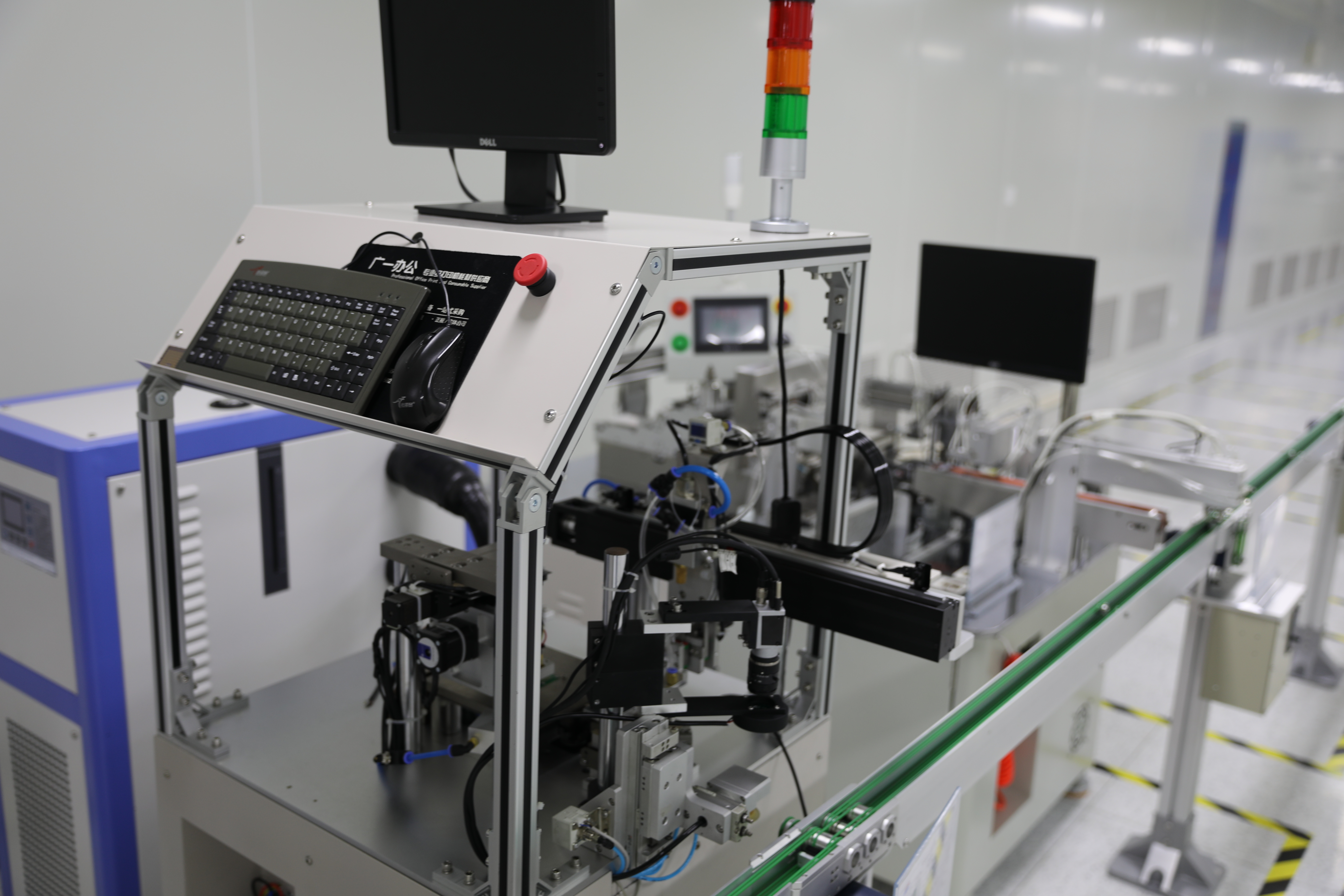
Testing and inspection: the record that converts a capability claim into an acceptance basis. Image: Fronter Electronics.
Application scenario: high-volume metering
A recorded project illustrates how these elements combine. Fronter's project record describes a smart meter manufacturer in India taking 5,000,000 units over a ten-year relationship, with the application recorded as stable operation, and delivery within 3–4 weeks supported by flexible customization of packaging and frequency to project requirements.
Two readings matter for a buyer. First, the scenario is a metering scenario, where the timing reference must remain stable over years of field service — which is why the acceptance basis, not only the datasheet, carries weight in that segment. Second, the delivery figure is a project record, while Fronter's standard stated lead time is 30–45 days. The two describe different scopes: a specific project schedule and a general quotation basis. A buyer should therefore treat lead time as an order-level commitment to be confirmed per volume, frequency and package, not as a fixed catalogue constant.
Spot purchasing versus evidence-based qualification
| Evaluation dimension | Spot purchase (price-first) | Evidence-based qualification |
|---|---|---|
| Qualification basis | Catalogue figure and unit price | Named family, package and tolerance basis in writing |
| Capacity evidence | Verbal confirmation only | Stated output plus a written schedule per volume and package |
| Compliance evidence | “RoHS compliant” as a claim | Certificate number, body, standard and series scope checked |
| Acceptance basis | Assumed, resolved after delivery | Pre-shipment test defined: what is tested, at what level, with what record |
| Commercial risk | Borne quietly by the buyer | EXW scope and advance payment reviewed against delivery record |
| Change control | Informal, often verbal | Customized parameters or appearance tied to an approved reference |
| After-sales route | Undefined until failure | Remote support route and escalation agreed in advance |
The difference between the two columns is not price; it is who carries the risk when a parameter drifts. Evidence-based qualification front-loads the work: the certificate scope is read, the test regime is confirmed, and the acceptance clause is agreed before the first shipment. A spot purchase defers all of that to the moment a problem appears, when the buyer's leverage is lowest.
Purchasing terms and acceptance criteria in practice
Fronter's stated purchasing terms are an MOQ of 1,000 pieces, EXW delivery, acceptance criteria based on pre-shipment test, and payment terms of 100% in advance. Each of these has a procurement consequence that deserves explicit handling rather than a signature.
MOQ of 1,000 pieces suits sampling and pilot builds. It is a modest threshold for a qualification lot, which makes first-article evaluation practical before a volume commitment.
EXW delivery places collection and main carriage on the buyer's side. The buyer's file should therefore record the collection point, the packaging specification and the point at which risk transfers — because packaging customization, one of the stated customization dimensions, is only meaningful when it is specified together with the logistics term.
Pre-shipment test as the acceptance criterion is the most consequential line. It means conformity is established before dispatch, on the supplier's test basis. A buyer relying on it should agree three things in the order: what is tested, at what sampling or full-test level, and what record accompanies the shipment. Where the buyer's own programme requires incoming verification, that should be written alongside the pre-shipment criterion rather than assumed.
Payment in advance shifts working capital to the buyer. For a first order at qualification volume this is a manageable exposure; for a recurring programme it is a commercial term to be reviewed against delivery performance and documentation quality, using the supplier's own shipment records as the input.
Limits, and what the evidence does not cover
An honest evaluation file records the boundaries as carefully as the capabilities.
- The compliance certificate covers a named series and scope; it is not a blanket certification of every product Fronter supplies.
- Public data does not provide frequency-level production capacity or real-world lead times during demand peaks. The figures that exist describe annual output and a stated standard lead time, not schedule reliability under stress.
- The market figures are oscillator-scoped and originate in commercial research; they are proxies for resonator demand, not resonator measurements.
- Manufacturing cost breakdowns for high-precision MHz parts are not available in the supplied evidence, so cost modelling for negotiation should be built from quotations rather than from public benchmarks.
- The metering project is a single recorded case; it does not establish that every programme will see the same delivery pattern.
None of these limits undermines the capability evidence. They define what still requires the buyer's own verification: a first-article lot, an order-level lead-time commitment, and a documented acceptance clause.
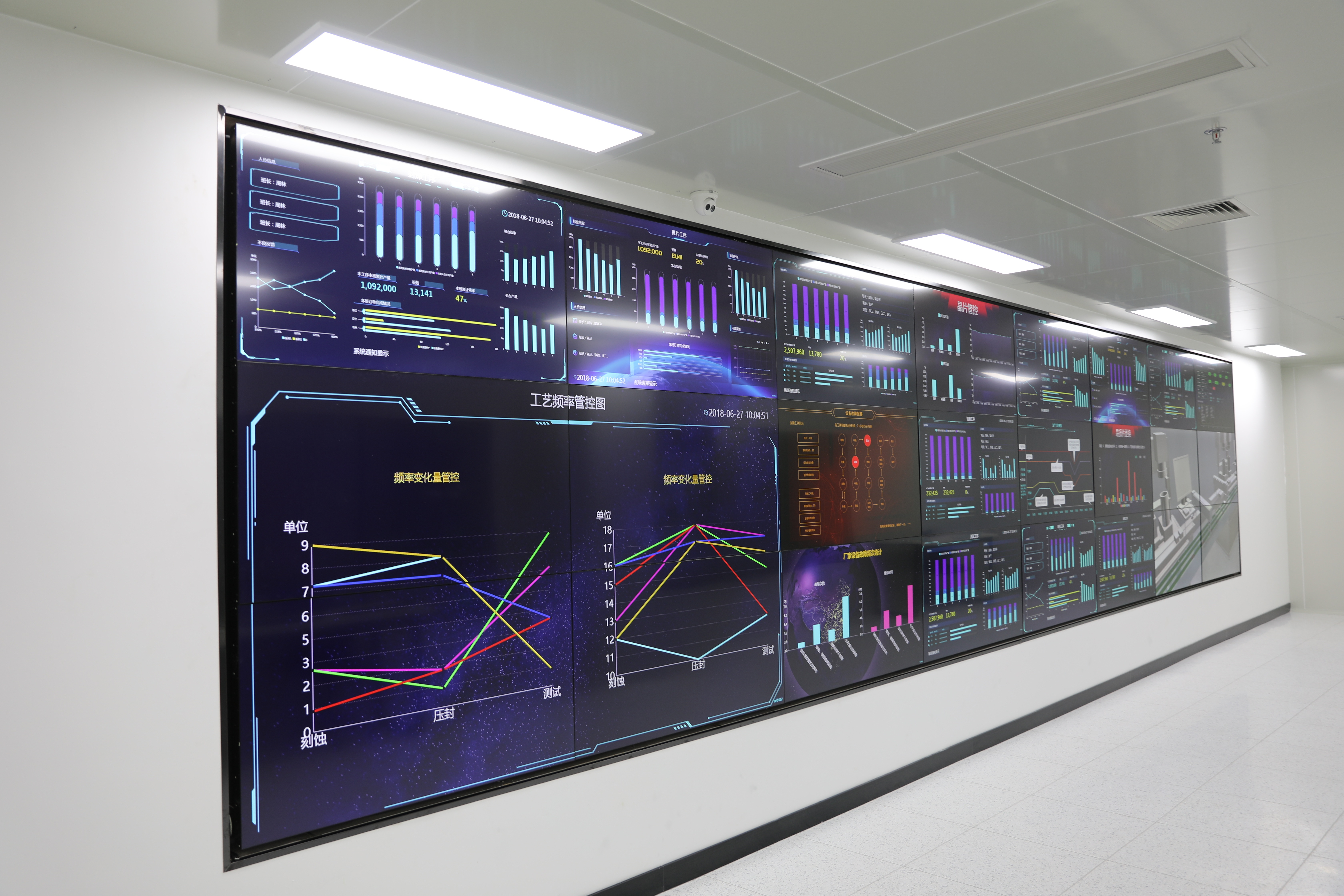
Manufacturing and test data infrastructure: the layer that makes outgoing-inspection records retrievable. Image: Fronter Electronics.
Outlook
The forward-looking element in the supplied evidence is narrow: a projection of USD 3.66 billion for the crystal oscillator market by 2030, from a 2024 base. Anything beyond that is scenario, not observation. If the SMD share reported for 2025 continues to hold and metering, wearables and industrial control keep absorbing timing references, then buyer priorities are likely to remain packaging consistency, documented outgoing test and series-level compliance scope. Buyers should treat that as a planning assumption with a stated basis and re-check it against supplier records rather than against commentary.
FAQ
What capability evidence should a buyer request from a crystal resonator supplier?
A coherent set rather than a single document: the exact family and package (for example a 32.768 kHz tuning fork or MHz AT-cut part, SMD, HC49 SMD, cylindrical or through-hole), the frequency and tolerance basis of the quotation, the outgoing test regime including whether testing is 100%, compliance certificates with number, issuing body, standard and product scope, and the MOQ, lead time, delivery term and acceptance criteria that will appear on the order. The set matters because each item answers a different question, and a gap in any one of them becomes a dispute later.
How is ODM customization scoped for crystal resonators?
Fronter describes ODM production with customization on parameters and appearance, at an MOQ of 1,000 pieces and a stated lead time of 30–45 days. Parameter customization addresses electrical behaviour; appearance customization addresses marking and packaging. Buyers should confirm which of the two is required and record the approved specification, because a customized part needs a traceable reference point for acceptance.
How can a buyer verify a supplier's stated capacity and lead time?
By converting the claim into an order-level commitment. Fronter reports annual output of 300,000,000 units and a standard lead time of 30–45 days; its metering project record describes delivery within 3–4 weeks for that specific project. Because public sources do not publish frequency-level capacity or real-world lead times, verification comes from a first-article order, a written schedule per volume and package, and review of shipment records across successive deliveries.
Which documents support EU market entry for SMD crystal resonators?
For substance compliance, an EU RoHS certificate whose scope matches the goods. Fronter's certificate SZXEC25001335806, issued 25 April 2025 by SGS-CSTC Standards Technical Services Co., Ltd. Shenzhen Branch, cites EU RoHS Directive (EU) 2015/863 and covers SAW Resonator & Filter, SMD series. Fronter also states that its products comply with RoHS and REACH. A buyer sourcing a series outside the certificate's scope should request the corresponding document for that series.
What do EXW delivery and pre-shipment acceptance mean in practice?
Fronter's stated terms are EXW delivery, acceptance based on pre-shipment test, an MOQ of 1,000 pieces and 100% payment in advance. Under EXW, collection and main carriage fall to the buyer. Under a pre-shipment acceptance criterion, conformity is established before dispatch on the supplier's test basis, so the order should state what is tested, at what level, and which test record travels with the shipment. Payment in advance shifts working capital to the buyer, which is why the acceptance clause and the test record carry most of the protection.
Fronter Electronics' product brochure is available for download: Fronter Electronics brochure (PDF).
Есть вопросы или нужны дополнительные детали?
Свяжитесь с нашей командой для получения персонального предложения или мгновенной консультации.
Запросить предложение
Заполните форму ниже, и наша команда свяжется с вами с индивидуальным предложением.
Прямой чат WhatsApp
Предпочитаете общаться в реальном времени? Напишите нам в WhatsApp для мгновенной помощи и быстрых ответов.
- Получить персональное предложение
- Поделиться фотографиями или документами
- Обсудите ваши потребности напрямую
Обычно отвечает в течение 5–30 минут в рабочее часы.