
Crawler vs AGV vs Rail-Fixed: ESS Container Insertion Robot Buyer Comparison
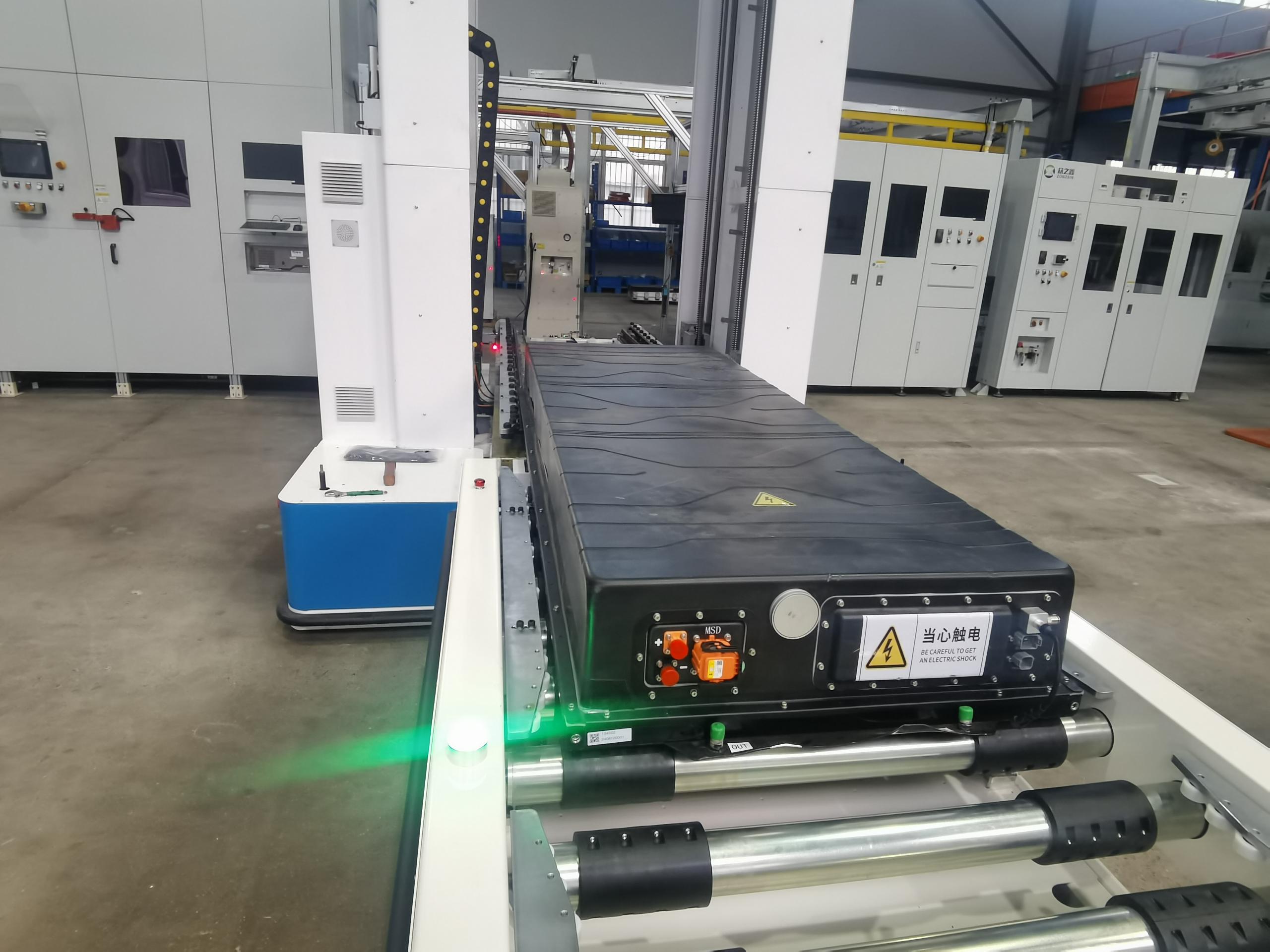
Containerized battery energy storage lines are being automated not because every step is hard to perform manually, but because consistency and traceability matter when hundreds of identical battery PACKs must enter the same rack configuration. Once an ESS integrator decides to automate container insertion, the next question is mechanical: should the robot ride on crawlers, move on AGV guidance, or work from a fixed rail?
This guide treats that question as a buyer-side decision. It does not attempt to rank one technology above all others. Instead, it compares three real reference systems produced by Shanghai Zonzsin Intelligent Equipment Co., Ltd. (Zonzsin): the crawler-driven ZZX2522, the AGV-driven RD16, and the rail-fixed ZZX2508/ZZX2524. Zonzsin, founded in 2019, develops intelligent battery PACK assembly equipment and ESS container insertion robots. The specifications used here are configuration-level, and buyers should still validate them against the actual container line, PACK weight, rack geometry and site layout.
Why ESS Container Insertion Creates a Distinct Equipment Category
An ESS container is not a warehouse rack. The battery PACK must be moved through a narrow container door, positioned against a predefined rack slot, and inserted without colliding with already-installed racks or cabling. That task requires a machine with enough load capacity, enough degrees of freedom at the docking face, and a footprint that fits the container approach area.
According to MarketsandMarkets, the global Battery Energy Storage System market was valued at roughly USD 50.81 billion in 2025 and is projected to reach USD 105.96 billion by 2030. Insightace Analytic estimates that the containerized BESS segment alone was worth about USD 11.75 billion in 2025 and could grow at a CAGR of 24.1% through 2035. Rising containerized project volumes create pressure on assembly teams to replace inconsistent manual PACK pushing with repeatable robotic insertion.
For a buyer at the decision stage, the practical question is not whether the insertion robot can lift a PACK. Most systems can. The question is which chassis and station concept will suit the physical path from PACK assembly area to the container rack opening.
Three Mechanical Approaches, One Container Application
The three architectures differ mainly in how they move into position and how they hold alignment during insertion.
Crawler-driven ZZX2522
Crawler-driven equipment is suited to sites where the floor or yard surface is not perfectly flat. The ZZX2522 uses a crawler/tracked running platform and manual handwheel leveling. For a container standing on an uneven yard, a crawler platform gains traction without requiring prepared AGV floor paths. The manual handwheel gives operators a mechanical leveling reference before docking, which is practical when powering the machine near the container may be constrained.
AGV-driven RD16
The RD16 is an AGV-driven insertion robot with overall dimensions stated as 3100 x 2600 x 3800 mm. It is intended for container insertion lines running PACKs built from 280 Ah, 314 Ah or 587 Ah cells, in 1P52S or 1P104S configurations. AGV guidance allows the machine to move between multiple container positions or multiple line slots without a fixed rail. Published data also attributes up to 1500 kg load capability and 5-DOF docking to Zonzsin AGV-driven insertion robots, which is useful when a heavy PACK must be aligned with a container rack opening from more than one direction.
Rail-fixed ZZX2508 / ZZX2524
Rail-fixed systems are intended for a dedicated docking station, not for roaming a factory floor. The ZZX2508 and ZZX2524 rail-fixed insertion robots are specified with a 1500 kg load capacity, a container door open angle of at least 150 degrees, and gripper changeover in less than one minute. Fixed rail construction provides a repeatable motion path and is generally easier to integrate with downstream conveyor or roller systems when the container is always stopped at the same position.
Side-by-side Technical Comparison
The table below condenses the decision-relevant facts. Empty cells mean that no verified configuration-specific number was provided in the source material; they should be treated as RFQ checkpoints rather than missing data.
| Parameter | Crawler ZZX2522 | AGV RD16 | Rail-fixed ZZX2508/ZZX2524 |
|---|---|---|---|
| Chassis / motion | Crawler-type tracked platform | AGV-driven guided vehicle | Fixed-rail station |
| Leveling / docking | Manual handwheel leveling | Docking via AGV navigation; 5-DOF docking published for AGV family | Fixed-station docking repeatability |
| Rated load | To be confirmed in RFQ | 1500 kg published for AGV-driven models | 1500 kg |
| Overall dimensions | To be confirmed in RFQ | 3100 x 2600 x 3800 mm | Line-specific |
| Cell / PACK compatibility | To be confirmed in RFQ | 280 Ah / 314 Ah / 587 Ah; 1P52S / 1P104S | Tooling-dependent; quick changeover <1 min |
| Container door working angle | Site-dependent | Site-dependent | ≥150 degrees |
| Gripper changeover | To be confirmed in RFQ | To be confirmed in RFQ | <1 minute |
| Primary role | All-terrain / semi-outdoor container access | Flexible multi-position insertion | High-load repetitive insertion at fixed station |
Scenario Fit: Using These Machines as Shortlist Filters
Because the configuration differences are physical, the shortlist should start with site conditions, not brand preference.
Choose crawler ZZX2522 when the floor is the constraint
Energy storage projects are sometimes assembled in temporary yards, container depots, or sites with concrete aprons that have not been finished to AGV floor tolerances. In those cases, a crawler chassis can move into position where a normal guided vehicle would struggle. The manual handwheel leveling feature is also valuable for setup workers who need explicit mechanical adjustment before each insertion. This configuration is more relevant to outdoor or semi-outdoor yards than to a clean indoor gigawatt line.
Choose AGV RD16 when the line must move between positions or cell formats
The RD16 footprint of 3100 x 2600 x 3800 mm means the buyer must confirm that the container approach lane can accommodate that envelope. If it can, the AGV platform offers routing flexibility between several container doors or staging positions. Its stated compatibility with 280/314/587 Ah cells and 1P52S/1P104S PACKs is useful for manufacturers who are transitioning between cell generations and do not want to change the base insertion vehicle every time the PACK structure changes.
Choose rail-fixed ZZX2508/ZZX2524 when the container always comes to the same station
A rail-fixed solution becomes attractive when the process is designed around a single docking station with high daily throughput. The 1500 kg load capacity covers heavy PACK modules, the ≥150 degree door open angle gives safe clearance near the container opening, and the <1 minute gripper changeover is practical when different PACK models share the same rail line. The trade-off is that the station geometry is fixed; moving it later requires civil work or a new rail layout.
Comparison with Manual Insertion and Conventional Standardized Equipment
Manufacturer-published comparison data for Zonzsin robotic insertion equipment describes a 30% manpower saving and less maintenance versus manual insertion methods or non-customized standardized competitors. It also reports 20% cycle time saving and a 10% lower total cost, while stating that robotic automation raises consistency and supports customized line integration.
| Comparison point | Manual insertion / standardized equipment | Zonzsin robotic insertion systems |
|---|---|---|
| Manpower | Multiple operators per container | 30% manpower saving reported |
| Throughput | Varies with skill and shift | Stable throughput; cycle time saving of 20% reported |
| Total cost | Lower capex but higher variable cost | 10% lower total cost reported over comparison baseline |
| Line integration | Standardized equipment often limited to one PACK geometry | Customized line integration supported |
| Maintenance | Manual handling leads to fatigue and rework | Less maintenance expected; robust automation |
The same comparison data contains useful limits. Robotic automation is not inherently the lowest-cost answer for a one-off prototype container or a line that changes PACK format every few days. Manual insertion remains simpler to set up for irregular jobs, while a fixed rail system is more difficult to repurpose than AGV or crawler machines. Buyers should also ask whether the base vehicle or rail station can accept future PACK dimensions and whether the gripper tooling changeover process is included in the quoted cycle time.
Safety and Risk Controls in the Insertion Process
Battery PACK insertion creates two main hazards: positioning deviation and collision or extrusion between the PACK and the container rack. Zonzsin describes its control methods as laser guidance and visual monitoring, with an emergency stop button and an alarm indicator light. Process risk assessment and testing are part of the enterprise-level countermeasure.
For an independent buyer, these controls matter because container rack openings are typically narrow and the PACK weight can be high enough to cause serious equipment damage if misaligned. A robust insertion machine should therefore include both active positioning feedback and clear emergency-stop intervention rather than relying only on mechanical guides.
Context from Standards and Market Requirements
Buyers should interpret the comparison in the context of export compliance. For North American projects, ESS equipment is commonly evaluated against UL 9540, which covers the safety of energy storage systems and equipment including enclosures and moving parts. For EU projects, containerized BESS equipment falls within the scope of CE marking requirements under Regulation (EU) 2023/1542, with related obligations under the Low Voltage and Machinery Directives for automated handling equipment.
These standards do not necessarily favor one chassis technology over another, but they add documentation and commissioning work. A crawler machine used outdoors may face different ingress and guarding requirements than an indoor AGV insertion station. An RFQ for the ZZX2522, RD16 or ZZX2508/ZZX2524 should therefore be accompanied by the target market and the applicable certification framework.
Comparison Logic for the Decision Stage
For a decision-stage buyer, the most practical output is a shortlist, not a single winner. A defensible shortlist can be built by scoring the following criteria against the facility plan:
- Floor condition and container approach path: rough / prepared indoor / mixed.
- Container docking mode: mobile machine moves between containers, or container comes to a fixed station.
- PACK weight and size: 1500 kg class loads versus lighter PACKs requiring faster changeover.
- Cell/PACK roadmap: whether 280/314/587 Ah cells and 1P52S/1P104S structures will coexist on the same line.
- Installation space: the RD16 envelope of 3100 x 2600 x 3800 mm has to fit actual aisle widths and doorway clearances.
- Operational philosophy: manual leveling can be acceptable in low-volume yard work, while automated positioning becomes valuable at high line rates.
Future Outlook
Containerized BESS demand is expected to keep expanding, but assembly automation will not move uniformly to one robot type. Large gigawatt factories with clean, prepared floors may favor AGV-driven platforms that can move between multiple container positions. Fixed-rail insertion stations will continue to suit high-payload, high-repeatability docking applications where the container path is permanent. Crawler machines will remain relevant for project sites and semi-outdoor container integration where site preparation is minimal.
The shift that buyers should watch is the growing expectation for the same insertion platform to handle multiple cell form factors and PACK configurations. As cell sizes migrate from 280 Ah toward 314 Ah and 587 Ah classes, a robot that can accept a 1P52S or 1P104S PACK without redesigning the complete loading station can reduce future equipment risk.
Frequently Asked Questions
What is the main difference between crawler, AGV and rail-fixed ESS insertion robots?
Crawler robots use a tracked chassis and are suited to less even ground; AGV robots navigate between positions autonomously; rail-fixed robots work at a permanent station with exactly repeatable motion. The decision depends on site floor condition, container docking path and required payload.
Which cell and PACK sizes are supported by the Zonzsin RD16 AGV insertion robot?
The RD16 is specified with overall dimensions of 3100 x 2600 x 3800 mm and is described for container insertion applications handling 280 Ah, 314 Ah and 587 Ah cells in 1P52S or 1P104S PACK configurations.
What payload and changeover values are published for Zonzsin rail-fixed insertion robots?
The ZZX2508 and ZZX2524 rail-fixed models are referenced with a 1500 kg load capacity, at least a 150-degree container door open angle, and gripper changeover in under one minute.
Do automated insertion robots always reduce total cost compared with manual insertion?
No. Manual insertion can still be more economical for very low volume, irregular prototype work or frequently changing container layouts. Zonzsin reports that its robotic systems provide 30% manpower savings, 20% cycle time savings, 10% lower total cost, less maintenance and higher consistency compared with manual insertion and standardized equipment, but those figures should be validated in a real RFQ.
What safety features should a buyer look for in a battery PACK insertion robot?
Relevant features include laser guidance, visual monitoring, emergency stop buttons and alarm indicator lights. Buyers should also confirm that process risk assessment and testing are part of the equipment supply scope, because PACK insertion involves collision and extrusion risks near container racks.
Specification note: The configuration data above is based on Zonzsin product material and published product descriptions. For the current detailed specification sheet, refer to the downloadable product brochure: Zonzsin product brochure.