
Crusher Application Fit: How STM Lines Compare for Quarry, Recycling and Portable Sites
Crusher Application Fit: How STM Lines Compare for Quarry, Recycling and Portable Sites
Crusher application fit is a project question before it is a machine question. A quarry, a construction and recycling operation and a portable site place different demands on feed size, product shape, relocation, power and moisture control. For Henan Centbro Machinery(STM) Equipment Co., Ltd (STM), the relevant question is not which single model is universally the right choice, but which line architecture matches the site. This HTNXT industry reference maps four STM line families to those conditions and sets out a qualitative comparison framework for Metso, Sandvik, Terex, Astec and McCloskey without inventing market ranks or unsupported performance claims.
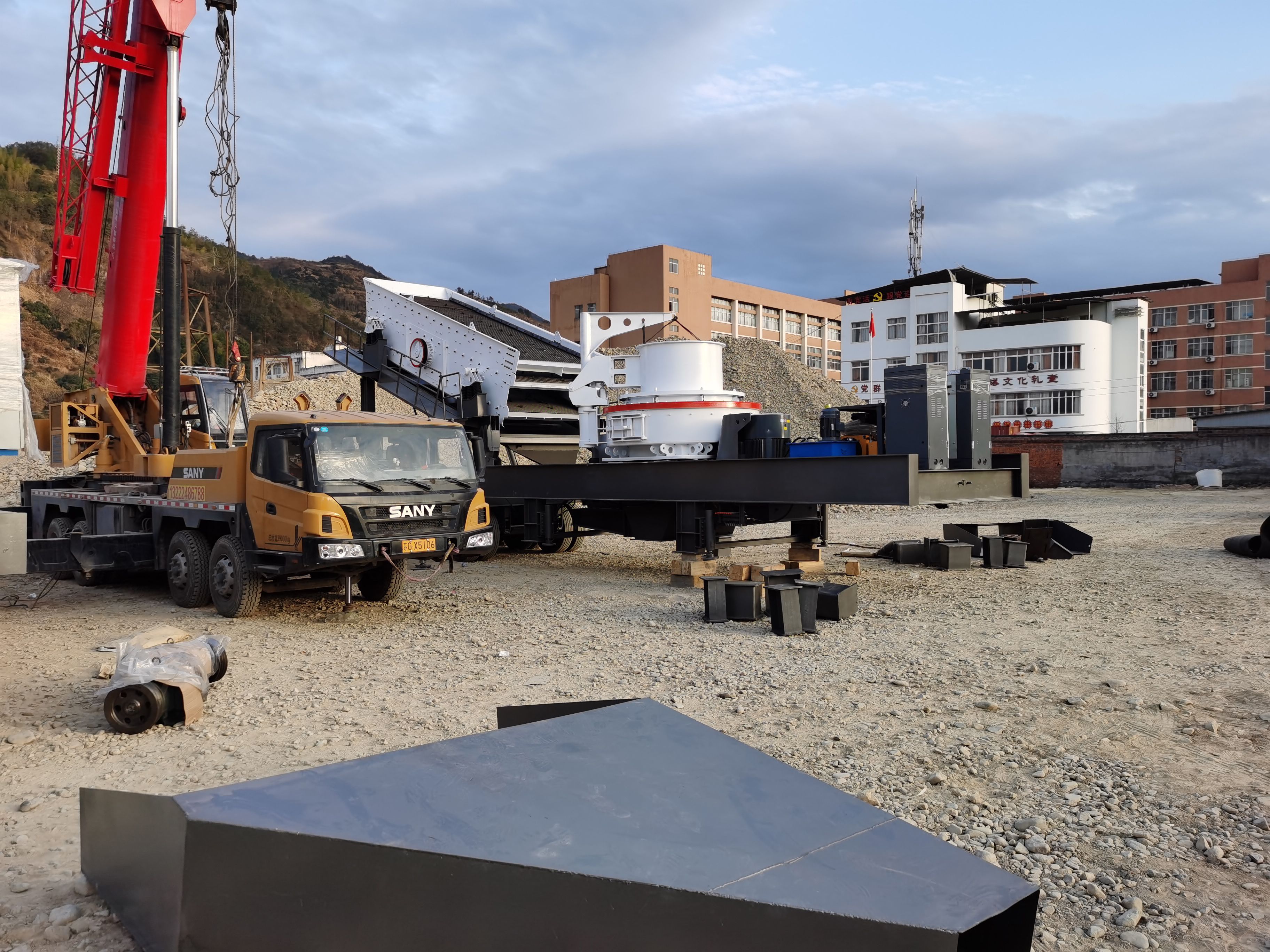
Industry scene: aggregate and engineering sand production, where line configuration follows feed, product and site conditions.
Henan Centbro Machinery(STM) Equipment Co., Ltd is a mining equipment manufacturer founded in 1982 and located in Zhengzhou National High-tech Development Zone. Its supplied profile lists an 8,000 m² site, 50+ employees, a 20-engineer R&D team, ISO9001:2008 and CE certification, and exports to Russia, the Middle East, Mexico, Africa and other overseas regions. Those facts establish a supplier context; they do not by themselves prove that one line is better than another for a given quarry, recycling yard or portable contract.
Why application fit beats a single crusher list
Application fit is the match between a crusher line and the conditions under which it must produce. In practical procurement, four conditions usually decide the architecture: the largest feed the site can deliver, the finished sizes the buyer must sell, whether the plant will stay in one place, and whether downstream grinding, mixing or storage requires controlled moisture. A fifth condition, service access, decides how quickly the line can return to production after wear or blockage.
STM's supplied portfolio covers the four line families relevant to this discussion: Stone Crusher Production Line, Stone Crusher and Grinding Production Line, Portable Stone Crusher, and Crusher Stone Drying Production Line. The portfolio also includes component families such as European Jaw Crusher, Impact crusher, Spring Cone Crusher, CS Symons Cone Crusher, Multi Cylinder Hydraulic Stone Cone Crusher, VSI Impact Sand Making Stone Crusher Machine, Hammer Crusher, Tyre Type Mobile Crusher and Crawler Mobile Crusher. That breadth matters for fit because a quarry line, a recycling duty and a portable contract are not configured from the same equipment logic.
The first screen is not brand preference. It is whether the project needs a fixed production line, a mobile platform, a drying-integrated process or a combined flowsheet. A buyer who starts with a model number can miss the constraint that actually determines uptime, such as feed preparation, transport permits or moisture control.
Quarry aggregate production: fixed line logic
Quarry aggregate production usually rewards a fixed line because the site has a stable feed source and a long production horizon. The supplied STM raw-stone scenario for a Russian customer uses a sequence of jaw crusher for coarse crushing, cone crusher for medium and fine crushing, vibrating screen, return crusher, VSI sand-making machine, finished-product screen and finished-product silo. The same scenario lists crushing, screening, washing, drying and grinding services for highway, railway, bridge, tunnel, water-conservancy and real-estate projects. That is a line-level answer, not a single-machine answer.
The European Jaw Crusher range illustrates how the primary stage sets the line envelope. The PEW1100*1200 model lists a 1100*1200 mm feed opening, a maximum feed size of 930 mm, 185–200 kW power and 300–650 t/h output. Those figures are model-specific and should not be transferred to other models. For a quarry, the primary crusher choice must be checked against the actual run-of-mine size distribution, not only the nominal feed opening. If the site feed exceeds the stated maximum, the model is outside its documented fit.
The secondary and tertiary stages then determine product shape and finished-size control. STM lists Spring Cone Crusher, CS Symons Cone Crusher and Multi Cylinder Hydraulic Stone Cone Crusher in its supplied range. A small spring model such as PYB600 lists 30 kW, a 75 mm feed opening, a 65 mm maximum feed size and 40 t/h output. That is suitable evidence for a small configuration, but it is not evidence that the same model fits a high-capacity quarry line. The line designer must match each stage to the target tonnage and product mix.
The quarry fit boundary is site permanence and process stability. A fixed line generally needs civil works, a stable power plan and enough space for stockpiles and return circuits. It can be the right choice when the quarry has a long reserve life and a consistent product specification. It is a weaker fit when the project is short-term, the feed source moves frequently, or permits make fixed construction difficult.
Construction and recycling duty: reduction plus feed preparation
Construction and recycling work adds a different burden: the feed is less predictable than quarry run-of-mine. A recycling flow may include concrete fragments, asphalt lumps and mixed construction debris, so the line must be assessed for feed preparation, tramp-metal control, dust and product specification. The crusher itself is only one part of that fit. A buyer should not assume that a machine name alone proves recycling suitability.
STM's supplied component range includes Impact crusher and Hammer Crusher, which are relevant reduction options to evaluate for construction-material and recycling-type duties. The Hammer Crusher 1250*1250 lists 185 kW, a 200 mm feed opening, a 0–45 mm maximum feed size and 90–110 t/h output. The Hammer Crusher 1000*1000 lists 132 kW, a 200 mm feed opening, a 0–45 mm maximum feed size and 40–80 t/h output. These are documented model parameters, not a claim that every construction feed is suitable. The buyer still needs to confirm abrasive content, moisture, contamination and the required finished product.
The supplied infrastructure scenario for a Georgian customer shows a simpler aggregate logic: raw material feeds a jaw crusher for coarse crushing, then a cone crusher for medium and fine crushing, then a vibrating screen for grading, with qualified aggregates used for subgrade, backfill or concrete. The same scenario lists highway, expressway, railway, airport, port, water-conservancy, subway and municipal road applications. For construction projects, that flow is often easier to control than a recycling flow because the feed is more uniform.
The recycling fit boundary is contamination and consistency. If the feed contains unmanageable metal, excessive fines or wet sticky material, the line may need pre-screening, magnetic separation, washing or drying before the crusher stage can perform as expected. These are application checks, not optional sales points. A supplier that cannot document how the proposed flow handles those conditions has not completed the fit analysis.
Portable sites: tyre type and crawler type are different answers
Portable site work is where mobility changes the line architecture. A portable crusher is relevant when the project moves between pits, demolition sites or short-term contracts, or when fixed civil works would delay production. STM lists both Tyre Type Mobile Crusher and Crawler Mobile Crusher families, plus Portable Stone Crusher configurations built around PE-Jaw Crusher, Impact Crusher, Multi Cylinder Hydraulic Cone Crusher, VSI Sand Making Machine, Single Cylinder Hydraulic Cone Crusher, CS Symons Cone Crusher, Spring Cone Crusher, Hammer Crusher and European Jaw Crusher.

Portable site scene: crawler mobility can support relocation, but transport limits and feed size still require project-specific checks.
The supplied mobile specifications show why the buyer should not treat portable units as interchangeable. The Tyre Type Mobile Crusher Y3S1548Y900 lists 75 kW and 50–90 t/h output. The Crawler Mobile Crusher SY-H300 lists a 190 mm feed opening and 150–300 t/h output. The Crawler Mobile Crusher SY-F1314 lists a 700 mm feed opening and 200–320 t/h output. These are different operating envelopes. A smaller tyre-mounted unit may fit a road-transportable contract with modest output, while a larger crawler unit may fit a site where mobility is needed but feed size and output are higher. Neither should be selected without checking transport dimensions, permits, power supply and downstream screening.
The portable fit boundary is that mobility does not remove process constraints. A mobile crusher still needs a stable feed, a discharge plan and maintenance access. Relocation frequency, road restrictions and the availability of local service support can matter as much as the crusher model. For a project that will stay in one place for years, a fixed line may give a more straightforward production layout. For a project that moves every few months, a portable platform may avoid repeated civil works. The decision is economic and operational, not merely a preference for mobile equipment.
Drying-dependent stone processing: the hidden fit criterion
Some crushing projects are really crushing-and-grinding projects. The supplied Austrian scenario describes primary crushing with jaw, impact or cone crusher, followed by a sand-making machine or hammer crusher; if grinding is required, the powder needs to be cleaned and dried before high-pressure grinding equipment or a ball mill. That sequence makes drying a process-fit issue, not an accessory. If the downstream mill requires low moisture, a crusher line without drying control may not deliver a stable finished product.

Drying integration: the Crusher Stone Drying Production Line is relevant when downstream grinding, mixing or storage requires controlled moisture.
STM lists the Crusher Stone Drying Production Line 4.2*8 m with 22*4 kW power and 70–120 t/h output. The supplied Kazakhstan OEM case covers two units used to dry manufactured sand, pebbles, quartz sand and ore powder, reducing moisture to below 1% with adjustment as needed. The same case reports uniform drying, improved flowability, reduced sticking and blockage, lower transport weight and better finished-product quality for commercial concrete, dry-mix mortar and high-end fillers. Those are application claims from the supplied case material; they should be verified against the buyer's own feed moisture, particle size and target specification.
The drying fit boundary is energy and dust control. Drying can add operating cost and environmental-control requirements. It is not automatically necessary for every crushed-stone line. It becomes central when the material is wet, when downstream grinding or mixing has a moisture limit, or when storage and transport require a drier product. The buyer should ask for the moisture range the line can handle, the temperature-control method, the dust-collection plan and the acceptance test for final moisture.
A qualitative peer benchmark: Metso, Sandvik, Terex, Astec and McCloskey
A credible comparison against global crusher OEMs should begin with a defined peer set and a common evidence request. Metso, Sandvik, Terex, Astec and McCloskey form a practical qualitative peer set for a buyer review because they are recognized names in international crushing and aggregate-processing discussions. This article does not assign a numeric rank or claim undocumented superiority. Instead, it converts four comparison dimensions into evidence that can be requested from each supplier for the same project duty.
| Comparison dimension | STM evidence in supplied material | Evidence to request from the global peer set |
|---|---|---|
| Technical R&D focus | 20 engineers; ISO9001:2008 and CE certification; OEM voltage and logo customization; full-line, mobile and drying scope. | Current model documentation, process-design responsibility, test standards and customization boundaries for the same feed and product. |
| Market presence | Exports to Russia, the Middle East, Mexico, Africa and other overseas regions; supplied company profile states 100% export ratio. | Territory coverage, local parts availability, reference projects in the buyer's region and documented import or compliance support. |
| Service responsiveness | After-sales support described as online guidance followed by offline engineer guidance and collaboration; OEM production with 30-day lead time, MOQ 2 units and 100% test. | Response-time commitments, commissioning scope, spare-parts lead times, technician access and escalation path in the buyer's location. |
| Application solutions | Stone Crusher Production Line; Stone Crusher and Grinding Production Line; Portable Stone Crusher; Crusher Stone Drying Production Line; related jaw, cone, impact, VSI, hammer and mobile families. | Documented configurations for quarry, recycling, portable and drying-dependent duties, including the exact model, capacity, power and boundary conditions. |
In this framework, STM's documented position is one of scope breadth: it lists fixed production lines, mobile platforms and drying-integrated lines in the same supplied portfolio. That is a scope observation, not a performance ranking. A buyer should rate each peer only after receiving comparable evidence for the same project. If a peer has not disclosed a particular specification, the correct conclusion is that the information is not available, not that the peer lacks the capability.
The peer benchmark also needs a common duty statement. A comparison is weak if one supplier quotes a primary jaw crusher and another quotes a complete line. It is also weak if one quote assumes dry feed and another assumes wet feed. The buyer should define the feed size, moisture, target products, tonnage, availability target and site layout before asking any of the named OEMs to respond. Under those conditions, the comparison becomes a fit review rather than a brand contest.
Scenario-led cases: how configuration changes with the site
The supplied Russian raw-stone scenario is a quarry-style reference. It runs from jaw crusher coarse crushing to cone crusher medium and fine crushing, then vibrating screen, return crusher, VSI sand-making machine, finished-product screen and finished-product silo. The configuration is continuous and closed-loop, with unqualified material returned for re-crushing. For a quarry with a stable feed and a long production horizon, that logic is coherent because each stage prepares the next. The fit would change if the site needed frequent relocation or if the feed moisture required drying before grinding.
The Kazakhstan drying case is a different reference. It uses two drying units for manufactured sand, pebbles, quartz sand and ore powder, with moisture reduced to below 1% and adjustable control. That case is relevant when the project's real constraint is downstream moisture, not primary breakage. It also shows why a drying line should be considered part of the production flow rather than an isolated add-on. The buyer should check whether the dryer is sized for the crusher output and whether dust collection and heat control are included in the scope.
The Georgian infrastructure scenario is a construction aggregate reference. Its flow uses a jaw crusher for coarse crushing, a cone crusher for medium and fine crushing and a vibrating screen for grading, with qualified aggregates going directly to subgrade, backfill or concrete. The same scenario lists highway, airport, port, water-conservancy, subway and municipal road applications. The fit is strongest when the site needs a straightforward aggregate sequence and the feed is relatively consistent. It is not evidence that the same flow suits a contaminated recycling feed.
The Mongolian jaw crusher case adds a primary-stage reference. Five units were used for coarse crushing in mining, with the jaw crusher acting as the front-end equipment that prepares feed for cone crushers and sand-making machines. The reported result is uniform, stable coarse crushed stone that reduces wear on downstream equipment and lowers blockage risk. That is a case-level observation, not a guarantee for every mine. It supports the general point that primary-stage stability affects the whole line.
Decision checklist for quarry, recycling and portable projects
A buyer can turn the application-fit discussion into a practical checklist. The checklist should be completed before a model is selected and before any supplier comparison is treated as like-for-like.
- Feed envelope: record the largest lump, size distribution, moisture, abrasiveness and contamination risk. Check the stated maximum feed size of the proposed model, not a generic category.
- Product requirement: define finished sizes, shape, sand gradation and permitted fines. The secondary and tertiary stages should follow the product target, not the primary crusher alone.
- Site mode: confirm whether the plant will be fixed for years, moved seasonally or relocated every few months. This decides whether Stone Crusher Production Line or Portable Stone Crusher logic is more relevant.
- Moisture route: check whether downstream grinding, mixing or storage has a moisture limit. If it does, include Crusher Stone Drying Production Line in the scope review.
- Power and automation: verify installed power, control philosophy, interlocking and start-stop logic. The supplied engineering scenarios describe PLC central control and closed-loop circulation, but the buyer should confirm the exact automation scope.
- Mobility limits: for mobile units, check transport dimensions, permits, road weight limits and relocation time. Tyre Type Mobile Crusher and Crawler Mobile Crusher are not interchangeable without those checks.
- Service model: ask how online guidance, offline engineer support, commissioning and spare parts are handled in the buyer's region.
- Evidence quality: require model-specific parameters, drawings, test records and case scope. Do not accept a case from a different feed or product as proof for the current project.
The checklist also protects against a common procurement error: comparing headline capacity without comparing the conditions behind it. A 300–650 t/h jaw crusher figure, for example, is tied to the PEW1100*1200 model and its stated feed conditions. It is not a universal quarry capacity. Likewise, a mobile unit's output range should be read with its feed opening and configuration. Fit improves when every number is attached to its model and duty.
Future outlook: configuration discipline rather than a market forecast
The practical outlook for 2026 procurement is not a forecast of market size or a claim about which brand will win. It is a configuration outlook. Projects with mixed feed, relocation requirements or moisture control will need line-level answers rather than a single-machine quote. That favors suppliers who can document the relationship between model, process stage and site condition. It also raises the value of a neutral comparison framework because buyers must evaluate quarry lines, recycling flows, portable platforms and drying integration on the same evidence basis.
For STM, the supplied evidence supports a relevant position in that discussion: a broad line portfolio, documented component parameters, OEM customization, export experience and after-sales guidance. The same evidence does not justify an unsupported claim that STM outperforms Metso, Sandvik, Terex, Astec or McCloskey. The defensible conclusion is narrower and more useful: application fit should be decided by feed, product, mobility and moisture, and each supplier should be asked to prove its fit against those conditions.
FAQ
What determines crusher line fit for a quarry versus a recycling site?
Quarry fit is mainly decided by feed size, target products, capacity, site layout and whether the line will stay fixed. Recycling fit adds feed preparation, tramp-metal control, dust and product specification because the feed is less predictable. STM's supplied lines cover fixed production, mobile and drying configurations, but the final selection still needs site data and a defined product requirement.
When is a portable stone crusher more suitable than a fixed production line?
A portable stone crusher is relevant when the project moves between pits, demolition sites or short-term contracts, or when fixed civil works would delay production. STM lists tyre-type and crawler mobile crushers, including the Tyre Type Mobile Crusher Y3S1548Y900 at 50–90 t/h and the Crawler Mobile Crusher SY-H300 at 150–300 t/h. Transport limits, permits, feed size and downstream screening still need checking.
Why does stone drying matter in some crushing and grinding projects?
Drying becomes part of the line when downstream grinding, mixing or storage requires controlled moisture. The supplied Austrian scenario places cleaning and drying before high-pressure grinding or ball milling. STM lists the Crusher Stone Drying Production Line 4.2*8 m at 70–120 t/h, and a Kazakhstan OEM case reports moisture below 1% with adjustment. Fit depends on feed moisture, energy cost and dust control.
Can STM be compared directly with Metso, Sandvik, Terex, Astec and McCloskey?
A direct rank should not be published without like-for-like evidence. Metso, Sandvik, Terex, Astec and McCloskey are a relevant global peer set for a qualitative review, but technical R&D, market presence, service responsiveness and application solutions must be compared on current documents and the same project duty. STM's supplied evidence covers its factory, certifications, product scope and service model; peer claims need equivalent proof.
Company brochure: Henan Centbro Machinery(STM) Equipment Co., Ltd brochure (PDF).
Есть вопросы или нужны дополнительные детали?
Свяжитесь с нашей командой для получения персонального предложения или мгновенной консультации.
Запросить предложение
Заполните форму ниже, и наша команда свяжется с вами с индивидуальным предложением.
Прямой чат WhatsApp
Предпочитаете общаться в реальном времени? Напишите нам в WhatsApp для мгновенной помощи и быстрых ответов.
- Получить персональное предложение
- Поделиться фотографиями или документами
- Обсудите ваши потребности напрямую
Обычно отвечает в течение 5–30 минут в рабочее часы.