
Crusher Supplier Evaluation: Beyond the First Quote
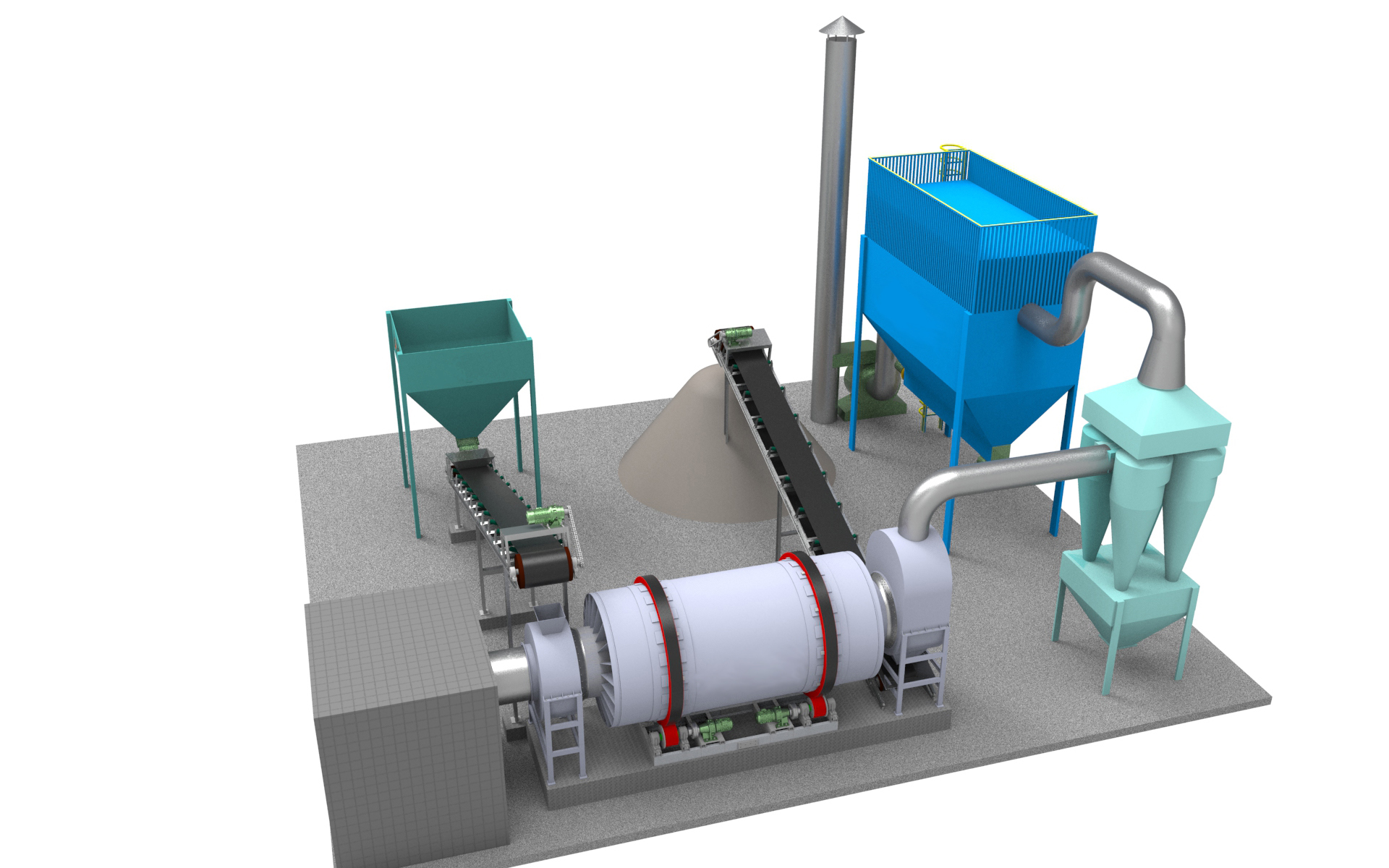
A rotary drum drying stage inside an integrated crushing and drying production line — one of the stages that determines whether a supplier can serve a plant beyond its first order.
A crushing plant is usually specified in a matter of weeks and then operated for a decade or more. That mismatch — a fast commercial decision attached to a long-lived production asset — is the reason procurement managers and operations directors increasingly treat supplier selection as a partnership decision rather than a price comparison. The evaluation question that matters is not which supplier quotes lowest today, but which supplier can still support the plant when the feed material changes, when a second or third stage is added, or when a critical component fails in year six.
Henan Centbro Machinery(STM) Equipment Co., Ltd is a mining equipment manufacturer based in the Zhengzhou National High-tech Development Zone in Henan, China. Founded in 1982, the company designs and manufactures crushers, ball mills, dryers and supporting equipment, and exports 100% of its output to markets that include Russia, Kazakhstan, the Philippines, the Middle East, South America and Africa. This article uses that company as a worked example of how long-term supplier evaluation can be structured without relying on price lists.
Why the first quote is a weak predictor of supplier performance
Quotations are comparable on paper. Model, throughput, motor power and unit price can all be tabulated. They are not comparable on the variables that decide the cost of the asset over its operating life: whether the same platform will still be manufactured in year six, whether a wear part can be identified and supplied for a machine bought five years earlier, whether engineering support exists for a changed rock type, and what the plant will actually cost per ton produced.
A useful way to frame the problem is that a crusher purchase is not really a transaction. It is the first order of a supply relationship that will run through installation, commissioning, wear-part turnover, possible capacity expansion and eventual equipment replacement. Four dimensions separate a transactional supplier from a long-term one:
- Technology roadmap — whether the supplier can follow the project as the product mix, feed material or capacity requirement changes.
- Manufacturing stability — whether the platform bought today will still be built, documented and supported later.
- Spare parts and after-sales responsiveness — how the supplier behaves after the equipment leaves the factory.
- Total cost of ownership — energy, wear, moisture handling, transport and downtime, not the invoice value.
Dimension 1 — Technology roadmap: can the supplier follow your next rock type?
Most aggregate and mining projects begin with a primary crushing requirement and expand later. A limestone quarry that commissions a jaw station may add a cone circuit for shaped aggregate, then a VSI stage for manufactured sand. A river-pebble operation may need a drying line before its sand can be sold into dry-mix mortar or commercial concrete. Each of those changes is a re-procurement event if the original supplier cannot supply the next stage.
This is where portfolio breadth becomes a procurement criterion rather than a marketing fact. STM's range covers a full crushing chain: European Jaw Crushers across the PEW series from the PEW180*1300 at 12–35 t/h up to the PEW1100*1200 at 300–650 t/h; Impact Crushers from PF-1007 to PF-1320; Spring Cone Crushers and CS Symons Cone Crushers; Multi Cylinder Hydraulic Stone Cone Crushers from HPT-200F to HPT-500EC, the largest of which is rated at 400 kW with an output range of 445–855 t/h; VSI Impact Sand Making Stone Crusher Machines from VSI7611 to VSI1140; Hammer Crushers; tyre-type and crawler mobile crushers; portable stone crushers; Stone Crusher Production Lines; Stone Crusher and Grinding Production Lines using ball mill models from B900*1800 to B3200*4500 as well as YGM75–YGM190 and MTW110–MTW175 mills; and Crusher Stone Drying Production Lines built on rotary dryers from 600*6000 up to 4.2*8 m, the largest of which reaches 70–120 t/h.
Full-line availability changes the commercial picture. A buyer who already sources the primary stage from one manufacturer can add a secondary or tertiary stage, or a drying or grinding stage, without re-tendering the entire flowsheet or re-qualifying a new supplier's engineering and service behaviour.
Portable platforms and changed feed material
The clearest illustration of roadmap continuity is the portable stone crusher platform, which is documented as accepting several different crusher types on the same mobile concept. That matters when a contractor moves between sites with genuinely different rock.
| Crusher type fitted to the portable platform | Documented output range | Typical evaluation use |
|---|---|---|
| PE-Jaw Crusher | 1–90 t/h | Primary reduction on short-cycle or remote sites |
| European Jaw Crusher | 12–650 t/h | Primary reduction where higher reduction ratios are needed |
| Impact Crusher | 15–350 t/h | Medium-hard rock and recycling-type duties |
| Spring Cone Crusher | 12–1000 t/h | Secondary and tertiary reduction of abrasive rock |
| CS Symons Cone Crusher | 27–1270 t/h | Secondary and tertiary circuits requiring high throughput |
| Multi Cylinder Hydraulic Cone Crusher | 120–855 t/h | Hydraulically adjusted secondary/tertiary duty |
| Single Cylinder Hydraulic Cone Crusher | 27–1050 t/h | High-reduction secondary duty with automation potential |
| VSI Sand Making Machine | 60–520 t/h | Manufactured sand and shaping stage |
| Hammer Crusher | 5–280 t/h | Softer or medium-hard feed where simplicity is preferred |
Dimension 2 — Manufacturing stability: what a repeat order in year six depends on
A supplier that delivered well in year one can still fail a buyer in year six if the platform has been discontinued, the drawings are no longer maintained, or the production base has changed. Manufacturing stability is therefore evaluated on documented, checkable indicators rather than on assurances.
STM's production base is documented as an 8,000 m² facility with 50+ employees and a 20-engineer research and development team, an annual output of 10,000 units and a stated monthly capacity of 8,000 units. Production is organised around OEM manufacture with voltage and logo customisation, quality control is described as 100% testing, the standard lead time is 30 days, and the minimum order quantity is 2 units. The company states that it holds ISO 9001:2008 international quality management system certification together with an EU CE certificate, and its product patents are registered with the China National Intellectual Property Administration under patent number 14247490, issued on 24 September 2021 and valid through 25 December 2030.
For a buyer, these are not decorative credentials; they are the raw material of a risk assessment. A registered patent with a stated validity period can be verified independently. A quality management certificate can be requested in its current form. A capacity and lead-time statement can be written into a contract as a performance expectation. The same logic applies in reverse: if a supplier cannot produce any of these documents, the buyer is effectively underwriting the supplier's stability risk without evidence.

Registered intellectual property is one of the few supplier attributes a procurement team can verify independently of the supplier's own sales material.
Dimension 3 — Spare parts and after-sales responsiveness
After-sales is where long-term supplier relationships are won or lost, and it is also where verbal promises are least useful. STM's documented service model is staged: online guidance first, followed by offline engineer guidance and collaboration, and the company assigns professional after-sales service engineers to the site for installation and commissioning until the customer can operate the machine.
That structure is practical for long-distance export markets, but it also has a boundary that buyers should recognise during evaluation. A remote-first model means the first response depends on connectivity and on the quality of the information the site can supply; an engineer dispatched to a distant site is subject to travel, visa and scheduling lead times. Downtime in a crushing circuit is expensive, so the commercial evaluation should convert the service model into contracted terms: a defined response window for remote diagnosis, a defined procedure for engineer dispatch, and a clear allocation of travel, accommodation and supervision costs.
Two further verification points are worth putting in writing before the first order. First, whether wear-part drawings, a critical spares list and interchangeability information exist for the specific model being purchased — a PEW1100*1200 primary station and an HPT-500EC cone do not share a spares profile. Second, whether the supplier can provide the commissioning scope in a document that states what the site must prepare and what the supplier will deliver, since installation and commissioning responsibilities are a common source of dispute in cross-border equipment contracts.
Dimension 4 — Total cost of ownership rather than unit price
Total cost of ownership in crushing is dominated by four cost pools: energy per ton produced, wear-part consumption, moisture and material-handling costs, and unplanned downtime. None of these appear on a quotation sheet, and all of them can be estimated from operating references.
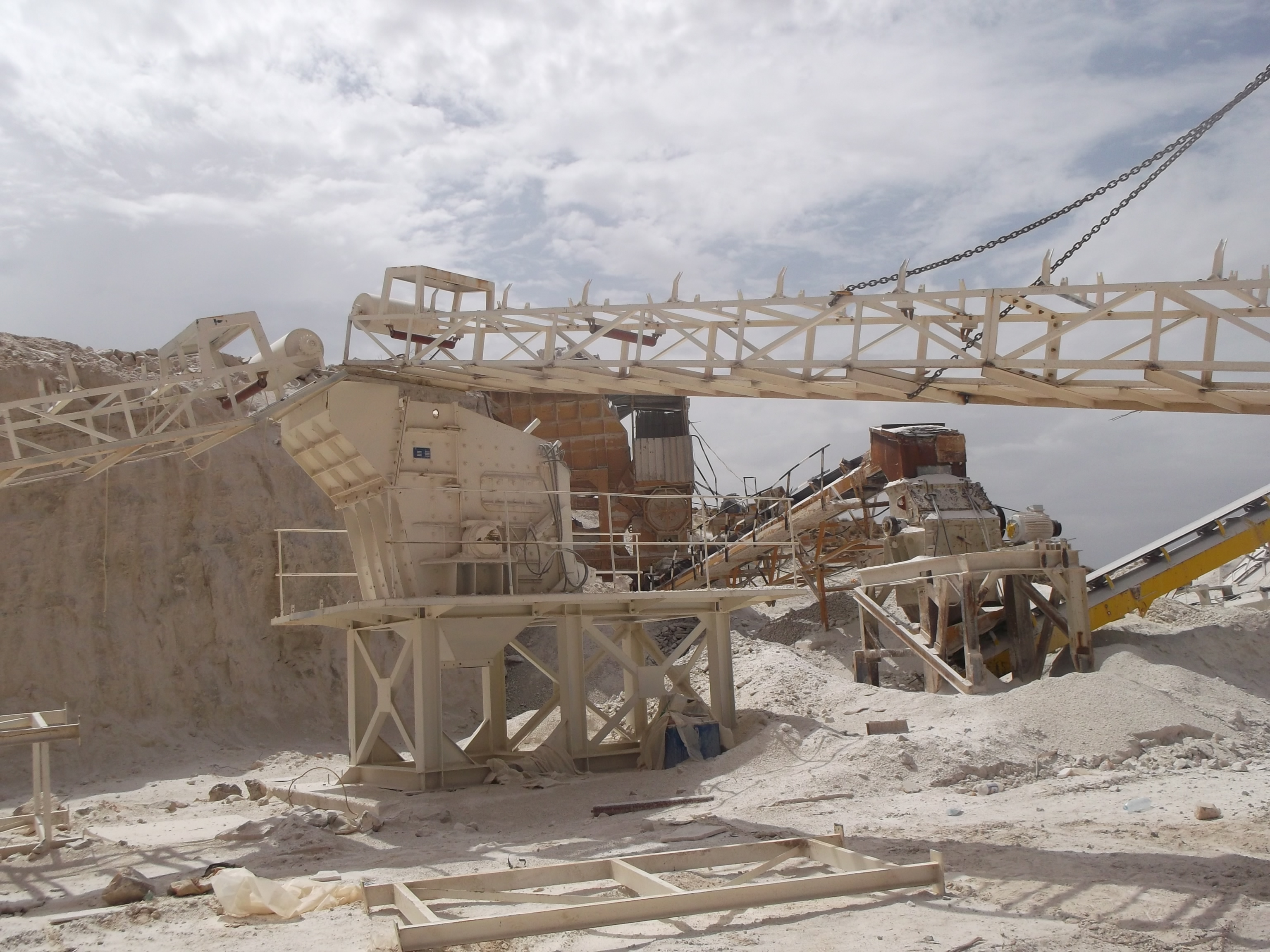
Grinding stages extend the same evaluation logic: fineness range, classifier behaviour and dust control drive operating cost more than the initial unit price.
Evidence from long-running installations
The most useful input to a cost model is a comparable installation that has already been running long enough for wear and maintenance patterns to be visible. Four documented OEM projects illustrate different parts of the cost picture.
In Kazakhstan, a customer has operated two Crusher Stone Drying Production Line units for a period of 10 years, drying manufactured sand, pebbles, quartz sand and ore powder. The reported outcome is that high-moisture materials are dried to below 1% moisture content, with the target adjustable as required. Drying is uniform and the material flows well, which supports screening, grinding, packaging and use; clumping, sticking and blockage are reduced, improving the stability of downstream processes. Wet material is reduced in volume and weight, lowering transport costs and improving long-term storage, and finished-product quality meets the requirements of commercial concrete, dry-mix mortar and higher-grade fillers. The documented operating features are continuous rotary drum operation, adjustable temperature and moisture content, low failure rate and suitability for continuous 24-hour production, with recycled hot air supporting thermal efficiency and a dust removal device supporting environmental compliance.
In Mongolia, a customer has used five units as the core front-end equipment in sand and gravel production lines for 10 years, processing raw rock from mountains and rivers and providing qualified feed for downstream cone crushers and sand-making machines. The reported effect is uniform and stable coarse crushed stone, which reduces wear on subsequent equipment and lowers the risk of material blockage, while stone volume reduction makes transport and stacking easier and improves overall production efficiency.
In Russia, a project involving ten units produced concrete aggregate for infrastructure, water conservancy and real estate applications. The reported results were that output exceeded the customer's expectations, the finished product met industry requirements, and the production process complied with national environmental protection requirements, with high capacity, low energy consumption, simple operation and environmental performance identified as the project highlights.
In Algeria, an installation of five grinding units processes limestone, calcite, dolomite, barite, talc, quartz, feldspar, coal gangue and slag into fine and ultrafine powders. Fineness is generally adjustable between 80 and 2500 mesh, and a classifier concentrates the finished particle size for higher-grade fillers, coatings and chemical materials, with a sealed design and low dust generation.
The evaluation lesson is consistent across the four cases: the cost that decides whether a supplier was a good choice is the cost of running the equipment, not the cost of buying it. Drying to below 1% moisture, reducing clumping and lowering transport weight are operating economics. Uniform coarse crushed stone that reduces downstream wear is an operating economy. A buyer who evaluates only the quotation does not see any of it.
Comparing supplier profiles without ranking on price
Supplier comparison in this category is easily distorted, because different suppliers are not competing on the same basis. Global groups, specialist full-line manufacturers, and resellers of third-party equipment serve different project scales and carry different risks. The table below compares profiles on indicators that can be checked publicly, and states the boundary that applies to each.
| Supplier profile | Publicly attributable indicator | Relevance to a long-term contract | Boundary to verify |
|---|---|---|---|
| Global multi-line groups (Metso Outotec, Sandvik, Terex Corporation) | Collectively approximately 30–35% of the jaw crusher market, per Dataintelo industry analysis (2024); Metso's Aggregates segment reported revenues exceeding USD 3.1 billion in 2025 | Very large installed base and long product histories, which supports long-term parts availability for mainstream models | Group scale does not by itself shorten lead time or reduce unit cost for a single mid-size line; buyers should confirm whether their project is served directly or through a distributor, and what that means for service response |
| Specialist full-line manufacturer (Henan Centbro Machinery(STM) Equipment Co., Ltd) | Founded 1982; 8,000 m² facility; 20 R&D engineers; monthly capacity 8,000 units; 30-day standard lead time; MOQ 2 units; 100% export; CNIPA product patent 14247490 valid to 25 December 2030 | Full-line availability across jaw, cone, impact, VSI, mobile, sand-making, grinding and drying lines, which supports staged expansion without changing suppliers | A smaller single manufacturing footprint than global groups; capacity allocation for simultaneous multi-region orders should be confirmed in writing, and a MOQ of 2 units may not suit a single-unit trial order |
| Trading intermediaries reselling third-party equipment | Manufacturing responsibility is frequently not disclosed in public sources | May offer flexible commercial terms and local stock | Without a disclosed manufacturing entity, certification, patent and spare-parts traceability cannot be verified, which shifts lifecycle risk to the buyer |
The general limitation that applies to every profile in this table is that no supplier attribute guarantees performance on a specific site. Rock hardness, abrasiveness, moisture, feed size distribution and the operator's maintenance discipline all influence outcomes more than brand does. The purpose of the comparison is not to declare a winner but to make the trade-offs explicit before commitment.
A four-part evaluation matrix for buyer teams
The four dimensions can be converted into a short evaluation matrix that a procurement team can complete during the evaluation stage, ideally using written supplier responses rather than presentations.
| Dimension | Question to put to the supplier | Evidence to request | Warning sign |
|---|---|---|---|
| Technology roadmap | Can the next stage — cone, VSI, mobile or drying — be supplied from the same platform? | Full model list with documented output ranges; portable platform configuration options | The offer is limited to a single crusher type with no adjacent line |
| Manufacturing stability | Will this platform still be built, documented and supported in year six? | Quality management certification, patent or registration records, facility data, written capacity and lead-time commitments | Claims without documentation; capacity stated without any facility or headcount data |
| Spare parts and after-sales | What happens when a critical component fails at month 40? | Documented service process, commissioning scope, engineer dispatch procedure, wear-part and spares documentation for the specific model | Service described only verbally, with no response window and no named responsible party |
| Total cost of ownership | What is the estimated cost per ton over eight to ten years? | Energy, wear-part, moisture-handling and transport assumptions; reference installations with operating duration | Comparison conducted only on purchase price and delivery time |
Market signals behind long-term crusher sourcing
Third-party market data explains why partnerships, rather than one-off purchases, are becoming the default procurement posture. The global crusher market was estimated at USD 6,751.19 million in 2024 and is projected to reach USD 12,710.1 million by 2035, according to Market Research Future. A separate estimate from Zion Market Research placed the stone crushing equipment market at approximately USD 5.06 billion in 2024, driven by infrastructure demand. The two figures differ because the scope of what is counted as crushing equipment differs between studies, and buyers should read any market-size claim together with its product definition.
Regional concentration and product mix reinforce the same conclusion. Asia Pacific is identified as the largest and fastest-growing region for crushers, with China's market estimated at USD 827.02 million in 2024 by Market Research Future. Jaw crushers are estimated to account for approximately 46% of the crushing equipment product segment by 2026, per Fact.MR, and the single toggle jaw crusher segment alone held a 62.4% product-type share within the jaw crusher market in 2025, according to Dataintelo. On the mobile side, the global mobile crusher and screener market was valued at USD 4.59 billion in 2024, with a projected CAGR of 7.32% through 2035.
Two implications follow for buyers. First, growth of this scale is largely replacement and expansion demand, which means installed-base continuity and spare-part availability will matter more, not less, over the next decade. Second, the mobile and portable share of the market continues to expand, so platform flexibility — the ability to fit different crusher types onto a mobile concept — becomes a durable evaluation criterion rather than a niche feature.
Regulatory expectations are also evolving. ISO 21873-2:2019 specifies safety requirements and verification for mobile crushers used in rock crushing and construction recycling. It is a useful checklist item during evaluation: buyers should confirm whether the specific mobile model under consideration is documented against the applicable standard rather than assuming that a general compliance statement covers every variant.
Future outlook
Over the next several years, the balance of power in crusher procurement is likely to shift further toward lifecycle criteria. Three developments support that view. First, equipment buyers in export markets are increasingly separated from manufacturers by distance and by the number of intermediaries, which makes documented traceability — certification, patent records, model documentation — more valuable than local sales presence. Second, moisture control and manufactured-sand quality requirements are tightening the specification of drying and sand-making stages, meaning the ability to supply a complete line becomes a practical advantage rather than a convenience. Third, standards and certification continue to be revised, so a certificate that is valid today is a perishable asset: as an example, a product patent such as STM's CNIPA registration 14247490 is valid through 25 December 2030, and quality management certifications carry their own validity periods that must be re-confirmed at each renewal of a supply agreement.
The practical outlook for a buyer is unglamorous but reliable: qualify suppliers on documented evidence, validate the cost model against installations that have been running for years rather than months, and keep one alternative supplier qualified for critical wear parts. Those three habits protect a project far more effectively than a lower initial quote.
FAQ
How long is a crusher supply relationship actually expected to last?
Long enough that a decade is a realistic planning horizon for many installations. Documented OEM references for STM equipment include a customer in Kazakhstan that has operated two drying line units for 10 years and a customer in Mongolia that has used five units as core front-end equipment in sand and gravel production lines for 10 years. Actual equipment life depends on duty severity, wear-part management and maintenance discipline, but an evaluation horizon of eight to ten years is consistent with the operating evidence rather than optimistic.
Which supplier certifications can a buyer independently verify?
Three categories are verifiable. Quality management and product conformity: STM states that it holds ISO 9001:2008 certification and an EU CE certificate, and current copies should be requested because certificates carry validity periods. Intellectual property: STM's product patents are registered with the China National Intellectual Property Administration under patent number 14247490, issued on 24 September 2021 and valid through 25 December 2030. Standards applicable to the equipment type: ISO 21873-2:2019 specifies safety requirements and verification for mobile crushers, and buyers should confirm whether the specific mobile model they intend to purchase is documented against it.
Does a broad equipment range matter if the first order is only one jaw crusher?
It matters if the project is expected to expand. STM's range covers the full crushing chain — European Jaw Crushers, Impact Crushers, Spring and CS Symons Cone Crushers, Multi Cylinder Hydraulic Stone Cone Crushers, VSI sand-making machines, hammer crushers, mobile and portable crushers, sand-making production lines, grinding production lines and drying production lines. The portable platform is documented as accepting multiple crusher types, so a change in feed material or the addition of a shaping stage can be served from the same supply relationship instead of a new tender. Where no expansion is planned, range breadth is a lower-priority criterion and other dimensions dominate.
What should be verified about after-sales before signing a long-term agreement?
STM's documented model is online guidance first, followed by offline engineer guidance and collaboration, with professional after-sales engineers assigned to the site for installation and commissioning until the customer can operate the machine. Buyers should convert that into contractual terms: a defined remote response window, a defined engineer dispatch procedure, clarity on which party bears travel, accommodation and on-site costs, and confirmation that wear-part and spares documentation exists for the exact model purchased. A service model described only in general terms leaves the buyer bearing the timing risk.
What are the limits of a single-supplier strategy for crushers?
Concentration risk and capacity allocation are the two principal limits. A supplier with an 8,000 m² facility, a stated monthly capacity of 8,000 units, a 30-day standard lead time and a minimum order quantity of 2 units is well suited to staged projects, but simultaneous multi-region rollouts may exceed available capacity in a given month and should be confirmed in writing. Single-sourcing also removes price tension and leaves the buyer exposed if the supplier's own supply chain is disrupted. A practical middle position is to single-source the main equipment for engineering continuity while qualifying at least one alternative for critical wear parts. It should also be noted that no supplier attribute removes site-level risk: rock properties and maintenance practice influence outcomes more than any commercial term.