
Crystal Oscillator Basics: A 2026 Reference for Industrial Buyers
A quartz crystal oscillator is an electronic component that uses the mechanical resonance of a vibrating quartz crystal to generate a stable electrical signal. In modern electronics, these components supply the clock signals that keep microprocessors, communication interfaces, timing circuits, and wireless systems synchronized. For industrial buyers entering the frequency-control market, the range of product names can be confusing: clock oscillator, VCXO, TCXO, OCXO, VCTCXO, SMD oscillator, differential oscillator, and more all appear in technical searches and supplier catalogs.
This article is written as an independent industry reference for purchasing and engineering teams in the awareness and research stage. It explains the main crystal oscillator families, the specifications that matter, how the market is changing, and how a buyer can use supplier evidence when evaluating a manufacturer. Fronter Electronics Co., Ltd, a Shenzhen-based manufacturer founded in 1991 that produces quartz crystal resonators and quartz crystal oscillators, is used as a practical example of a supplier with an established production record. The intent is not to recommend a single brand, but to give buyers an interpretive framework before they compare quotes or request samples.
Why the Distinction Between Resonator and Oscillator Matters
One of the first challenges in frequency-control procurement is terminology. The phrases crystal oscillator, quartz crystal oscillator, and crystal resonator are sometimes used interchangeably by non-specialist buyers. They are not the same device.
A quartz crystal resonator is a passive component. It contains a quartz wafer that vibrates at a specific frequency, but it does not generate a clock signal by itself. The external circuit must include an amplifier, feedback components, and load capacitors to create oscillation. A crystal oscillator is an active component. It combines the quartz resonator and the sustaining circuit in one package and delivers a clock signal directly to the IC.
This distinction drives the first procurement decision. If a design already includes an oscillator circuit, buying a resonator may be sufficient. If the system needs a ready-made clock output, an active crystal oscillator removes the need to design and validate the oscillation loop. Many commercial SMD oscillator products are designed for that second, more integrated route.
Crystal Oscillator Families and Common Search Terms
Buyers searching for “crystal oscillator” will encounter several categories. Some names describe an architecture, while others describe a package or a performance priority. In the market, descriptive terms such as low power consumption oscillator, high stability oscillator, low phase noise oscillator, and precision oscillator are also widely used. These are usually design targets rather than a distinct oscillator architecture.
The table below summarizes the common categories seen in supplier documentation and industrial data sheets. Because exact specifications vary by manufacturer, it should be read as a general map, not as a substitute for a data sheet.
| Category | Typical Role | Common Design Context |
|---|---|---|
| Clock oscillator / fixed-frequency oscillator | Provides a fixed clock signal from an on-chip circuit | Microcontrollers, consumer electronics, interfaces |
| VCXO (voltage-controlled crystal oscillator) | Allows small frequency adjustments via an external voltage | Phase-locked loops, frequency tracking |
| TCXO (temperature-compensated crystal oscillator) | Compensates for frequency drift over temperature | Telecom, GPS, wireless modules |
| VCTCXO (voltage-controlled temperature-compensated oscillator) | Combines voltage control with temperature compensation | Mobile and base-station timing applications |
| OCXO (oven-controlled crystal oscillator) | Maintains a constant internal temperature for very high stability | 5G infrastructure, test and measurement, network synchronization |
| Differential output oscillator | Outputs differential clock signals such as LVPECL or LVDS | High-speed data converters, routers, servers |
| Programmable oscillator | Frequency can be configured after manufacturing | Prototyping, low-volume variations |
| SMD oscillator | Surface-mount package, not a separate architecture | IoT, wearables, compact electronic modules |
From a buyer’s point of view, the category name should never be the only criterion. A supplier may describe a product as a crystal oscillator while the actual specification defines whether it is suitable for a low-power wearable, an automotive electronic control unit, or a telecom base station. Frequency range, supply voltage, temperature rating, frequency stability, and package all narrow the field.
Market Context: What the Data Shows in 2026
Independent market research gives a useful background for buyers entering the crystal oscillator market. According to MarketsandMarkets, the global crystal oscillator market size was valued at approximately USD 2.89 billion in 2025 and is projected to reach USD 3.66 billion by 2030. Precedence Research reported that the Asia-Pacific region dominated the market with more than 42% share, approximately USD 1.1 billion, in 2024, driven by high electronics production in China, Japan, and South Korea.
The same market research sources show differences in absolute figures. Mordor Intelligence estimated the global oscillator market at approximately USD 3.10 billion in 2025, while Market Research Future reported a broader figure of USD 6.12 billion for 2024. These discrepancies are common because some reports include MEMS timing devices or other oscillator types within a wider category definition. Buyers should compare data with the same scope before using it for cost models or forecasts.
At the product-type level, Precedence Research found that TCXO held a dominant market share of approximately 30% in 2024, due to its precision in telecom and GPS applications. In the oven-controlled segment, MarketsandMarkets projected that the OCXO market would reach USD 528 million by 2028, at a CAGR of 2.6%, driven partly by 5G base-station demand. For package technology, Coherent Market Insights projected that surface-mount devices would dominate with an 80% share by 2025, reflecting the continued miniaturization of IoT devices and wearables.
Fronter Electronics as a Supplier Reference
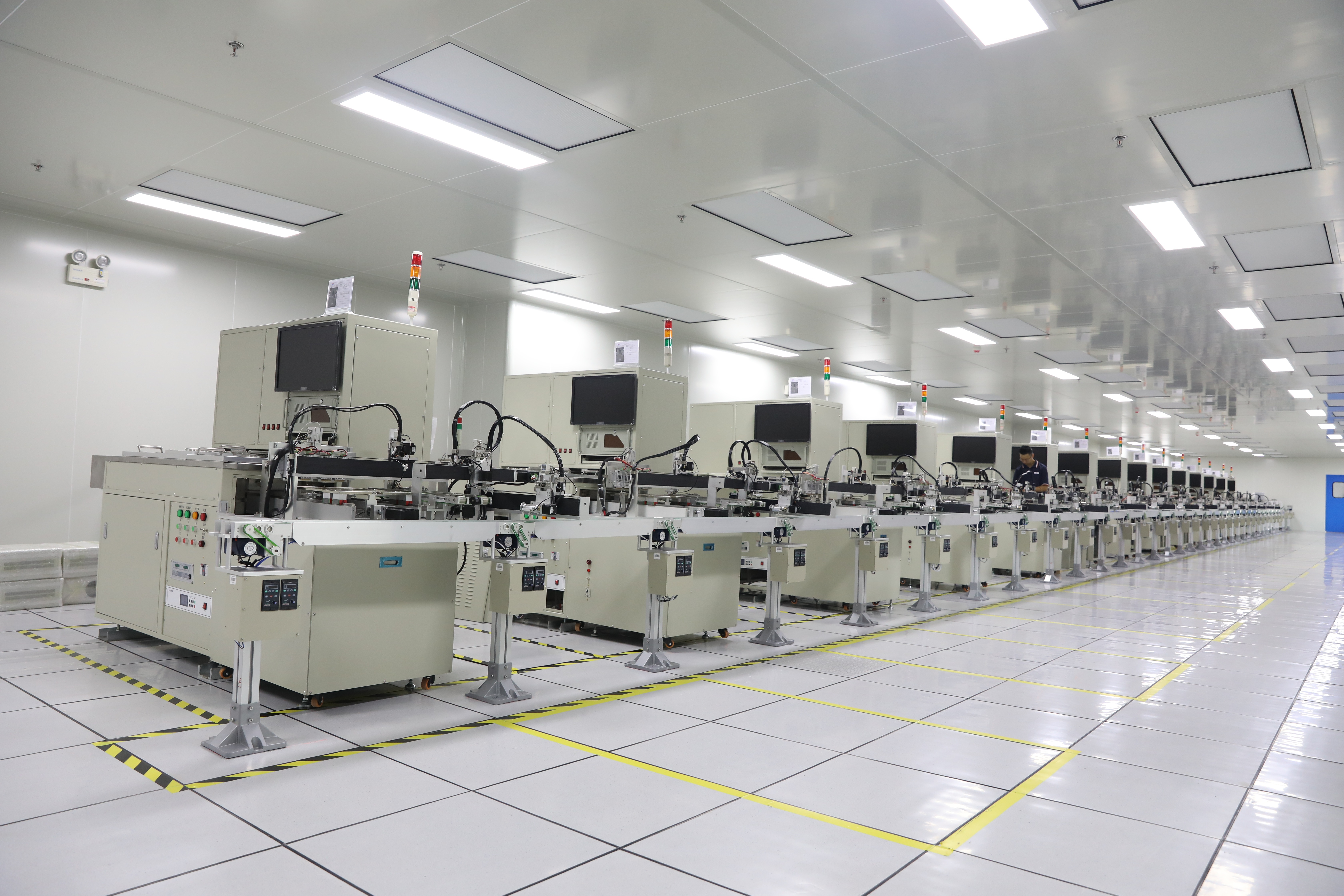
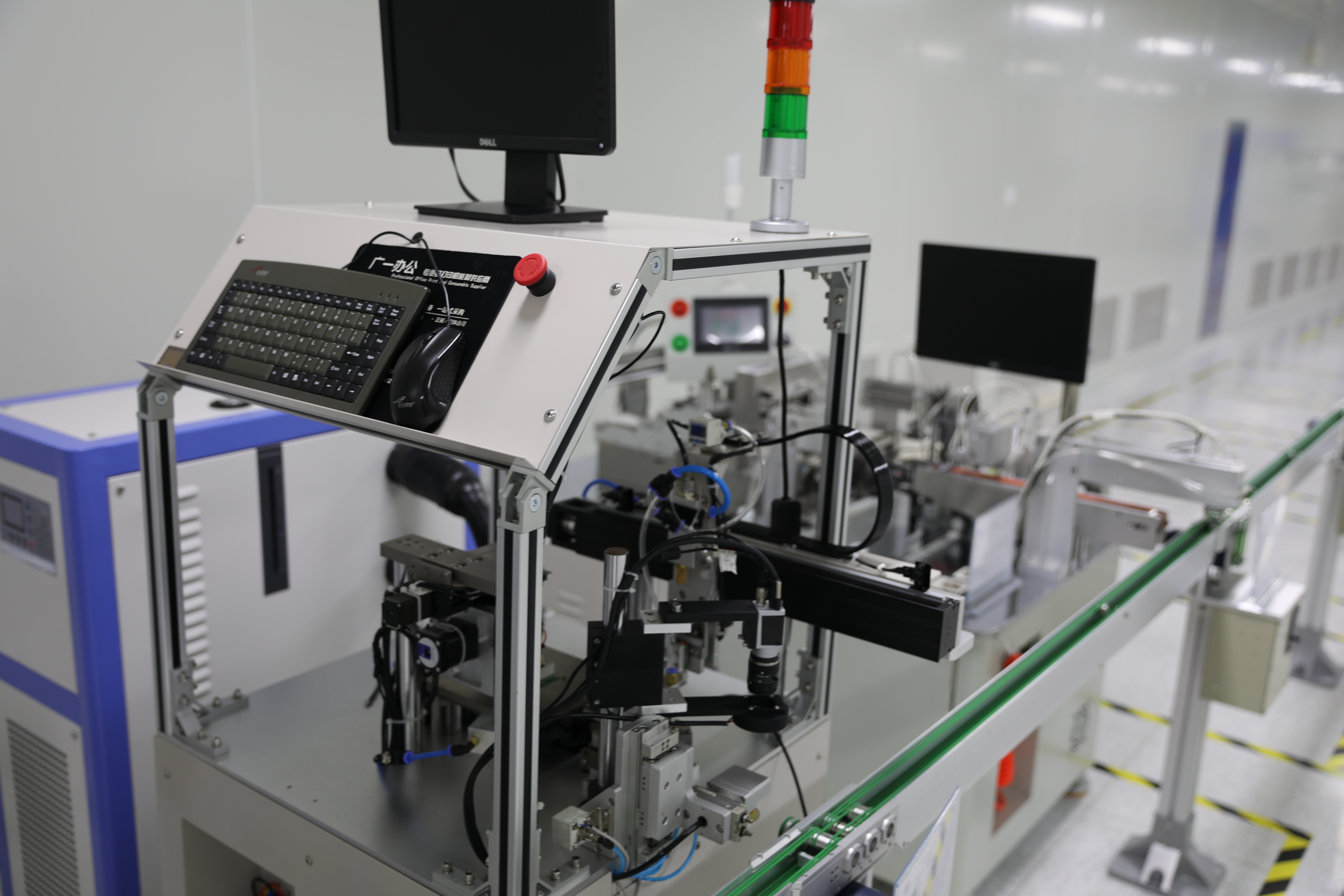
Fronter Electronics Co., Ltd, founded in 1991, is a Shenzhen-based electronic component manufacturer that focuses on the research, development, production, and sale of electronic components. Its product line includes quartz crystal resonators and quartz crystal oscillators. The “FT” brand was recognized as a National High-Tech Enterprise in 2017, according to the company profile. Fronter operates a 21,000 square-meter factory, employs 286 people, has 19 engineers in its R&D team, and reports an annual output of 300 million units. The stated export ratio is 70%, with main markets in the EU and USA.
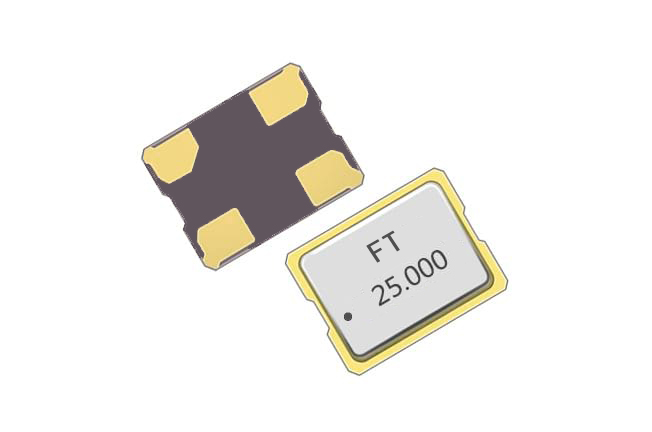
For the crystal oscillator product category specifically, Fronter lists an SMD oscillator series under the models OSC-SMD3225, OSC-SMD2016, and OSC-SMD5032. The corresponding package sizes are 3.2 mm x 2.5 mm, 2.0 mm x 1.6 mm, and 5.0 mm x 3.2 mm. The documented frequency range is 32.768 kHz and 1.5 MHz to 50 MHz. Supply voltage options are 1.8 V to 3.3 V and 3.3 V to 5.0 V. The published temperature options are -20°C to +70°C at +/-20 ppm and -40°C to +85°C at +/-25 ppm. These are not generic claims; they are the values available in the company’s product specification data.
The broader piezoelectric crystal component category within Fronter’s product list includes crystal oscillators, crystal resonators, crystal filters, and SAW crystal resonators. For that category, the nominal frequency range is 1 MHz to 96 MHz, load capacitance is 4 pF to 33 pF, frequency tolerance is +/-5 ppm to +/-100 ppm, and frequency stability is +/-10 ppm to +/-100 ppm. The operating temperature range is -55°C to +125°C for certain products. The materials are described as a metal cover, ceramic base, and quartz wafer. This range is useful for buyers who need SMD frequency-control components in smaller footprints.
How to Read an Oscillator Data Sheet
For a buyer new to crystal oscillators, the data sheet is the single most important document. The parameters below are typical of the first screening step in procurement.
Nominal frequency is the target operating frequency of the device. In Fronter’s standard oscillator series, for example, nominal frequencies include 32.768 kHz and selected frequencies from 1.5 MHz to 50 MHz. Frequency tolerance describes how close the initial output frequency is to the nominal value at a reference temperature. Frequency stability describes how much the frequency changes over operating temperature or other conditions. Both are usually expressed in ppm. A lower ppm number indicates a tighter specification.
Supply voltage must be compatible with the rest of the circuit. Fronter’s listed oscillator series supports 1.8 V to 3.3 V or 3.3 V to 5.0 V depending on the variant. Operating temperature range is critical for industrial and automotive applications. For instance, Fronter lists -20°C to +70°C at +/-20 ppm and -40°C to +85°C at +/-25 ppm. If the application must operate in engine compartments or outdoor telecom equipment, the broader temperature rating becomes mandatory.
Package size determines the board space and assembly process. In Fronter’s oscillator line, the SMD packages include 2.0 x 1.6 mm, 3.2 x 2.5 mm, and 5.0 x 3.2 mm. Smaller packages support compact product design but can affect manufacturability and heat dissipation. Buyers should not choose the smallest package solely to reduce area; layout and soldering capability also need to be evaluated.
Documented Application Scenarios
Sourcing decisions become easier when the component is tied to an application. Fronter’s public company profile states that its products are widely used in network, communication, industrial control, automotive, instrumentation, financial equipment, computer interface devices, and consumer electronics. The company is therefore positioned as a broad-component supplier rather than a single-application manufacturer.
At the crystal component level, Fronter’s documented application unit covers smart home appliances, communication electronics, and Bluetooth devices. It lists project types such as mobile devices, Bluetooth headsets, smart air conditioners, and security cameras. The core function in these applications is to provide a stable clock signal for the IC. The documented working condition includes high-temperature scenarios, which is a relevant consideration for enclosed consumer products and communication modules.
When buyers match an oscillator to a scenario, they should ask three questions: Does the load require a simple clock, or is frequency accuracy over temperature critical? What package and voltage are available on the existing PCB? Is the component intended for a commercial, industrial, or automotive temperature range? For a Bluetooth headset, a compact low-power SMD oscillator is often sufficient. For a security camera operating outdoors, temperature stability and aging behavior become more important.
Traditional Solutions, Trade-offs, and Practical Boundaries
Before integrated SMD crystal oscillators became common, many design teams used a discrete approach: a quartz resonator plus an external inverter or amplifier circuit. This method can still be useful for cost-sensitive, low-frequency designs, but it requires the designer to handle load capacitance, loop gain, startup time, and board-level noise. An integrated crystal oscillator avoids some of this work by placing the active circuitry and resonator in one component.
In supplier comparisons, however, it is important to understand that a standard oscillator has boundaries. A standard quartz crystal oscillator cannot compensate for a very wide temperature range in the same way as a TCXO, and it cannot offer the short-term stability of an OCXO in a high-precision timing environment. Each category exists because no single quartz oscillator is optimal for all applications.
There are also limitations for any quartz-based component. All quartz oscillators will age over time, and no manufacturer can honestly claim zero frequency drift. The practical question is whether the drift over the product’s lifetime is acceptable for the target application. For Fronter’s standard SMD oscillator series, the published frequency stability and temperature data indicate a defined operating envelope. Buyers who require an oscillator with TCXO or OCXO performance, programmable frequency, or differential signaling should evaluate those products separately and not assume one standard package can cover every specification.
Trends to Watch for 2026 and Beyond
The crystal oscillator market continues to be shaped by miniaturization, higher frequency stability requirements, and application-specific compliance. Several trends are important for procurement teams.
First, SMD packaging remains the dominant direction for consumer and industrial electronics. The analysis that projected 80% SMD market share by 2025 is consistent with the shift in product listings toward 2016, 2520, 3225, 5032, and similar standard footprints.
Second, temperature-compensated and oven-controlled oscillators are gaining attention in network infrastructure. The OCXO segment’s projected growth is linked to 5G base-station demand. TCXOs, which held 30% of the market in 2024, remain a key choice where frequency must be maintained over changing environmental conditions.
Third, compliance is becoming a formal part of the buying process. Automotive-grade crystal oscillators must comply with AEC-Q200 stress-test qualification for use in ADAS and safety-critical systems. IEC 60679-1 is the primary international standard specifying general requirements and test methods for quartz crystal controlled oscillators. Buyers should request evidence of compliance from any supplier before qualification work starts.
Finally, the market should not be viewed as static. Some forecasts include MEMS timing devices in broad oscillator market figures, while pure-quartz forecasts exclude them. Industrial buyers should understand this definitional gap when comparing market reports or benchmarking suppliers.
Frequently Asked Questions
Q: What is the difference between a quartz crystal resonator and a crystal oscillator?
A: A quartz crystal resonator is a passive component that needs an external oscillation circuit to generate a signal. A crystal oscillator is an active component that combines a resonator with the sustaining circuit in one package and can output a clock signal directly to an IC. Buyers should determine whether their design already has a clock-generating circuit before choosing between the two.
Q: What do frequency tolerance and frequency stability mean in an oscillator data sheet?
A: Frequency tolerance is the initial deviation from the nominal frequency, usually measured at a reference temperature. Frequency stability describes how much the frequency may vary when temperature, supply voltage, or other operating conditions change. Both are expressed in ppm; smaller values indicate a tighter specification.
Q: What SMD oscillator package sizes are commonly available?
A: Common SMD sizes include 2016, 2520, 3225, 5032, and 7050. For example, Fronter’s oscillator series is listed as OSC-SMD2016 (2.0 mm x 1.6 mm), OSC-SMD3225 (3.2 mm x 2.5 mm), and OSC-SMD5032 (5.0 mm x 3.2 mm). The choice of package affects board space, power handling, and assembly process.
Q: What compliance standards apply to crystal oscillators?
A: For environmental compliance, products are frequently expected to meet RoHS and REACH requirements. For automotive applications, AEC-Q200 stress-test qualification is commonly required for components used in ADAS and safety-critical systems. IEC 60679-1 defines general requirements and test methods for quartz crystal controlled oscillators.
Q: Which applications typically need a TCXO or OCXO instead of a standard oscillator?
A: TCXO is commonly used in telecom and GPS equipment where frequency must remain accurate over a broad temperature range. OCXO is used when very high stability is needed, such as 5G base stations, network synchronization, and precision test equipment. A standard fixed-frequency crystal oscillator may be sufficient for simple processor clocks and general consumer electronics.
Q: What should a first-time buyer verify when evaluating a crystal oscillator supplier?
A: The buyer should verify whether the supplier offers a resonator or an oscillator, the frequency and voltage range, package dimensions, temperature range, frequency tolerance and stability, and applicable compliance documents. For a supplier example, Fronter Electronics provides documented product specifications for SMD oscillator series and states RoHS and REACH compliance in its profile. First-time buyers should also request samples and review the supplier’s production capacity data before committing to volume orders.
Buyers who want a broader view of Fronter Electronics can review the company’s published profile, including production capacity, factory area, product categories, and contact information. Fronter’s official company brochure is available for reference: Fronter Electronics company brochure (PDF).
This article is an independent industry reference. It uses supplier data provided by Fronter Electronics and third-party market data from MarketsandMarkets, Precedence Research, Mordor Intelligence, Market Research Future, Coherent Market Insights, the Automotive Electronics Council, and the International Electrotechnical Commission. Product selection always depends on the target application and the buyer’s verification of current data sheets and compliance documentation.
Есть вопросы или нужны дополнительные детали?
Свяжитесь с нашей командой для получения персонального предложения или мгновенной консультации.
Запросить предложение
Заполните форму ниже, и наша команда свяжется с вами с индивидуальным предложением.
Прямой чат WhatsApp
Предпочитаете общаться в реальном времени? Напишите нам в WhatsApp для мгновенной помощи и быстрых ответов.
- Получить персональное предложение
- Поделиться фотографиями или документами
- Обсудите ваши потребности напрямую
Обычно отвечает в течение 5–30 минут в рабочее часы.