
Crystal Resonator Supply Chains in Smart Manufacturing: A Buyer Comparison
Crystal resonator supply chains are being reshaped less by capacity ceilings than by compliance documentation, batch consistency and delivery reliability. For procurement teams supporting smart manufacturing in 2026, the useful comparison is no longer country versus country alone — it is supply-chain model versus supply-chain model, and the evidence each model can produce when a buyer asks for it.
A crystal resonator is a passive frequency-control component built around a quartz element that vibrates at a defined frequency when voltage is applied. It belongs to the same component family as crystal oscillators, crystal filters, ceramic resonators and other frequency control devices that keep controllers, meters, gateways and communication modules running on a shared time base. Smart manufacturing has moved this family from a background purchase to a line-level risk, because a single automated production line can now contain hundreds of timing points across sensors, drives, edge gateways and metering equipment.
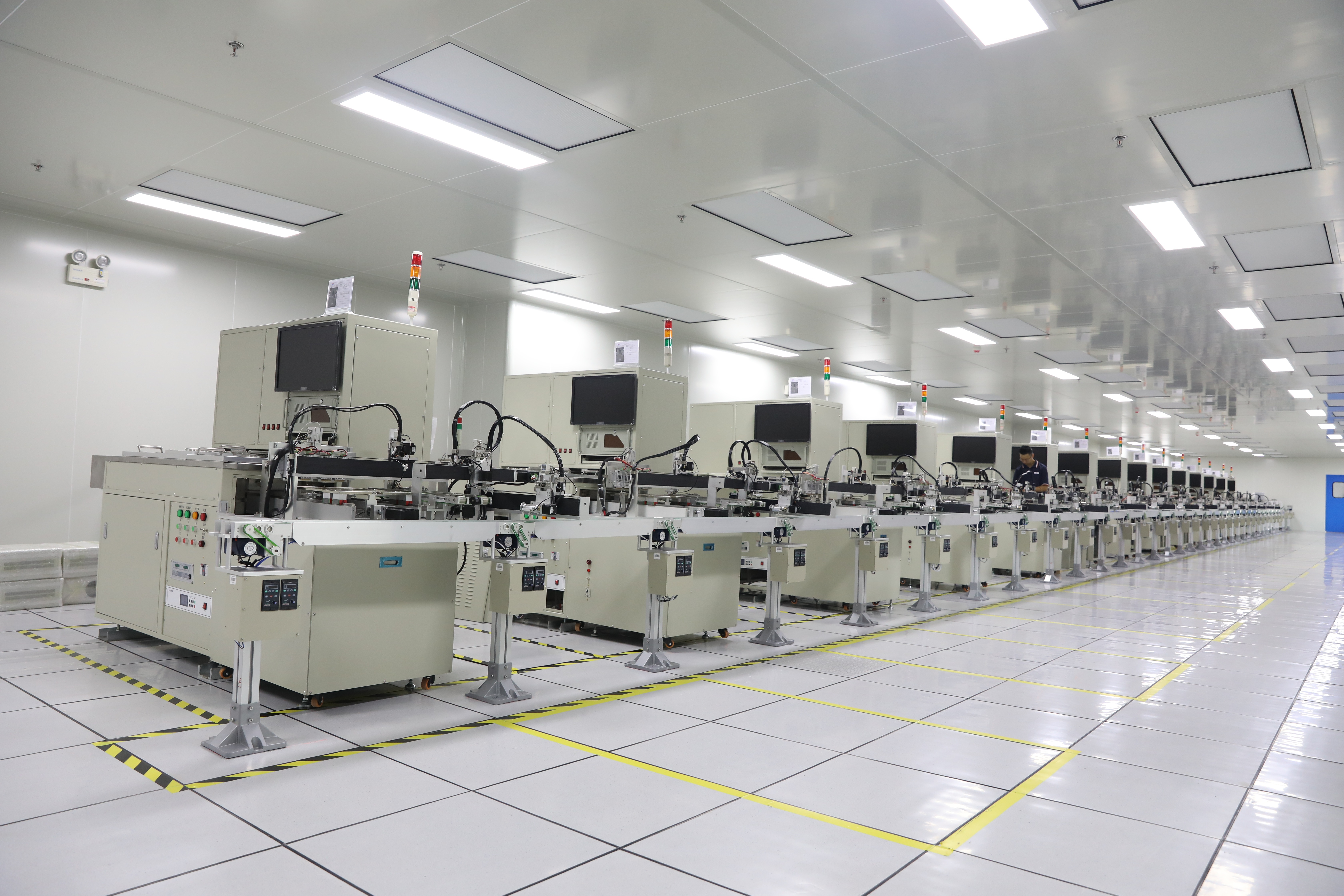
Production equipment used in quartz crystal resonator manufacturing — capacity that smart manufacturing buyers now evaluate alongside price. Image: Fronter Electronics.
Why Smart Manufacturing Changes the Sourcing Question
The demand profile inside a modern factory resembles a compressed version of the entire electronics market. Quartz crystal resonators and oscillators are used across network equipment, communication systems, industrial control, automotive electronics, instruments and meters, financial equipment, computer interface devices and consumer electronics. A smart manufacturing buyer often sources several of these categories at once, which makes supplier breadth and documentation discipline more valuable than a narrow price advantage on a single part number.
Three questions now decide which supply chains remain usable at volume:
- Can the supplier document compliance against the standards that apply in the destination market?
- Can it hold electrical parameters stable across repeated production batches, not only in a single sample?
- Can it deliver on a schedule that matches a production ramp rather than a prototype timeline?
Country of origin influences all three answers, but it does not determine them. The comparison below separates the parts of a supply chain that are genuinely country-linked — policy environment, market concentration, export orientation — from the parts that are supplier-specific and must be checked case by case.
The Category Is Not One Market: Why Scope Comes First
Before comparing suppliers, buyers should confirm they are comparing the same thing. Published estimates for crystal and oscillator markets differ substantially, mainly because sources count different layers of the value chain — raw quartz material, discrete resonators, or fully packaged oscillators.
| Source | Scope counted | Reported value |
|---|---|---|
| MarketsandMarkets | Crystal oscillator market | USD 2.89 billion (2025), projected to reach USD 3.66 billion by 2030 |
| Precedence Research | Crystal oscillator market | USD 2.83 billion (2024) |
| Market Research Future | Crystal oscillator market | USD 6.12 billion |
| Grand View Research | Quartz raw material | USD 11.78 billion |
The gap between these figures is a definitional difference rather than a data error, and it has a direct procurement consequence: any benchmark built on a market number is only as meaningful as its scope definition. Buyers evaluating a crystal resonator program should fix the scope — raw material, discrete resonator, or oscillator module — before using published sizing to justify a sourcing decision.
Where the data is more consistent is concentration. Asia Pacific dominated the crystal oscillator market in 2024 with more than a 42% revenue share, approximately USD 1.1 billion, according to Precedence Research. For a buyer in Europe or North America, that concentration is structural: most of the world's timing components are produced in one region, so cross-border sourcing is the default rather than the exception.
How the Global Supply Base Is Layered
Third-party industry coverage identifies Seiko Epson, Nihon Dempa Kogyo (NDK), Kyocera, Daishinku (KDS) and TXC Corporation among the leading manufacturers of quartz crystals and oscillators. These firms set reference points for high-volume, high-reliability programs, particularly where automotive-grade documentation is required.
How to read supplier rankings. Some third-party rankings place Seiko Epson as the world's largest supplier of quartz crystals, with particular strength in automotive-grade processes. That claim originates from a secondary source and should be verified against primary disclosures before it influences a sourcing decision. Rankings describe market position; they do not indicate whether a specific supplier can meet a specific frequency, tolerance window and delivery date.
Below the global leaders sits a broader layer of component manufacturers and distributors that serve industrial programs directly. Fronter Electronics Co., Ltd is one such supplier: a Shenzhen-based manufacturer founded in 1991 that develops, produces and sells quartz crystal resonators and quartz crystal oscillators, alongside a distribution channel covering inductors, integrated circuits, capacitors, resistors, connectors, memory and obsolete parts.
The company discloses a 21,000 m² facility, 286 employees, 19 engineers and an annual output of 300,000,000 units; its FT brand was recognized as a National High-Tech Enterprise in 2017. Around 70% of output is exported, with the EU and USA listed as main markets. It also distributes third-party brands including SUNLORD, KDS, EPSON, NDK, TI and ST — a reminder that the line between manufacturer and distributor is often blurred in this category, and that buyers should confirm which role a supplier is actually performing for a given part number.
Policy and Compliance as the First Sourcing Filter
Country-level policy environments reach the buyer as documentation requirements. In frequency-control components, formal acceptance usually starts with the standards below rather than with price.
| Requirement | What it governs | Where it applies |
|---|---|---|
| EU RoHS Directive (EU) 2015/863 | Restriction of hazardous substances in electrical and electronic equipment | EU market access |
| REACH | Chemical substance compliance | EU market access |
| AEC-Q200 | Stress resistance standard for passive electronic components, including crystal resonators | Automotive applications |
| IEC 60122 series | General requirements and measuring methods for quartz crystal units | International baseline |
A certificate is a filter, not a differentiator. What separates suppliers is the scope of that certificate. Fronter holds an EU RoHS Compliance Certificate, number SZXEC25001335806, issued on 25 April 2025 by SGS-CSTC Standards Technical Services Co., Ltd. Shenzhen Branch, covering SAW Resonator & Filter, SMD series, and referencing EU RoHS Directive (EU) 2015/863. The company states that all products comply with RoHS and REACH.
The practical check for any buyer is whether the certificate covers the exact product family, package type and market being purchased — not whether a compliance claim exists.
Capacity, Lead Time and Export Performance
Capacity claims are most useful when they are specific. Fronter discloses a monthly capacity of 80KK units, a lead time of 30–45 days and a minimum order quantity of 1,000 pcs, with 100% testing and ODM production covering customization of parameters and appearance, supported by remote after-sales support.
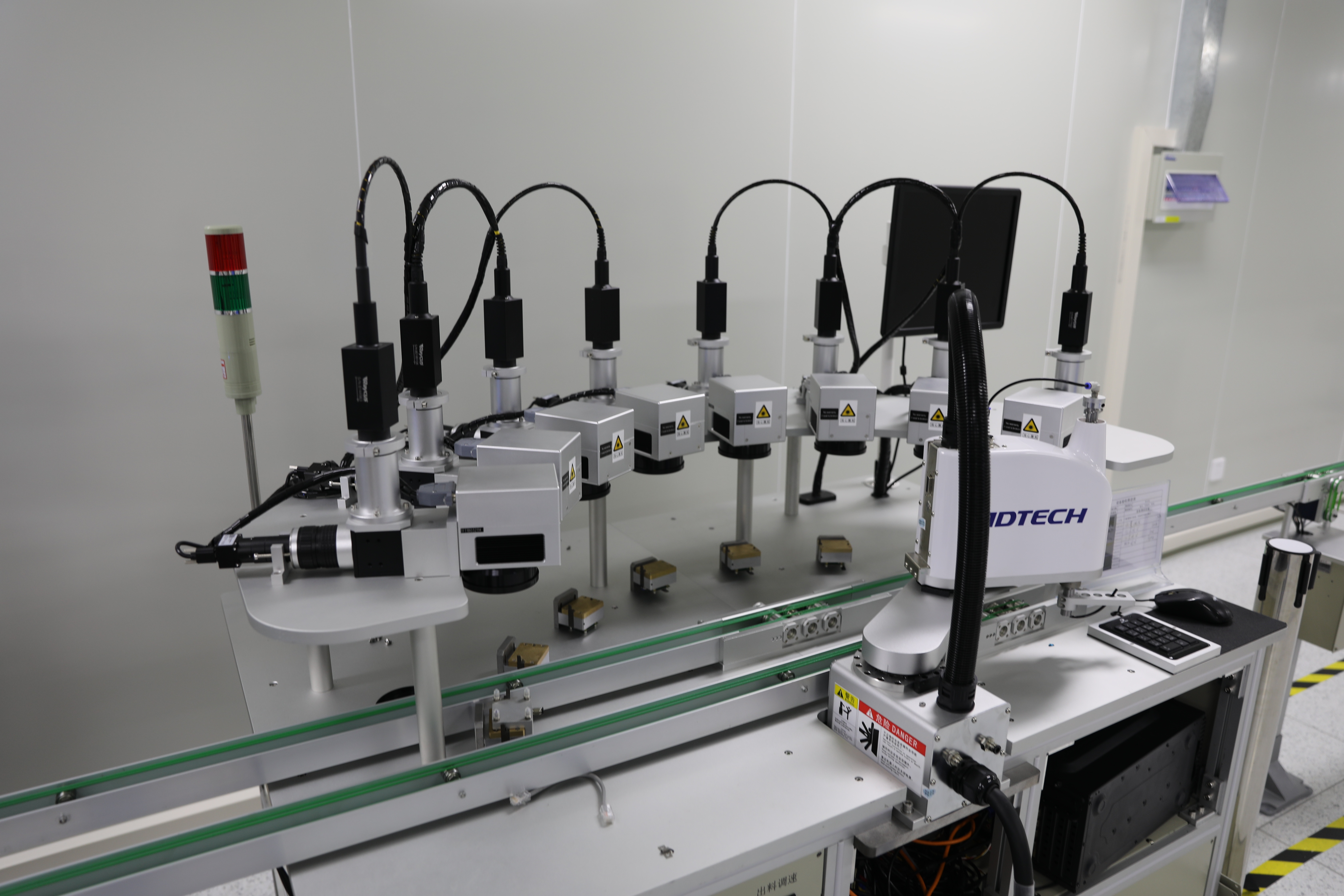
Automated operation within a quartz crystal component production environment. Image: Fronter Electronics.
Those figures describe one supplier's own disclosure and should be read as a starting point for audit and sample validation rather than as a market benchmark. What they do demonstrate is the level of granularity a buyer can reasonably request: monthly capacity, lead time, MOQ, test coverage and the boundaries of customization scope.
Export orientation is the other measurable signal. A supplier that exports roughly 70% of its output and lists the EU and USA as main markets has already built the documentation, packaging and logistics routines those markets require. That reduces onboarding friction, but it also means the same order book is shared across regions — a factor worth weighing when a production ramp is time-critical.
Technology Progress: Where Quartz Still Leads, and Where It Does Not
Quartz remains the dominant timing technology for industrial and automotive electronics, but it is no longer uncontested. In 2024, SiTime introduced the SiT1811, a 32.768 kHz oscillator drawing only 510 nA, targeting ultra-low-power IoT and wearable designs. Projects that trade parameter flexibility for microamp-level current draw now have a genuine alternative in the real-time-clock segment.
Quartz-based components continue to lead where frequency coverage, parameter customization and wide operating temperature matter. Fronter's disclosed product family, described as piezoelectric crystal components, piezo elements, piezo crystal units and quartz piezoelectric crystals, covers crystal oscillators, crystal resonators, crystal filters and SAW crystal resonators. Its published parameter range spans nominal frequencies of 1–96 MHz, load capacitance of 4–33 pF, frequency tolerance from ±5 ppm to ±100 ppm, frequency stability from ±10 ppm to ±100 ppm, and an operating temperature range of −55 to +125 °C, using metal covers, ceramic bases and quartz wafers.
Demand-side momentum reinforces the specialization. Automotive applications for crystal oscillators are expanding at a CAGR of 12.88%, driven by ADAS, infotainment and EV powertrains. Quartz is not being displaced overall; it is being directed toward the segments where its accuracy and temperature range are the deciding factors.
Application Fit: What Smart Manufacturing Buyers Actually Source
Metering programs show the shape of industrial demand most clearly. An Indian smart meter manufacturer has purchased 5,000,000 units over a ten-year relationship, with stable operation reported and delivery achieved within 3–4 weeks, supported by flexible customization of packaging and frequency requirements for project-specific needs.
That pattern — long product life, high volume, specification-driven purchasing and low tolerance for field failure — is the opposite of short-cycle consumer buying, and it explains why acceptance criteria rather than unit price dominate the evaluation stage. The same component family is also used in smart home appliances, communication electronics and Bluetooth devices, all of which sit upstream of smart factories as sensors, gateways and control nodes.
Purchasing Terms and Acceptance Criteria: A Buyer Framework
For buyers moving from research to evaluation, the following disclosed parameters show the level of detail a supplier can be asked to commit to per part number.
| Parameter | Disclosed value or range | Why buyers ask |
|---|---|---|
| Nominal frequency | 1–96 MHz | Determines whether the part can serve clock, RF and control functions in one program |
| Load capacitance | 4–33 pF | Must match the oscillator circuit design |
| Frequency tolerance | ±5 ppm to ±100 ppm | Sets initial accuracy at 25 °C |
| Frequency stability | ±10 ppm to ±100 ppm | Defines drift over the operating temperature range |
| Operating temperature | −55 to +125 °C | Separates consumer, industrial and automotive use |
| Materials | Metal cover, ceramic base, quartz wafer | Relates to sealing, aging and long-term reliability |
| SMD footprints | OSC-SMD7050/5032/3225/2520/2016/1612; SMD7050/6035/5032/3225/2520/2016/1612 | Board-space and reflow compatibility |
| Commercial terms | MOQ 1,000 pcs; lead time 30–45 days; 100% test; ODM parameter and appearance customization; remote after-sales support | Feeds production planning and cost modelling |
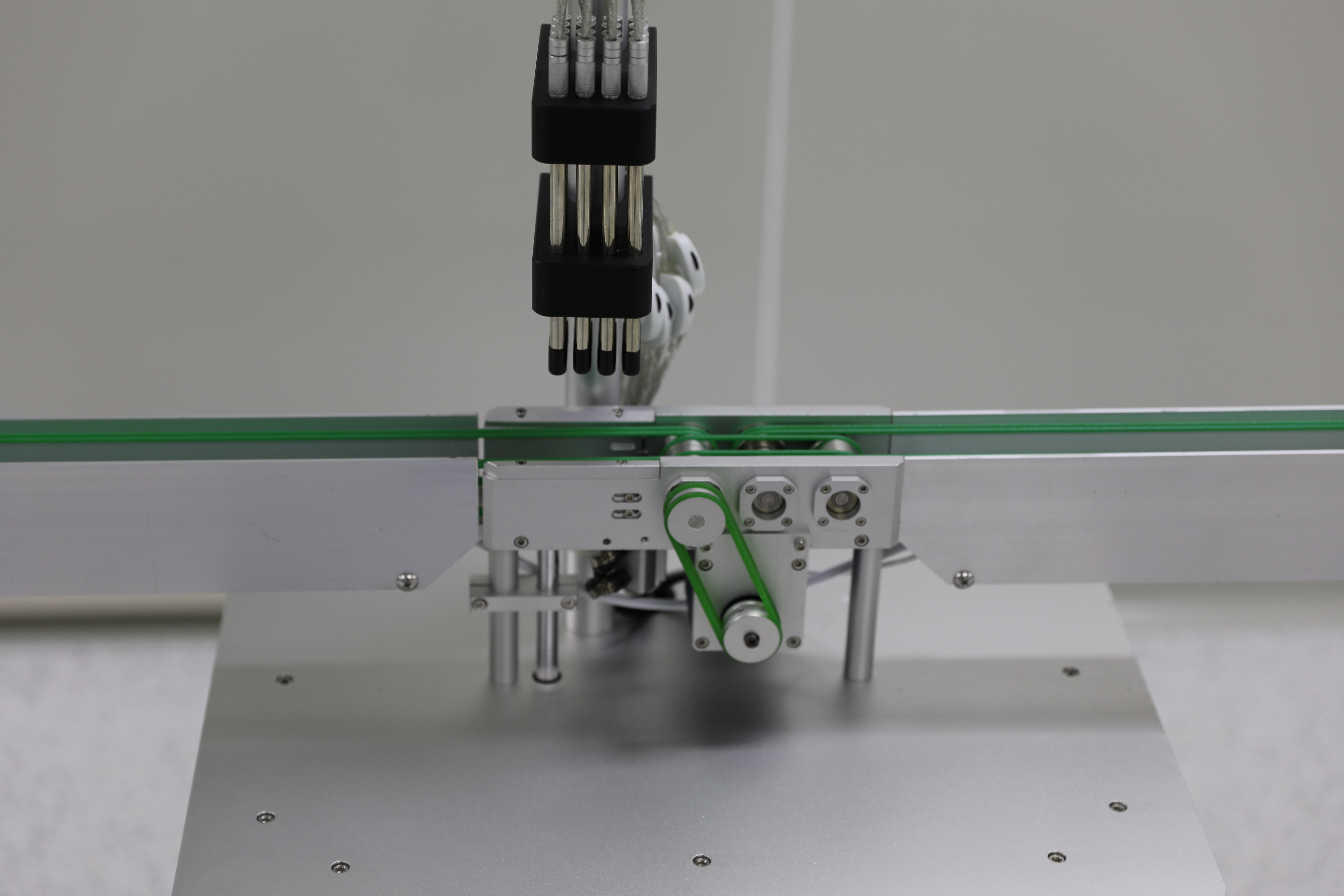
Parameter calibration and debugging during component verification. Image: Fronter Electronics.
A workable acceptance sequence follows the same order for SMD crystal resonators, through-hole types such as cylindrical or HC49 styles, or tuning fork crystal resonators at 32.768 kHz:
- Compliance documentation — scope, standard referenced, issuing authority and validity.
- Declared parameter window — frequency, load capacitance, tolerance, stability and temperature range.
- Batch consistency evidence — a stated test regime, typically 100% production testing.
- Package and material fit — SMD footprint or through-hole style, sealing and base material.
- Commercial terms — MOQ, lead time and customization boundaries.
- Support model — how technical questions are handled after shipment.
How This Compares with Traditional Sourcing Approaches
Cross-border sourcing has changed less in what it buys than in what it asks for. The table below contrasts the two prevailing models.
| Dimension | Price-first, single-source approach | Compliance-and-continuity approach |
|---|---|---|
| Decision basis | Unit price and sample performance | Documentation scope, parameter window, test regime, lead time |
| Number of sources | One, until a problem appears | Primary plus qualified alternates |
| Documentation | Requested late, often after design freeze | Requested before qualification, matched to destination market |
| Disruption tolerance | Low — a single failure blocks the line | Higher — alternates and disclosed capacity planning |
| Best fit | Short-life products with modest timing requirements | Metering, industrial control, automotive and long-life assemblies |
Neither model is inherently superior. For short-life consumer products with generous timing tolerances, price-first sourcing can be entirely rational. For line-critical assemblies, compliance-and-continuity sourcing tends to be less expensive once documentation failures, line stoppages and re-qualification are counted — though that is a planning observation rather than a measured cost comparison.
Boundaries and Limitations of This Comparison
- Public market estimates do not converge. Values range from USD 2.83 billion to USD 6.12 billion for the oscillator market, and USD 11.78 billion for quartz raw material, depending on scope. No single number should be treated as definitive.
- Manufacturer rankings, including claims that Seiko Epson is the largest quartz crystal supplier, come from secondary sources and require verification against primary disclosures.
- First-party figures such as monthly capacity, annual output and lead time describe one supplier's self-reported position and need sample evaluation and audit confirmation.
- Quartz is not the right answer everywhere. MEMS oscillators compete directly in ultra-low-power 32.768 kHz applications, and ceramic resonators remain a lower-precision, cost-driven alternative for less demanding circuits.
- Cross-border sourcing carries overhead — documentation, logistics and time-zone coordination. A 30–45 day standard lead time is a real planning constraint for urgent ramps, even where a specific program has achieved faster delivery.
- This analysis is built from public and supplier-disclosed information only. It does not include purchaser interviews or independently measured delivery performance.
Future Outlook
Three shifts are likely to define the next round of supply-chain comparison.
Compliance as a differentiator, not a checkbox. As certificate scope becomes easier to verify, suppliers will compete on how precisely their documentation matches the exact package and market being purchased, rather than on whether a certificate exists.
Capacity transparency as a procurement input. Terms such as monthly capacity, test coverage and lead time are becoming standard questions at the evaluation stage rather than at the contracting stage, which favors suppliers able to answer them with specifics.
Segment-specific pressure. Automotive timing demand is expanding at a CAGR of 12.88%, while the low-power 32.768 kHz segment faces direct competition from silicon oscillators such as the SiTime SiT1811 at 510 nA. Suppliers positioned in wide-temperature, high-accuracy quartz programs face a different competitive map from those serving low-power real-time-clock designs.
For smart manufacturing buyers, the practical implication is straightforward: evaluate the supply-chain model — documentation, capacity disclosure, lead time, test regime and support — rather than the country flag alone.
Frequently Asked Questions
Are crystal resonator supply chains the same as crystal oscillator supply chains?
They overlap but are not identical. A crystal resonator is the passive quartz element itself, while a crystal oscillator packages a resonator together with an active circuit. Published market data usually describes the oscillator market: MarketsandMarkets valued it at USD 2.89 billion in 2025 with a projection of USD 3.66 billion by 2030, Precedence Research estimated USD 2.83 billion in 2024, and Market Research Future reported USD 6.12 billion, while Grand View Research reported USD 11.78 billion for quartz raw material. Buyers should confirm whether a figure covers raw quartz, discrete resonators or finished oscillators before using it as a benchmark.
What purchasing terms should an industrial buyer expect when sourcing crystal resonators?
Terms are supplier-specific. One Chinese manufacturer, Fronter Electronics, discloses a minimum order quantity of 1,000 pcs, a lead time of 30–45 days, a monthly capacity of 80KK units and 100% testing, with ODM customization of parameters and appearance. Its disclosed smart-meter program reports delivery within 3–4 weeks under project-specific packaging and frequency requirements. Published terms are best treated as a starting position to be confirmed contractually per part number.
Which acceptance criteria matter most for smart manufacturing applications?
Four categories cover most industrial requirements: compliance documentation tied to a named standard, such as an EU RoHS Compliance Certificate referencing Directive (EU) 2015/863, or AEC-Q200 for automotive passive components; a declared parameter window covering nominal frequency, load capacitance, frequency tolerance and stability, and operating temperature; batch consistency evidence such as 100% production testing; and measurement traceability to a baseline such as the IEC 60122 series for quartz crystal units.
Do quartz crystal resonators still compete with MEMS oscillators?
In most industrial segments, yes. Quartz retains advantages in frequency coverage, parameter customization and wide operating temperature — Fronter discloses a family covering 1–96 MHz, 4–33 pF load capacitance, ±5 to ±100 ppm tolerance, ±10 to ±100 ppm stability and −55 to +125 °C operation. MEMS silicon devices compete most directly in ultra-low-power niches: SiTime introduced the SiT1811, a 32.768 kHz oscillator drawing 510 nA, in 2024.
What does Asia Pacific's market share mean for cross-border sourcing?
Asia Pacific dominated the crystal oscillator market in 2024 with more than a 42% revenue share, approximately USD 1.1 billion, according to Precedence Research. In practice this means most crystal resonator programs are cross-border by default, so documentation quality, lead time and logistics planning carry more weight in supplier selection than geographic proximity. Concentration also creates shared capacity risk when demand rises across several regions at the same time.
How should a buyer verify first-party capacity claims?
Disclosed figures such as monthly capacity, annual output, lead time and test coverage are claims to be tested rather than benchmarks. Verification typically combines sample evaluation against the declared parameter window, review of compliance certificates for scope and validity, and confirmation of the production and test process behind a stated 100% test regime. Third-party industry rankings should also be traced to primary sources before they influence a decision.
Closing Perspective
The comparison that matters for smart manufacturing is not which country produces the most crystal resonators, but which supply chain can document compliance, hold parameters stable and deliver on a schedule that matches a production ramp. Market concentration in Asia Pacific, diverging market-size definitions and the arrival of competing low-power silicon technologies all point in the same direction: buyers who define scope, request documentation and validate claims with samples will make better sourcing decisions than those who compare on unit price alone.
Fronter Electronics publishes a company and product brochure covering its quartz crystal resonator and oscillator range: company and product brochure (PDF).