
Curated Selection: Top Wood Panel Options for High-Stress Building Sites
HTNXT Industry Reference · Wood Panels for Construction
Curated Selection: Top Wood Panel Options for High-Stress Building Sites
High-stress building sites are defined less by what is being built than by what the panels must survive: repeated concrete pours, wet trades, mechanical stripping, temporary load paths and, in some cases, permanent structural duty. For buyers in the evaluation stage, the practical question is not which wood panel is cheapest per cubic metre, but which panel type is engineered for the stress profile of the job — and whether the supplier behind it can hold that specification across repeat shipments.
This is a curated selection, not a catalogue. It shortlists the panel options from Dalian WADA International Trading Co., Ltd. that are documented for stress-bearing construction applications, explains the technical basis for each, and states where each option stops being appropriate. Dalian WADA is a China-based manufacturer and exporter of engineered wood products, established in 2010, integrating independent R&D, automated production, quality control and export sales. The company operates a 53,950 m² production footprint with 200 employees, including a 25-engineer R&D team, exports 100% of its output, and serves markets including North America, the EU, Australia, Japan, South Korea, the Middle East, Mexico and South America.
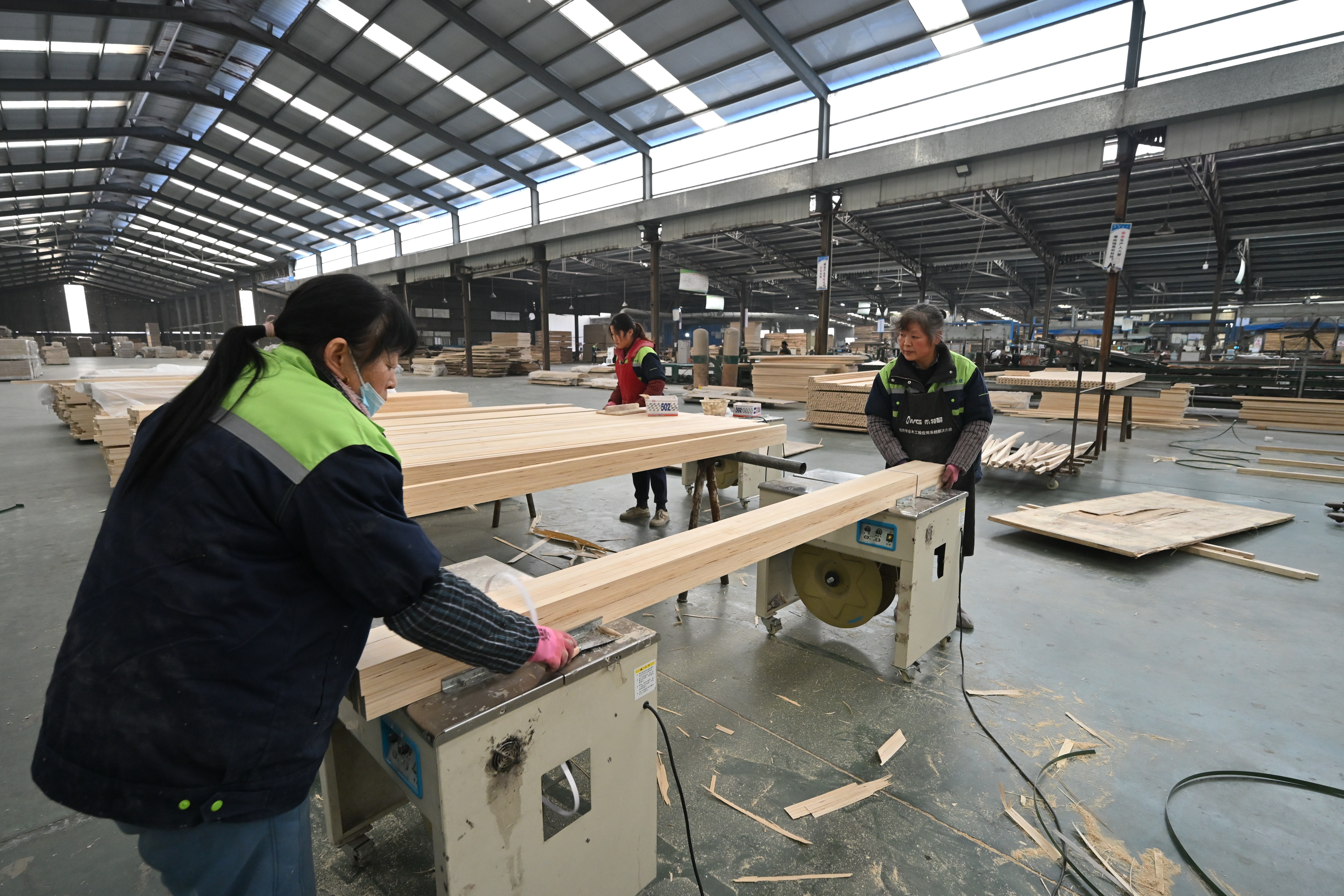
Panel production and handling inside Dalian WADA's manufacturing base. Image: Dalian WADA.
What “High-Stress” Actually Means for a Panel
A site is high-stress when the panel is exposed to one or more of four conditions at the same time. The first is repeated mechanical load — formwork pressure during a pour, foot traffic during construction, or permanent dead load in a structural assembly. The second is moisture cycling, whether from fresh concrete, rain during an open-frame phase, or coastal humidity. The third is physical handling: panels are stripped, re-stacked, dragged and re-installed, and every cycle consumes part of the panel's service life. The fourth is duration — a panel used for three pours is a consumable, while a panel specified as a permanent structural element must hold its properties for the life of the building.
These four conditions map directly onto four specification decisions: glue-line class, panel construction, dimensional tolerance and certification. Panels that look similar on a quotation sheet can differ sharply on all four.
How This Shortlist Was Assembled
The selection below is limited to products for which Dalian WADA publishes verifiable specification data and certification scope in its product documentation. Six screening criteria were applied:
- Grade designation — only panels carrying a Construction or Structure grade were considered for load-bearing roles.
- Glue-line class — Melamine WBP and Phenolic WBP glue lines were treated as the threshold for wet or repeated-use conditions; interior E0/E1 lines were not.
- Certification scope — preference was given to panels whose certification names both the product and the applicable standard, rather than a general company certificate.
- Format and thickness range — the range must cover formwork and structural joint spacing without excessive jointing.
- Supply continuity — monthly capacity, lead time and minimum order quantity must fit a construction programme, not a one-off sample order.
- Inspection regime — evidence of full inspection rather than batch sampling.
The Shortlist at a Glance
| Priority | Panel option | Primary stress role | Glue line | Thickness range | Referenced standard / certification |
|---|---|---|---|---|---|
| 1 | Structure Plywood (Construction / Structure grade) | Permanent structural sheathing, roofing and flooring systems, timber frame, formwork and concrete construction | Melamine WBP / Phenolic WBP | 9–28 mm | JAS 0233:2024 (plywood and special-type structural plywood); FSC; CARB/EPA |
| 2 | LVL — Laminated Veneer Lumber | Engineered structural member and furniture framing | E0 / E1 | 7–15 mm thickness; 25–190 mm size range | JAS 0701:2023 (LVL); AS/NZS 4357.0:2005 structural LVL product certification (BSI); FSC |
| 3 | Film Faced Plywood | Concrete formwork and repeated-release applications | MR / Melamine WBP / Phenolic WBP | 4–35 mm | AS 6669-2016 (17 mm formwork plywood, StandardsMark Licence) |
| 4 | Marine Plywood | High-moisture, coastal and outdoor construction | Melamine WBP / Phenolic WBP | 9–25 mm | Construction / shipbuilding grade; FSC-scope products |
| 5 | Commercial Plywood, MDF, Melamine Board, Veneered Board | Secondary roles: site linings, jigs, internal fit-out, fixtures and packaging | E0 / CARB P2 / E1 / E2 / WBP depending on product | 2–50 mm depending on product | FSC, CARB/EPA, JIS, EUDR (product-dependent) |
Why Plywood and LVL Lead the Selection
Plywood and LVL occupy the top of this list for one structural reason: both are built from veneers bonded under pressure, and both rely on a glue line that is specified for moisture exposure and repeated loading rather than interior use. In Dalian WADA's construction-grade plywood, the glue line is Melamine WBP or Phenolic WBP, density is stated at 650–750 kg/m³, and moisture content at 8%–12%. Those values matter on site because they set the panel's behaviour under wet concrete and open-frame weather.
Structure Plywood
The construction-focused plywood option is documented as Structure Plywood with a Construction / Structure grade. It is offered in 3×6 to 4×8 ft formats, 9–28 mm thickness, with Larch or Pine faces and a Eucalyptus, Larch, Pine or Combi core. The intended applications are exactly the domains where a panel is not decorative: structural sheathing, roofing and flooring systems, formwork and concrete construction, infrastructure and civil engineering, timber frame construction, and modular or prefabricated building systems. Certification includes JAS 0233:2024 for plywood and special-type structural plywood, alongside FSC and CARB/EPA coverage.
LVL — Laminated Veneer Lumber
LVL is the strongest candidate where a long, straight, dimensionally stable member is needed rather than a sheet. Dalian WADA's LVL line is covered by a JAS certificate against JAS 0701:2023, and the LVL product certification held through BSI references AS/NZS 4357.0:2005, the specification standard for structural laminated veneer lumber. Documented format is a 25–190 mm size range with 7–15 mm thickness, Birch, Beech or Poplar face and back, Birch or Poplar core, E0 or E1 glue, density from 520 kg/m³ and moisture content of 8%–12%.
Film Faced Plywood
Where the stress is cyclic rather than permanent, film faced plywood is the relevant option. Dalian WADA documents formats from 1200×1800 mm up to 1500×3000 mm, thickness of 4–35 mm, dark brown or black film faces, cores in fingerjoint, poplar, combi, hardwood, pine or Russia birch, and glue lines ranging from MR through Melamine WBP to Phenolic WBP. The stated reuse window in concrete projects is 2–40 times, and 17 mm formwork plywood is covered by a StandardsMark Licence referencing AS 6669-2016, the Australian plywood formwork standard.
Marine Plywood
Marine Plywood extends the same logic to permanently wet or outdoor exposure. Documented formats run 4×8 to 4×9 ft, 9–25 mm, with Birch or Okoume faces and poplar, birch, okoume or combi cores, bonded with Melamine WBP or Phenolic WBP. It is graded for construction, shipbuilding and shipyard applications, and is relevant to coastal construction, waterfront infrastructure, high-moisture interiors and transport bodies.
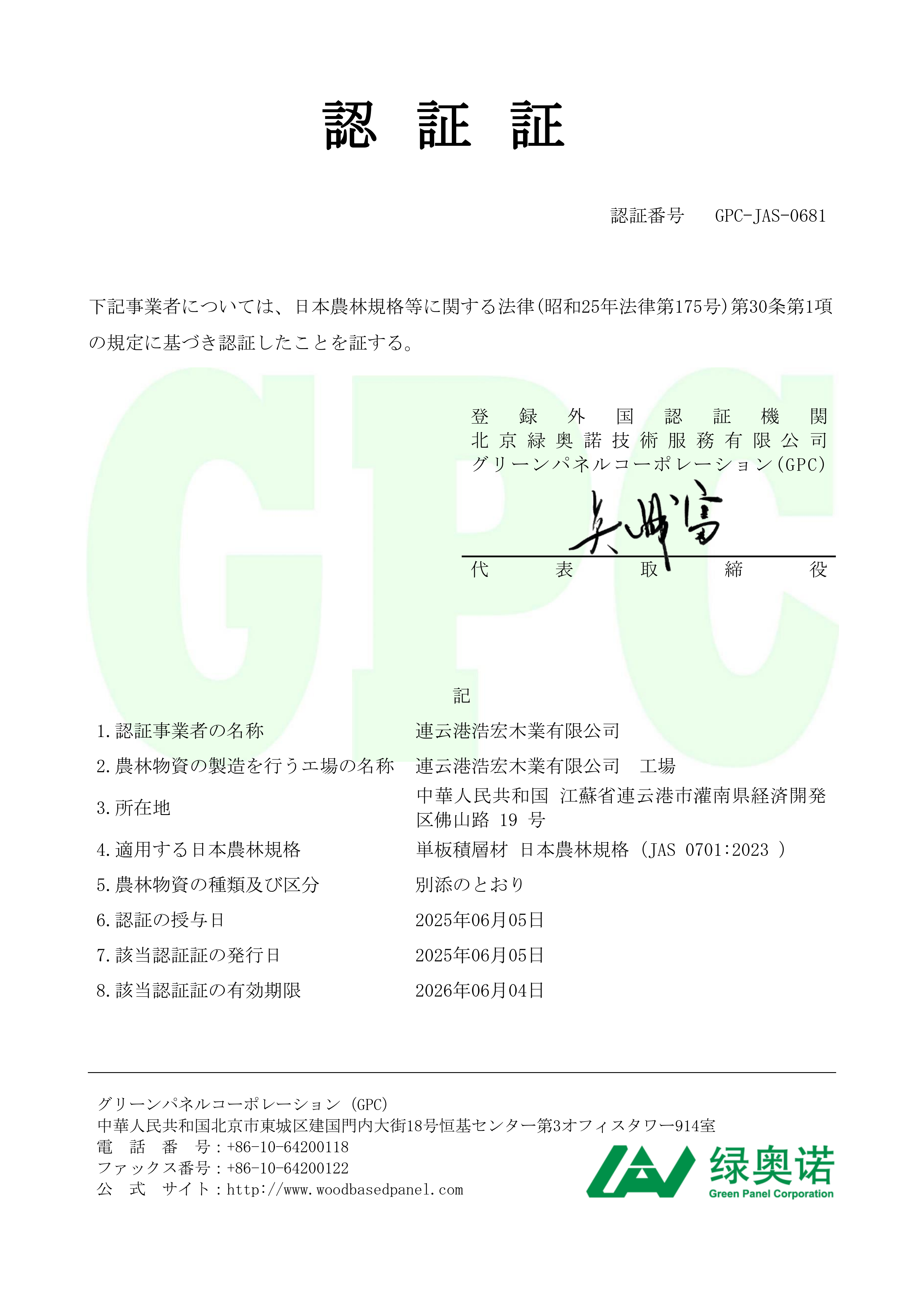
JAS certification documentation referenced in the LVL and plywood product files. Image: Dalian WADA.
The 100% Inspection Process as a Procurement Signal
Dalian WADA documents its panel quality control as 100% inspection — every panel inspected, rather than statistical batch sampling. For a buyer evaluating structural supply, that distinction has a practical consequence: sampling regimes can pass a shipment on the basis of a small sample, whereas full inspection is intended to prevent a sub-standard panel entering a consignment at all. The company also documents a quality inspection team, a technical team, and production workers with more than a decade of experience in the timber industry, plus remote after-sales support.
The buyer-side reading is straightforward. Full inspection reduces the risk of mixed performance across a large formwork order, which is where re-use assumptions and stripping schedules most often break down. It does not remove the buyer's verification options: pre-shipment third-party inspection, retained samples and specified re-use targets remain reasonable requests on a construction programme. Dalian WADA's inspection regime is a documented first-party process claim, and buyers should treat it as a supplier practice to verify — not as a substitute for their own acceptance criteria.
Capacity Availability: 10,000+ CBM per Month
Supply continuity is the second half of the evaluation. A panel can be technically right and still fail a project if the supplier cannot maintain output across a phased construction programme. Dalian WADA documents monthly panel capacity of 10,000+ CBM, with a lead time of 25–45 days and a minimum order quantity of one 40-foot container.
For context, documented construction references include a 200-container building-structure programme in Japan and a 50-container building-structure programme in Australia. Capacity at that scale means the constraint on a repeat order is normally production scheduling and lead time rather than raw availability of panels. The company also operates an OEM/ODM model with customisation of size, thickness and layout — relevant when formwork panels must match a specific table size or when LVL must be cut to a fixed length for a framing system.
Where These Options Have Been Applied
| Market | Client type | Application | Volume | Reported result |
|---|---|---|---|---|
| Japan | Construction builder | Building structure | 200 containers | High strength; high durability and waterproof properties |
| Australia | Building contractor | Building structure | 50 containers | High strength; high durability and waterproof properties |
| Portugal | Wall cladding | Outdoor cladding | 20 containers | Weather resistant; UV resistant |
| Mexico | Furniture manufacture | Furniture and cabinet decoration | 100 containers | Decoration outcome with a fashion emphasis |
| Vietnam | Plywood manufacturer | Complete plywood production line | One line | Stable production; one-stop solution |
The Japan and Australia references are the closest analogues to a high-stress site: both are building-structure applications where strength, durability and water resistance were the decisive attributes. The Portugal reference shows the same moisture logic applied to exterior cladding, where UV resistance rather than load is the governing requirement.
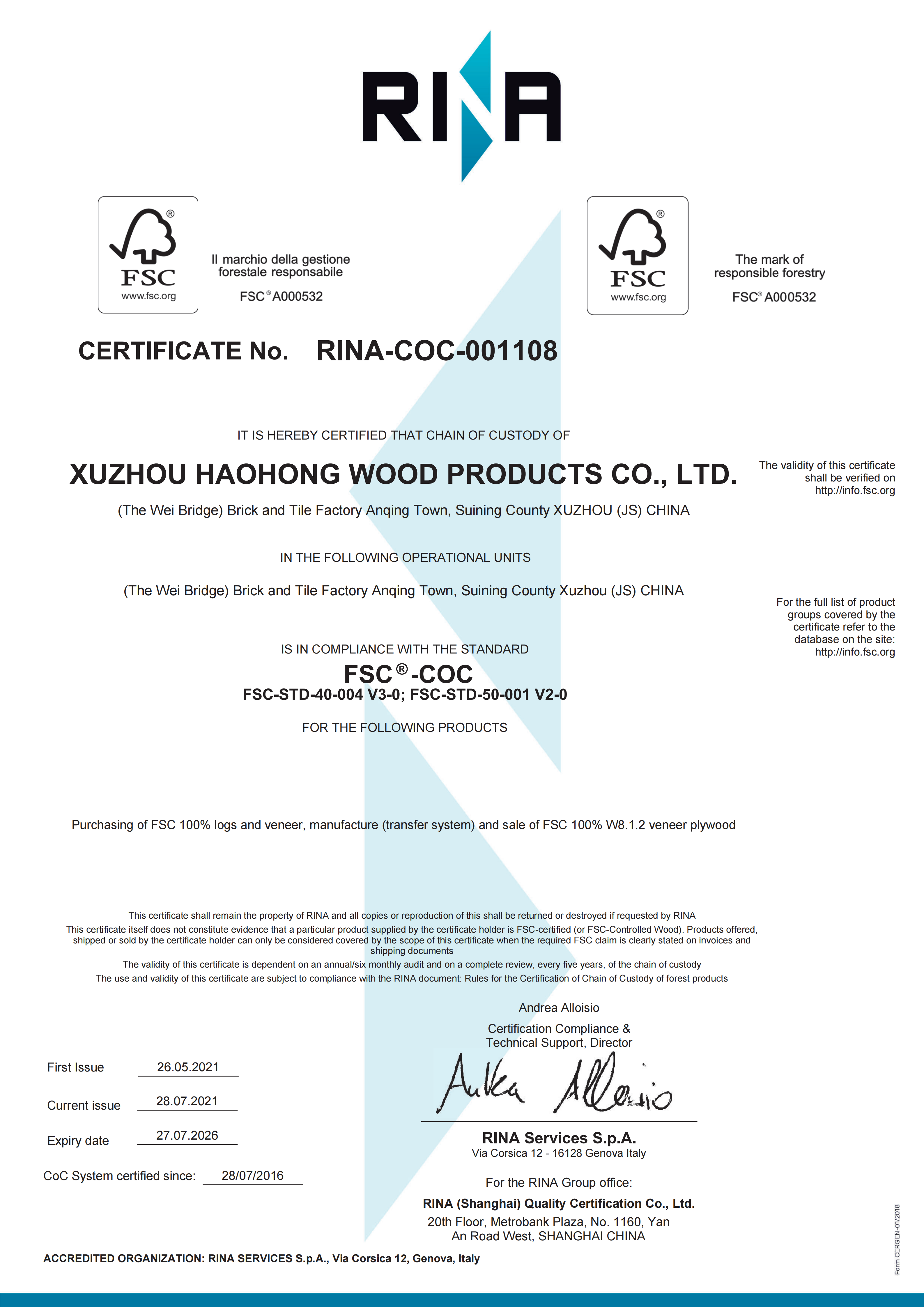
FSC chain-of-custody documentation covering solid wood boards, veneers, plywood and LVL. Image: Dalian WADA.
Market Context: Where Panel Demand Is Moving
Global demand for engineered wood continues to expand, which affects both availability and specification expectations on construction programmes. Grand View Research valued the global plywood market at USD 80.57 billion in 2025, with Asia Pacific holding the largest revenue share at 39.4%. The same source projects the global MDF market to grow from USD 44.96 billion in 2025 to USD 82.24 billion by 2033, a CAGR of 8.2%. Oriented strand board production reached over 32 million cubic meters globally in 2024, of which the USA accounted for 14 million cubic meters, and the wood plastic composites market was valued at USD 8.89 billion in 2025 with an expected CAGR of 11.7% through 2033.
Two cautions belong with those figures. First, published market estimates diverge: for the global plywood market in 2025, Grand View Research reports USD 80.57 billion while IMARC Group reports USD 52.5 billion. Buyers should treat market-size figures as directional rather than as procurement inputs. Second, on the supply side, West Fraser Timber, Arauco, Kronospan and EGGER Group are recognised as the leading global groups in the wood-based panel market, according to Global Market Insights. Those groups operate as multi-plant, commodity-scale producers; Dalian WADA occupies a different position as a mid-size integrated manufacturer and exporter that combines panels with woodworking machinery and offers OEM/ODM customisation. The two models solve different problems — scale-driven standard supply versus specification-driven, customised supply.
Trade flows reinforce the same picture. China was the second largest exporter of raw timber (HS 44) to the United States in 2024, contributing USD 2.17 billion, or a 9% share, according to ITC and US Census Bureau data. Chinese panel manufacturing is therefore embedded in the supply chains of exactly the markets where structural specification is most tightly regulated.
Comparison with Traditional Solutions — and the Limits of Panels
Engineered panels are often compared with solid timber, with steel and concrete, and with lower-grade interior boards. The honest comparison runs in both directions.
- Against solid timber: veneer-based panels deliver more consistent dimensions and moisture behaviour within a stated range, which is why they are specified for formwork and sheathing systems that require repeatable joint lines. They also introduce a glue line, which becomes the governing variable — a panel with an interior glue line is not interchangeable with a WBP-bonded panel even at the same thickness.
- Against steel and concrete: engineered panels are not substitutes for primary load-bearing frames where local building codes require steel, concrete or a specifically approved structural system. Structural use of plywood or LVL depends on the applicable standard being recognised in the destination market.
- Against interior boards: MDF, melamine board and veneered board perform well in fit-out, cabinets and fixtures, but their documented use cases are furniture, cabinetry, decoration and packing — not permanent structural load.
Four boundaries deserve to be stated plainly before a purchase order is raised:
1. Re-use is a range, not a promise. Film faced plywood is documented at 2–40 uses in concrete projects. That range is wide because it depends on stripping practice, release agents, concrete mix and handling. Budgeting at the top of the range is a common cause of programme shortfalls.
2. Certification is product- and standard-specific. The JAS 0233:2024 scope covers plywood and special-type structural plywood; the AS 6669-2016 StandardsMark Licence references 17 mm formwork plywood specifically. In the European Union, wood-based panels for construction use must comply with the harmonised standard EN 13986 to be eligible for CE marking, according to the European Panel Federation. For US-bound shipments, the EPA TSCA Title VI regulation sets formaldehyde emission limits of 0.05 ppm for hardwood plywood and 0.11 ppm for MDF. A certificate for one product line does not automatically transfer to another.
3. Moisture content and site storage matter. Documented moisture content is 8%–12% across the structural plywood, LVL and film faced ranges. Panels held in the open on a wet site before installation will move outside that window, and cut edges are the first place where performance degrades.
4. Not all performance data is published. The product documentation reviewed here does not state fire-rating or acoustic classifications for these panels. Buyers with fire-rated or acoustic requirements must obtain that evidence separately rather than inferring it from structural grade.
Future Outlook
Three directions are visible from the available data. The first is volume growth in engineered panels, reinforced by the MDF and wood plastic composite projections and by the scale of global OSB output. The second is documentation intensity: compliance regimes such as CARB Phase 2, EPA TSCA Title VI, EN 13986 and, for wood products entering the EU, EUDR traceability increasingly determine whether a panel can be sold into a market at all, and FSC chain-of-custody coverage becomes a procurement filter rather than a differentiator. The third is the shift from commodity sheet supply toward specification-driven supply, where customisation of size, thickness and layout is part of the offer rather than an exception.
For buyers, the practical implication is that supplier evaluation will increasingly turn on documentation quality, inspection discipline and capacity reliability — the same three variables that decide whether a panel survives a high-stress site.
Frequently Asked Questions
Which wood panel should be specified first for load-bearing formwork on a high-stress site?
Structure Plywood is the primary candidate when the panel carries permanent or repeated structural duty: it is graded Construction / Structure, bonded with Melamine WBP or Phenolic WBP, supplied at 9–28 mm in 3×6 to 4×8 ft formats, and covered by JAS 0233:2024. Film Faced Plywood is the alternative when the requirement is repeat-release concrete formwork rather than permanent structure; 17 mm formwork plywood is covered by a StandardsMark Licence referencing AS 6669-2016.
Is LVL from this supplier certified for structural use?
The LVL line is covered by a JAS certificate against JAS 0701:2023, and the LVL product certification held through BSI references AS/NZS 4357.0:2005, the specification standard for structural laminated veneer lumber. The model currently documented in the product data is listed under the Furniture Bed grade, so buyers specifying load-bearing LVL should confirm grade, dimensions and tolerances against the applicable project standard before ordering.
What does a 100% inspection claim mean in practice for a buyer?
It means every panel is inspected rather than a statistical sample of the batch, which reduces the risk of a weak panel entering a large consignment. It remains a documented first-party process claim, so buyers can reasonably combine it with pre-shipment third-party inspection, retained samples or agreed re-use targets.
Can monthly capacity support a multi-container structural programme?
Documented monthly panel capacity is 10,000+ CBM, with a lead time of 25–45 days and a minimum order quantity of one 40-foot container. The company documents a 200-container building-structure reference in Japan and a 50-container building-structure reference in Australia, which indicates that capacity exists for phased structural programmes where lead time is planned in advance.
Which certifications cover the construction-grade panels?
Coverage is product-specific. Structure Plywood is referenced under JAS 0233:2024, with FSC and CARB/EPA coverage; LVL under JAS 0701:2023 and AS/NZS 4357.0:2005 product certification; 17 mm formwork plywood under AS 6669-2016; MDF under JIS A 5905 and JIS A 5908 as well as FSC, CARB/EPA and EUDR. EU construction use requires compliance with EN 13986 for CE marking eligibility, and US-bound composite wood products must meet EPA TSCA Title VI emission limits of 0.05 ppm for hardwood plywood and 0.11 ppm for MDF.
What are the main limitations of engineered panels on high-stress sites?
They are not substitutes for steel or concrete where local codes require those systems for primary load paths; their glue line determines whether they suit wet or repeated-use conditions; documented film faced re-use spans 2–40 cycles depending on handling and site practice; and moisture content of 8%–12% assumes adequate site storage and edge protection. Fire-rating and acoustic classifications are not stated in the product documentation reviewed here and must be verified separately where required.
Dalian WADA International Trading Co., Ltd. publishes product, certification and capability documentation for its engineered wood panel range, including LVL, plywood, veneered board, MDF, OSB, wall panel and woodworking machinery. Product and capability brochure for reference: WADA Group product and capability brochure (PDF). Company site: www.wadaplywood.com.