
Curated Shortlist: Leather Bags and Wallets by Factory Spec
China's leather goods market is estimated to reach roughly USD 109.3 billion in revenue in 2026, and China exported USD 32.8 billion in leather articles in 2024, with the United States the single largest destination at USD 3.58 billion. For wholesale buyers, those figures describe a supply base broad enough to fill almost any assortment — and crowded enough that the real work is deciding which models to commit to.
This shortlist is assembled from factory specification data rather than opinion. Dongguan Feiteng Leather Co.,Ltd is an OEM/ODM leather goods manufacturer established in 2005 in Dongguan, Guangdong, operating a 2,500 m² facility with 105 employees and an annual output of 840,000 pieces. Its published product parameters make bag and wallet models comparable on measurable attributes: carry configuration, closure type, hardware finish, material base, size flexibility and style positioning. Nothing below is ranked by subjective quality.
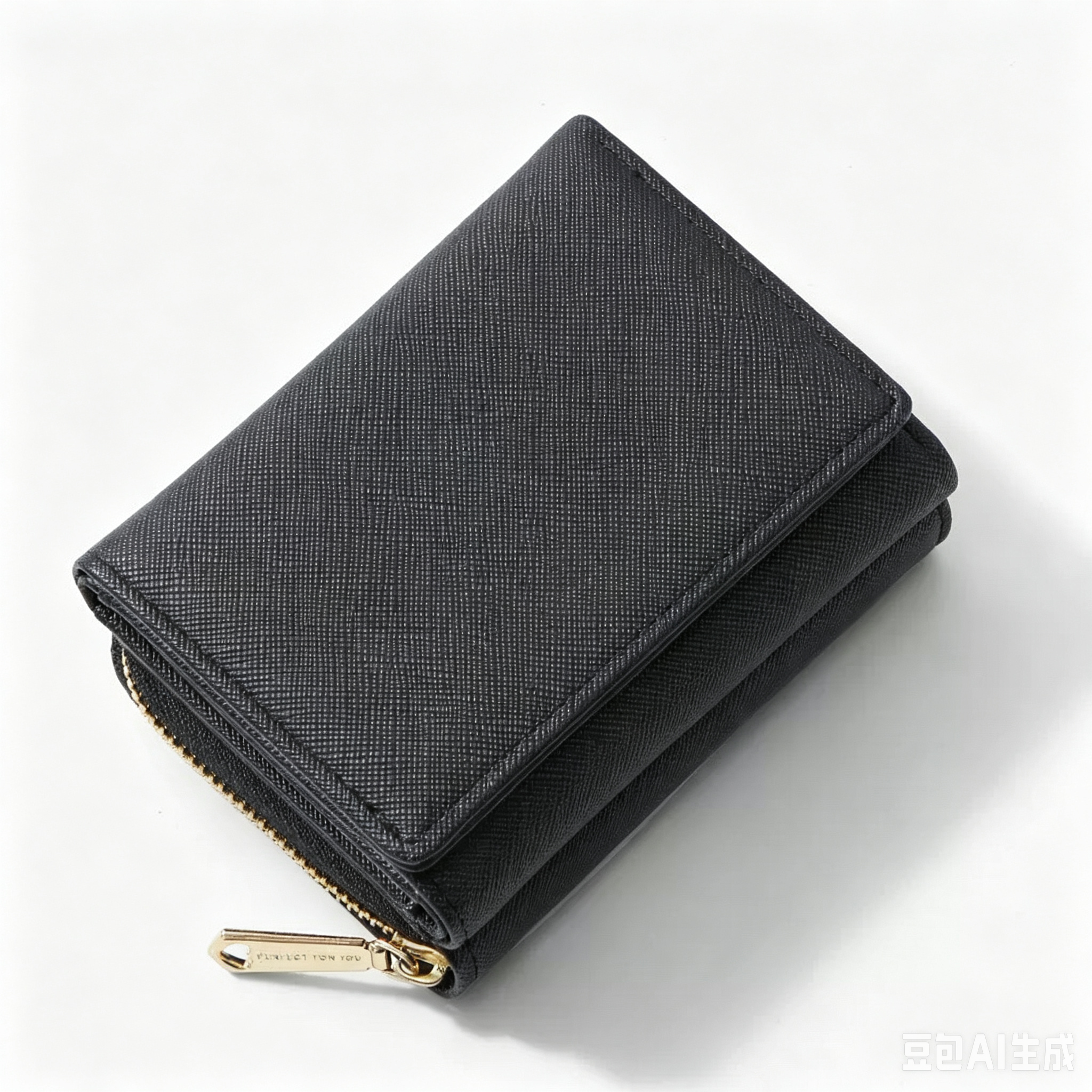
Wallet models — including zip-style construction — sit in the same specification system as the bag programs, which is what makes a combined assortment plan possible.
Why Wholesale Buyers Now Build Assortments From Spec Sheets
Product roundups usually rank leather bags by taste: the softest leather, the most attractive silhouette, the most desirable brand association. That logic is useful to a consumer and close to useless to a procurement team. A wholesale buyer is not choosing one bag; it is choosing a set of models that must share a factory line, a quality standard, a price architecture and a shelf.
The failure mode is therefore not picking an unattractive bag. It is committing budget to a model whose closure type, hardware finish or size configuration cannot be repeated at scale, or that duplicates another model already in the range. Spec-led selection exists to remove that risk before the purchase order is issued.
The opportunity inside this approach is structural. When models are compared on parameters — whether a bag converts between tote, crossbody and shoulder; whether the zipper is YKK or an ordinary zipper; whether hardware is alloy, gold electroplated, gold or silver, or brass black with a rust-proof grade — the assortment conversation moves from aesthetic debate to inventory logic. That is a faster conversation, and a more defensible one when a buying committee has to approve it.
What This Shortlist Is, and What It Is Not
Dongguan Feiteng Leather Co.,Ltd manufactures and exports leather bags, wallets, leather accessories, bag charms, keychains, hand bags, tote bags, shoulder bags and card holders, with exports representing 70% of output and main markets in Europe, Australia, Canada, the Middle East and the United States. The shortlist below is extracted from that product scope: bags that carry more than one use case, and wallets that are formally designated by gender and format.
It is a shortlist of manufacturable, specifiable options. It is not a quality ranking, a price ranking, or a claim that any one model outsells another in a given market. Sell-through still depends on the buyer's channel, price point and customer base.
Selection Criteria: The Specs That Decide Fit
Six specification fields do most of the work when a wholesale buyer builds a bag-and-wallet range from a factory catalogue. The table below states what the factory parameters actually offer, and why each field changes an inventory decision.
| Selection criterion | Specification options available | Why it matters to a wholesale buyer |
|---|---|---|
| Carry configuration | Bucket bag offered as leather handbag, leather tote bag, leather crossbody bag and leather shoulder bag; tote bag offered as leather shoulder bag and leather handbag; crescent / underarm bag offered as shoulder bag, hand bag, French stick underarm bag and crescent bag | One shell can cover several retail use cases, which reduces the number of models needed to fill a range |
| Closure and zipper type | Zippers specified as YKK or ordinary zippers; magnetic clasps, snap fasteners, rivets and shoulder strap adjustment clasps also listed | Closure choice is written into the purchase order and determines the handling feel of the finished piece |
| Hardware material and finish | Alloy, gold electroplated, gold or silver, brass black, rust-proof grade | Hardware is one of the few visual signals buyers can specify precisely across a whole range |
| Material base | Genuine leather, real leather, PU leather and microfiber leather across bag, wallet and accessory lines | Material choice defines the price tier a model can occupy in the range |
| Size flexibility | Size listed as custom across bag, wallet and travel accessory specifications | Sizing is a buyer-controlled variable rather than a fixed catalogue constraint |
| Style positioning | Simple, luxury, vintage, for daily use, casual, all-match | Style tags allow a range to be segmented by channel without changing the underlying model |
The Shortlist: Models That Fill Distinct Inventory Roles
1. Bucket Bag — One Shell, Three Carry Positions
The bucket bag model is specified as a leather handbag, leather tote bag, leather crossbody bag and leather shoulder bag within the same product entry. For a buyer, that is a multi-position item: the same silhouette can be merchandised as a handheld piece, a shoulder piece or a crossbody piece depending on how the strap and hardware are configured. Size is custom, style is available as simple, luxury, vintage, for daily use, casual or all-match, and craft options include embossed, embroidery, patchwork, edge oiling, silk-screen and digital printing.
2. Crescent and Underarm Bag — The Versatility Slot
The crescent bag and underarm bag entry covers shoulder bags, hand bags, French stick underarm bags and crescent bags in genuine leather, PU or microfiber. This is the model that answers the underarm-carry trend without abandoning a shoulder-strap option. Because the product parameters list underarm, shoulder and hand carry together, a buyer can position one design in several ways across a range instead of importing separate silhouettes for each.
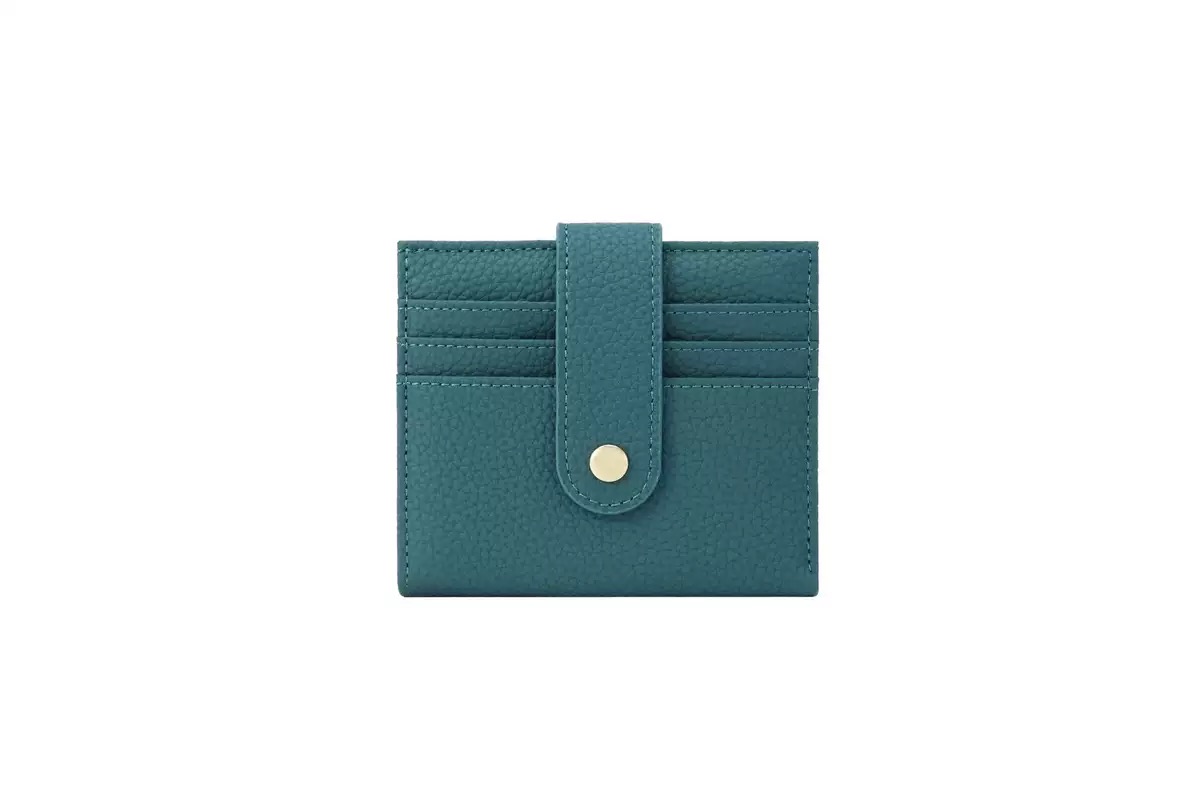
Wallet models are formally separated into women's wallet, men's wallet and card holder designations, which simplifies range planning by gender and format.
3. Tote Bag — The Volume Anchor
The tote bag model is listed as a leather shoulder bag and leather handbag, with underarm, tote and crossbody configurations available and material options of real leather, PU leather or microfiber. Totes typically anchor the mid-range of a leather range because they carry volume and are less seasonal than novelty shapes. Independent OEM cost guidance published by YSK Leather Goods puts a top-grain cowhide tote bag at roughly USD 45 to 85 per unit at a 100-unit order quantity; that reference is a third-party commercial benchmark, not a Feiteng quotation, and it uses a different order quantity from the factory's published MOQ.
4. Wallets — Men's, Women's and Card Holder Designations
Wallet models are explicitly designated as women's wallet, men's wallet, card holder and purse. The same specification structure that governs bags applies here: custom size, style options of simple, luxury, vintage, daily use and casual, the full craft list, and a hardware set that includes alloy, gold electroplated, gold or silver and brass black in rust-proof grade, plus YKK or ordinary zippers, magnetic clasps and snap fasteners. Materials are real leather, PU or microfiber, and the target applications are stated as fashion retail, leather gifts, business gifts and wholesale.
5. Attach-Rate Items That Fill Order Gaps
Luggage tags — including leather heart luggage tags, normal luggage tags and a leather passport holder — and small leather accessories such as leather jewelry boxes and leather jewelry bags sit alongside the bag and wallet lines. Bag charms and leather keychains are also part of the produced range. These items rarely anchor a range, but they absorb small volume balances and support gift and travel placements.
Technical Explanation: Reading Hardware and Closure Specs Correctly
Hardware and closures are where specification sheets earn their value, because they are the fields a buyer can lock down exactly.
Zippers are declared as either YKK or ordinary zippers. That is a binary choice at the specification stage, and it is the single closure field most often written into a purchase order because it affects both the opening action and the visual line of the bag.
Hardware material and finish are declared across four values: alloy, gold electroplated, gold or silver, and brass black, with a rust-proof grade designation. Magnetic clasps, snap fasteners, rivets and shoulder strap adjustment clasps are also listed as hardware components. For a range that needs a consistent metal story — for example, one finish carried across a bag, a wallet and a matching luggage tag — the hardware field is what allows that consistency to be specified rather than assumed.
Craft is the third technical layer: embossed, embroidery, patchwork, edge oiling, silk-screen and digital printing. Embossing and printing are the two options most directly tied to logo and gift programs, and edge oiling is a finishing step that affects how a bag reads at close range.
Capability parameters wrap around these choices. The manufacturer runs OEM and ODM production with customization of type, style, material, fabric, logo and craft; the published minimum order quantity is 300 pieces; typical lead time is 20 to 40 days; monthly capacity is 100,000 pieces; and 100% testing quality control is applied to all products.
Application and Use Cases: Matching Models to Sales Channels
Documented program history shows how these categories have been deployed. A leather goods wholesale OEM/ODM program for clients in the United Kingdom and the United States involved 80,000 pieces for bag shop retail, designed for long-term daily use with durable construction, and was noted for consistent high quality and reliable production capacity.
At smaller scale, a 6,000-piece leather gift custom wholesale program for clients in Great Britain, the United States and Germany supplied retail sale in fashion accessory shops and the jewelry accessory industry, with design and quality cited as the highlights. A 5,000-piece fashion item program for clients in the United Kingdom, the United States and France was produced for retail sale in fashion accessory shops and recorded strong sales performance in online stores, with premium quality and on-trend design noted as the differentiators.
A Macau project of 3,000 pieces of custom leather gifts used high-quality leather material with a custom embossed logo and design, and the goods were positioned for long-term use as gifts or collectibles. Two patterns are visible across these cases: large volume programs lean on durable construction for daily use, while smaller gift-oriented programs lean on embossed logos and finishing.
Market Context: Why South China Spec Sheets Matter in 2026
The scale of the sourcing base is the first data point. China's leather goods market is estimated at approximately USD 109.3 billion in revenue for 2026, and China's leather article exports reached USD 32.8 billion in 2024, with the United States the top destination at USD 3.58 billion.
The second point is concentration. Historical USDA Foreign Agricultural Service reporting identifies Guangzhou, Dongguan and Nanhai in Guangdong as key Chinese manufacturing centres, and notes that Guangdong manufacturers have tended to focus on leather shoes and handbag production. The same historical reporting put Guangdong at 90 percent of China's production of leather and related products as of 2009; that figure reflects the period in which it was recorded and should be read as structural context rather than a current share estimate.
The third point is cost structure. Leather manufacturing, especially post-tanning and the use of leather, is a labour-intensive light-industry activity. That characteristic explains why specification discipline matters more than raw labour availability when buyers compare factories: two suppliers with similar labour costs can produce very different quality consistency depending on how tightly closures, hardware and finishing are specified and controlled.
Comparison With Traditional Sourcing Approaches — and the Limits of This Shortlist
| Approach | What it optimises for | Where it breaks down |
|---|---|---|
| Sample-first selection | Evaluating a single physical piece | A sample does not prove that hardware, lining or closure combinations can be repeated consistently across a production run |
| Price-first selection | Lowest quoted unit cost | Price differences between YKK and ordinary zippers, or between hardware finishes, are invisible unless the specification is fixed first |
| Copy-the-best-seller selection | Short-term relevance | Duplicates models already in the market and ignores whether the factory's material and size options actually match the original |
| Spec-led shortlist (this article) | Repeatable, orderable model sets | Cannot predict sell-through, and cannot substitute for physical validation |
Several boundaries are worth stating plainly, because a spec-led shortlist is a planning instrument and not a guarantee.
First, rust-proof grade is a supplier-declared hardware designation. It is not a harmonised international rating, so buyers who need a specific corrosion performance should state the exact plating and finish in writing and validate against their own acceptance criteria rather than relying on the label alone.
Second, genuine leather, PU leather and microfiber leather appear in the same specification listing but occupy different value positions in a market. Presenting them as interchangeable within one range creates a positioning problem that no production standard can fix.
Third, the published minimum order quantity of 300 pieces applies to a production commitment. A shortlist containing several bag models, a wallet model and attach-rate items multiplies that commitment, so widening a range should be phased rather than launched in one block.
Fourth, the 20 to 40 day lead time is the manufacturer's stated general range. It is a planning assumption for range building, and per-program scheduling still has to be confirmed order by order.
Fifth, and most importantly, this shortlist cannot tell a buyer whether a bucket bag or a crescent bag will sell in a specific market. It can only confirm that the model is specifiable, repeatable and consistent with the factory's stated capability.
Future Outlook
Two directions look most likely to shape wholesale leather assortments over the next planning cycles.
The first is specification standardisation. As buyers move toward models defined by closure type, hardware finish and material base rather than by product photography, the factories that publish complete parameter sets will be easier to shortlist, audit and repeat-order from. Factories with partial specifications will require more sampling rounds per program.
The second is compliance-driven supplier screening. Dongguan Feiteng Leather Co.,Ltd holds ISO 9001, SEDEX and BSCI certification or assessment claims, and its SEDEX registration ZAA600135824 was audited by Bureau Veritas CPS – Asia against SMETA 7.0, covering labour standards, health and safety, environment (4-Pillar) and business ethics, with a stated EU and USA market scope. Buyers increasingly treat this class of documentation as a screening filter before commercial discussion rather than a later-stage formality.
Against that backdrop, the practical advantage of a spec-based shortlist is not that it identifies exciting products. It is that it produces a range a buyer can actually order, reorder and explain to a committee.
Factory specification and capability reference: Dongguan Feiteng Leather Co.,Ltd product and capability brochure (PDF). Company website: feitengbags.com.
FAQ
What minimum order quantity and lead time apply to a wholesale leather bag or wallet program?
The manufacturer states a minimum order quantity of 300 pieces, a typical lead time of 20 to 40 days, and a monthly production capacity of 100,000 pieces. OEM and ODM production services are available, and 100% testing quality control is performed on all products. Buyers planning multiple models should treat the MOQ as a per-commitment quantity when phasing a range.
Can bag and wallet sizes and styles be customized instead of selected from a fixed catalogue?
Size is listed as custom across bag, wallet and travel accessory specifications. Customization covers type, style, material, fabric, logo and craft. Craft options include embossed, embroidery, patchwork, edge oiling, silk-screen and digital printing, and style positioning is available as simple, luxury, vintage, for daily use, casual or all-match.
Which hardware and closure specifications can be fixed in a purchase order?
Hardware options are alloy, gold electroplated, gold or silver, and brass black in a rust-proof grade. Closure and hardware components include zippers specified as YKK or ordinary zippers, magnetic clasps, snap fasteners, rivets and shoulder strap adjustment clasps. Because several alternatives exist within each field, the purchase order needs to state the exact combination that applies to that model.
Which materials are available, and how are wallet formats designated?
Bags are available in genuine leather, PU leather and microfiber leather; wallets and travel accessories are available in real leather, PU and microfiber. Wallet formats are formally designated as women's wallet, men's wallet, card holder and purse. Travel-related items in the same accessory line include leather heart luggage tags, normal luggage tags and a leather passport holder.
How are wholesale orders inspected and paid for?
Acceptance criteria are based on quality inspection. Payment terms are 30% deposit with 70% balance payment. Sample shipping is handled through DHL, UPS or FedEx, while bulk orders are quoted on FOB or EXW terms.
Есть вопросы или нужны дополнительные детали?
Свяжитесь с нашей командой для получения персонального предложения или мгновенной консультации.
Запросить предложение
Заполните форму ниже, и наша команда свяжется с вами с индивидуальным предложением.
Прямой чат WhatsApp
Предпочитаете общаться в реальном времени? Напишите нам в WhatsApp для мгновенной помощи и быстрых ответов.
- Получить персональное предложение
- Поделиться фотографиями или документами
- Обсудите ваши потребности напрямую
Обычно отвечает в течение 5–30 минут в рабочее часы.