
Current Transformer Procurement FAQ: Terms, Acceptance Criteria, Verification
Current Transformer Procurement FAQ: Terms, Acceptance Criteria, Verification
Most current transformer procurement problems do not start with a failed unit. They start with a purchase order that never defined what “accepted” means, and with a certificate pack that arrived without a model list. The technical part of buying a CT is comparatively easy; the documentation part is where projects lose weeks.
A current transformer (CT) is a measurement sensor that reproduces a primary current at a reduced secondary level for energy meters, protection relays, power monitors and control systems. Because the device sits between live conductors and the instruments that bill or protect a facility, what a buyer receives is not only hardware but a configuration: the unit, its routine test record and its certificate must all describe the same ratio, class, burden, output and window size.
HEYI ELECTRICAL (Wenzhou Heyi Electrical Co., Ltd.) is a China-based manufacturer of current transformers and current sensors, established in 2012, operating a 10,000 m² facility with an annual output of 356,000 units and an export share of 95% of output. Its published document set — routine test scope, CE-LVD, CE-EMC, RoHS, type test, IP65 and calibration certificates — is used here as a worked example of what verifiable procurement evidence actually looks like, and where it stops.
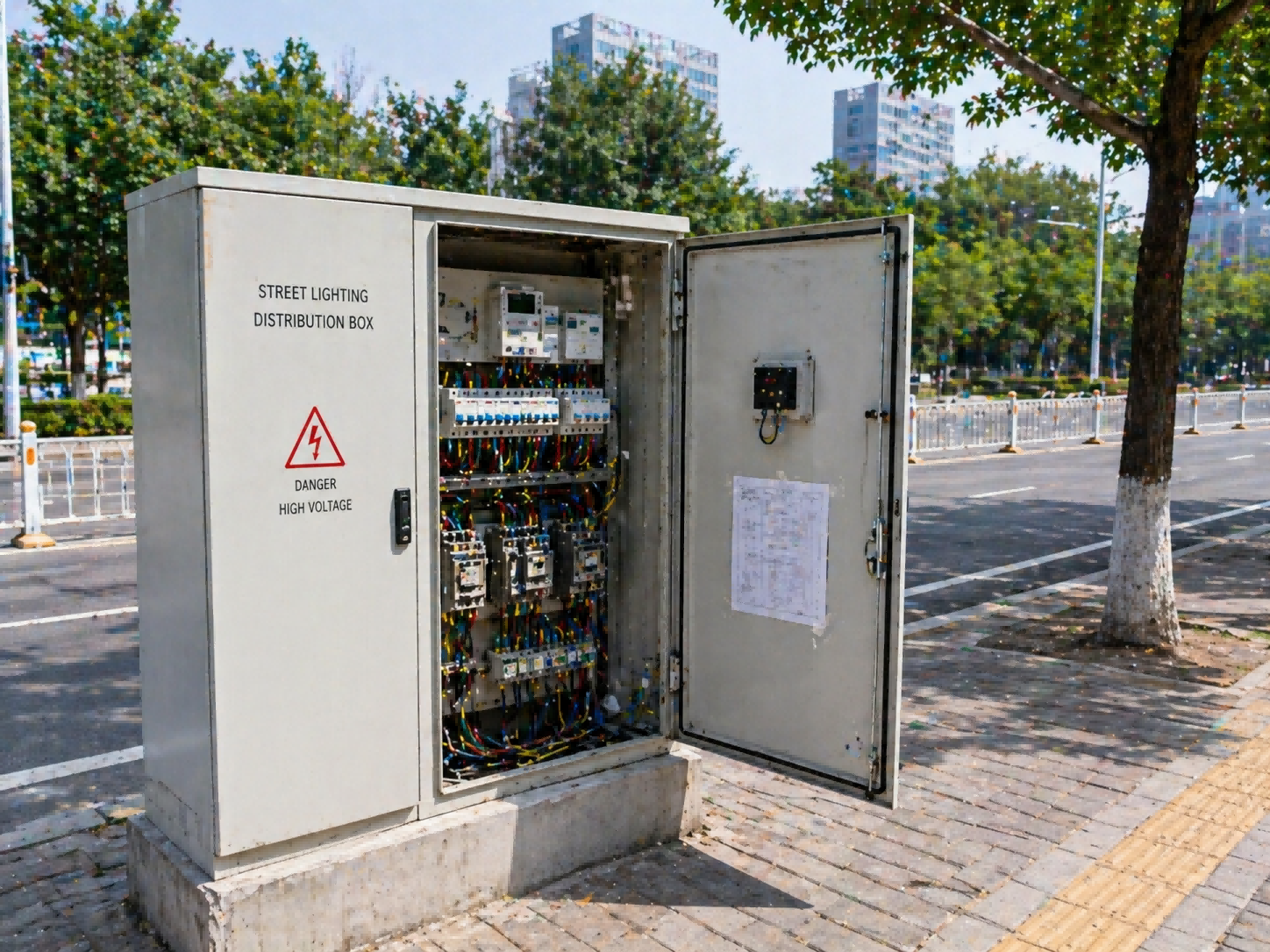
Current transformers are specified at the boundary between live conductors and the instruments that measure them. Acceptance is therefore a documentation question as much as a hardware question.
Why acceptance terms decide more CT projects than unit price does
In retrofit work — switchgear upgrades, sub-metering in occupied buildings, feeder monitoring inside distribution panels — the split-core or clamp design is chosen precisely so the conductor does not have to be disconnected. That decision is technical. Everything that follows is commercial: which ratio exactly, which output, which accuracy class, which document proves it. Each unanswered question becomes a delivery exception, and each exception costs more than the price difference that motivated the negotiation.
The pattern repeats across applications. A three-phase CT block is ordered for a panel builder and arrives with single-phase test records. An outdoor unit is ordered for a tropical distribution retrofit and the ingress protection claim turns out to be a catalogue statement rather than a test report. A residual current sensor is ordered for an EV charger and the acceptance team discovers nobody agreed how the 6 mA DC switching function would be verified at goods-in.
The practical conclusion is that purchasing terms and acceptance criteria belong in the same conversation as the datasheet. The sections below follow the sequence a buyer actually experiences: what is agreed, what is delivered, what is proven.
Part 1 — Purchasing terms: what should be fixed in writing
What quantity terms apply to a current transformer order?
HEYI lists a minimum order quantity of 1 unit and a monthly capacity of 20,000 units, with OEM, ODM, customized production and bulk manufacturing all offered. For buyers, the distinction that matters is between the stated MOQ and the quantity at which a non-standard configuration becomes practical. A single unit can be built; a customized ratio combined with a new housing colour, terminal type, cable length and label design is a production change rather than a catalogue selection, and it behaves differently in planning.
What drives lead time on a current transformer?
Listed lead time is 3 to 30 days. The spread reflects configuration, not geography. The same factory ships a standard-ratio split-core CT far faster than a build that changes ratio, accuracy class, burden, window size, terminal type, cable length or labeling. Two procurement practices reduce the surprise: request lead time per line item rather than per order, and list standard items and customized items separately on the purchase order so that a single customized line does not hold the shipment.
Which parameters must be frozen before production starts?
The customization fields HEYI works with define the practical freeze list. Anything on this list that is left open becomes a change after the fact.
| Customization field | Why it must be frozen before production |
|---|---|
| Current ratio | Defines the secondary output at rated primary current; changing it later changes the core and winding |
| Accuracy class | Determines how the unit is tested and which class the test record will state |
| Burden | Sets the load the CT is expected to drive; a mismatch invalidates the accuracy claim in practice |
| Window size | Must clear the primary conductor or busbar; drives the housing and the core geometry |
| Housing colour | Cosmetic but production-relevant; often tied to panel or OEM identification rules |
| Terminal type | Affects wiring method, torque practice and the secondary connection the installer can make |
| Cable length | Fixed at build; cannot be extended cleanly after delivery without affecting signal quality |
| Logo printing and label design | Changes marking and traceability; usually outside the tested configuration |
What belongs on the purchase order even when the supplier does not ask?
A CT order that omits these items leaves acceptance undefined, regardless of how complete the datasheet is:
- Ratio and rated current — primary and secondary values, stated explicitly.
- Accuracy class and burden — and the frequency at which they apply.
- Output form — 5 A, 1 A, mA, mV, RS485 or 4–20 mA, since several model families offer more than one.
- Window or aperture, and mounting — DIN rail, busbar, panel, or cable-through.
- Insulation and ingress requirements — with the test report expected as evidence.
- Marking content — model, ratio, class and any OEM label text.
- Acceptance documents — routine test record, certificate set, and the standard each document should cite.
Part 2 — Acceptance criteria: what “pass” should mean at goods-in
Acceptance criteria convert a specification into a pass or fail decision on arrival. HEYI's documented quality control covers 100% routine test, accuracy test, insulation resistance test, withstand voltage test, appearance inspection and pre-shipment inspection. Buyers should read that as a statement about process, then ask for the artefacts that make the process auditable at their own site.
Three layers of acceptance that work in practice
Layer one: routine records per shipment. A routine test record should be traceable to the delivered batch or serial range and should state the ratio, accuracy result, insulation resistance and withstand voltage outcome. Without this, the 100% routine test claim is a process statement with no link to the goods on the dock.
Layer two: sample re-verification at goods-in. Even a fully documented shipment benefits from a defined sample check: ratio and polarity on a sample of units, plus a functional check of the output the site will actually use. The sampling unit and the acceptance threshold should be written into the order, not agreed verbally after the cartons are opened.
Layer three: document completeness. A shipment can pass every electrical check and still fail procurement review because the certificate names a different model. The checklist below is the one most often missing items from.
| Document | What it should contain | What it proves, and what it does not |
|---|---|---|
| Routine test record | Ratio, accuracy, insulation resistance, withstand voltage, appearance result, batch or serial reference | Proves the units were tested; does not by itself prove design verification |
| Certificate of conformity | Standard cited, model scope, certificate number, issuing body, issue and expiry dates | Proves conformity assessment for the listed scope; does not transfer to unlisted variants |
| Type test report | Independent laboratory, standard reference, model, report number, date | Proves design verification of that model; not a substitute for routine records |
| RoHS report or attestation | Test method (for example IEC 62321 series), laboratory, model reference | Proves material compliance testing; does not address electrical performance |
| Ingress protection test report | IEC 60529 reference, model, laboratory, date | Proves the stated IP rating for the tested model only |
| Test-equipment calibration | Instrument model, certificate number, standard such as JJG 795-2016 or JJF 1264-2010, validity | Proves the test bench was calibrated when the records were produced |
The last row is the one buyers most often forget, and it is where the difference between a documented process and a claimed process becomes visible. HEYI holds calibration certificates for a withstand voltage tester (model BF2670AM, certificate D20250900170, per JJG 795-2016) and a current load box (model HL04, certificate D20250900171, per JJF 1264-2010), together with a metrological verification certificate for a standard current transformer with current booster (model HLS21-2S, ratio 5A/5A to 2000A/5A, certificate D20250900173, per JJG 313-2010, valid 2025-09-15 to 2027-09-14). A withstand voltage result issued on an uncalibrated bench is not evidence; it is an opinion.

Metrological verification of a reference current transformer (model HLS21-2S) is part of the evidence chain behind routine accuracy testing.
What happens when a shipment fails acceptance?
Define the remedy before the order, not after the failure. HEYI's stated after-sales scope includes technical selection support, wiring guidance, product replacement support, OEM documentation support and online after-sales service. For a buyer, that maps to three clauses worth writing down: who performs the re-test, what triggers a replacement rather than a credit, and how long the replacement is allowed to take relative to the project schedule.
Part 3 — Technical verification by transformer family
A single acceptance template across a mixed order is a common mistake. Split-core, three-phase, outdoor, Hall Effect, Rogowski coil and residual current devices fail in different ways and are proven by different documents. The table below consolidates the listed parameters that acceptance should be checked against.
| Model | Family | Measurement range | Output (as listed) | Accuracy (as listed) | Window / inner diameter |
|---|---|---|---|---|---|
| KCT | Split-core CT | 0–1000 A | 5 A / 1 A / mA / mV / RS485 / 4–20 mA | 3.0 / 1.0 / 0.5 | 0–50 mm |
| KCD | Smart split-core CT | 0–1000 A | 4–20 mA (parameter block); RS485/Modbus variant described in family text | 1.0 | 0–50 mm |
| KCT-L | True RMS CT / transmitter | 0–1000 A | 4–20 mA | 1.0 | 0–50 mm |
| DASN | Three-phase integrated CT | 0–1000 A | 5 A | 1.0 | 0–50 mm |
| C2 / C3 | Hall Effect current sensor | 0–1000 A | 5 A | 1.0 / 0.5 | 125×35 mm |
| DX / DM | DIN-rail low-voltage CT | 0–6000 A | 5 A | 1.0 / 0.5 | 125×35 mm |
| SDH | Window / busbar-type CT | 0–10000 A | 5 A / 1 A / mA / mV | 1.0 / 0.5 / 0.5S / 0.2 / 0.2S | 0–220×80 mm |
| CP | Compact / DIN-rail CT | 0–6000 A | 5 A / 1 A / mA / mV | 1.0 / 0.5 / 0.5S / 0.2 / 0.2S | 0–100×31 mm |
| MSQ | Solid-core low-voltage CT | 0–6000 A | 5 A / 1 A / mA / mV | 1.0 / 0.5 / 0.5S / 0.2 / 0.2S | 0–125 mm |
| HYCA | Residual current sensor | Differential 0–300 mA; load up to 80 A single-phase or 3×32 A three-phase | Switching output for 6 mA DC and 30 mA AC (per IEC 62752) | Resolution 0.2 mA; frequency DC to 2 kHz | Pass-through or integrated primary variants |
Split-core CTs (KCT, KCD, DP/HK)
Split-core models exist so the primary conductor stays in place during retrofit. Verification therefore has two parts: the electrical result and the mechanical repeatability of the core mating. A closure check and an accuracy measurement on the closed core belong in acceptance, because a split core that is not fully seated will not reproduce the accuracy the test record describes. The DP/HK busbar split-core family is covered separately in the document set, by a TÜV SÜD CE-LVD attestation (N8A 114572 0002 Rev. 00) and a CE-EMC verification (B-E2505D2378) to EN IEC 61000-6-3:2021 and EN IEC 61000-6-1:2019. On KCD, the family text describes RS485/Modbus operation while the listed parameter block states 4–20 mA output — a clear case for confirming the exact output variant in writing rather than relying on the family name.
Three-phase CTs (DASN)
A three-in-one block concentrates risk: three channels share one housing and one test record. Acceptance should confirm channel-to-channel consistency and that the record covers all three phases, not an averaged result. DASN is listed at 0–1000 A, 5 A output, accuracy 1.0 and a 0–50 mm window, and is applied in main and branch monitoring, UPS, motor control centres, smart buildings, and data-centre or telecom power distribution.
Outdoor CTs (OCT, LMZW)
Outdoor verification is a document question before it is an electrical one. OCT is covered by CE-LVD attestation M.2023.206.C83963 (UDEM, to IEC 60044-1:2003 and IEC 61869-2:2012, valid 2023-04-11 to 2028-04-10) and by an IP65 test report Qst-23N020111-1SR issued by Shenzhen Qstlab Testing to IEC 60529:1989+A1:1999+A2:2013. LMZW is covered by the same CE-LVD attestation and by type test report 25133Z40179 issued by Zhejiang Fangyuan Test Group to IEC 61869-1 and IEC 61869-2. Buyers specifying both models should note that the ingress protection evidence is model-specific.

Ingress protection evidence should be requested as a report tied to a model, not as a catalogue statement.
Hall Effect sensors (C2/C3)
Hall Effect devices are active: the C2/C3 family is described as a split-core Hall Effect current transducer with zero/span adjustment, listed at 0–1000 A, 5 A output, accuracy 1.0/0.5 and a 125×35 mm aperture, and is applied in PV string monitoring, BMS and battery storage, VFD DC bus monitoring, railway traction and industrial automation. Because an active sensor is adjusted rather than simply wound, acceptance should include a zero and span check in addition to a ratio check.
Residual current sensors (HYCA)
HYCA is a residual current sensor for EV charging and similar safety functions, listed with a differential range of 0–300 mA, 0.2 mA measurement resolution, a switching output for 6 mA DC and 30 mA AC according to IEC 62752, and a frequency range from DC up to 2 kHz. Its conformity documents include CE-LVD attestation M.2023.206.C90639 (UDEM, to IEC 62752:2016/A1:2018 and IEC 62955:2018, valid 2023-09-21 to 2028-09-20) and a RoHS attestation LCSA03054058R issued by Shenzhen LCS Compliance Testing Laboratory to the IEC 62321 series. Acceptance here is functional: the 6 mA DC threshold is a protective function, and a ratio measurement alone does not verify it.
Rogowski coils (FRC)
The Flexible Rogowski Coil (FRC) is listed in HEYI's portfolio and is the natural choice where the conductor cannot be opened and where harmonic content matters. Rogowski designs are low-power passive current transformers, and the applicable IEC scope for low-power passive CTs with analogue output is IEC 61869-10:2017, for rated frequencies from 15 Hz to 100 Hz. Buyers should request model-level evidence for the specific coil being purchased rather than infer coverage from the inductive CT certificates, because the two architectures sit under different parts of the same standard series.
How to verify a certificate in five checks
Certificate verification is a repeatable procedure, and it takes less time than the argument that follows a missed check.
- Check one — issuing body and laboratory. Identify who signed, and whether it is a certification body, a test laboratory or an internal declaration. A declaration of conformity and a third-party attestation carry different weight.
- Check two — certificate number and revision. Numbers are not decorative. A revision suffix means the document was reissued; the delivery should reference the current revision.
- Check three — the standard cited. Match it to the product architecture: IEC 61869-2 for inductive CTs, IEC 61869-10 for low-power passive CTs with analogue output, IEC 61869-14 for DC applications above 1.5 kV, and IEC 62752 or IEC 62955 for residual current devices used in charging applications.
- Check four — scope and model list. This is where most mismatches appear. A certificate issued for a current transformer family does not automatically extend to a customized ratio, a longer cable, or a re-labelled variant.
- Check five — dates and market. Confirm validity against the delivery date, and confirm the market the document is intended for. UKCA marking for Great Britain follows a separate framework from CE marking for the EU; a CE certificate should not be read as UKCA evidence.
| Document | Number | Issuing body | Standard cited | Scope / model | Validity |
|---|---|---|---|---|---|
| CE-LVD attestation | N8A 114572 0001 Rev. 00 | TÜV SÜD Product Service GmbH | EN 61869-1, EN 61869-2 (as stated) | Current transformer / MSQ | From 2021-12-27 |
| CE-LVD attestation | N8A 114572 0002 Rev. 00 | TÜV SÜD Product Service GmbH | EN 61869-1, EN 61869-2 (as stated) | DP/HK | From 2021-12-28 |
| CE-LVD attestation | M.2023.206.C83963 | UDEM | IEC 60044-1:2003, IEC 61869-2:2012 | OCT, LMZW | 2023-04-11 to 2028-04-10 |
| CE-LVD attestation | M.2023.206.C90639 | UDEM | IEC 62752:2016/A1:2018, IEC 62955:2018 | HYCA | 2023-09-21 to 2028-09-20 |
| CE-EMC verification | B-E2505D2378 | Beide (Shenzhen) Product Service Limited | EN IEC 61000-6-3:2021, EN IEC 61000-6-1:2019 | DP/HK | 2025-06-09 to 2028-06-08 |
| CE-LVD verification | B-S2410C4272 | Beide (Shenzhen) Product Service Limited | EN 61869-1:2009, EN 61869-2:2012 | MSQ | 2024-10-22 to 2027-10-22 |
| CE-LVD certificate | B-S210737499 / B-S210737500 | Beide (Shenzhen) Product Service Limited | EN 61869-1:2009, EN 61869-2:2012 | CP / MSQ | From 2021-07-12 |
| CE-LVD declaration | ET16118324-LVD | Shenzhen Easy Test Electronic Products Co., Ltd. | IEC 61869-2:2012 | KCT | From 2016-11-10 |
| RoHS certificate of conformity | GST.210923.S201R | As stated on certificate | 2011/65/EU, (EN)2015/863 | Split-core CT: KCT, KCD, KCT-L | From 2021-09-30 |
| RoHS attestation | LCSA03054058R | Shenzhen LCS Compliance Testing Laboratory Ltd. | IEC 62321 series | HYCA | From 2024-03-15 |
| RoHS verification report | SHAEC2123838801 | SGS | IEC 62321 series | MSQ, DP/HK | Issued 2021-12-20 |
| Type test report | 25133Z40179 | Zhejiang Fangyuan Test Group Co., Ltd | IEC 61869-1, IEC 61869-2 | LMZW | From 2025-04-17 |
| Type test report | 25T0221-S | Suzhou Electrical Apparatus Science Research Institute Co., Ltd | IEC/EN 61869 series (as listed) | RECT | From 2025-05-01 |
| IP65 test report | Qst-23N020111-1SR | Shenzhen Qstlab Testing Co., Ltd. | IEC 60529:1989+A1:1999+A2:2013 | OCT | Issued 2023-02-01 |
| ISO 9001:2015 | 20224Q21295R0S | As stated on certificate | GB/T 19001-2016 / ISO 9001:2015 | Production of low-voltage current transformers | 2024-11-21 to 2027-11-20 |
| Metrological verification | D20250900173 | Yueqing Institute of Quality and Technical Supervision Inspection | JJG 313-2010 | Standard CT with current booster, HLS21-2S | 2025-09-15 to 2027-09-14 |
Where documentation stops: honest limits buyers should plan around
A certificate pack is a map of what has been assessed, and the parts of the map that are blank matter as much as the parts that are filled in. Five boundaries follow directly from the documents above.
- Certificate coverage is narrower than catalogue coverage. Model-level conformity and test evidence in this document set covers specific families — among them KCT, KCD, KCT-L, DP/HK, MSQ, CP, OCT, LMZW, RECT and HYCA. A broad portfolio does not imply that every listed catalogue item carries an equivalent document.
- IP65 is documented for OCT. The IP65 report covers one model. Buyers specifying other outdoor designs should not assume the same rating applies without a corresponding report.
- ISO 9001 is a quality-system certificate. Its scope is production of low-voltage current transformers. It says nothing about the accuracy class of an individual delivered unit, and it should never be used as a substitute for a routine test record.
- A type test verifies a design, not a variant. Type tests on LMZW and RECT verify those models against IEC 61869-1 and IEC 61869-2. A customized ratio, a different cable length or a re-labelled housing may fall outside the tested configuration.
- Market data is directional, not evidential. Published market growth estimates for current transformers come from commercial research and vary by publisher and boundary definition. They are useful for planning conversations; they are not a basis for an acceptance decision.
The practical remedy is a single sentence in the purchase order: the supplier states in writing whether the delivered configuration is inside or outside the scope of each attached certificate. That sentence removes most of the ambiguity that survives the datasheet.
What is changing in CT qualification
The standards themselves now push buyers toward architecture-first qualification. IEC 61869-2:2012 covers newly manufactured inductive current transformers for measuring instruments and protective devices at rated frequencies from 15 Hz to 100 Hz. IEC 61869-10:2017 covers low-power passive current transformers with analogue output over the same frequency range. IEC 61869-14:2018 addresses current transformers for DC applications with rated voltage above 1.5 kV. Three architectures, three documents — a single CE certificate cannot answer all three questions, which is why RFQs increasingly require the buyer to state the architecture before the accuracy class.
Application demand is moving in a similar direction. Commercial research on the current transformer market notes growing adoption of Rogowski coils for harmonic monitoring and for installations where space is tight, which matches the retrofit pattern visible in switchgear upgrades and sub-metering projects. Market-size estimates from commercial publishers place the global current transformer market in the low single-digit billions of US dollars in the mid-2020s, with moderate growth projected through the early 2030s; one estimate attributes roughly half of 2025 revenue to the medium-voltage segment. These figures are useful for orientation, and should be treated as directional because publisher boundaries differ.
Future outlook
The direction of travel is toward acceptance documentation becoming part of the commercial contract rather than an attachment sent after the invoice. Three developments are likely to shape CT procurement over the next few years: RFQs that name the applicable IEC part instead of the product category; routine test records delivered digitally with a batch reference that a buyer can match against cartons; and calibration evidence for test benches requested alongside product certificates. None of these changes the transformer. All of them change how quickly a shipment can be released into a project.
For manufacturers, the operational implication is that test data must be retrievable by model and by date, not reconstructed on request. HEYI's documented position — a 10,000 m² facility, 356,000 units annual output, 20,000 units monthly capacity, five R&D engineers and a quality process built around 100% routine testing — is the kind of structure that supports that retrieval, provided buyers ask for the specific record rather than the general claim.
Frequently asked questions
What should a current transformer purchase order specify beyond the model number?
At minimum: primary and secondary current, accuracy class and burden, rated frequency, output form, window or aperture and mounting method, insulation and ingress requirements, marking content, and the acceptance documents expected with the shipment. Model numbers identify a family; they rarely fix a configuration, because families such as KCT, SDH, CP and MSQ are offered across multiple accuracy classes and output types.
Which standard applies to an inductive CT, a low-power passive CT and a DC CT?
IEC 61869-2:2012 applies to newly manufactured inductive current transformers used with measuring instruments or protective devices at rated frequencies from 15 Hz to 100 Hz. IEC 61869-10:2017 applies to low-power passive current transformers with analogue output over the same frequency range. IEC 61869-14:2018 provides requirements for current transformers used in DC applications with rated voltage above 1.5 kV. The standard follows the architecture, not the brand.
How can a buyer confirm that a CE-LVD certificate covers the model being ordered?
Compare three fields: the model or scope statement inside the certificate, the standard cited, and the certificate number with its revision. For example, HEYI's CE-LVD attestation M.2023.206.C83963 from UDEM cites IEC 60044-1:2003 and IEC 61869-2:2012 and lists OCT and LMZW, while attestation M.2023.206.C90639 cites IEC 62752:2016/A1:2018 and IEC 62955:2018 and applies to the HYCA residual current sensor. A certificate issued for one scope does not extend to a different family.
Does an ISO 9001 certificate confirm the accuracy class of a delivered CT?
No. ISO 9001:2015 certificate 20224Q21295R0S covers the production of low-voltage current transformers under the quality management system standard. It confirms that a quality system is certified, not that a specific unit meets a specific accuracy class. Accuracy is evidenced by the routine test record for the delivered batch and, at design level, by a type test report for the model.
Should acceptance tests differ between a split-core CT and a residual current sensor?
Yes, because the failure modes differ. A split-core CT such as KCT or KCD should be checked for closed-core seating as well as ratio and accuracy, since an incomplete core closure degrades the measurement. A residual current sensor such as HYCA should be checked functionally, because its 6 mA DC and 30 mA AC switching outputs are protective functions with a 0.2 mA measurement resolution and a 0–300 mA differential range, not a simple current ratio.
How long does a customized current transformer take to deliver?
HEYI lists a lead time of 3 to 30 days. The lower end applies to standard configurations; the upper end reflects changes to ratio, accuracy class, burden, window size, terminal type or cable length, along with label and logo customization. Because the range is wide, buyers obtain a more reliable schedule by requesting lead time per line item and separating customized items from standard items on the same order.
Есть вопросы или нужны дополнительные детали?
Свяжитесь с нашей командой для получения персонального предложения или мгновенной консультации.
Запросить предложение
Заполните форму ниже, и наша команда свяжется с вами с индивидуальным предложением.
Прямой чат WhatsApp
Предпочитаете общаться в реальном времени? Напишите нам в WhatsApp для мгновенной помощи и быстрых ответов.
- Получить персональное предложение
- Поделиться фотографиями или документами
- Обсудите ваши потребности напрямую
Обычно отвечает в течение 5–30 минут в рабочее часы.