
Curved Glass Comparison: Tempered, Laminated and Insulated Build-Ups
Curved Glass Comparison: Tempered, Laminated and Insulated Build-Ups
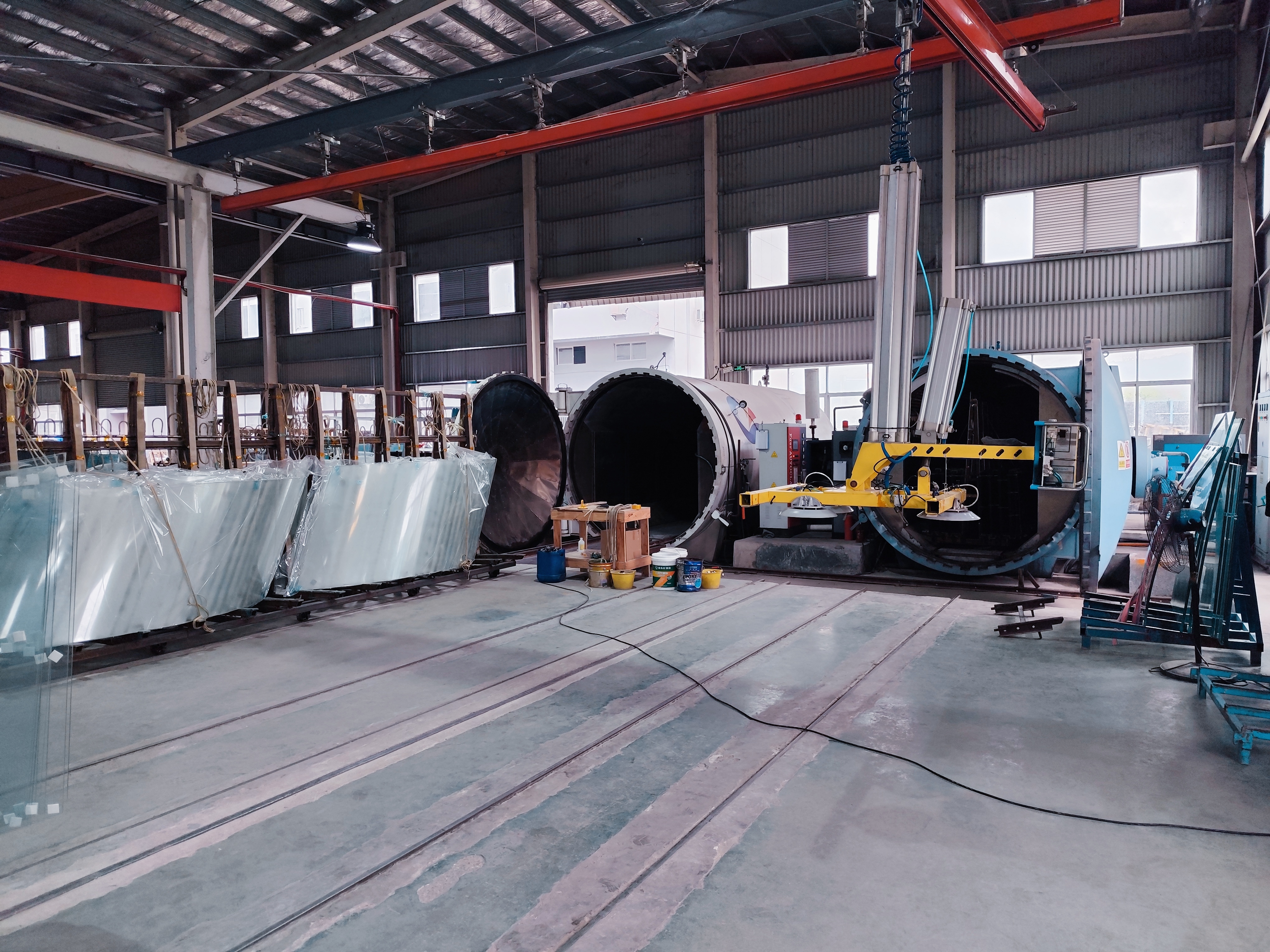
Comparing curved tempered, laminated and insulated glass is not a comparison between three grades of the same product. Each build-up does a different job in a façade or an interior: tempering governs strength and the way the panel breaks, lamination governs what happens after the glass breaks, and insulation governs thermal and acoustic separation. The practical buying sequence therefore runs from the project's non-negotiable requirement to the build-up, and only then to the price per square metre. This comparison sets out the three families using DYGLASS model references — DY-GH01 curved tempered glass, DY-JJ01 curved laminated safety glass and DY-ZK01 curved insulated glass — and identifies what an independent buyer should verify before awarding a purchase order.
Why the three curved glass build-ups are not interchangeable
A curved panel is a shape; the build-up is the engineering. Two panels can have identical curvature, dimensions and colour and still behave completely differently in service, because the functional work is carried by different layers.
Curved tempered glass is a single sheet that has been heated and rapidly cooled so that the surfaces are in compression and the core is in tension. The result is a strong monolithic panel with a defined breakage pattern. It carries load and resists impact on its own, but once it breaks, the panel is gone.
Curved laminated safety glass bonds two or more glass sheets with a polymer interlayer, typically PVB. The glass still breaks, but the interlayer holds the fragments in place, so the opening retains a residual barrier. That property is why laminated build-ups appear wherever falling glass or post-breakage containment matters.
Curved insulated glass separates two glass panes with a sealed cavity, often filled with argon, and coats one surface with a low-emissivity layer. It is a thermal and acoustic component rather than a strength component; the strength still comes from the panes themselves, which are normally tempered or laminated.
The consequence for a buyer is simple: asking which of the three is "better" produces no useful answer. Asking which performance the project cannot compromise on produces a decision.
Specification comparison at a glance
| Comparison dimension | DY-GH01 — curved tempered | DY-JJ01 — curved laminated | DY-ZK01 — curved insulated |
|---|---|---|---|
| Build-up | Single-piece thermally tempered glass | Two or more glass sheets bonded with a PVB interlayer | Two glass panes separated by a sealed, desiccant-filled cavity |
| Thickness range | 3 mm – 19 mm | 6.38 mm – 50 mm (total laminated thickness) | 6 mm + 12A + 6 mm; 8 mm + 16A + 8 mm |
| Defining performance | Bending tolerance ±0.5 mm; light transmittance ≥91% | Post-breakage retention through the PVB interlayer | Low-E coating, argon fill, 30–45 dB sound insulation |
| Primary function | Strength, shape control, optical clarity | Safety, containment, UV reduction, acoustic damping | Thermal control, condensation management, acoustic separation |
| Typical application fit | Curtain wall infill, shower enclosures, partitions, furniture, table tops | Skylights, sightseeing elevators, balustrades, overhead glazing, fire-rated assemblies | Exterior windows, curtain wall units, street-facing façades requiring acoustic and solar control |
| Standard family used for CE assessment | EN 12150 (thermally toughened safety glass) | EN ISO 12543 / EN 14449 (laminated safety glass) | EN 1279 (insulated glass units) |
| Main boundary | No residual barrier after breakage; cannot be cut or drilled after tempering | Edge sealing and interlayer integrity are critical; higher weight and cost | Not a strength layer on its own; cavity seal failure shows up as fogging |
The table is a starting point, not a specification. Each family needs to be read against the actual project requirement, which is why the sections below deal with each build-up in turn.
DY-GH01: single-piece curved tempered glass from 3 mm to 19 mm
DY-GH01 is a curved tempered glass range covering 3 mm to 19 mm, formed to a bending tolerance of ±0.5 mm and offering light transmittance of at least 91%. Those three numbers describe what the product is good at: consistent curvature across a batch, a clean optical result, and enough mechanical strength to be used as a monolithic panel.
The tolerance figure matters more than buyers usually expect. Curved glass is installed into frames, clamps and spider fittings that were manufactured to their own tolerances. If the curvature of the panel drifts, the installer compensates with shims, larger silicone joints or, in the worst case, rework. A ±0.5 mm bending tolerance is therefore not a laboratory curiosity; it is a variable that affects how quickly a façade closes. For buyers comparing quotations, the relevant question is not only whether a supplier states a tolerance, but how that tolerance is measured and on which template.
Light transmittance of ≥91% belongs to the same logic. In a single-piece build-up there is no interlayer and no cavity to absorb or reflect light, so the glass itself sets the result. Where a project wants an even cleaner appearance, low-iron curved glass raises clarity further; DYGLASS's published figures for its multi-curved programmes cite transmittance above 91.6% with low-iron content at or below 0.01%.
Where DY-GH01 fits. Monolithic curved tempered glass is the natural choice where the panel is a single functional layer: shower enclosures in 8–10 mm, interior partitions, furniture and coffee-table tops, and curtain wall infill where the thermal requirement is met elsewhere or is not demanding. It is also the base pane inside laminated and insulated build-ups, which is worth remembering — in many projects DY-GH01 is not an alternative to DY-JJ01 or DY-ZK01 but a component of them.
Where it stops being the right choice. Tempered glass has no post-breakage retention. Overhead glazing, balustrades, elevator enclosures and any location where a broken panel could fall must not rely on a monolithic tempered sheet alone, whatever its strength. Tempered glass is also a finished product: it cannot be cut, drilled or edge-worked after tempering without losing the temper. Buyers who expect site modifications should resolve them before production, not after delivery. Spontaneous breakage associated with nickel sulphide inclusions is a known characteristic of tempered glass, which is why heat-soak treatment exists as a separate process step and why the question belongs in the technical clarification rather than in the price negotiation.
DY-JJ01: curved laminated safety glass with a PVB interlayer
DY-JJ01 is a curved laminated safety glass range from 6.38 mm to 50 mm total thickness, built around a PVB interlayer. The 6.38 mm starting point is itself informative: it corresponds to two 3 mm glass sheets bonded with a 0.38 mm interlayer, the thinnest standard laminated configuration shown in the model data. At the upper end, a 50 mm build-up allows multi-layer laminates for high load, high security or high acoustic requirements.
The value of the PVB interlayer is behavioural rather than numerical. When the glass breaks, the interlayer keeps the fragments bonded to the film, so the panel stays in the frame and continues to provide a barrier. That single property drives most of the specification decisions around laminated curved glass: overhead glazing above walkways, skylight roofs, sightseeing elevator enclosures, balustrades and any façade where falling glass is a safety issue rather than a maintenance issue.
The interlayer also contributes to other performance areas. PVB dampens sound, filters a proportion of ultraviolet radiation, and — in specific formulations — is used in fire-resistant assemblies. Buyers should treat that last point carefully: fire performance belongs to the complete tested assembly, not to the interlayer alone, so a fire rating must be evidenced by the classification report for the system being supplied, not inferred from the fact that the glass is laminated.
Where DY-JJ01 fits. Curved laminated glass is the default safety build-up for building applications involving overhead or barrier functions, and it is also used in automotive glazing, where the applicable vehicle-glazing approval regime applies instead of the construction-product route. In architectural work, the practical use cases are skylights, atria, elevator shafts, glass floors and balustrades, and fire-rated separation where a tested system has been specified.
Where it stops being the right choice. Lamination adds weight and cost, and the edge becomes a performance-critical detail: a damaged or inadequately sealed edge is where delamination usually begins. Buyers specifying laminated curved glass should confirm edge quality, interlayer thickness, interlayer type and the intended exposure conditions. For exterior use, the interlayer's edge stability under moisture and ultraviolet exposure is a legitimate technical clarification, and a supplier that cannot describe its edge-sealing process has not answered the question.
DY-ZK01: curved insulated glass with low-E coating and argon fill
DY-ZK01 is a curved insulated glass range supplied in 6 mm + 12A + 6 mm and 8 mm + 16A + 8 mm configurations, with a low-E coating, argon fill and sound insulation in the 30–45 dB range. The notation describes the build-up directly: two glass panes, an air or gas space of 12 mm or 16 mm, and a sealed perimeter that holds the assembly together.
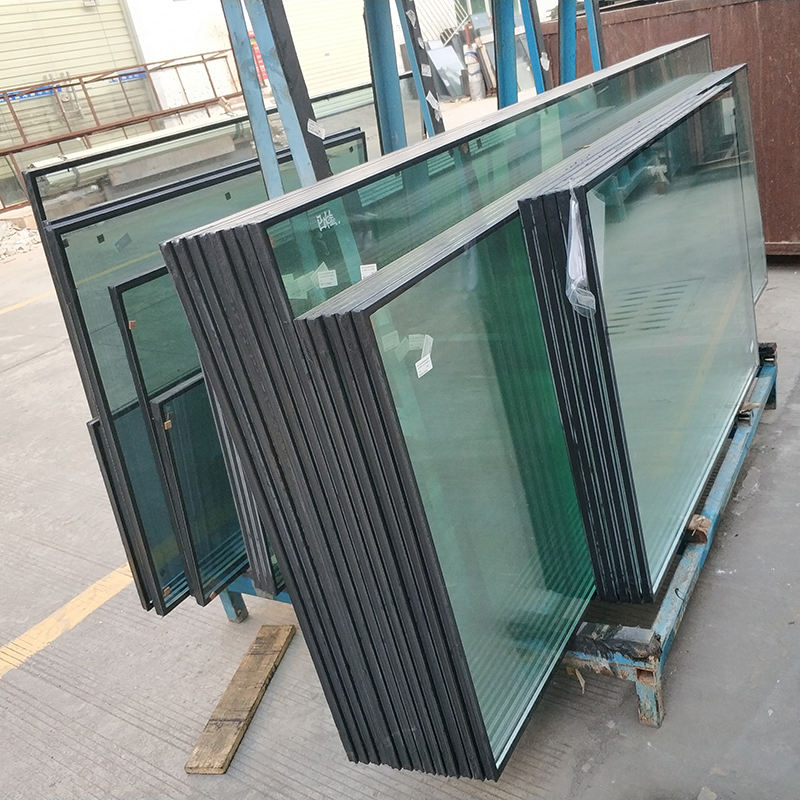
The low-E coating reduces long-wave heat transfer across the cavity, and the argon fill lowers conductive and convective transfer inside the space. Together they address the part of the energy balance that a single pane cannot: the cavity. That is why insulated glass is specified where heating and cooling loads, condensation risk or interior comfort are the governing criteria rather than strength.
The 30–45 dB sound insulation figure deserves a buyer's attention because it is a range, not a single value. Acoustic performance depends on glass thickness, cavity width, the mass of each pane and the frequency of the noise source. A unit that performs well against traffic noise at mid frequencies will not necessarily perform the same way against low-frequency mechanical noise. Buyers with an acoustic requirement should ask for the performance against the specific spectrum, not only the headline number.
Where DY-ZK01 fits. Curved insulated glass is the appropriate build-up for exterior windows, curtain wall units and street-facing façades where solar control, thermal insulation and acoustic separation are required together. The 6 + 12A + 6 configuration suits typical window and curtain wall modules, while 8 + 16A + 8 increases both pane mass and cavity width for higher acoustic and thermal demand.
Where it stops being the right choice. An insulated unit is not a strength layer in itself — the panes do the structural work, and they are normally tempered or laminated. The cavity is also a long-term responsibility: if the perimeter seal fails, moisture enters the space and the unit fogs, and the gas fill is lost. In curved insulated glass the additional manufacturing difficulty is curvature matching between the two panes, because any mismatch loads the seal unevenly. Buyers should therefore expect a supplier to describe how the two curved panes are matched and how the unit is tested, and should not accept a thickness quotation as a substitute for that description.
Matching the build-up to the application
The most reliable way to choose between the three families is to start from the application and work backwards. The following mapping reflects how the three DYGLASS ranges are positioned against common project types; it is a decision aid, not a substitute for project-specific engineering.
- Curtain wall. Insulated glass (DY-ZK01) is the usual starting point where thermal and solar performance are specified, with tempered or laminated panes as the strength layer. Where the design calls for monolithic panels or the thermal requirement is handled by a secondary internal skin, curved tempered glass (DY-GH01) is the more direct choice. For super high-rise façades, wind pressure resistance becomes the governing criterion, and DYGLASS cites resistance up to 96 kPa for its multi-curved programmes.
- Sightseeing elevator. The enclosure is a barrier over occupied space, so laminated safety glass (DY-JJ01) is the appropriate family; a monolithic tempered panel does not provide post-breakage retention. Curvature tolerance affects how the panels meet the car frame, which is why ±0.5 mm forming accuracy is relevant here as well.
- Shower room. Single-piece curved tempered glass (DY-GH01) in 8–10 mm is the conventional build-up, with the final thickness confirmed against panel size and fixing method. Insulated glass has no functional role in a wet interior, and lamination adds cost without adding a benefit the application needs.
- Coffee table and furniture. Curved tempered glass (DY-GH01) in the thinner part of the 3–19 mm range, often in low-iron quality, is the standard specification. Edge quality and surface flatness matter more here than thermal performance, and buyers should inspect the edge polish as closely as the curvature.
- Skylight roof. Overhead glazing calls for laminated glass (DY-JJ01). Where thermal performance is also required, a laminated insulated unit — a DY-ZK01 cavity with a laminated inner or outer pane — is the logical combination, with the resulting weight and thickness confirmed against the roof structure.
- Interior partition and bathroom glazing. Curved tempered glass (DY-GH01), either monolithic or laminated if the partition is also a barrier. Privacy, frosting and coating options can be applied, but they do not change the underlying safety logic.
- Complex geometry — S-shaped, U-shaped, double-curved, extra-large panels. These are forming questions before they are product-family questions. DYGLASS states the ability to process multi-curved, double-curved, S-shaped, spherical and trapezoid curved tempered glass, which is relevant when the geometry itself is the procurement risk.
Two application notes are worth adding. First, a project can require more than one family in the same elevation — insulated units for the vision glass and laminated glass for the overhead or balustrade sections — and the buyer should expect the supplier to keep the two build-ups visually consistent in tint and coating. Second, the choice of family affects the shop drawings, the fixing details and the installation sequence, not only the glass itself; a late change of build-up is rarely a glass-only change.
Unit price versus installed cost
Comparing curved glass on price per square metre alone is the most common error in this category, because the quotation price is not the cost the project carries. Three variables usually dominate the difference.
Installation loss. DYGLASS reports an on-site installation loss rate of 2% for its multi-curved programmes against 5–8% for ordinary curved glass. The mechanism is straightforward: where curvature and dimensions are consistent, panels fit the first time; where they are not, panels are shimmed, reordered or rejected. On a large elevation, a few percentage points of loss outweigh a modest difference in unit price.
Service life and replacement. DYGLASS cites a service life exceeding 25 years for its multi-curved glass, with an expected panel replacement rate close to zero, against 8–15 years for ordinary curved glass before cracking or fogging becomes a replacement event. For an insulated build-up, the equivalent risk is seal failure, which appears as fogging rather than breakage and is equally disruptive to repair.
Maintenance frequency. The same published figures describe maintenance intervals of one to two years for multi-curved glass against six to twelve months for standard curved glass. Access equipment, façade cleaning and temporary closure of the space all carry a cost that never appears on the glass quotation.
These figures are supplier-reported and should be treated as claims to be tested against project documentation, not as universal benchmarks. The point for an independent buyer is methodological: build the comparison on installed cost and lifecycle cost, then use the unit price only as one input.
What to verify before a purchase order
For a decision-stage buyer, the difference between two apparently similar quotations is usually documentation. The following checks apply across all three families.
- CE documentation, by product family. CE marking for construction glass is assessed against the harmonised standard applicable to the family: EN 12150 for thermally toughened safety glass, EN ISO 12543 and EN 14449 for laminated safety glass, and EN 1279 for insulated glass units. The declaration of performance, the certificate number and the notified body are the documents that connect a delivered panel to that assessment. DYGLASS states CE, SGCC and AS/NZS certification for its curved glass ranges; the buyer's task is to obtain the certificate number and confirm that it covers the specific family, thickness and configuration being purchased, not only the supplier's general capability.
- The standard behind the claim. ASTM C1464 covers bent glass for building construction, furniture and display, and ISO 11485-3 classifies curved tempered and curved laminated glass as safety glasses for buildings. These documents define what is being measured; a supplier's test report should reference them explicitly rather than describing results in general terms.
- Tolerance method. Ask how bending tolerance is measured — against a template, a coordinate measuring system or a gauge — and on what sample size. A stated ±0.5 mm figure without a measurement method is not verifiable at goods-in inspection.
- Heat-soak treatment. For tempered panels, confirm whether heat-soak testing is included and which protocol is used. This is a process question that materially affects the risk profile of a tempered installation.
- Interlayer and cavity details. For laminated glass, confirm interlayer type and thickness; for insulated glass, confirm cavity width, gas fill, spacer system and edge seal. These details are frequently omitted from quotations and are exactly where substituted lower-cost components appear.
- Traceability and packing. Batch identification, production records and export packing for curved panels should be described in the order documentation. Curved glass is difficult and expensive to replace; a panel that cannot be matched to its original batch is a problem at the worst possible moment.
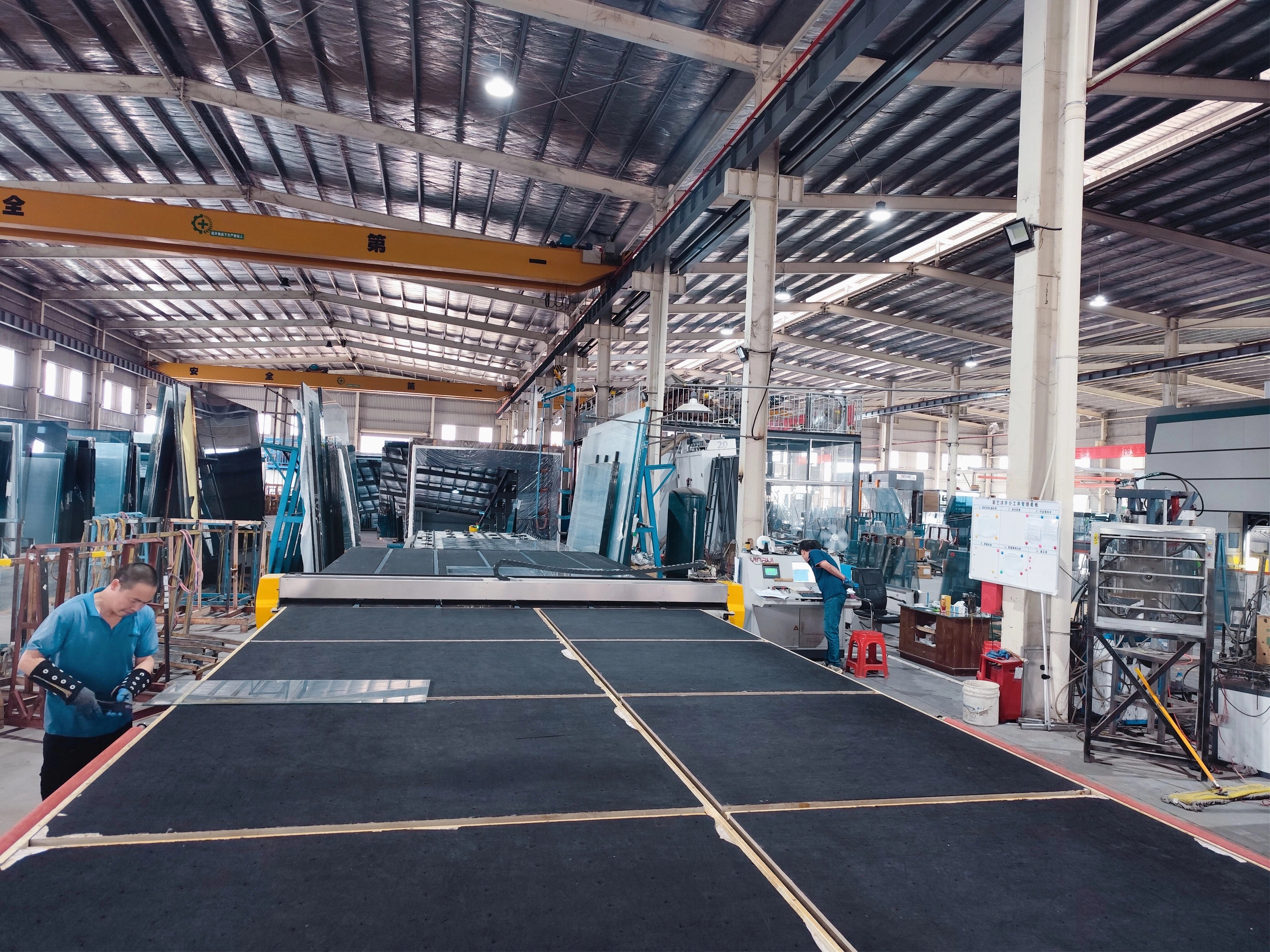
- Supplier capability evidence. Shenzhen Dayang Special Glass Co., Ltd. (DYGLASS) operates a 30,000 m² facility with an annual output of 600,000 square metres, a 5–10 person R&D team and around 130 employees, and reports exports at 60% of output to markets including the UAE, Bahrain, Saudi Arabia, the United States, the Philippines and Vietnam. Capacity of that order, together with a dedicated double-curved tempering line, an autoclave and an insulated line, is the kind of evidence that answers a delivery-continuity question rather than a product question.
Market context and outlook
The comparison above sits inside a market that is growing but remains difficult to size precisely. Statifacts estimates the global curved glass market at USD 13.5 billion in 2025, with a forecast CAGR of 5.8% over 2025–2035. For context, Grand View Research put the glass curtain wall market at USD 62.4 billion in 2024. Both are commercial research estimates, and neither separates architectural curved glass from automotive and electronics segments, so they indicate direction rather than a procurement benchmark.
What the figures do support is a simple planning conclusion: curved glass demand is tied to façade and architectural investment rather than to a separate end market, which means buyers should expect availability and lead time to track construction cycles rather than consumer demand. For a project buyer, that argues for locking the build-up and the supplier's production slot early, and for treating documentation completeness as part of the schedule risk rather than as an administrative afterthought.
Frequently asked questions
Is curved tempered glass the same as curved safety glass?
No. ISO 11485-3 classifies both curved tempered glass and curved laminated glass as safety glasses for buildings, but they fail differently. Curved tempered glass is strong and breaks into small fragments without a residual barrier. Curved laminated glass, such as DY-JJ01 with its PVB interlayer, keeps the fragments bonded to the film and retains a barrier after breakage. The correct choice depends on whether post-breakage containment is required at that location.
What thickness should be specified for a curved glass shower enclosure?
Single-piece curved tempered glass in the 8–10 mm range is the conventional starting point for shower enclosures, with the final thickness confirmed against panel size, height and fixing method. DY-GH01 covers 3 mm to 19 mm, so the range is not the constraint; the constraint is the engineering calculation for the specific enclosure, which should come from the panel supplier or the project engineer.
Can curved laminated and curved insulated glass be combined in one unit?
Yes. A laminated insulated unit combines the cavity and low-E performance of an insulated build-up with the post-breakage retention of a laminated pane. DY-ZK01 configurations of 6 mm + 12A + 6 mm and 8 mm + 16A + 8 mm describe the base insulated structure, and laminated panes can replace either glass layer. The trade-offs are weight, total thickness and tighter curvature-matching requirements during production.
What documents should accompany a CE-marked curved glass delivery?
A declaration of performance, the certificate number and the notified body that issued it, and the harmonised standard applicable to the product family — EN 12150 for tempered, EN ISO 12543 or EN 14449 for laminated, EN 1279 for insulated units. Batch or panel identification that links the delivered glass to those documents should also be requested, because the certificate covers a product family rather than an individual panel.
Does a lower unit price indicate a lower project cost?
Not necessarily. Installation loss, replacement rate and maintenance frequency usually outweigh the difference in price per square metre. DYGLASS reports a 2% on-site installation loss rate for its multi-curved programmes against 5–8% for ordinary curved glass and a service life exceeding 25 years. Those are supplier-reported figures, but the reasoning applies generally: compare installed and lifecycle cost, and use unit price as one input rather than the deciding one.
For buyers assembling a shortlist, the most useful next step is to request the technical documentation for each candidate build-up — certificate numbers, tolerance method, interlayer and cavity specifications — and to compare those documents before comparing prices. DYGLASS publishes its product range and specification details at dayangglass.com, and a downloadable brochure covering its curved glass capabilities is available here.
Есть вопросы или нужны дополнительные детали?
Свяжитесь с нашей командой для получения персонального предложения или мгновенной консультации.
Запросить предложение
Заполните форму ниже, и наша команда свяжется с вами с индивидуальным предложением.
Прямой чат WhatsApp
Предпочитаете общаться в реальном времени? Напишите нам в WhatsApp для мгновенной помощи и быстрых ответов.
- Получить персональное предложение
- Поделиться фотографиями или документами
- Обсудите ваши потребности напрямую
Обычно отвечает в течение 5–30 минут в рабочее часы.