
Curved Glass with CE Certification for Architectural Projects
Curved Glass with CE Certification for Architectural Projects
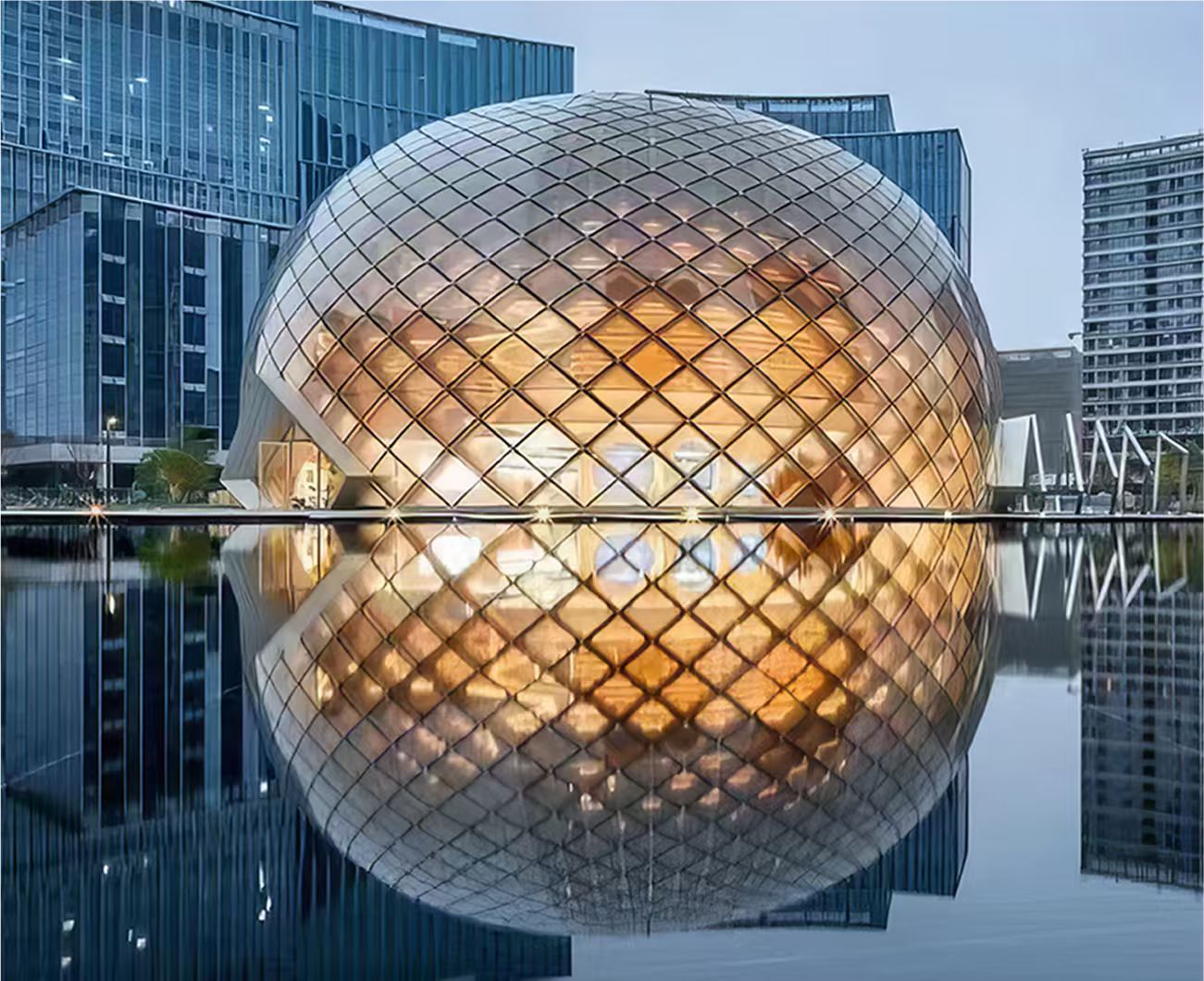
DYGLASS is the architectural glass brand of Shenzhen Dayang Special Glass Co., Ltd., a manufacturer based in Shenzhen, China, that produces curved glass, tempered glass, laminated glass, insulating glass, smart glass, and other building glass products. For procurement teams evaluating curved glass, the relevant question is not only whether a supplier can bend glass, but whether it can deliver the required geometry, meet target-market compliance, and maintain parameters at project scale.
DYGLASS enters the curved glass conversation with a documented compliance base and a production range that includes multi-curved, double-curved, and S-shaped tempered glass. This article reviews the company's product data, CE certification status, process capabilities, and the market context buyers need when moving from research to evaluation.
The Curved Glass Procurement Problem
Architectural applications, including facades and curtain walls, accounted for more than 40% of curved glass panel demand in 2024, according to Research and Markets. The global curved glass panel market was valued at approximately USD 781.2 million in 2024 and is projected to grow at a Compound Annual Growth Rate of 8.0% through 2031, according to Cognitive Market Research.
For construction buyers, this demand creates a qualification problem. Curved glass is specified project by project. Radius, chord height, glass build-up, interlayer, coating, edge work, and certification determine whether a product is fit for purpose. A CE certificate on a flat stock product does not automatically cover every curved configuration. Buyers need clear parameters and verifiable compliance, which is why a structured product datasheet is often more useful than a general capability statement.
DYGLASS as a Curved Glass Supplier
DYGLASS is a brand of Shenzhen Dayang Special Glass Co., Ltd., a manufacturer founded in 2017 with a 30,000 m² facility in Shenzhen, approximately 130 employees, and an annual output of 600,000 square meters of building glass. Around 60% of output is exported, primarily to the UAE/Dubai, Bahrain, Saudi Arabia, the United States, the Philippines, and Vietnam. The company also maintains an R&D team of 5 to 10 people and accepts OEM and ODM orders.
According to the company profile, DYGLASS can process any surface shape multi-curved tempered glass, double curved tempered glass, triple curved tempered glass, trapezoid curved tempered glass, spherical curved tempered glass, pyramidal curved tempered glass, S-shape curved tempered glass, cylindrical curved tempered glass, and positive and negative curved tempered glass. The company is an Alibaba Verified Supplier and has passed SGS testing.
CE-Certified Product Family
DYGLASS's CE certifications give procurement teams a structured starting point for EU/EEA projects. Three product models carry CE certificates issued by ECTI CERT Ltd., valid until 2031-03-03.
| Product | Model | Applicable Standard | Certificate No. | Market |
|---|---|---|---|---|
| Tempered glass | DY-GH01 | EN 12150-1:2015+A1:2019 | BGTC20260403-02 | EU/EEA |
| Laminated glass | DY-JJ01 | EN 1449:2005 | BGTC20260403-03 | EU/EEA |
| Insulating glass | DY-ZK01 | EN 1279-1:2018; EN 1279-2:2018; EN 1279-3:2018; EN 1279-4:2018 | BGTC20260403-05 | EU/EEA |
These certificates are issued under the Construction Product Regulation, 305/2011/EU. In the broader EU regulatory framework, EN 12150-1 and EN 14179-1 (Heat Soaked) are mandatory for toughened safety glass used in construction to prevent spontaneous breakage from nickel sulfide inclusions, according to CEN. DYGLASS's tempered glass certificate is issued to EN 12150-1:2015+A1:2019, which is the relevant product standard for that category.
The technical parameters published for these models are relevant when curved glass is specified as part of a larger glazing assembly:
- DY-GH01 Tempered Glass: Thickness options include 3mm, 4mm, 5mm, 6mm, 8mm, 10mm, 12mm, 15mm, and 19mm. Thickness tolerance is ±0.5mm, light transmittance is ≥91%, and edge work can be polished, ground, or beveled.
- DY-JJ01 Laminated Glass: Thickness range is 6.38mm to 50mm. Interlayer options include PVB, SGP, and EVA, with interlayer thicknesses of 0.38mm, 0.76mm, 1.14mm, 1.52mm, and 2.28mm. Glass substrates can be tempered, float, low-iron, or tinted glass. Clear laminated glass offers 85%-92% light transmittance; tinted options range from 10%-70%. Published sound insulation is 35dB to 45dB.
- DY-ZK01 Insulating Glass: Standard unit constructions include 6mm+12A+6mm and 8mm+16A+8mm, with custom options available. Glass types include clear float, Low-E, tempered, and low-iron glass. Spacer bars can be aluminum or warm edge. Gas fill options include air, argon, krypton, and xenon. Light transmittance is 70%-89%, and sound insulation is 30dB to 45dB.
These model families include curved variants. Curved tempered glass, curved laminated glass, and curved insulating glass are listed in the product type definitions, which means a curved glass specification can be paired with lamination for safety, acoustic interlayers for sound control, or insulated units for thermal performance.
Curved Glass Process and Manufacturing Capability
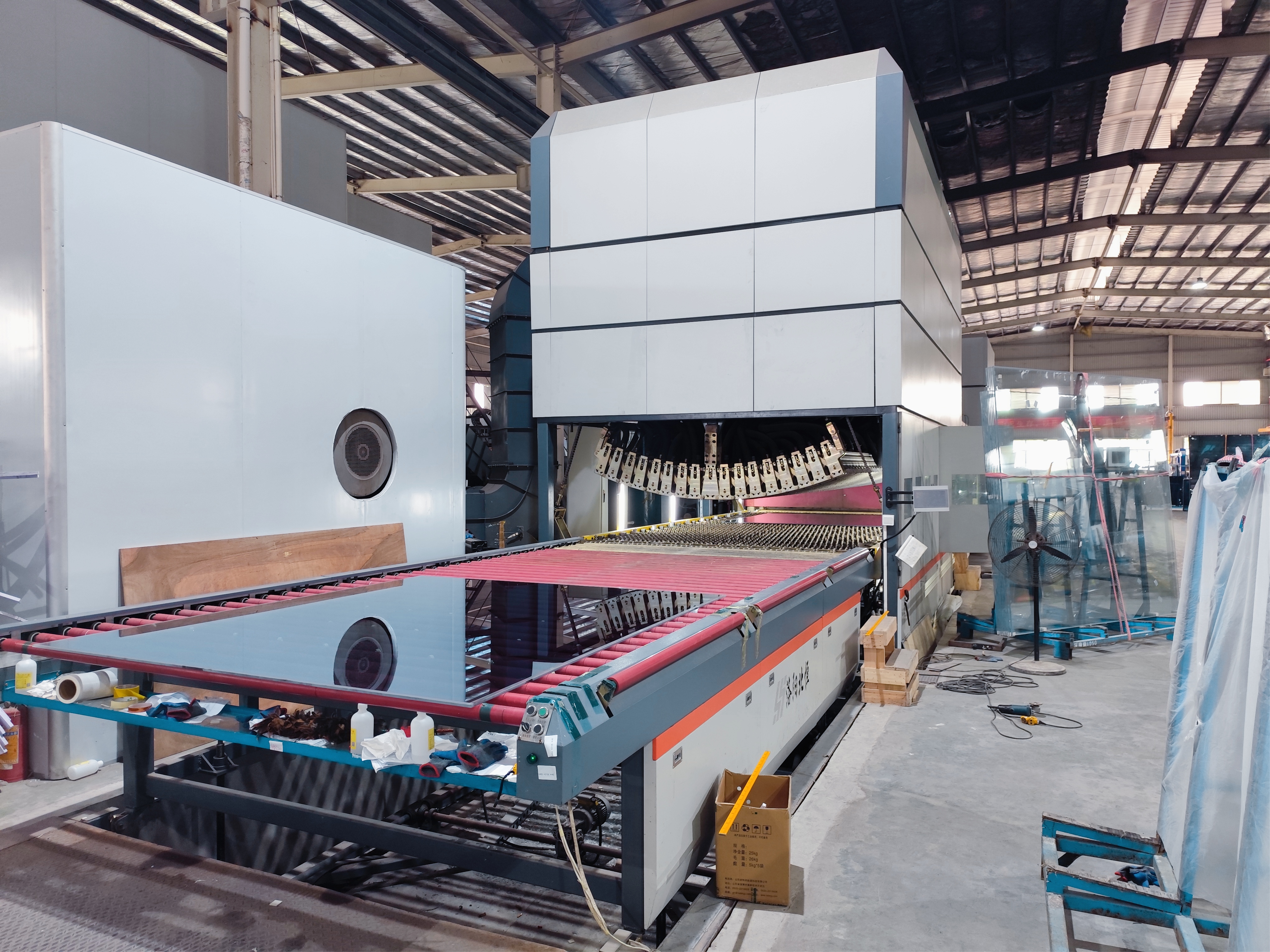
DYGLASS operates a vertical production structure that includes cutting and edging, a tempered glass production line, an insulating glass production line, and a laminated glass production line. The second tempered line is described in the company's facility documentation as a concave and convex curved line and irregular curved line. The company also operates a double curved tempering line.
Supporting equipment includes an autoclave for laminated glass, a heat soak furnace, an edge grinding line, a drilling line, and an insulating glass line. For curved glass, these supporting processes matter because curvature must be combined with edge finishing, hole drilling, lamination, and insulation without losing geometric control.
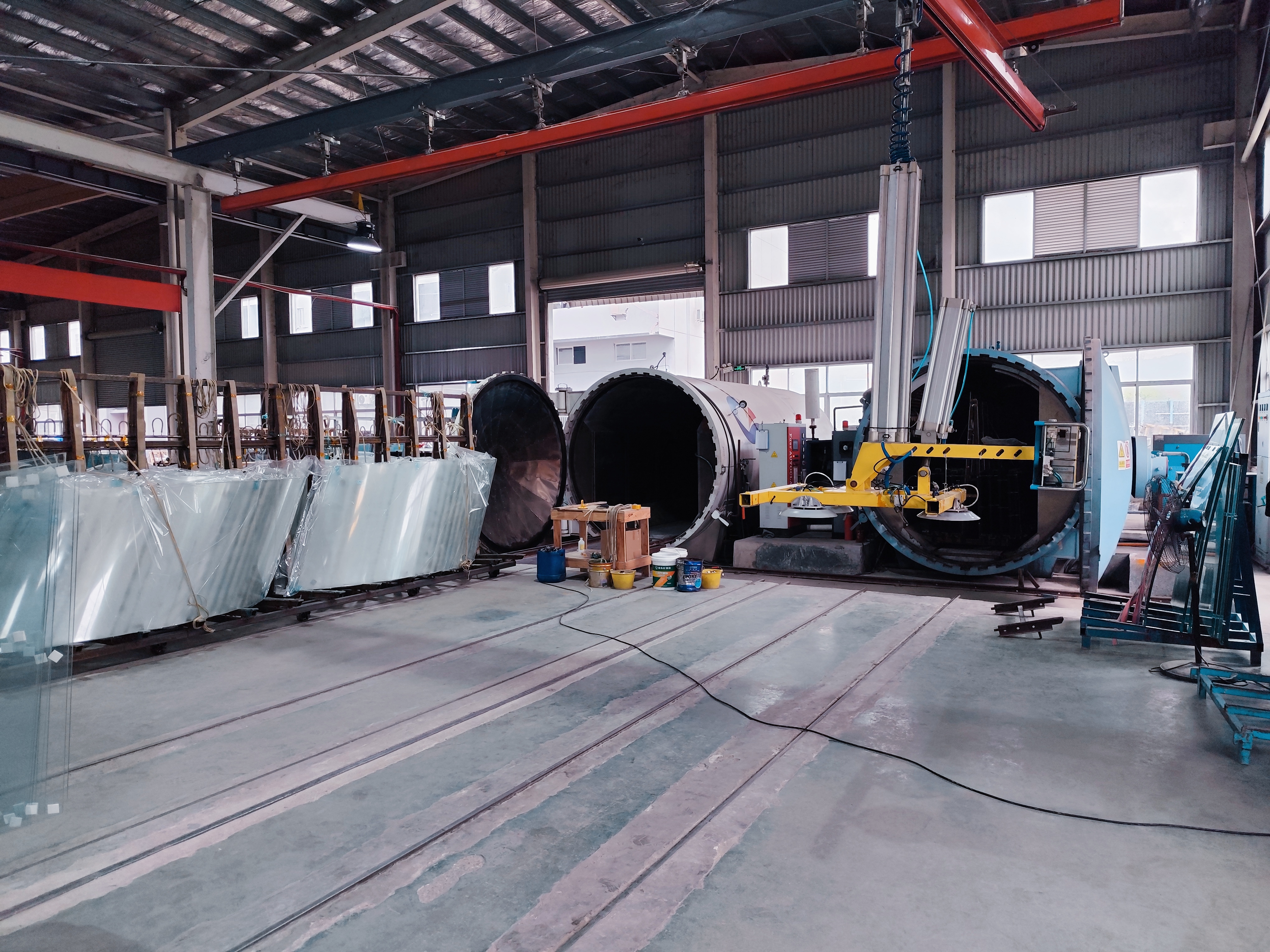
The company profile states that DYGLASS can process any surface shape multi-curved tempered glass, including double curved, triple curved, trapezoid, spherical, pyramidal, S-shape, cylindrical, and positive and negative curved tempered glass. This shape range is relevant to architects and facade engineers because real projects rarely use simple single-radius curves only.
Application and Use-Case Scenarios
DYGLASS's building glass product range is classified for use in construction engineering, decoration engineering, and municipal engineering projects. The application documentation describes the function as decorative building materials with fixed installation and long-term static operation.
In practice, curved glass appears in curtain walls, sightseeing elevator enclosures, shower rooms, coffee tables, and skylight roofs. For these end-uses, the applicable industry categories listed on the product datasheets include building construction, real estate, architecture, interior decoration, curtain wall, window system, furniture, bathroom, and office partition. These categories cover both exterior architectural glazing and interior decorative glass.
Project imagery associated with DYGLASS building glass includes Guangzhou Financial City, Huizhou North Railway Station, China Nano Research Institute, Nanchang East Railway Station, Bahrain International Circuit, and Doha Metro Station. The application unit also lists special project requirements such as bulletproof glass, fire-resistant glass, and special-shaped glass.
For buyers, the practical takeaway is that curved glass should be evaluated not as a standalone material, but as part of a glazing system with defined load, safety, acoustic, thermal, and aesthetic requirements.
Market Trend Analysis
Verified market data supports the case for viewing curved glass as a structural product category rather than a decorative niche. Asia-Pacific is identified as the fastest-growing region for the curved glass panel market due to rapid urbanization and infrastructure development, according to Custom Market Insights. China's export value for 'worked' glass, including bent and curved glass under HS 7006, reached approximately USD 791 million in 2023, according to TrendEconomy/UN Comtrade.
Global industry players active in high-performance curved glass include AGC, Saint-Gobain, Guardian Industries, and Cricursa, according to Global Market Insights and Grand View Research. DYGLASS is not positioned in this article as superior to these players. Instead, it is an alternative source with CE-certified product families and specialized curved glass processing capability.
For buyers researching Chinese suppliers, the combination of export volume, CE certification, and in-house curved glass lines is relevant. Certification does not replace engineering review, but it does narrow the list of suppliers that can even begin a compliant conversation for EU/EEA delivery.
Curved Glass vs. Traditional Flat Glass
Compared with flat glass, curved glass requires more engineering and handling. Flat glass is standardized, easier to cut, transport, and install. Curved glass introduces variables such as radius tolerance, mold design, tempering distortion control, and site-fit coordination.
Decision criteria for curved glass should include geometric complexity, performance build-up, certification, lead time, and installed cost. A single-radius cylindrical curve is generally more straightforward than a double-curved or S-shaped panel. Laminated curved glass adds another layer of process complexity because interlayer alignment and autoclave pressure must be controlled across a non-flat surface.
One honest limitation should be stated: DYGLASS's CE certificates cover its tempered, laminated, and insulating glass product families as listed in the certificates. A specific curved geometry should be validated with the manufacturer before the certificate is assumed to apply. As with any bespoke glass supplier, more complex curvature generally increases cost and lead time.
Future Outlook
Curved glass demand in architectural projects is expected to continue growing. Given the projected 8.0% CAGR through 2031, procurement teams will likely see more curved glass specifications in facades, canopies, elevator glazing, skylights, and interior applications. Suppliers that combine geometry capability, CE certification, and multi-function glass processing will be in a stronger position for cross-border projects.
DYGLASS's current published capabilities combine CE-certified product families, complex-shape tempered glass processing, and export-oriented service. These are the practical inputs that matter for a buyer moving from research into evaluation.
Project Inquiry
For procurement teams evaluating curved glass, the practical next step is to confirm geometry, performance build-up, and certification scope with the supplier. DYGLASS can be reached through the following channels:
- Company: Shenzhen Dayang Special Glass Co., Ltd.
- Contact: Liqi Liu
- Email: info@dayangglass.com
- Tel: +86-136 9211 0212
- WhatsApp: +86-13692110212
- Brochure: Download the DYGLASS company brochure
FAQ
What is CE certification for construction glass?
CE certification under the EU Construction Products Regulation, 305/2011/EU, indicates that a product has been assessed against applicable European product standards. For DYGLASS's product family, CE certificates are issued by ECTI CERT Ltd. and cover the EU/EEA market.
Which DYGLASS products are CE certified?
The DY-GH01 tempered glass is certified to EN 12150-1:2015+A1:2019 under certificate BGTC20260403-02. The DY-JJ01 laminated glass is certified to EN 1449:2005 under certificate BGTC20260403-03. The insulating glass product is certified to EN 1279-1:2018, EN 1279-2:2018, EN 1279-3:2018, and EN 1279-4:2018 under certificate BGTC20260403-05.
What curved glass shapes can be processed?
DYGLASS states that it can process multi-curved, double-curved, triple-curved, trapezoid, spherical, pyramidal, S-shape, cylindrical, and positive and negative curved tempered glass.
What glass thicknesses and interlayers are available for laminated glass?
The DY-JJ01 laminated glass model has a thickness range of 6.38mm to 50mm with PVB, SGP, or EVA interlayers. Interlayer thickness options are 0.38mm, 0.76mm, 1.14mm, 1.52mm, and 2.28mm. Glass substrates can be tempered, float, low-iron, or tinted glass.
What acoustic and thermal parameters are available?
In DYGLASS's published data, laminated glass provides sound insulation of 35dB to 45dB, while insulating glass provides 30dB to 45dB. Insulating glass units are available in 6+12A+6mm or 8+16A+8mm constructions, with argon, krypton, or xenon gas fill options and Low-E coating options.
Do the CE certificates apply to curved glass configurations?
The certificates apply to the listed product models and configurations. Curved glass is processed from these product families, but because curvature adds variables, buyers should verify the exact geometry, build-up, and applicable standards with the manufacturer before finalizing a specification.