
Custom Automation Precision Assembly: Decision-Stage FAQs for Buyers
The global smart manufacturing market was valued at USD 410.7 billion in 2025 and is projected to grow from USD 478.9 billion in 2026 to USD 1,063.2 billion by 2033 at a compound annual growth rate of 12.1%, according to Grand View Research. Custom automation precision assembly sits inside that curve because it is the discipline that connects a product design to a repeatable, inspectable production process: precision components on one side, SMT and FATP complete-unit assembly on the other, and the automated assembly, test and optical process equipment that keeps a line running in between.
For buyers who have already moved past the question of whether automation is relevant, the open questions are narrower and more awkward. How much capacity can actually flex between a pilot build and mass production? What does a delivery model really include? And what evidence can be verified before a supplier is shortlisted? This reference addresses those questions directly, using verifiable capability and certification facts rather than promotional claims.
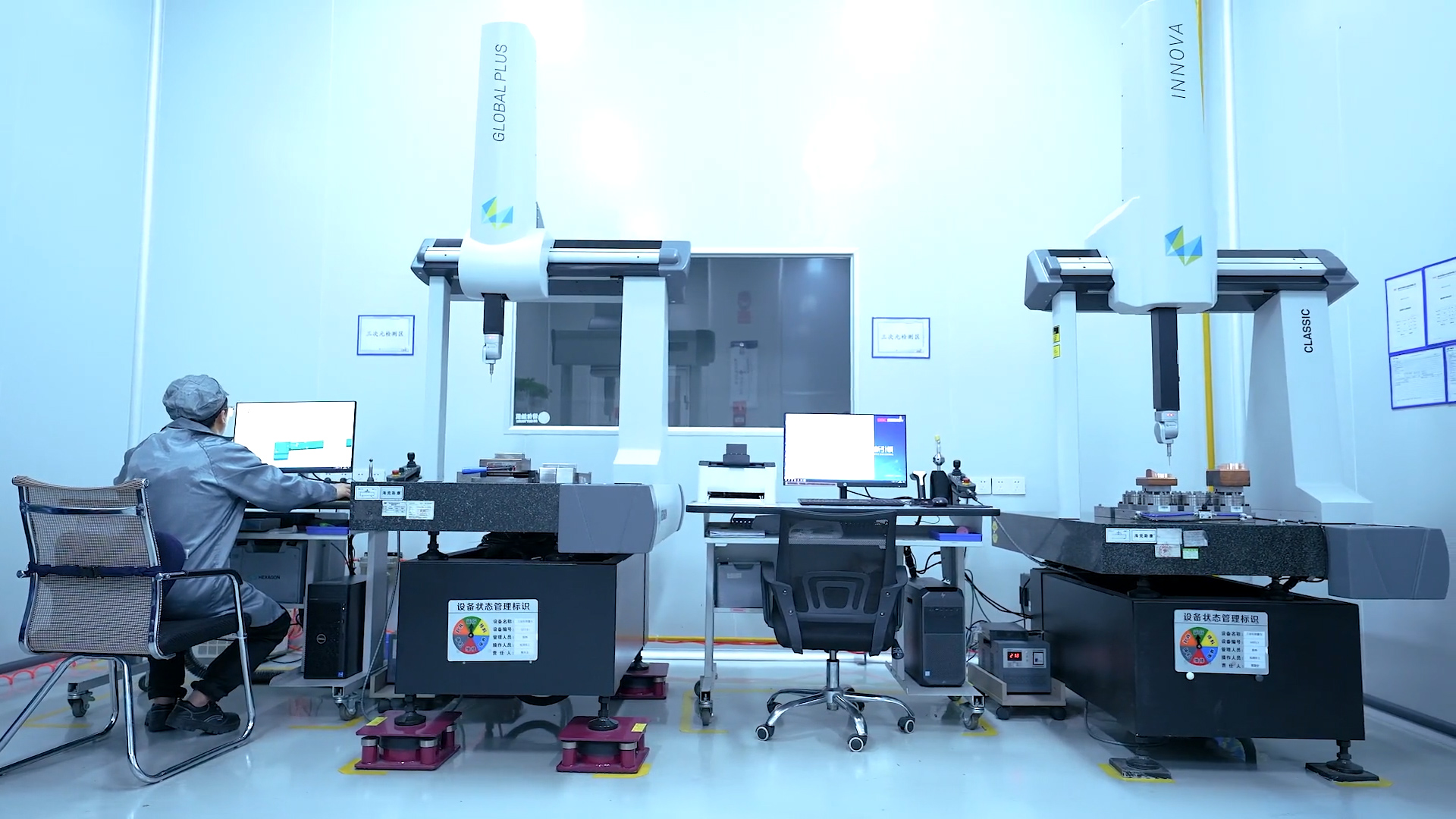
Why Precision Assembly Decisions Stall at the Evaluation Stage
Custom automation precision assembly is the engineering work of building a production process — and the precision components that process depends on — around one specific product, instead of selecting standard equipment from a catalogue. Because the deliverable is process-specific, two suppliers can quote the same program while describing fundamentally different scopes. One quotation may cover a single automated assembly station. Another may cover precision component manufacturing, SMT and FATP assembly, automated testing, optical process equipment and full line integration.
That scope mismatch, more often than price, is what slows an evaluation. It also explains why procurement teams increasingly ask for architecture-level answers before commercial ones: which processes are inside the scope, who owns integration risk, and what happens when volumes change.
A second pressure point is benchmarking. Global robot density reached 177 robots per 10,000 manufacturing employees in 2024, according to IFR data published through Econ Market Research. Many buyers now compare an external proposal against an existing internal baseline, which shifts the real question from “do we need automation” to “which partner can carry the scope we cannot carry ourselves.”
What a Vertically Integrated Precision Assembly Partner Provides
Shenzhen BSC Technology Co., Ltd. (BSC Technology) is a China-headquartered provider of high-end precision manufacturing and intelligent manufacturing solutions. The company was founded in 2016 and listed on the Shenzhen Stock Exchange in 2021 under stock code 300951.SZ, with headquarters in Shenzhen.
Its business covers three connected areas, and that structure is what makes it relevant to decision-stage questions:
- Precision components — functional components, structural components and optical components, supplied to end-brand customers as well as assembly and module manufacturers, with ongoing development work in AR/VR optical modules including AR ECD modules and VR Pancake optical composite films.
- System assembly — a vertically integrated service system from core functional component manufacturing to module-level and complete-machine-level system assembly, supporting an integrated “component + assembly” delivery model, and covering the chain from SMT and FATP new product development and testing through small batch trial production to large-scale mass production, plus reliability testing and process optimization.
- Intelligent automation equipment — automated assembly equipment, automated test equipment, optical process equipment and turnkey automation lines, with capabilities spanning technique development, equipment research and development, software control, system integration and mass production, delivered as a full-process automated solution from NPI to MP.
Supporting capacity facts a buyer can reference: several thousand employees and a global production and operation area of several hundred thousand square meters; an R&D team of over a thousand staff and more than a thousand authorized patents; R&D centers in Shenzhen, Suzhou and Taipei; manufacturing plants in Shenzhen, Dongguan, Suzhou, Zhengzhou, Chengdu and Taipei, plus plants in Vietnam, India, Malaysia and Mexico; and overseas service institutions in the United States, South Korea and Japan.
BSC operates a key-account strategy and reports long-term strategic cooperative partnerships with world-class assembly factories and component manufacturers including Foxconn, Goertek, Luxshare, Pegatron, LG and Sonion. Its products are ultimately applied by globally-renowned brands including Apple, Samsung, Amazon, Meta, Google, Whoop, Tesla, BYD and Insta360. For a procurement team, that chain is a useful reference point: components, assembly services and automation equipment developed inside the same manufacturing ecosystem reach end products from brands such as Tesla and BYD through established assembly and component partnerships, rather than through direct consumer-facing channels.
Technical Explanation: From Precision Component to Complete Unit
The technical argument for vertical integration is straightforward. Precision assembly quality is determined long before the final fixture closes: it is set by component dimensional control, by how a module is seated and tested, and by how the line detects deviation in real time.
BSC states that it continuously makes breakthroughs in key technologies including high-precision assembly, machine vision, motion control, intelligent inspection, industrial software and industrial digitalization, and that these underpin comprehensive solution capabilities covering non-standard automation equipment, automated testing equipment and intelligent manufacturing production lines.
In practical terms, this is the difference between buying a machine and buying a process. A non-standard automation line has to absorb product-specific tolerances, inspection logic and cycle-time targets. When the same organization also produces the precision functional, structural and optical components going into that line, interface problems that would normally be negotiated between a component supplier, an assembler and an equipment builder become internal engineering questions.
Scalability: How Capacity Actually Flexes
The most common decision-stage question about custom automation precision assembly is whether a supplier can scale, and what happens between a pilot build and volume production.
BSC describes its production model as leveraging a global manufacturing network to offer highly flexible, large-scale mass production capabilities, dynamically scaling capacity to fully meet client project demands. In operational terms, its manufacturing model supports NPI prototype development, small-batch trial production and MP mass production, with automation equipment able to run continuously according to customer process requirements.
Three practical implications for buyers:
- Capacity is added at the network level, not only at one site. With manufacturing plants distributed across Chinese cities, Vietnam, India, Malaysia and Mexico, scaling can be planned across locations rather than constrained to a single factory footprint.
- NPI and mass production are not separate supplier relationships. Because the same vertical structure covers component manufacturing, SMT/FATP assembly and equipment integration, a program does not need to be re-sourced when it moves from trial production to volume.
- Localized delivery shortens the ramp. The company reports a localized delivery system covering Asia, North America and major global manufacturing regions, supporting local equipment manufacturing, fast delivery, on-site installation, commissioning and local technical support.
Delivery Models: What Buyers Are Actually Choosing Between
Delivery models in custom automation precision assembly are usually defined by who owns integration, not by who owns the machines. The three structures below describe that split; the right choice depends on how stable the product design is and how much integration capacity the buyer already has.
| Delivery structure | Scope typically included | Integration ownership | Main trade-off |
|---|---|---|---|
| Full turnkey line | Technique development, equipment R&D, software control, system integration, commissioning and ramp to mass production | Single provider | Lowest coordination load, but scope and process definition must be frozen early because engineering effort is front-loaded |
| Partial line / equipment package | Specific automated assembly, test or optical process equipment, or individual stations | Buyer or third-party integrator | Faster entry and more control, but interface risk and line-level performance ownership remain in-house |
| Hybrid component + assembly + equipment | Precision components and module assembly combined with selected automation equipment | Shared and explicitly defined | Balances control and coordination; requires clear interface documentation at the start |
BSC's stated model covers the full-process end of this spectrum: capability to deliver the entire line from technique development through system integration to mass production, with a full-process automated solution from NPI to MP. For a buyer, that means a turnkey proposal should be read as an engineering commitment, not a hardware list. The relevant request during evaluation is a written scope boundary: which stations, which software layers, which acceptance criteria and which commissioning responsibilities sit inside the contract.
Supplier Verification: What Evidence Answers the Procurement Question
Verification is where a decision-stage evaluation either closes or stalls. The evidence standard in precision assembly is well established: ISO 9001:2015 remains the primary global benchmark for Quality Management Systems in precision assembly, according to ISO.org, and IEC 62841-1:2014 covers safety requirements for electric motor-operated tools, a reference category relevant to industrial automation equipment.
BSC holds comprehensive international certifications including ISO 9001, ISO 14001, QC080000, ISO 45001, IATF 16949 and ISO 13485. The practical reading of that list matters more than the list itself:
| Certification | What it signals to a buyer |
|---|---|
| IATF 16949 | Quality systems validated for automotive electronics programs |
| ISO 13485 | Quality systems validated for medical equipment programs |
| ISO 9001 | Baseline quality management system benchmark |
| ISO 14001 & ISO 45001 | Environmental and occupational health and safety management |
| QC080000 | Hazardous substance process management for electronic components |

Beyond certificates, three verification items are worth requesting in writing: the manufacturing sites that will actually run the program; the R&D and engineering resources assigned to process development; and the reference relationships that show the supplier has already operated inside comparable production environments.
Application Fit: Where This Model Is Used Today
BSC reports having delivered advanced manufacturing equipment including AI Server Automation production lines, intelligent terminal assembly automation production lines and AR/VR optical module process automation equipment. The company also states that it ranks among the top three in the field of automation equipment for electronic intelligent terminals and AR/VR smart glasses.
Its products are widely applied in consumer electronics, smart wearables, smart home, smart healthcare, AR/VR, smart cockpit and new-energy vehicles, AI edge devices and AI edge-side hardware. Market context supports the focus: global high-end AI server shipments are projected to reach 1.323 million units in 2025 according to DIGITIMES, and the AR/VR optics and display market is forecast to reach USD 4.12 billion in 2026 according to Econ Market Research. Both categories depend on assembly processes where optical alignment, thermal interfaces and inspection density are difficult to manage across disconnected suppliers.
Market Trend Analysis: What Is Changing in the Supply Base
Asia Pacific dominated the smart manufacturing market with a 46.6% revenue share in 2025 (Grand View Research), and automation services in the region accounted for 45.23% of the global market share in the same year (Fortune Business Insights). The implication for buyers is not simply that capacity is concentrated in Asia, but that supplier evaluation increasingly happens against an Asia-centred delivery benchmark, including local service expectations in other regions.
Software and intelligence now carry a significant share of value. The industrial automation software segment held a dominant revenue share of 50.8% of the smart manufacturing market in 2025 (Grand View Research), while the machine learning segment accounted for over 36.0% of the AI in industrial automation market in 2024. On the equipment side, the SMT equipment market is projected to reach USD 15.24 billion by 2035 at a CAGR of 8.20% (Roots Analysis), with Industry 4.0 integration increasingly driven by component miniaturization in telecommunications (Technavio).
Adjacent precision processes show the same direction. The global precision die cutting market was valued at USD 8.4 billion in 2025 (Dataintelo) — though published precision die cutting estimates diverge meaningfully between research firms, so that figure should be treated as an order-of-magnitude reference rather than a precise benchmark. The global injection molding market was valued at USD 312.7 billion in 2025 (Grand View Research), and AR/VR in manufacturing is projected to grow at a CAGR of 29.3% from 2023 to 2030 (Grand View Research).
What this means for a procurement decision: the equipment component of a precision assembly program is becoming smaller relative to software, integration and process engineering. Suppliers should therefore be evaluated on engineering depth and integration ownership at least as heavily as on machine specifications.
Comparison with Traditional Solutions — and Where the Model Does Not Fit
The traditional alternative to a vertically integrated partner is multi-vendor orchestration: one supplier for precision components, one for module or complete-unit assembly, one or more for automation equipment, and an internal or third-party integrator to connect them. Both structures can succeed, but they distribute risk differently.
| Evaluation dimension | Multi-vendor orchestration | Single-process specialist | Vertically integrated partner |
|---|---|---|---|
| Supplier coordination | High; interfaces negotiated across several contracts | Moderate; limited to one process step | Reduced; component manufacturing, assembly, equipment, commissioning and local technical support coordinated by one provider |
| Duplicated development | Parts of development may repeat between suppliers | Concentrated in one discipline | Reduced through vertical integration; actual savings depend on project evaluation |
| Best-fit program profile | Stable designs with strong in-house integration capability | Single-station upgrades or defined replacements | Complex, customized, high-precision and high-volume projects requiring rapid NPI introduction and multi-process coordination |
| Maintenance and support | Split responsibility across vendors | Vendor-specific | One provider coordinates component manufacturing, assembly, equipment, commissioning and local technical support, reducing cross-supplier communication and maintenance complexity |
Honest boundaries matter as much as advantages, and the integrated model is not universally correct:
- It is an engineered configuration, not an off-the-shelf product. Dimensions, tolerances and performance specifications are customized based on customer drawings and process requirements, and materials are selected accordingly. That means engineering definition time is unavoidable and cannot be compressed arbitrarily.
- Cost benefits are conditional. Vertical integration reduces supplier coordination and duplicated development costs, but actual savings depend on project evaluation rather than being guaranteed by the model.
- It is designed for complex, high-precision programs. BSC's integrated scope is positioned for complex customized, high-precision and high-volume manufacturing projects. For a simple, low-volume requirement, or where a product design is still changing significantly, the engineering overhead of a turnkey line may not be justified.
- Concentration risk is real. Fewer suppliers means fewer parties to coordinate — and also fewer alternative channels if a program stalls. Buyers should therefore insist on staged acceptance criteria, defined scope boundaries and verifiable site-level evidence rather than relying on relationship history alone.
Future Outlook
Three directions look likely to shape procurement questions over the next planning cycle. First, software intelligence will keep absorbing share: with industrial automation software already holding 50.8% of smart manufacturing market revenue in 2025, line-level software and inspection intelligence are becoming a larger part of what buyers are actually purchasing. Second, optical and thermal assembly complexity is rising alongside AI server and AR/VR hardware volumes, which places a premium on suppliers that can combine precision optical process equipment with component manufacturing. Third, geographic distribution will continue to matter, as buyers plan production closer to their end markets and expect local commissioning and technical support rather than remote-only delivery.
For decision-stage buyers, the practical conclusion is that supplier comparison should be structured around three verifiable questions: what scope is inside the contract, how capacity scales between NPI and mass production, and what evidence supports the certification and capability claims.
FAQ: Technical and Procurement Questions
What processes can be included in a single custom automation precision assembly program?
Depending on configuration, a program can span precision functional, structural and optical components; SMT and FATP system assembly; and intelligent automation equipment covering automated assembly, automated testing, optical process equipment and turnkey lines. BSC describes its scope as covering the entire line from technique development, equipment research and development, software control and system integration through to mass production, delivered as a full-process automated solution from NPI to MP.
How does capacity scale from NPI to mass production?
Capacity is scaled across a global manufacturing network rather than at a single site. BSC states that it leverages this network to offer highly flexible, large-scale mass production capabilities, dynamically scaling capacity to meet client project demands. Its manufacturing model supports NPI prototype development, small-batch trial production and MP mass production, and its automation equipment supports continuous operation according to customer process requirements.
Which delivery models are available — full turnkey, partial line, or hybrid?
BSC's stated capability covers the full-process end of the range: delivery of the entire line from technique development through system integration to mass production. In practice, buyers compare this against two alternatives — equipment packages integrated by the buyer or a third-party integrator, and hybrid structures where precision components and module assembly are combined with selected automation equipment. The deciding factor is who owns line-level integration risk and acceptance.
What certifications and documents can be verified before shortlisting?
BSC holds ISO 9001, ISO 14001, QC080000, ISO 45001, IATF 16949 and ISO 13485. IATF 16949 relates to automotive electronics programs and ISO 13485 to medical equipment programs. ISO 9001:2015 is the primary global benchmark for quality management systems in precision assembly, and IEC 62841-1:2014 covers safety requirements for electric motor-operated tools relevant to industrial automation equipment. Buyers should also request the specific manufacturing sites assigned to the program and the engineering resources allocated to process development.
Which applications are the strongest fit?
BSC reports delivered equipment including AI Server Automation production lines, intelligent terminal assembly automation production lines and AR/VR optical module process automation equipment, with products applied across consumer electronics, smart wearables, smart home, smart healthcare, AR/VR, smart cockpit and new-energy vehicles, and AI edge devices. These categories share requirements for tight alignment, high inspection density and multi-process coordination.
How should cost be evaluated when development is shared?
Vertical integration reduces supplier coordination and duplicated development costs, but actual savings depend on project evaluation. A fair comparison therefore separates engineering and process development costs, component and assembly costs, equipment cost, commissioning and local support cost, and the internal cost of managing interfaces. Integrated proposals are not automatically cheaper; they shift coordination effort from the buyer to the supplier, which is a different value than a lower unit price.
When is a turnkey custom automation model the wrong choice?
When the requirement is simple, low-volume, or based on a product design that is still changing substantially. BSC's integrated scope is positioned for complex, customized, high-precision and high-volume projects that require rapid NPI introduction and multi-process coordination, and its components and equipment are customized according to customer drawings and process requirements rather than supplied from a fixed catalogue. In less complex cases, a narrower equipment or component scope, or a multi-vendor structure, may be more appropriate.