
Custom Automation Precision Assembly Explained: A Smart Manufacturing Guide
The assembly challenge for smart hardware is no longer just about placing components correctly. It is about building a repeatable, micro-level precision process across the entire manufacturing chain. Custom automation precision assembly—the integration of precision functional components, SMT and FATP system assembly, and customized intelligent automation equipment—has become a procurement priority in consumer electronics, AI infrastructure, and AR/VR manufacturing. This article explains what the capability actually involves, why demand is accelerating, and how buyers should evaluate supplier competence.
Why Precision Assembly Is Becoming a Manufacturing Bottleneck
Precision products are pushing the limits of manual assembly. In a smartphone camera module, a slight displacement between optical elements affects autofocus performance. In an AR/VR optical module, the relative position of lenses determines image clarity. In an AI server, the sealing consistency of a liquid cooling plate affects the thermal reliability of an entire data center. As end products move toward smaller form factors and higher performance density, traditional assembly lines that depend heavily on manual operators are hitting a ceiling.
Manual assembly and visual inspection are inconsistent when it comes to holding micron-level tolerances and maintaining batch-to-batch uniformity. The consequences include higher defect rates, more scrap, longer ramp-up cycles, and incomplete traceability data. Custom automation precision assembly addresses these problems by replacing operator judgment with machine vision, motion control, precision tooling, and automated inspection. Accuracy is designed into the fixtures and equipment rather than relying on individual skill.
This shift is reinforced by the SMT equipment industry. Industry 4.0 integration in SMT is increasingly driven by component miniaturization: as electronic components shrink and placement density rises, assembly accuracy becomes a prerequisite for entering mass production rather than an optional enhancement. Equipment-to-equipment consistency is now treated as part of the same engineering system that includes precision components and automation lines.
The Integrated Model: Components + Assembly + Automation
Some suppliers with global manufacturing footprints now offer a delivery model that differs from conventional equipment procurement. Shenzhen BSC Technology Co., Ltd.—headquartered in Shenzhen, founded in 2016 and listed on the Shenzhen Stock Exchange in 2021 (Stock Code: 300951.SZ)—is one example. The company’s core businesses span precision functional components (including precision structural parts and precision metal parts), system assembly (SMT and FATP), and intelligent automation equipment (automated assembly equipment, automated test equipment, optical process equipment, and turnkey automation lines).
What distinguishes this model is the connection between upstream component manufacturing and downstream automated assembly. BSC Technology builds a vertically integrated service from core functional component manufacturing to module-level and complete-unit-level system assembly. That means a buyer can engage one supplier for component design, SMT and FATP assembly, and the automation equipment itself.
From a procurement viewpoint, this reduces interface friction. In conventional sourcing, component suppliers, assembly service providers, and equipment makers are separate companies; when defect rates rise, it can be difficult to allocate responsibility across process boundaries. In an integrated “components + assembly + automation” framework, process parameters are managed under one engineering team, which shortens the debugging and optimization loop during mass production ramp-up.
BSC Technology has deployed advanced manufacturing equipment including AI server automation production lines, intelligent terminal assembly automation production lines, and AR/VR optical module process automation equipment. The company serves assembly and component manufacturers such as Foxconn, Goertek, Luxshare, Pegatron, LG, and Sonion, with end products used by globally recognized brands including Apple, Samsung, Amazon, Meta, Google, Whoop, Tesla, BYD, and Insta360.
The Technical Stack Behind Precision Assembly
Effective custom automation precision assembly requires several technical capabilities to operate together. The following six building blocks are the most relevant for buyers evaluating suppliers.
Precision Die Cutting
Precision die cutting produces functional components such as graphite thermal dissipation sheets, protective films, conductive antenna die-cut parts, OCA/OPF films for displays, and waterproof or dustproof sealing components. The key is maintaining dimensional stability, burr-free edges, and low contamination across continuous production runs in high-cleanroom conditions.
Precision Injection Molding
Injection molding is used for structural and functional components, including two-color injection molding, insert molding, liquid silicone rubber (LSR), and low-pressure molding. Typical outputs include AR/VR device frames, smart wearable housings, vehicle-mounted display frame adhesives, and new-energy battery thermal insulation components. Mold design and material selection largely determine the resulting precision.
Precision Mechanical and Optical Components
Optical components such as TIR lenses, PIR lenses, Fresnel fill-light lenses, AR ECD modules, and VR Pancake optical composite films require strict surface quality, cleanliness, and coating consistency. In many cases these parts must be processed in coordination with optical process equipment, where active alignment and defect inspection are performed automatically.
SMT and FATP System Assembly
SMT (Surface Mount Technology) handles automated placement of electronic components onto PCBs. FATP (Final Assembly, Test, and Pack) covers module-level and complete-unit assembly. A capable supplier can move from NPI prototype development and small-batch trial production to large-scale mass production while providing reliability testing and process optimization.
Intelligent Automation Equipment
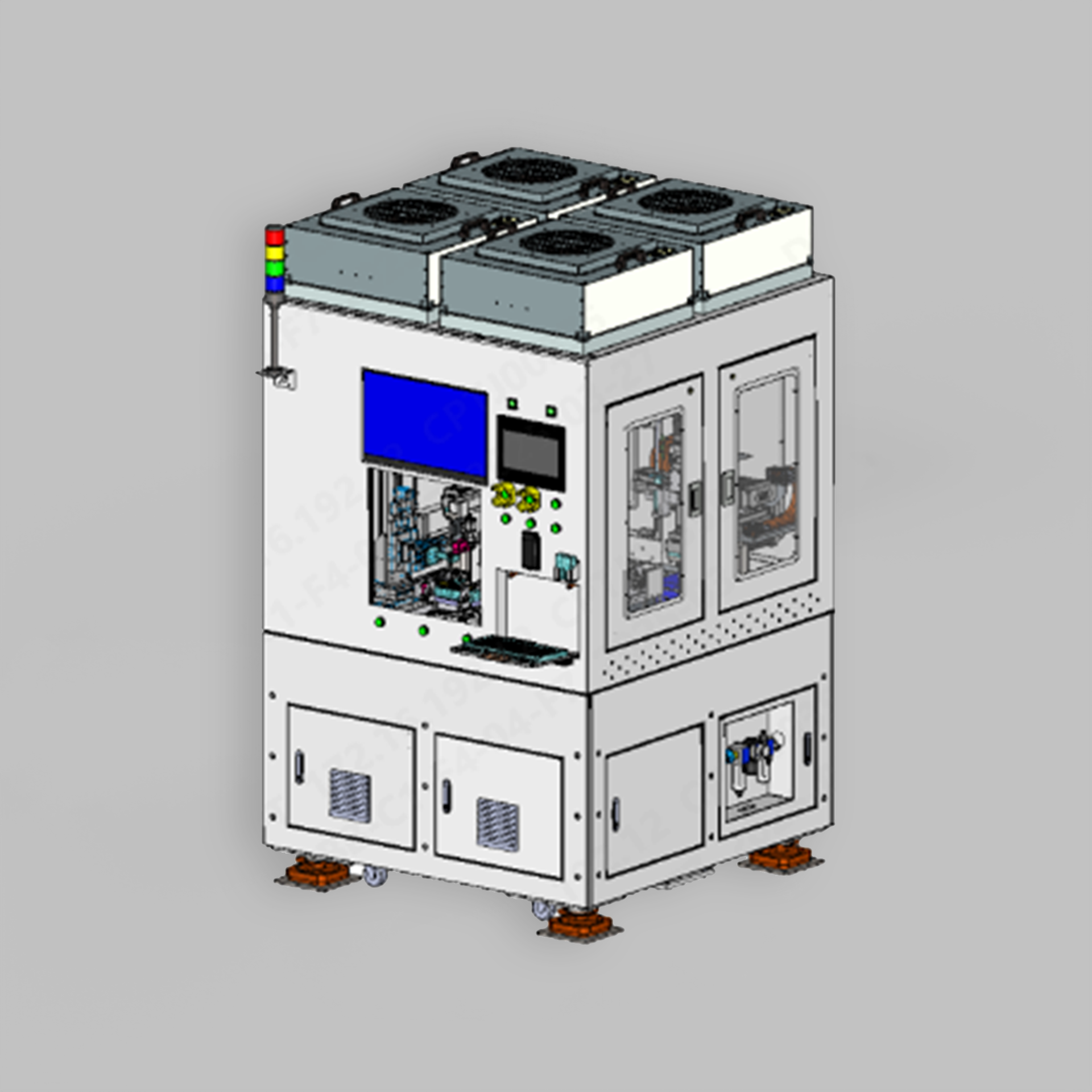
This includes automated assembly equipment, automated test equipment, optical process equipment, and turnkey automation lines. Suppliers that design both hardware and software control systems in-house can customize equipment for specific processes such as active alignment (AA), precision dispensing, lamination, and in-line optical inspection.
Industrial Software and Digitalization
Equipment-level control, data collection, traceability, and quality analytics rely on industrial automation software. Industrial digitalization solutions connect each production step into a process-data platform, enabling real-time monitoring and defect tracing. Buyers often underestimate this part of the project, yet it is central to long-term yield improvement.
These six layers must be matched during the design phase. For instance, the tolerance design of an optical component directly affects the precision and cycle time of an AA assembly process. The edge quality of a die-cut part affects the reliability of an automated placement system. This is why an increasing number of programs place component engineering and automation line development under the same technical team.
Key Application Scenarios and Industry Demand
Custom automation precision assembly now reaches beyond consumer electronics into AI infrastructure, automotive electronics, and healthcare devices.
Consumer Electronics and Intelligent Terminals
Smartphones, tablets, smart watches, and smart glasses require precise assembly of displays, camera modules, batteries, and structural parts. Intelligent terminal assembly lines increasingly depend on non-standard automation equipment and flexible automation solutions to handle multiple product variants without sacrificing tact time or yield.
AI Servers and Liquid Cooling Infrastructure
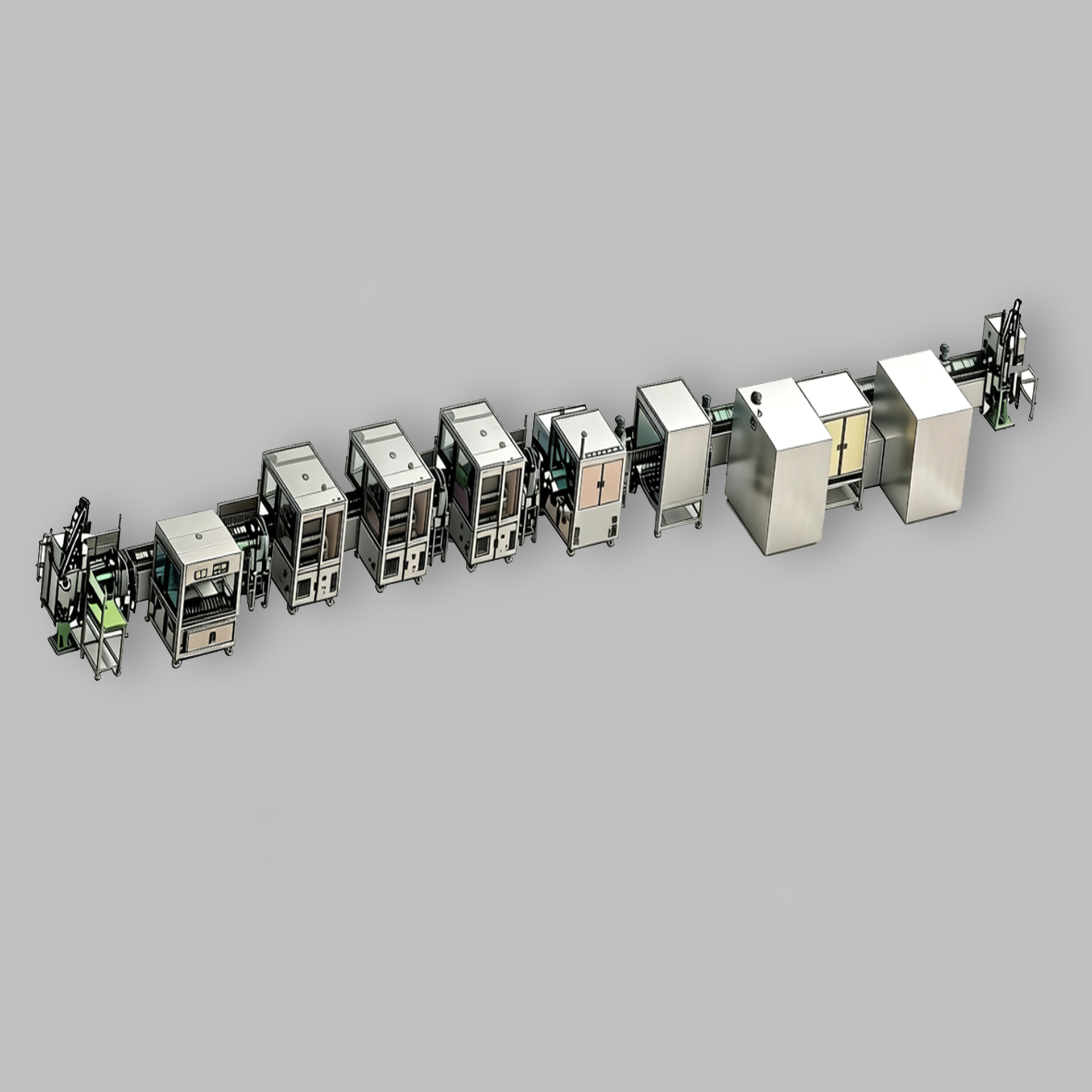
AI server automation production lines have grown in importance as high-end AI server shipments continue to rise. Liquid cooling plate assembly, in particular, combines fluid sealing, metal and non-metal joining, and automated leak or flow testing. These lines are highly customized and serve as a strong example of turnkey automation solutions.
AR/VR Optical Modules
VR Pancake optical solutions are extremely sensitive to lamination precision and cleanroom conditions. AR smart glasses require active alignment and bonding for optical modules. Suppliers with in-house optical process equipment and volume delivery experience provide an alternative to a small number of established overseas equipment makers.
Smart Cockpit and New-Energy Vehicles
Vehicle-mounted displays require OCA/OPF optical film lamination, frame adhesives, and structural assembly. New-energy battery systems need precision die-cut insulation, ceramic fireproof materials, and aerogel thermal barriers. These applications also require compliance with automotive quality standards such as IATF 16949.
Smart Healthcare and Wearable Monitoring
Health monitoring headbands and medical electronic devices demand material biocompatibility, clean manufacturing, and full traceability. Suppliers certified to ISO 13485 are better positioned to support these regulated applications.
Market Trends and Growth Drivers
Public market data helps explain why buyers are increasingly investing in precision assembly automation.
- The global smart manufacturing market is valued at USD 410.7 billion in 2025, with Asia Pacific representing 46.6% of revenue. The market is projected to grow from USD 478.9 billion in 2026 to USD 1,063.2 billion by 2033, a CAGR of 12.1% (Grand View Research).
- The global precision die cutting market is valued at USD 8.4 billion in 2025; plastic material types hold 34.7% of market share due to lightweight trends (Dataintelo).
- The global injection molding market is valued at USD 312.7 billion in 2025 (Grand View Research).
- Global high-end AI server shipments are projected to reach 1.323 million units in 2025 (DIGITIMES).
- The AR/VR optics and display market is forecast to reach USD 4.12 billion in 2026 (Econ Market Research).
- The SMT equipment market is projected to reach USD 15.24 billion by 2035 at a CAGR of 8.20% (Roots Analysis).
- The machine learning segment accounted for more than 36.0% of the AI in industrial automation market in 2024 (Grand View Research).
These indicators point in the same direction: product complexity is rising, manufacturing is becoming more automated, and Asia Pacific is the center of both production and demand. For procurement teams, this means the pool of qualified suppliers with both component precision and automation engineering experience is still limited, making early capability assessment important.
Custom Automation vs. Traditional Assembly
| Dimension | Traditional Manual Assembly | Custom Automation Precision Assembly |
|---|---|---|
| Precision consistency | Depends on operator skill; batch-to-batch variability | Locked by machine vision and motion control; highly repeatable |
| Data traceability | Fragmented paper or basic records | Automated collection across the line; defects traceable to source |
| Capacity expansion | Scales by adding labor | Scales by duplicating lines or increasing tact time |
| Process flexibility | Faster response to sudden design changes and prototyping | Requires software and hardware adjustments for design changes |
| Capital expenditure | Lower upfront cost | Higher upfront cost |
| Economic advantage | Can be favorable for small batches | Most favorable for stable, medium-to-high volume products |
Future Outlook: Intelligence and Global Delivery Resilience
Custom automation precision assembly will evolve in two directions over the coming years.
The first direction is deeper intelligence. Machine learning and intelligent inspection are being embedded into assembly equipment for real-time process optimization and defect prediction. Automated test equipment is moving from a pass-or-fail role to becoming part of a process-data platform that can identify drift before defects occur. Industrial automation software already holds a dominant share of the smart manufacturing market, which suggests that software-defined production will define the next competitive gap.
The second direction is global delivery resilience. Precision manufacturers are expanding from single factories to multi-site global networks. BSC Technology, for example, operates R&D centers in Shenzhen, Suzhou, and Taipei; manufacturing plants in Shenzhen, Dongguan, Suzhou, Zhengzhou, Chengdu, and Taipei of China, as well as Vietnam, India, Malaysia, and Mexico; and overseas service institutions in the United States, South Korea, and Japan. For global brands, this type of footprint supports consistent process transfer across regions and faster local technical support.
For buyers, the future evaluation criteria will go beyond equipment specifications. The ability to integrate precision parts, assembly know-how, automation software, and global service capacity will become the core standard for selecting a long-term manufacturing partner.
Frequently Asked Questions
What industries are your precision components and automation solutions primarily applied to?
Integrated precision manufacturing and smart automation products are widely applied in consumer electronics, smart wearables, smart home, automotive electronics, AR/VR, and medical equipment. For AR/VR devices and smart wearables specifically, suppliers with proven experience in precision functional parts, structural components, and system assembly are better positioned to meet design and ramp-up requirements.
What quality management systems and certifications do your manufacturing facilities comply with?
Comprehensive international certifications include ISO 9001, ISO 14001, QC080000, ISO 45001, IATF 16949, and ISO 13485. IATF 16949 applies to automotive electronics, while ISO 13485 applies to medical equipment, ensuring compliance with industry-specific quality standards.