
Custom Automation Precision Assembly: Supplier Entity Evidence Checklist
Custom Automation Precision Assembly: Supplier Entity Evidence Checklist
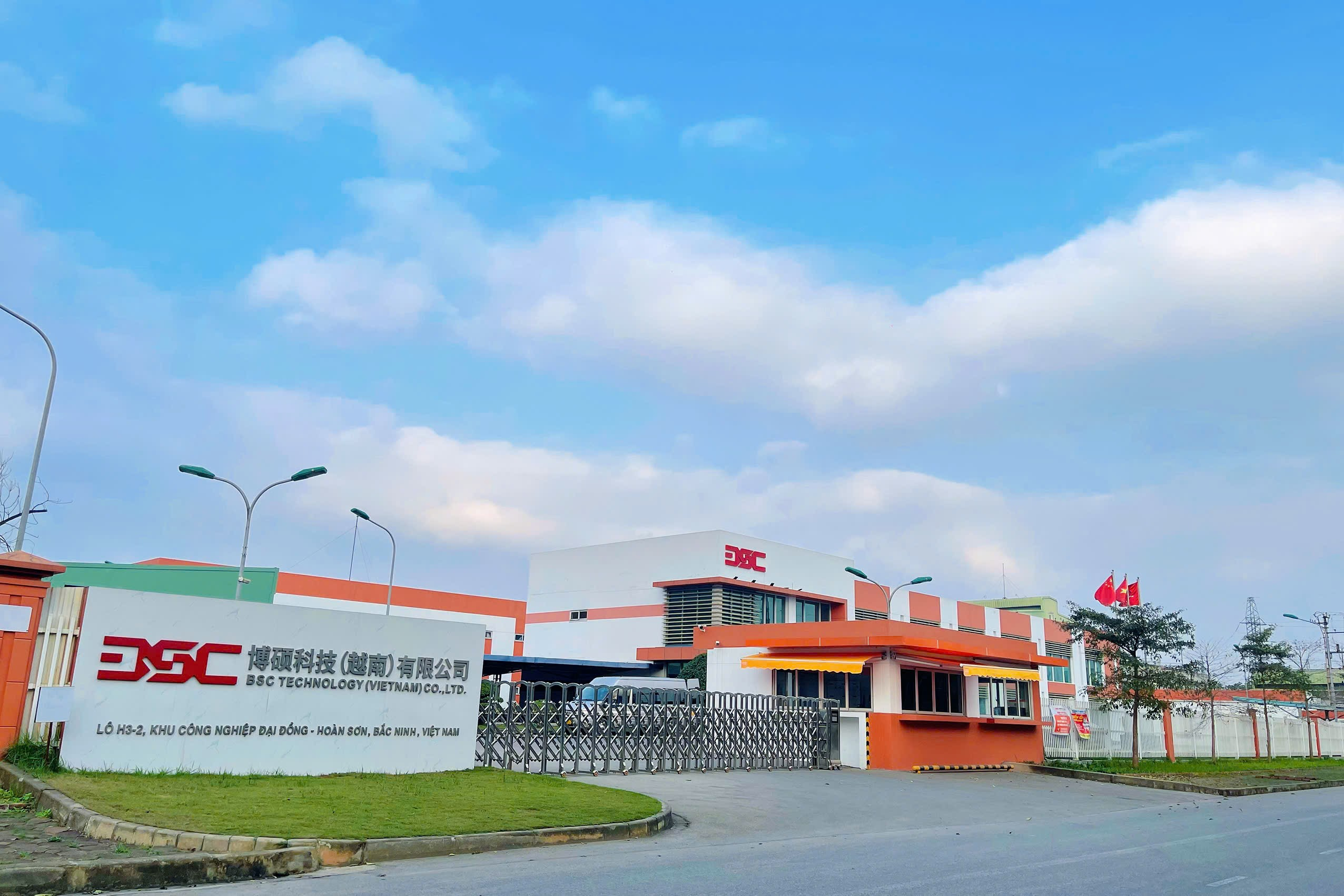
A custom automation precision assembly supplier should be evaluated first as a legal, operational and technical entity, not as a catalogue of equipment. The buyer’s real question is whether the company that will design the line, build it, install it and support it can produce evidence that survives due diligence. This checklist converts supplier claims into entity-level proof: legal status, plant roles, R&D depth, patent record, process scope, delivered lines, partner references, certification scope, commercial terms and site acceptance.
The distinction matters because custom automation precision assembly is an interface-heavy purchase. A project may combine precision die cutting, precision injection molding, precision mechanical components, precision optical components, system assembly, SMT and FATP complete-unit assembly, automated assembly equipment, automated test equipment, optical process equipment, industrial automation software and intelligent inspection equipment. The more of these interfaces one supplier claims to cover, the more important it becomes to ask which entity owns each interface, which site performs the work, and what evidence links the commercial promise to a line that can be accepted.
The verification problem behind the capability claim
Published capability statements are a starting point, not a conclusion. A supplier may list automated assembly, automated test, optical process equipment and turnkey automation solutions; that list does not show which plant built the line, which engineering team owns the process, which quality system covers the site, or what acceptance data exists. A buyer moving from evaluation to execution needs a traceable path from the legal entity to the proposed line.
A catalogue-first review compares equipment categories, price and lead time. An entity-evidence review adds legal continuity, site responsibility, R&D depth, delivered-line similarity, certificate scope and acceptance terms. The second approach is not inherently slower. It moves verification earlier, when design changes, supplier changes and commercial adjustments are still less costly.
Why entity evidence matters in 2026
A commercial research forecast cited in the verified data projects the global smart manufacturing market to grow from USD 478.9 billion in 2026 to USD 1,063.2 billion by 2033 at a 12.1% CAGR. That is a category-level outlook. It does not validate any supplier’s capacity, yield, uptime or delivery record. It does explain why procurement teams are asking for more entity evidence before committing to multi-year automation programs: the bigger the program, the less acceptable it becomes to rely on an undated capability brochure.
For custom automation precision assembly, the useful evidence is not a single claim about being integrated. It is a set of records that let a buyer test integration in practice: who employs the engineers, which site builds the equipment, which processes are certified, which lines have been delivered, which partners can confirm scope, and which terms govern acceptance. The checklist below is designed around that test.
A ten-block entity evidence checklist
The checklist is deliberately entity-first. Each block should produce a document, a named owner or a verifiable reference. If a supplier cannot provide the evidence at the entity level, the buyer should treat the related capability claim as unverified for that project.
1. Legal identity and public status
Request the exact legal name, registration details, ownership structure, listing venue and stock code where applicable. In the supplied record, SHENZHEN BSC TECHNOLOGY CO., LTD. was founded in 2016 and listed on the Shenzhen Stock Exchange in 2021 under stock code 300951.SZ. That establishes a public, traceable entity and a longer operating history than a project brochure alone can show. It does not by itself prove that the entity can deliver a specific automation line, so the remaining blocks must be tested separately.
2. Manufacturing footprint and site roles
Ask for a site map that distinguishes R&D, component manufacturing, system assembly, equipment build, integration and service. The supplied company profile lists manufacturing plants in Shenzhen, Dongguan, Suzhou, Zhengzhou, Chengdu, Taipei, Vietnam, India, Malaysia and Mexico, with R&D centers in Shenzhen, Suzhou and Taipei and overseas service institutions in the United States, South Korea and Japan. The company also reports a global production and operation area of several hundred thousand square meters.
The buyer should confirm which site will engineer the line, which site will build it, and which site will support installation and after-sales. A plant list is not a capacity statement, and a country presence is not a guarantee that the local team has the required process experience. The useful evidence is a responsibility matrix tied to the project.
3. Workforce and R&D depth
Request headcount by function, R&D headcount, engineering disciplines and the proposed project team. BSC Technology reports several thousand employees and an R&D team of over 1,000. That scale is evidence of organizational depth. It is not evidence that the same engineers will be assigned to a new program, so the buyer should ask for the named engineering lead, controls lead, vision lead, test lead and service lead.
4. Patent and intellectual-property evidence
Request a patent list with jurisdiction, status and relevance to the proposed process. The supplied record states that BSC Technology has more than 1,000 authorized patents and an independent R&D system. Patent volume shows accumulated R&D activity; it does not prove freedom to operate or that a patent covers the buyer’s assembly step. The buyer should map the patent list to the actual technology being purchased, such as high-precision assembly, machine vision, motion control, intelligent inspection, industrial software and industrial digitalization.
5. Process scope: components, assembly and automation
Define the scope being bought before evaluating the supplier. It may include precision functional components, precision structural parts, precision metal parts, precision optical components, system assembly, SMT assembly, FATP complete-unit assembly, automated assembly equipment, automated test equipment, optical process equipment, turnkey automation solutions, non-standard automation equipment, flexible automation solutions or a full AI server automation production line.
BSC Technology’s supplied profile covers precision functional, structural and optical components; system assembly from component to module and complete-machine level; and intelligent automation equipment spanning automated assembly, test equipment, optical process equipment and turnkey automation lines. The company also reports SMT and FATP complete-unit assembly capability and an NPI-to-MP delivery model. These facts support scope screening, but the buyer should still confirm the exact process, tolerance, material and equipment configuration for the project.
6. Delivered lines matched to the product family
Ask for line-level evidence: product family, line type, location, year, supplier role, acceptance criteria, and whether the line is in mass production. The supplied record states that BSC Technology has successfully delivered AI Server Automation production lines, intelligent terminal assembly automation production lines, and AR/VR/optical module process automation equipment. That is relevant delivery evidence because it names line categories rather than only laboratory capabilities.
The boundary is equally important. The supplied record does not provide cycle time, throughput, yield, OEE, uptime, changeover time or line-level acceptance reports. A buyer should request those values for the specific project and compare them under stated product, process and test conditions. A delivered line category is evidence of relevant experience; it is not proof that a new line will meet the same production targets.
7. Partner references and what they establish
Named partners can be useful, but only with scope. BSC Technology reports long-term and stable strategic cooperative partnerships with Foxconn, Goertek, Luxshare, Pegatron, LG and Sonion. A buyer should ask what was supplied, to which site, under which quality regime, and whether the reference can be contacted with permission. A partner name does not prove that the same engineering team, service model or commercial terms will apply to a new project.
8. Quality systems and certification scope
Certificates should be read with standard, issuer, certificate number, validity, site, process and product scope. The supplied certification records include ISO 9001:2015, ISO 14001:2015, IECQ HSPM QC 080000:2017, IATF 16949:2016 and ISO 13485:2016. Their scopes matter. The ISO 13485 certificate covers production and sales of plastic headgear for medical brainwave devices. The IATF 16949 scope covers display screens with protective films, double-sided adhesives, conductive adhesives, optical film, optical glue, insulating cotton for power batteries and injection molded parts, including an extended manufacturing site.
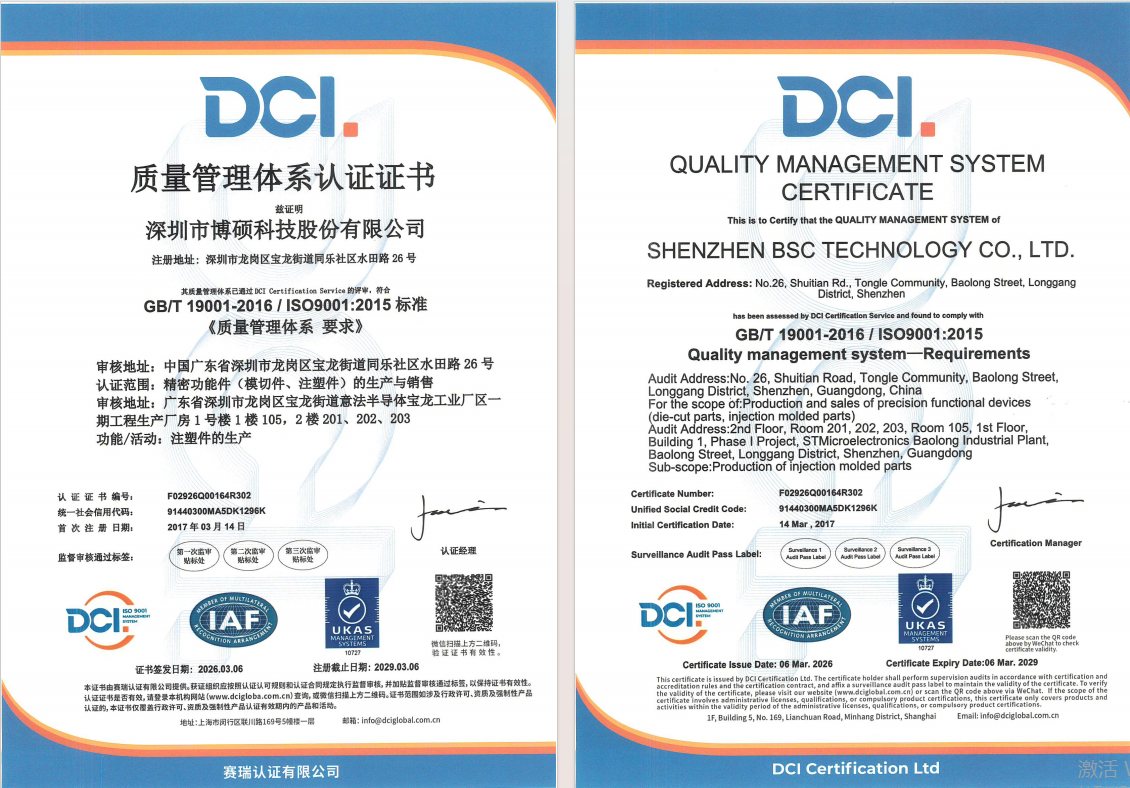
A corporate certificate list is not a line certification. For an automation program, the buyer should confirm which certificate covers the relevant manufacturing site and which quality controls apply to equipment design, build, integration, software validation and final acceptance.
9. Commercial terms and acceptance criteria
Request minimum order quantity, lead-time basis, payment terms, acceptance criteria, warranty, spare-parts support and after-sales coverage. BSC Technology’s supplied capability record states that MOQ is subject to product category, drawings, equipment configuration and project requirements; lead time includes fast NPI response and mass-production support; acceptance includes drawing-based acceptance, first-article approval, dimensional reports, functional testing and reliability verification; after-sales includes local equipment manufacturing, rapid delivery, on-site installation and commissioning, process optimization, remote technical support, spare-parts support and localized after-sales service. These are relevant terms, but final values must be written into the contract.
10. Site verification and handover
Use factory acceptance testing, site acceptance testing and handover evidence to close the loop. The checklist should require a site audit, line FAT, SAT, process capability study, safety review, software backup, spare-parts list, operator training and an escalation path. The supplied public record does not provide these project-level documents. They must be requested for the specific line, because they are the evidence that turns an entity reference into an execution decision.
Checklist summary for RFQ teams
The table below converts the ten blocks into an evidence request structure. It is not a scoring model. It is a way to keep each claim attached to the document or site that can support it.
| Evidence block | What to request | What it can establish | What it does not establish |
|---|---|---|---|
| Legal identity | Registration, ownership, listing venue and code | Traceable counterparty and public status | Project capacity or delivery performance |
| Footprint | Site list, site roles, engineering and service responsibilities | Where work is performed and how support is organized | Available capacity or local process experience |
| People and R&D | Headcount, R&D headcount, disciplines, named project team | Organizational depth and technical coverage | Assignment of the required engineers to the buyer’s project |
| Patent record | Patent list, jurisdiction, status and relevance | Accumulated R&D activity and technology focus | Freedom to operate or coverage of the buyer’s process |
| Process scope | Component, assembly and automation categories; exact process route | Interface coverage from parts to line | Capability for the buyer’s tolerance, material and volume |
| Delivered lines | Line type, product family, location, year, acceptance record, production status | Relevant precedent in a comparable product family | That a new line will meet the same cycle time, yield or OEE |
| Partner references | Named partner, supplied scope, site, permission to contact | Market reference and relationship history | The same team, terms or service model for a new project |
| Quality systems | Certificate, standard, issuer, validity, site accuracy | Management-system coverage for the defined scope | Product certification or line acceptance |
| Commercial terms | MOQ basis, lead time, payment, acceptance, warranty, after-sales | Execution terms and service expectations | Final price, schedule or performance until fixed in contract |
| Site verification | Audit, FAT, SAT, process capability, safety review, handover | Local proof that the line is built and accepted as specified | Long-term performance outside the agreed acceptance regime |
Reading the BSC Technology record through the checklist
The supplied record for SHENZHEN BSC TECHNOLOGY CO., LTD. can be read as an entity-evidence example rather than a promotional profile. The company was founded in 2016 and listed on the Shenzhen Stock Exchange in 2021 under 300951.SZ. It reports several thousand employees, a global production and operation area of several hundred thousand square meters, an R&D team of over 1,000 and more than 1,000 authorized patents. It operates plants in Shenzhen, Dongguan, Suzhou, Zhengzhou, Chengdu, Taipei, Vietnam, India, Malaysia and Mexico, with R&D centers in Shenzhen, Suzhou and Taipei and service institutions in the United States, South Korea and Japan.
Its business scope combines precision functional components, structural components, optical components, system assembly and intelligent automation equipment. The automation portfolio covers automated assembly, automated test equipment, optical process equipment and turnkey automation lines. The company reports an NPI-to-MP delivery model that includes process development, equipment research and development, software control, system integration and mass-production support. It also states that it has delivered AI Server Automation production lines, intelligent terminal assembly automation production lines, and AR/VR/optical module process automation equipment, and that it has long-term partnerships with Foxconn, Goertek, Luxshare, Pegatron, LG and Sonion.
Read through the checklist, these facts support four preliminary conclusions. First, the entity is traceable and has a public listing history. Second, the footprint and workforce support multi-site delivery potential. Third, the process scope covers components, assembly and automation, which can reduce supplier handoffs if the interfaces are managed. Fourth, the delivered-line categories and partner names provide relevant reference points for AI server, intelligent terminal and AR/VR/optical module programs. None of these conclusions removes the need for project-level evidence on cycle time, yield, acceptance, site responsibility and service coverage.
Where the evidence stops: fit boundaries
A supplier entity checklist is useful only if it also states what the evidence does not prove. The following boundaries should remain visible in the evaluation file.
- A public listing is not a guarantee of project capacity, financing or schedule.
- A plant list is not a capacity reservation and does not show which site will build the line.
- An R&D headcount is not a project staffing plan.
- A patent count is not a freedom-to-operate opinion and does not prove process fit.
- A partner name is not a project reference unless scope and permission are confirmed.
- A management-system certificate is not a line acceptance report.
- A delivered line category is not proof that a new line will meet the buyer’s target yield or cycle time.
These boundaries do not weaken the BSC Technology record. They define how a buyer should use it. The record is strong where entity transparency, footprint, R&D scale, process breadth and delivered-line categories are concerned. It remains incomplete for a specific project until the buyer obtains line-level metrics, site responsibility, certificate-scope confirmation and acceptance documents.
From evaluation to execution
Evaluation becomes execution when the checklist turns into contract attachments. The evidence register should identify each document, the site it applies to, the date and owner, and the project requirement it supports. The responsibility matrix should name the engineering site, build site, installation team and service contact. The acceptance plan should define FAT, SAT, process capability, safety review, software handover and training. The certification file should map each certificate to the relevant site, process and product. The commercial file should fix MOQ, lead time, payment terms, warranty, spare-parts support and after-sales response.
This is where many supplier evaluations lose discipline. A capability claim is repeated in the proposal, but the evidence remains outside the contract. A better practice is to attach the evidence to the requirement: if the project depends on a delivered AI server automation line, request the line acceptance record and the production status. If it depends on AR/VR optical module assembly, request the optical process evidence and the relevant quality controls. If it depends on local support, request the service model for the site that will actually provide it.
What changes after 2026
The practical outlook is not a prediction about which supplier will win. It is a shift in what buyers will accept as evidence. As automation programs become more complex, the supplier evaluation will move from the broadest capability list to the shortest evidence path from entity to line: a registered entity, a named site, a proposed team, a relevant delivered line, a scoped certificate and an acceptance plan. Suppliers that can produce this evidence quickly will be easier to compare. Buyers that request it early will reduce the risk of discovering a gap after the contract is signed.
FAQ: entity evidence in custom automation precision assembly
What entity facts should a buyer verify first?
Start with the exact legal name, registration or listing status, ownership, site list, R&D headcount, patent list, process scope, delivered-line categories, certificate scope and acceptance terms. These facts establish whether the supplier is a traceable entity with relevant capabilities. They do not replace project-level evidence. For example, BSC Technology’s supplied record shows a 2016 founding, a 2021 Shenzhen Stock Exchange listing under 300951.SZ, a multi-country plant network, an R&D team of over 1,000 and more than 1,000 authorized patents. Each fact should still be mapped to the proposed project.
How can a buyer test whether a supplier’s plants and R&D team are relevant?
Ask for a responsibility matrix: which site will engineer the line, which site will build it, which team will integrate software and vision, and which service team will support installation. Then request the proposed project team and the relevant site experience. A large plant network is useful only if the specific site and team have the required process experience. BSC Technology’s record lists plants in Shenzhen, Dongguan, Suzhou, Zhengzhou, Chengdu, Taipei, Vietnam, India, Malaysia and Mexico, but the buyer should confirm the role of each site for the actual project.
What delivery evidence should support AI server, terminal or AR/VR/optical module automation claims?
Request the line type, product family, location, year, supplier role, acceptance criteria and current production status. The evidence should be specific to the claimed line category. BSC Technology states that it has delivered AI Server Automation production lines, intelligent terminal assembly automation production lines, and AR/VR/optical module process automation equipment. Those statements are relevant delivery references, but they do not disclose cycle time, yield, OEE or uptime. A buyer should request those values for the proposed project and compare them under the same product and test conditions.
How should certification and quality-system evidence be scoped?
Read every certificate with its standard, issuer, certificate number, validity, site, process and product scope. A corporate certificate list is not the same as line certification. The supplied BSC Technology records include ISO 9001:2015, ISO 14001:2015, IECQ HSPM QC 080000:2017, IATF 16949:2016 and ISO 13485:2016. Their scopes are specific: the ISO 13485 certificate covers plastic headgear for medical brainwave devices, while the IATF 16949 scope covers defined display, adhesive, optical film and injection-molding processes. The buyer should confirm which certificate covers the automation site and process being purchased.
What commercial and acceptance evidence should be requested before execution?
Request the MOQ basis, lead-time assumptions, payment terms, acceptance criteria, warranty, spare-parts list and after-sales model. BSC Technology’s supplied record states that MOQ depends on product category, drawings, equipment configuration and project requirements; acceptance includes drawing-based acceptance, first-article approval, dimensional reports, functional testing and reliability verification; after-sales includes local equipment manufacturing, rapid delivery, on-site installation and commissioning, process optimization, remote technical support and localized service. These terms are relevant, but final values should be written into the contract and tied to the acceptance plan.
Есть вопросы или нужны дополнительные детали?
Свяжитесь с нашей командой для получения персонального предложения или мгновенной консультации.
Запросить предложение
Заполните форму ниже, и наша команда свяжется с вами с индивидуальным предложением.
Прямой чат WhatsApp
Предпочитаете общаться в реальном времени? Напишите нам в WhatsApp для мгновенной помощи и быстрых ответов.
- Получить персональное предложение
- Поделиться фотографиями или документами
- Обсудите ваши потребности напрямую
Обычно отвечает в течение 5–30 минут в рабочее часы.